
There’s no doubt the late Lt. Colonel Jeff Cooper left an undeniable impact on the firearms community. From his color code of awareness to the development of standardized drills, to the legacy of GUNSITE, Cooper’s words and writings are still championed to this day.
I happen to be one of those who respect his opinions, and I still utilize firearms he would have approved of in my outdoor travels and adventures. When I attended Gunsite Academy for Pistol 250, I carried a 1911. When I attended Rifle 270, I carried a scout rifle. I’m well-versed in each and have poured a lot of time and energy into learning how to utilize them to their full capability.
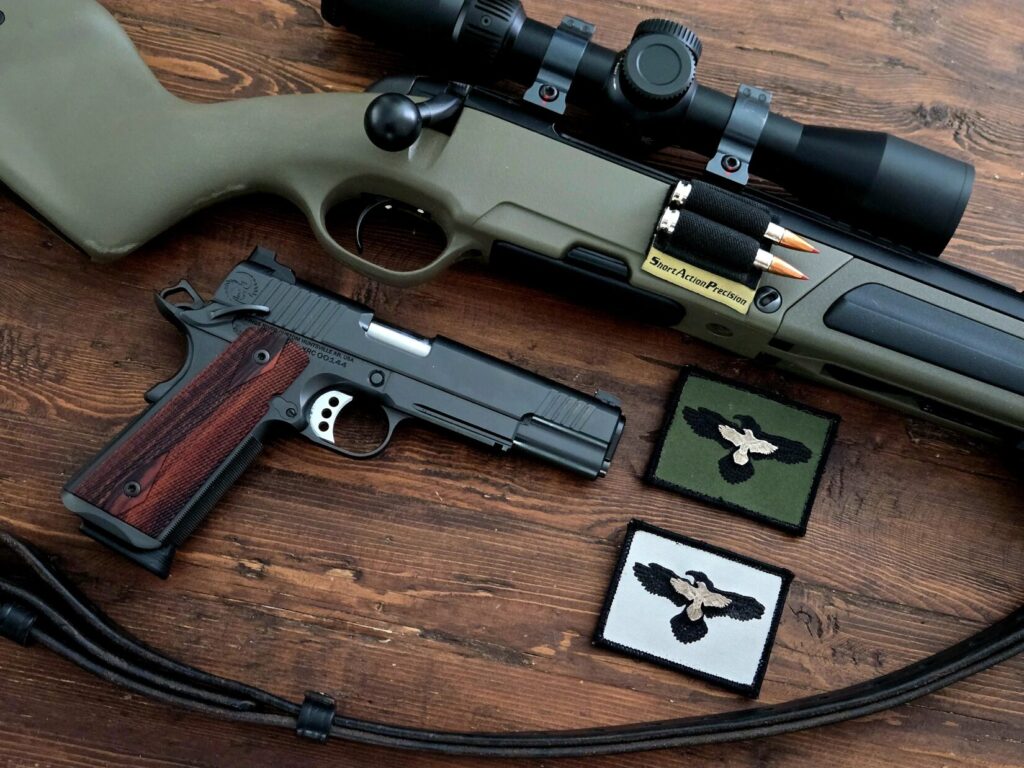
What follows is a description of my “Cooper Combo,” as I like to call it.
My 1911
When you look at just about any photo of Jeff Cooper, he has a 1911 by his side. Cooper was a fan of the .45 ACP, and the term “double tap” was his way of explaining a controlled pair of 9mm. A “hammer”, on the other hand, was two shots of a .45.
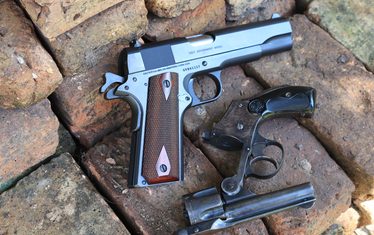
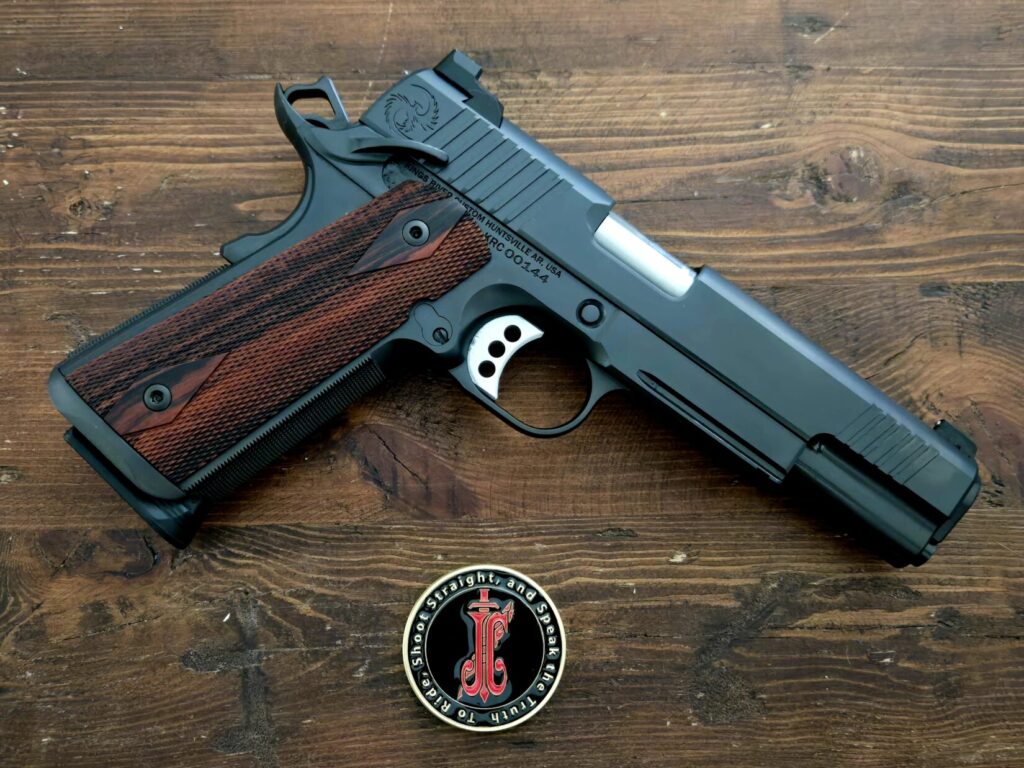
My preferred 1911 comes from the talented gunsmiths at Kings River Custom. The Phoenix Fighting Gun came out of a discussion with Matt Riker, who helped spec it out for me. Matt and the team wanted me to join the team as a sponsored shooter, and they provided me with the nicest 1911 I’ve ever used.
I basically wanted an FBI HRT spec pistol with an integrated rail for a weaponlight.
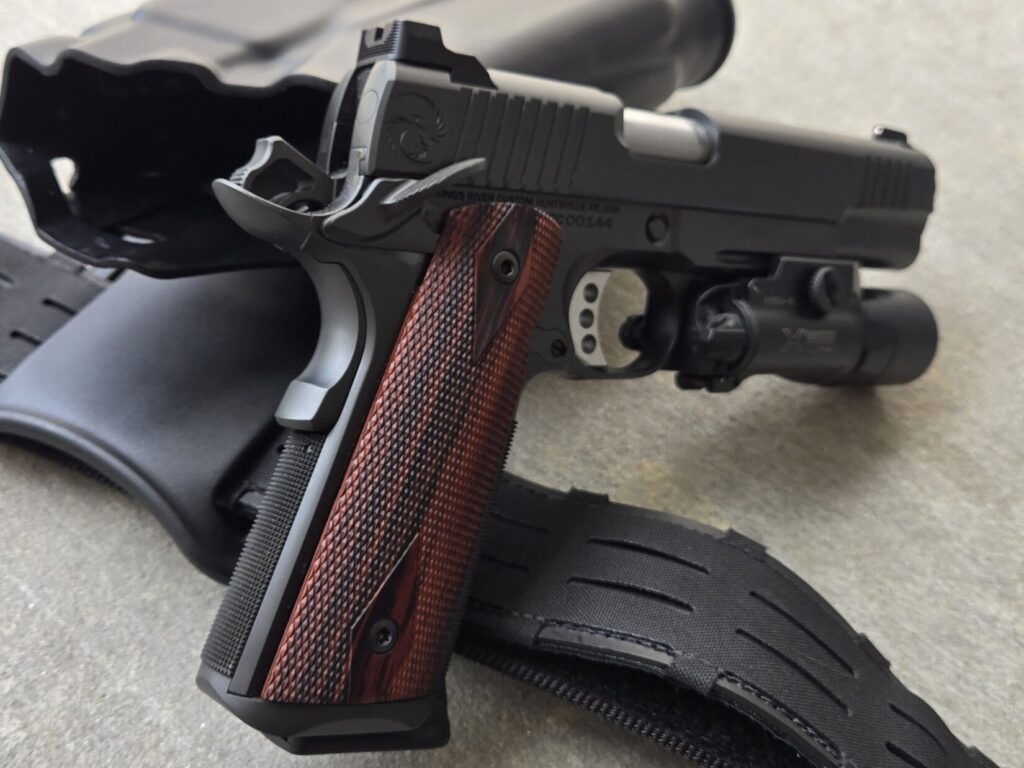
The front strap and the backstrap have 25 line-per-inch checkering. The pistol has a match-grade barrel and bushing as well as a very light and crisp match-grade trigger. The sights are a combination of a blacked-out rear and silver bead front.
The pistol came with one of the wildest sets of grips I’ve ever seen that were made by VZ Grips. Since acquiring the pistol, I’ve played around swapping grips for smooth micarta, and now it wears a set of Hogue Cocobolo.
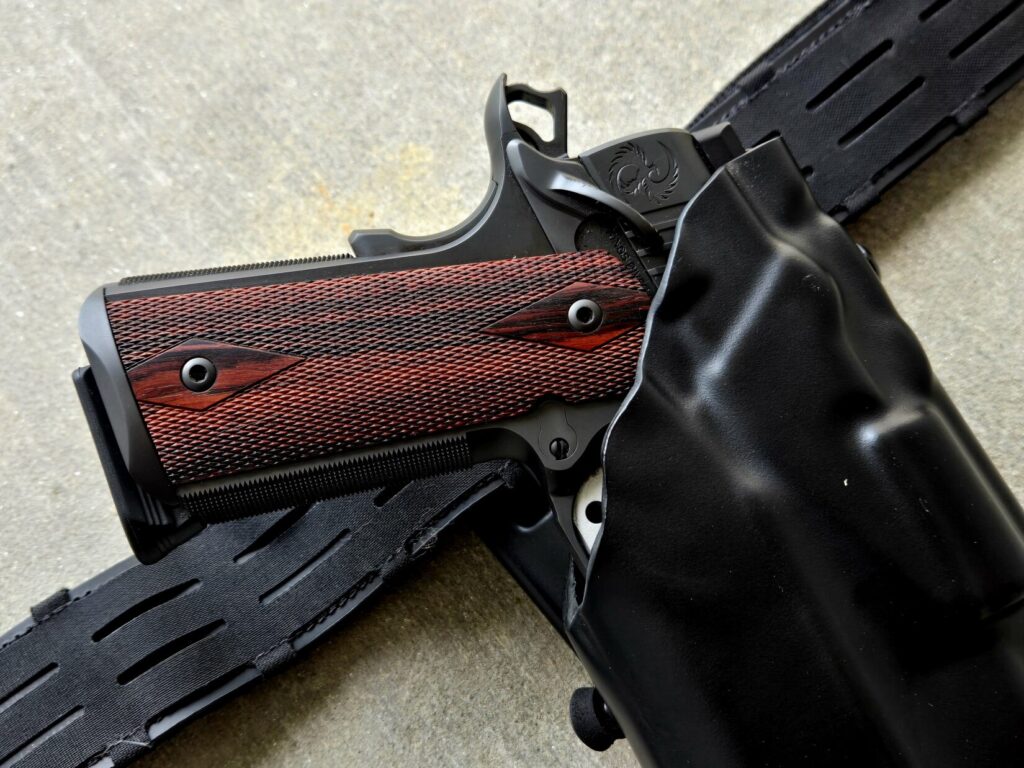
The PFG is finished with an extremely durable DLC (Diamond-Like Carbon) coating. Even after 18 months of using it at course after course and training sessions with plenty of repetitions from my holsters, the coating doesn’t show any sign of wear.
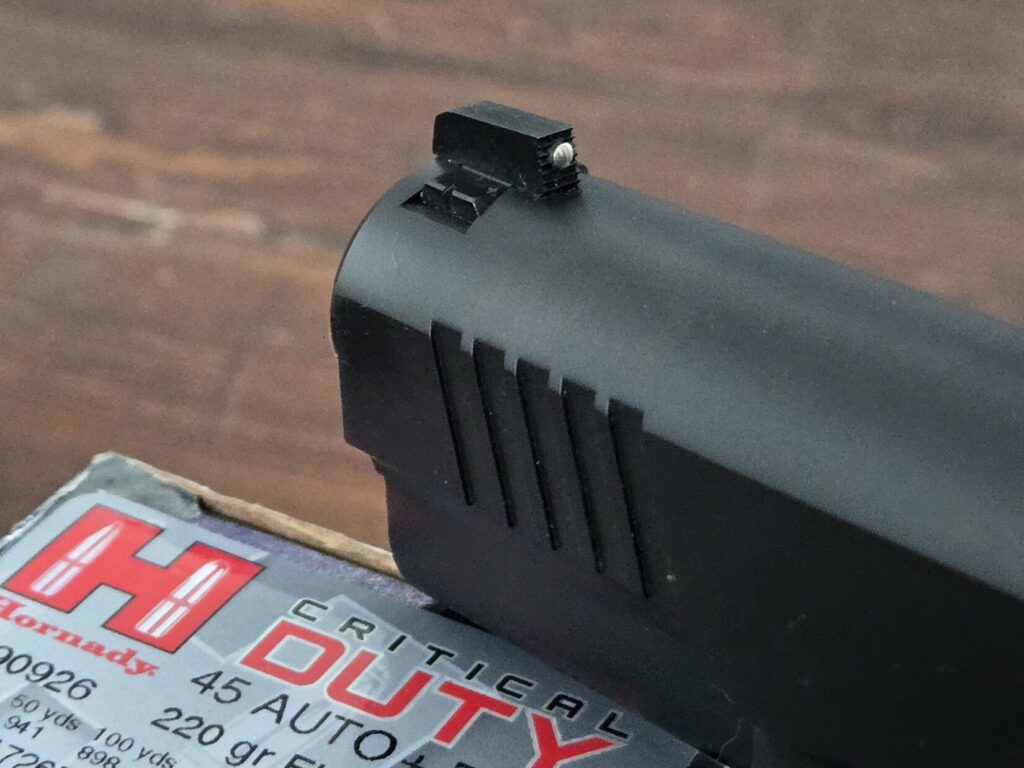
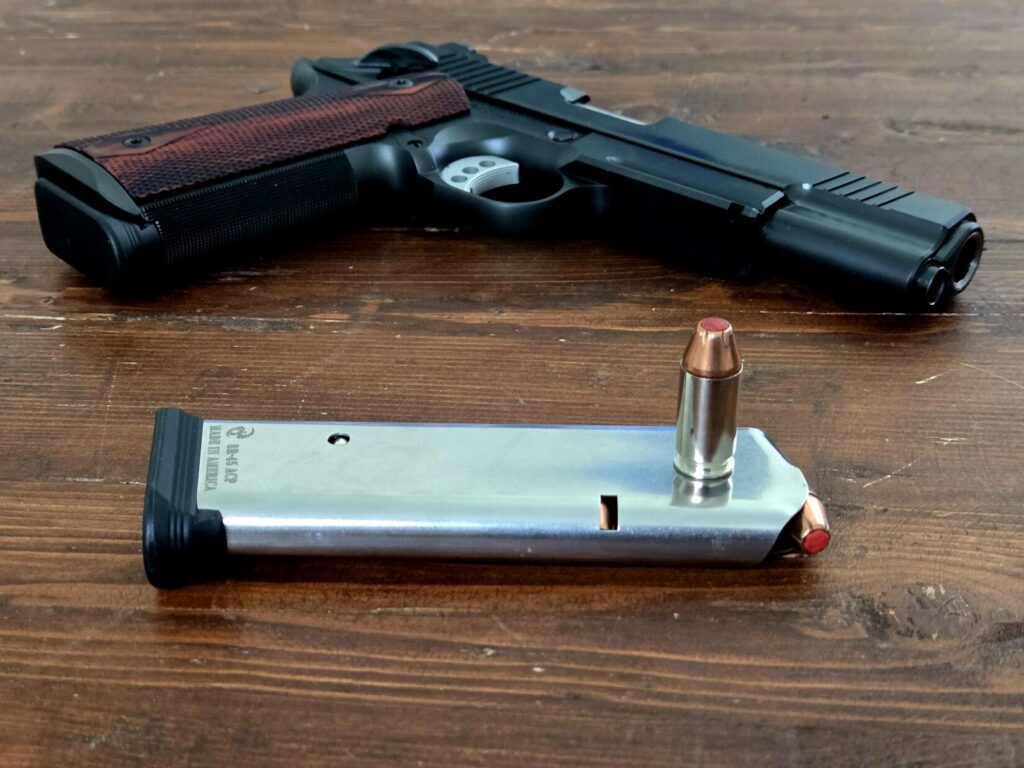
On the range, the pistol is a performer. Since the pistol is all-steel construction, it handles recoil well. Compared to a similarly sized 45 ACP with an aluminum frame and steel slide, the difference in recoil is noticeable.
The pistol is more accurate than I am, and this is proven when it is shot with a solid rest at 25 yards. Matt Riker told me the firearm would break in over time and get even more “slick,” and that is the best way I can describe the feel of the slide and frame connection. Even though the pistol’s action moves like greased lightning, there is no movement in the fit front to back and left to right anywhere on the pistol.
My Scout Rifle
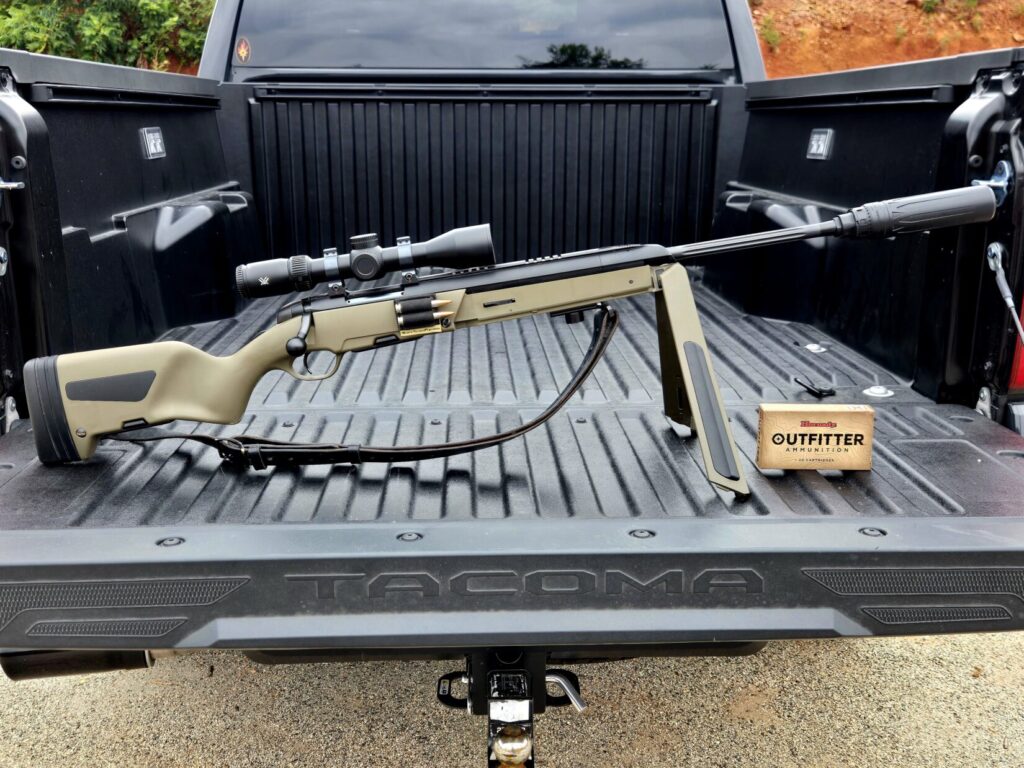
In a previous article for Safariland, I wrote about the differences between the Steyr Scout 1.0 and the newer 2.0. I own the 1.0, and it has been with me for over six years and well over 1000 rounds, including 550 rounds at Gunsite.
This rifle has been with me on hunts in Connecticut, North Carolina, and Texas. I travel with this rifle, and it always feels good knowing I have a five-shot .308 Win rifle at the ready for just about anything.
That was the idea behind the scout, a do-all rifle that may not be the best for any one application, but it is damn good at multiple. Cooper believed the rifle was the “jewel of battle” and that a 150 grain .308 caliber round traveling 2600 feet per second was a good benchmark for a universal rifle round.
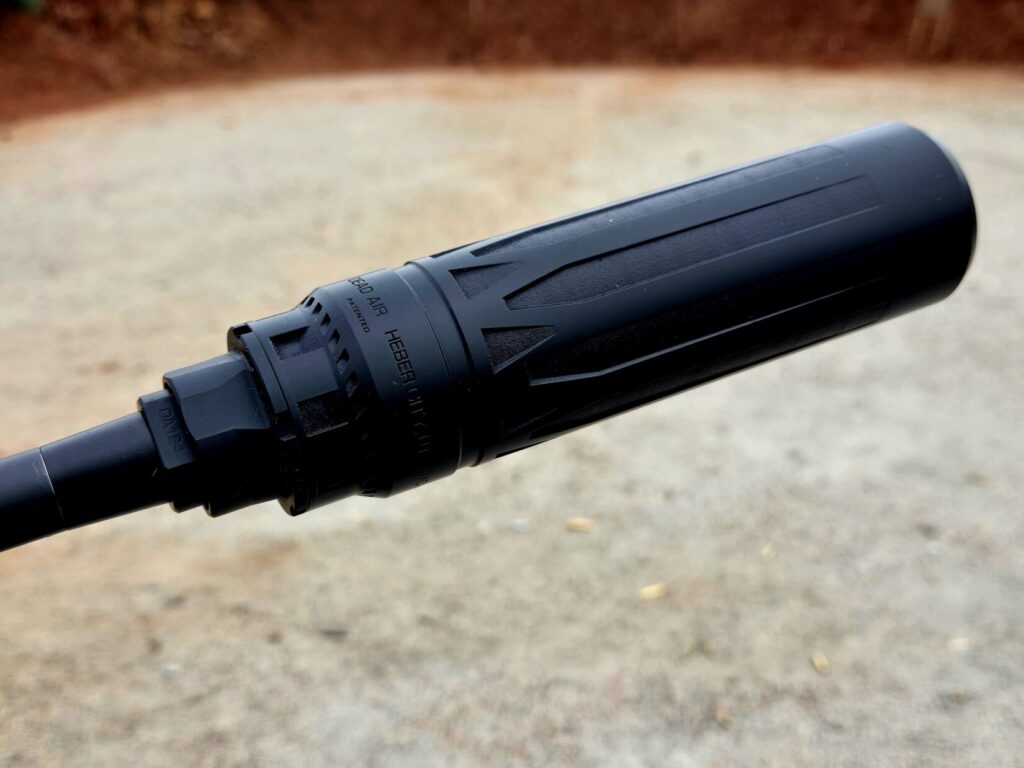
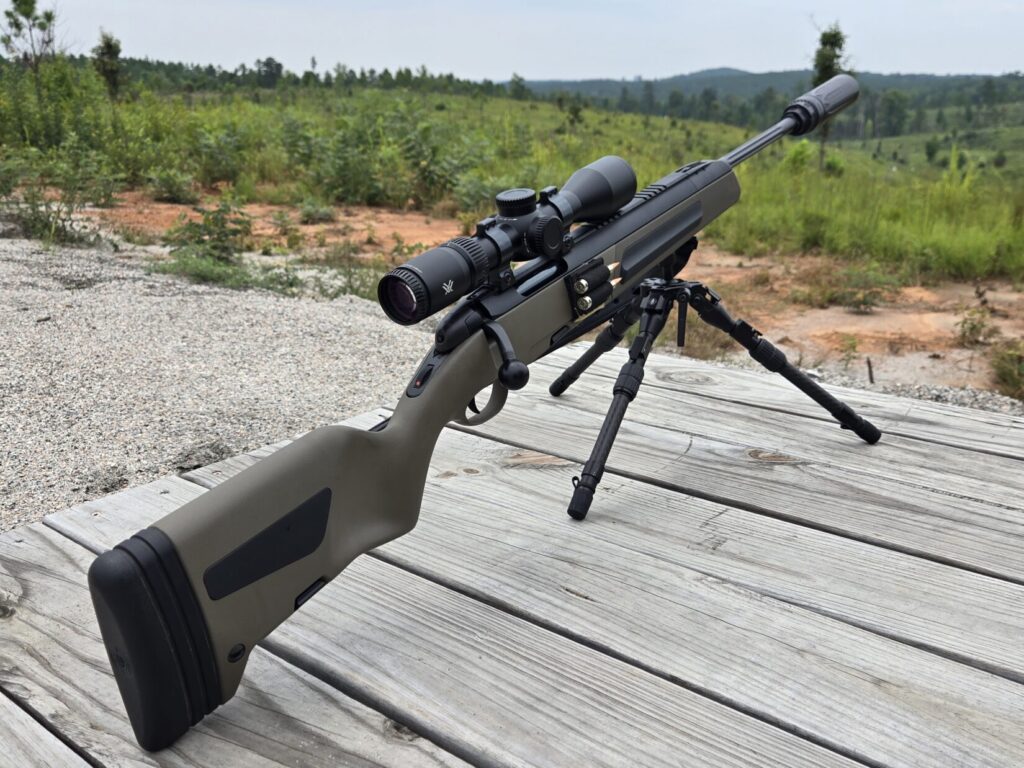
At 19 inches long, the pencil barrel of the Steyr Scout is lightweight, cools down quickly, and is insanely accurate for its size. At the end of my muzzle is an adapter that converts the ½”x20 threads to ⅝”x 24 pitch. This lets me use my Dead Air Silencers Nomad Ti XC suppressor with a Xeno muzzle brake adapter.
While Cooper didn’t run his rifle suppressed, in this day and age, it makes sense to preserve hearing, aid in recoil reduction, and minimize muzzle flash and sound. The titanium construction of the Dead Air suppressor makes it very light and easily forgotten on the rifle. The sound of a 308 round coming out of the can is very mild, and it has a nice pitch and tone to it.
Unlike the forward-mounted intermediate eye relief scope, I decided a traditionally mounted scope would better suit my needs as a hunting rifle. I understand the point behind the IER optic, and I used one when I shot the Gunsite 270 rifle course. I just know the low power of my Vortex optic paired with an illuminated reticle works very well as a makeshift red dot for snap shots with a flash sight picture for targets up close.
I also know a traditional rifle scope has significantly more magnification capability than the highest power IER optic. While putting a traditional rifle scope on a Steyr Scout may upset purists, I think Jeff Cooper would see modern optics as an acceptable option for his multi-purpose rifle.
Support Equipment
To keep my 1911 and Scout rifle supported in the field, I carry some basic maintenance equipment, including quality firearms lubricant and some basic tools to make sure I can tighten screws and address any issues with either firearm. I also bring spare CR123 batteries for my Surefire X300 and 2032 lithium batteries for my rifle’s optic.
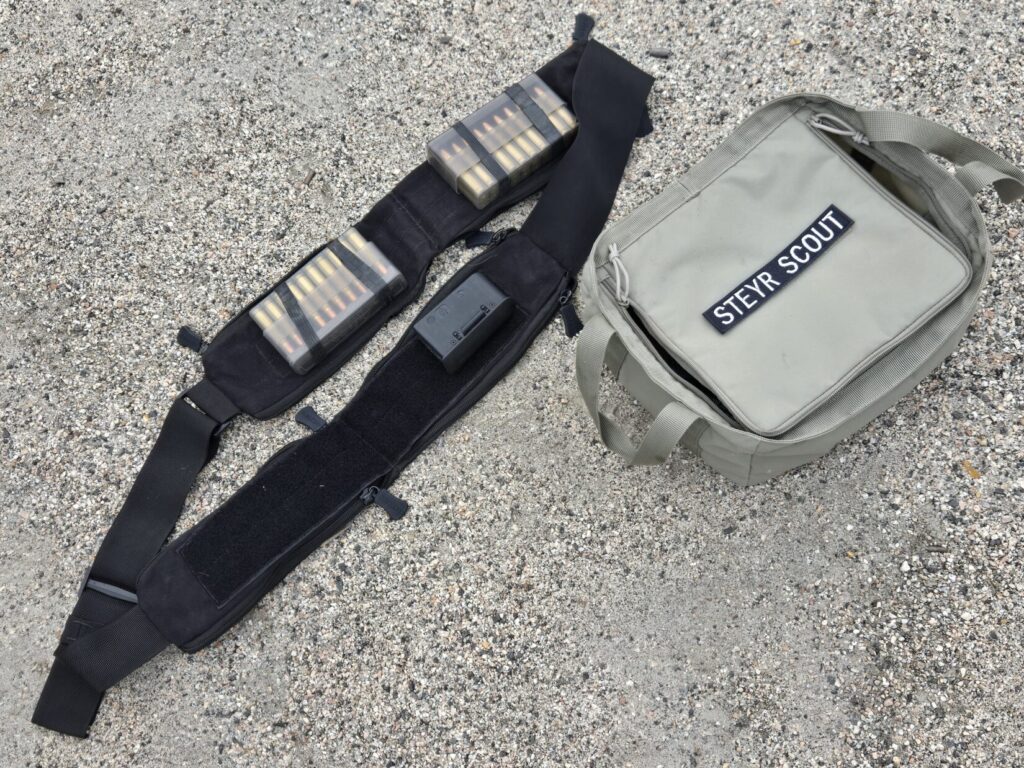
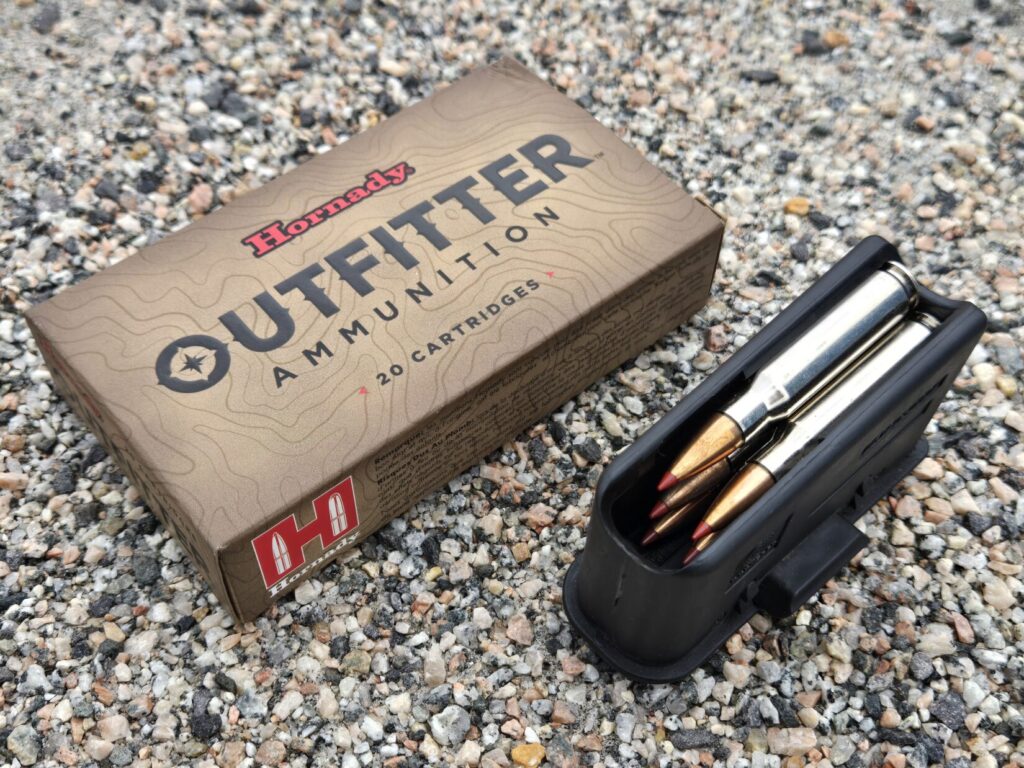
A box of 25 rounds for my pistol and a box of 20 rifle rounds will help me load up three 8-round magazines and leave a spare round for the chamber. My rifle has a 5-round magazine and a spare 5-round magazine in the buttstock. I have two spare rounds in a Short Action Precision spare holder to the right of the receiver, and I also put a single loose round in the cavity where the spare magazine fits in the buttstock.
All told, I can carry 13 rounds on the rifle when I go into the field. My rationale is that if I anticipate needing more than that, I need to bring friends with me. Since I believe in spares, I use aftermarket boxes that hold 50 rounds for the pistol and 20 for the rifle.
This combination works well for me, and if I had to add anything else to make it a “Cooper’s triple” or “Cooper’s Quadrupe,” I would add a shotgun to the mix. That is one course I’ve wanted to take at Gunsite for a while now.
Then again, I’ve heard from my friend and rangemaster Freddie Blish that the carbine course is something to partake in too. I guess I’ll have to make it more of a Cooper Quadruple then. I don’t think the Lt. Col would mind me adding more firearms to the mix instead of leaving one out.