Most of the time, when an average Joe or police officer uses force, it’s at fairly close range. Close ranges seem easy until you run into something called height over bore.
The closer you are to the target, the easier it should be to hit, right? That’s true, but hitting the target and landing an effective shot are two different things. We want to put rounds into an effective zone of the target or threat.
What Is Height Over Bore?
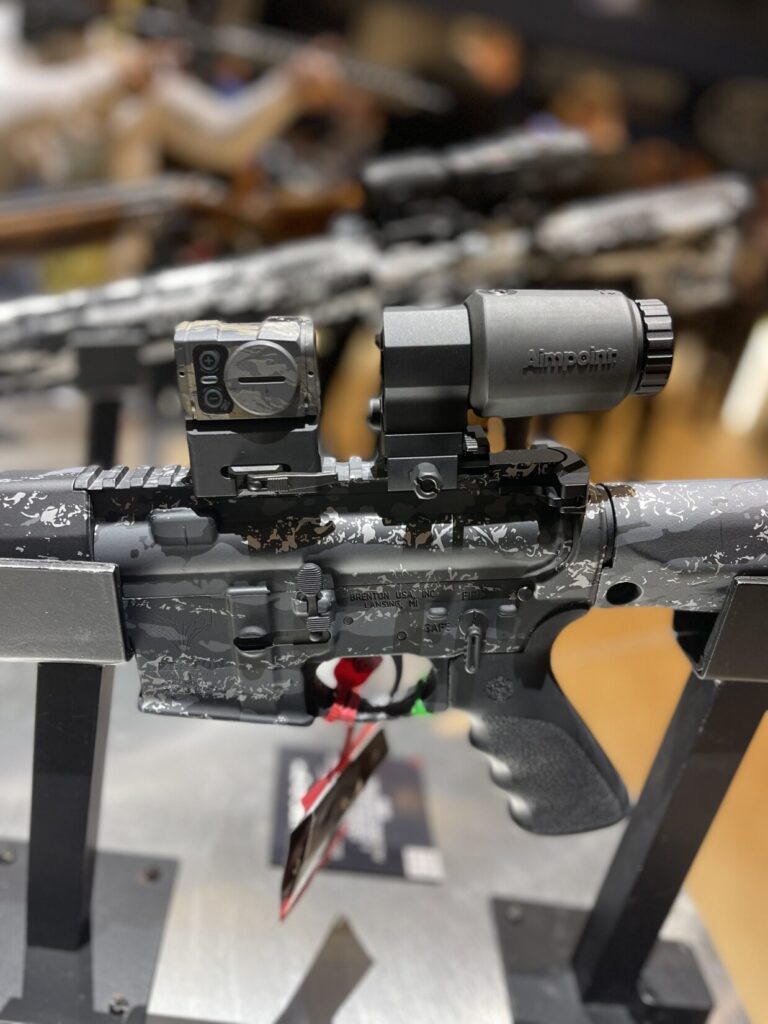
At close range, understanding height over bore is essential. It refers to the distance between your sights’ centerline and your rifle’s bore centerline. It’s also called mechanical offset.
Height over bore affects all firearms, but it’s especially noticeable on straight, inline stock designs like the AR-15.
Why Height Over Bore Matters at Close Range
Let’s explore why this matters in real shooting scenarios. I typically set my rifles to a bog-standard, boring 50/200-yard zero. If I take that same zero and move to seven yards, it’ll look like I hit low compared to my dot placement. This is due to the height over bore.
Height over bore creates a gap between your point of aim and point of impact. The firearm’s mechanical accuracy stays constant. The centerline of AR sights is typically 2.61 inches above the barrel’s center.
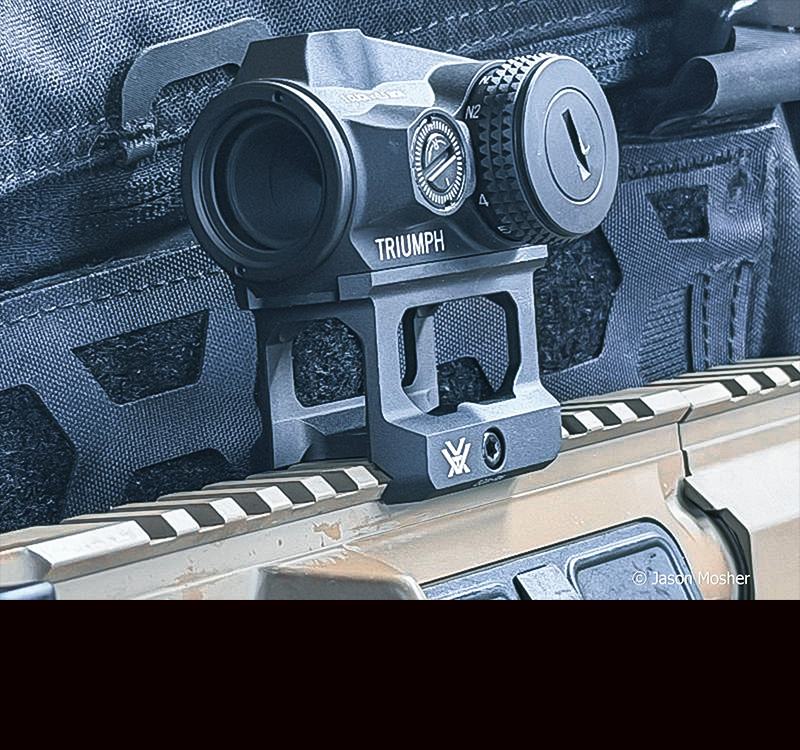
This can vary a fair bit these days, thanks to different optic heights. Standard optics typically sit at 1.42, 1.57, or 1.93 inches, though taller risers and mounts are coming out. These measurements are taken from the top of the rail to the center of the optic, so your total height over bore is greater. As the optic height increases, the POI/POA discrepancy increases.
How much does that add up to? According to Ozark Armament, a typical AR-15 round often prints about 2″ to 2.5″ under the dot at 7 to 10 yards.
With my 50-yard zero, the sights are zeroed to converge with the bullet’s path at 50 yards. At any distance closer than 50 yards, my bullet will strike lower than my point of aim. As you get closer, the difference gets more dramatic. At 49 yards, it’s not noticeable, but at five yards, it can be a problem.
When we get into extreme close quarters with a rifle, say between 5 and 15 yards, the offset becomes an issue. If you are aiming to hit something vital or to hit a small target, you’re going to have to account for height over bore. If not, your round might be less effective, or a complete miss.
At a square range, it’s easy; under the pressure of a dangerous situation, there are no mulligans. You need to perform on demand.
How to Compensate for Height Over Bore
There are two ways to deal with height over bore: training and optics.
Train Your Holds at Close Range
The best way to perform on demand is to train at close ranges with your shotgun, rifle, and optic, aiming at small targets. This is a lot like shooting at extended distances; you just learn your hold. How high does your dot need to be to make the shot hit where you’re aiming? It’s the high-speed version of Kentucky windage.
I love index cards as a quick, cheap, and easy way to train height over bore. In my class with War HOGG Tactical, we used Rick Hogg’s own target, which has an entire section of small cards and dots designed for height-over-bore training.
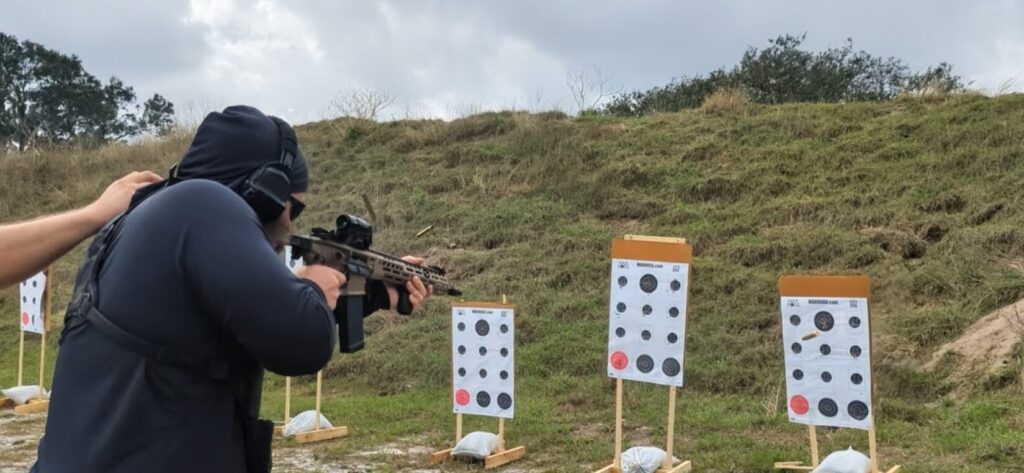
You should take all the drills you already like to run and run them with height-over-bore in mind using small targets. Small targets force you to prioritize accuracy and height over bore compensation. Run Bill Drills, Failure to Stop drills, double taps, and more on small targets, forcing yourself to compensate for height over bore.
Like any other skill, it can be worked dry. I like to use sticky notes on the wall, and my Mantis Blackbeard lets me confirm each shot with its laser. Height-over-bore training and practice should be a regular part of your training regimen, especially if a rifle is your go-to for home defense.
Choosing an Optic That Helps
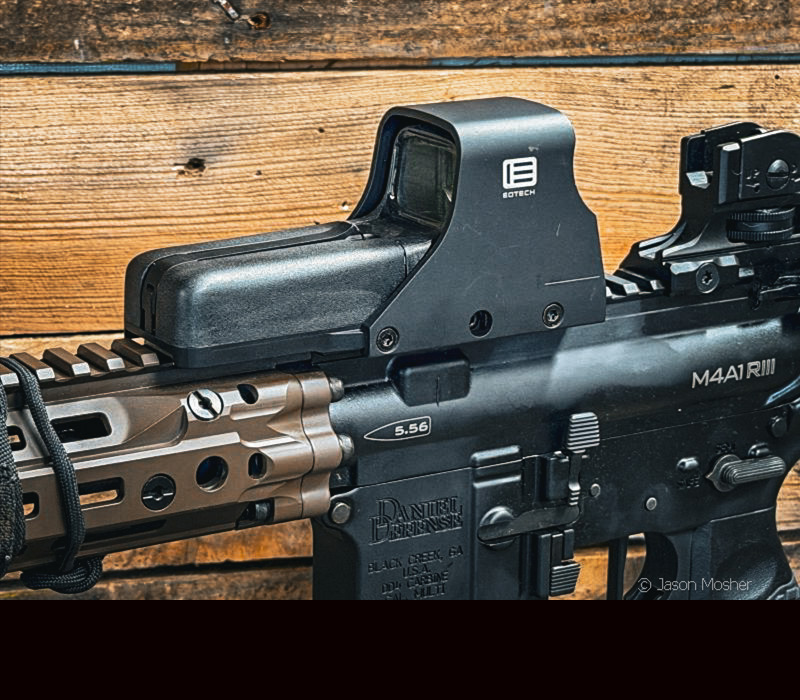
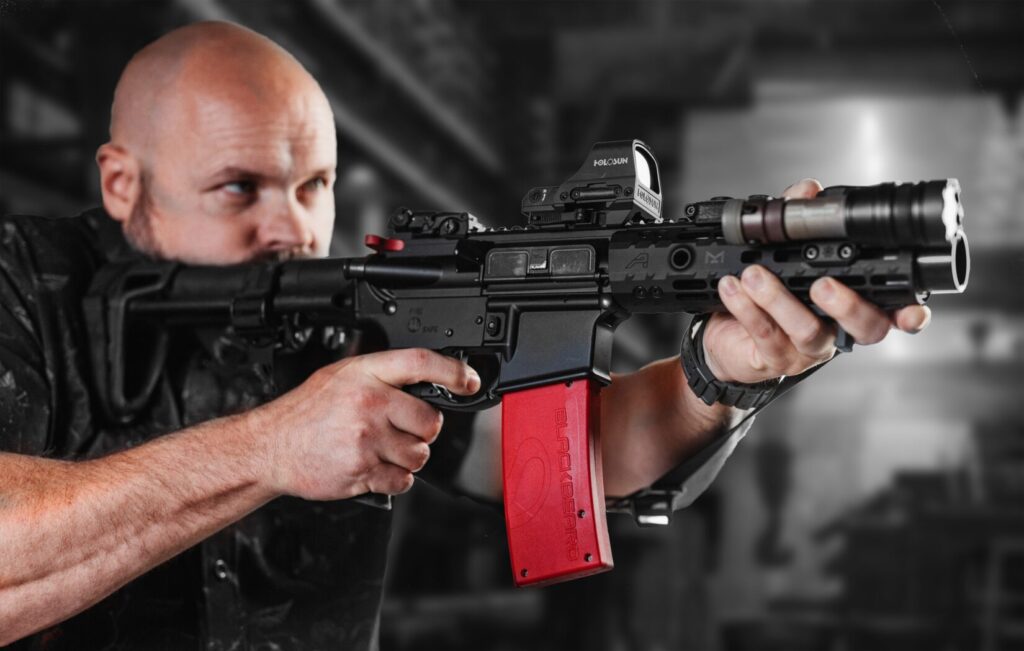
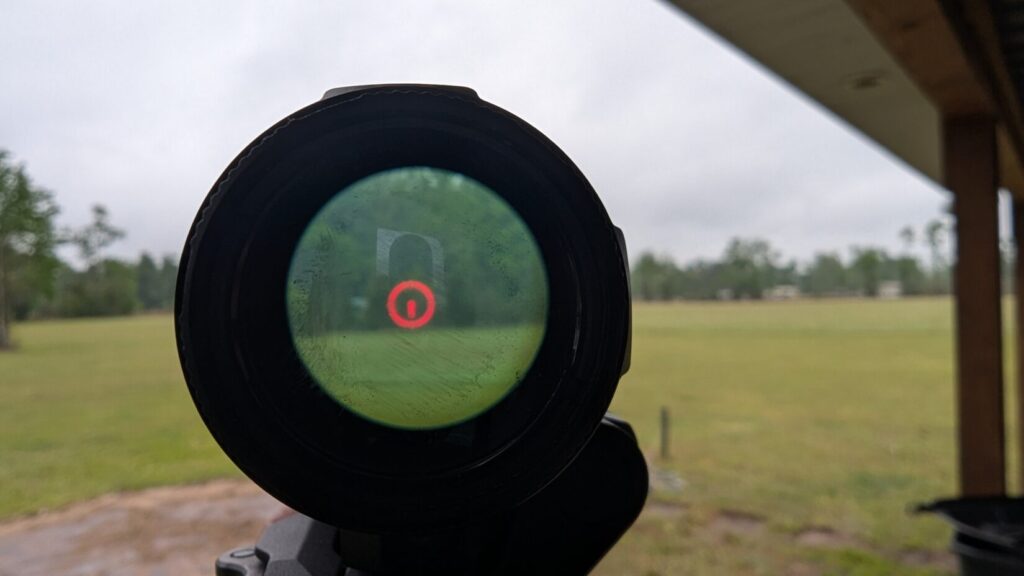
Training is more important than gear, but if gear can help you reduce your human error, feel free to take advantage of it. Height-over-bore problems are why I fell in love with the circle-dot reticle pioneered by EOTech.
I can use the bottom of the circle as a point of aim. It’s not perfect, but it gets you close enough to land rapid shots on an index-card-sized target. I used the Romeo8T with the circle dot to compensate for height over bore at the War HOGG class, and I sailed through the drills.
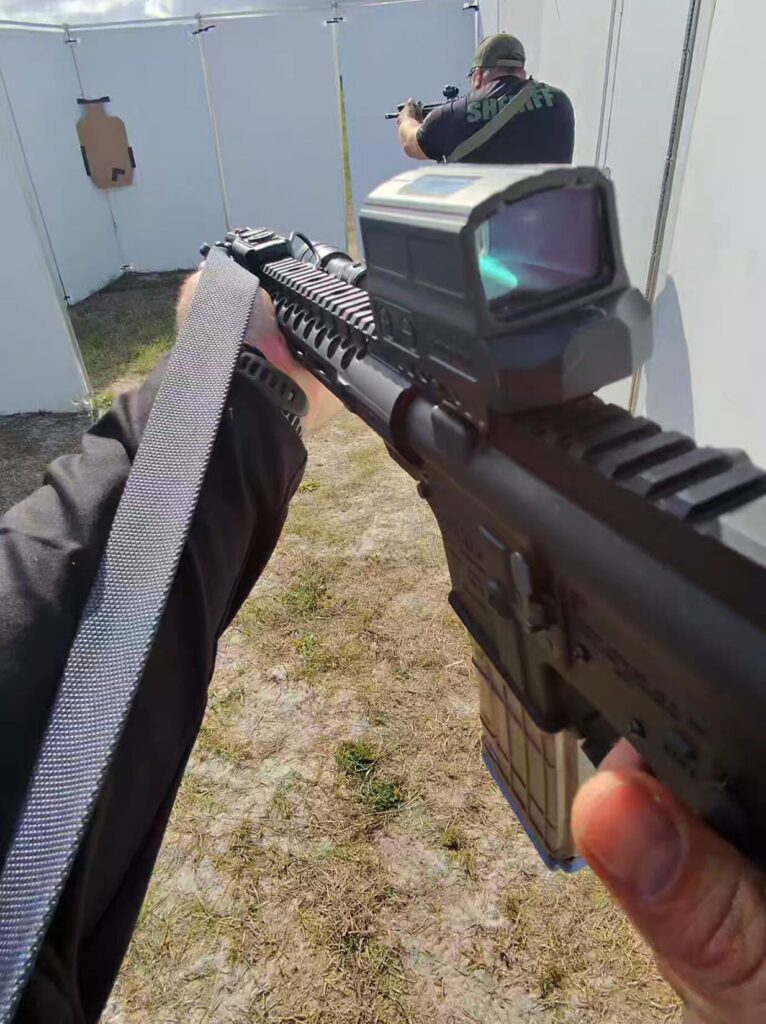
This is one option, but you can learn which part of an LPVO ladder works for close-range compensation. The same goes for prisms and other specially designed optics.
It felt a bit like cheating at times. That didn’t mean I didn’t need to train with it. Once I started moving and shooting, my cognitive load got heavy, my eyes drifted to the center of the reticle, and my “cheat code” fell apart. Training isn’t replaced by the optic; the optic supplements the training.
You Can’t Prevent Height Over Bore, but You Can Train for It
We can’t prevent height over bore, but we can mitigate it. Train for those close-range shots. Work small-target drills at 5 to 15 yards into your regular training, live and dry, and turn it into a trained behavior that you can perform on demand.
Height Over Bore Questions, Answered
What is height over bore?
The distance between the centerline of your sights and the centerline of your bore, also called mechanical offset.
How low will my AR hit at close range?
With a typical optic setup, often about two to two and a half inches below the dot at 7 to 10 yards, according to Ozark Armament.
Does a taller optic mount make it worse?
Yes. The higher the optic sits, the larger the gap between point of aim and point of impact at close range.
How do you compensate for height over bore?
Learn your close-range holds on small targets, both live and dry. Reticles like a circle-dot can give you a quick reference point.