What do you think when you hear someone say they have a “thirty-eight pistol?” If you are completely new to firearms, it can mean anything. In the world of guns and ammo, it is short for a handgun, usually a revolver, chambered in the .38 Special cartridge.
That is usually true, but sometimes false. It can be a revolver, derringer, or semi-auto chambered in a wide variety of rounds besides .38 Special. In this article, we will discuss why we have so many .38 rounds and what they mean when selecting your next handgun.
Origins of the .38 Caliber
.38 caliber guns originated as a medium caliber for belt pistols that were smaller than pistols that could be carried on a horse, while being more powerful than pocket pistols.
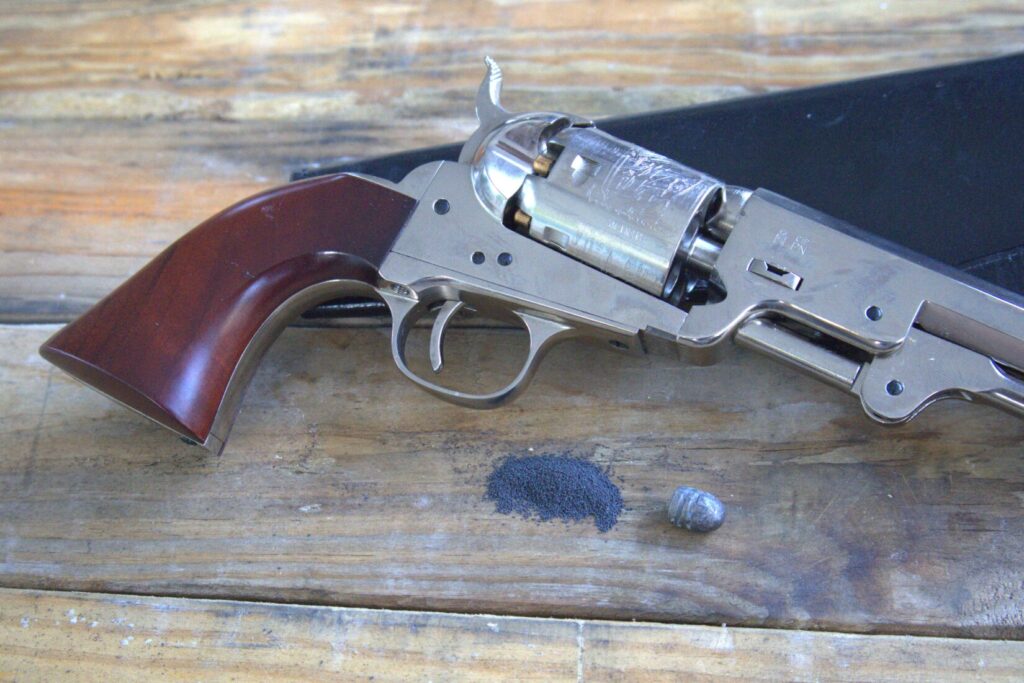
The .38 began with the Colt Paterson and Navy revolvers. The inside of the barrel, at its narrowest, measured .36 caliber. But these cap-and-ball muzzleloaders were loaded with a nominal .380-inch diameter bullet.
Later on, as we transitioned from cartridges based on muzzleloading designs to modern cartridges, the bullet diameter was changed to approximately .357 inches in diameter—a true .36 caliber. But the old .38 designation stuck.
The .38 Rimfire
The .38 Rimfire is not one but several cartridges. These were used primarily in converted muzzleloading revolvers and used a heeled .375-inch bullet with outside lubrication, not unlike an upsized version of a .22 rimfire bullet. The exact length of the case and overall length varied.
Remington revolvers could use a longer .38 rimfire cartridge because the cylinders on those handguns were longer than those of a Colt revolver. Given the popularity of the Colt revolver, their version of the .38 rimfire with a .73-inch case formed the basis for what would become the .38 Short Colt.
The .38 Short Colt and .38 Long Colt
The .38 Short Colt is a centerfire cartridge introduced in 1875. Initially, it was another stopgap cartridge intended for converted Colt Navy revolvers. However, purpose-built handguns were soon built for the cartridge, including the Colt New Line and Model 1877 Double Action revolvers.
In its prime, the .38 Colt used a similar heeled .375-inch, 130-grain bullet like the .38 rimfire and was a popular medium-powered cartridge.
In 1889, Colt debuted their first swing-out cylinder revolver with an eye toward military contracts. But pending the Army adoption of this new revolver, the US government wanted a more powerful and more modern .38 caliber cartridge to go with it. In 1892, the New Army revolver was adopted along with the .38 Long Colt cartridge.
The .38 Long Colt utilized a heavier 150-grain bullet, but unlike the old .38 Colt, this one had a bullet enclosed by the brass case and was inside lubricated to prevent damage and debris collection. The first .38 Colt revolvers had bore diameters of .370 inch, but by the end of the century, bore diameters were standardized to .357 inch to go along with the .38 Colt’s transition to smokeless powder.
The .38 Long Colt is nominally more powerful than the .38 Short Colt. Interestingly, both have the same overall length. The longer 1.03-inch case length of the .38 LC is used to enclose the more modern bullet design.
Modern .38 Colt ammunitions use modern .357-inch diameter bullets, which can lead to poor accuracy in older handguns with a larger bore diameter. A solution is to use hollow-based projectiles that provide the best results. Otherwise, .38 Short and Long Colt ammunitions are compatible with revolvers chambered for the .38 S&W Special cartridge.
The .38 Special
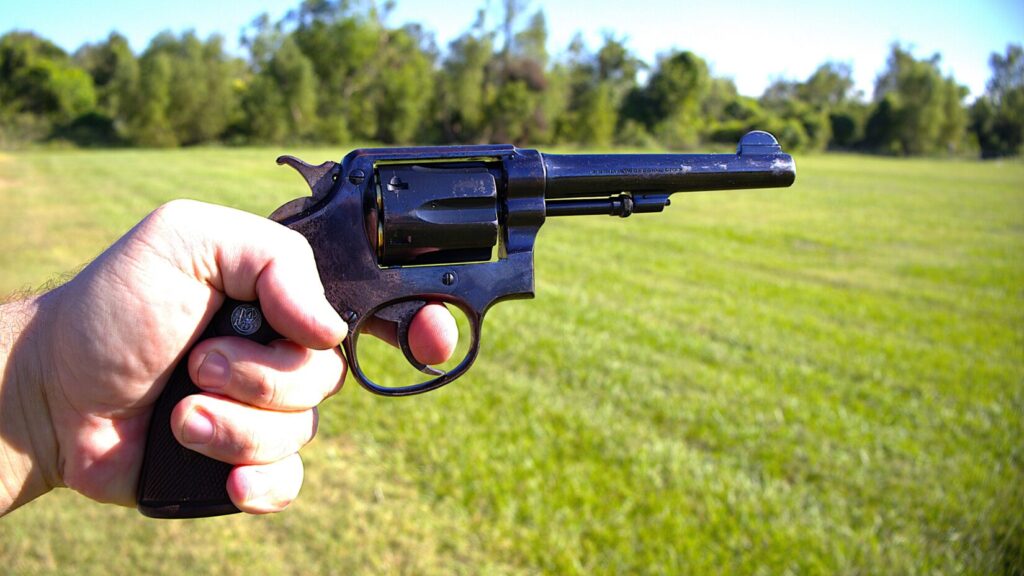
In 1898, the US Army sent out requests for arms as the government geared up for the Spanish-American War. Smith & Wesson responded to that request with a new revolver meant to compete against the Colt Model 1892. That was the Smith & Wesson M&P revolver. In 1899, it made its debut with a new and more powerful .38 S&W Special cartridge.
The .38 Special’s case was identical to the .38 Colt, but lengthened to 1.15 inches. It held 21 grains of black powder and used a 158-grain lead bullet. The round was an improvement over the .38 LC, but its potential was fully realized when it made the jump to smokeless powder in 1902.
The case capacity was further exploited in 1930 with the development of the .38 Special Hi Speed load meant for heavy frame revolvers. This round was intended for better barrier penetration than the standard .38. These rounds featured a 158 grain bullet at about 1,000 feet per second. The .38 Hi Speed would later be developed into the .357 Magnum cartridge.
In 1972, with the development of hollowpoint ammunitions, SAAMI designated the first +P loadings for the .38 Special. These were higher-pressure cartridges meant for modern duty revolvers.
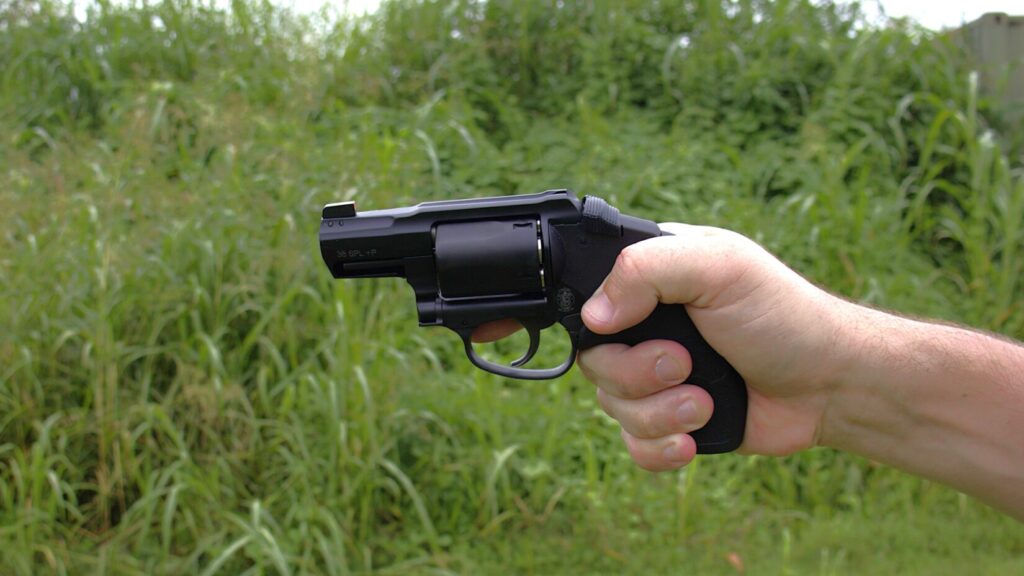
There is active debate about whether older handguns can handle +P ammunition, given these loadings are little different from the old .38 Hi Speed cartridges. No matter how one slices that debate, +P ammunition causes additional wear and tear over time compared to designated standard pressure loads.
The .38 Special is the most popular revolver cartridge on the market. Beginning in the 1920s, American police departments gravitated toward six-shot revolvers from Colt and S&W chambered in .38 Special. Even with the advent of the .357 Magnum, the .38 Special revolver remained a mainstay until the gravitation toward semi-automatic pistols in the 1990s.
The .38 S&W AND .38 COLT NEW POLICE
Today’s .38 Short Colt, .38 Long Colt, and .38 Special are something of a family of cartridges. The .38 S&W cartridge is not one of them. To add to the confusion, the .38 Special’s long name is the .38 S&W Special. This may confer a relationship that simply is not there.
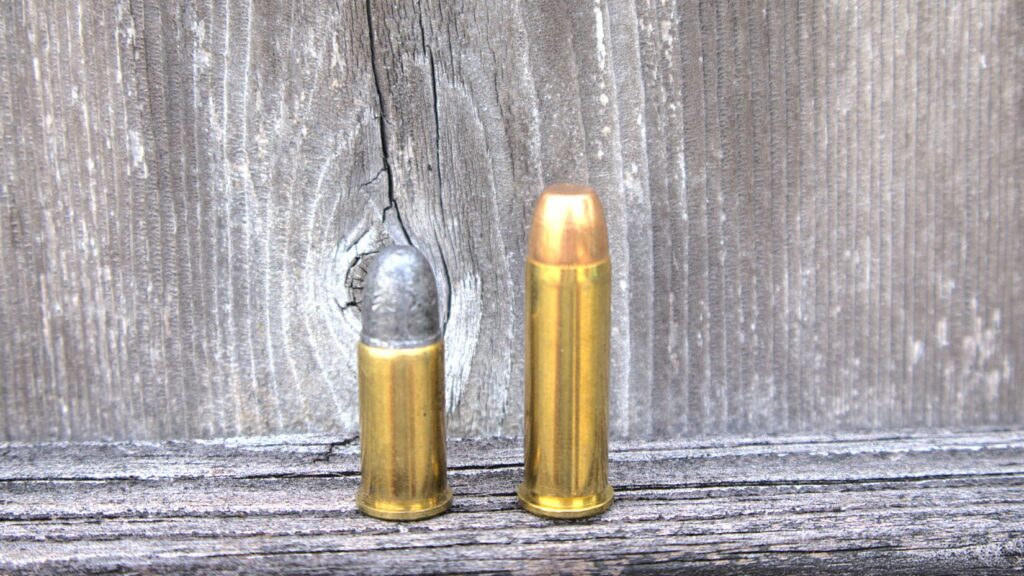
The .38 S&W cartridge was developed in 1877 for Smith & Wesson’s No. 2 single action pocket revolver. Like other products of its time, it was a black powder cartridge and used a 145 grain lead bullet. From afar, it looks like the old .38 Short Colt. But the .38 S&W uses a modern inside-lubricated bullet in a wide case.
Over modern .38 Special, the .38 S&W has a short .775-inch case and uses a wider .361-inch bullet. Depending on the tolerances of a revolver’s chambers, a .38 S&W cartridge may not fit in a .38 Special revolver.
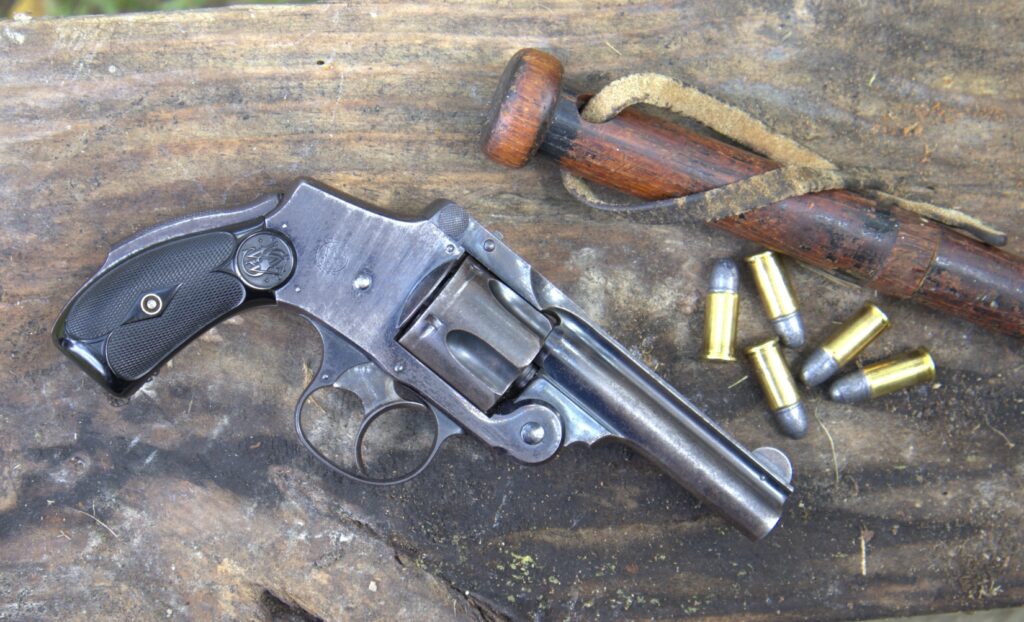
Small top-break revolvers like the No. 2 and the double-action New Departure grew in popularity. With that popularity came competing copies from firms like H&R, Hopkins & Allen, and Iver Johnson. Revolvers like these would remain in production into the 1940s, which kept the .38 S&W relevant.
But the weak top-break action was a dead-end design not suitable for higher-powered cartridges like the .38 Special. This did not stop Britain from adopting the cartridge with a 200 grain bullet. The .38-200 or .380 Rimmed was Britain’s standard pistol cartridge going into the Second World War and remained in police use throughout the Commonwealth into the 21st century.
Colt revolvers also used the .38 S&W cartridge. However, Colt called the cartridge the .38 Colt New Police to avoid giving their chief rival free publicity. .38 Colt New Police revolvers use .38 S&W ammunition.
Several manufacturers still produce .38 S&W ammunition. Most feature either a 145 grain FMJ or lead bullet at a moderate velocity of 650 feet per second. Buffalo Bore offers a stouter 125 grain defensive load for solid-frame revolvers like the Smith & Wesson Terrier and Colt Police Positive. Steinel and Matt’s Bullets have taken a crack at the old 200 grain British military load with their .38/200 round.
The .38 WCF
The .38 WCF, otherwise known as the .38-40, is another cartridge unrelated to the .38 Colt/Special saga. In fact, it is not even .38 caliber.
The .38 Winchester Center Fire cartridge debuted in 1874 for the Winchester 1873 lever action rifle. It takes the .44-40 case and reduces the caliber down to .401. The cartridge used 40 grains of black powder and a 180 grain bullet. It effectively duplicates modern .40 S&W and was intended for deer-sized game when fired from a rifle.
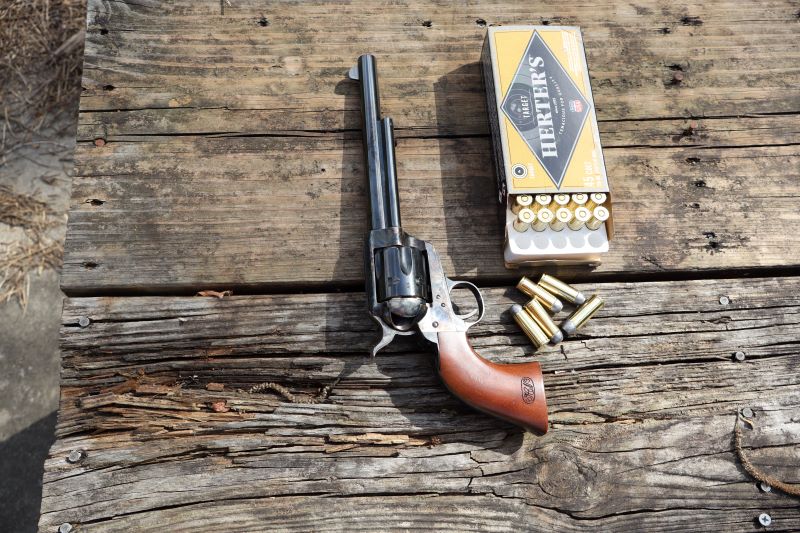
Like the .44-40, the .38 was hosted by handguns like the Colt Single Action Army, among others. This enhanced the popularity of this flat-shooting cartridge in the 19th century and brought along a resurgence with the popularity of cowboy action shooting in the 21st century.
Today, the round is supported by replica makers producing Colt and Winchester clones. But one enduring mystery remains: why did Winchester market the cartridge as .38 caliber?
The .38 ACP
.38 caliber cartridges are generally rifle and revolver cartridges. But not always. The .38 ACP dates back to the first Browning-designed prototypes for a locked-breech semi-automatic pistol made all the way back in 1897.
The .38 ACP has a semi-rimmed case for positive extraction and uses a .356 inch diameter bullet not dissimilar to what would come with the .380 ACP or 9mm Luger. Unlike the later 9mm, the .38 ACP uses a longer .90 inch straight case and a heavier 130 grain bullet going at about 1,050 feet per second.
The .38 Automatic Colt Pistol cartridge got its official launch in 1900 with the Colt Model 1900, which in turn was designed to replace their Model 1892 .38 revolvers. But by 1905, the US Army wanted to return to a .45 caliber cartridge. However, the high-velocity .38 Auto gained a following among motor cops in the United States and South American militaries. This popularity was compounded by the next development: the .38 Super.
The .38 Super Auto
Like the .38 Special, the .38 ACP cartridge got an upgrade during the Great Depression to make the cartridge more barrier blind. The .38 ACP gained favor in the 1920s for its ability to penetrate steel car doors and primitive bulletproof vests worn by motor bandits. In 1929, the .38 ACP was loaded to its potential and dubbed the .38 Super or .38 Super Auto.
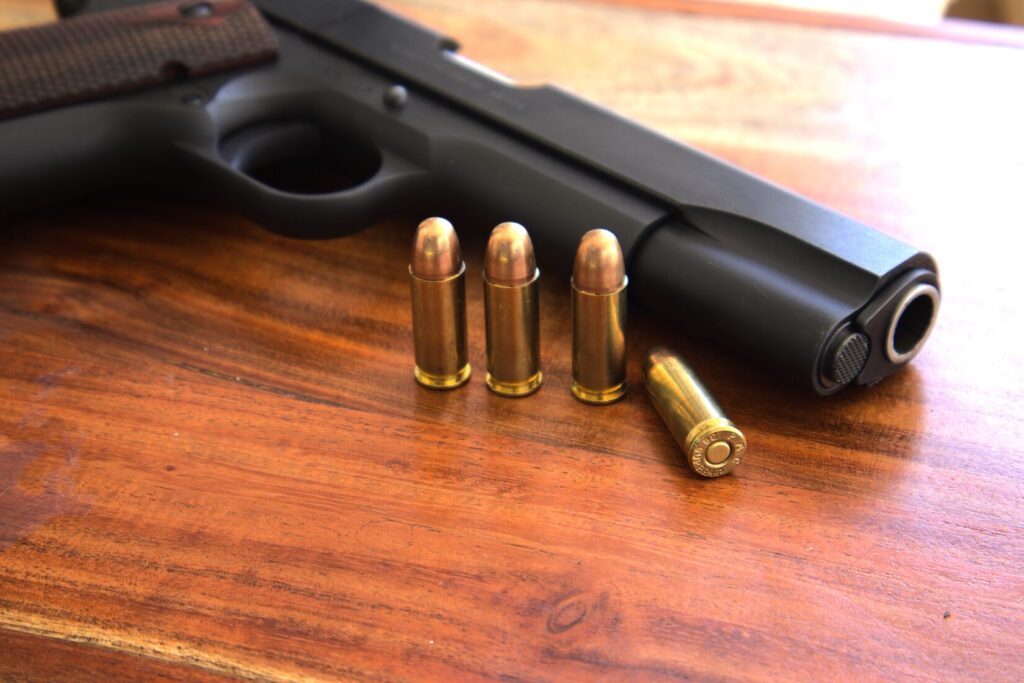
The original .38 Super load featured the same 130 grain bullet and the same exact case as the .38 ACP, but it was loaded to higher pressures and velocities exceeding 1,250 feet per second.
The .38 Super was paired with the Colt Model 1911 pistol, and it remains a popular chambering in the 1911 platform. It remains popular among IPSC competitors and in Latin America, where the .38 Super is a potent non-military caliber that is available to the public.
In 1974, SAAMI gave the .38 Super the +P designation. Unlike the .38 Special +P, the .38 Super +P is not loaded any hotter. Rather, the +P label was given to help shooters avoid putting .38 Super ammunition in older .38 ACP pistols.
The .38: An Oldie, But Goodie
.38 caliber pistol cartridges go as far back as the cartridge itself. From then to now, the .38 has been the ideal size for compact handguns without going down to the .22s and .32s of the world. It began as a way to convert muzzleloading revolvers, transcended to small and medium-framed revolvers, and finally, into high-powered semi-automatic pistols. So when you are looking at your next handgun and see it is a .38, now you will know what kind.