
When I was growing up, suppressors (also called silencers or ‘cans’) were the “hush-hush” tools of Hollywood spies and elite special forces. But nowadays, it’s completely normal to see a suppressor attached to the end of a firearm. And why not? After all, it’s just another safety device like your eye and hearing protection.
Recently, we have seen a massive shift in the civilian market for suppressors. The federal tax stamp (once a mandatory $200 fee), has dropped to $0 as of 2026, giving it a boost. More and more companies have been adding suppressors to their product lineup because even if a silencer doesn’t make the gun silent, it sure does make it more bearable on your ears. It’s easier on everyone else’s ears as well.
But even with the $200 tax being eliminated, suppressors can be expensive. Many high-end models cost more than the firearm they are attached to. This leaves a lot of people searching for a middle ground.
Can you find a decent silencer without the four-digit price tag? The short answer is yes, but there are some things to be aware of when purchasing “budget-friendly” cans. Today, we are looking at the A-10 suppressor (often called the A-10 Warthog) from AB Suppressors.
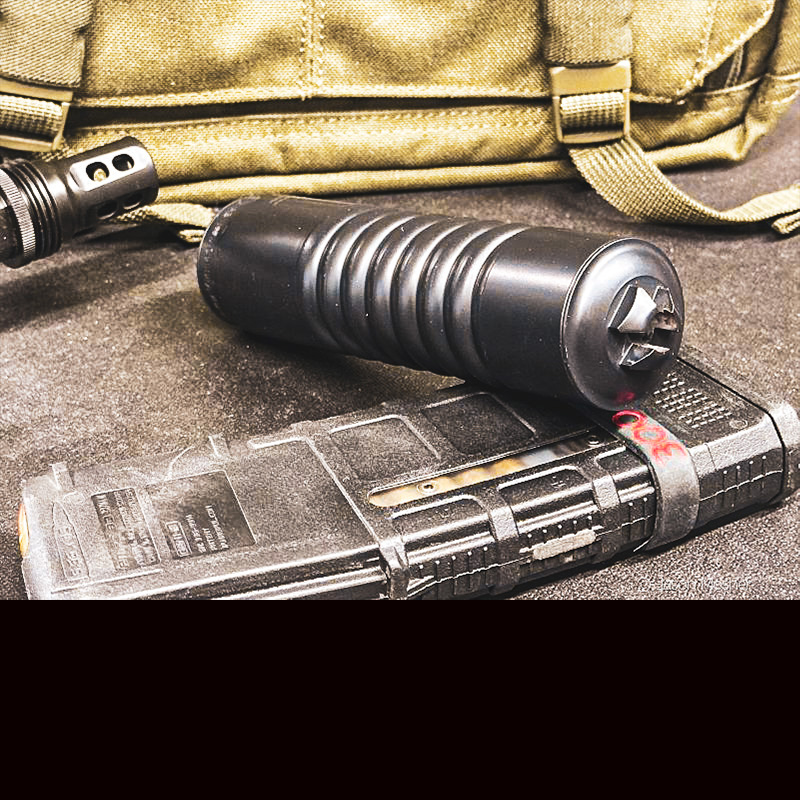
A-10 “Warthog”
When I found the A-10, I was standing in a gun store, drooling over all the new suppressors that had just arrived.
As I do with guns, I looked at each one while being overcome with “I Want That” syndrome. When this happens, the logical part of my brain goes to sleep. The impulse-buying, ask-for-forgiveness-later part of my brain takes over, and I leave with a new toy. Or should I say, a tactical piece of essential gear that I could not do without…
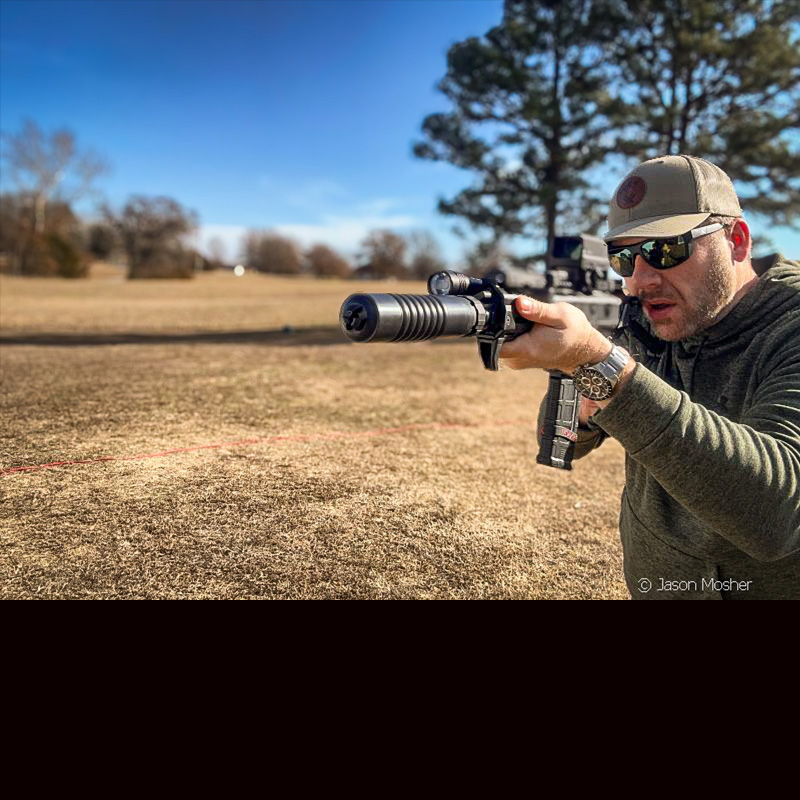
As I was fighting the internal struggle to purchase something I couldn’t afford, my eyes fell on the A-10 suppressor. It had a price tag of $400 (on sale), making it the cheapest .30 caliber can I’ve found so far. At that price, the “Buy It” side of my brain won by a landslide, and I started the paperwork to take it home.
It is manufactured in the USA by AB Suppressor, a company out of New Century, Kansas. This is a simple, plane-jane suppressor, but so far, I’ve been impressed with it.
Construction
The A-10 is constructed entirely from 17-4 PH Stainless Steel. This metal is then H900 heat-treated. This process hardens the steel to roughly 45-47Rc, making it incredibly resistant to the high-pressure erosion caused by rifle rounds. It’s a fully-welded, tubeless design, making it even more durable.
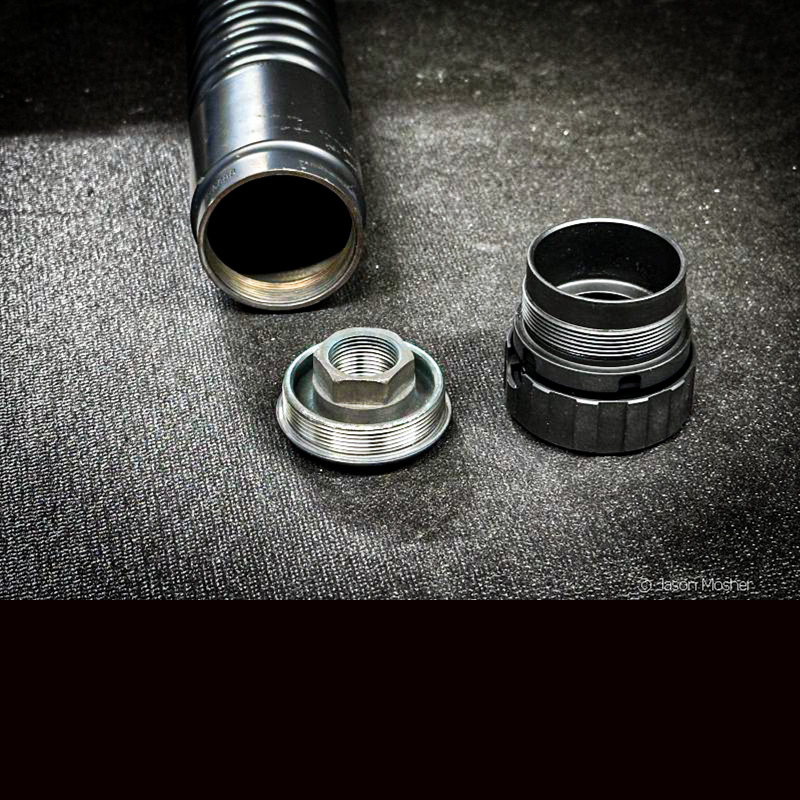
AB Suppressor uses what they call “SpiralTech baffles.” These are designed to create turbulence, which slows down the hot gases more effectively. It also features a built-in flash hider at the end cap. This helps kill the visual signature of the shot. The blast tube (or blast chamber) also has internal reinforcing rings to increase turbulence even more and provide additional strength.
Breaking down the science in Construction materials
Suppressors live in a violent environment. When you pull the trigger, the metal must withstand pressures exceeding 50,000 psi. It must also handle temperatures that quickly climb above 800°F.
High-priced silencers often use exotic alloys like Inconel 625 or Titanium. Inconel is a “superalloy” that is extremely difficult to machine. This wears out drill bits and takes longer to cut, driving up labor costs. Titanium is expensive and requires a vacuum for welding.
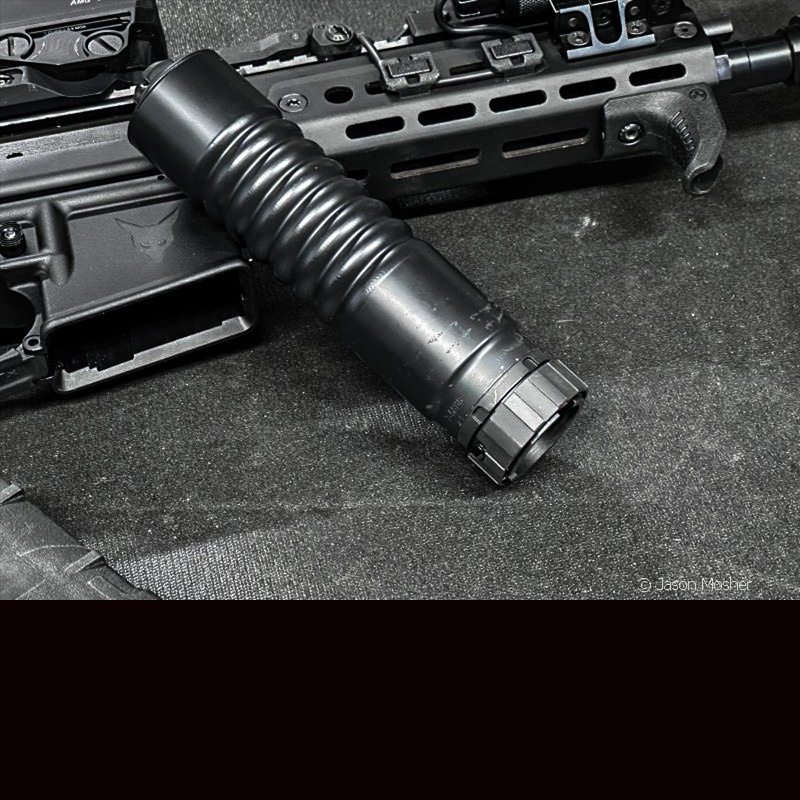
The A-10 uses 17-4 Stainless Steel. It is a strong material and corrosion-resistant. It is also much easier for machines to cut than Inconel. This keeps production costs lower.
Don’t get me wrong, Inconel 625 makes for a superior product. The SilencerCo Velos LBP, for example, uses Inconel 625 for the entire baffle structure, making it extremely durable. But again, you pay a little more for a silencer made from higher-grade materials.
Using 17-4 stainless steel, however, still makes for a great suppressor, especially when you need a lower price tag. There are just a couple of things to be aware of on models like this, which we will discuss below.
A-10 Technical Specifications (7.62 Model)
- Material: 17-4 PH Stainless Steel (H900 Heat Treated)
- Weight: 11.7 oz (can only)
- Length: 6.3 inches
- Diameter: 1.625 inches
- Calibers: Up to .300 Win Mag / .308 Win / 7.62×39 / .300 BLK
- Mounting: 1.375×24 “HUB” threads (Industry Standard)
- Finish: Black Cerakote
How durable is the A-10?
In the world of suppressors, you usually trade weight for durability and sound for size. The A-10 falls in what I would call a “sweet” spot. It’s not the smallest silencer out there, but neither is it the biggest. Because it is stainless steel, it is heavier than a titanium “hunting” can. However, it is much more durable for rapid fire.
AB Suppressor also sent the A-10 to the NAVC Warfare Center for suppressor verification testing protocol. This is a popular testing center for gauging “duty” grade suppressors, and the A-10 passed.
There is no doubt that it is a durable can, and it does a great job with sound suppression.
Comparing the A-10 to the higher-end VELOS LBP
I mentioned there were some differences between this and silencers made with more expensive materials. One of the biggest differences is the pressure they can handle, which restricts the suppressor to some barrel lengths.
The A-10 is rated for a minimum of 10.5 inches with 5.56 NATO barrels and 8 inches on .300 BLK. This doesn’t mean it isn’t durable, but it does have restrictions. My SilencerCo Velos LBP has no barrel restations. Of course, the rifle platform you intend to use it on will determine how much this matters.
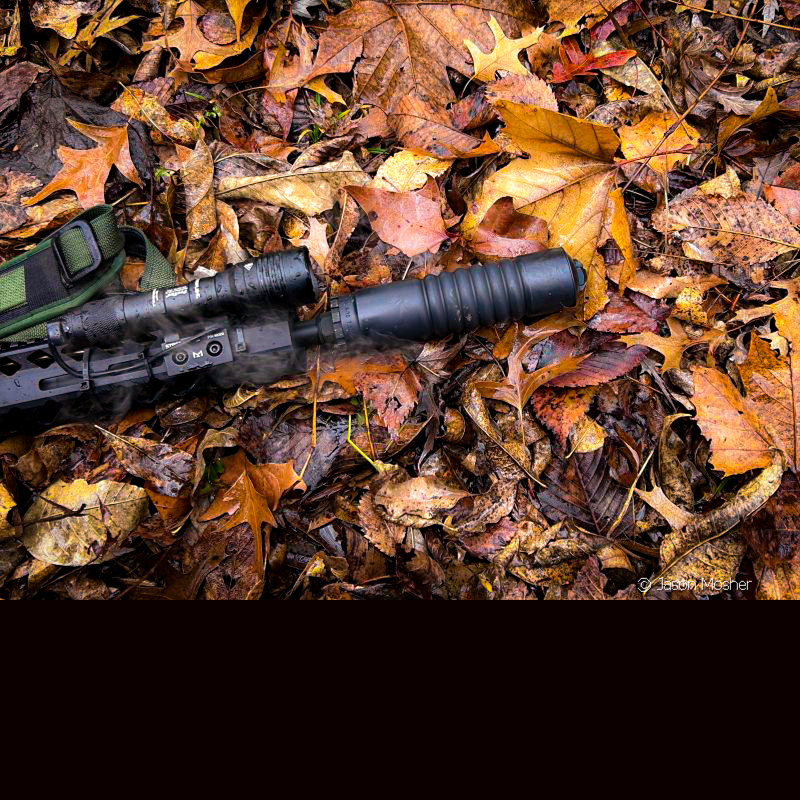
Another difference I noticed between the A-10 and Velos LBP is the number of rounds fired before it became extremely hot. When rapid-firing, the A-10 was hot enough (after two mags) to burn leaves on the ground when I set it down.
The Velos was hot but did not make the leaves smoke when it touched them. I would have measured the actual temperature, but I forgot to take my thermal heat gauge with me. But trying to start leaves on fire with a suppressor is more fun anyway…
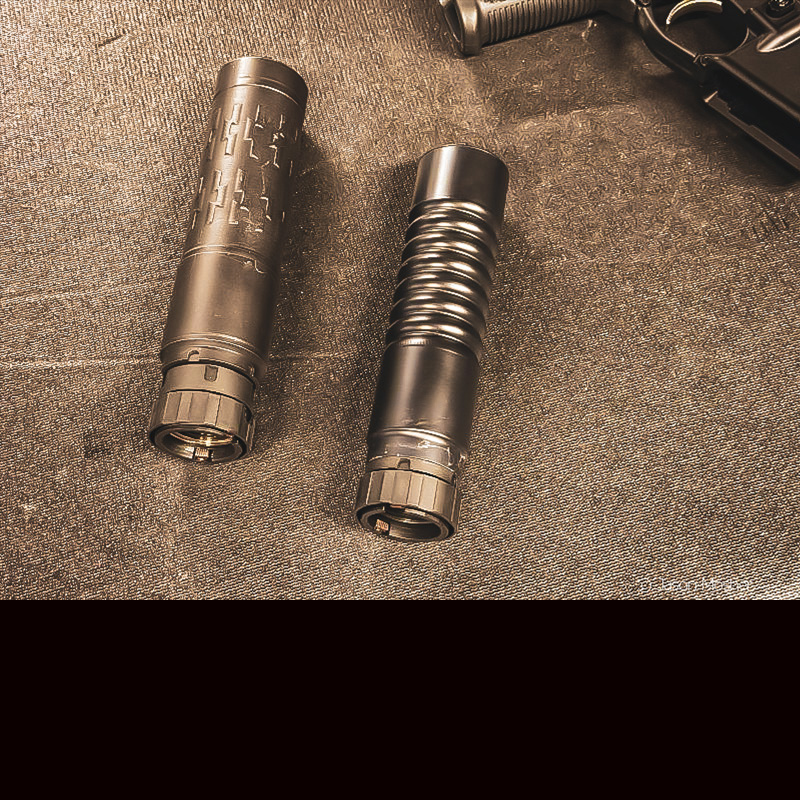
The last and obvious difference between these two cans is the appearance. AB Suppressor made the A-10 a plane-jane suppressor on purpose. This helps with production costs and ultimately the price you pay. Many other silencers, like the Velos LBP, have some sort of design that improves their appearance.
Is it worth the money?
The big question with any firearm or accessory is about value: the quality vs the price tag. In this case, I would say the A-10 is a great suppressor. With a lower price tag, you do have some restrictions on barrel lengths, but that may not be a big deal to everyone. It is light and one of the smaller .30 caliber cans I’ve seen.
When using it on a .300 Blackout with an 8.5-inch barrel, it reduced the sound enough that I was able to remove my hearing protection. Because it is a .30 caliber suppressor, it can be used with 5.56, .300 Blackout, 7.62, and more.
AB Suppressor also used the universal (HUB) threads on the back (1.375×24), so you can use the 5/8 x 24 direct thread mount or the mounting system of your choice. I decided to use the SilencerCo Bravo ASR mount on the A-10. I already have ASR muzzle devices on my rifles, so this makes it easy to attach the A-10 to them.
For a lightweight suppressor that costs less than $500, it’s hard to beat. It just may be the perfect “poor man’s can.”