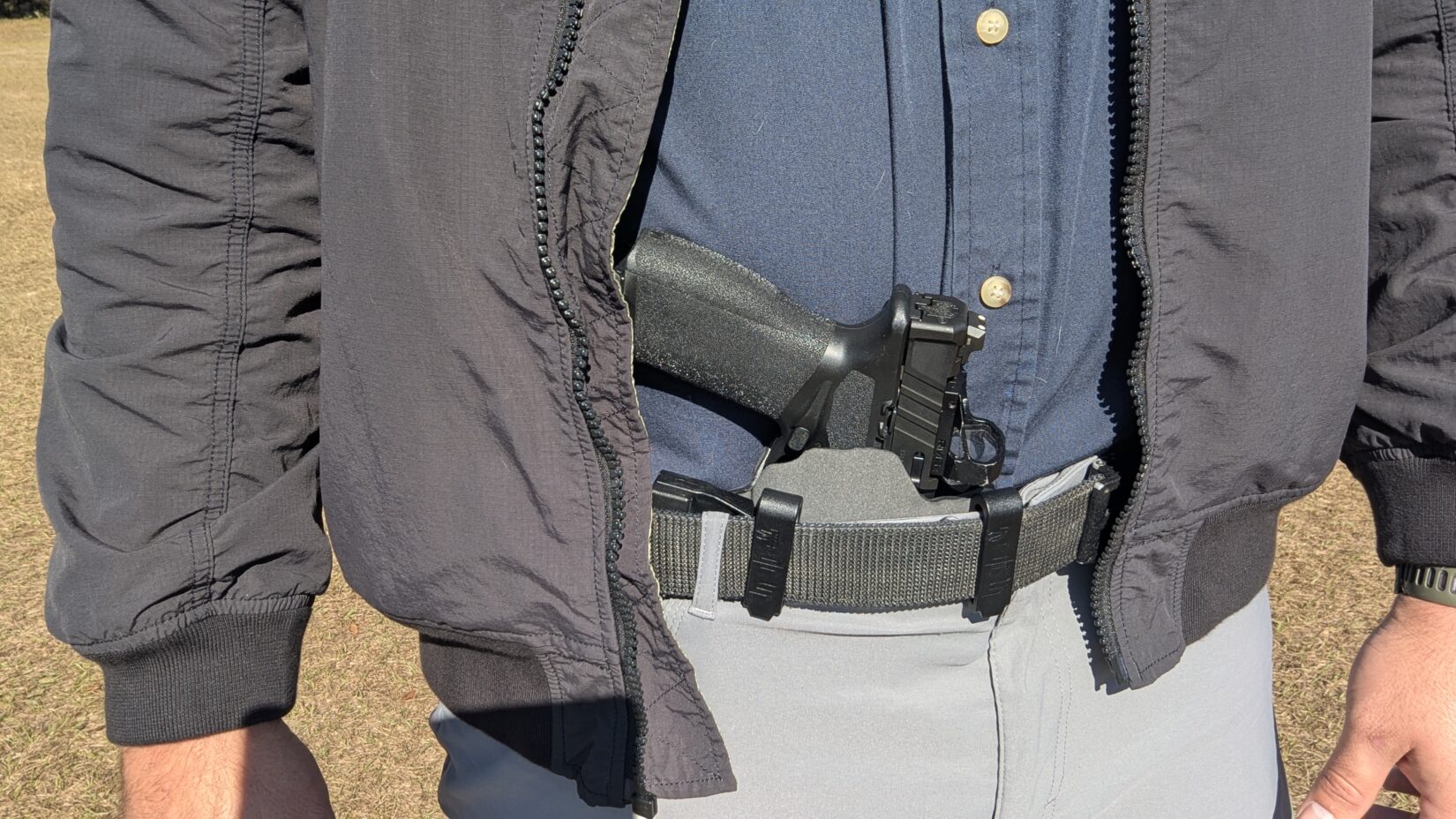
Speed rules when it comes to surviving and winning a gunfight. Fractions of a second can mean the difference between life and death. For this reason, the appendix position, or AIWB (Appendix Inside the Waistband), has become the dominant position in the concealed carry meta.
AIWB has taken the firearms industry by storm. Some of the industry’s most advanced and modern holsters are utilizing this position due to its benefits. In the AIWB position, the gun primarily sits in front of the body at the 11 to 12 o’clock position.
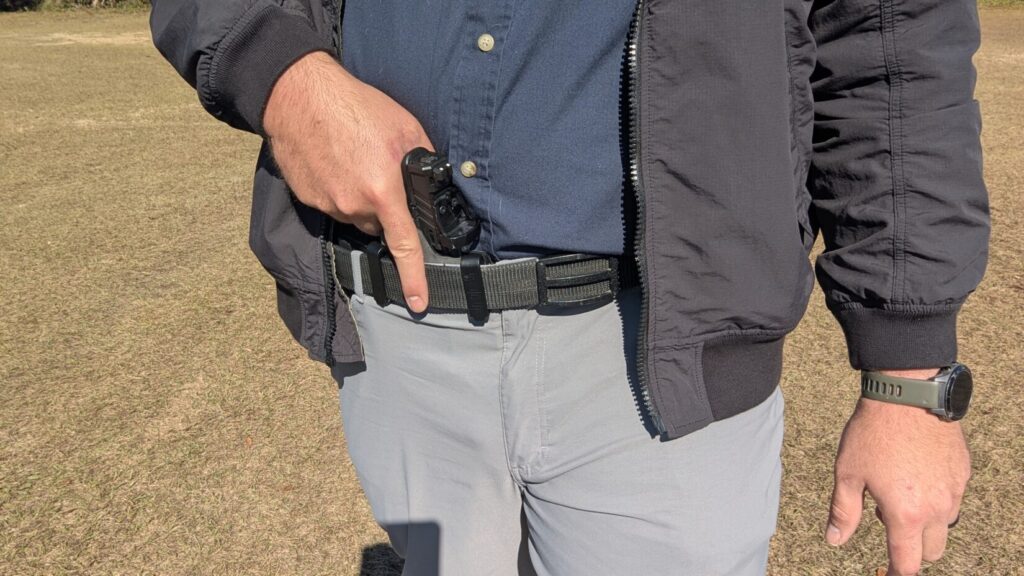
AIWB offers a ton of benefits to the end user, but I have a confession to make. I get a little nervous carrying a striker-fired, partially-cocked semi-auto handgun with no manual safety in an AIWB position.
Actually, it’s not the carrying that bothers me; it’s the holstering. Pushing the gun back into the holster makes me nervous. Typically, when I don my Incog X or Schema, I put the gun in the holster, then the holster on my belt, and I think there is a good reason for that.
While AIWB offers the fastest draw, it also requires the strictest safety protocol.
AIWB and The Speed Advantage
Appendix carry positions the gun in front of the body. This puts it in an opportune position for a rapid draw. Your hand has to travel a shorter distance to access the gun.
Additionally, the draw stroke aligns naturally with a standing or moving position. It’s all done in front of you. After clearing the cover garment, your support hand has to travel a very short distance to get to the gun’s grip.
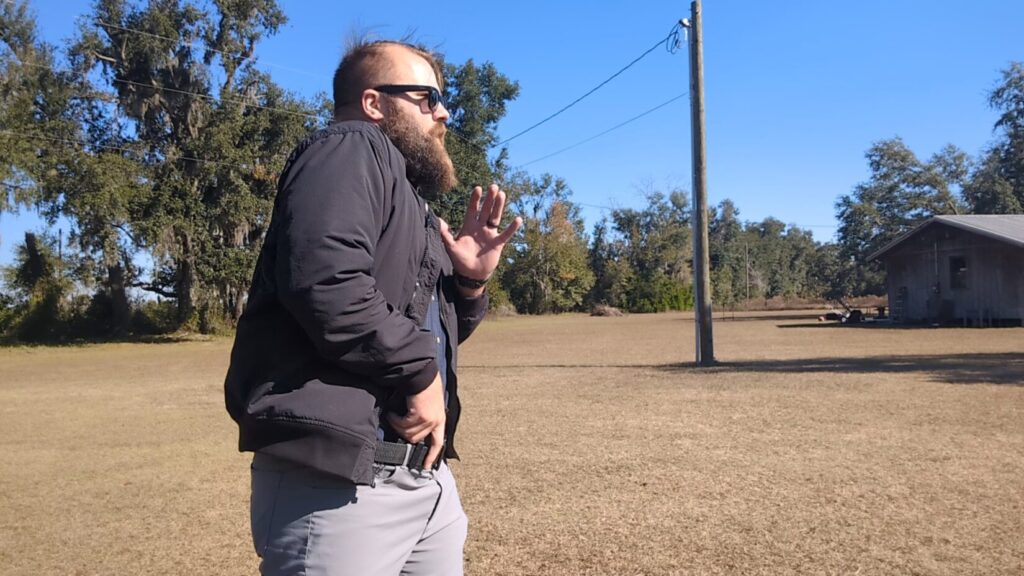
This combines to make AIWB the fastest draw, especially when concealed carrying. The only thing faster is firing a revolver out of a jacket pocket.
This assumes you conduct a proper draw. To get fast, you have to practice and use the right technique. Most shooters can drive their draw to first shot down to under a second with consistent dry fire practice over a couple of weeks.
Beyond speed, AIWB has other benefits, namely access. Drawing while seated is much easier than other traditional positions. This includes seated in a vehicle, at a restaurant, or in an office.
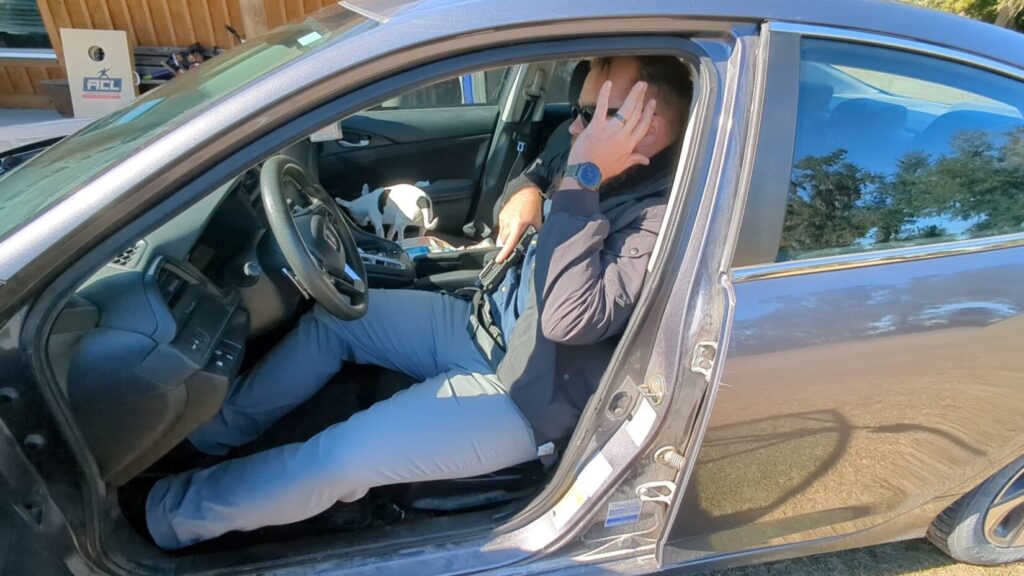
AIWB guns won’t catch on anything when you stand, which, as a big guy, I’ve experienced with 3 and 5 o’clock positions.
Concealment is often easier with AIWB. It sits in front of the body and doesn’t have that distinct lump when the gun is sitting on your strong side. The gun sits flat on the body and disappears with nothing more than a T-shirt as a cover garment. Carrying a full-sized firearm is easy in an AIWB position.
Why We Need A Safety Protocol
AIWB is completely safe, as long as you follow a strict holstering protocol. When carrying AIWB, the gun is pointing in the direction of your femoral artery, pelvis, and groin. Any inadvertent press of the trigger could have fatal consequences.
The risk comes down to user error more than anything else. Fingers touching the trigger as you holster is an absolute no-go. That’s true for any type of holster and firearm. Additionally, when drawing, you have to be conscious of trigger finger placement; again, that’s critical for any holster type.
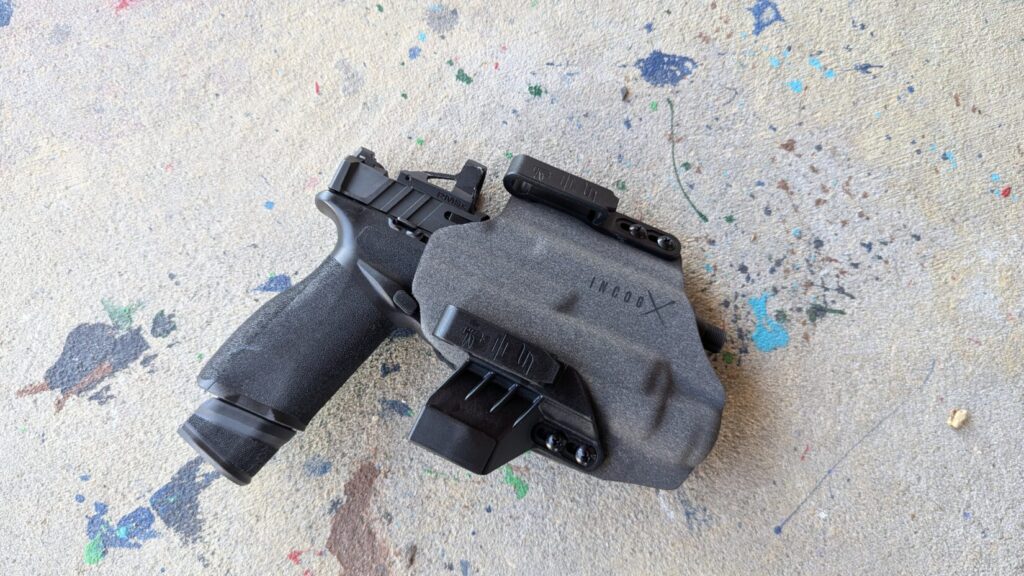
Where this becomes even more critical is when you’re tired. You’ve been training all day, or your adrenaline is finally coming down. That’s when negligence occurs.
Beyond the typical user-induced negligent discharge due to a wandering trigger finger, we have to pay attention to other obstructions. You have to be aware of shirt tails, drawstrings, and similar foreign objects that could enter the trigger guard and actuate the trigger.
The Safety Protocol
When the gun’s seated, it’s completely safe, assuming you are using a good, quality holster. The first step in your safety protocol is using a good holster.
Rule 1: Use A Good Holster
You need a holster that’s molded to your gun and completely envelopes the trigger. Preferably, the holster will be made out of one of the many forms of polymer used in modern holster design. The gun should not move in any direction but upward when encased in the holster.
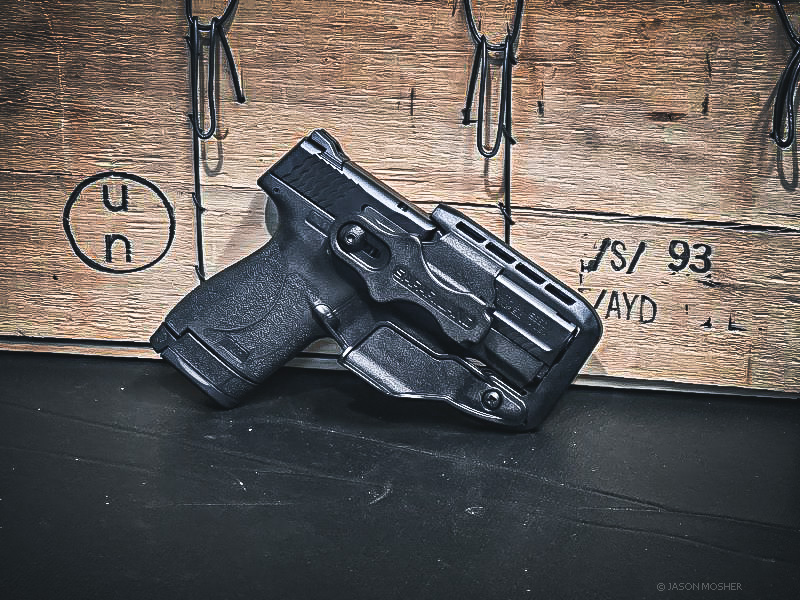
Holsters like the Incog X and Schema emphasize safety and support. These holsters are designed around specific firearms and use modern polymer materials. The gun doesn’t move left or right in the holster, or back and forth.
Rule 2: The Draw
As we attempt to shorten our draw-to-first-shot time, it’s tempting to race that finger to the trigger. What’s critical to remember is that your finger doesn’t touch the trigger until the gun is oriented at the target and you’re ready to fire.
Rule 3: Holstering Isn’t Fast
There are very few reasons to reholster quickly. It’s not a race, and we don’t have a par time for reholstering. This seems like common sense, but when we start training and going fast with the draw, our mind can get set on go fast.
Take a pause, slow it down, and reholster safely.
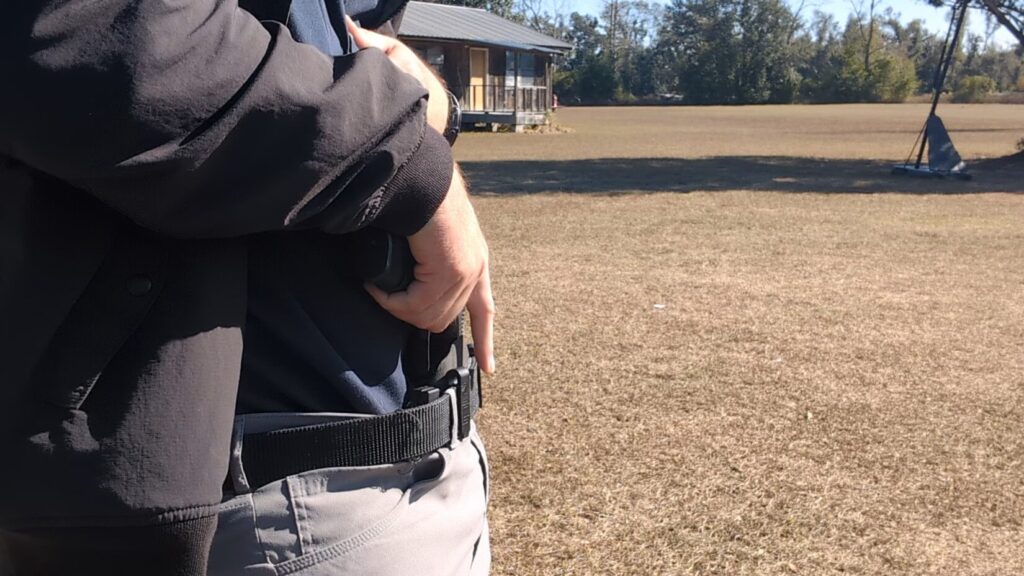
Rule 4: Look It In
As you break down your firing position, you should look down at your holster and body. This allows you to observe for any obstructions and helps you holster in an AIWB position with greater safety.
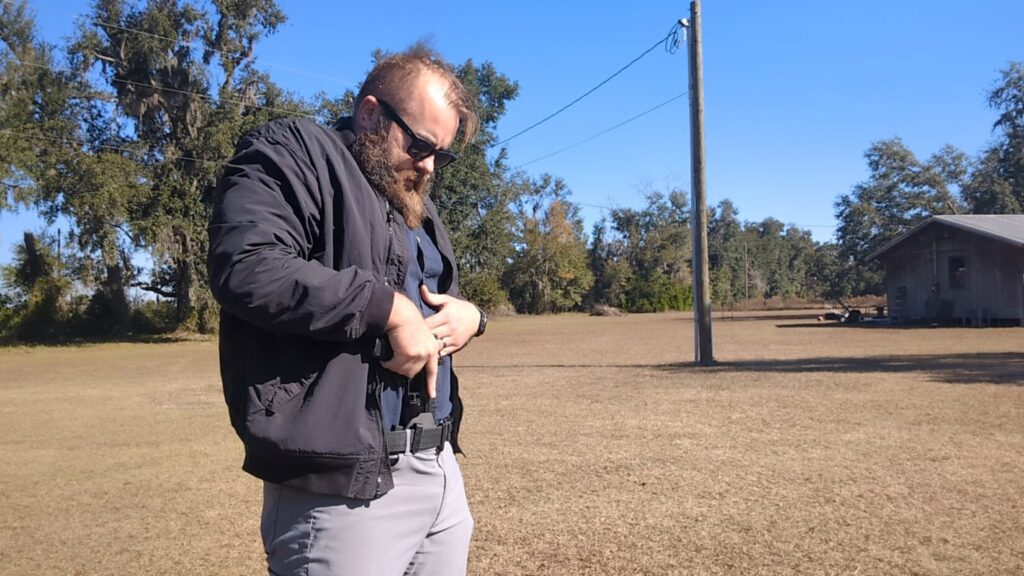
Rule 5: Move It All
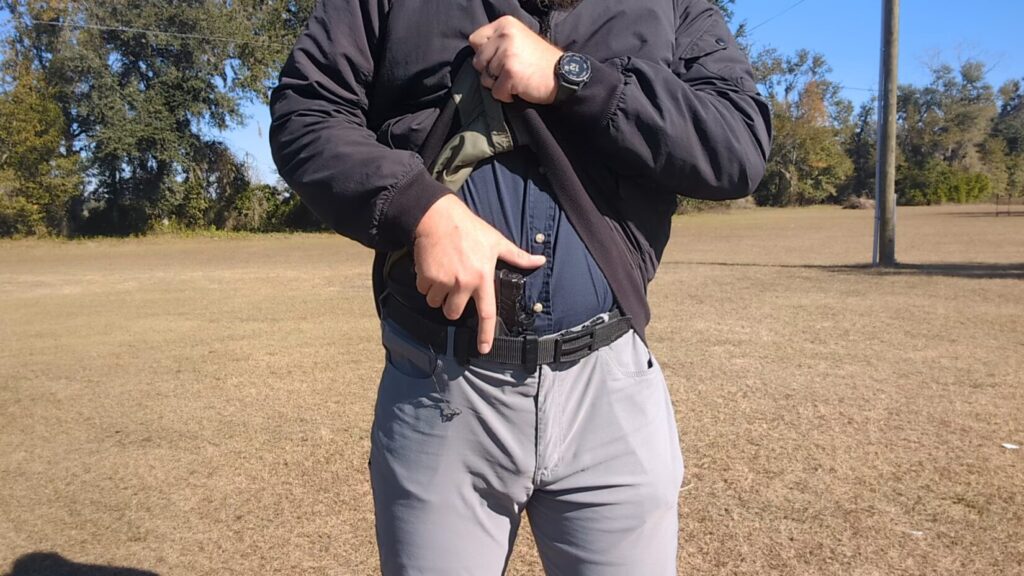
As you holster the gun in an AIWB holster, you should use your support hand to clear away clothing. More than likely, your shirt will fall back over the holster, so move it up and out of the way. Observe and move any other potential obstructions.
Rule 6: Watch Your Trigger Finger
The golden rule is to leave your finger off the trigger until you are ready to fire. Most people obey that rule, but as you holster, ensure your finger is on the frame of the gun rather than the trigger guard. This prevents the holster from jamming the finger against the trigger.
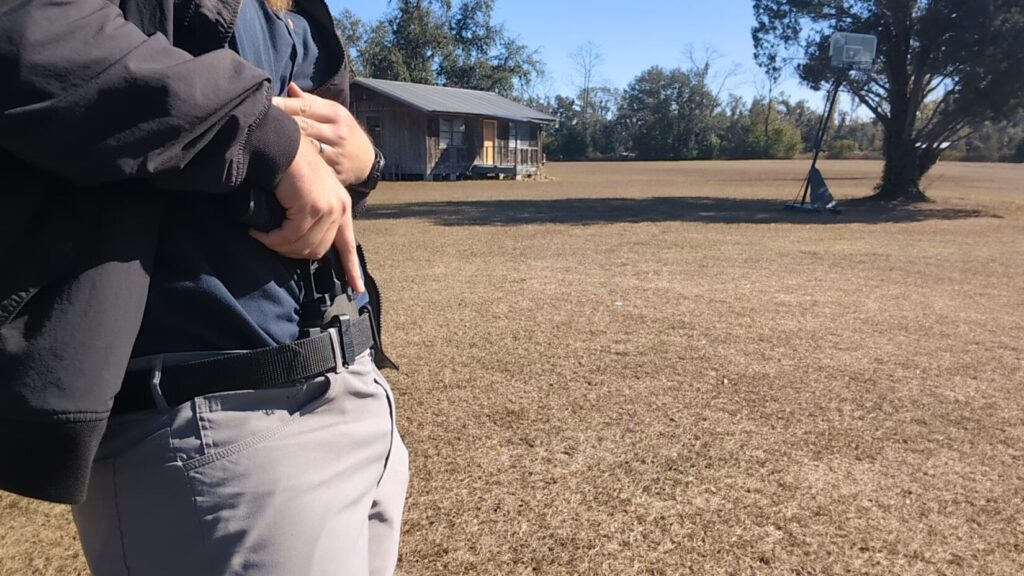
Bonus Protocol: Push the Hips
This bonus protocol isn’t necessary for safe reholstering, but it can help emphasize safety by ensuring the gun is not pointing at your body. You can drop a leg rearward and cant your hips forward as you reholster. This points the gun’s barrel forward and away from the body.
It’s Discipline
If you’re looking at carrying AIWB, you need to do two things.
First, purchase a quality, well-made holster that carries the firearm securely and safely.
Second, train with the holster. Focus on dry fire repetitions until you can quickly draw, and smoothly and safely reholster. Train that pause before you reholster to get used to slowing down.
Slow is smooth, and smooth is fast. However, slow is also safe.