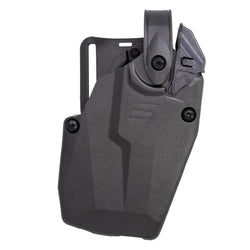
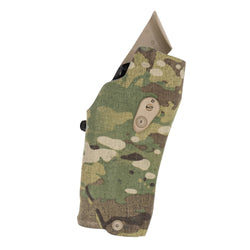

“Go until the wheels fall off”. You’ll hear that expression in shooting classes where students are pushed to complete a course of fire faster. With enough time and a certain amount of skill, it is easy to make perfectly placed shots on your target. The flip side of that coin is having very little time to complete a string of fire and understanding that accuracy will suffer if the objective is a tight group on paper.
If we isolate training each skillset independently, being accurate and being fast, we can then pull them together to learn how to balance speed and accuracy for a desirable outcome.
Accuracy
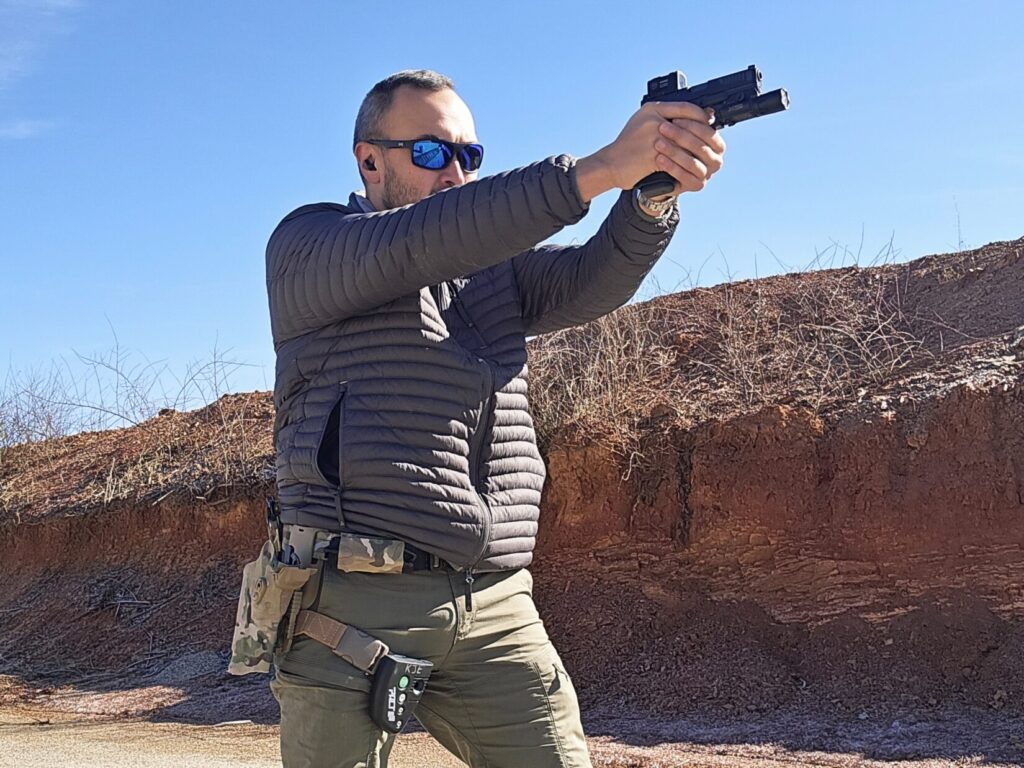
Between speed and accuracy, it isn’t difficult for me to choose accuracy as more important than speed. While I’d like both, if I had only one, I’d want to know my shots make impact where I want them to, rather than simply getting the firearm to go off.
Accuracy is important because we don’t want to fire inadvertent warning shots when it matters. Fundamentals come into play, including sight alignment and trigger control. Additional factors like natural point of aim and breathing control also come into play.
When we isolate accuracy, we set up a standard like a B8 target at a given distance and score it. Each shot is potentially worth 10 points, and we can determine our accuracy using a quantifiable number.
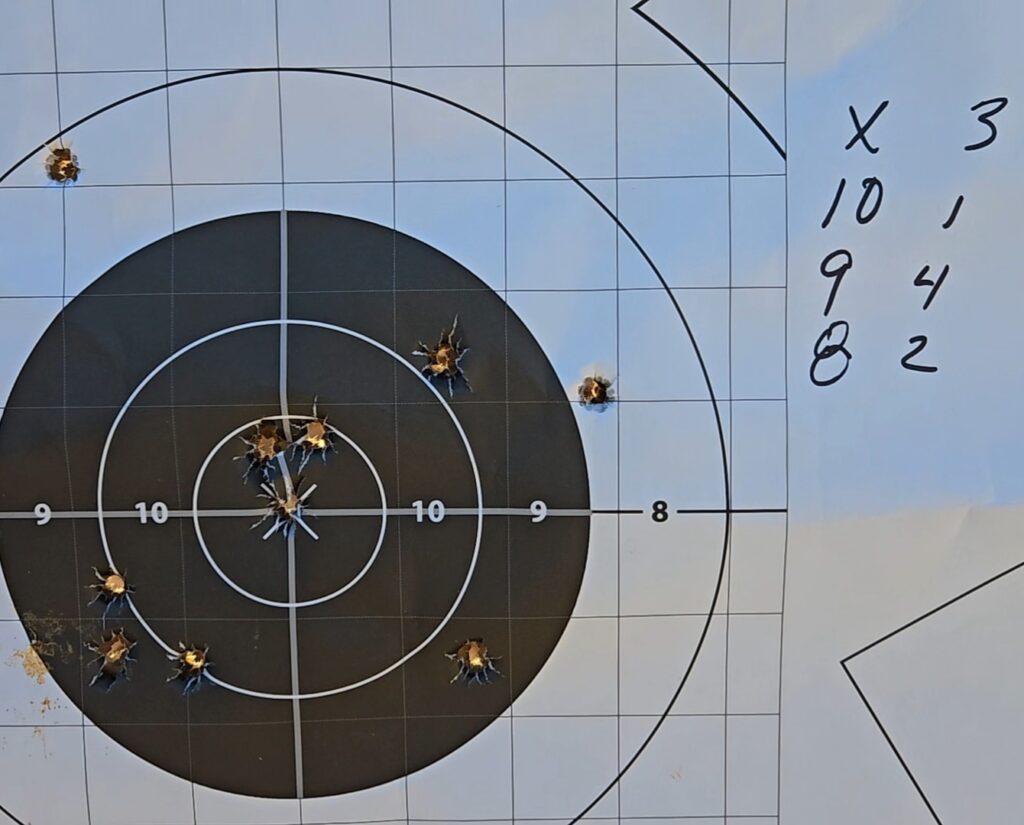
Once we establish a baseline of accuracy at a given distance and a set number of rounds, we can increase the difficulty by pushing the distance to the target back. Assuming we can score a perfect 100 points at 25 yards with no dropped rounds, we can see where our accuracy falls off.
When we can repeatedly perform at a given distance with no time standard, we can lock that in as our max distance. We know we should be able to work in closer distances with an understanding of our accuracy capability.
Speed
Our firearms can cycle faster than we can press the trigger. Consider a Glock 18 full-auto can cycle about .05-second splits. By comparison, world-renowned shooter Jerry Miculek can run a semiautomatic pistol with around .11-second splits. How do you stack up?
When we compare ourselves to mechanical full-auto firearms or professional shooters, we may think we aren’t shooting fast, but we should consider how fast is really needed to match our definition of success.
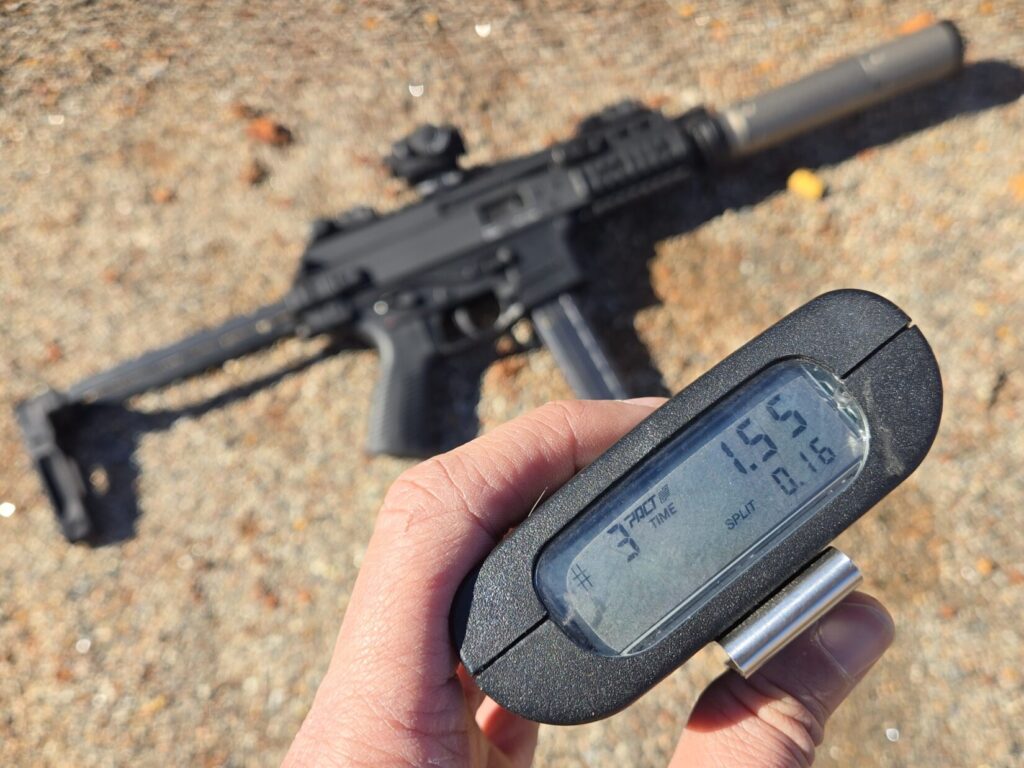
The analog method of learning how to shoot fast involves tempo shooting. Counting off “one and two and three” with each press of the trigger coincides with each statement of the number. We can speed it up by counting off “one n two n three” and eventually “one two three” with each iteration getting faster.
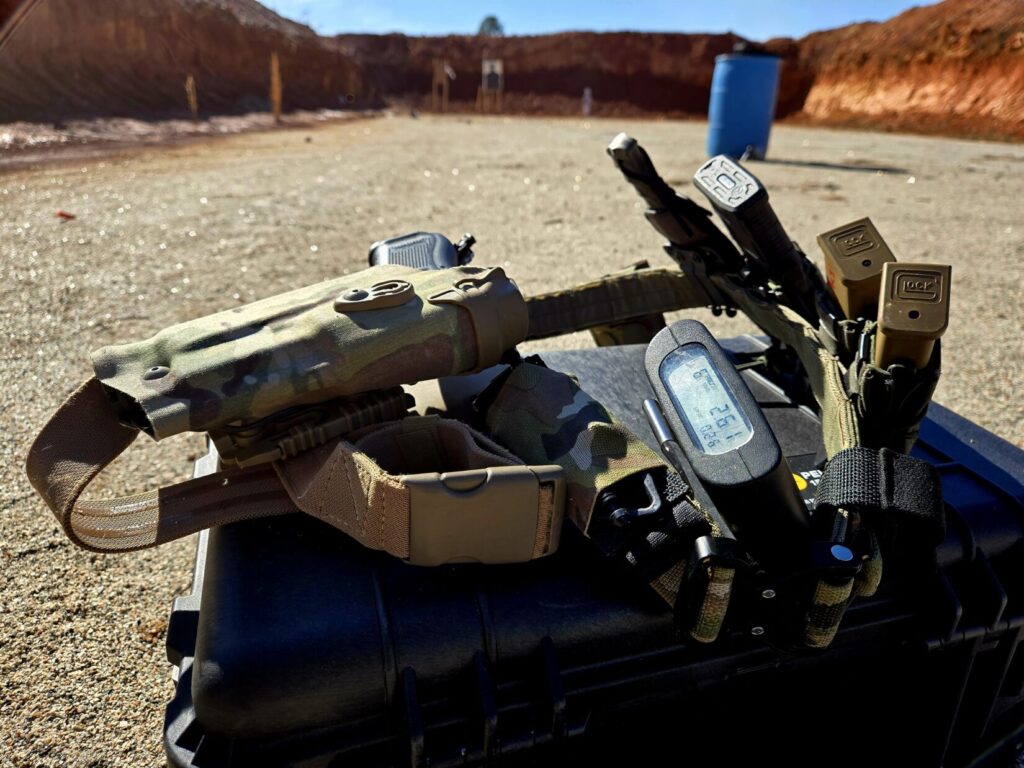
Of course, the more professional way to determine your splits is with a dedicated shot timer. Not only can you assess the time between rounds fired, but the consistency as the range day goes on and fatigue comes into play.
On one shooting course I attended, a student felt uncomfortable shooting faster, and the instructor did an excellent job bringing that student into a more comfortable condition.
He asked the student to step up to a ballistic berm and shoot as fast as possible in a guaranteed safe direction. He let the student focus on learning the trigger reset with zero consequence recorded on paper. When the student came back to the line, they were able to apply the sensation of the faster string of fire to the target, and they showed remarkable improvement.
Applying to Drills
In my time working as an instructor with various companies, I’ve learned it is important to shoot drills cleanly and establish a moderate expectation for a par time and accuracy standard.
Countless shooting drills have both time and accuracy standards. The basic Bill Drill, which is six rounds at seven yards in under 3.5 seconds, can be used as an example.
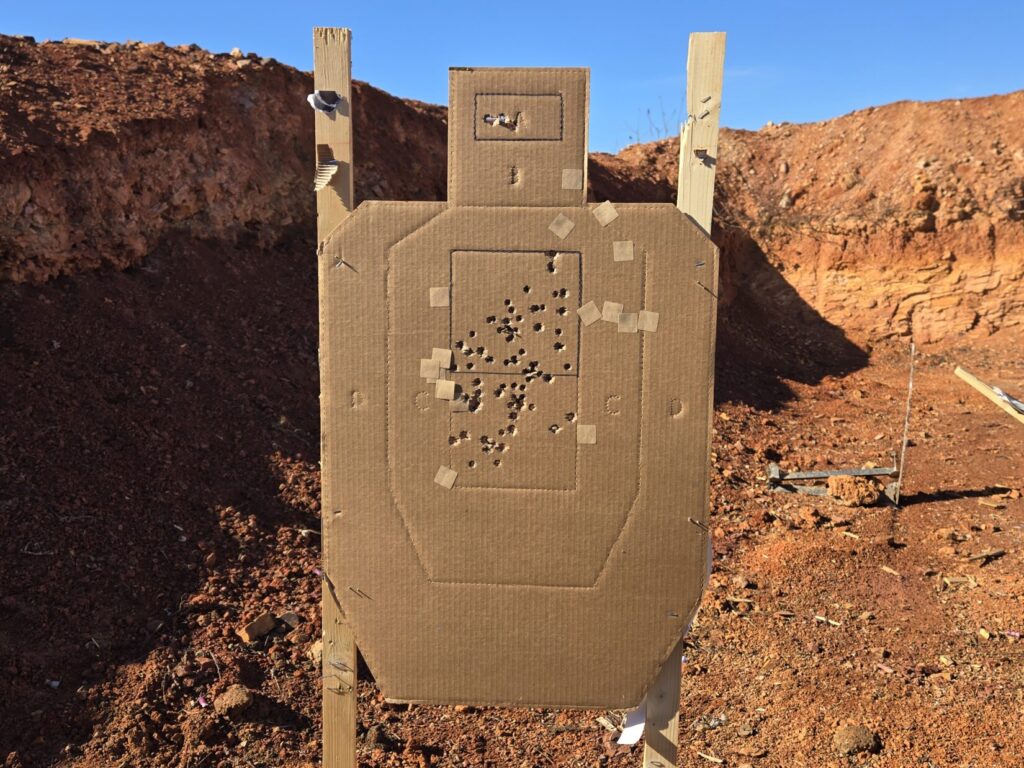
If no time penalty is in place, make sure you hit the A zone only. Then, if no A Zone penalty exists, shoot it as fast as you can and make sure you have six new holes somewhere on the target. Once you know your time and your accuracy limits, combine them and push yourself to achieve both speed and accuracy.
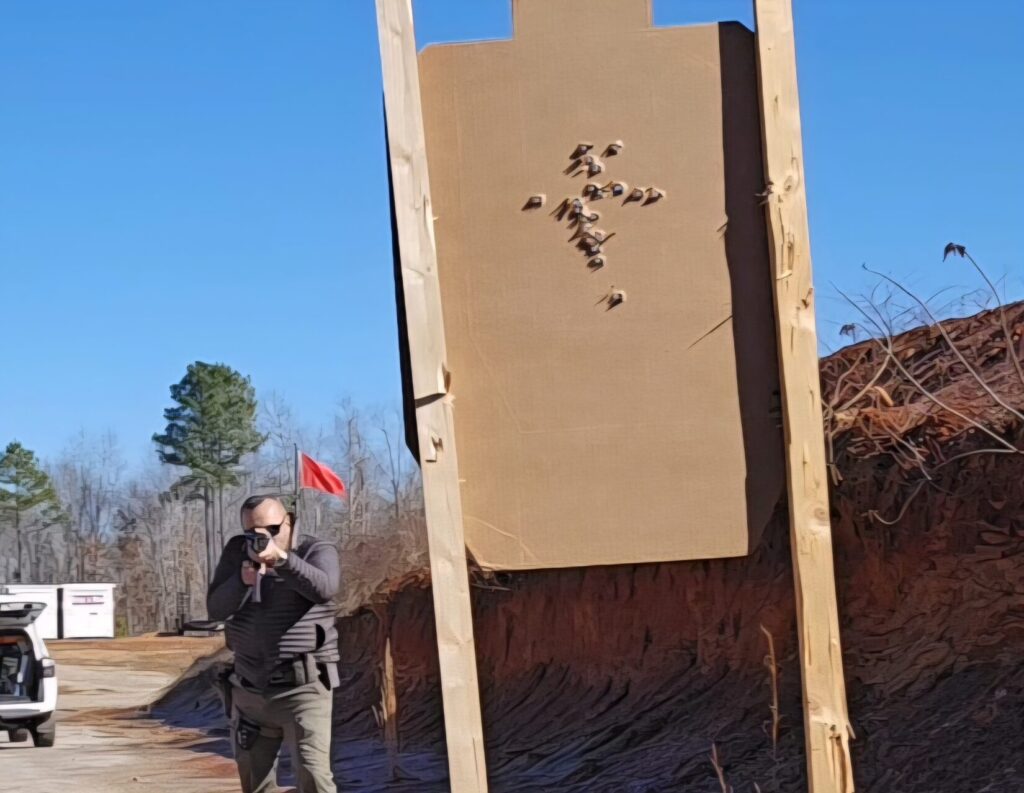
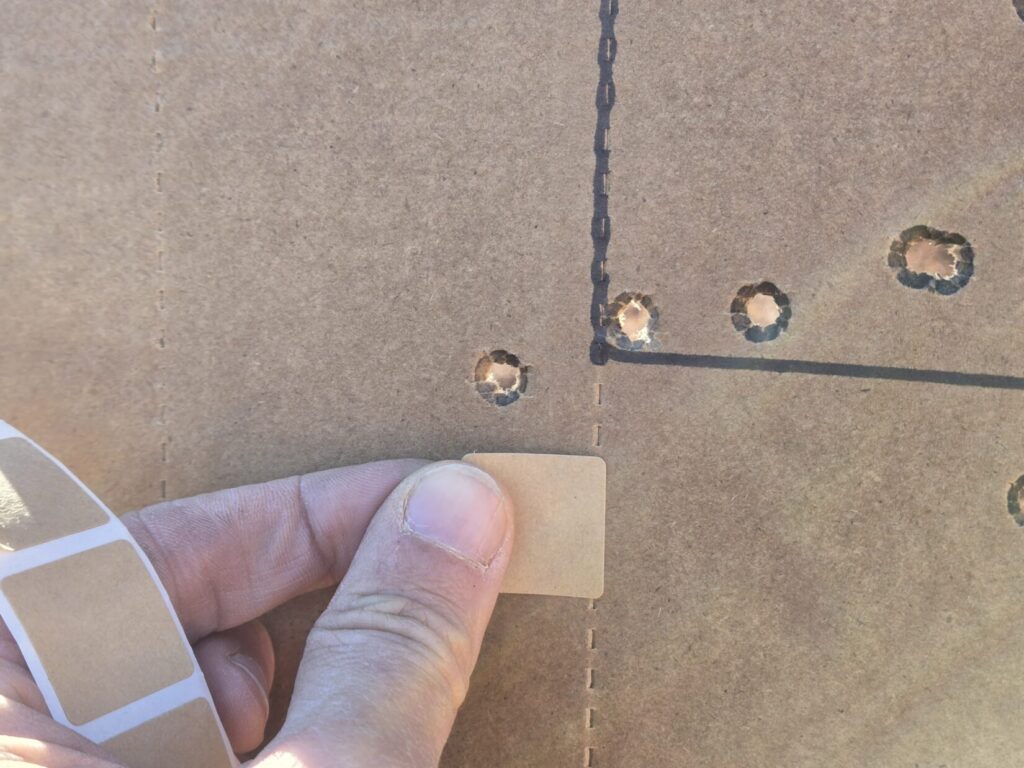
Staying within the context of that drill, you can build up to better performance with three strings of controlled pairs in close succession. Make sure your master grip is strong, and you have a new sight picture on target after each trigger press. Don’t double-tap but rather keep your shot placement under control. Mark your target after each drill and refer back to your shot timer.
Eventually, you want to work away from the likely longer pause between each controlled pair. Continue to assess your performance and don’t lose track of what the drill is and what realistic use of a firearm is. If you have a line burner—a shot that breaks the A zone and C Zone—don’t beat yourself up over it.
What is a realistic level of accuracy? In a self-defense encounter, would the shots stop the threat? Incremental steps toward both speed and accuracy matter.
Multiple Targets and Transitions
The Bill Drill is a great diagnostic as it involves multiple shots on a single target. El Presidente is another excellent drill encompassing many skill sets that can also be isolated. El Prez challenges the shooter with two shots on three different targets, a mandatory reload, and then two more shots on each of the three targets. The drill is performed at 10 yards with one yard between each target. Penalties are assessed for C zone shots and missed shots.
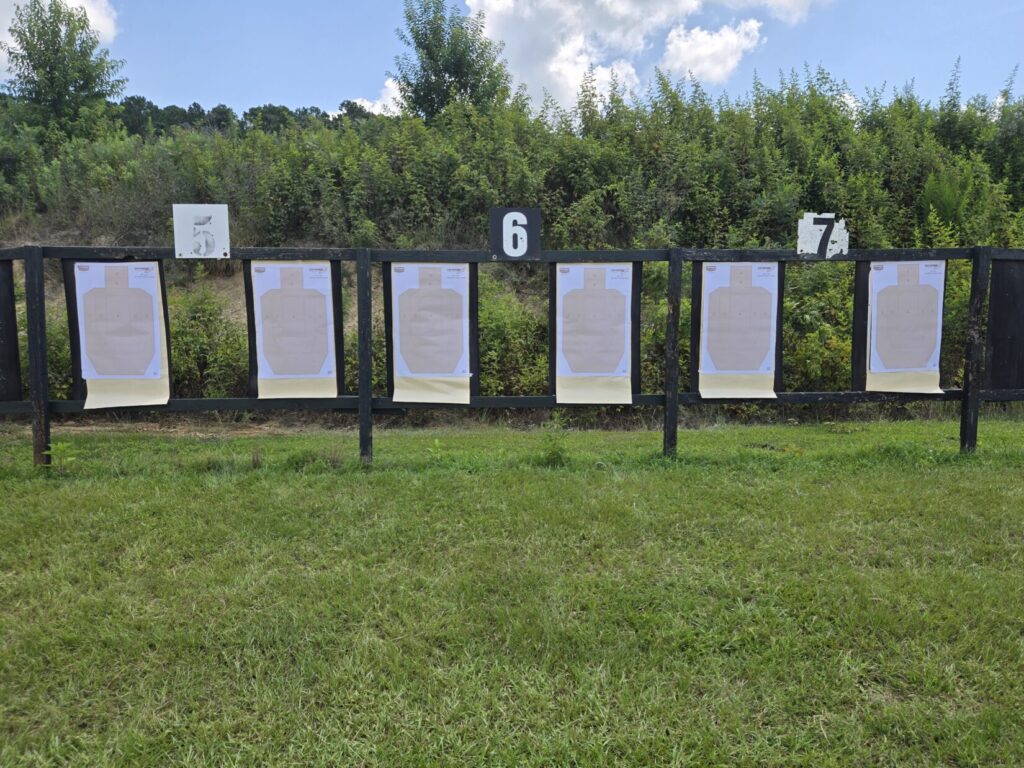
The drill can be broken down into an untimed standard, allowing the shooter to be as accurate as possible. The shooter can focus on regaining a new sight picture, moving from target to target without overgassing and shooting past, and also not pressing the trigger early before the sights are on target.
The movement from one target to another can be repped over and over dry before any live fire is done. The reload provides a tempo change and breaks the shooter from just moving and firing. The reload forces the shooter to re-establish their grip and new sight picture, which adds a layer of complexity.
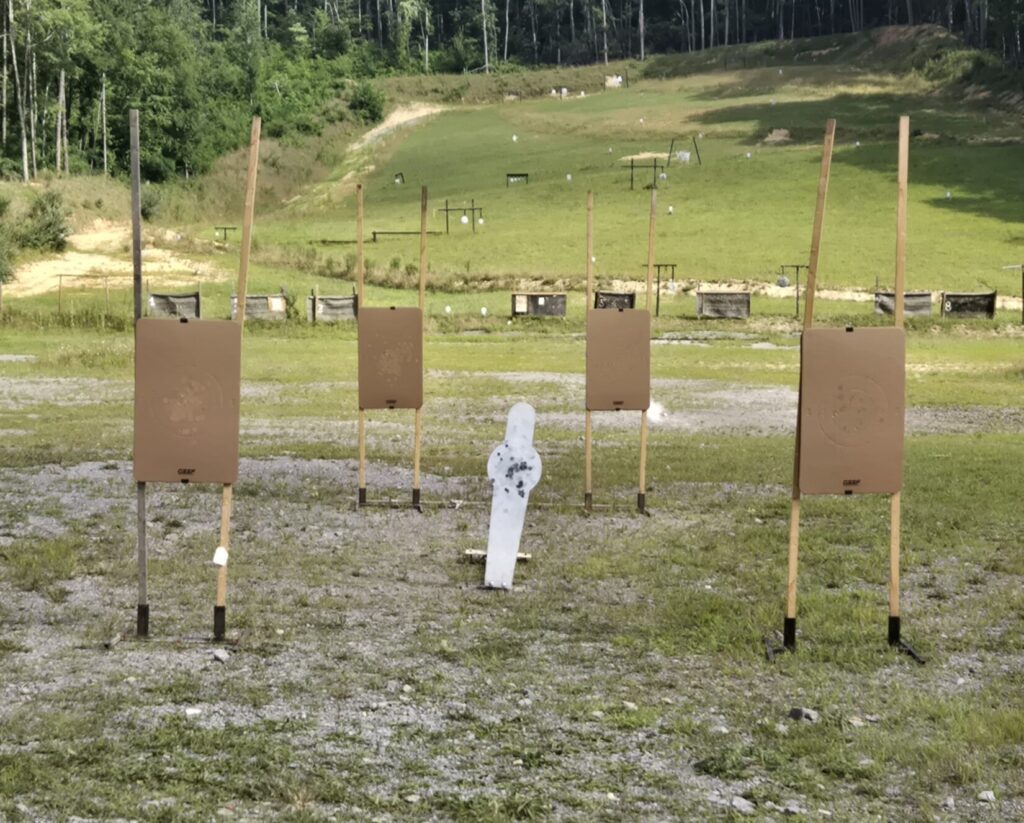
Moving from one target to the next, the temptation is to run the drill with three controlled pairs with a noticeable tempo change as the shooter moves from one target to the next.
Reviewing your split times, you should see consistency between shots two and three as well as between four and five. Look at your accuracy and if your shots were early or late. Check your natural point of aim and evaluate if you were leading with the firearm or with your eyes.
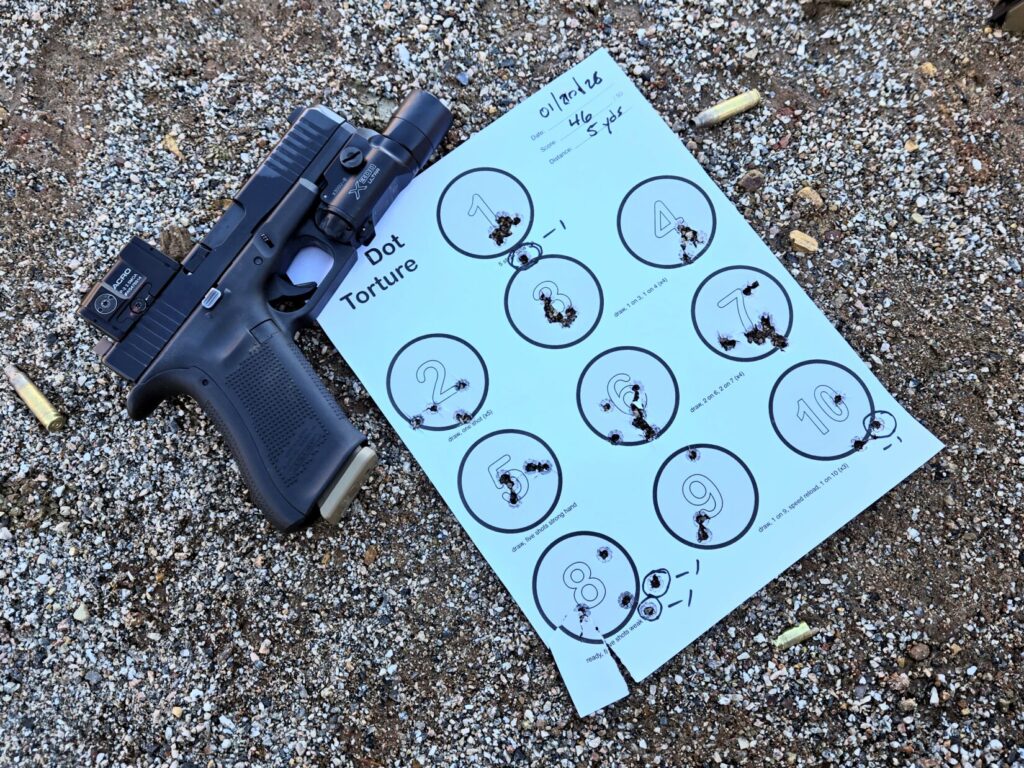
With any drill or with any standard, there will always be a balance of speed and accuracy. Don’t get sucked into the vacuum of pursuing one over the other. Find the right mix of speed and acceptable accuracy for the given situation. The situation and your training will dictate the tactics used.