
Huge developments have shaken the firearm industry following the summary judgment in Silencer Shop Foundation et al. v. ATF. In a single ruling, the presiding judge nullified core provisions of the NFA. Well, kind of. As of mid-August 2026, the ruling has officially gone live. Let’s dig into what happened, what it means on the ground right now, and what the future could hold.
LEGAL FILINGS
After the signing of the One Big Beautiful Bill Act (OBBB) on July 4, 2025, the first lawsuit was filed in federal court in Texas: Silencer Shop Foundation vs. ATF. The suit raised several arguments, primarily challenging the legality of the NFA ’s regulatory scheme when applied to items with a $0 tax, alongside the undue burden placed on business owners to enforce those regulations.
Shortly thereafter in October 2025, another lawsuit was filed in the same district: Jensen v. ATF, similarly questioning the legality of the NFA under a zero-tax structure while posing broader Second Amendment questions regarding serialization requirements and possessing unmarked firearms.
Recognizing overlapping arguments, the court consolidated both cases under Silencer Shop Foundation. Oral arguments were heard in early July 2026, leading to a major 66-page summary judgment issued by Judge James Wesley Hendrix on August 5, 2026.
WHO ALL IS INVOLVED
Across the consolidated lawsuits, a myriad of firearm industry associations, companies, individual Texas residents, and the Attorneys General from 15 states joined the effort. Prominent industry names like Silencer Shop and Palmetto State Armory lined up alongside advocacy groups such as the FPC Action Foundation, the Texas State Rifle Association, and the American Suppressor Association (ASA). A tremendous collective effort went into securing this ruling.
WHAT THE JUDGMENT MEANS
In his August 5 66-page summary judgement, Judge Hendrix declared the enforcement of specific NFA provisions unlawful.
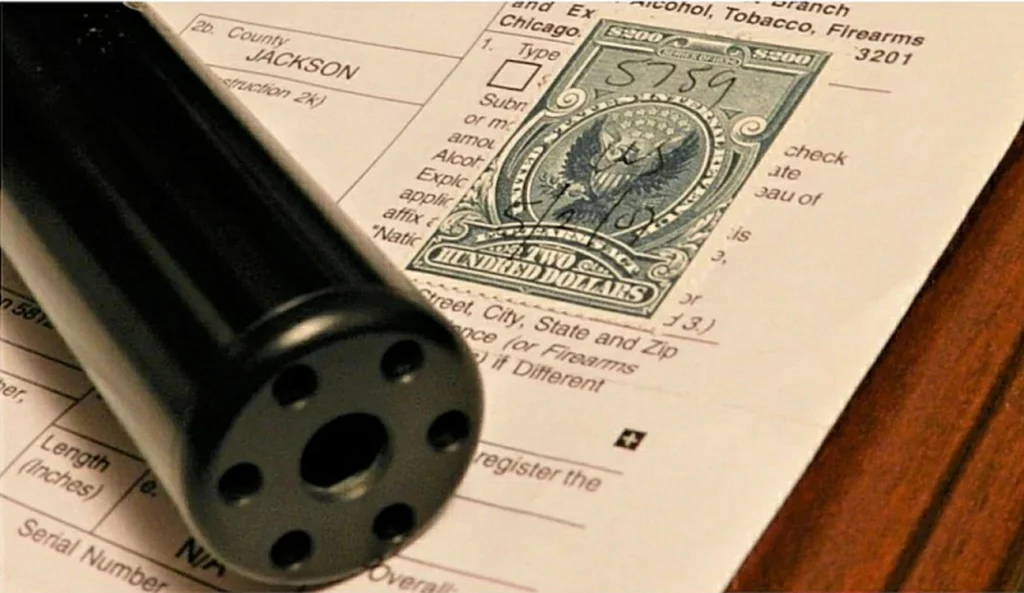
Thanks to the OBBB passed in July 2025, the federal transfer and making taxes dropped to $0 on January 1, 2026, for suppressors, short-barreled rifles (SBRs), short-barreled shotguns (SBSs), and Any Other Weapons (AOWs). Without an actual tax being collected, the central legal authority under the Taxing Clause that sustained the 1934 National Firearms Act and its registry crumbled. The court agreed with the plaintiffs’ core premise.
Judge James Wesley Hendrix wrote in his judgment,
“But to be clear: The challenged NFA provisions are unconstitutional. Congress’s choice to eliminate the transfer and making taxes matters, and the defendants cannot save the NFA’s regulatory scheme by referring to a power that Congress never invoked. Efforts to render the NFA constitutional must come from Congress, not this Court.”
In simple terms: because no transfer tax is collected, maintaining a tax registry isn’t constitutional. If the federal government wants to regulate these items, Congress must invoke an explicit constitutional power rather than relying on a defunct taxing mechanism.
Scope and Exceptions
The judge’s ruling contains crucial nuances:
Tax Basis, Not 2A Broad Sweep: The court struck down these provisions under Congress’s limited taxing powers, not on broad Second Amendment grounds. Consequently, broader NFA frameworks—such as Special Occupational Tax (SOT) requirements for dealers/manufacturers and restrictions on machine guns or destructive devices—remain fully in effect.
Scope of Relief: The permanent injunction applies specifically to the named plaintiffs, their agencies, political subdivisions, members, and customers—both current and future. It does not automatically apply to every citizen universally without a connection to the case.
Excluded Items: The judge excluded AOWs from certain aspects of the judgment. Furthermore, while the tax on SBRs and SBSs was zeroed out, approval criteria for short rifles and shotguns remain embedded in the Gun Control Act (GCA), meaning Form 4 approval is still required for those firearms.
Current Status: The Injunction is Live
When Judge Hendrix issued his summary judgment on August 5, he included an initial seven-day stay to allow the Department of Justice and ATF time to seek emergency appellate relief. That stay expired at 12:00 AM on August 13, 2026, without a stay extension.
As of August 13, 2026, the judgment is active. Under the current court order, eligible customers purchasing suppressors through qualifying entities can bypass traditional Form 4 eForms processing, fingerprinting, and registry entry, completing their purchase via a standard Form 4473 and NICS background check.
To transfer a suppressor via Form 4473, the FFL dealer must be a member of one of the organizations named as plaintiffs in the lawsuit. Legal protections then extend to the end user by virtue of being that member-dealer’s customer (similar to immunity passing from a mother to a child). Under this structure, covered purchases are not limited to specific brand offerings or single transfer platforms.

Important Rules and Unanswered Questions
While same-day Form 4473 transfers are now happening, significant grey areas and restrictions remain:
Regulatory Risk: The Department of Justice still has a 60-day window following the court’s entry of judgment to file a formal appeal. If an appellate court eventually stays or reverses the ruling, or if Congress steps in to amend the law, questions remain regarding how previously completed 4473 transfers would be treated.
Interstate Transport Prohibitions: Because suppressors remain classified as NFA items under federal statutory definitions, unregistered items acquired via Form 4473 cannot be legally transported across state lines—even to suppressor-friendly states. This creates immediate hurdles for users traveling out-of-state or shipping items back to manufacturers for repair.
State Laws Still Apply: The federal ruling does not override state-level prohibitions or registration requirements. In states with independent NFA or suppressor bans, Form 4473 transfers remain prohibited.
Inventory & Logging Headaches: Dealers currently face compliance hurdles. Items received on an NFA Form 3 must be logged out of bound books and removed from ATF eForms inventory, but the ATF has not yet released explicit administrative guidance detailing how FFLs should document Form 4473 suppressor dispositions without an approved Form 4.
GOING FORWARD
The legal battle over the NFA is far from finished. The DOJ may still appeal the decision to the U.S. Court of Appeals for the Fifth Circuit, and the case could ultimately reach the U.S. Supreme Court. Concurrently, additional lawsuits challenging the NFA on distinct Second Amendment grounds continue to advance through other federal circuits.
For now, while same-day Form 4473 suppressor transfers are a reality for qualifying dealers and buyers, many industry members are proceeding with caution until the ATF issues formal administrative guidance.