
“Darkness, my old friend…” No, not really. Today, we’re going to dive into low-light tactics for defensive use and how to make the most of your weapon light.
Humans tend to rely on vision to perceive their environment, so when it’s compromised, things get difficult. In a potentially violent encounter, sight is a good thing to have. In the modern firearms realm, we have tons of options for weapon-mounted and handheld lights to cut through the darkness.
Tactical lights allow you to see your threat. If you can’t see your threat, you are firing shots in the dark at noise and movement. Now, I don’t particularly like the cat that lives in my house, but I don’t want to shoot it if I mistake it for an intruder. Weapon-mounted lights allow me to see and, most importantly, positively identify a threat.
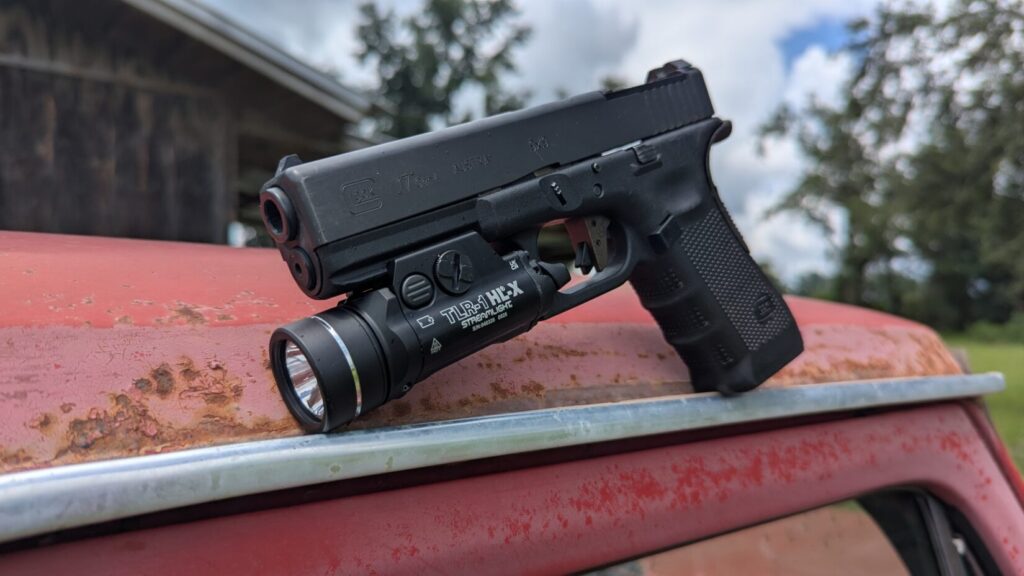
That’s the reason why we have the lights. How we use the light is called “low-light tactics.” You don’t just turn on your weapon-mounted light and flash it around until you see the threat. That’s where low-light tactics come into play.
There are lots of low-light tactics, but today we are going to focus on weapon-mounted lights.
Low-Light Tactic: Move, Flash, Move
When using a weapon light, less is more. Most modern weapon-mounted lights have a Momentary setting, meaning the light stays on only until you release the activation switch.
This is the primary mode you’ll use when employing a weapon-mounted light. You may switch to Constant mode when you have eyes on the target and can dedicate the white light to doing so, but even then, that might not be best. You want to avoid leaving the light on because it can give your position away if used improperly.
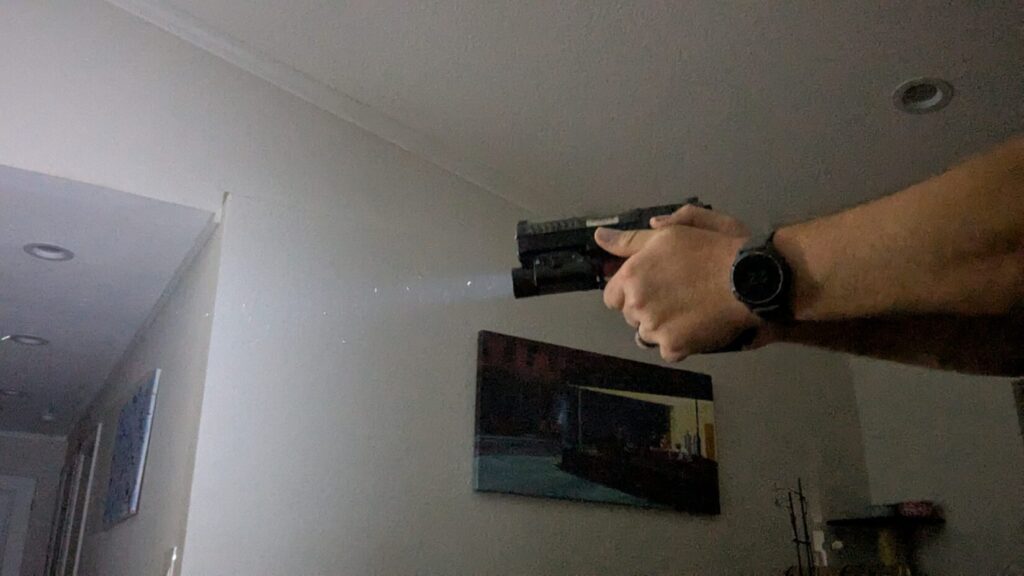
When you’re using a weapon light, your general tactic is to use Momentary and flash an area where you think a threat might be. You’re using one to two seconds of white light and not much more. You get your view and process the information.
If the threat is present, then you can keep the light shining and react as appropriate. If not, you kill the light, and then you’re going to want to move. The light works both ways and can tell the bad guy where you are.
You move to another piece of cover, retreat somewhere, or just move in general. You need to be thinking about this before you ever turn the light on. Users need to be prepared to move after using the light.
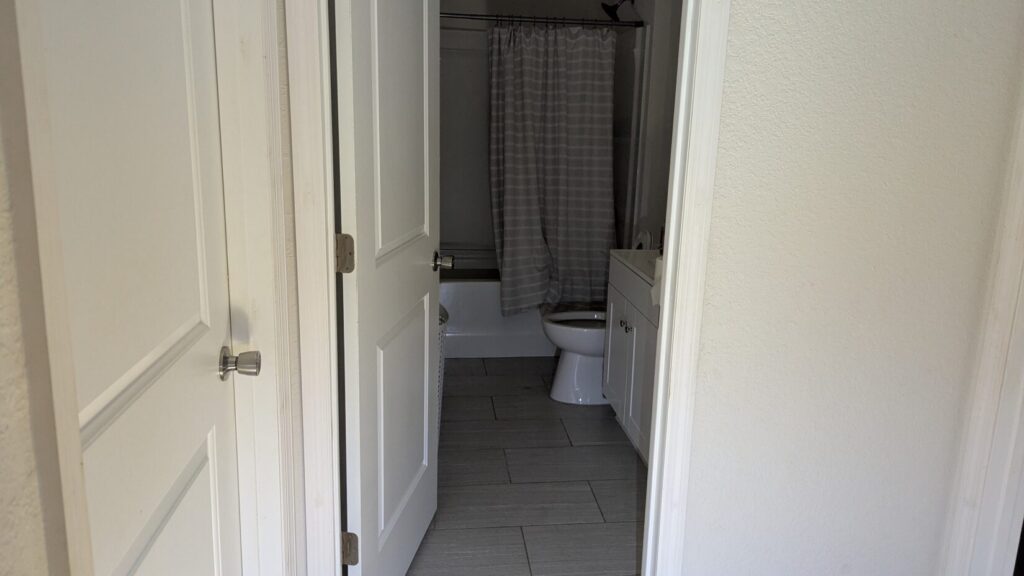
“Flash and move” makes up the majority of your tactics when it comes to low-light use, but that’s not the only thing you need to know.
Avoiding Backsplash and Friendly Fire
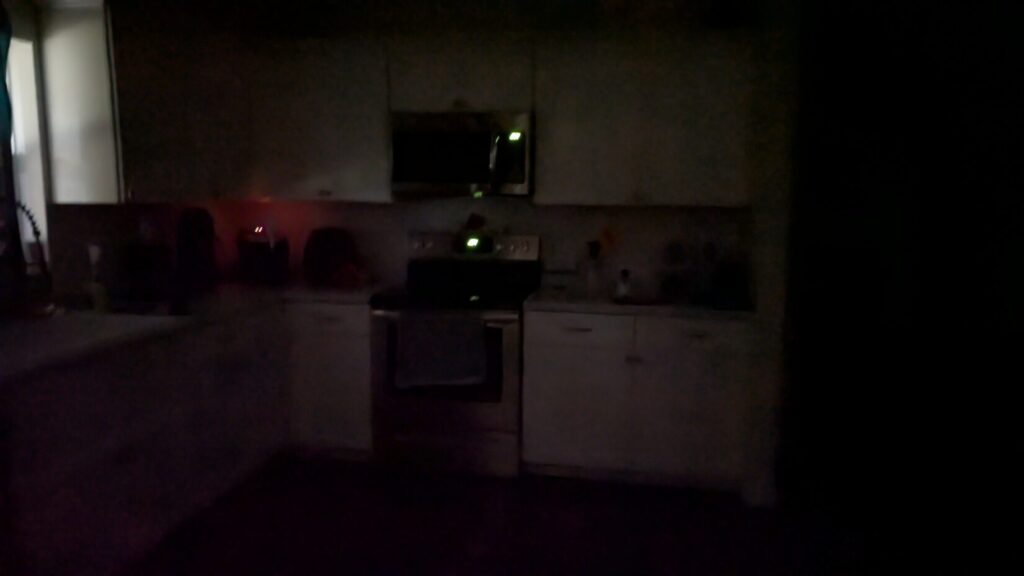
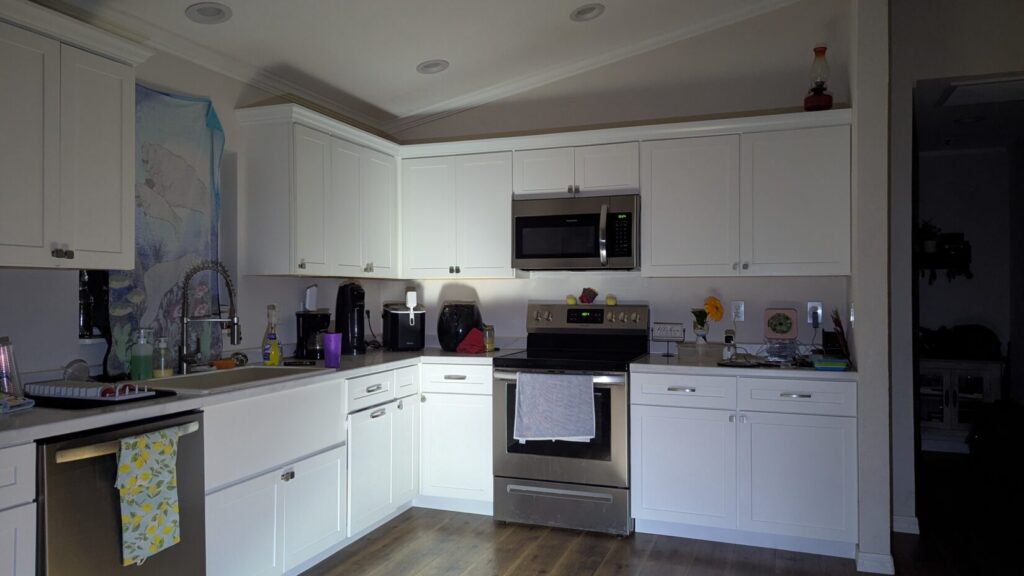
Modern weapon lights are bright. They are packed with tons of lumens and candela. They can blind the user if the user isn’t careful. My wife loves stainless steel appliances, so a thousand lumens backed by 65,000 candela reflect brightly in my kitchen.
You want to avoid backsplash and the blinding effect potentially created by windows, appliances, mirrors, and similar reflective surfaces. We have a tactic for that!
We also have to deal with the potential for flagging friendlies. Whenever you point your light at something, you’re also pointing your gun at it. That’s not optimum.
It makes it too easy to flag a friendly, a loved one, or even a disliked cat. Don’t worry, we have a tactic for that!
In fact, the tactic to avoid reflection is the same as the one to avoid flagging friendlies. There are two techniques designed to reflect light in your favor and prevent friendly flagging. They are called Baseboard and Umbrella.
Baseboard and Umbrella Techniques
As the name implies, the techniques vary based on the position of your firearm. These low-light tactics more or less match the standard ready positions for handguns. Baseboard coordinates well with a low-ready, and Umbrella coordinates with a high-ready position.
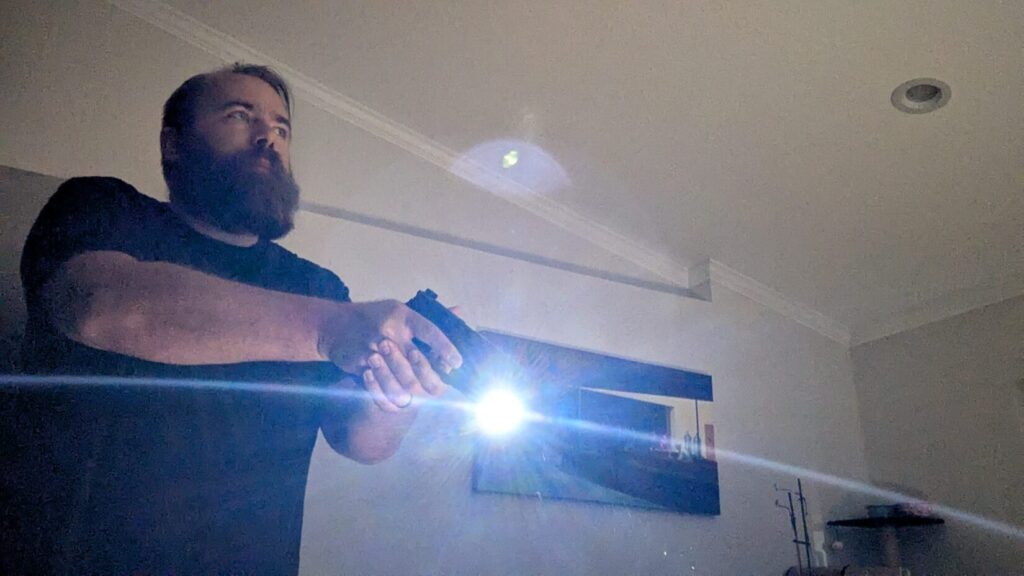
These two positions can also help hide the user. Since they aren’t a direct beam of light focused in a specific direction, they can help disguise the shooter’s position. You still want to flash and move, but compared to a direct flash, these techniques can make you a little tougher to find.
Which one should you use? Both can work, but much like ready positions, they can be situationally dependent. If I’m downstairs and my family is downstairs, I use Baseboard. If the opposite is true, I use Umbrella.
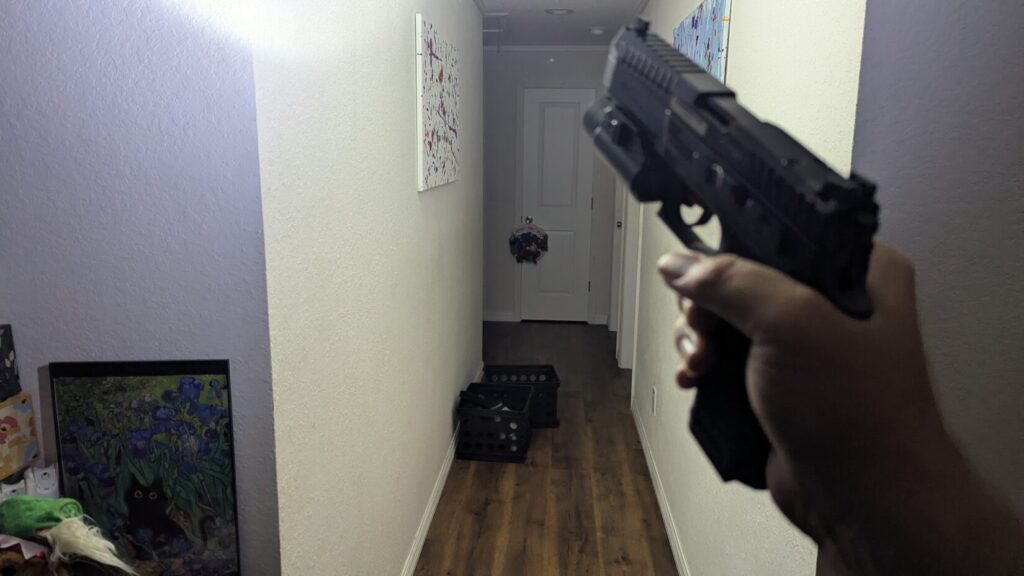
Also, if the roof above me is more reflective than the floor below me, or vice versa, I’ll use what reflects best. There are plenty of situations where the environment isn’t reflective, which is unfortunate, and you’ll have to make do with what you have.
As we dissect these two low-light tactics, I will point to situations where one works better than the other.
Baseboard
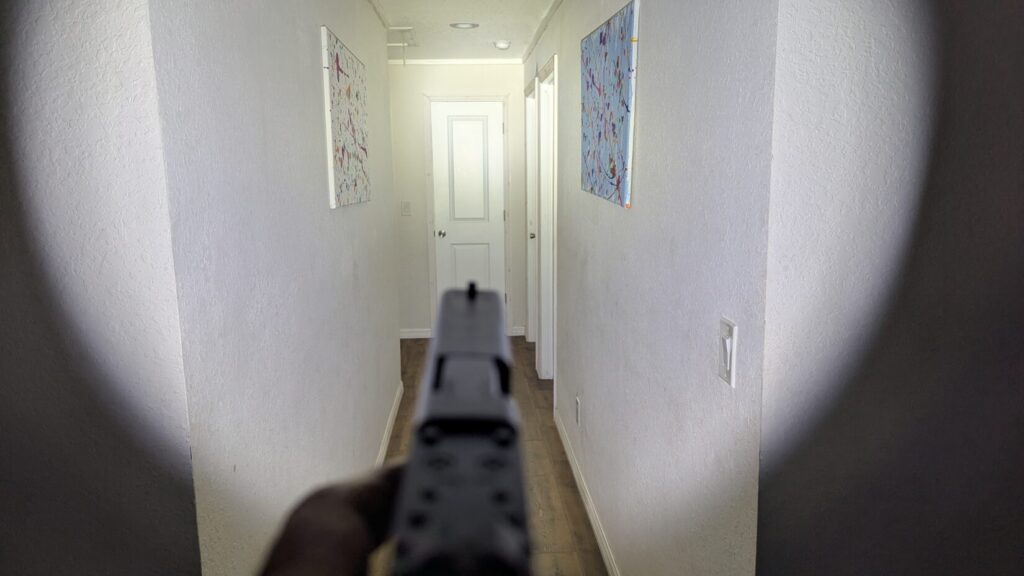
With Baseboard, we’ll be aiming at the floor and bouncing light off the floor and off the baseboard. You want to aim the light at a 45-degree angle downward, roughly two to five feet in front of you.
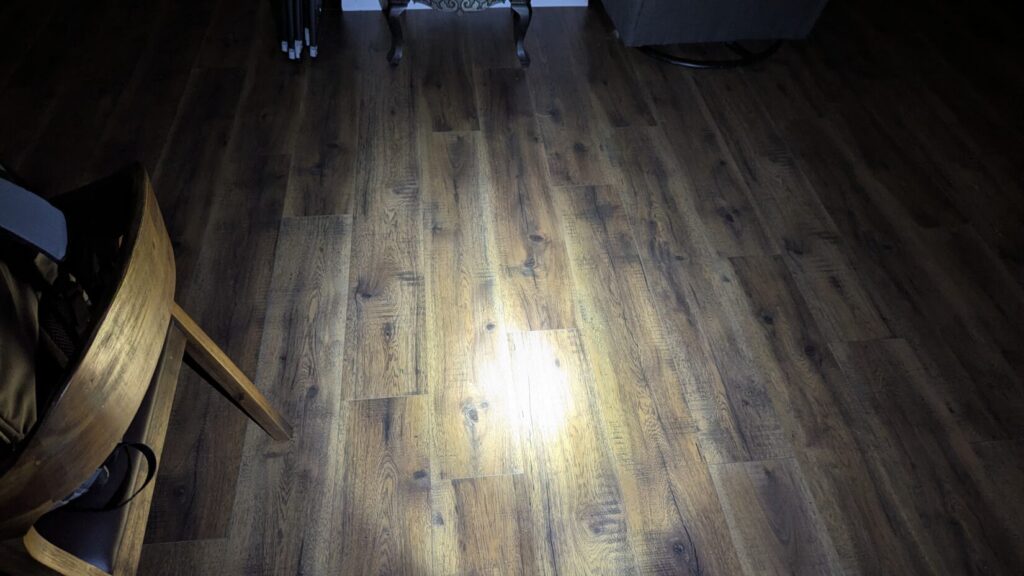
A powerful light has a distinct bright hotspot that becomes essential for using the Baseboard low-light tactic. The Baseboard tactic will take that hotspot and reflect it forward, directing it to cut through the darkness. It’s going to reflect light and help diffuse the spill, which will also aid in illuminating the room.
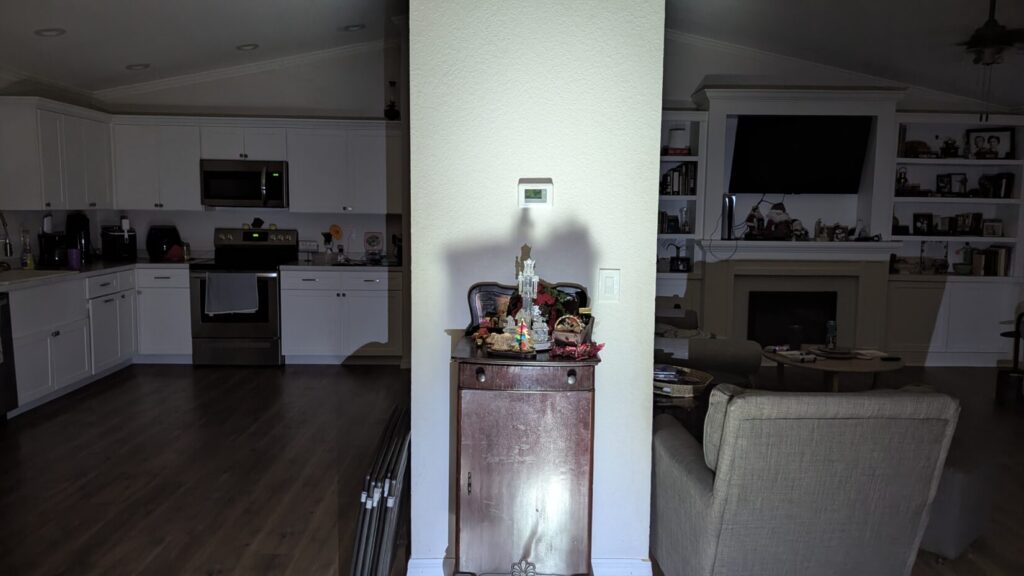
Baseboard works best in large rooms, hallways, and buildings with high ceilings, or urban environments where there are no ceilings but plenty of floor. It allows you to look for outlines of potential threats with ease and, in some cases, even navigate unknown environments.
Umbrella Technique
With Umbrella, we are pointing the gun and the beam of light upward. You want to position the light’s beam slightly forward of your eyes, with the best results coming from shining the light into the roof corners. The light is diffused by the ceiling or upper walls and acts a lot like a photographer’s umbrella.
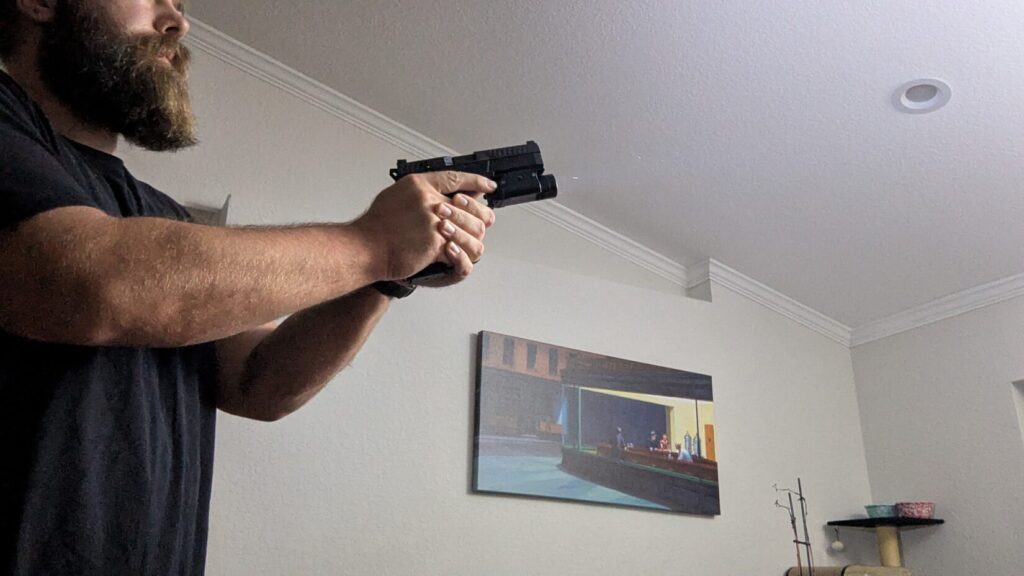
Light rains down, filling rooms and giving you enough ambient light to illuminate your environment and to find threats. It also prevents those nasty reflections and helps hide your position. We are still relying on powerful modern lights with an excellent hotspot to provide that light.
This is a great tactic to put light behind objects and eliminate gaps in your field of view. This creates better situational awareness and makes it easier to spot threats.
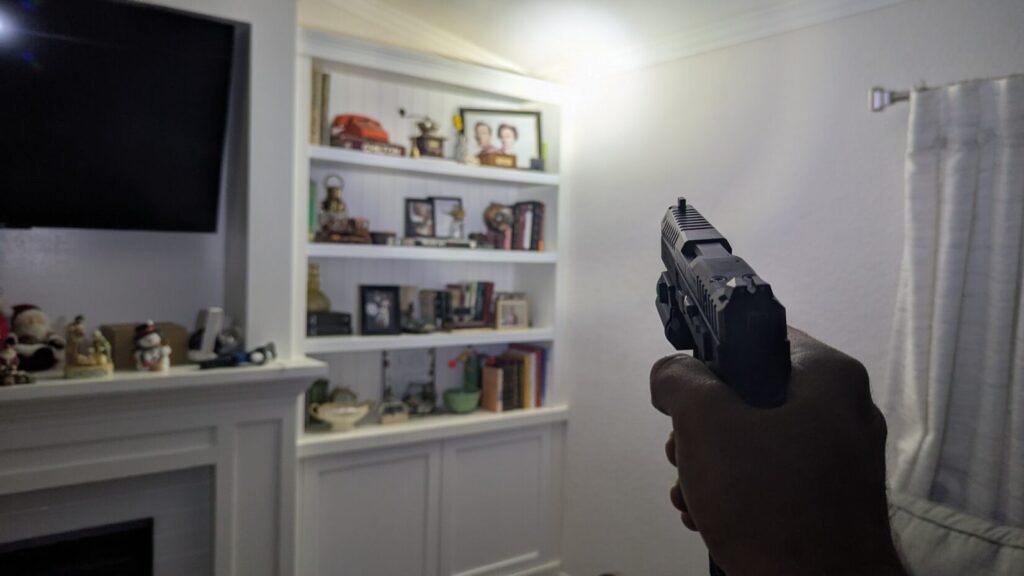
This technique is best used in smaller rooms with low to medium height ceilings. It works well in residential and office spaces and casts enough light to fill a room.
Bringing Baseboard and Umbrella Together
Regardless of which technique you use, they come together when a threat is present. When you detect a threat, you move up or down from your chosen technique to illuminate the threat directly. This allows for the ultimate positive identification, makes it easy to aim, prepares you to react, and allows you to even disorient the attacker.
What Now?
You know some of the basics of low-light tactics. Now you need to practice these tactics. For most users, that means a cleared gun and a little low-light practice inside your home. Practice using Baseboard and Umbrella. Get used to using momentary and moving in the dark.
Better yet, take a low-light class to sharpen your skills under the eyes of a knowledgeable instructor. As always, training is critical, and a professional instructor offers you the best bang for your buck, or in this case, flash of your light.