

Exercise is the cure to many ills, keeps you prepared for the fight, and may even help you avoid it in the first place. Weight training gets the buzz and gains muscle strength, but endurance comes down to cardio. Here is why cardio is vital to your fitness regimen and how you can use it tactically.
Cardio: What Is It?
Cardio is the short answer for cardiovascular exercise. While free weights and resistance exercises hone muscle groups, cardio strengthens the lungs and heart by raising the heart rate for a prescribed time. The exercise itself also strengthens the muscles activated through use.
Cardio exercises are as varied as muscle exercises. While running, walking, and biking might be the first to come to mind, cardio also includes swimming, rowing, jump rope, jumping jacks, and other calisthenics.
Some believe doing more repetitions with free weights will count as cardio, as the heart must work more in order to power fatigued muscles. Perhaps the ultimate blend of both is HIIT, which blends muscle work and high-intensity cardio in brief intervals. Both offer strength training, but do not quite level with bringing the heart rate up for a period without meaningful rest.
Why It Matters
From a preparation perspective in the world of personal defense, we get bogged down in the semantics of such things as caliber, weapon platforms, blade profiles, and capsicum percentages. While we want our guns, blades, and sprays to be effective enough should they be needed, it becomes too easy to ignore your most important piece of kit: your body.
Weight training has its value. Strengthening muscle allows us to perform strength-related tasks we otherwise would not. Likewise, arm and leg work can aid in manipulating and powering through obstacles on the job. In the latter category, weight training also shows in our appearance, potentially preventing conflict in the first place.

The benefits of cardio are more subtle but equally valuable. Cardio is efficient for weight loss, whereas weight training can effectively increase weight. If you are struggling with your current weight, addressing your cardiovascular endurance can help you lose some of that weight and make you stronger. Tactically, a good cardio base allows you to stay strong and sharp in a prolonged struggle.
Cardio: For When The Threat Doesn’t End
Ideally, our presence is enough to render aid and deter malfeasance. Failing that, we hope our strength and our tools can get us through a struggle.
But what happens when that is not enough? When in danger, our hearts quicken, our vision narrows, and time can feel slow despite moving in real time. Our blood pools only where it is needed, and we lose our finest motor function as our body prioritizes the anatomy vital to immediate survival.
Cardiovascular exercise induces cardiovascular stress. With a good cardiovascular base, you can lessen its effects on the body and perform at a higher level than you otherwise would. Your breathing will be less labored, your muscles less jittery, and your movements faster.
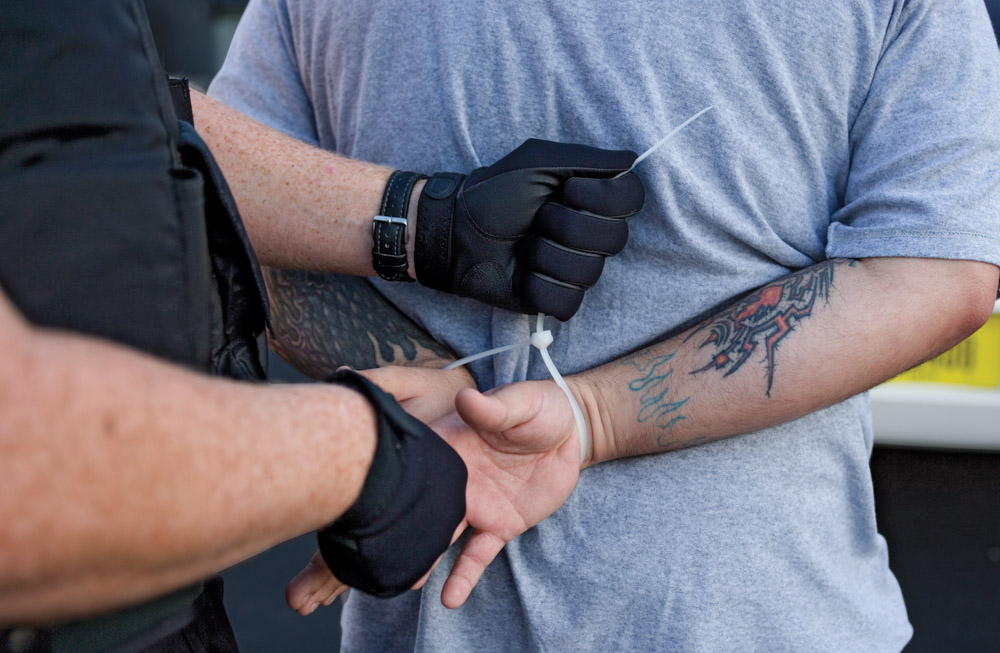
From a shooting perspective, a good base will keep your body in a steadier position to shoot more accurately and get faster follow-up shots if necessary. Even with short runs and exertions, you will shoot better when you are not exhausted, as the threshold for exhaustion has been pushed much further through exercise.
Cardio can help in that one-in-a-lifetime moment of needing to shoot, but a good regimen can go a long way to preventing it from happening. Training with cardio gives you the confidence and capability to act tactically beyond pressing the trigger. Moving from danger to cover, closing to assist teammates and victims, and going hands-on with combative suspects gets easier when you know you can get there with energy to spare to use your muscle, your head, and your gear.
Running and Rope: The Ultimate Cardio Cures
The Department of Health and Human Services recommends a minimum of 150 minutes of moderate intensity exercise or 75 minutes of vigorous exercise for optimum health benefits. Walking and swimming fall in the former category and are great low-impact ways to get some cardio and shed some pounds with minimal injury risk. Running, jogging, biking, and jump rope are more intense, but these and other exercises are not created equal.
Finding the ideal cardio regimen will depend on your physical conditioning, equipment, and time. In my own multi-year wellness journey, I found running and rope to be the most beneficial.
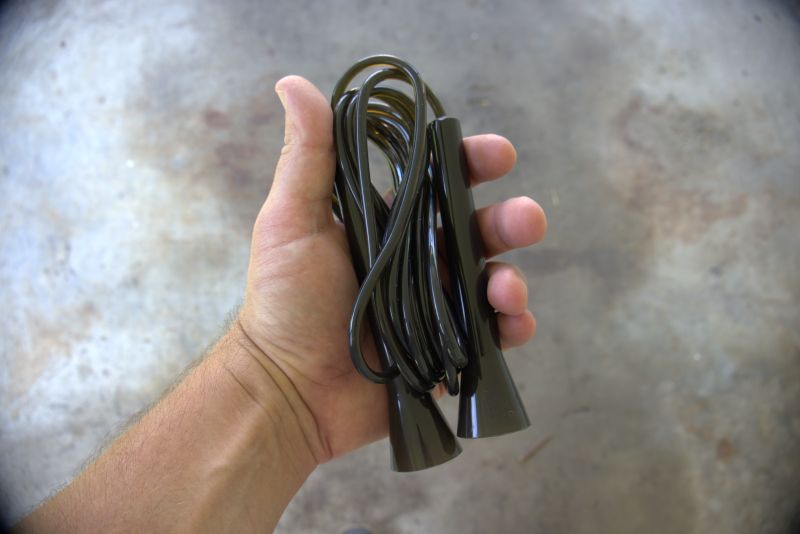
Jump rope is a full-body exercise that involves rapid footwork and coordination. When done at a high intensity, it can yield more calories burned than running at an equivalent time. It also involves a good rope and very little space. However, if you are not the most fleet of foot yet, jump rope can feel like an exercise to work up to. Nobody likes to get tangled in those ropes, especially in front of spectators! Thus, the default high-intensity exercise is to run.
While the investment and time in rope is low, running is more accessible and scalable. It also yields superior endurance building for the time spent compared to other exercises like walking and biking. But looking at people running seems intense. That fact puts off many people from trying. Even longtime bodybuilders struggle with it or avoid it altogether in favor of weights.
So, how do you get into running without being miserable or getting hurt?
The short answer to that question goes back to childhood. Before you can learn to run, you have to learn to walk. Long before I laced up running shoes, let alone set foot in a gym, I was about 100 lbs. overweight and had no endurance once or ever.
I grabbed a pair of tennis shoes and just started walking. First, I started at 10 minutes a day for a week, then 20 minutes, and finally half an hour, all the while increasing my speed sustainably enough to make the time limit.
Then it came time to run. I started with a 30-second jog, followed by three minutes of walking, repeated cyclically. I was knocked down to a 20-minute total time, but built it back up to 30 minutes. I followed that up after a few weeks with a one-minute jog followed by two minutes of walking. Then, a few weeks of 2 minutes of jogging and 1 minute of rest.
Shortly, I could jog 10 minutes without issue. Then 20 minutes. Then 30, varying my speed to make the grade. By that point, I had graduated the speed from a jog to a run, taking a breather as needed until it was no longer necessary.
In the end, I can now go 30 minutes at a moderate pace and reliably hit the nine-minute mile mark in just six months of prep work. Just about anyone should be able to go faster and get faster than me.
Run For Your Life
A smart man once said that logistics is not sexy, but it is how you win a war. For the bodybuilder, it can feel like a step down to get time on the treadmill. It can also feel like a step too high for those who are new to physical fitness.
Cardio can feel intimidating and even un-sexy, but good overall fitness cannot be done without it.