
Our home is our safe space, our castle, our palace, where we can relax. My home is sacred, and anything that’s sacred needs to be defended. When it comes to home defense and firearms, you have a big choice to make.
What firearm will you use to defend your home? Specifically, what category of firearm will you use to defend your home? While there are tons of different types of firearms, realistically, it comes down to three choices: you can use a pistol, a rifle, or a shotgun.
Each has its strengths and weaknesses. Today, we are going to examine all three in depth and judge them based on five categories. Each firearm is being graded against the others, so each category will be one out of the three. We are looking at the following aspects:
Maneuverability: How easy is it to move a firearm inside your home? Homes are typically close-quarters environments, and maneuverability matters.
One-Shot Stop Potential: In a home defense situation, we want to stop the threat quickly and effectively, and do so in as few rounds as possible.
Ease of Use: How easy is the gun to aim and control in a defensive situation?
Overpenetration: We’ll evaluate a round’s potential to penetrate through the walls of a standard home.
Value: How much does it cost to get invested in a specific setup, and how much value does the gun offer?
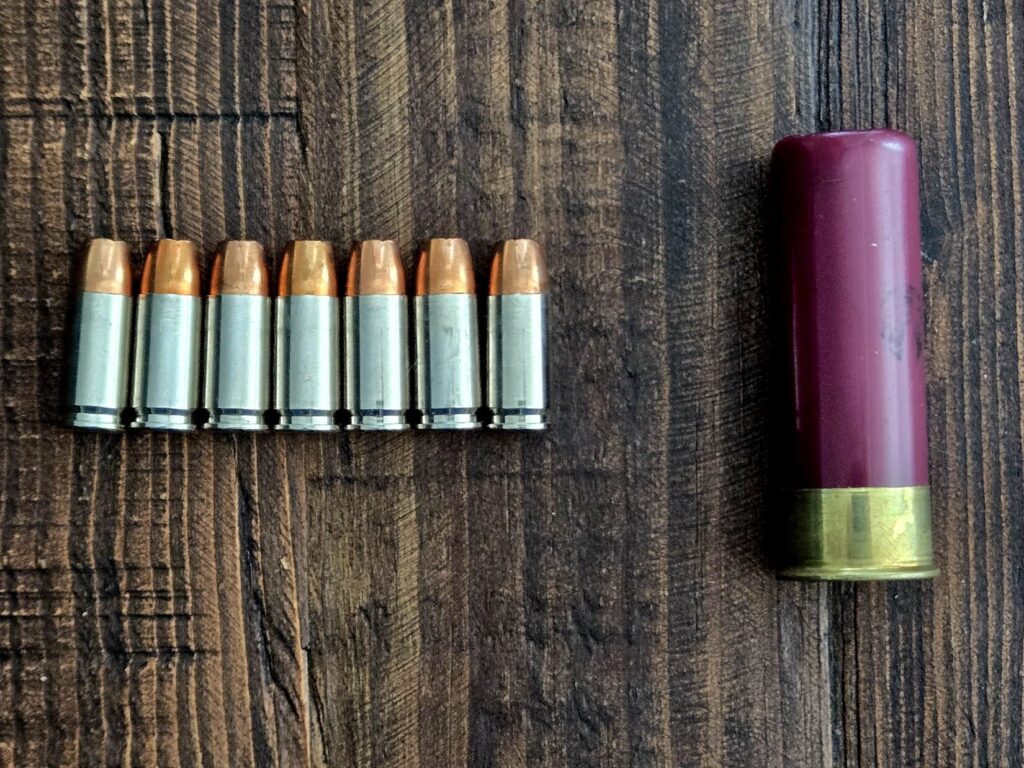
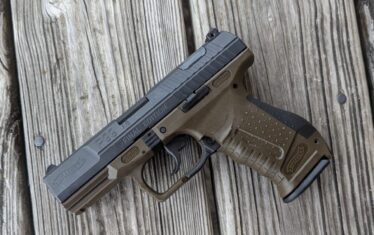
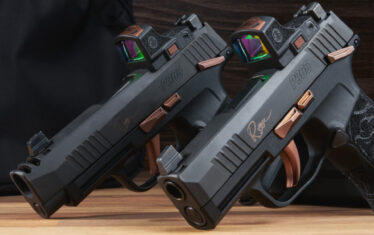
Handguns For Home Defense
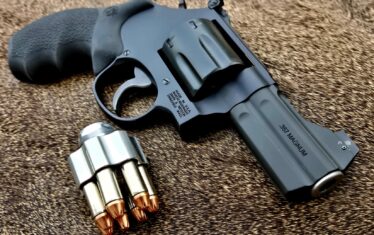
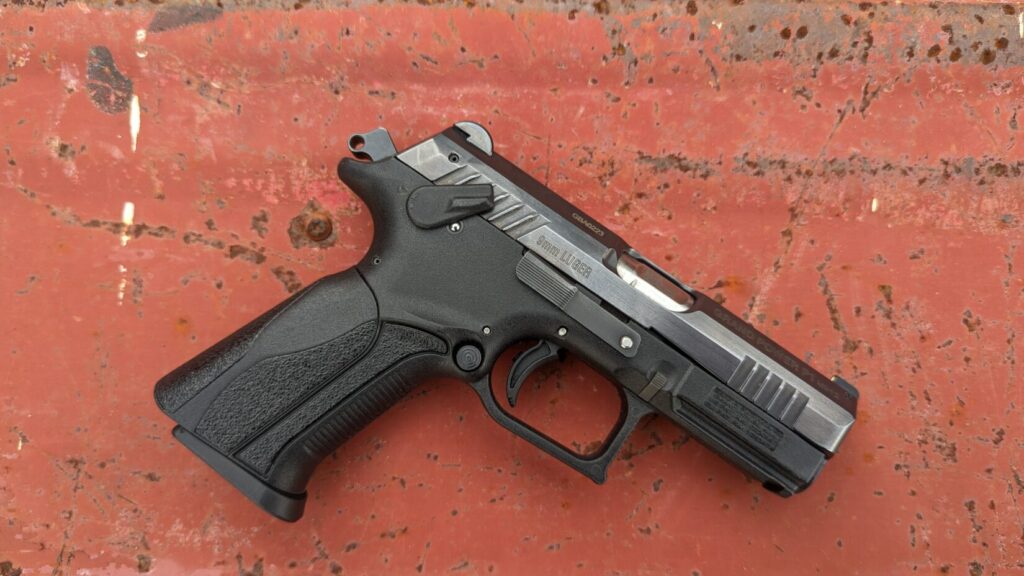
Due to so many different platforms out there, we have to work from a place of common sense. When I say handgun, I mean a modern semi-automatic or, in some cases, a revolver. I don’t mean deringers, rifle calibers, pistols, or any other non-standard platforms.
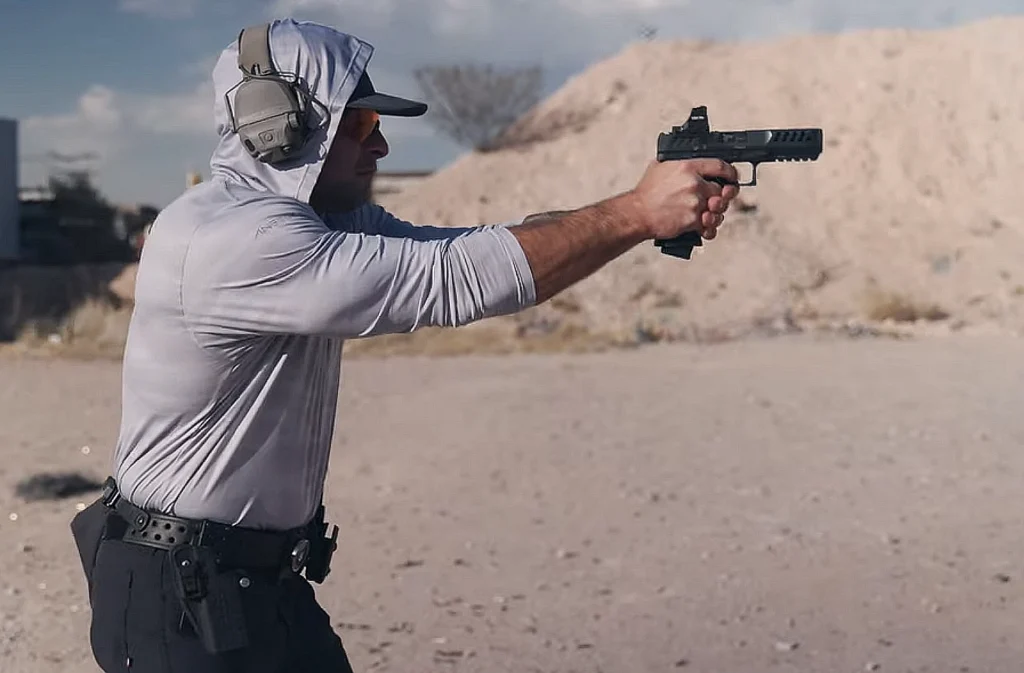
Maneuverability: 3/3
The handgun is, without a doubt, the most maneuverable platform for home defense. It’s the shortest and lightest. Handguns are easy to move around a home with, and handguns can be easily wielded with a single hand to navigate doors, call 911, and carry children to safety.
One Stop Shot Potential: 1/3
Handgun rounds do not offer any secondary wounding characteristics and only damage exactly what they touch. This creates the least effective defensive platform and requires proper shot placement to effectively stop a threat.
Ease of Use: 1/3
Due to the lack of a third point of contact, handguns can be the most difficult platform to accurately shoot, which can be difficult since handguns require excellent accuracy to stop a threat. The lack of a stock tends to make it tougher to control in terms of recoil.
Overpenetration: 2/3
Proper defensive JHPs can still penetrate several layers of drywall and limited wood walls. They do tend to deform and lose energy, but handguns still penetrate more than most people expect.
Value: 3/3
Handguns come at every price point you could imagine. A good handgun can be had for less than $500, and out of the box with sights and magazines. Plus, a home defense handgun can also be a concealed carry firearm.
This doubles its use case and increases its overall value.
Shotguns for Home Defense
Shotguns for home defense should be focused on either pump-action or semi-automatic repeating guns. I’m using the standard tube-fed shotgun that every serious shotgunner would field, using buckshot ammunition. Birdshot is for birds and not for home defense.
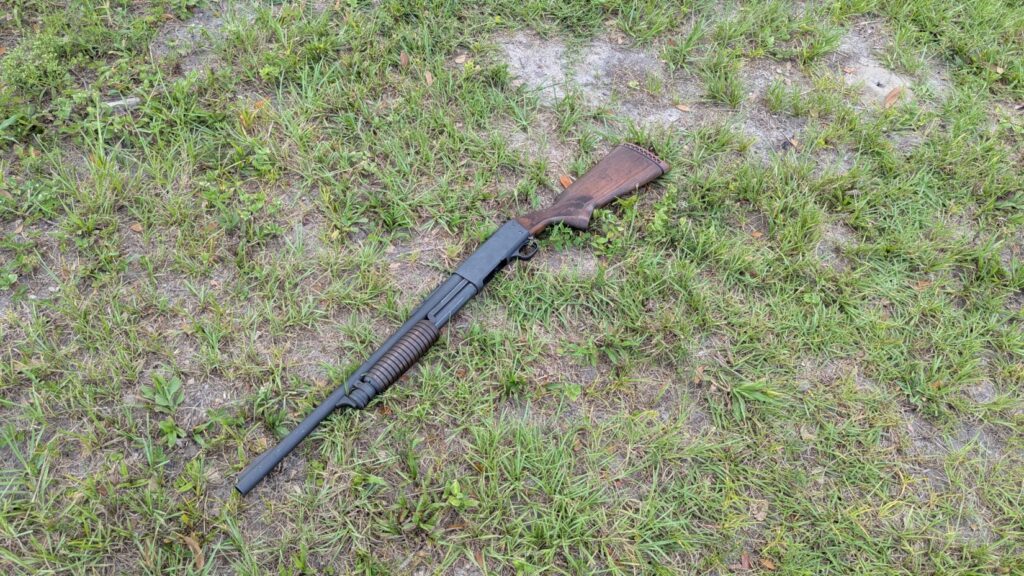
Maneuverability: 1/3
Assuming you’re abiding by the NFA, the shotgun is the longest of the three home defense firearms. The minimum barrel length is 18 inches, and even if you go the short-barreled shotgun route, you’re still fielding a fairly large gun. The weight and length of shotguns make them difficult to field in close-quarter environments.
One Stop Shot Potential: 3/3
Greg Ellifritz’s study on what guns are most efficient at stopping threats in one shot points to the shotgun. A shotgun firing buckshot is firing at least eight .33 caliber balls per trigger pull. This ensures multiple hits per trigger pull.
This creates multiple wound channels and increases your ability to stop a threat with one shot. In a situation where a load of buckshot doesn’t strike something vital, it’s still doing tremendous damage to the threat.
Ease of Use: 2/3
The shotgun does have some challenges, namely recoil, which calls for greater training to effectively use. Shotguns do offer a third point of contact in the form of a stock, which helps support the weapon and makes it easier to control recoil.
The massive power of the shotgun and its buckshot helps you get past minor marksmanship flaws. You still have to aim a shotgun and can still miss, but if you flinch a bit, you’re still likely to put buckshot in an effective location to stop the threat.
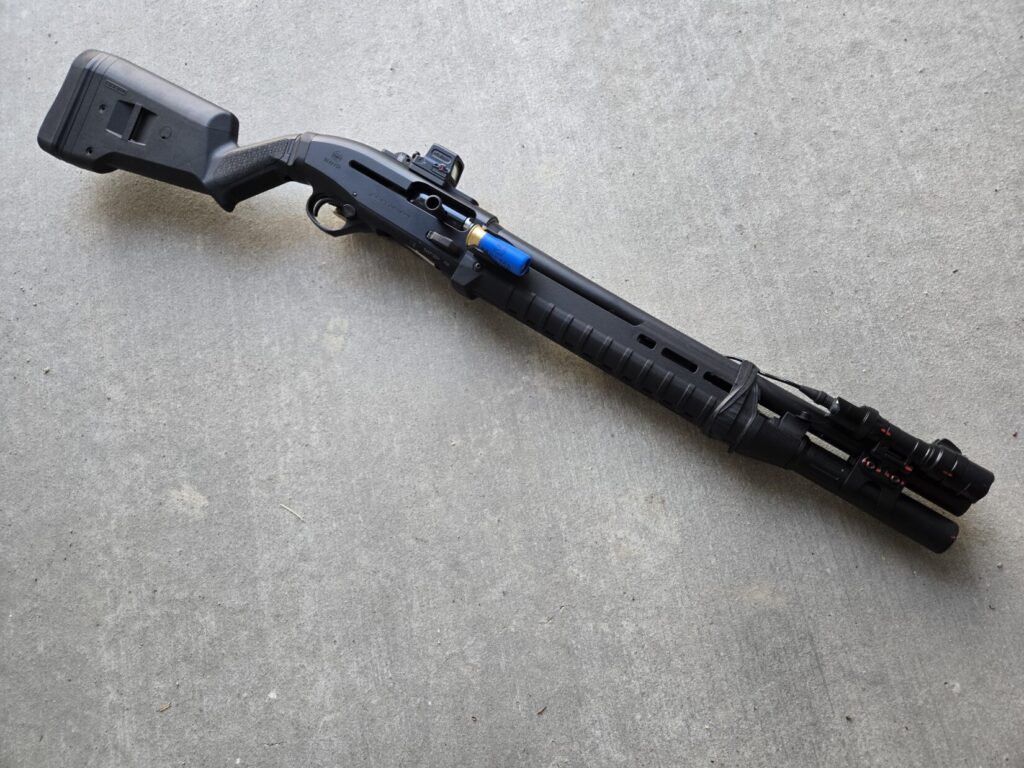
Overpenetration: 1/3
Buckshot offers the highest potential for overpenetration. A multitude of rounds can cause multiple overpenetrations per trigger pull. Shotgun pellets tend to break through drywall and framing with greater effect than other options.
Value: 2/3
You can get a rock-solid, made-in-America pump-action shotgun for less than $300. Something like the Maverick 88 gives you a reliable pump-action shotgun that’s remarkably affordable. Even premium-grade semi-auto shotguns are fairly affordable when compared to premium rifles.
Modern Rifles For Home Defense
Modern rifles imply the use of a semi-auto platform, namely the AR, which is synonymous with the defensive rifle. These chamber intermediate cartridges, like 5.56 and .300 Blackout. While other platforms could fit this gap, there isn’t a massive difference between platforms.
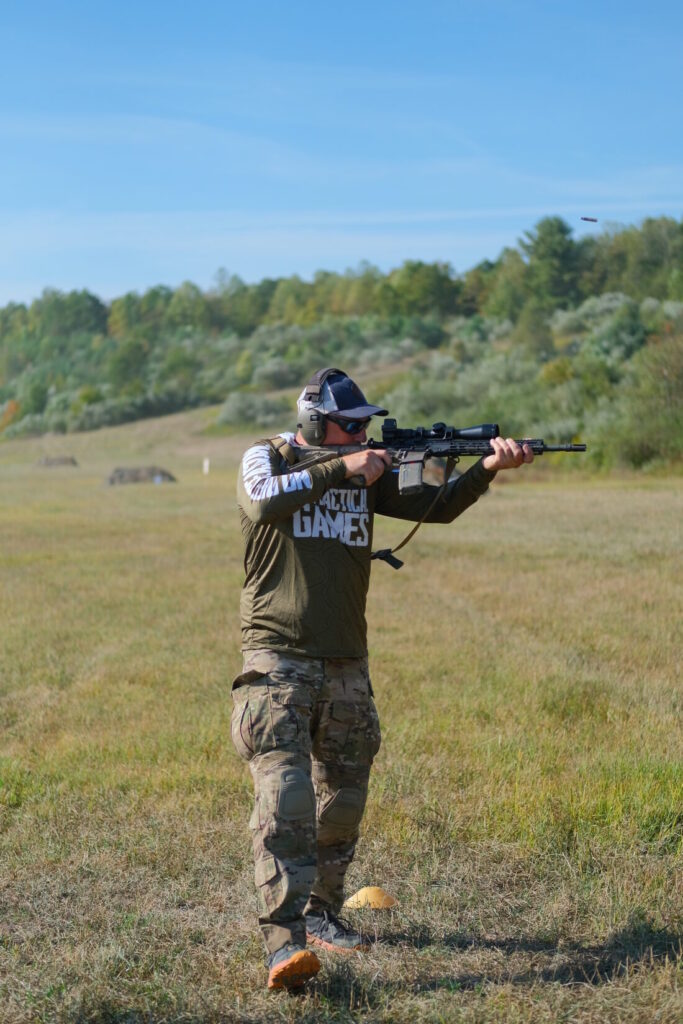
Maneuverability: 2/3
Rifles are shorter than shotguns, but longer than handguns. The modern world of pistol braces and SBRs has introduced extremely short platforms. These can be easy to maneuver indoors and around corners, but are still long guns with long gun challenges.
One Stop Shot Potential: 2/3
Intermediate rifle rounds do offer secondary wounding characteristics. This makes them incredibly capable threat-stopping rounds. At close range, you’re going to see cartridges tumble and fragment, increasing your chance of incapacitating a threat.
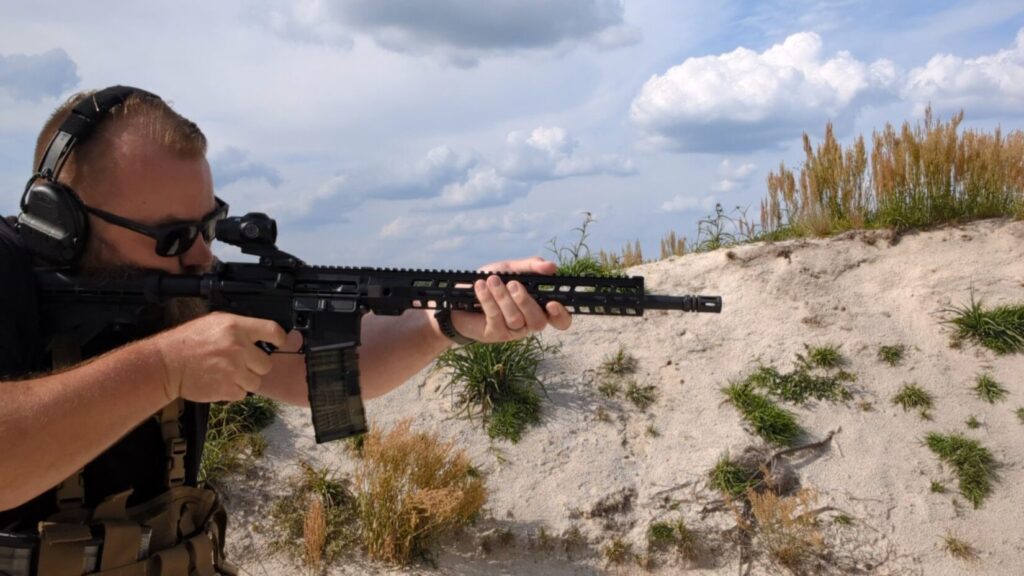
Ease of Use: 3/3
A rifle offers a lightweight platform, complete with a stock, and intermediate rounds offer very little recoil. This makes the gun easy to control and easy to shoot accurately. Even untrained shooters can make effective hits at close range.
Overpenetration: 3/3
Intermediate rifle rounds offer the least amount of overpenetration, particularly .223 and 5.56. These rounds will often tumble and fragment through walls and lose massive amounts of energy as they pass through drywall. If overpenetration is your biggest concern, the .223/5.56 rifle offers you the least amount of risk.
Value: 1/3
Good semi-automatic rifles tend to be somewhat expensive. You can get into budget options, but even budget options are more expensive than budget pistols or shotguns. Most rifles in general do not even come with sights, meaning you need to spend more money to make the platform ready to shoot.
Making the Choice
Each platform has its strengths and weaknesses. Regardless of which option you choose, you should train and practice to overcome your weaknesses. A skilled shooter is going to be more important than the firearm they are choosing for home defense.
This means training inside and outside the home, having a plan, and carefully considering your weapon, ammo, and accessories. It all starts with picking the platform, and to do so, weigh those pros and cons and figure out what’s most important to you.