
It’s estimated that more than half the time, when a crime is committed, the perpetrator we know about (the “principal”) has at least one “accessory,” or accomplice. Often, the abettors operate covertly, behind the scenes.
If you see a fight coming, you can avoid or win it before it begins. This article, the first in a two-part series on how to counter covert accomplices, lists ways you can detect an accessory who is hiding in plain sight, before he or she gets the drop on you.
The Lesson on the Bedsheet
I’m not admitting that I’m old, but when I went through Peace Officer basic, our state police academy’s high-tech, live fire Use of Force simulator consisted of a bedsheet hung over the 5-yard line of the indoor range, and a slide projector.
Yes, a slide projector, like families used to show their neighbors Kodak Instamatic pictures from their vacation. It was more stop-motion than Gumby, but it was how the cadre evaluated us on Use of Force decision-making.
One scenario took place at a convenience store. The first slide was of customers by the beer section. I scrutinized everyone in the picture intently, because it was a shoot / don’t shoot evaluation, not a real midshift coffee run. Missing a weapon or suspicious activity might mean failing the eval, which could be career-limiting. I saw nothing out of the ordinary.
The next slide showed a guy at the counter, robbing the place at gunpoint.
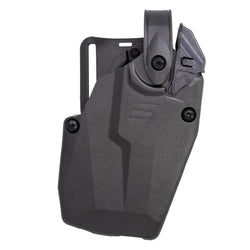
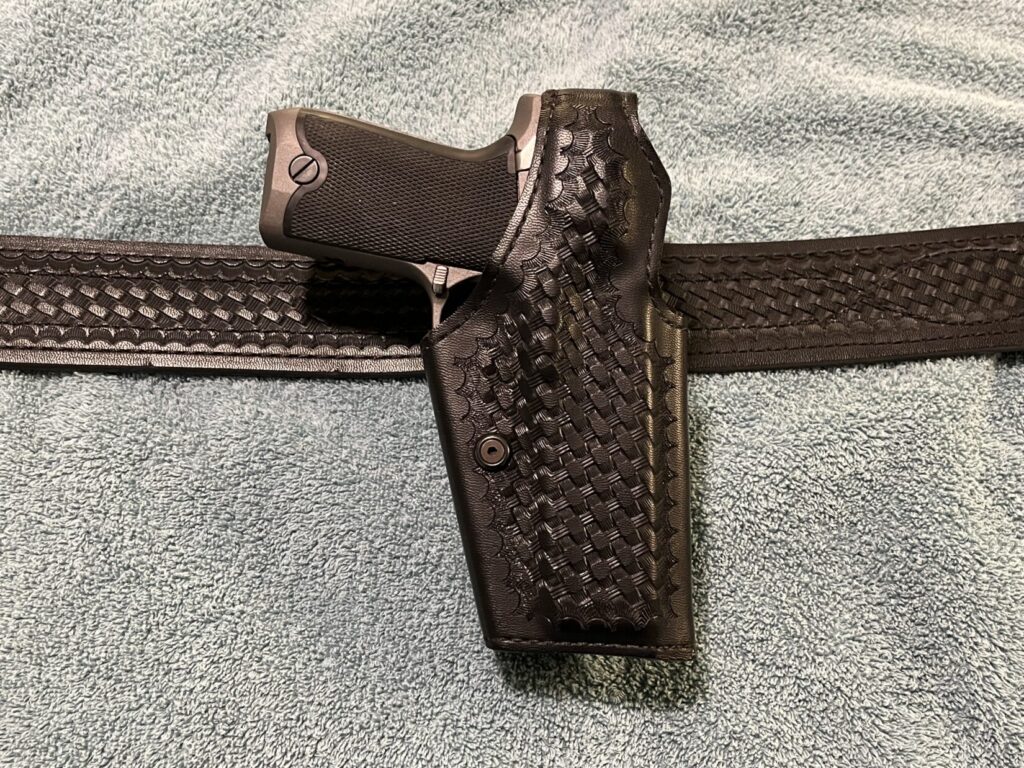
Some of the previous scenarios had been tricky, but this one seemed like a no-brainer. I pulled my Gen 2 Glock out of my state-of-the-art SafariLaminate Model 200 thumb break, and commanded him to drop the gun.
The heinous felon did not comply. In his defense, he was a still photo, not a video, so his ability to respond for good or ill was limited. I drilled the two-dimensional threat through the ears. I was quite proud of my marksmanship.
“Not bad shooting,” said my instructor, “but are you sure you want to jump into the middle of a gunfight in a crowded store?”
“What gunfight?”
. . . said I, flushed with the thrill of victory over a picture projected onto a cotton sheet. “I just pulled his plug. Game over.”
“The second you issued that command, you put the ball in their hands, as to whether or not there’s going to be a gunfight,” my much wiser instructor replied. His feedback confused me, because I had only seen one perpetrator, and in those days, “their” was plural. My confusion was quickly remedied.
“Now you’re taking fire from his accomplice,” he continued, “who was pretending to be a customer off to the side. Perhaps you should’ve backed off, called for backup, and issued a challenge from behind cover if they came out. That would’ve been safer for the bystanders in the store, and for you.”
Nobody in the previous slide had a visible gun or even a printing bulge in a cover garment that I could see. They all looked like ordinary customers to me. But one had been up to no good. Rookies these days might call such an undercover abettor a “sleeper.”
The Covert Accomplice
The sleeper blends in with the bystanders and watches the principal’s back. After the robbery, the accomplice slips away.
If the cops get there before the accessory can exfil, he or she gives a misleading eyewitness description. The other three witnesses might legitimately report that the robber was a 5’4″ white guy who was last seen fleeing north. The accomplice swears, “No, he was a 6′ tall Asian who ran south,” or whatever.
If somebody catches the principal in the act, the covert partner may sneak up behind them and shoot them in the back. Unidentified accomplices pose a grave risk to anyone who intervenes while a crime is in progress.
Shooters, active shooters, and sleepers
On June 8, 2014, a couple in a suicide pact murdered two police officers at a CiCi’s Pizza in Las Vegas. They walked into a nearby Walmart. The husband cranked a round into the ceiling, yelling something about “revolution” before heading toward the ready ammo supplies of the sporting goods counter.
People fled the store. Joseph Wilcox, a responsibly armed citizen, pulled his Glock 19 and followed the man, trying to figure out what was going on.
If a shooting is “active” (ongoing), we press to the threat, bypassing potential dangers in the interest of haste, because time is of the essence. Every shot could end one more life.
But in that Walmart, the husband had only fired one shot. He had the option of shooting again, but if he had been an “active” shooter, there would have been occasional bursts of fire as he encountered victims fleeing the store. As my friend and mentor, Phoenix PD Lt. “Z,” warns his officers, “Do not rush headlong to your death.”
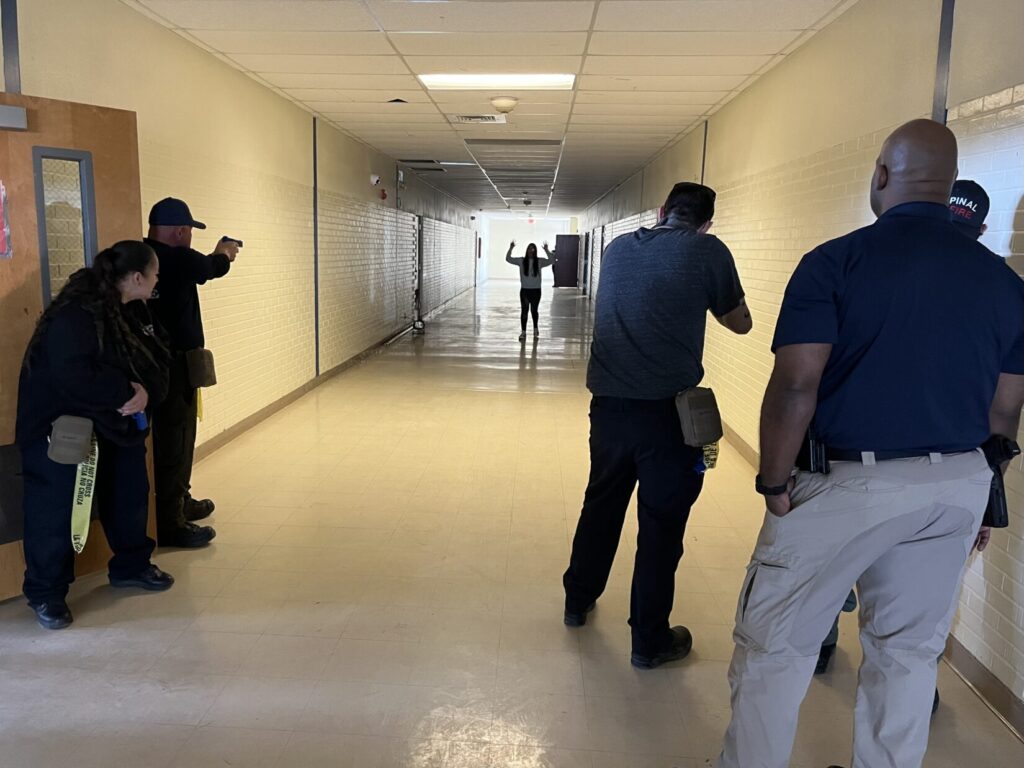
Wilcox passed a woman pushing a shopping cart. Apparently, she hadn’t gotten the message that there was an armed madman on the loose. Her blithely walking deeper into the store should have been a clue, but Wilcox was tunneled in on finding the man who’d fired the shot. Wilcox may have been wondering why she was so unconcerned, when the woman with the cart–the wife–shot him from behind.
Looking the Other Way
Which brings up one way of spotting covert criminals. The FBI ID’ed the Boston Marathon bombers through security camera footage. Each time a bomb went off, every face outside the blast radius turned to look at the explosion–except theirs. Figuring out which bystanders are accessories is the first step in countering them.
People tend to tunnel in on drama. If five of the customers are staring aghast at the clerk getting pistol-whipped, a person reading Cosmo in the magazine section might just be in Condition White (oblivious to surroundings). But a person scanning intently out the windows is probably a lookout.
Crew for Upcoming Heist
When trying to identify a crook’s potential allies, it helps to understand how organized criminals collaborate. In addition to spotters looking out for responders, accomplices might perform any of these functions on their team:
• Cover (armed backup)
• Getaway driver
• Scout
• Holster (carrying guns for prohibited possessors, so they don’t get busted violating their probation)
• Designated distractor
An accomplice might have one or several of those assignments.
Cover
As many reading this know, police use a system called “cover and contact.” The contact officer does all the talking. The cover officer hangs back and maintains a global perspective, watching everyone at the scene for threats. A partner watching your back is the best way to keep covert accomplices from sneaking up on you.
Cops aren’t the only ones who use cover and contact. A person wearing a trench coat in July, standing just inside the front door and scanning the crowd, is probably covering the back of the crook passing the note to the bank teller.
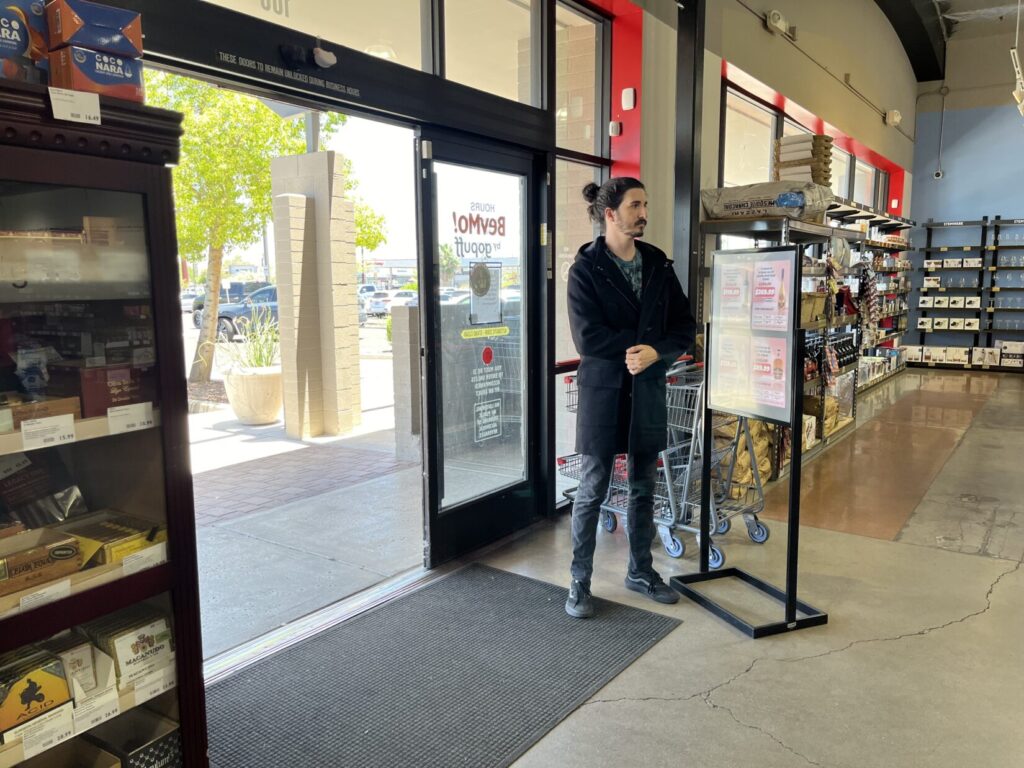
An armed backup’s clothing might not be that obvious. An accomplice killed Police Sergeants Billy Colón-Crespo and Ramón Ramirez-Castro at the Rio Piedras Bakery in Puerto Rico on August 24, 1998. The cover officer had checked the accomplice, but when that “innocent bystander” lifted his shirt, there were no visible weapons.
The “bystander” kept his left elbow pinned as he lifted his shirt. He made that look almost natural. When the cover officer turned his back on him and joined the contact officer interviewing the suspect, the incognito accomplice lifted his shirt and pulled the gun he’d been pinching out of sight in his armpit.
Getaway Drivers
In May of 1974, heiress Patricia Hearst waited in a van on the street while her radical cohorts stole from a Mel’s Sporting Goods in Inglewood, California. When the store manager followed them out and confronted them, Hearst mag-dumped an M-1 carbine at him to cover their escape.
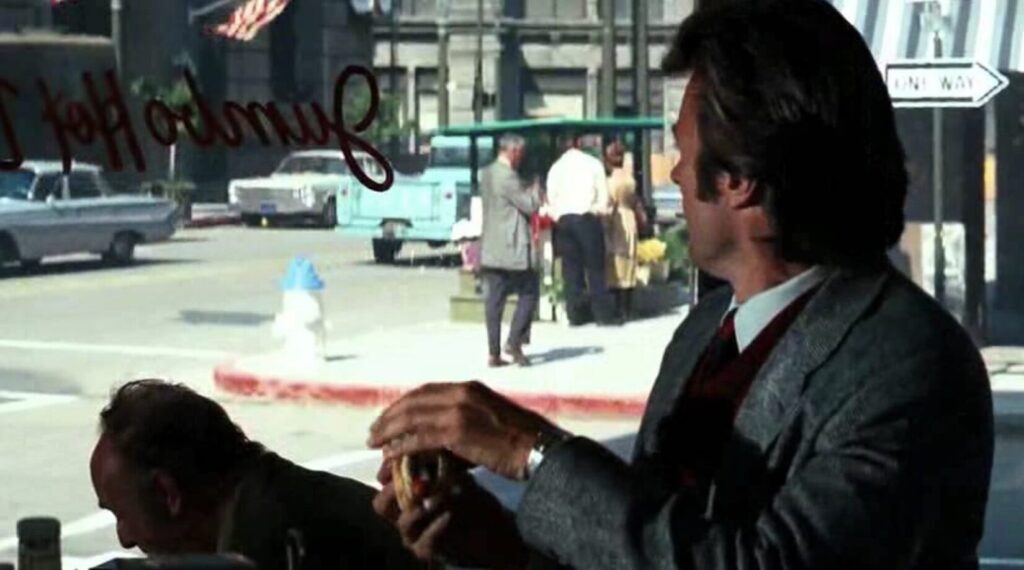
Remember the “211 in progress” scene from the 1971 Malpaso / Warner Brothers classic Dirty Harry? It won’t always be that blatant, with a pile of cigarette butts, a cloud of exhaust, and serious blues on the stereo that only the man payin’ his dues can fully appreciate. But if you see someone in the driver’s seat of a parked car just looking around, ask yourself why.
Scouts
Criminals will “case the joint” to see if there are any witnesses, to gauge security camera coverage, and to count the clerks on duty, before a robbery.
When my friends Ila and John were on a road trip, Ila went into a store while John gassed up the truck. Ila wanted to stretch her legs, so she took her time in there. A former deputy, John was in Condition Yellow (relaxed alert), looking around. His attention was not buried in his phone.
John noticed three men in a car parked around the side of the building, out of sight from the windows. One at a time, they went into the store, walked through the aisles, left without buying anything, and got back in the car. They appeared to be having a serious discussion.
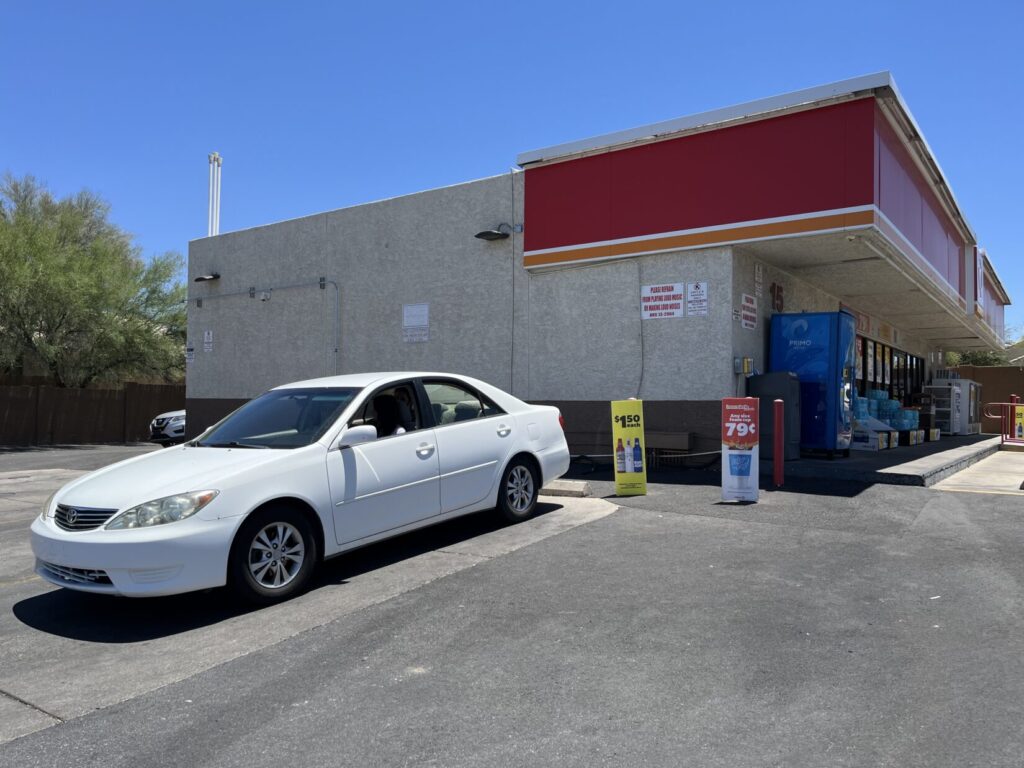
John called Ila, who had also noticed something amiss: “This place is about to get robbed.” They told the clerk, egressed, and called 911 to report suspicious activity. It turned out, they were right.
Double D’s
Designated distractors (DDs) are another type of accomplice. DDs are covert but not trying to blend in; quite the opposite.
The DD asks you for $5 or directions at the gas station, while unseen accomplices sneak up on you from behind the pumps.
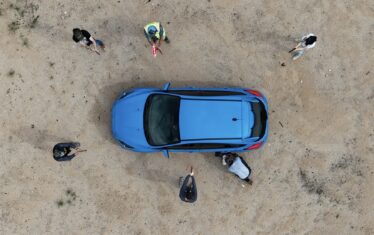
Randy Harris outlined the PESTS EAT FAST protocol for street encounters with unknown subjects in his seminal article, “Dealing with PESTS.” Harris recommended stepping off the X and orbiting a person who accosts you. That way, you can keep the distractor in sight while anyone who had been behind you will come into your field of view.
If you are solo, orbit till you are almost on the opposite side of the person who accosted you from where you started. This is not a natural act. It needs to be rehearsed, or you’ll forget to do it when a stranger has your undivided attention. Fortunately, you don’t need to be on a firing range to role-play this skill with your family. You can practice orbiting in your own backyard.
Watch out for the quiet ones
If you are accosted by a group, the loud, mouthy one is the Double-D. He’s there to take your attention from the quiet one hanging back and looking around. If anybody has a gun, the quiet one does. Don’t get so tunneled-in on the loudmouth that you miss the others fanning out around to cut off your escape routes.
DDs are nothing new. Cunning tacticians on every side have used subterfuge throughout history. On December 21, 1866, Red Cloud had Crazy Horse and a few other chosen warriors lure Captain Fetterman over Lodge Trail Ridge, beyond the fire support of Fort Phil Kearney, into the ambush that killed everyone in Fetterman’s command.
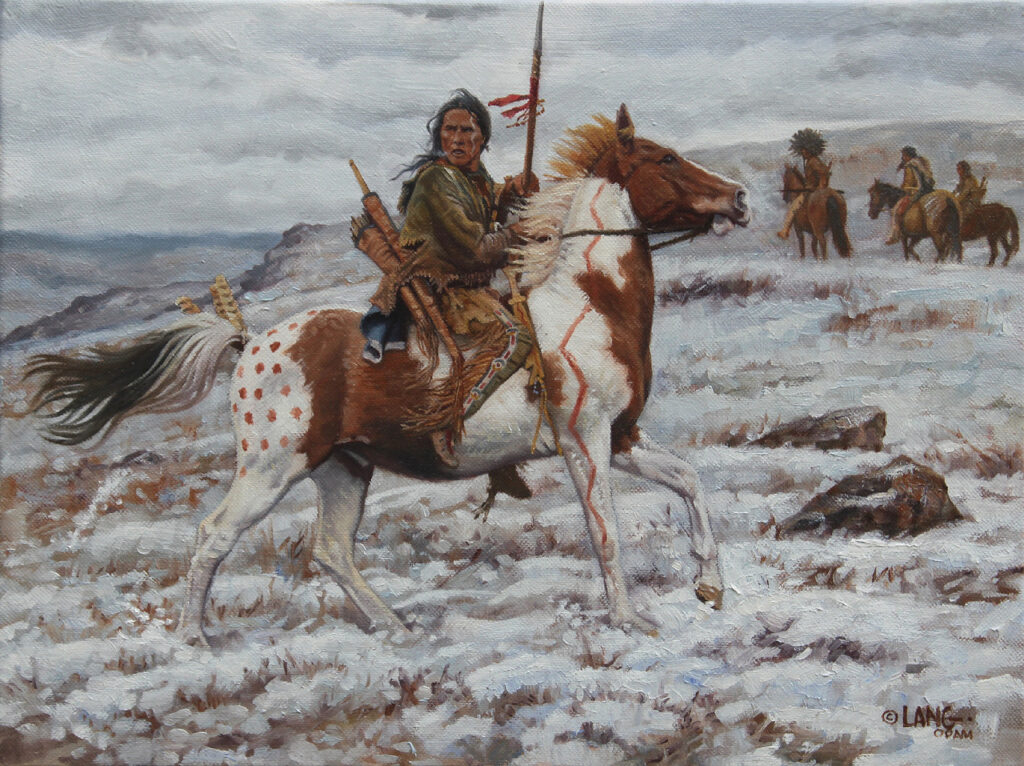
In this painting by renowned Western artist Steven Lang, Crazy Horse glances over his shoulder to ensure the troopers chasing them are close enough, but not too close.
Understanding that the person hogging your attention could be intentionally distracting you from danger is the first step toward not being bushwhacked.
In the next installment of the Covert Accomplice series, we’ll discuss options you have for dealing with the bad actor’s backup.