Anything can fail; we accept that, and we attempt to mitigate it as much as possible. When we discuss firearms and duty and defensive use, however, we are looking at life-and-death failure points. Because violence often thrives in the shadows, overcoming darkness becomes a non-negotiable part of that mitigation. Weapon-Mounted Lights (WMLs) allow us to establish positive identification of a threat and to accurately engage that threat.
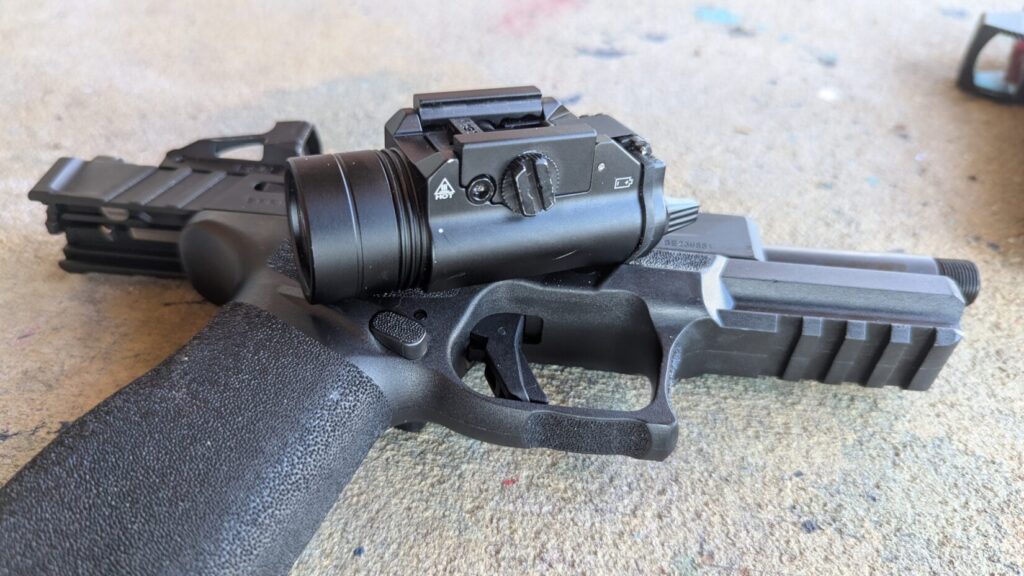
You can’t accurately shoot what you can’t see, and you should not shoot at things you can’t identify. WMLs are becoming more and more common. In the military and police world, they’ve become standard issue and are quickly becoming the norm on concealed carry guns.
Whenever you add an accessory to your firearm, you should be aware of its potential failure points. WML failures fall into four categories: mechanical, electrical, environmental, and operational. We’ll discuss those failure points and ways to mitigate failure.
Mechanical Failure Points
Anything made by man will eventually fail; that’s a rule of life. The only exception is the Nokia 3310. Weapon-mounted lights are often subject to a fairly rough-and-tumble life.

They are constantly subjected to recoil, which means G-forces going back and forth, which creates wear. The best mitigation for mechanical failures is to invest in high-quality weapon-mounted lights by brands like Surefire, Streamlight, Modlite, etc.
The Clamp
The clamp—the portion of the light that connects to the gun—is a weak point. The light can detach dramatically from the gun while firing, which puts you in a poor position when you need a weapon-mounted light.
This is most often caused by an improper connection. A WML must be more than fingertip-tight. Most reputable manufacturers provide torque specifications, and they must be followed. Thread locker can also be invaluable, but be cautious if you have to remove the light to swap batteries.
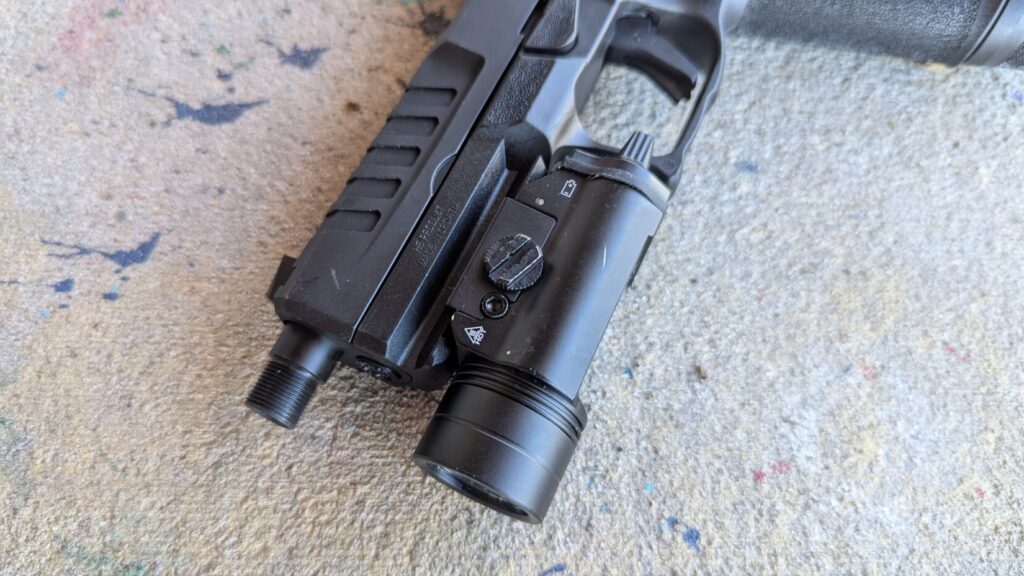
One of the best things you can do is inspect the mount every so often. A witness mark with a paint pen or even nail polish can show you anytime the screw clamping the light to the gun has moved or rotated.
The Switches
Switches activate and deactivate the light. When used aggressively, they can break or fail. This can make it difficult to engage momentary or constant modes, to turn the light off, or even turn it on.
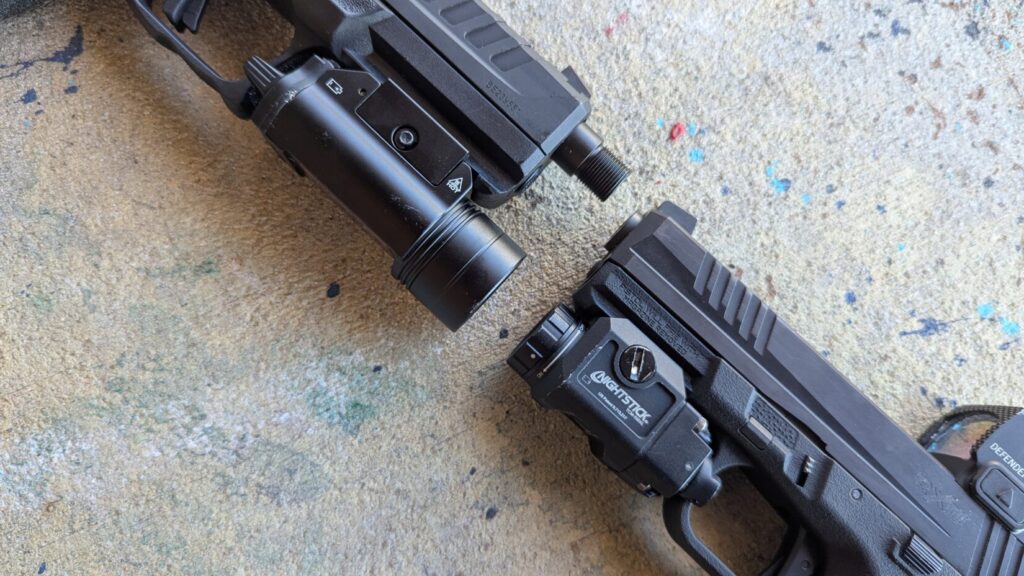
Switches can be put under a lot of stress when activated. If you’re fairly rough on your Weapon-mounted lights, these switches can break. The best mitigation is to be a little gentler. They don’t require much force to activate, so don’t abuse them.
WML quality comes into play here more than anywhere else.
The Lens
The lenses are often made from glass or high-impact polymer. They are likely the biggest weak point. They can crack or break when they strike something hard or are dropped, which can destroy any protection of the bulb and internals.
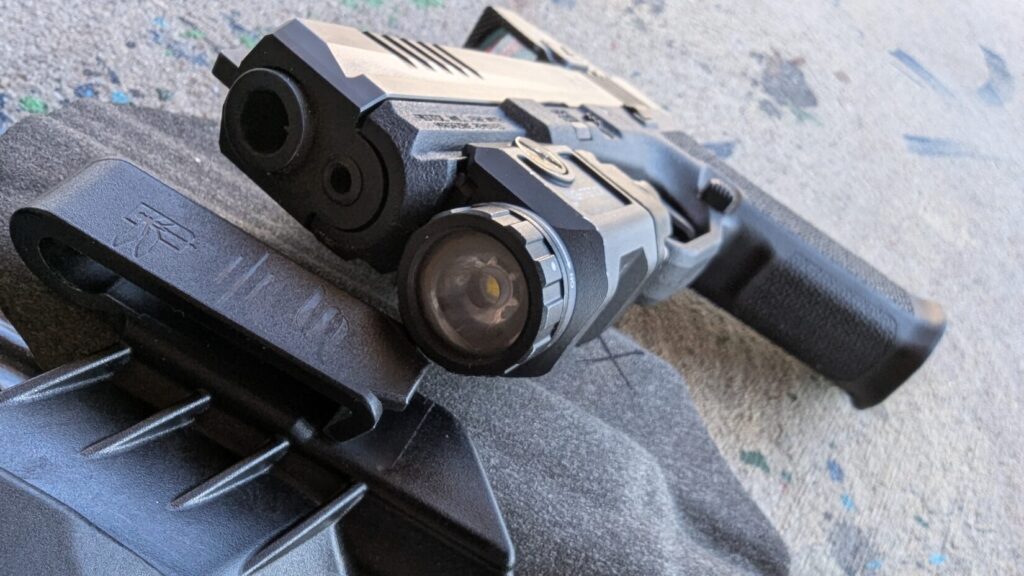
The best mitigation technique is to avoid slamming or dropping your WML. The second best is investing in a high-quality one. A good light will recess the lens to provide a degree of protection from drops and slams and use more durable materials to ensure a ruggedized design.
Electrical Failure Points
Electronics are always failure points. Compared to something mechanical, electronics can be downright fragile. We are relying on batteries and internal circuitry.
The best mitigation for electronic failures is the same as for mechanical failures: Buy a quality weapon light.
Let’s break down some of the issues.
Battery Terminals
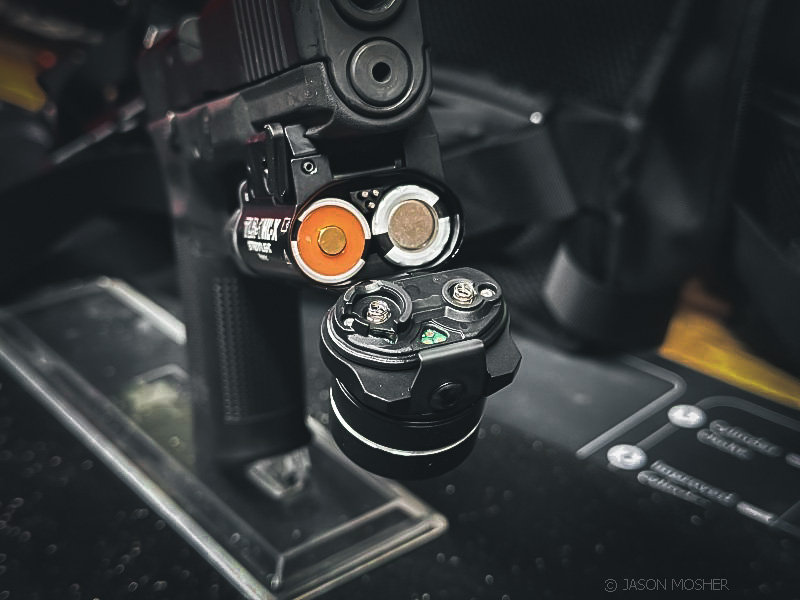
The battery terminals are springs and contact points that feed juice from the battery to the light. Springs can potentially wear out and decompress permanently due to fatigue, but I’ve owned some lights for over a decade and never observed this particular failure.
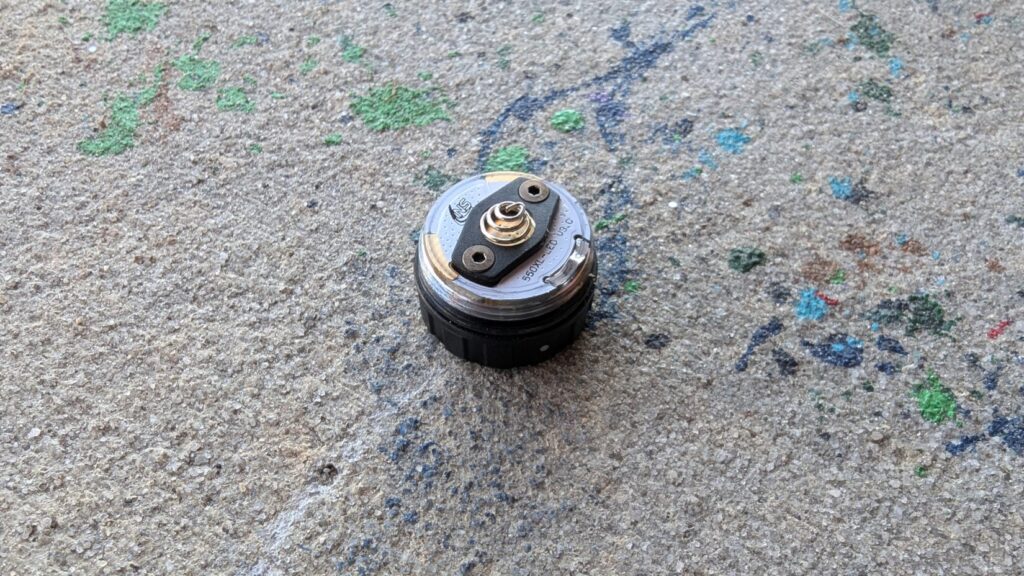
The most likely failure is corrosion or dirty contacts. This prevents the juice from getting to the bulb. The best way to prevent this is to occasionally clean the terminals.
A pencil eraser is my go-to option. It’s small enough to fit into battery compartments and abrasive enough to clean terminals. Heavy corrosion may call for a bit of white vinegar and a pencil eraser.
Circuit Board Failure
Weapon-mounted lights use circuit boards like any other electronic device. These circuit boards can be a weak point, specifically the solder joints, which have to deal with the shock of recoil. This is why shotguns kill lights so fast.
Preventing this is difficult, but purchasing a quality weapon light is the way to go. Look for weapon lights with high drop ratings, which usually translates to good recoil resistance.
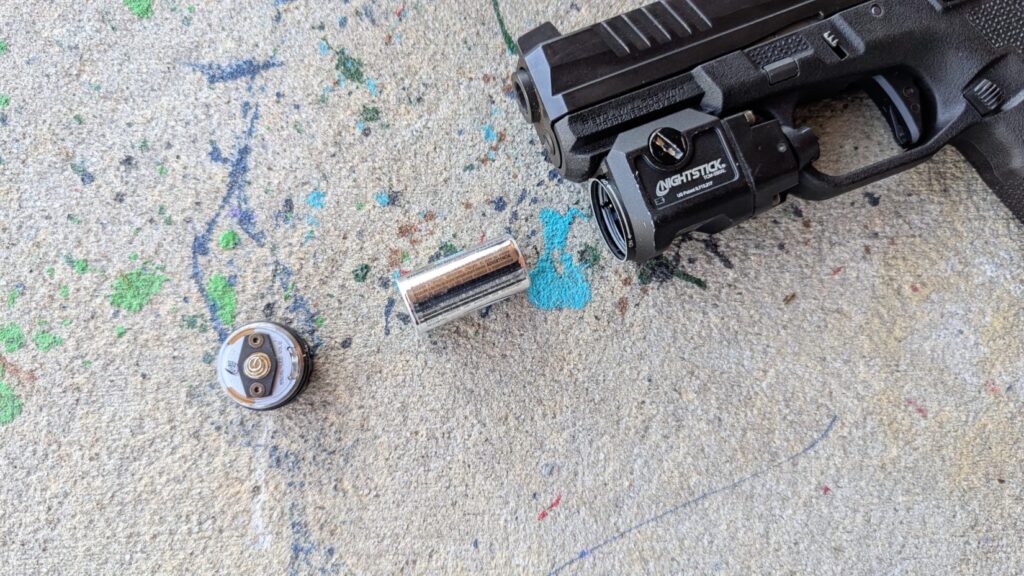
Some companies will also pot specific parts—meaning seal them in an epoxy—to prevent this issue.
Others rely on heavy-duty soldering. When comparing the Streamlight to the Harbor Freight clone, the Streamlight features significantly larger, more robust solder joints that are clearly built for long-term reliability.
Battery Failures
Not all batteries are equal. Some batteries don’t do well under recoil and cannot handle the current draw or thermal load of powerful WMLs. The battery can vent or rupture, creating a fun failure in the middle of the night.

We mitigate this by using good batteries. Streamlight and Surefire-branded batteries are designed for recoil and weapon lights. Stick to those high-quality batteries in your weapon-mounted lights.
Environmental Failure Points
The environment can be particularly rough on your light. Water, dirt, wind, and carbon can all act against your weapon light’s best interest. There are two main failure points, and they reflect quality and general maintenance.
Seals Break
Not Navy SEALs or seals in the ocean, but the seals that keep environmental elements out of the light. With most weapon mount lights, these are going to be O-rings on or near anything threaded.

O-rings can wear out and crack, which allows for water and dust to access the inside of your optic. We can’t stop them from wearing out, but we can occasionally check on them and replace them when we notice they are dried out, frayed, or too loose.
Carbon is a Pain
The head of your weapon-mounted light is most commonly either flush with or a little past your muzzle. Regardless of its position, any light can get coated in carbon.
That black, gross stuff coming out of the barrel of your gun can gather on your light’s lens. Get enough of it, and it will stain the lens and reduce light output. It’s a particulate that tends to accumulate.

There are a few different ways to take care of this problem. Dark Matter Concepts offers the CMD (Carbon Mitigating Device), which is an add-on device to protect the bezel and lens of a WML from carbon buildup.
If you don’t want to add a device to your WML, there are cleaners specifically meant to remove this carbon fouling without harming your lens. Paragon WLC is my go-to. It’s critical to use something that won’t damage the lens, and you certainly don’t want to brush it away.
Another method that can work is the Chapstick trick. If you have a mounted weapon light and aren’t going to be using it, you can coat the lens with Chapstick. The carbon gathers on the Chapstick, and you can quickly wipe it away after training. I prefer to just clean it off, but if you’re in a bind, Chapstick is an option.
Operational Failures
Sometimes the weapon-mounted light isn’t the problem. Sometimes it’s the user or their gear. Like any firearm-based tool, the WML has its own operational tactics and gear requirements.
Poor Training
Training and practicing with your light is a must. Life isn’t as easy as throwing on a WML and being an expert. Like anything gun-related, you need to train with the light to use it properly.
You need to learn when to use momentary and when to use constant on. Users should train in-depth to shine, shoot, or move after using a light.
Anytime you point the light at something, you’re pointing your gun at it too. Learning how to use the light to bounce the beam off floors and roofs can be invaluable.
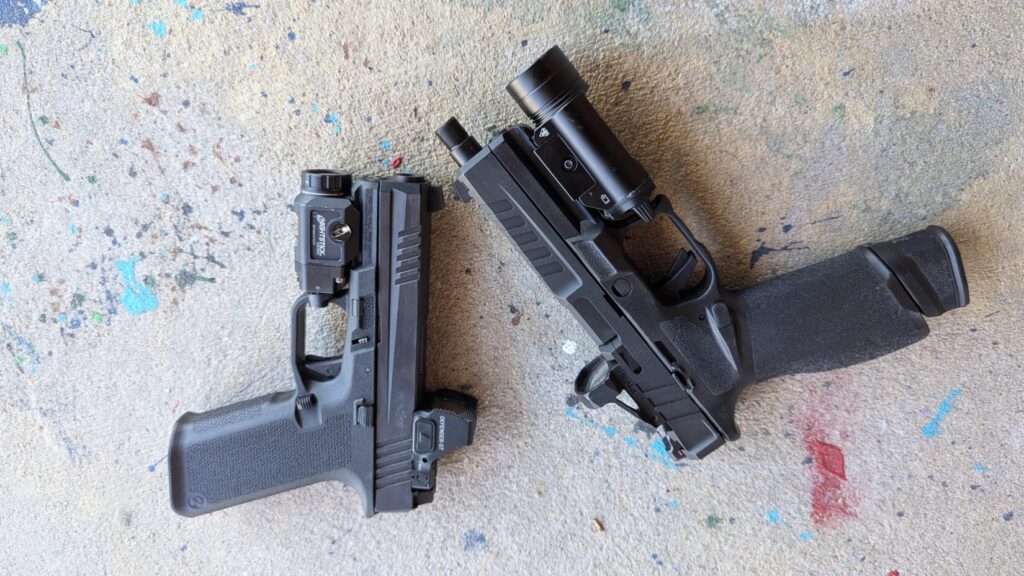
Two Is One
I’m a big believer in carrying a handheld light and my weapon-mounted light. I can point the handheld anywhere and use it while my gun remains holstered.
If low-light environments are a major concern, then I would advise you to bring both a handheld and a weapon-mounted light.
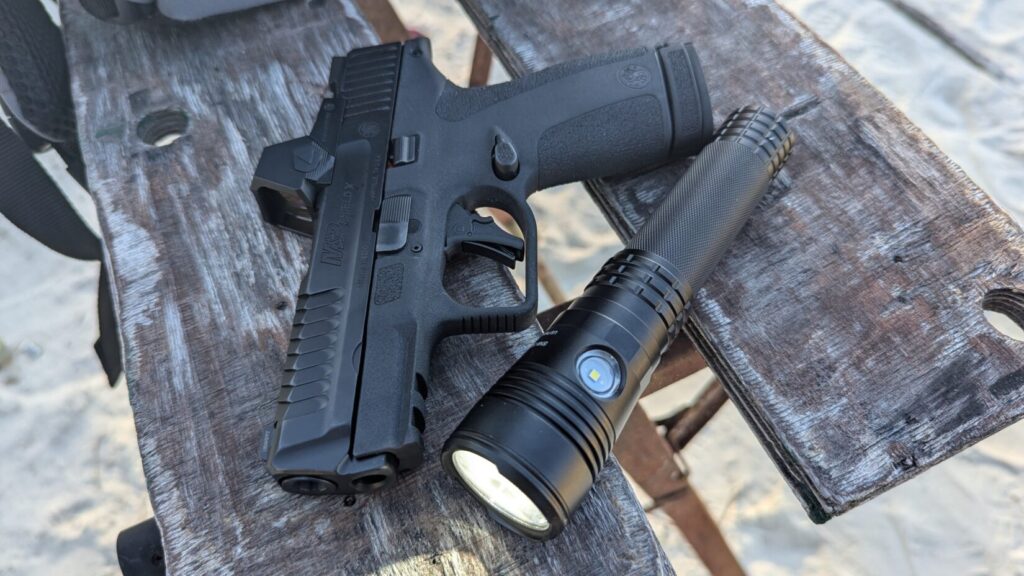
This way, you can have a light for navigating, conducting non-fighting tasks, and similar tasks when your gun remains holstered.
Having two lights means that if you run into a failure with one, you always have the other.
Gear Failures
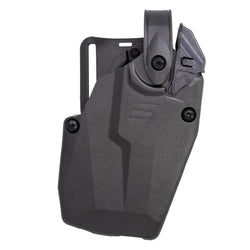
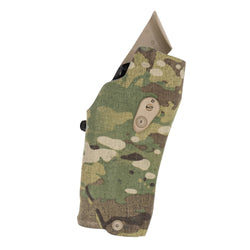
When choosing a gun and light combo, you should conduct some research into holster options. Having a combo that doesn’t have a dedicated holster won’t take you very far. Sometimes you might have a gun and light that just happens to fit a holster made for a different light.
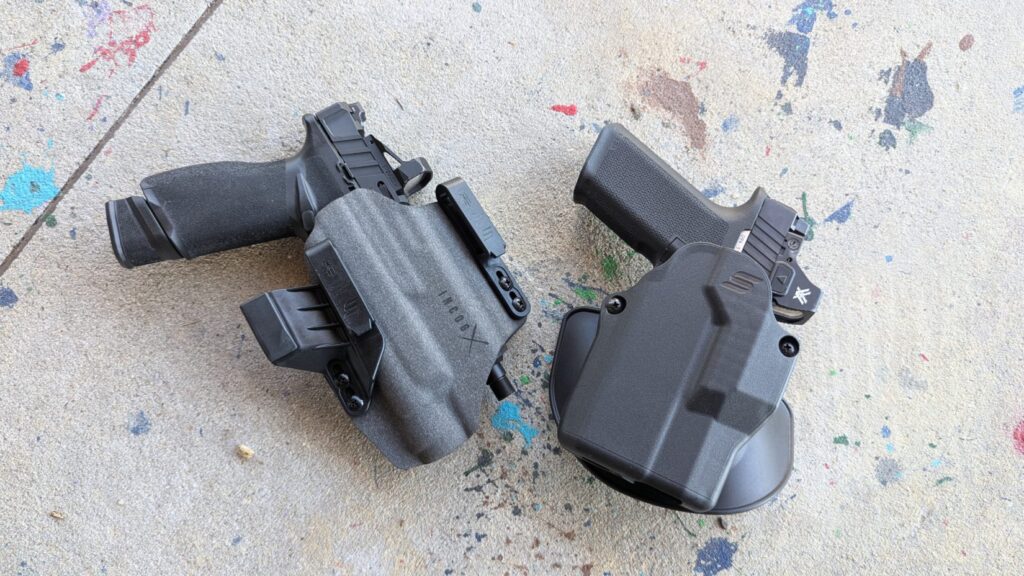
If this is the case, make sure you’re observing for any interference in the switches with the holster body. The last thing you want is the holster activating your light. Additionally, an improper fit may challenge retention mechanisms you rely on.
Always ensure your gun and weapon-mounted light combination is paired correctly.
Fearing Failure
If you can only take two pieces of information from this article, let it be these two:
- Purchase a quality weapon-mounted light from an established brand with a history of success.
- Apply proper maintenance to the WML. It’s just like a gun; it runs best when well-maintained.
Weapon lights have failure points, but they aren’t anything that can’t be dealt with. Understanding how weapon lights fail is the key to preventing failure.