

While I muse about writing as my full-time profession, I’m a Historian by trade. And yes, I’ve always imagined giving lectures to a room full of eager students, discussing Aegon’s conquest of Westeros (wait… that’s the wrong history), all while dressed in a sports coat with elbow pads. Yes, simple dreams. But not all things are meant to be. COVID put a pin on any attempt to pursue a PhD, and honestly, higher education is in shambles.
So now I apply all my skills and knowledge from grad school to crafting entertaining articles for the firearms and outdoor industries (trust me, this is way less stressful than prepping for a dissertation).
As a historian, one of my great passions is reading. In many ways, it’s my oldest hobby. My mother was an elementary school teacher; from an early age, she impressed upon me the importance of reading and comprehension. My love of reading comes from her.
But I fully understand that reading history can be boring and dry—especially academic history. Sometimes these tomes get so bogged down in the minutiae that the historian forgets that people actually need to read them. And then there’s the opposite end of the spectrum—popular history. I feel these skip over the minutiae and important details completely to provide a more entertaining story.
To me, the best history lies somewhere in between. So, for this article, I challenged myself to find history books that offer detailed, well-researched history but also read like thrillers. Hopefully, something on this list will spark your interest.
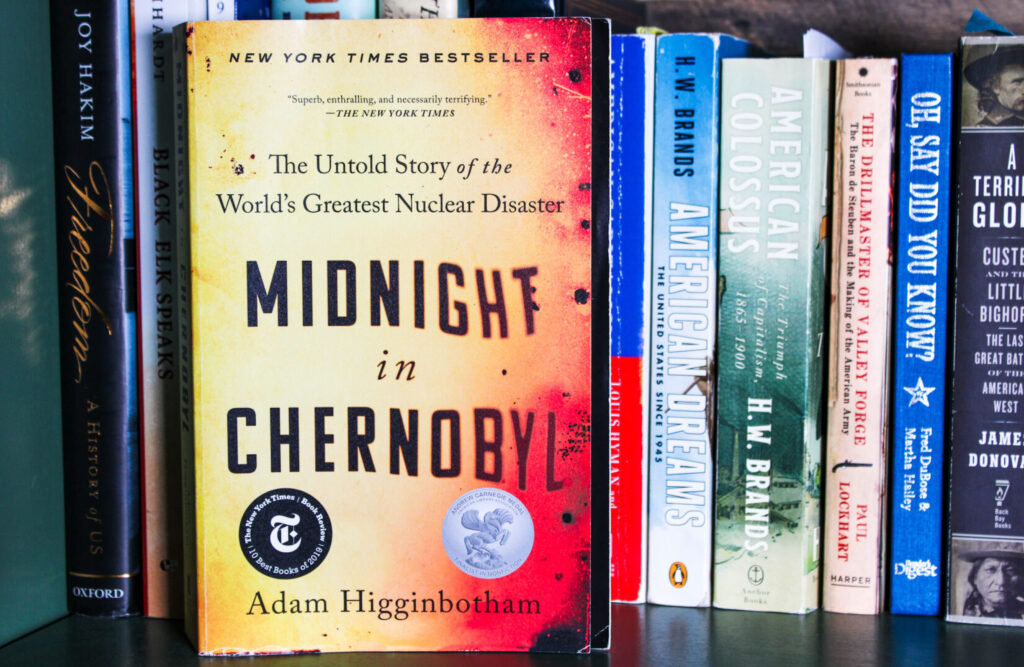
MIDNIGHT IN CHERNOBYL BY ADAM HIGGINBOTHAM
In Midnight in Chernobyl, Adam Higginbotham guides readers through an understanding of the Soviet Nuclear-Industrial complex and how a segmented, compartmentalized society led to the worst nuclear disaster in history. If you remember, in 2019, HBO released the mini-series Chernobyl (which was mostly excellent). That show was largely based on another book that primarily follows the traditional Soviet narrative.
Higginbotham, however, reconstructs the incident and examines the aftermath. What he presents is a chilling story of failure, deception, and dishonesty. Instead of blaming an individual, he puts the Soviet system itself on trial.
Midnight in Chernobyl is the most well-researched yet accessible account of the event. It combines a narrative approach to recreating the meltdown with thorough research to guide us through the investigation that followed and the event’s global impact.
Higginbotham is one of my favorite writers today. I recently finished Challenger, the story of the tragic 1986 Space Shuttle Challenger disaster. In this, he traces the history of NASA, the development of the Space Shuttle, and the ultimate failure of a bureaucracy meant to send man into space.
Higginbotham is an expert in recreating tragedy and finding the truth behind it.
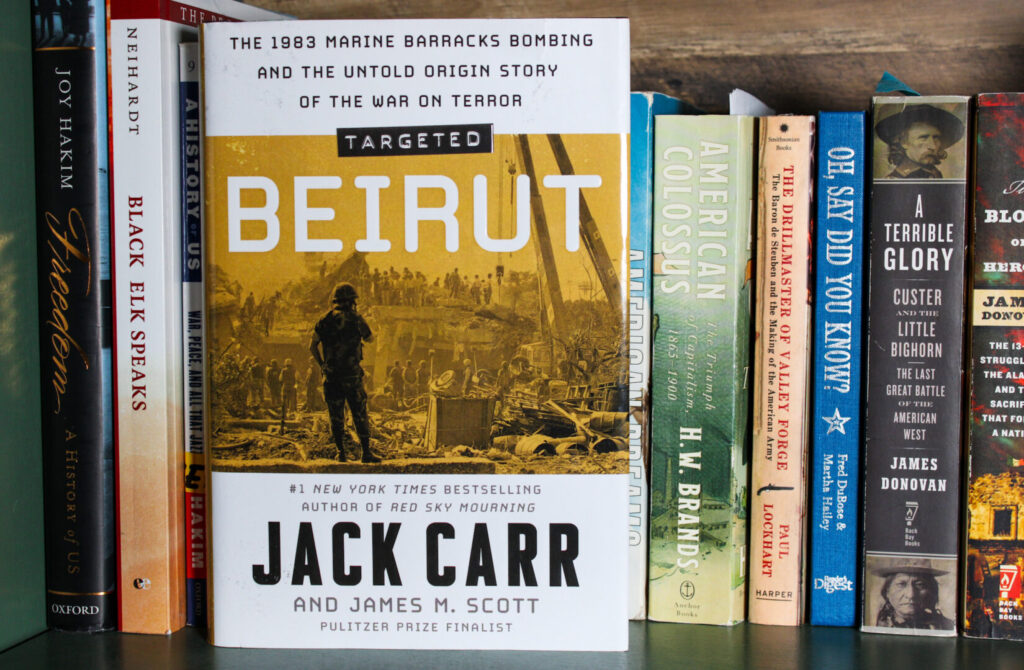
TARGETED BEIRUT: THE 1983 MARINE BARRACKS BOMBING BY JACK CARR & JAMES SCOTT
If you’re building a list of history that reads like a thriller, it’s hard to ignore what Jack Carr and James Scott accomplish in Targeted: Beirut. Of course, this is the Jack Carr of the widely successful Terminal List series, which has TV adaptations on Amazon Prime (starring Chris Pratt).
The book revisits the 1983 Marine barracks bombing in Beirut—an attack that killed 241 U.S. servicemen and still echoes through American foreign policy and Marine Corps culture today.
Carr and Scott take what is a complex, often second-guessed episode and turn it into a fast-moving, deeply human narrative. They balance the political, military, and humanitarian angles without getting bogged down, keeping the pace tight while still doing justice to the subject. The research is extensive, the sourcing is solid, and the story is told with a clear perspective that never loses momentum.
Carr is at the top of the political thriller genre today. So reading a work of history by him is a no-brainer.
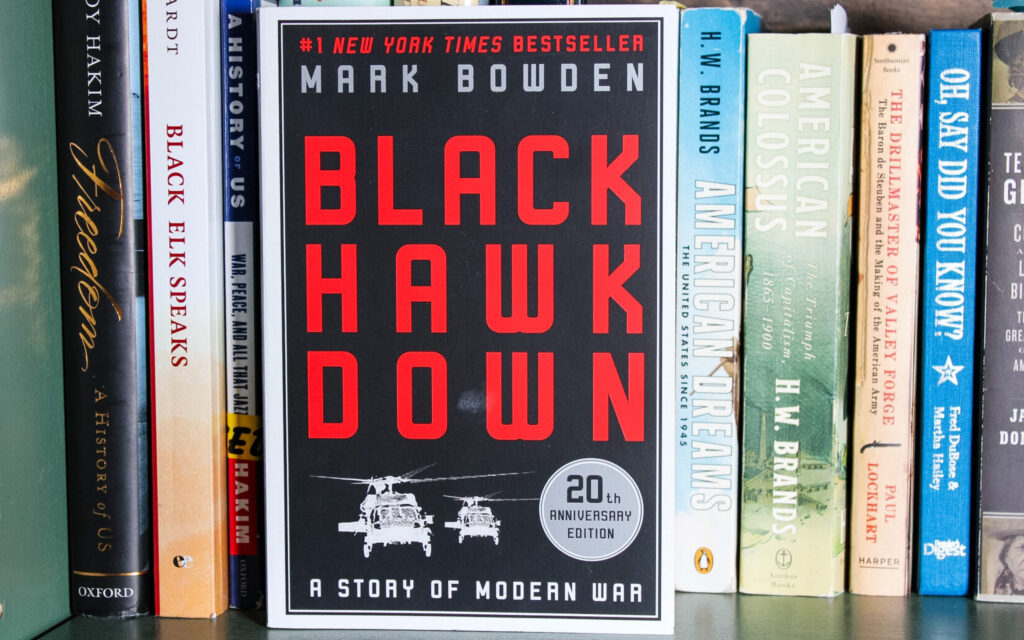
BLACKHAWK DOWN: A HISTORY OF MODERN WAR BY MARK BOWDEN
I have no doubt that, as a self-respecting gun guy or girl, you’ve seen the film Blackhawk Down. Personally, it’s my favorite war flick. The film captures the emotion and grit of the battlefield. You feel the intensity of the fight. The book, by Mark Bowden, does the same.
Blackhawk Down is one of those rare nonfiction works that reads with the intensity of a novel but never strays from the facts. It recounts the 1993 Battle of Mogadishu, where a mission to capture key lieutenants of warlord Mohamed Farrah Aidid spiraled into a prolonged urban firefight after two U.S. Black Hawk helicopters were shot down.
Bowden tells the story from the ground level, shifting among Rangers, Delta operators, and helicopter crews as the situation unfolds in real time. The chaos, confusion, and split-second decision-making come through clearly, but so does the discipline and resilience of the soldiers on the ground. It’s detailed without being overwhelming, and the pacing never lets up. More than anything, it captures how quickly a “simple” mission can collapse—and what it takes to fight through it when it does.
I can’t even count how many times I’ve read this. I know it’s enough that I’m on the second volume, having worn through the first (which is a shame. It was a mass-market film edition). I encourage you to read this book, then follow up with the film. I’d also recommend The Road to Unafraid by Jeff Struecker, which offers his account of the events (portrayed by Brian Van Holt in the film).
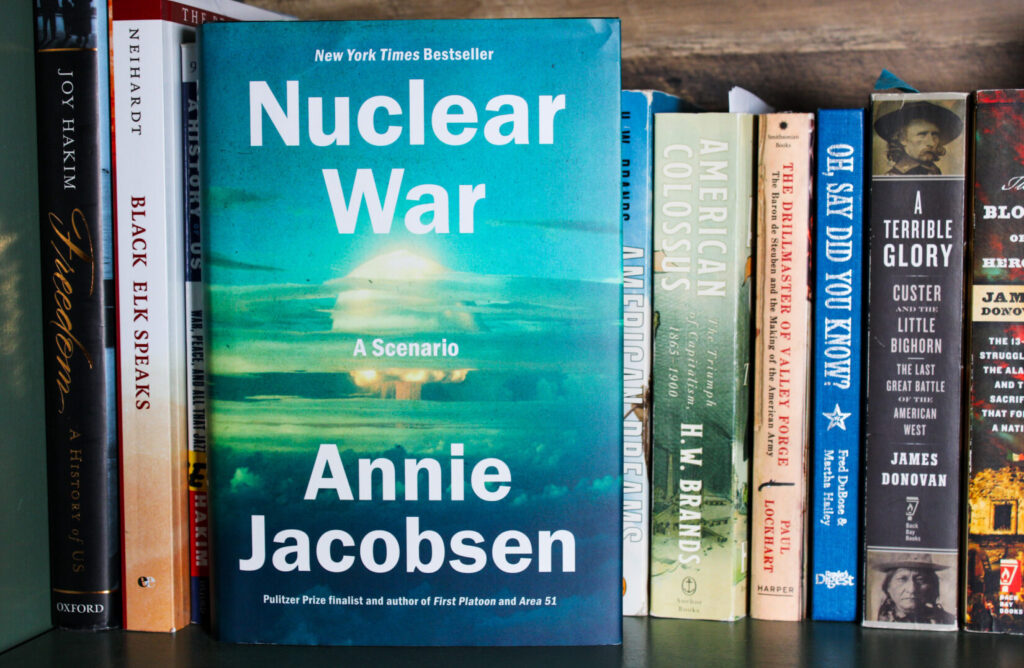
NUCLEAR WAR: A SCENARIO BY ANNIE JACOBSEN
I was unsure whether or not to include this one. It’s part history and part what-if. It depicts an event that could happen, one that we all hope never does. But I’ve read several books by Annie Jacobsen, who’s one of the best investigative journalists today. She’s not afraid to rattle the cages and uncover the truth, so I decided to add it.
What we all should fear in a nuclear world is a “bolt out of the blue.” An unprovoked nuclear launch. Jacobsen explores this nightmare scenario and follows it in real time. Starting with a surprise nuclear launch, the book details—minute by minute—how the United States would detect, assess, and respond, revealing systems designed to operate faster than human decision-making can handle.
Jacobsen relies heavily on expert interviews, declassified documents, and FOIA (Freedom of Information Act) queries, but the writing never feels overly academic. The timeline structure maintains the tension, illustrating how little room for error exists once the process starts. It’s technical without becoming bogged down in details, and the scale of destruction is presented in a way that feels immediate and undeniably real.
The book’s most startling realization is that once the chain reaction begins, there’s no way to truly stop it. It’s haunting, like any good thriller should be.
I’d recommend pairing this book with the Netflix original, House of Dynamite. While I don’t think there’s any connection between Jacobsen’s book and the film, it follows a very similar narrative.
Again, Nuclear War might not be the most historically derived narrative, but it uses all the information we know to map out an Armageddon scenario.
DEAD WAKE: THE LAST CROSSING OF THE LUSITANIA BY ERIK LARSON
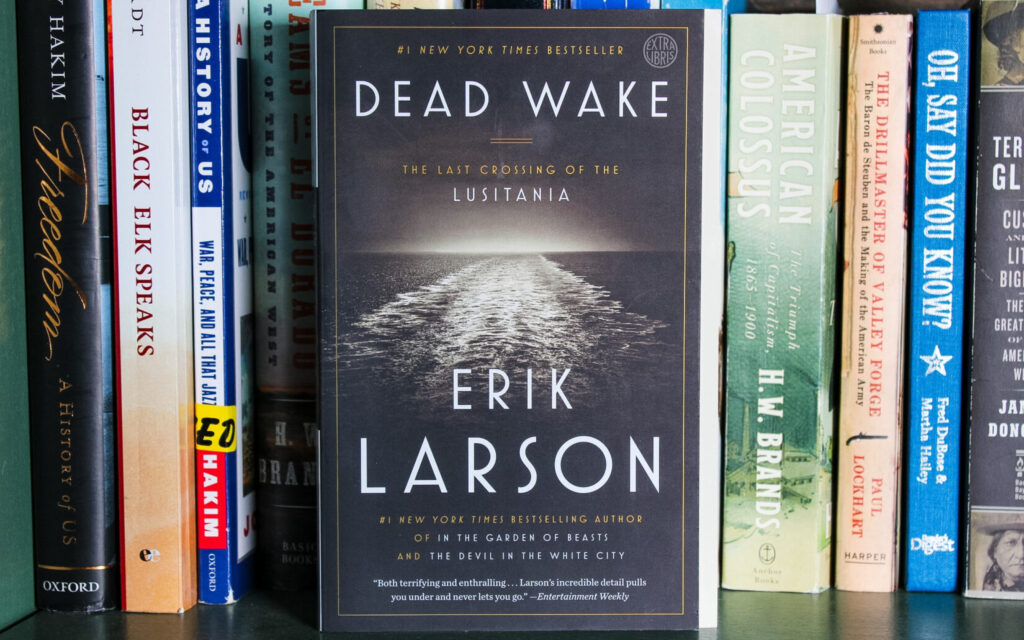
When creating this list, I knew I wanted to include a work by Erik Larson. The challenge was which one? Titles like The Demon of Unrest, The Splendid and the Vile, or In the Garden of Beasts all fit. In fact, all of those are excellent choices, and I genuinely recommend them all. But I felt Dead Wake was the best choice for this exercise.
I see myself as a student of the Great War. I studied the conflict thoroughly during graduate school. Additionally, I notice that, more than a century after the event, there is still a lack of understanding of the war and its effects—especially on this side of the Atlantic. I believed this was a good way to help more people learn about it.
Dead Wake follows the final voyage of the RMS Lusitania in 1915, while also tracking the German U-boat and its commander, Walther Schwieger, as their paths inevitably converge.
Larson creates tension through the sense of inevitability. We know the ending, but the pacing and perspective keep it engaging throughout. He interweaves passenger stories, political context, and naval strategy without losing momentum, making the larger stakes of World War I feel immediate. It’s detailed but never sluggish, resulting in a narrative that feels less like history and more like a slow-burning thriller you can’t put down.
FINAL THOUGHTS
Narrowing this list to five wasn’t easy. Many more could’ve made the cut—and if this goes over well, there’s potential for a follow-up. The main point is simple: learning history doesn’t mean forcing yourself to read dense academic texts or settling for watered-down popular histories. There’s a middle ground, and it’s packed with well-researched, highly readable work.
Each of these books tackles a significant moment (or a potential one) that still shapes the world we live in. As Winston Churchill put it, “The farther backward you can look, the farther forward you are likely to see.” I hope we heed those words.
You may also be interested in Guns and Legends: Top 5 Books You Need to Read.