When I graduated from the police academy in the early 1990s and started my first job with a major metropolitan police department, I was issued a Glock, a baton, a blackjack, and handcuffs. Shotguns existed, but they were kept in a special locker at the precinct and only passed out by the Sergeant or Lieutenant for “special occasions.”
At the time, the shotgun of choice was the Remington 870 with a top-folding sheet metal stock. While it looked cool and made the weapon compact, the stock was notorious for bruising the shooter’s face. My training and experience with those guns were minimal at best.
Fast forward to the late ’90s when I started my career with my current department. Every patrol car contained a Remington 870. From modified Police Magnums to “plain-jane” Wingmasters, everyone had access to the power of the 12-gauge. We trained with them, though not at a high level.
A few years later, I responded to one of the worst calls for service in my career. Upon exiting my patrol car, I grabbed the shotgun and attempted to rack a round into the chamber. In my haste, I short-stroked the slide, hopelessly jamming the gun and rendering it useless. I finished that day relying on my sidearm and a partner who was much more proficient with his shotgun. From that point on, I took shotgun training much more seriously.
The Shift to the Patrol Rifle
In the wake of the infamous North Hollywood shootout, the shotgun has slowly been replaced by the patrol rifle as the long gun of choice. Today, many agencies no longer issue the venerable 12-gauge at all.
Whether this is a wise move is a point of contention among firearms trainers and administrators. Since agencies are limited by training time and budgets, many choose to concentrate on the platform that provides the most “bang for the buck.”
My agency handles firearms training better than most, but we still feel those same budgetary pressures. While we don’t have as much dedicated shotgun time as I’d like, I refuse to abandon the system entirely.
The Project: Modernizing a 1970s Wingmaster
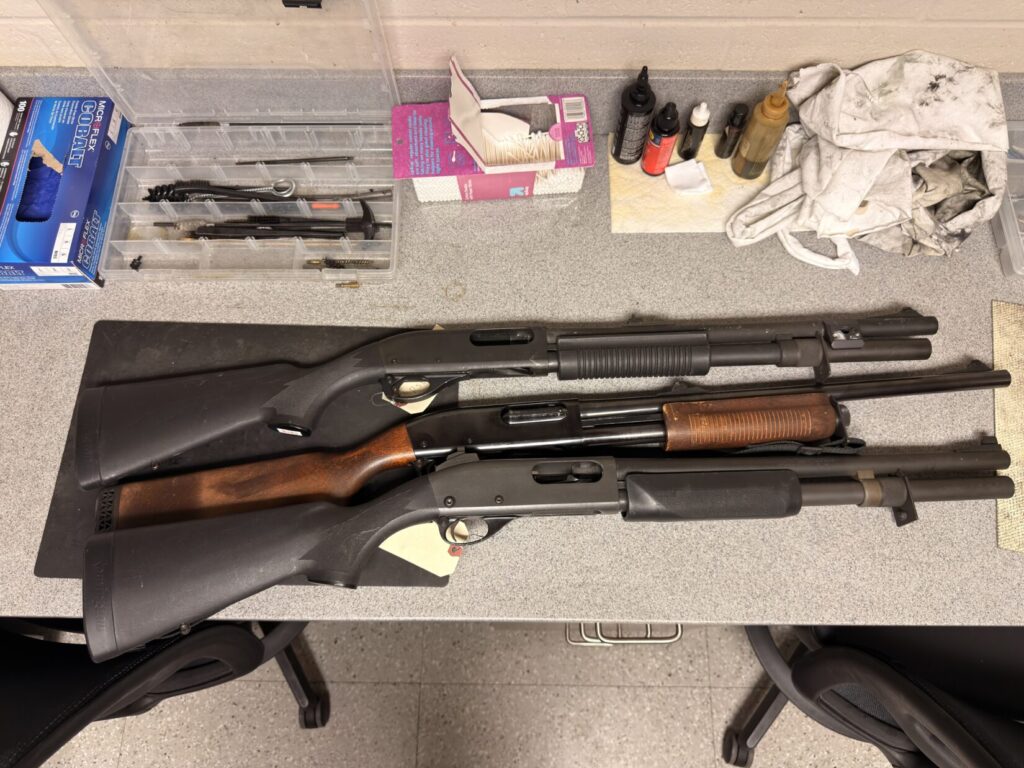
A recent transition to new sidearms and optics prompted an inventory evaluation. We had a large stock of Remington 870s in various configurations, and many older models were traded in to defer the cost of our new pistols.
Officers were given the opportunity to purchase these surplus 870s. I walked away with a Wingmaster made in the 1970s. My goal was to modernize it for an upcoming “Shotgun Mastery” series hosted by Lodestone Training and Consulting.
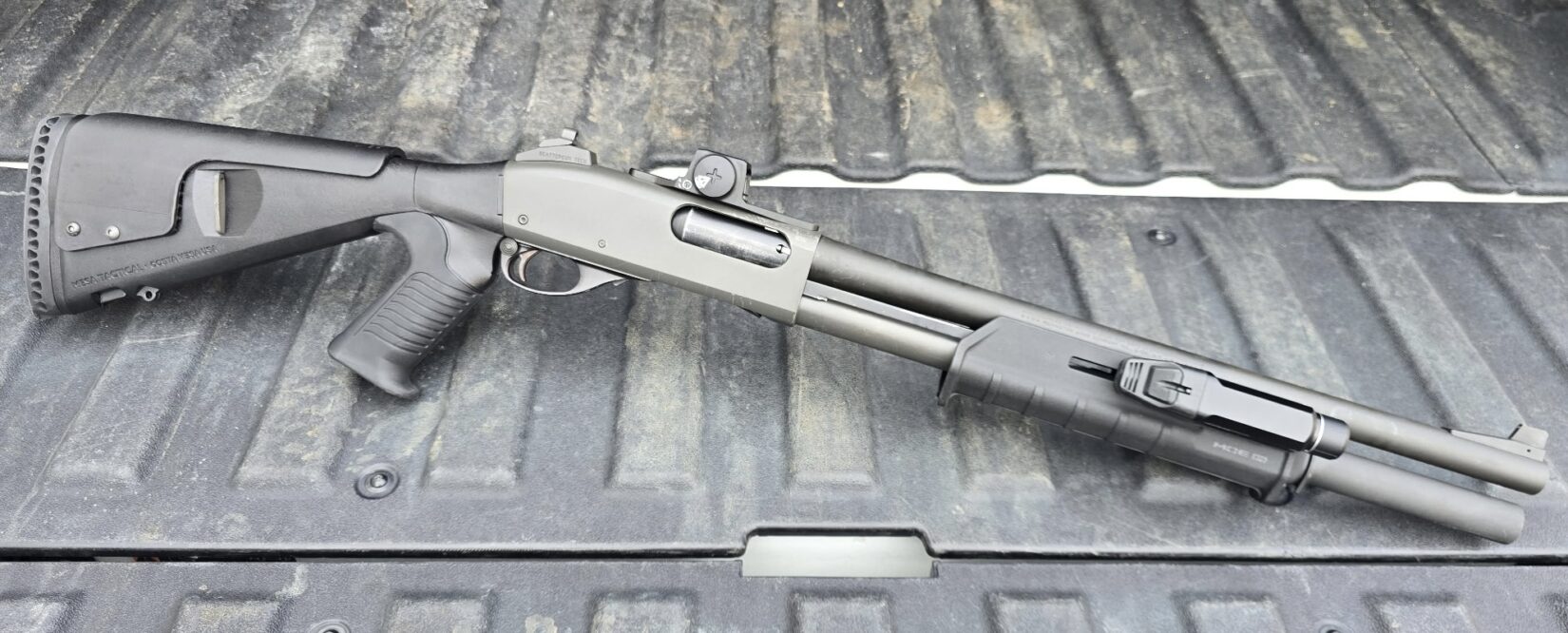
Admittedly, I had already “stacked the deck” in my favor years ago. While I was managing our inventory, I had updated this specific gun with an extended magazine tube, an improved follower, an oversized safety, ghost ring sights, and a custom Duracoat finish. However, to bring it up to modern combat standards, I focused on the upgrades below.
The Sling
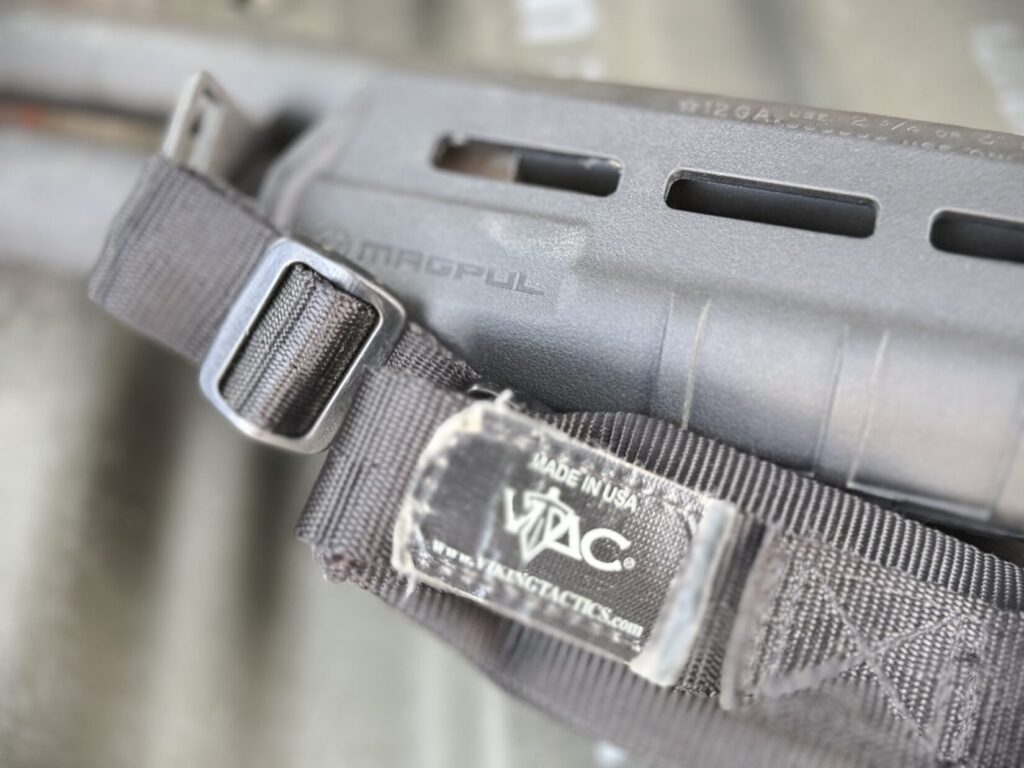
Old-school slings were meant only for carrying a gun from point A to point B. I chose the Viking Tactics (VTAC) sling. This modern two-point, quick-adjust sling allows for multiple carry styles and provides support in dynamic environments, letting the user drop the weapon to transition to a sidearm while maintaining positive control.
The Stock
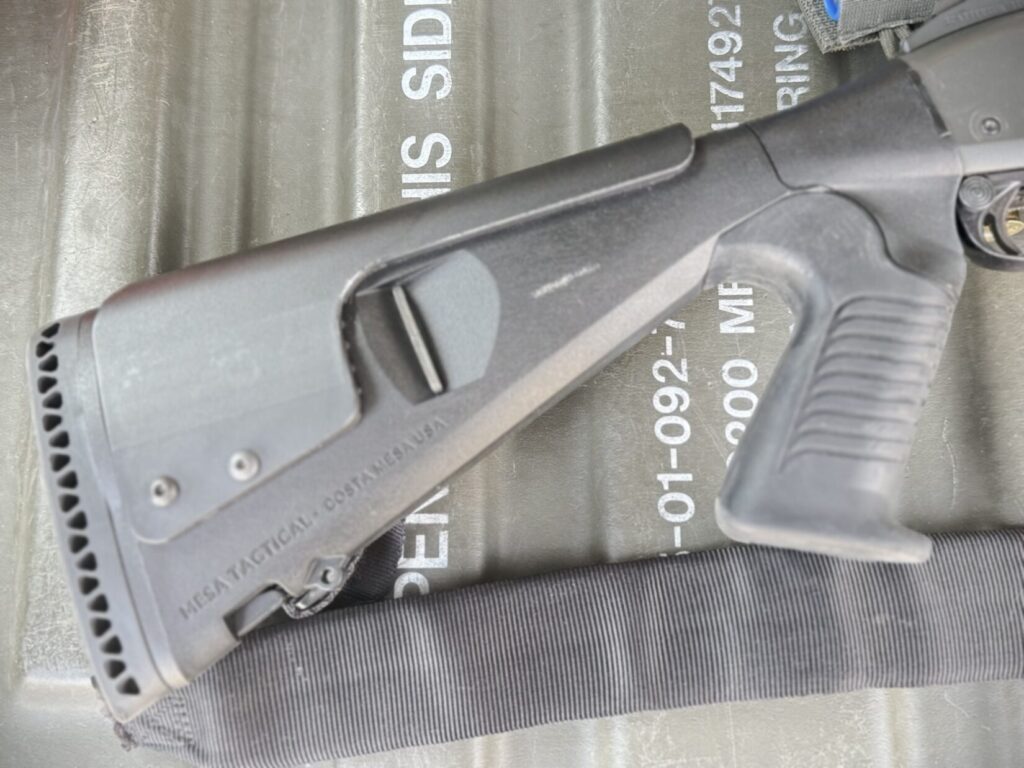
The original polymer stock had a long “length of pull” (LOP), making it awkward to use while wearing body armor. I replaced it with the Mesa Tactical Urbino stock. It features a shorter LOP, a rubberized pistol grip for better control, and an adjustable comb height to accommodate optics.
The Forend
The gun previously had a synthetic Hogue forend. While comfortable, it offered no way to mount a light. I swapped it for a Magpul forend, which is rugged, simple, and features M-LOK slots for easy accessory attachment.
The Weapon Light
A combat shotgun requires a light. Using the new M-LOK forend, I installed a section of Picatinny rail to mount a Streamlight TLR RM2 HL-X. This light is low-profile and powerful, and it can be controlled via an integrated switch or a pressure pad.
The Optic
Some argue that optics on shotguns are unnecessary, but a red dot provides the same speed and accuracy advantages as it does on a carbine. I chose the Vortex Viper Enclosed Micro Red Dot.
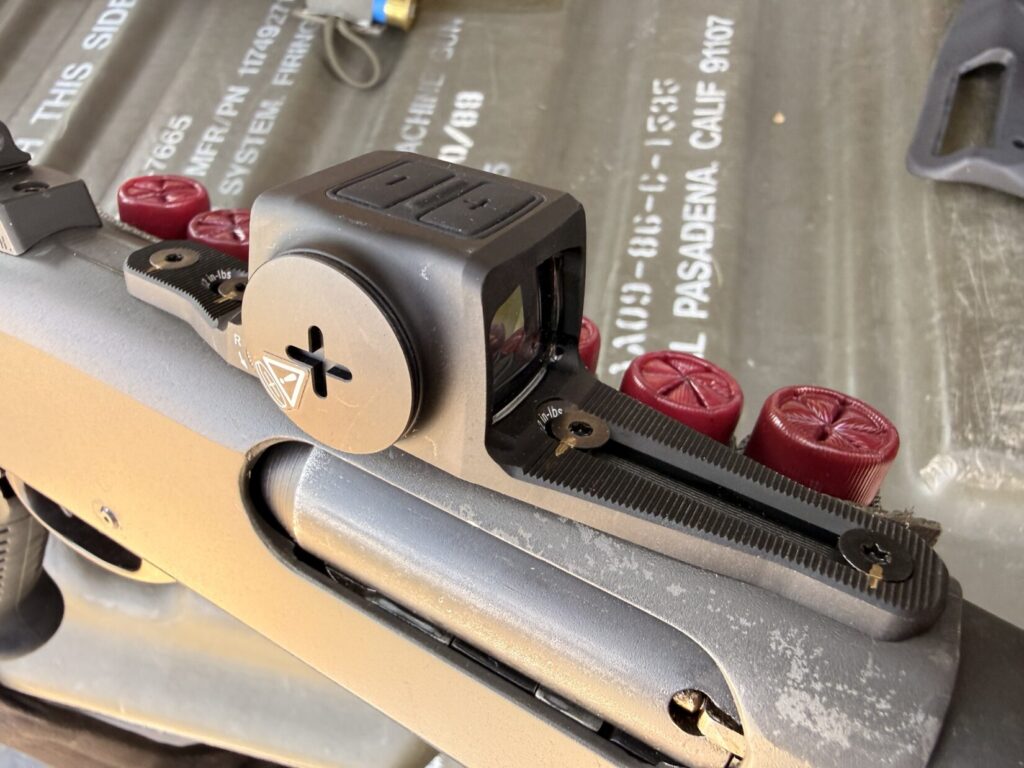
Since the old Wingmaster wasn’t factory-drilled, I had a local gunsmith tap the receiver so the optic could mount directly and co-witness with the ghost ring sights.
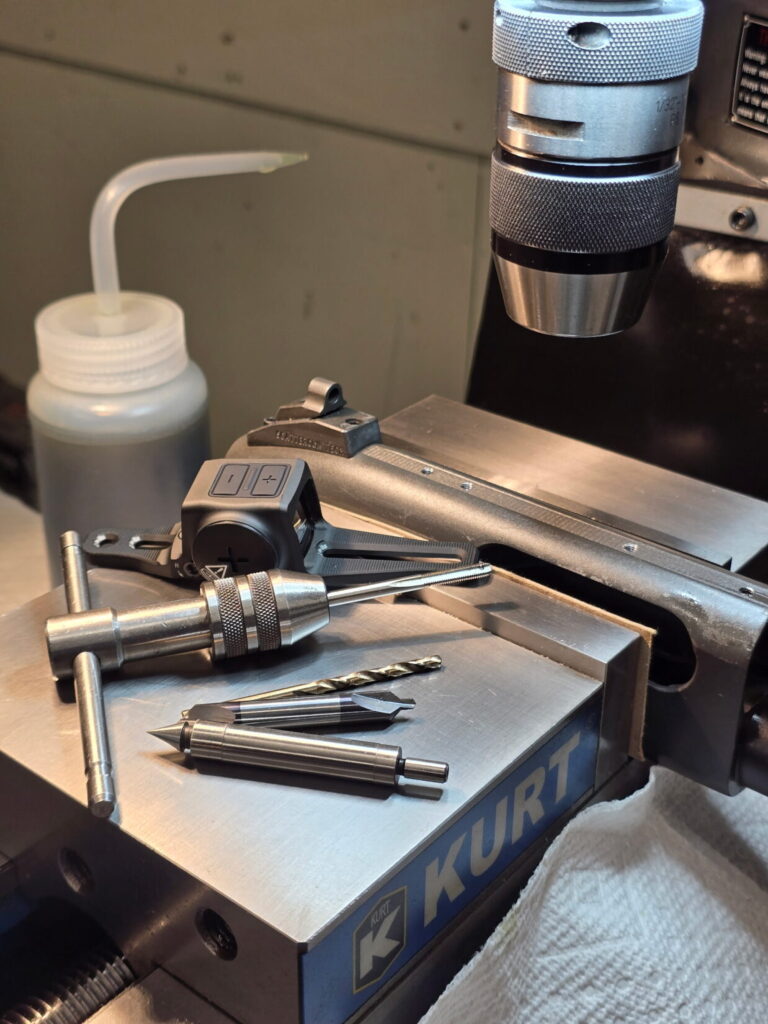
Superior Gun Works to ensure the job was done correctly. (photo credit-Superior Gunsmithing)
Time to Train
The finest gear in the world is all but useless without the knowledge, skills, and ability to use it. While I have had extensive training on the combat shotgun in the past, my skills were rusty.
To “knock the rust off,” I enrolled in Lodestone Training and Consulting’s Shotgun Mastery Series.
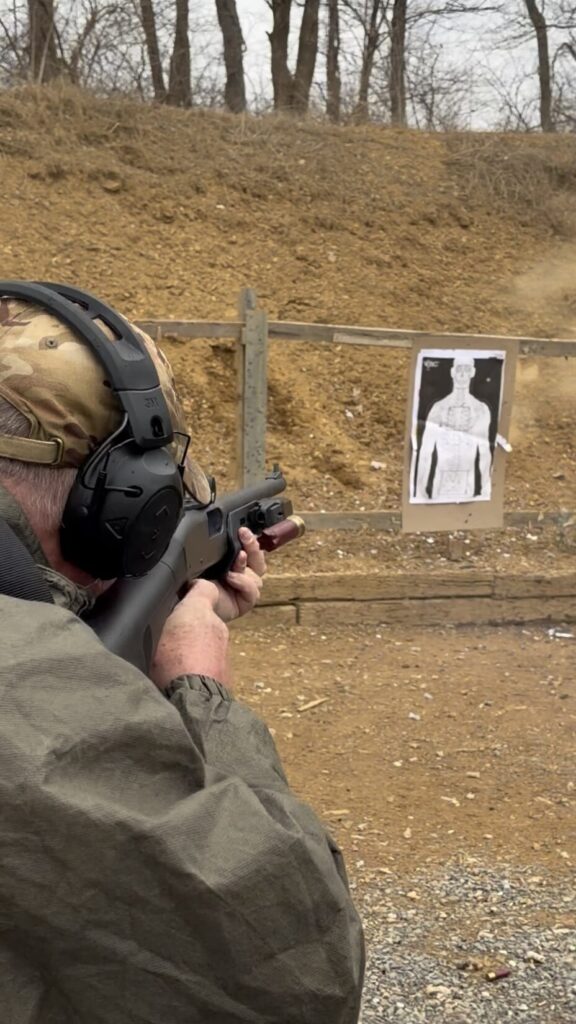
LTAC Shotgun Mastery Series
While firearms training schools are plentiful, few offer dedicated combat shotgun courses. The Shotgun Mastery Series focuses on foundational shooting principles coupled with an exploration of techniques that allow students to succeed within the limitations of their specific equipment.
We began with a thorough discussion of safe handling procedures, followed by practicing loading and unloading techniques using snap caps. This included instruction on how and where to carry spare ammunition—a critical skill, as proper ammunition management is the key to successfully running a combat shotgun.
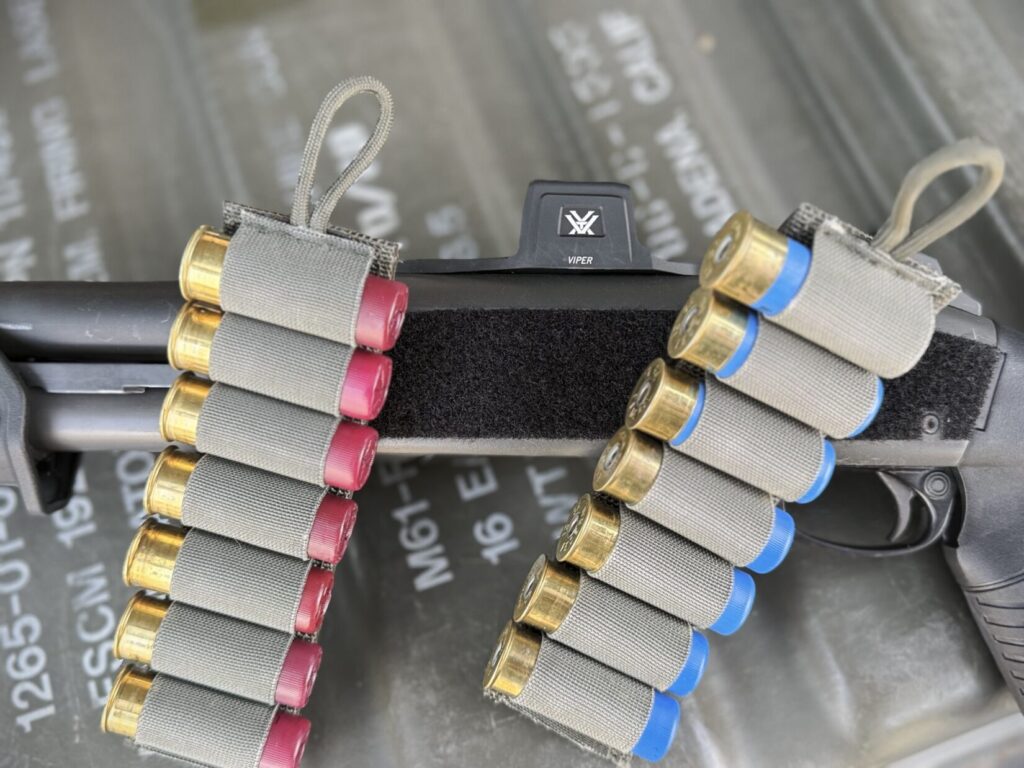
The remainder of the day was spent on the range shooting the following:
- Slugs: Practiced at various distances to understand our personal accuracy limitations.
- Buckshot: Used to determine the effective engagement ranges of our specific shotgun and ammo combinations.
- Birdshot: The bulk of our time was spent running drills with birdshot, allowing us to practice the loading techniques discussed earlier.
All told, I fired about 400 rounds through my 870. That may not sound like much if you are accustomed to training with 5.56 or 9mm, but it is a significant amount of lead to push through a 12-gauge in a single day.
After Action Report
My biggest takeaway was that I need to spend much more time on the “dry fire” range practicing ammunition management. This includes loading, unloading, keeping the gun fed while engaged, and mastering the skills needed to swap ammunition types on the fly.
I left the class with a much more polished skill set and the realization that more practice is always needed.
Equipment Performance
How did my 50-year-old shotgun hold up? As expected, the “old warhorse” performed without a hitch.
The Viking Tactics Padded Sling: This was greatly appreciated throughout the day. The 870 is not a light weapon, and the padding provided comfortable support between stages of fire and during reloads.
The Mesa Tactical Urbino Stock: This provided vastly improved ergonomics and recoil management compared to the original stock. I’ve used many pistol-grip stocks over the years, and this is hands-down my favorite.
The Magpul Forend: A worthwhile upgrade. It provided better ergonomics for running the slide hard and a solid mounting point for my light.
The Vortex Enclosed Micro Dot: The hero of the day. The 870 is 50+ years old, and so are my eyes; they don’t play as well with iron sights as they used to. I found the 3 MOA dot combined with the 32 MOA circle perfect for everything from CQB distances to hitting steel with slugs at 100 yards. Thanks to the professional drilling and tapping by Superior Gunsmithing in Robesonia, PA, the optic stayed rock-solid.
The Casualty: Unfortunately, the Streamlight RM2 HL-X did not fare as well.
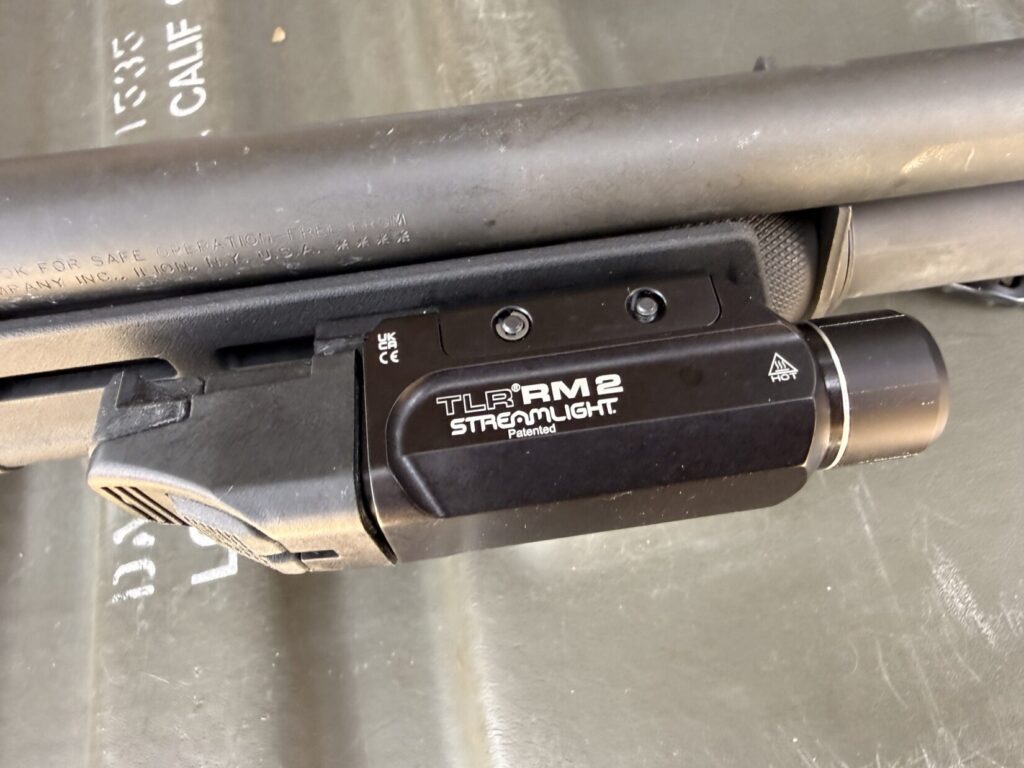
Although this was a daylight class and the light wasn’t used, the violent recoil of the pump-action shotgun took its toll. While the rail clamp stayed tight, the screws holding the switch assembly to the body backed out and fell off, rendering the light inoperable.
Shotguns are notoriously hard on accessories. Fortunately, Streamlight is an outstanding company that stands behind its products, though I already have my eye on a different light that might be a better fit for this platform.
Final Thoughts
If you follow combat shotgun content on social media, you’ll notice the current “hotness” is focused on modern semi-auto platforms. While those are fantastic firearms, do not relegate the Remington 870 or Mossberg 500/590 to the history books.
These guns were built to last and offer decades of refinement and aftermarket support. Keep an eye on the used racks at your local shop or on police surplus websites.
Don’t let a little wear and tear fool you—you are likely looking at a diamond in the rough. This old gun is ready for another 50 years of service.