Newton’s Third Law of Motion says that “For every action, there is an equal and opposite reaction.” It’s one of the most basic concepts out there, and it’s why firearms recoil. This article is all about the mechanics of recoil and how to reduce handgun recoil as much as possible.
Let’s break down recoil according to Newton’s Third Law of Motion.
The action begins when the gunpowder inside the cartridge ignites, creating hot, rapidly expanding gas in a small space. Seeking the path of least resistance, this gas exerts pressure against the bullet where it is crimped to the case, ultimately propelling it out of the casing and down the barrel.
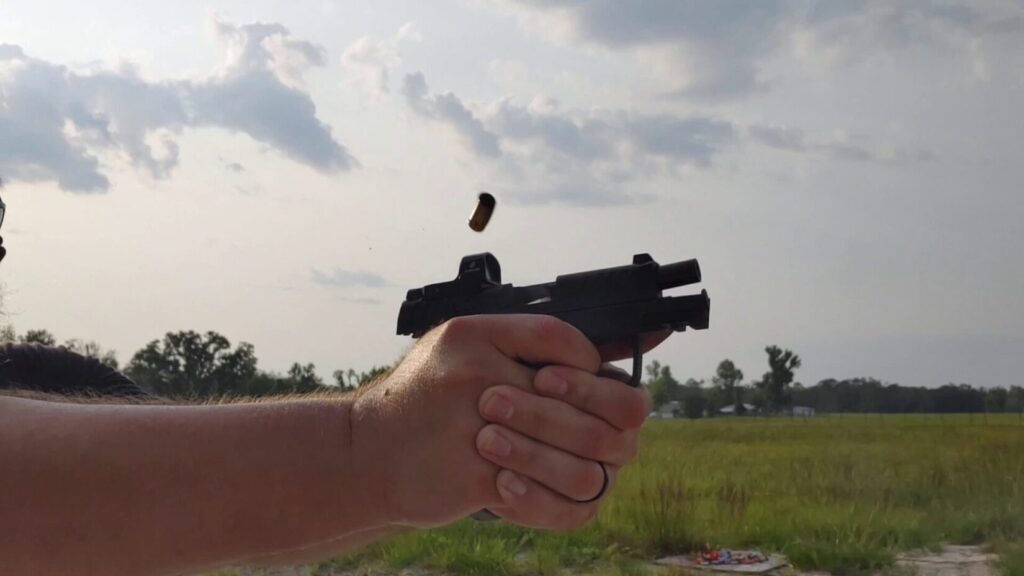
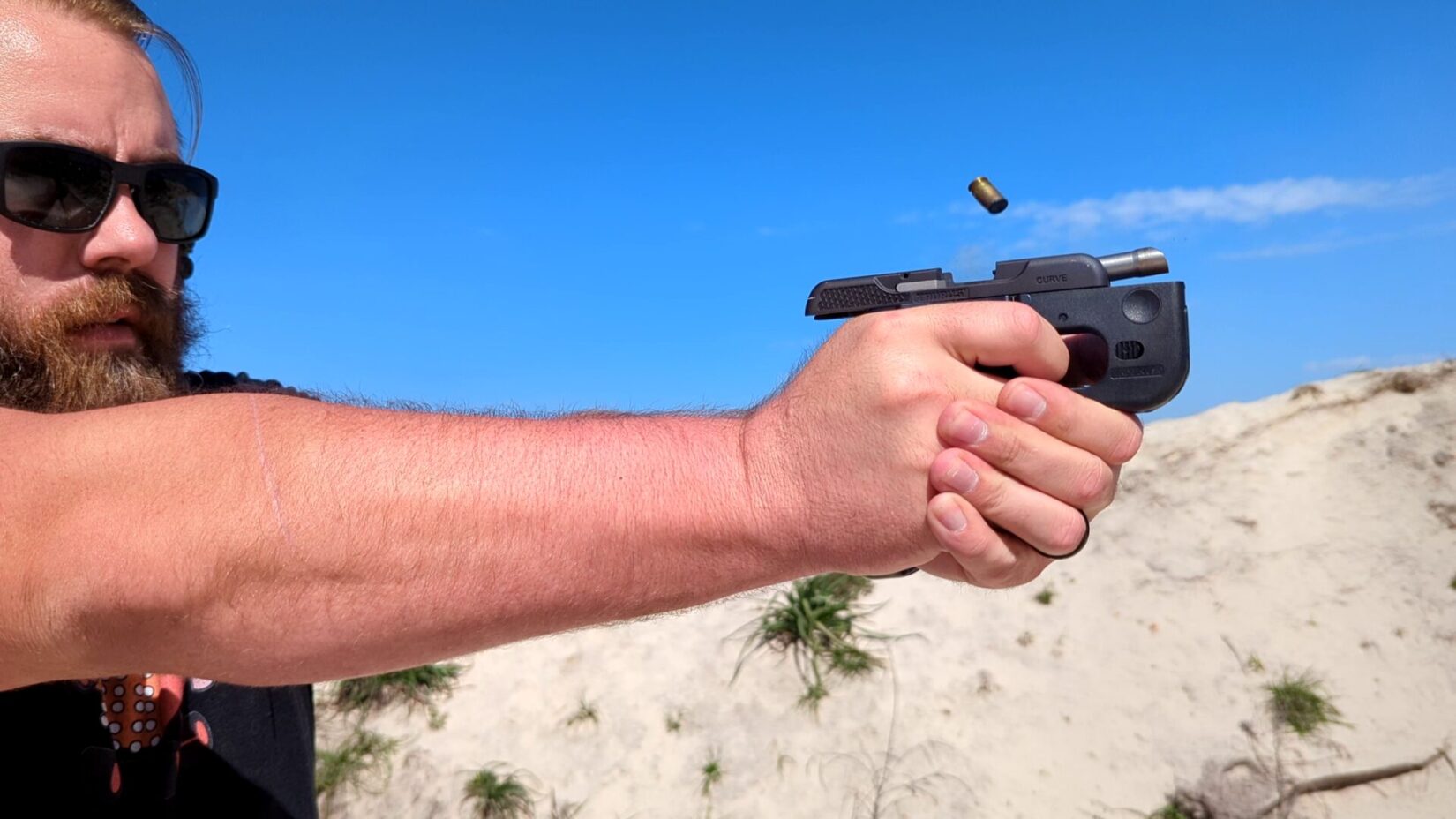
As the bullet moves forward, the reaction is the gun moving in the opposite direction, meaning into your shoulder or hand. While the force is equal on both the bullet and handgun, the handgun has more mass, which means it’s not moving rearward at 1,200 feet per second.
This rearward movement is what we define as recoil, but it also includes muzzle flip. Because the center of the barrel typically sits above the grip, your hand acts as a pivot point or fulcrum. This offset causes the force to drive the gun both backward and upward.
Reducing felt recoil allows us to shoot faster with greater accuracy in most cases. So, how do we minimize it? The answer is somewhat complicated.
Recoil Reduction Factors
Recoil and Caliber Selection
Recoil is often determined by your caliber and cartridge of choice. More powerful cartridges have more recoil.
Most people with a modern handgun that’s P365-sized and larger will be well served with 9mm. However, if you are particularly recoil-sensitive, a .380 ACP in that same frame size can be an excellent alternative. If you’re looking at an ultra-small pocket pistol, then .22LR and .32 ACP can be your best friends.
Cartridges like .40 S&W, .357 SIG, .45 ACP, and 10mm have more recoil than the other calibers listed, so keep that in mind when purchasing a handgun.
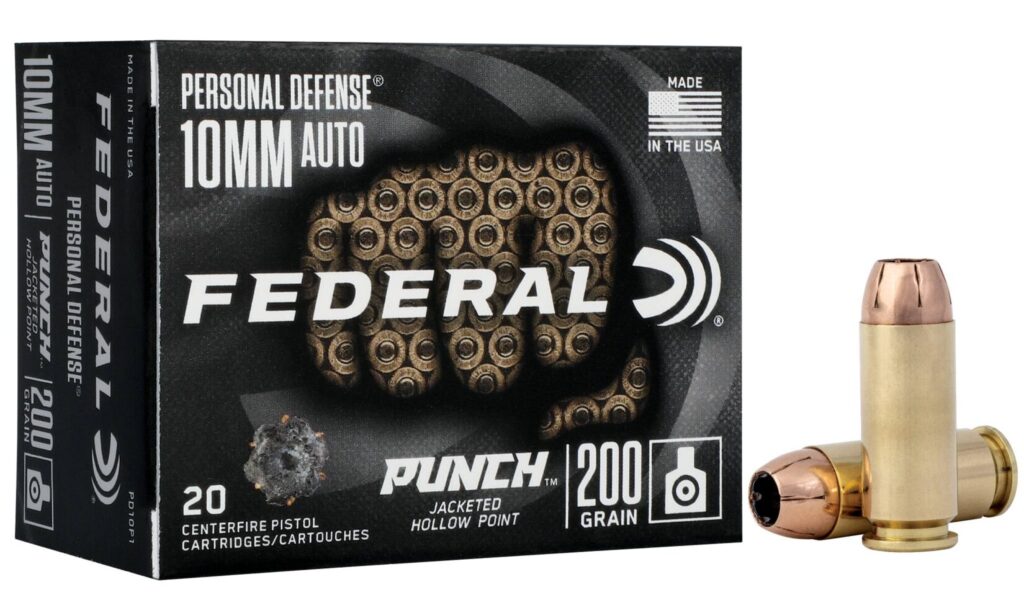
Beyond caliber selection, you can also experiment with different ammunition types. In a semi-auto pistol, I would stay away from reduced-recoil ammo due to reliability concerns. As a rule of thumb, lighter bullets tend to have less recoil.
As an example, 9mm rounds with 115-grain JHPs are competent defensive rounds with minimal recoil. When you start adding more velocity and heavier bullets, the recoil will increase.
Recoil and Technique: The Most Important Factor
The most effective way to fight recoil is through proper technique. Ideally, this involves taking a class with an experienced instructor who can diagnose your specific shooting habits in real-time. I’m no pro, but I’ll share the technique that works for me.
Keep in mind, things change a lot with grip, stance, and technique, and there are different methods out there. This works for me, and I’ve found it to be easily repeatable.
Grip
First, establish a high grip on the gun, as high as you can. I often press up and against any kind of beavertail. Be warned, with large hands and small guns, this can trigger some slide bite.
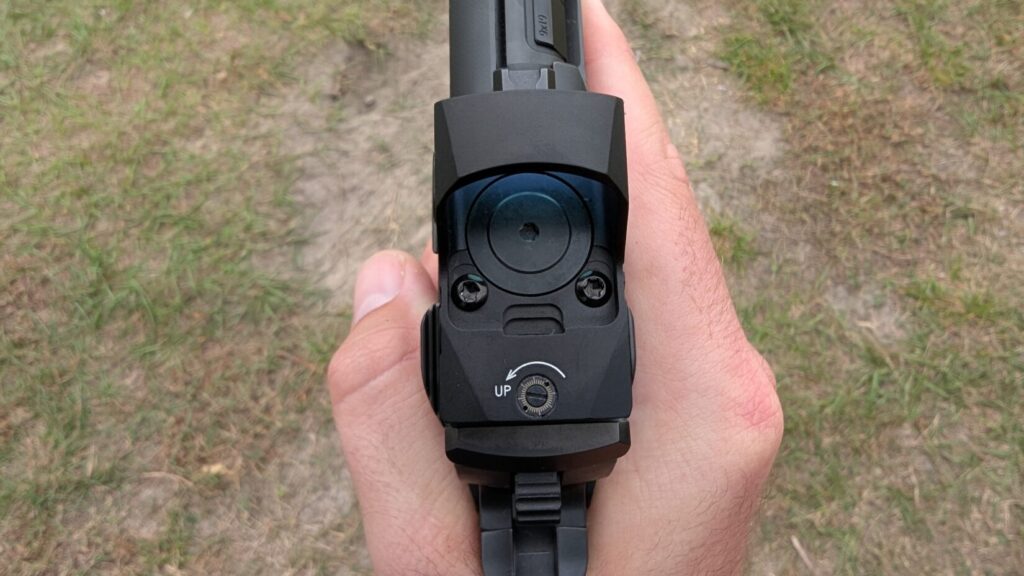
With my firing hand, I want to avoid putting fingertip pressure on the side of the grip; this can cause the gun to go low and left. I want finger pressure to push the gun straight back and into my palm. My firing hand applies front-to-rear pressure, but my thumb and trigger finger remain relaxed.
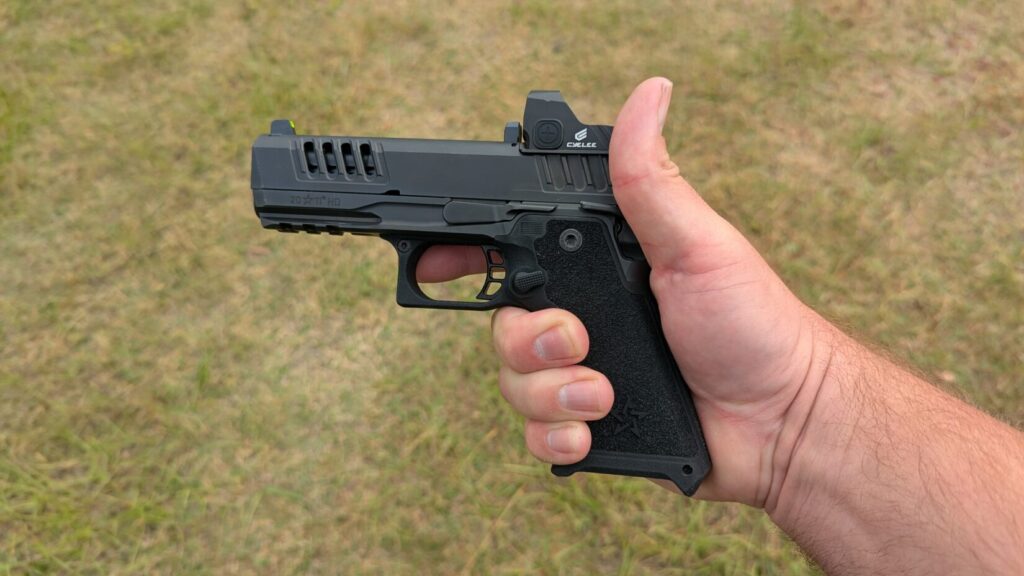
As I bring my support hand to the gun, my firing hand thumb will be up, and allow my support hand to slide under it. I want to get as much meat on the gun as possible. I want that support hand to be high, and I use the trigger guard as a reference point for my support-hand trigger finger.
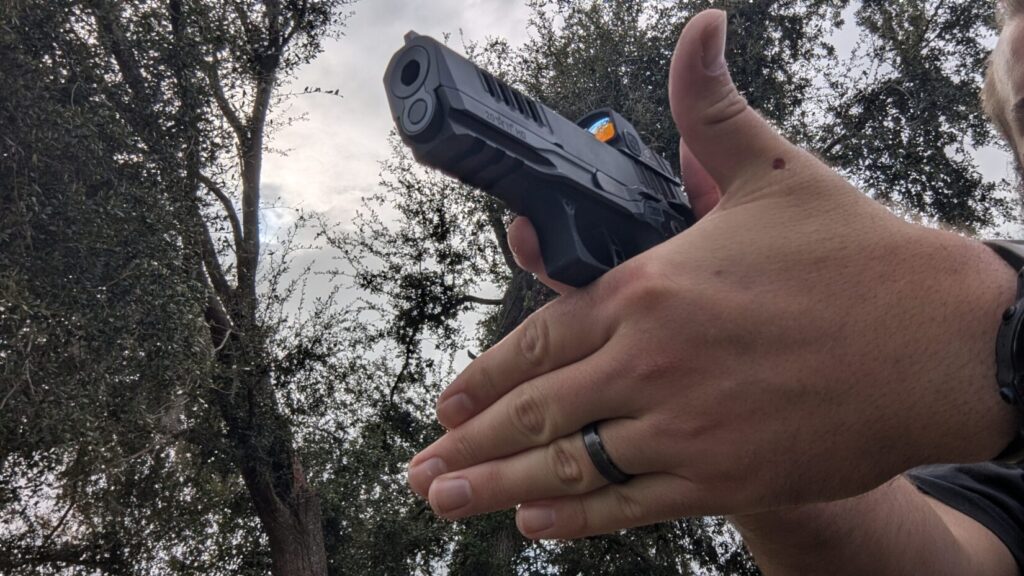
My support hand will clamp down on the gun with my palm applying pressure to the side of the gun. Ultimately, my support hand palm will be pressing the gun’s grip against my firing hand palm. At this point, I’m exerting both front-to-back and side-to-side pressure against the gun.
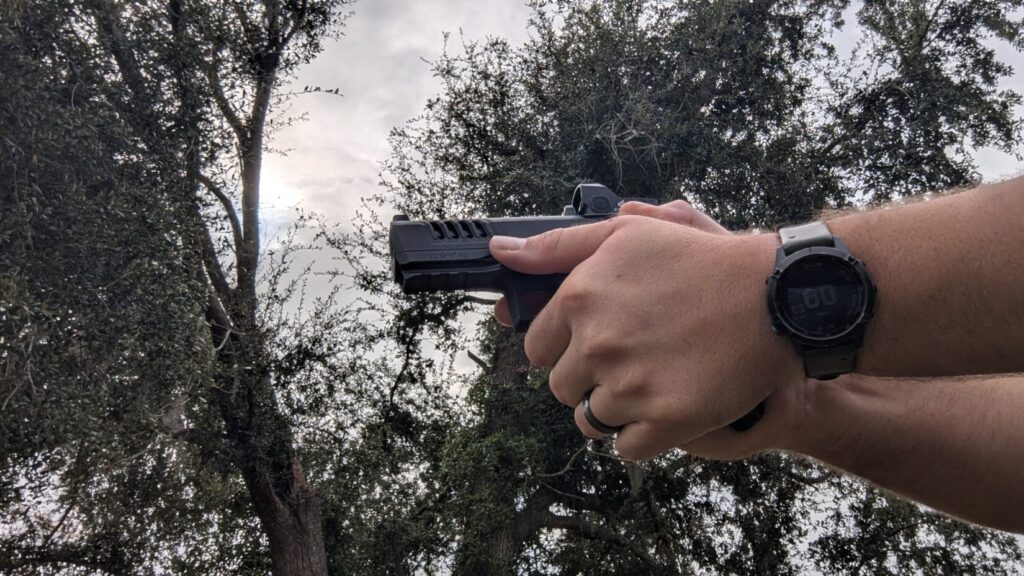
My support hand clamps as hard as possible without creating a situation where I’m exerting so much grip pressure that I can’t maintain the position.
Stance
Stance plays a critical resisting recoil. If you are leaning rearward, then recoil is going to push you backward even more. To counter this, you want your weight forward and behind the gun.
I prefer a boxer’s stance with my non-dominant leg forward and my dominant leg rearward. This forms a stable and repeatable base that feels natural for me. It also allows for easy movement.
At my hips, I bend forward just slightly to put my weight forward and mostly on the balls of my feet.
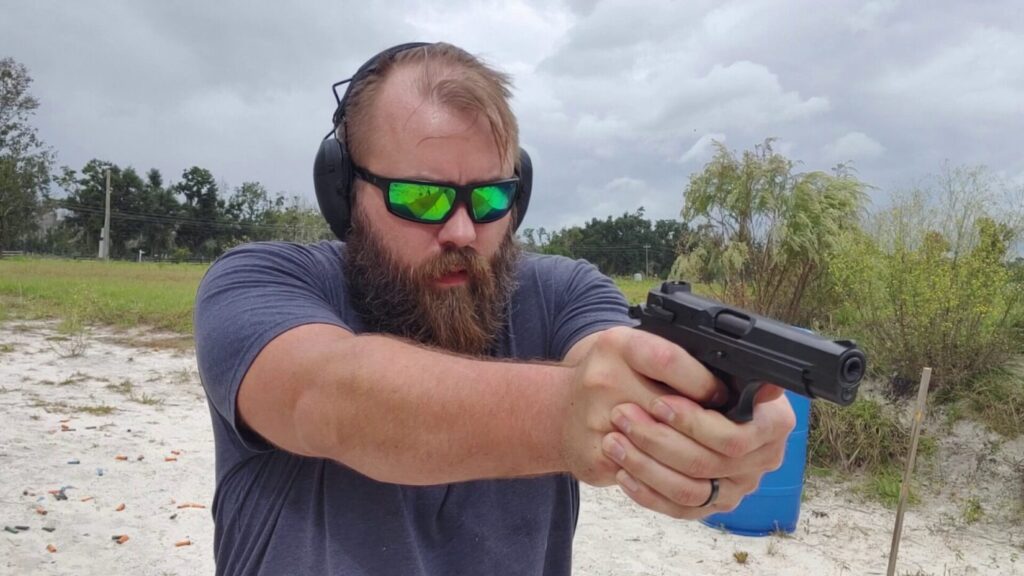
Ideally, your arms will be somewhat bent, and not locked out. Imagine opening a stubborn jar of pickles. You are stronger with your arms closer to your body than when they are locked out.
Additionally, bent elbows act as a shock absorber. Your muscles and joints compress slightly under recoil. This helps the recoil go straight back instead of straight up. Recoil going backwards makes follow-up shots faster.
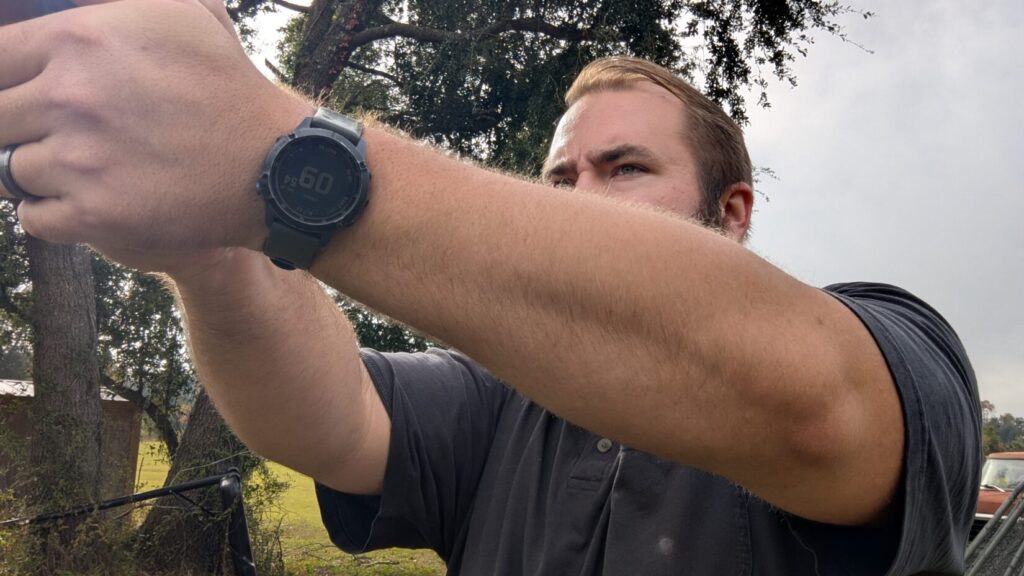
Imagine jumping off something.
If your legs are straight when you hit the ground, the force is absorbed through the skeleton and kind of hurts. If you bend your knees a bit, they absorb the blow, and it’s pain-free.
I have an injured left shoulder and terrible arthritis, so bending my left elbow while supporting a gun’s weight is difficult for me, so I often lock out that left arm.
Mechanical Solutions
There are some upgrades you can make to an existing gun, and design features to look for when purchasing a firearm that impact recoil.
Grip Design
Guns that encourage and allow for a high grip on the gun are often easier to control. Most modern guns allow for a comfortable high grip with a deep undercut beneath the trigger guard or a pronounced beavertail. Some exceptions include extremely small pistols that don’t have room for an ‘overhang’ to tuck up against.
Your hand size compared to the gun’s grip can be an issue. Small hands on a big gun make it difficult to achieve a good grip. This typically has to be somewhat extreme; 10mm and .45 ACP double-stack guns tend to be the ones people find difficult to establish a good grip with.
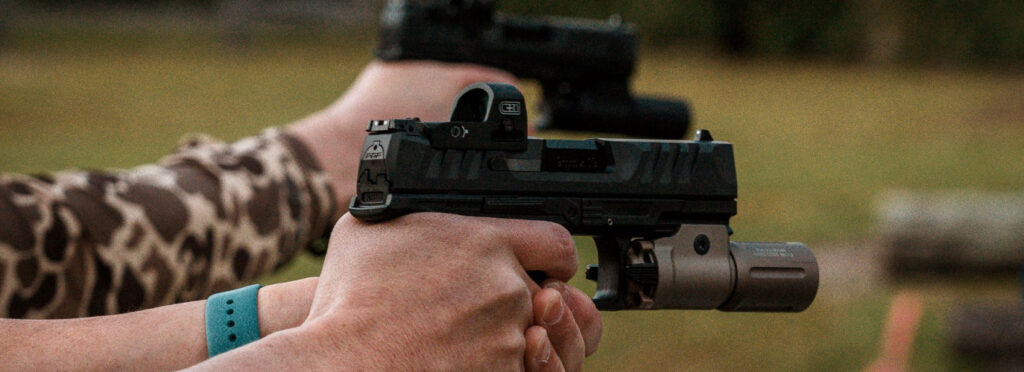
Most people can easily handle a double-stack 9mm handgun. Smaller guns with single-stack magazines might be better for folks with extra-small hands. Guns like the PDP-F are specifically designed to accommodate smaller hands while maintaining the double-stack magazines.
Ultimately, the best thing to do is to try the gun in your hands and ensure you can establish a solid grip with a firm hold. If it feels like your hand is stretching, it might be too big for you.
Operating Systems
We won’t get too deep in the weeds with this subject and break down the various short-recoil or gas-retarded systems. Instead, we’ll address the worst offenders of enhanced recoil: blowback-operated guns.
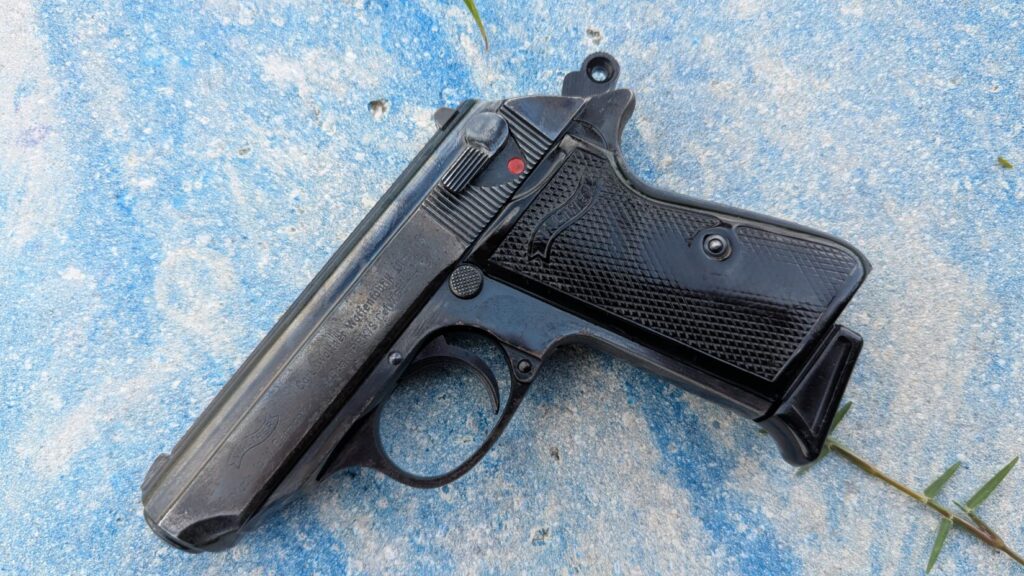
Straight blowback guns, like the Walther PPK, deliver more felt recoil than guns with short-recoil or gas-delayed systems. Straight blowback can make guns extremely uncomfortable, especially if they are on the smaller side.
Weight
Because the same force is imparted on the projectile and the gun, the gun’s mass keeps it from moving rearward at 1,200 feet per second. Simply put: weight helps reduce felt recoil.
Metal guns tend to recoil less than polymer guns if all other factors are equal. Polymer frames do ‘flex,’ which does provide a small degree of recoil mitigation, but weight still seems to be king.
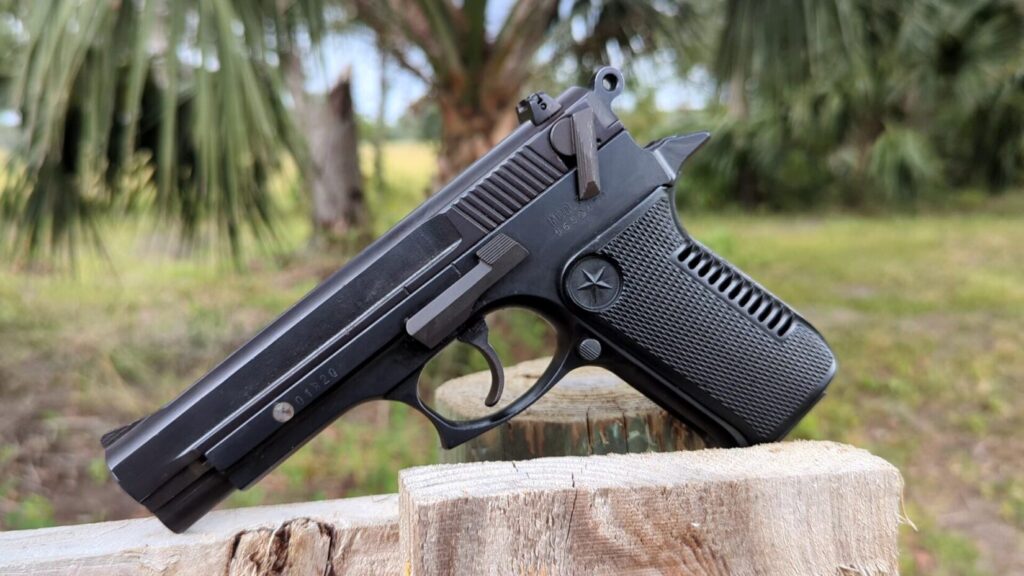
Some polymer frame guns allow you to add weights in the grip to increase the weight without giving up the polymer flex. Don’t get too wrapped around the axle searching for the heaviest gun to reduce recoil.
Most compact handguns weigh enough to be controllable. The difference in added weight can be valuable, but fractionally so. There are plenty of world champs shooting polymer frame Glocks and succeeding.
Add-Ons and Upgrades
If you have a stock gun and are still looking for methods to reduce recoil, there are some mechanical upgrades that can help.
Compensators
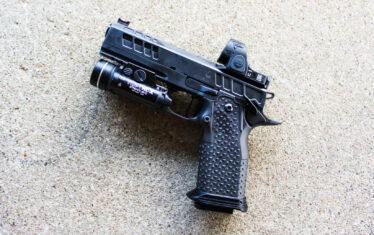
Compensators attach to the end of the muzzle and have ports for venting gas that face upward and sometimes to the side. A compensator with both top and side ports is a hybrid design that applies both downward compensation and braking effect.
Compensators redirect gas upward as the projectile leaves the barrel. This upward movement of gas presses the gun downward, which reduces muzzle rise.
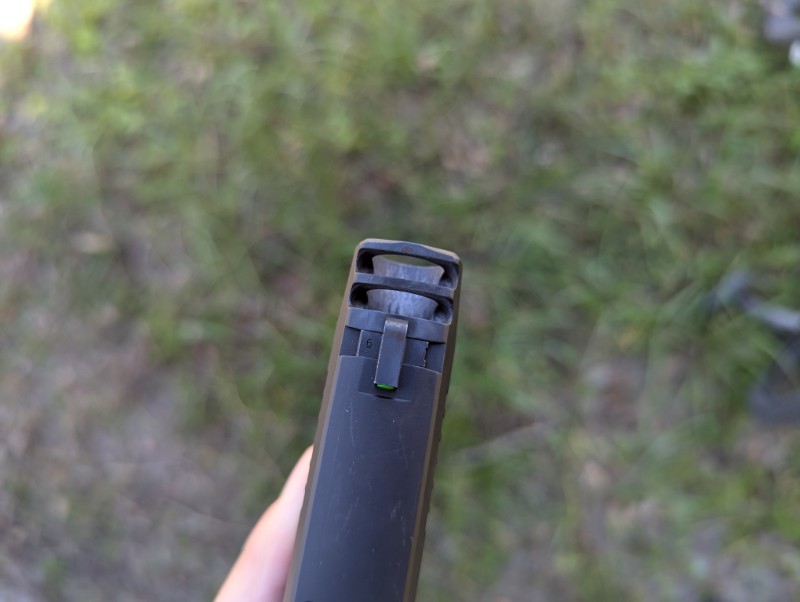
When side ports are present, the gas brakes against the port, reducing rearward recoil. Compensators are great, but they can affect firearm reliability. Any use of comps needs to be tested with carry ammunition to ensure reliability.
Recoil Springs
A recoil spring’s job is to manage the rearward velocity of the slide and ensure it returns to battery (the forward, locked position). You can’t reduce recoil by changing the spring, but you can change the duration and feel of the recoil impulse.
A heavier spring can slow the slide down and create a less snappy feeling as you’re shooting. A light spring allows for a lighter return as the slide goes into battery.
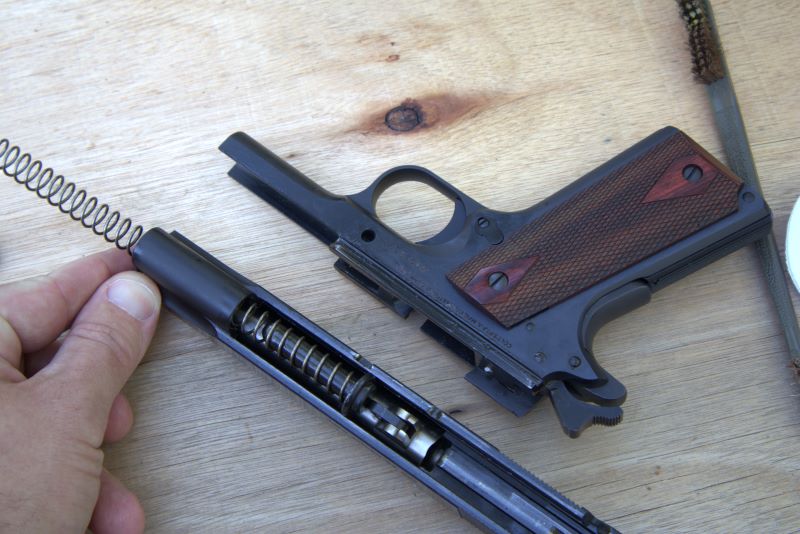
If, after you fire, the sights tend to remain high and not return to your point of aim, you might want to consider a heavier spring. If your gun tends to dip and the sights appear below the target, you might want a lighter spring.
If neither is happening, leave your spring alone.
Reducing Recoil Summary
Recoil is a big topic, and we’re only covering one specific format in our discussion. To recap, in order of importance, let’s list the recoil factors:
- Technique
- Caliber
- Gun Design / Operating System
- Weight
- Compensators
- Recoil Springs
If you get a compact-sized 9mm and practice proper technique, 99% of your recoil problems will disappear for defensive shooting.
You don’t need a race gun to win a gunfight. Good techniques and proper caliber selection will get you 90% there. The other 10% is worth considering, but only after you have a solid technique.