This month’s skill builder combines the numerous shooting skills and fundamentals of marksmanship that we have built for a solid foundation over the last year. If you are new to the Safariland CADRE Dispatch, go back and review those articles.
At War HOGG Tactical, we use a building block methodology of teaching. Our special operations combat experience helps you become a more efficient and effective shooter while building a solid foundation of the fundamentals of marksmanship.
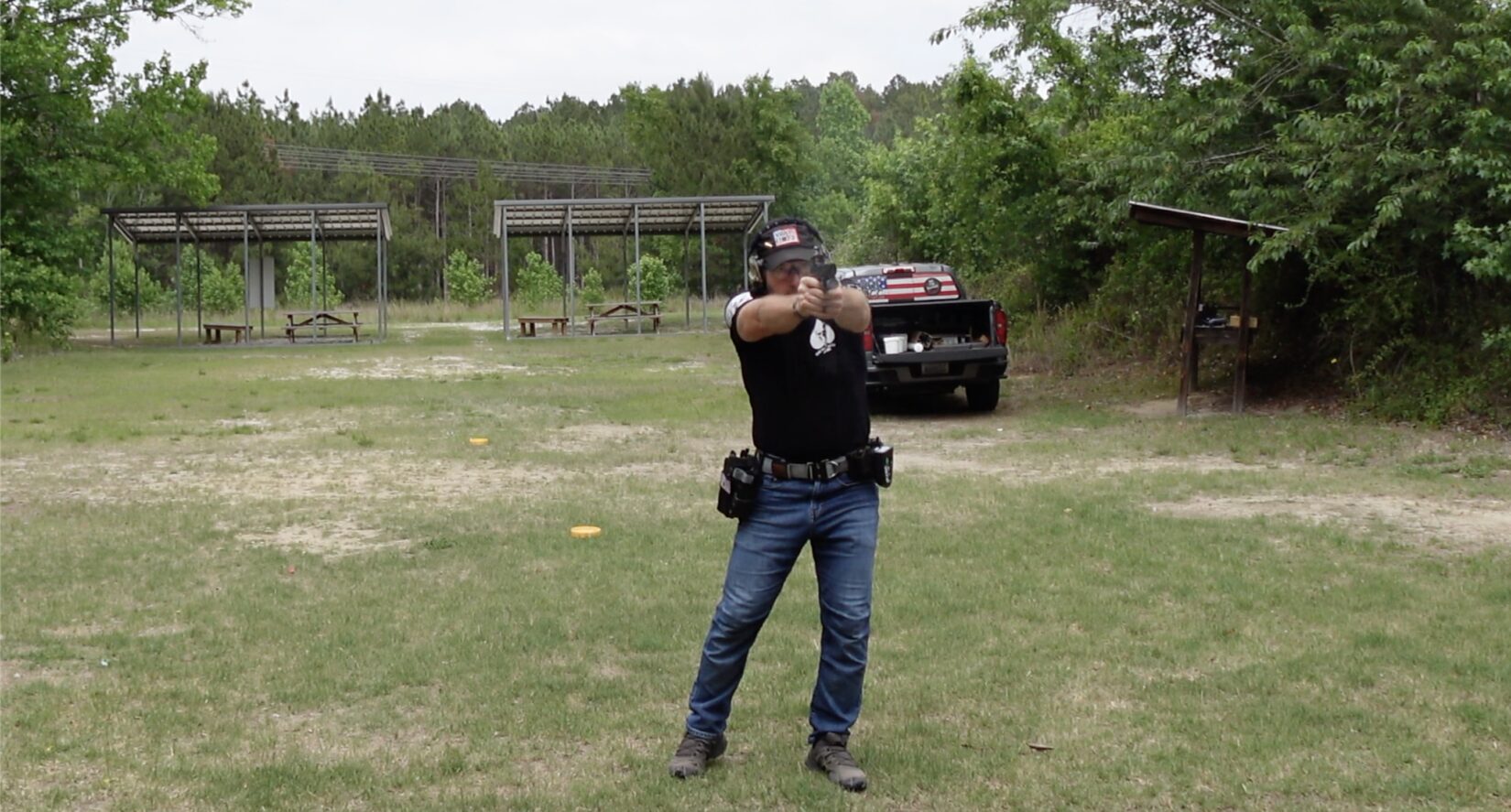
The War HOGG Zipper Drill is designed to get you out of your flat-footed comfort zone on the range and show you that you don’t always need a perfect stance to fire your shots. It also increases the normal controlled pairs to shooting three rounds per position and a slide lock speed magazine change at a smaller target.
EQUIPMENT NEEDED
- Normal range and firearms equipment
- Live-fire range
- Dry-fire training area
- The Firearms Training Notebook – available on Amazon
- Shot Timer, we recommend the PACT Club Timer III. Click the link to learn how to use a timer effectively in your marksmanship training.
- Recording device and tripod/holder – this will be key to watching your footwork
- Two cones
- War HOGG Tactical Training Target or IPSC target

How the Monthly War HOGG Skill Builder Works
The War HOGG skill builder model is simple. At the beginning of the month, head to the range and shoot the War HOGG skill builder drill cold. No warm-up. Just shoot the skill builder and let the target and your shooting performance data tell you where you are with your shooting performance on demand.
Record the data in your copy of The Firearms Training Notebook. The data you collect will be very helpful in building your dryfire training plan. For example, just don’t record the overall time, but all the shooting data (your split time) from the War HOGG skill builder.
From there, build your dry-fire and live-fire plan around what the target exposed. Later in the month, go back to the live fire range and reshoot the skill builder to see whether your shooting skills improved.
Set Up for the War HOGG Zipper Drill
You will need a range with at least 25 meters, your target, and two markers for the 25-meter start point and the 15-meter firing point. I did not mark my left or right step points, but feel free to do so if it will help.
How to Run the War Hogg Skill Builder
You will need a 15 or 18-round mag and a spare mag for a reload. Start at the 25-meter line. On the buzzer, run to the 15-meter mark while drawing your pistol at the same time. When you hit the 15-meter mark, fire three rounds, take two steps at a 45-degree angle left or right, and fire three more rounds.
Repeat this left and right movement until you run the gun dry. Conduct a speed magazine change and fire a single round into the head of your target.

The Variation
Depending on your skill set, you could take out the 10-meter run and just start at the 15-meter mark. If two steps are too much, then just do one. Alternatively, you could take more steps, increase the distance from the start firing point to 25 meters, or both. You can also use your rifle for this drill and run it the same way as you did for the pistol.

Build Your Dry Fire Plan
Once you get feedback from your target and your shooting performance data, your dry fire plan should be easy to build. For most people, it is the setup at each spot you move to that is inefficient. If you recorded your session, you should be able to see how you are planting your feet and getting set up for the shots.
The other thing is, you are not always going to have that perfect stance. Don’t be afraid to fire. As long as your sights are on the acceptable target area, send the round. This is easy to set up in your dryfire area because you are only taking two steps and presenting your pistol.
The next big performance skill is the pistol speed magazine change. Read my article on how to conduct an effective and efficient pistol slide lock speed magazine change.
The Skills: What the War HOGG Zipper Drill Develops
The primary skills developed are position building, stability management, pistol presentation with sight (red dot or irons), accountability, calling your shot, understanding your foot movement, and knowing that your stance doesn’t always need to be perfect.

Check Your Work
Sometime near the end of the month, go back out and reshoot the War HOGG zipper drill. Compare the end-of-the-month shooting performance data to that of the first of the month. If you put in the work with your dryfire program, you should see improvement in your shooting performance.
Build Your Shooting “CREW”
Having other like-minded shooters around will help you push to make yourself better. If you have friends, family, or co-workers who share your shooting passion, start building that shooting tribe. This way, not only do you have your own accountability, but you also have others to help you improve on your marksmanship journey. They can record you shooting, possibly give you feedback on things they see, and it’s always good to have some fun competition to help you grow.
At War HOGG Tactical, our motto is “Be 1% Better Everyday!” You can always join us in sharing your marksmanship growth.
Go to our On The Range (OTR) Patreon “CREW” members’ page and join like-minded shooters looking to get more proficient in their marksmanship skills. My co-author, Mark Kelley (Kelley Defense), and I conduct bi-monthly interactive Zoom calls where we break down each shooter’s skill builder. We have even reviewed video of “CREW’ members shooting during our Zoom call and given immediate feedback on where we see they can improve their shooting skills.

Conclusion: Put In The Work
The War HOGG Zipper drill gives you a dynamic drill to work on your marksmanship accountability with a pistol or carbine while incorporating some type of movement. Shoot it cold, record the data, study the feedback, and build your dry fire plan. Then come back and check your work.
To see improvement in your marksmanship skills, you must put in the work. This means having a solid dry fire training plan throughout the month and a way to record your progress, like with The Firearms Training Notebook. Using additional tools, like a shot timer and a phone to record your training sessions, you can take your dry-fire training to the next level and see improved performance during your live training.
Don’t forget to check out the War HOGG skill builder library for more shooting tips, and sign up for the War HOGG newsletter to know about our upcoming courses.
Train Hard, Stay Safe, and see you “On The Range” – Rick