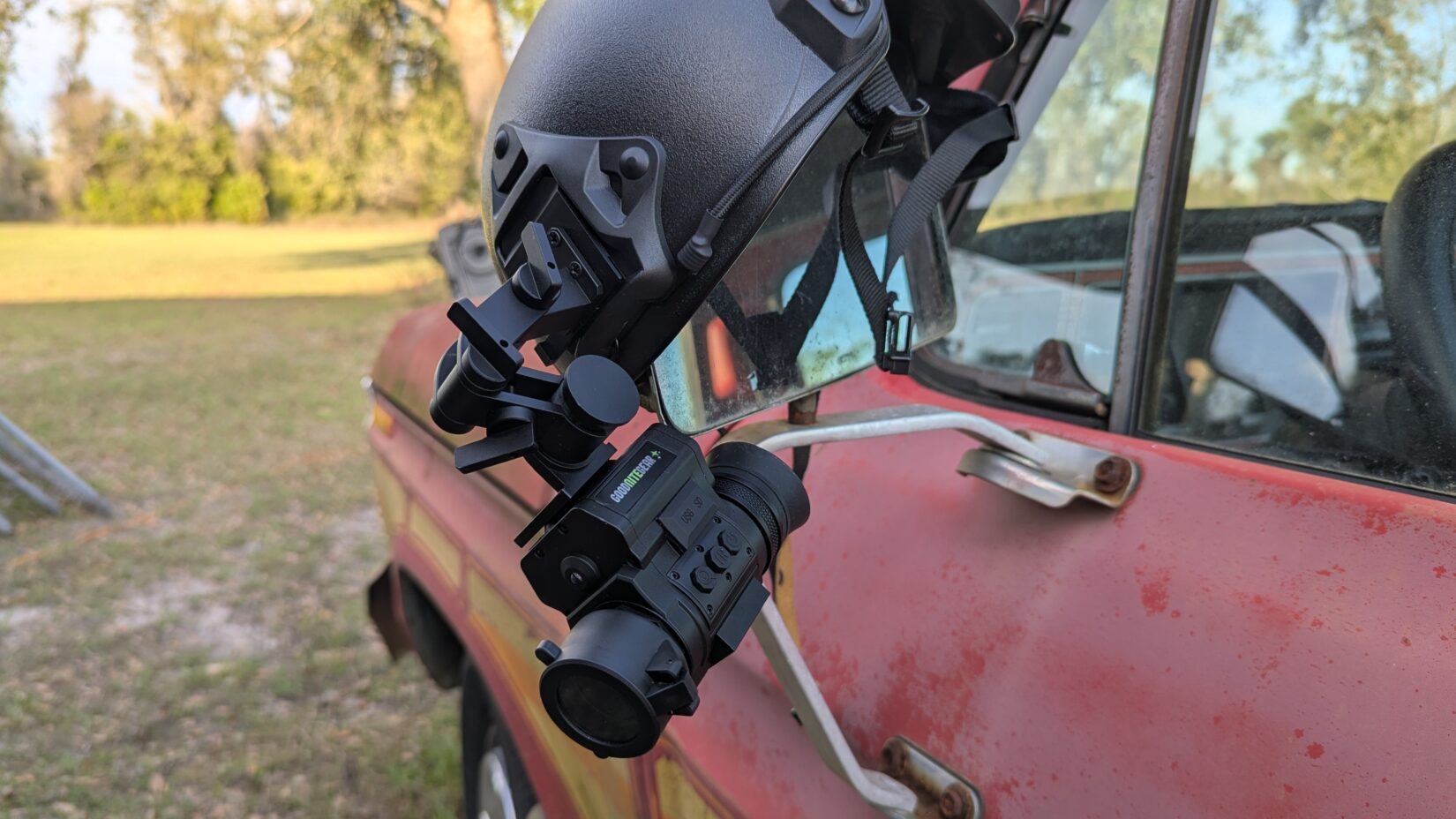
My experience with night vision started and ended with my Marine Corps career. I remember being disappointed in the School of Infantry that night vision didn’t make that cool noise Splinter Cell told me it would. This year, I ran across Goodnite Gear and NVG50, a digital monocle designed to let you dip your toe in the pond of night vision without going broke.
The most common advice for newbies in the night-vision world is to purchase a single PVS-14 tube for a bump helmet. That’s good advice, but it’s still pricey advice. A PVS-14 can still cost north of $1,500 for a used model, and for a lot of people, that’s just too much, especially if their plan is just to have a little fun.
For smaller, rural agencies, getting red dots on their rifles is a budgetary challenge, so spending over a grand to outfit the night shift with night vision isn’t going to happen. So what’s an affordable alternative? The term “digital night vision” will draw the ire of many people, but digital night vision has made significant gains.
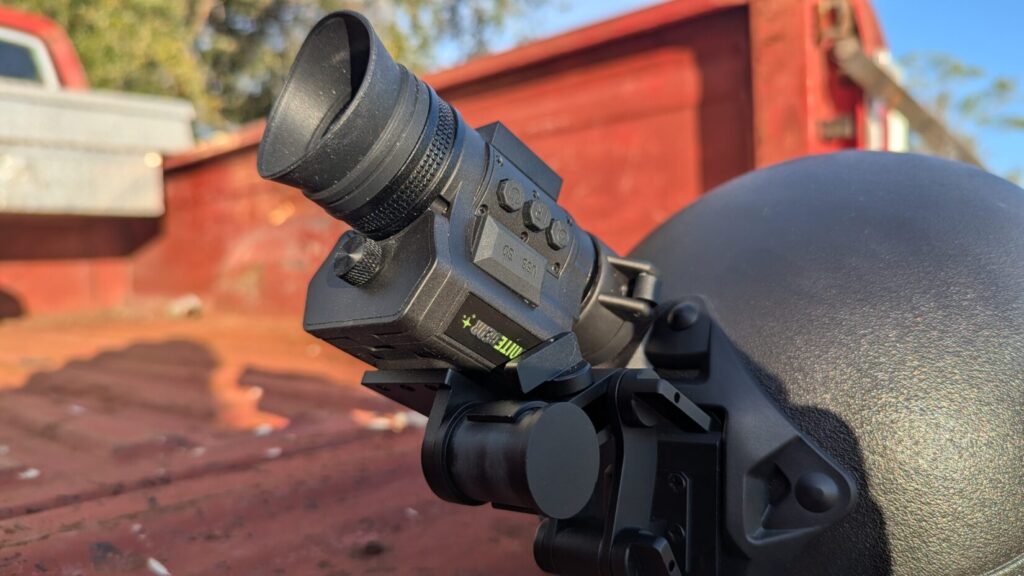
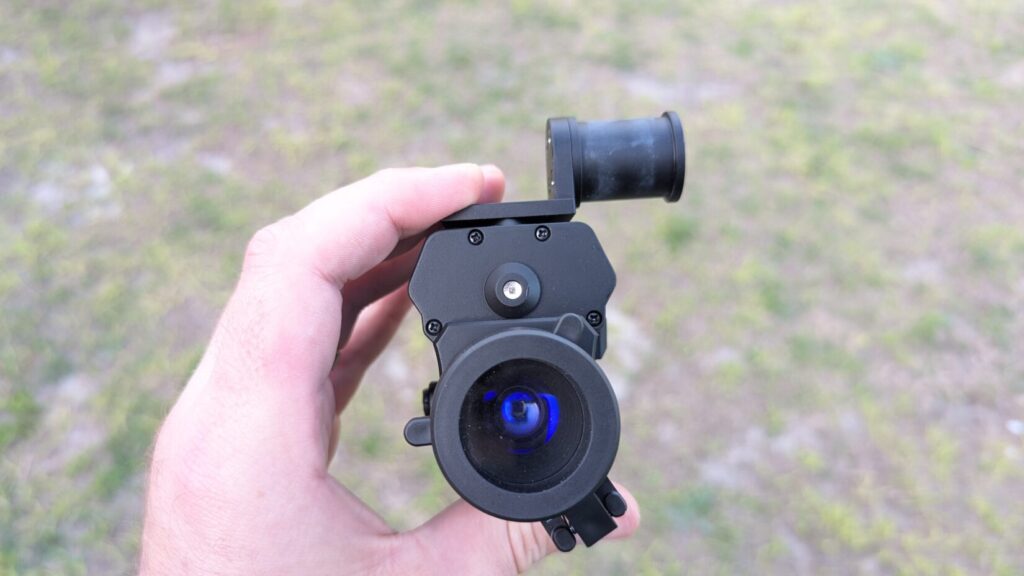
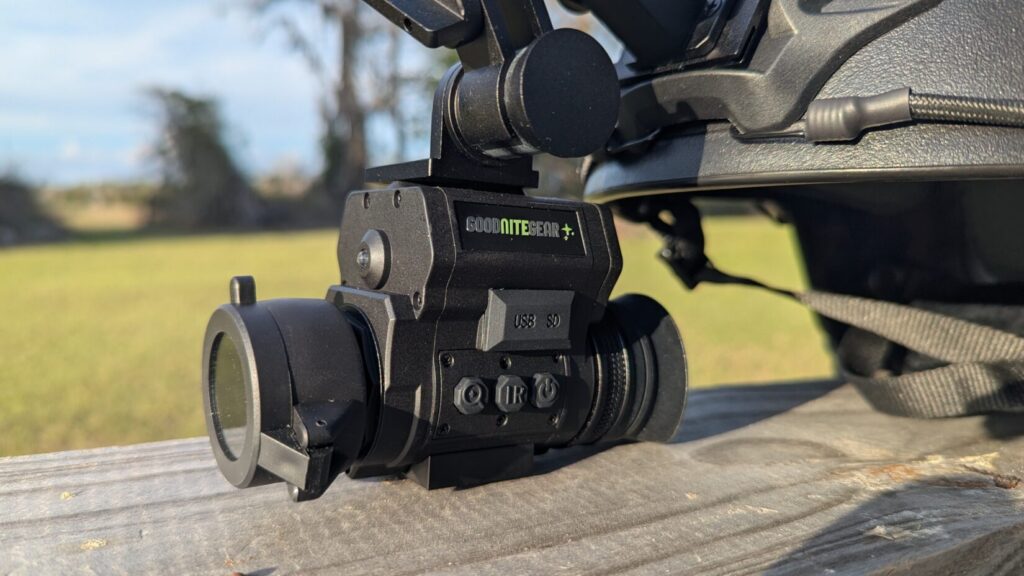
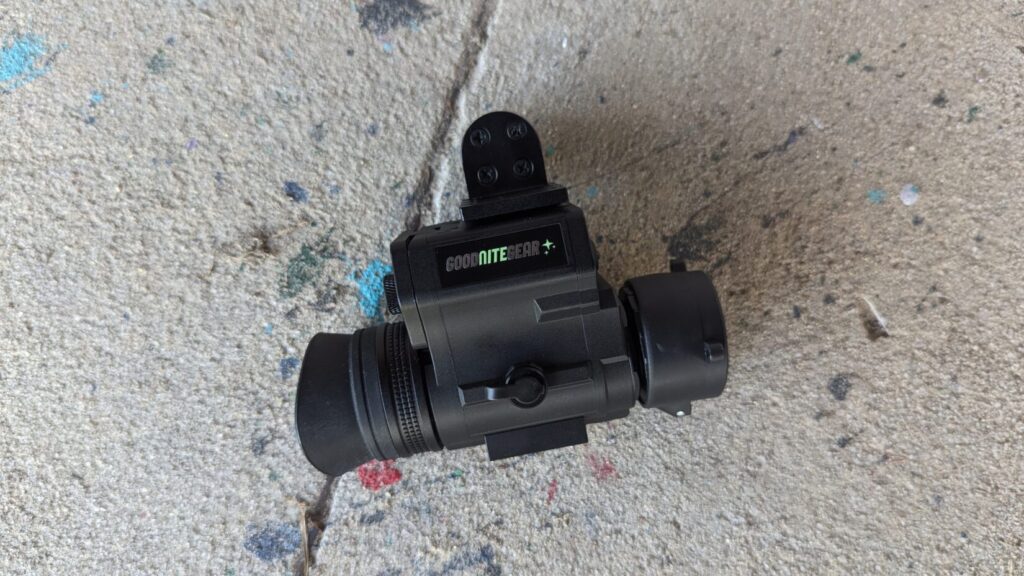
The Goodnite Gear NVG50 retails for $550 and provides a comfortable way to dip your toe into night vision for less than the price of a Glock. The NVG50 offers you a fair bit of performance and modularity.
You can pair two NVG50 monocles together for dual tubes, attach an external battery pack, and it comes with a simple mount kit, so all you need to add is a bump helmet, and you’re off to the races. The kit even comes with a Picatinny mount in case you want to attach it to a rifle.
Digital Tech and Realistic Expectations
Will the NVG50 meet Gen 3 analog night vision performance? No, and it wouldn’t be the tool to use against a near-peer force using night vision against you. Since most of my time with the Goodnite Gear NVG50 was spent in flip-flops, I don’t have that concern.
I do agree with the idea of buy once, cry once, but what if you buy once and completely dislike using nightvision, then you’re out a fair bit of money. If you toss on the Goodnite Gear NVG50 and decide you don’t like nightvision, well, it’s a lot easier to sell a $550 monocle than one that costs more than a grand.
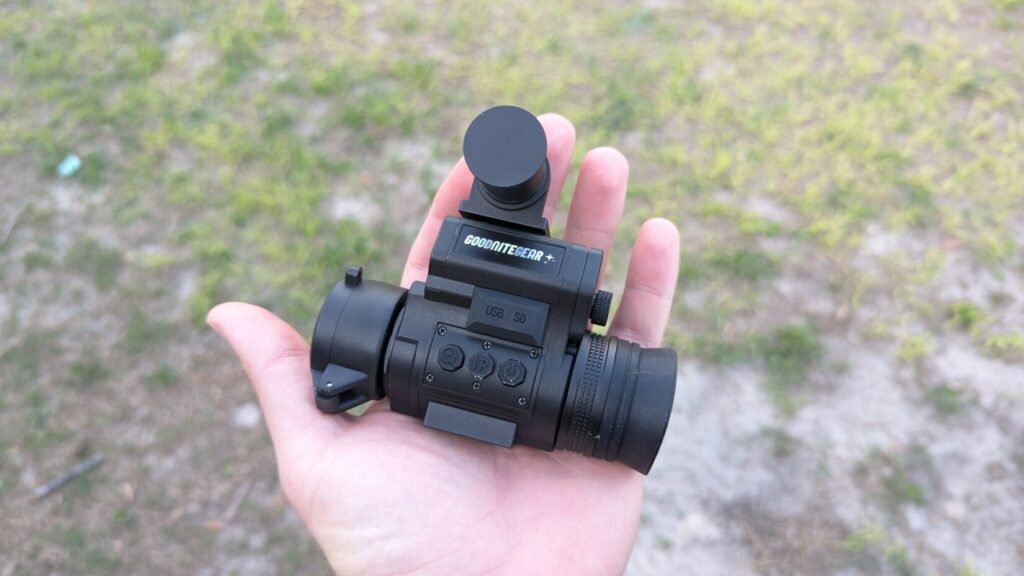
Digital night vision uses CMOS, which stands for Complementary Metal Oxide Semiconductor. A CMOS turns light into a digital image. You are essentially looking through a camera with a ultra low light CMOS sensor. This creates some challenges that Goodnite Gear worked to overcome.
Addressing the Latency Issue
First, latency is an issue with digital night vision. Most digital night vision will experience lag as you move your head while viewing through the optic. This lag makes it difficult to maneuver through rough areas, to aim with a firearm, and to accurately observe moving objects.
Is there some latency with the NVG50? Yes. However, it’s fairly slight. The optic comes set to 30 FPS, but you can swap it to 40 FPS, which I did immediately.
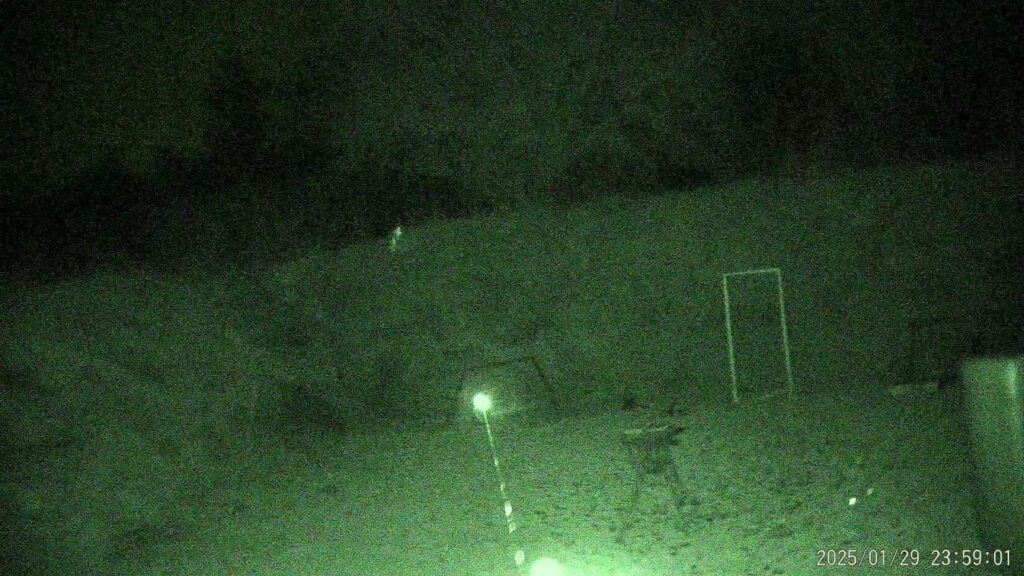
When walking and navigating, I couldn’t detect lag at 40 FPS.
I could see it with an IR laser ever so slightly. It was most evident if you looked at a source of light and then immediately moved your head. That little light source will still be illuminated for what feels like less than half a second.
Even with the minimal lag, I could aim with an IR laser or a red dot and hit my shots, transition targets quickly, or shoot from multiple positions around barricades pretty well.
Navigation and Field of View
A lot of cheaper monoculars have a pretty small field of view—between 24 and 30 degrees, you might have issues with navigation. The NVG50 offers a 40-degree field of view that’s perfectly adequate for open fields, roads, and even walking through the woods.
The view uses an OLED screen with a resolution of 2560×1440. It’s a surprisingly clear and crisp image. My constant companion on my night walks is my Toller, a duck-retrieving dog that’s never retrieved a duck in her life. I can see the fine details of her wavy outcoat as she bounces around and chases random noises.
The viewing screen is rectangular, which doesn’t feel natural to the eye. You’re viewing the screen through a tube, so it’s a little further from your eye and less natural. The rectangular screen causes tunnel vision and provides little peripheral vision.
The NVG50 has to be attached and adjusted quite a bit to make it easy to navigate. I had to have it in the right spot all the time for it to be extremely effective.
Environmental Performance and Ambient Light
Every other experience I’ve ever had with digital night vision required the use of an IR Emitter. The NVG50 comes with an IR emitter, but doesn’t require it to see. I was pleasantly surprised by the clarity and range offered by the digital night vision monocle.
Of course, this depends on ambient light. I live in the middle of nowhere; I don’t have city lights or a ton of ambient light that isn’t created by the moon and stars. For the last month, I’ve been taking nightly walks with the dog under a variety of lighting conditions.
On overcast nights with little moonlight, I could see the shape and profile of my pull-up bar at 35 yards without IR. I can see the dog running ahead of me at various distances and watch her scare a rabbit out of hiding between 35 and 50 yards. At 50 yards, she became a bit of a blur.
As the moon got higher and more light came into play, the range expanded. I could see steel targets reflecting moonlight out to 50 yards with absolute ease. I could make out the square-like shape of the target and the circular gongs.
This is all wide-open terrain with few shadows.
If I had low to no moonlight, my range was cut dramatically. In fact, on a cloudy night with no moonlight, at 25 yards, I had to use the IR to see the targets. Beyond 25 yards, they weren’t visible at all.
I decided to take a walk through the woods under what I’d call medium moonlight. The canopy of the oak hammock cuts my view down to what feels like 20 to 30 feet in front of me. I could navigate, but slowly, and could walk myself into a thicket where I had to turn back.
Testing the IR Illuminator
However, if I popped the IR illuminator on I could navigate quite well in the oak hammock. My range extended enough to make out small details and forge a mostly easy path to and fro. The same goes for dark buildings.
In my home, white walls reflect a lot of light. Even with the lights off, there is light. The light from my router, moonlight coming through windows, cell phone chargers, digital clocks, and all such devices create a little light that reflects off white walls. I didn’t need IR at all inside my home.
Finding a lightless closet was surprisingly difficult, but it was accomplished. Inside the dark closet, without IR I could see clothes hanging, shoes on the floor, my dresser, etc. It’s fairly low range, but all visible.
We also have a storage building chock full of stuff and completely windowless. No lights, no power, all navigation. In this dense environment of boxes and toys the NVG50 performs well. I could make it through with only one stubbed toe.
Depth perception with a monocle is a challenge regardless of the nightvision type, so it was slow going and careful, but IR wasn’t required. It helped, especially if I wanted to make out exactly what I was looking at. Black blocks turned into cardboard boxes and plastic totes.
Firearms Training and Passive Aiming
As mentioned, the lag was most noticeable with red dots and IR. It’s just barely perceptible, but still perceptible. Drawing, turning on an IR laser, and shooting didn’t feel slow. I could make out the bright white IR dot and make hits on steel targets.
Doing everything at night feels a little slower with a handgun. Luckily, the laser is bright enough to see because looking through a red dot is interesting. Even an NVG-capable dot is a bit tough. It’s incredibly bright and takes up most of the window.
This could be my dot choice, and I’ve never purchased a handgun dot for its NVG performance.
With the IR Illuminator on, passive aiming is impossible since the IR light reflects on hands, optics, and the gun. You can only use IR lasers to aim with IR on.
I also used the SIG Romeo8T AMR, which offers many dedicated night-vision settings. Passive aiming through the optic was possible, but I need a riser to make it easier. My main problem with the Romeo8T was streaking.
The reticle streaked to the left a fair bit. Again, it might be optic-related, but it’s noticeable. Still, at close ranges I can make hits, but beyond 25 yards it’s difficult. An EoTech on a riser is likely the better option due to holographic optics playing so well with nightvision.
Additional Features and Final Verdict
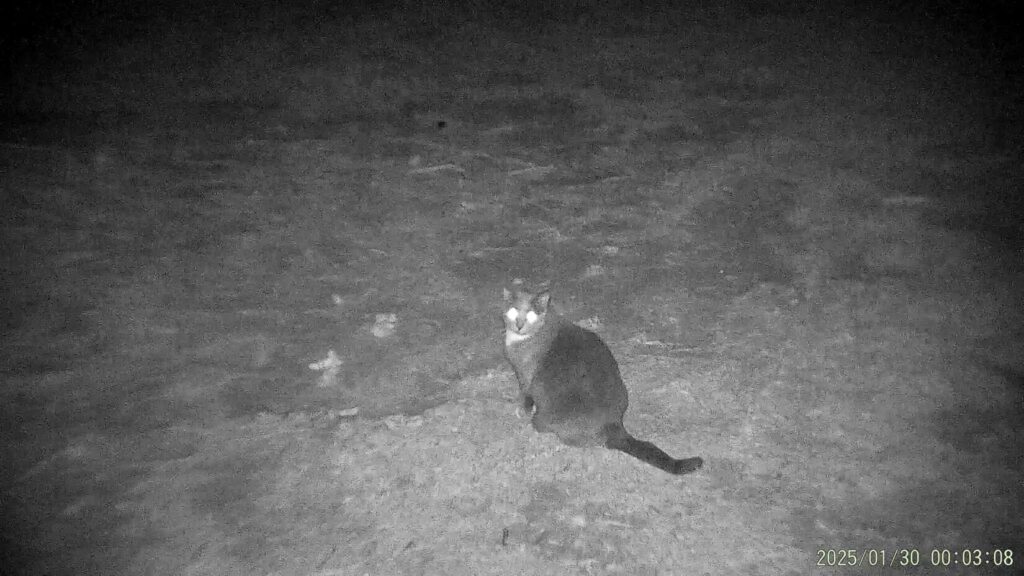
I’ve got to mention a few features worth noting. First, the NVG50 can record to an SD card, making it easy to record my night vision walks. It’s pretty neat and fun to fool around with.
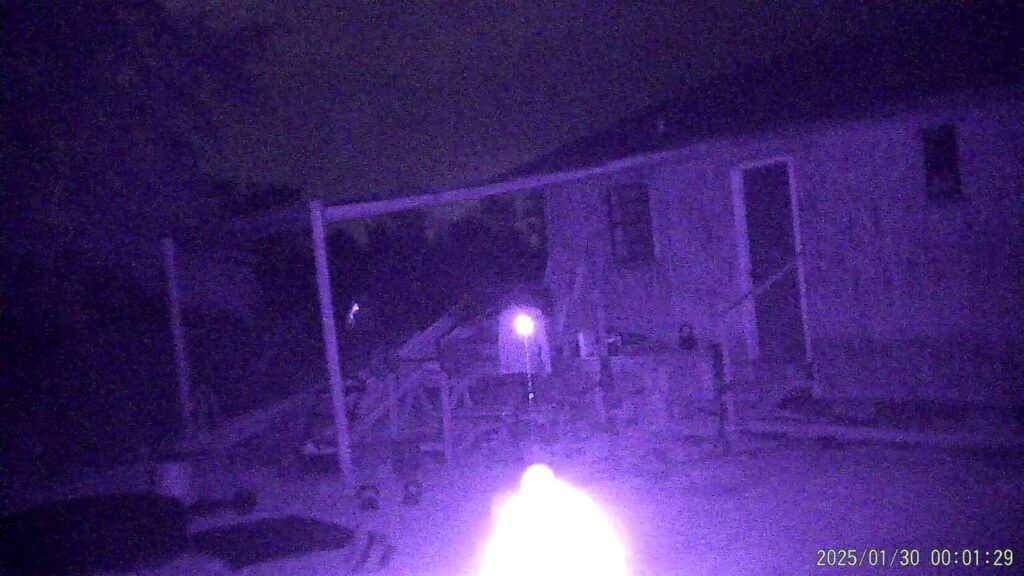
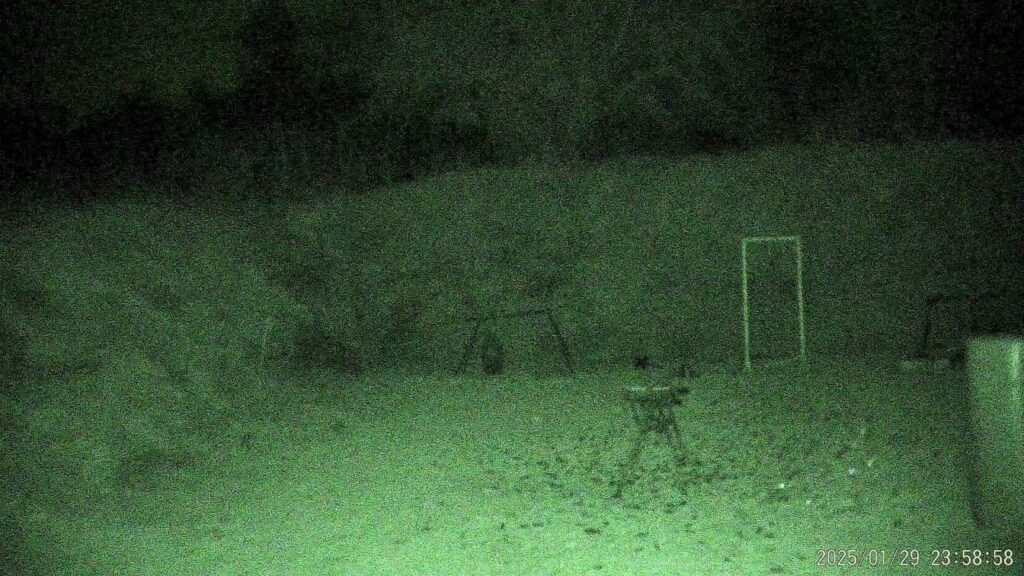
Additionally, the NVG50 has four viewing modes: green, white phosphor, black-and-white, and color. The color works best in a lot of ambient light; without it, it looks purple.
There is a digital zoom that goes up to 4X, and the IR illuminator has three intensity modes. The zoom makes the image grainier, and the IR has an effective range of about 25 yards.
Unlike analog night vision, there aren’t many rules for safely storing the item. You can look at bright light and not damage your optic. That’s great for a knockaround NOD and especially good for beginners.
The Goodnite Gear NVG50 surprised me. I had a much lower set of expectations for digital night-vision optics. I figured they all kind of sucked, but it seems like they’ve made some serious gains in the last few years.
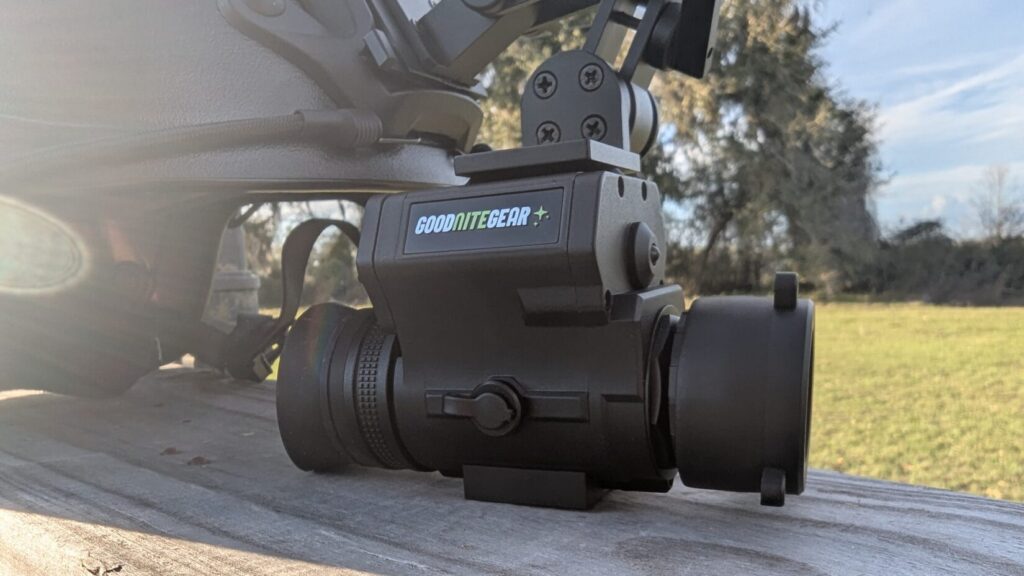
While it’s still not up to analog night-vision performance, the NVG50 is way better than I expected. If I had to change one thing, I’d probably get a tougher mount. The included mount is fairly lightweight and made of thin aluminum.
I’m impressed, and my family and I have had a lot of fun with the NVG50. I’m pleasantly surprised, and as a notable cheap guy, I’m happy to continue my backyard and range shenanigans with the NVG50.