
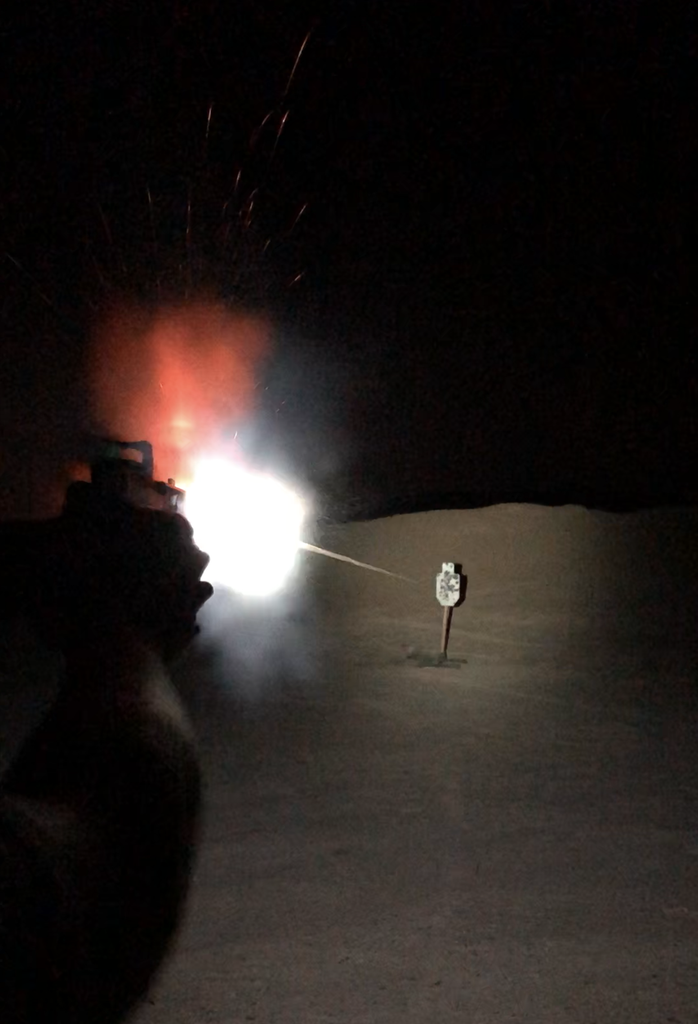
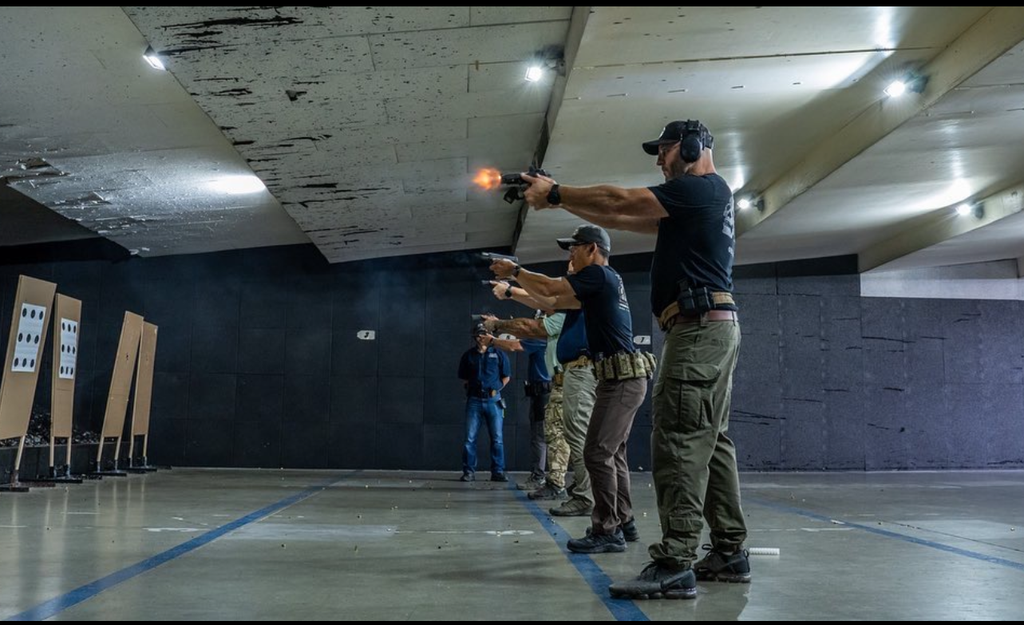
At War HOGG Tactical, whenever I conduct courses at an indoor range, a low-light pistol course is always offered. One big part of our low-light course is conducting a low-light ammo test of both duty / carry and training ammo to see what kind of muzzle flash is produced.
Since I retired and founded War HOGG Tactical, along with our free law enforcement firearms training initiative, Project Officer Survival, I have focused on training law enforcement officers and armed citizens. In the law enforcement realm, there should be no doubt how much muzzle flash their duty ammo produces in low-light or reduced-light conditions.
For everyday carry (EDC) citizens, violent encounters rarely happen under bright fluorescent range lighting; they happen in dimly lit parking garages, dark alleys, or their home overnight.
Yet, despite this reality, most shooters make a critical error: they buy a box of self-defense ammunition, load their magazines, and never fire a single round in the dark. They assume that because a box says “Self Defense” or features high-end packaging, it will perform flawlessly when the lights go out.
If you have not personally verified the muzzle flash signature of your carry ammo in low light, you are just hoping for the best.
The Mechanics of Muzzle Flash: What Happens When You Pull the Trigger?
To understand why low-light testing is a must, you have to understand what happens inside your firearm when a cartridge ignites.
When the firing pin strikes the primer, it ignites the gunpowder inside the casing. As that powder burns, it generates rapidly expanding high-pressure gas that drives the projectile down the barrel. However, not all powder burns inside the barrel.
When the bullet exits the muzzle, superheated, partially combusted gases burst into the atmosphere. When those hot gases mix with oxygen in the ambient air, they ignite a secondary explosion outside the barrel. That visual flash of burning gas and light is muzzle flash.
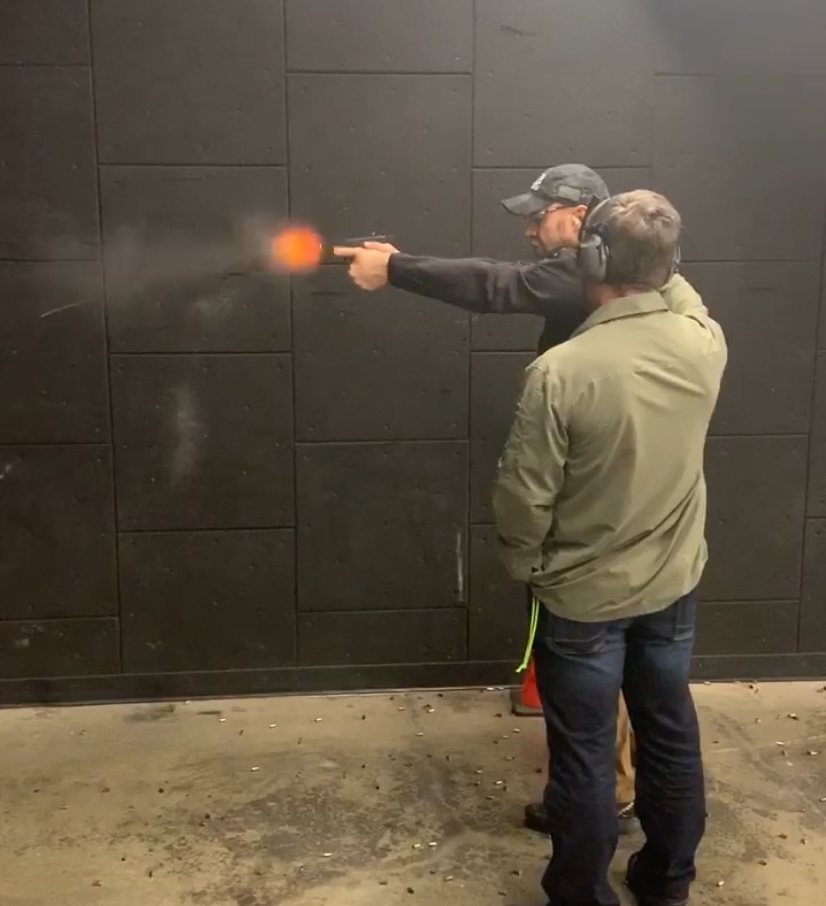
Several variables dictate the size and brightness of that fireball:
- Powder chemistry: The specific burning rate and chemical additives in the propellant.
- Barrel length: How much distance the powder has to burn before reaching open air.
- Caliber and pressure: High-pressure rounds (such as +P 9mm, .40 S&W, or .357 SIG) generate more gas volume.
- Muzzle devices: Compensators or ports that vent gases upward and outward.
In broad daylight, muzzle flash is largely invisible to the human eye. But in a low-light or zero-light engagement, a bright muzzle flash can leave you with temporary tunnel vision or disorientation right when you need your sight picture back fastest.
Range Ammo vs. Carry / Duty Ammo: The Flash Suppressant Difference
When it comes to ammo, it all boils down to manufacturing cost and chemical engineering. Range ammunition — typically Full Metal Jacket (FMJ) — is manufactured for one purpose: high-volume target practice at the lowest price point possible. Ammunition companies use standard commercial propellants that lack specialized chemical additives.
As a result, range ammo typically produces a huge, bright orange muzzle flash in low light.
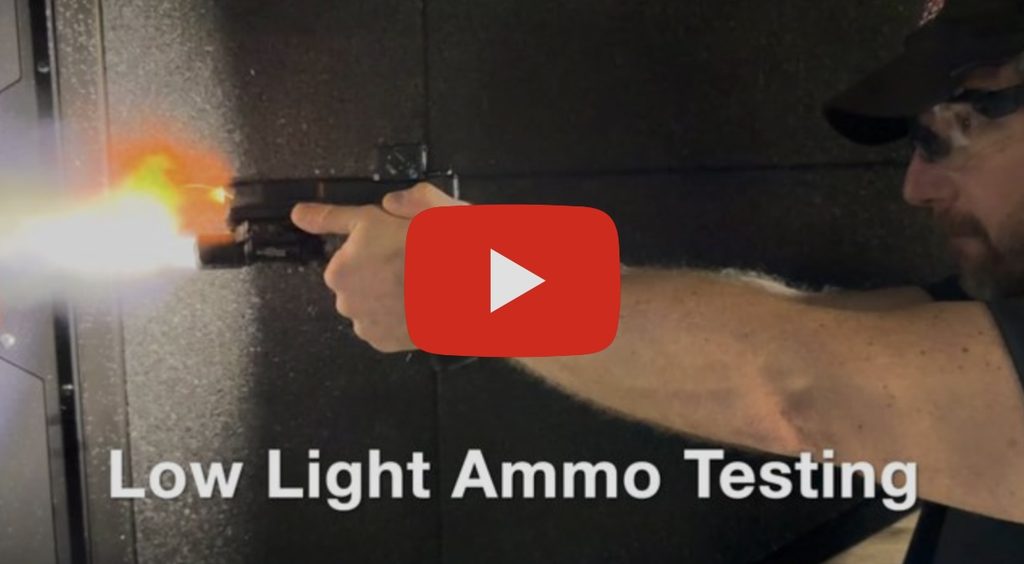
On the flip side, premium duty ammunition engineered specifically for law enforcement and defense—such as Hornady Critical Defense for civilians and their Critical Duty for law enforcement—utilizes low-flash propellants.
Manufacturers add chemical flash suppressants (typically alkali salts like potassium chloride) into the powder blend. These chemicals disrupt the chain reaction of the secondary gas ignition at the muzzle, converting that massive orange fireball into a minimal, dull violet spark that is virtually unnoticeable to the shooter.
The Short Barrel Penalty: Concealed Carry vs. Duty Guns
Another critical factor every shooter must account for is barrel length. Law enforcement duty pistols generally feature 4.0 to 4.5-inch barrels. Some concealed carry pistols have trended toward micro-compacts with 3.1 to 3.5-inch barrels.
When you shoot a high-pressure defensive round through a short 3.1-inch barrel, the bullet exits the muzzle much faster relative to the powder burn cycle. Because the barrel is shorter, more unburned powder escapes into the open air before it can burn inside the slide.
The Result: The exact same box of duty ammunition that produces a low, manageable flash out of a full-size duty pistol can produce a noticeable fireball out of a sub-compact carry gun.
This is precisely why you cannot rely on ballistic charts or manufacturer claims printed on the back of the ammo box. You must test your specific carry/duty load out of your specific handgun.
How to Conduct a Low Light Ammo Test
You don’t need a military testing facility to evaluate your carry ammunition. You just need a structured, safe low-light range environment and a methodical approach.
Step 1: Establish Your Baseline
Select three types of ammunition:
- Your primary duty/carry load.
- An alternative premium defensive load.
- Your standard training FMJ range ammo.
Step 2: Set Up Recording Equipment
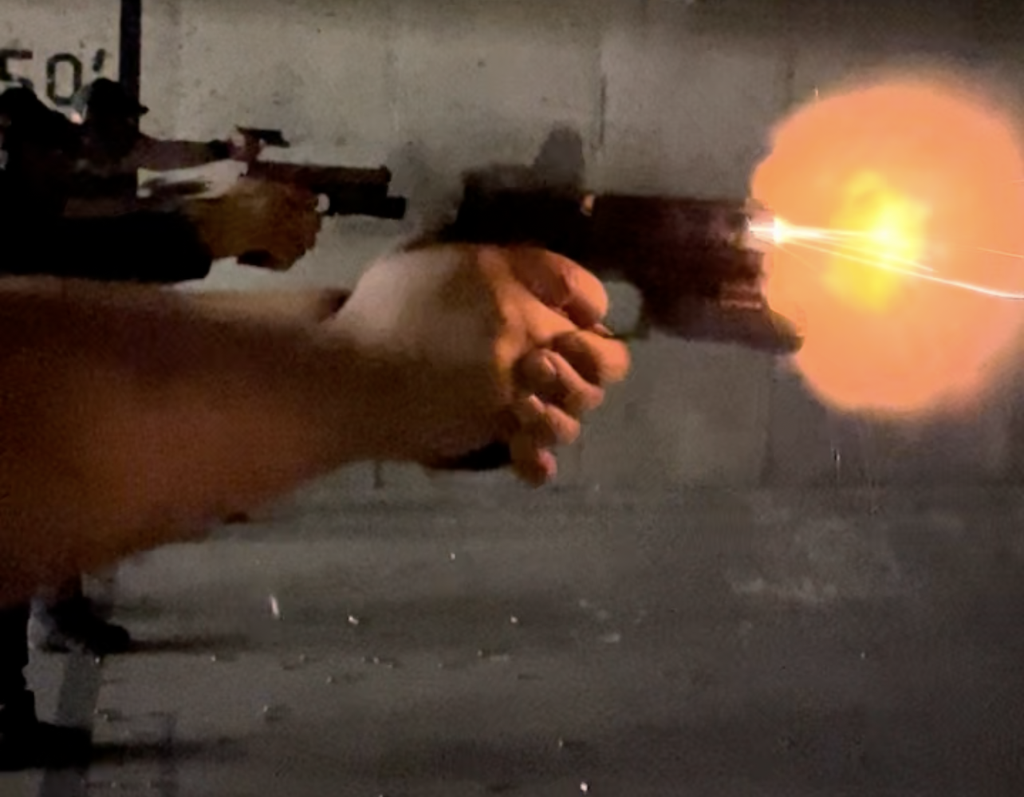
Set up your phone or camera on the side of the shooter and have the framing capture the entire pistol and about a foot in front of the muzzle. Ensure the camera is set to record high-definition video at 60 frames per second (fps).
I would recommend, from personal experience, that you slightly illuminate the pistol to make sure framing is correct.
Step 3: Execute the Test
When you load your ammo, load it backwards—training ammo first, then alternative, and last your duty ammo—that way you fire your duty first, then alternative, and last training ammo:
- Fire a 3-shot string of your primary duty ammo.
- Fire a 3-shot string of your alternative load.
- Fire a 3-shot string of your range ammo.
Pause briefly between shots to allow ambient light conditions to reset for your eyes and camera lens.
Repeat the test with your pistol-mounted light or handheld light source. This is going to give you more information
Step 4: Analyze the Footage & Record Metrics
Review the footage frame-by-frame. Look specifically for:
- Flash Volume: Is the flash a small, momentary violet pop, or a wide orange ball?
- Red Dot / Iron Sight Visibility: Can you maintain tracking of your red dot or front sight post through the break of the shot?
- Sight Recovery: How quickly can you re-acquire the target after the shot breaks?
Log these results in The Firearms Training Notebook. Documenting your ammo, lot numbers, and performance metrics allows you to make data-driven decisions about what ammo you are going to use/carry.
Own Your Equipment
At War HOGG Tactical / On The Range Podcast, our motto is simple: Be 1% Better Everyday.
Being 1% better isn’t just about how fast you draw from your Safariland holster or how quickly you press the trigger on a shot timer. It is about eliminating single points of failure in your entire life-preservation system. That includes your mindset, your physical fitness, your trauma medical training, your firearm, and yes, the ammo sitting inside your magazine.
Do not take low-light performance for granted. Take your blaster to a low-light range, run a proper low-light ammo audit, and verify that your ammunition gives you every tactical advantage when the sun goes down.
Don’t forget to check out the War HOGG skill builder library for more shooting tips and sign up for our newsletter. Go to warhogg.com for our upcoming training course schedule.
FAQ
Does premium defensive ammo really produce less muzzle flash than range ammo?
Yes — manufacturers like Hornady formulate low-flash propellants specifically for their duty and defense lines, while standard FMJ range ammo uses commercial propellants without those additives.
Why does a short-barreled carry gun produce more muzzle flash than a duty pistol?
A shorter barrel gives powder less distance to burn before the bullet exits, so more unburned powder ignites outside the muzzle — producing a larger visible flash from the exact same ammunition.
Train Hard, Stay Safe, and see you “On The Range” – Rick