
The first minutes after a traumatic injury are medically decisive. Effective bleeding control and basic airway support performed before EMS arrives often determine whether a patient survives long enough to reach definitive care.
Having the right trauma equipment, and the training to use it confidently, directly increases those odds.
Trauma Kit Requirements
An individual first aid kit / (IFAK), or trauma kit must balance capability with practicality. It needs to be compact, lightweight, and accessible with gross motor movements when stress or environmental conditions limit fine dexterity. An effective kit should include TCCC‑compliant components for managing massive hemorrhage, airway compromise, and penetrating trauma.
Two pieces of gear I’ve been running, the Haley Strategic Partners Improved Trauma Response Kit (ITRK) and the Safariland and Haley Strategic Partners BASELINE MOLLE Belt, are built around that foundation.
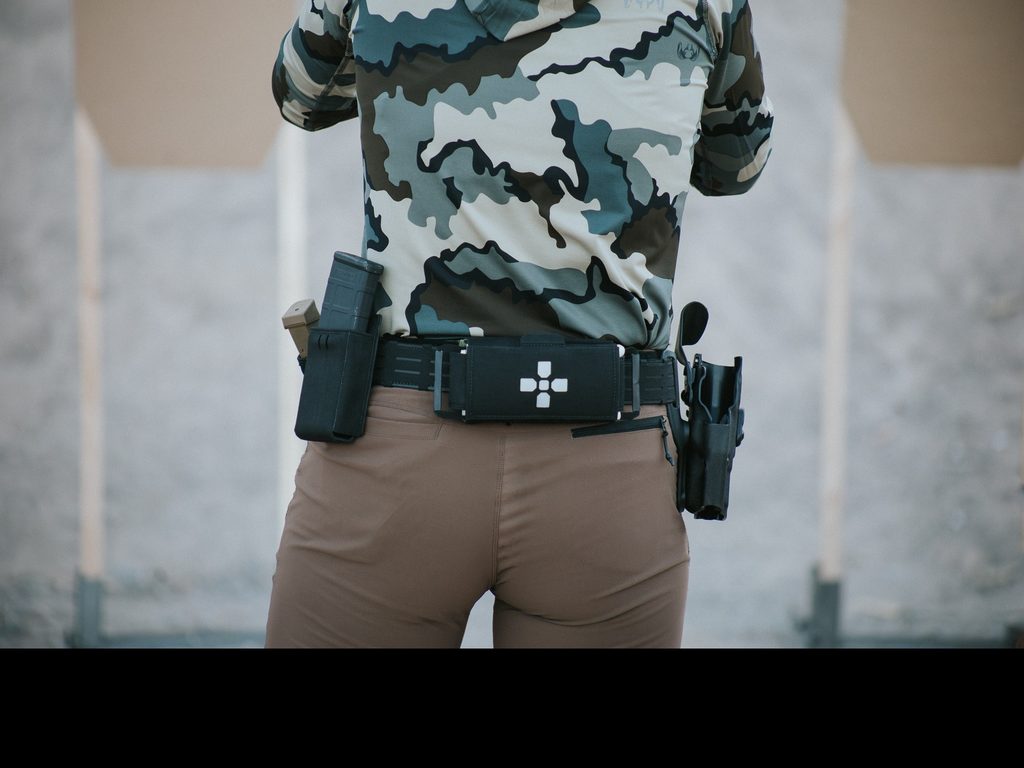
The Improved Trauma Response Kit (ITRK) is everything that an IFAK should be. (Image: Haley Strategic Partners Marketing).
The Improved Trauma Response Kit (ITRK)
The ITRK is the result of a collaboration between Haley Strategic Partners and Special Operations Aid and Rescue (SOAR). It brings together current TCCC best practices with the real‑world needs of law enforcement, military personnel, and other armed professionals.
Construction and Materials
The ITRK uses MIL-SPEC Aramid X-PLY laminate, MIL-SPEC nylon laminate, thermoplastic reinforcement, heavy woven elastic, and VELCRO Brand hook. Everything feels tough and well‑chosen, built to handle scuffs, the elements, and whatever comes over time.
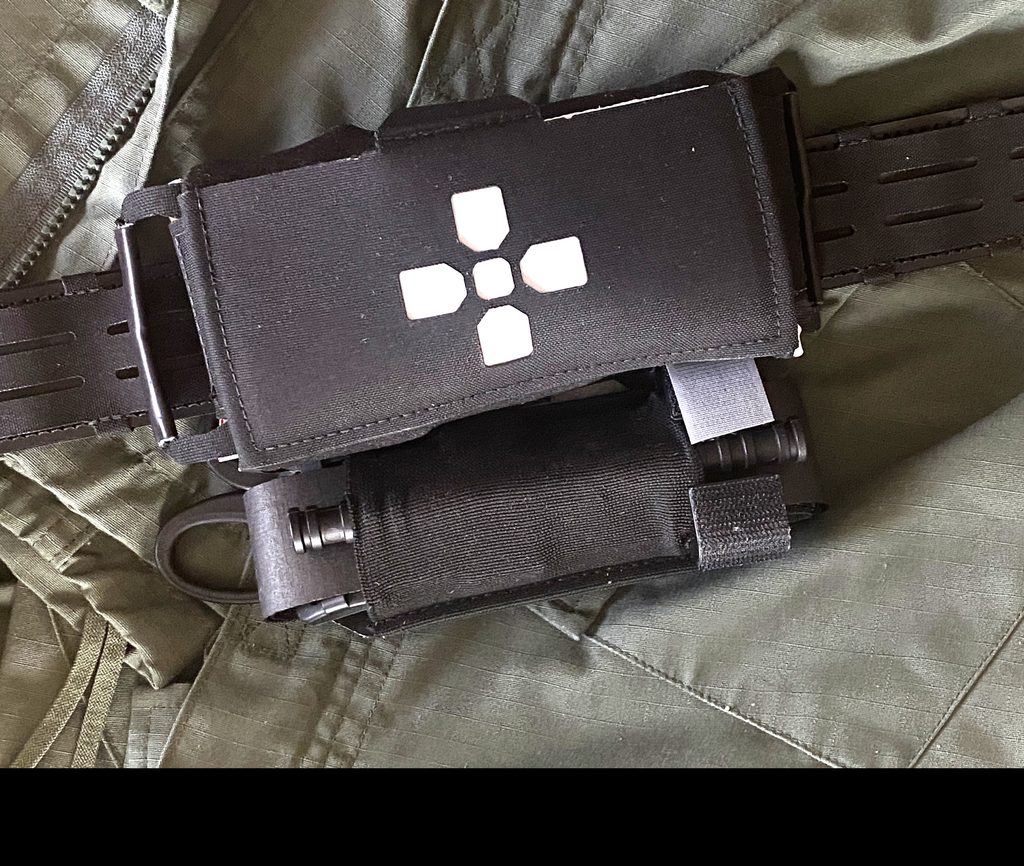
The front of the ITRK has a laser-cut cross and an interior pouch containing a weatherproof vinyl medical information and DD Form 1380 (TCCC) card. The card has a perforated edge that allows separation of personal medical information from responder-completed TCCC documentation.
Deployment Under Stress
The ambidextrous medical tray is the core of the ITRK and a big selling point for me. Its integrated rubberized closed‑loop pull handles make it easy to retrieve with one hand, even if your grip is wet or compromised.
Inside, elastic organization keeps every component visible and neatly indexed so you can quickly find what you need.
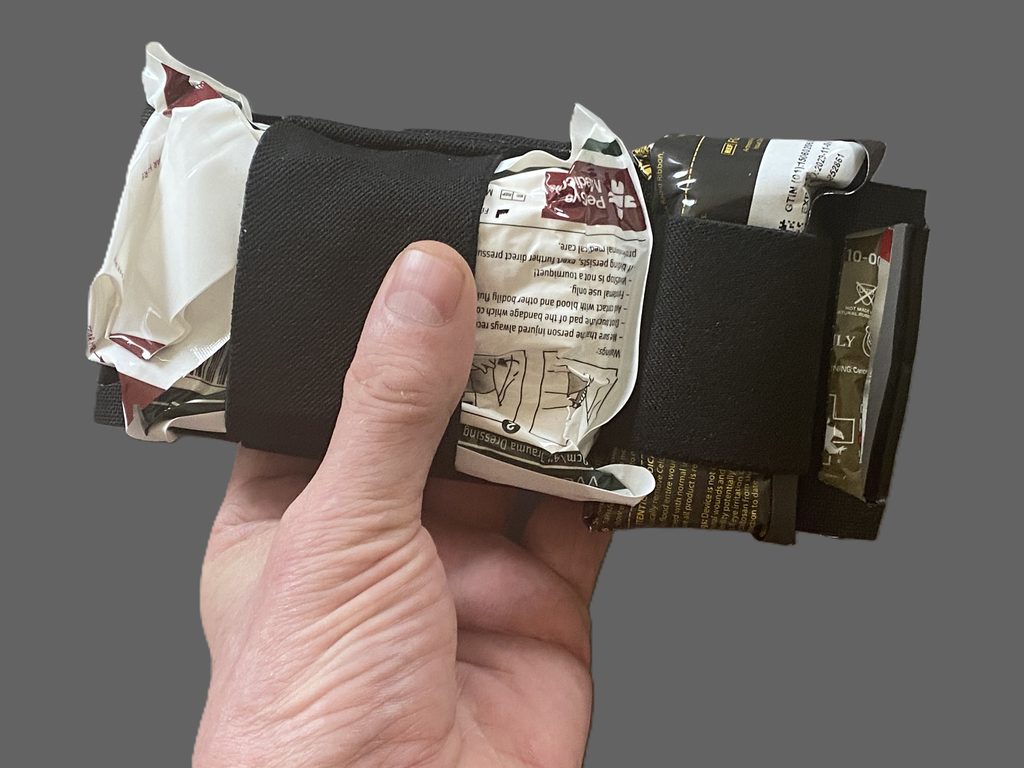
The tray accepts a sealed SOARescue MedMag IFAK insert or separate individual components such as hemostatic gauze, chest seals, pressure bandages, and an NPA. I opted for the latter. The components are firmly retained yet easy to remove without snagging. Even when shaken or dropped, the components stay in place and are immediately identifiable.
All closure mechanisms that would complicate removal of the equipment have been eliminated. The kit can be deployed from either side and handed off without losing organization.
Simply pull either of the handles to extract the tray. The whole setup is built for quick, easy access using simple, gross‑motor movements.
Pairing the ITRK With a Tourniquet Pouch
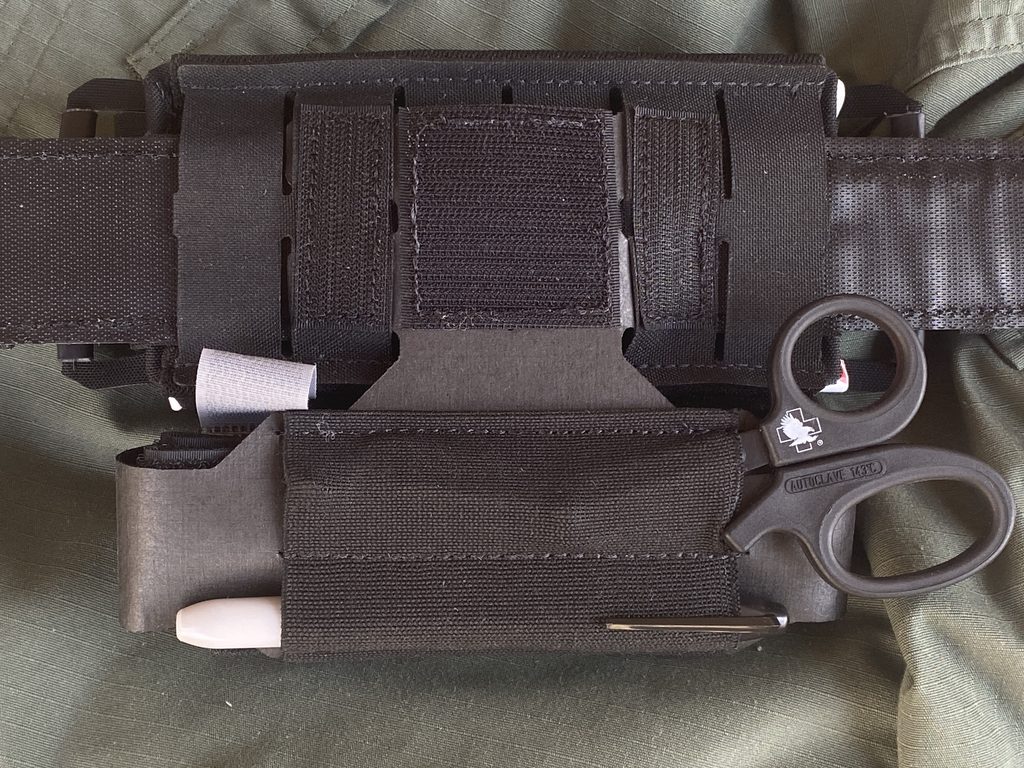
The ITRK is designed to pair with a separate tourniquet pouch (such as the Haley Strategic Partners TQS Hanger (Tourniquet & Trauma Shears Hanger), which is designed specifically for attachment to the ITRK, or the Safariland Tourniquet (TQ) Pouch System. This configuration is consistent with TCCC’s emphasis on keeping a tourniquet immediately accessible, without having to open an IFAK first.
I have a C-A-T tourniquet, trauma shears, and a Sharpie marker in a HSP TQS Hanger attached to my ITRK. I also have a second tourniquet in a Safariland Tourniquet System. One tourniquet may not be enough for every injury, which is why I carry two.
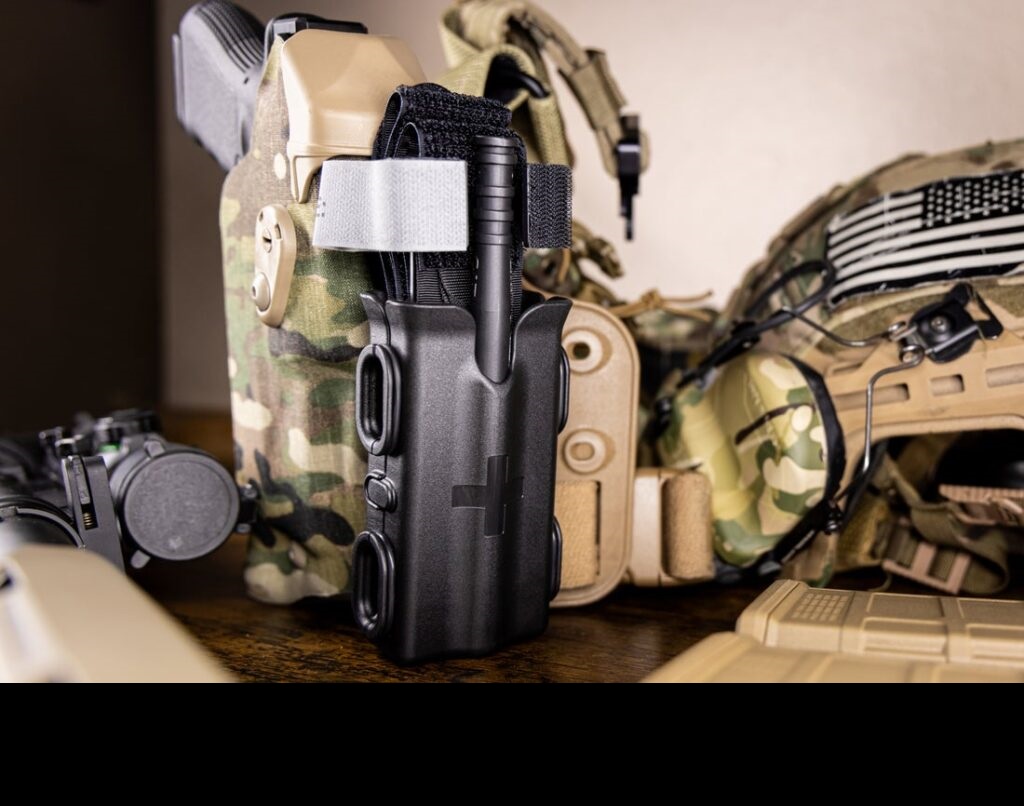
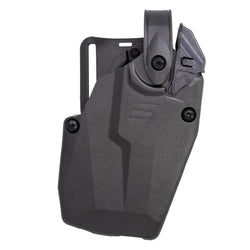
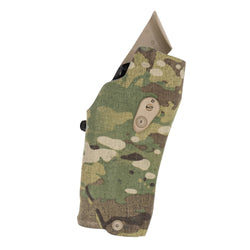
The Safariland Tourniquet (TQ) System (shown) offers a variety of mounting options. I carry two tourniquets — one in an HSP TQS Hanger mounted to my ITRK and a second in a Safariland TQ System. (Image: Safariland)
ITRK Mounting Options
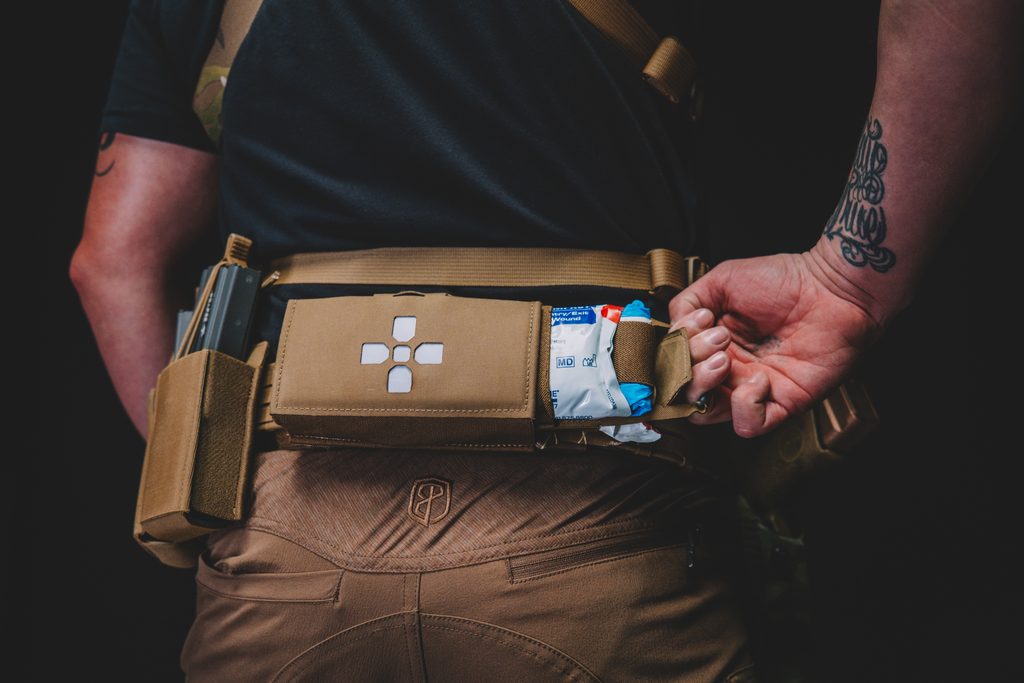
The ITRK can be mounted vertically or horizontally. Mounted vertically using two MOLLE columns, the ITRK fits cleanly onto plate carriers or chest rigs without interfering with gun manipulation or communications equipment.
The horizontal belt pass-through system is where the ITRK excels. It fits belts from 1 to 2.25 inches and uses interior loop material to secure the kit to gun belts and exterior hook material to adhere to inner belt systems.
Mounted horizontally on my BASELINE MOLLE Belt System, the ITRK stays stable during movement, vehicle operations, and rapid transitions.
I generally prefer to mount the ITRK horizontally on the rear of my belt. In this position, the kit stays accessible with either hand, helps balance the load, and keeps the front of the belt from getting crowded.
That said, it may not be the most comfortable spot if you’re sitting in a car all day. I usually avoid placing gear on my lower back because of the risk of spinal injury during a backward fall, but the kit’s soft construction reduces that concern.
In my drills, the kit was quick to deploy, easy to repack, and accessible even from tight spots, including inside vehicles.
BASELINE MOLLE Belt System
The BASELINE MOLLE Belt is built for duty use, providing a rigid, lightweight platform that supports a full loadout without pressure points or fatigue. Its laminate materials resist sagging and maintain shape under load. Like the ITRK, it’s well-made.
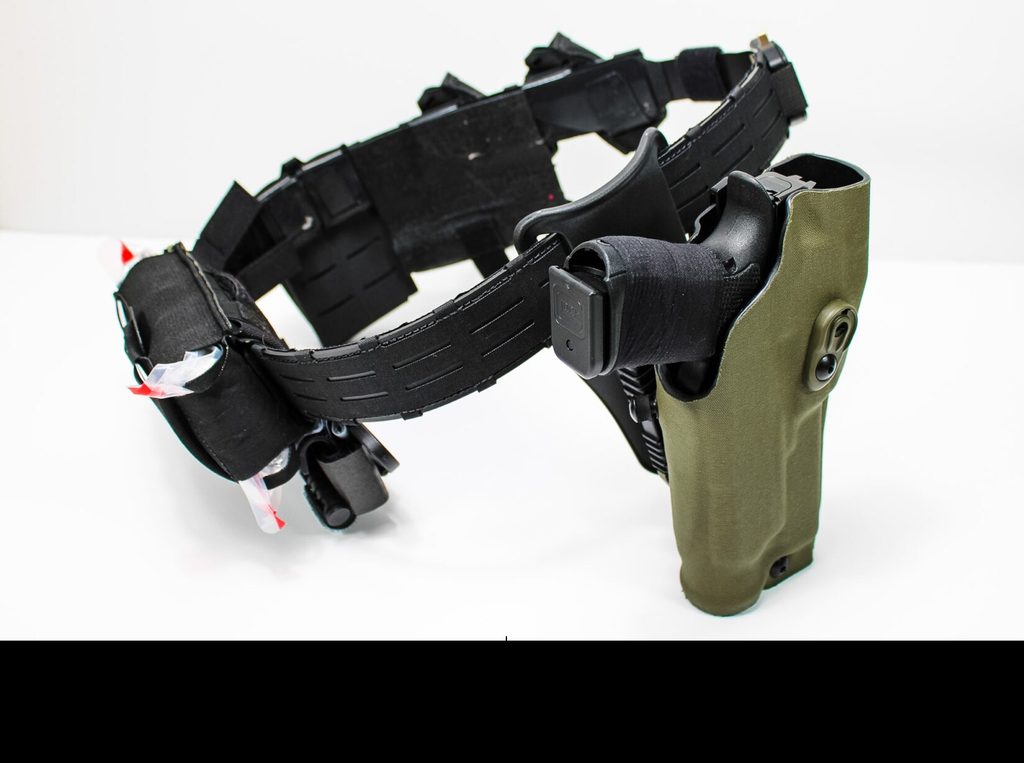
The belt uses a multi-layer composite structure that combines stiffness with controlled flex, allowing it to remain supportive without feeling overly rigid during extended wear.
The inner surfaces are designed to interface cleanly with common inner belt systems, such as the Haley Strategic Partners D3 Inner Belt or D3 Pro Inner Belt, creating a stable foundation that prevents rotation or drift during movement. It can also be paired with the Haley Strategic Partners Belt Pad Kit to adapt the belt to a padded load-bearing platform without the need for an inner belt.
The outer laminate maintains consistent geometry even when exposed to heat, cold, moisture, or prolonged daily use, so holsters, pouches, and medical equipment stay where they were placed. Half‑inch MOLLE spacing allows precise pouch placement while remaining compatible with standard MOLLE and PALS accessories.
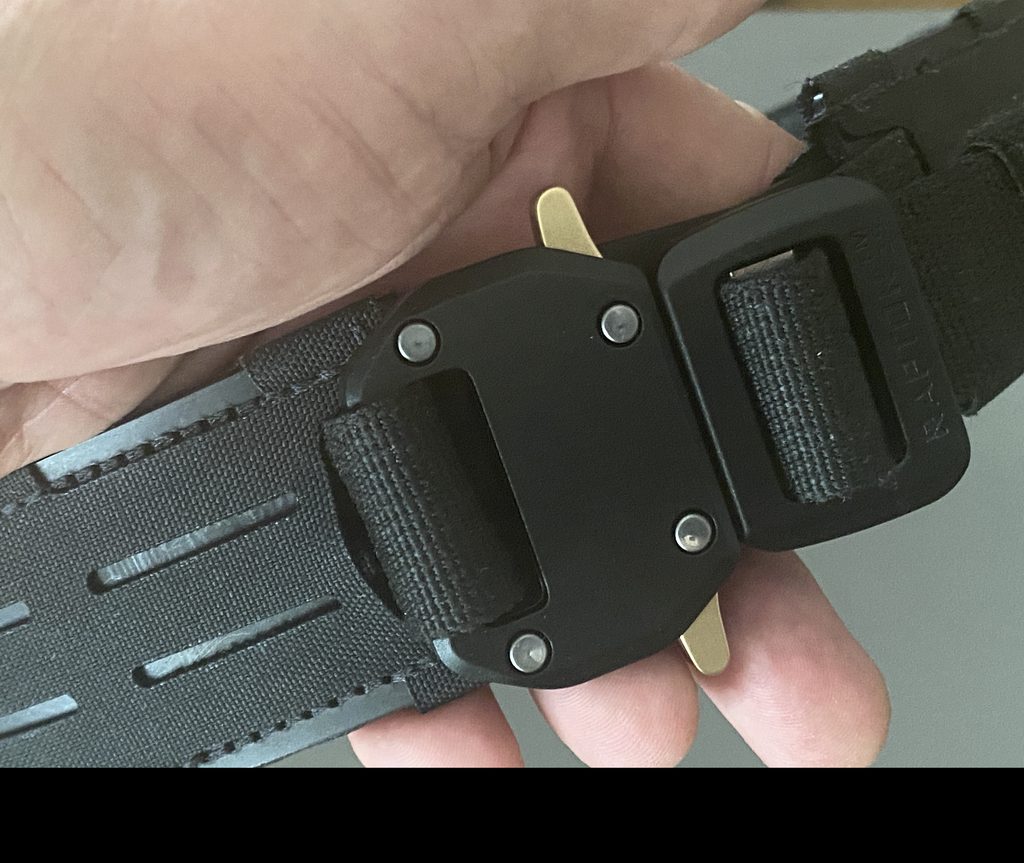
The belt has a quick-release ADF Raptor buckle. The buckle is made in the USA from lightweight, high-strength 7075 aluminum. An Overlock Tab Closure System reinforces the front of the belt, bridging the gap behind the buckle to eliminate flex.
Policy and SOP Alignment
Agencies and units often maintain specific standards for medical carriage, component selection, and placement on duty gear. The ITRK and BASELINE MOLLE Belt fit into most existing frameworks, but users should confirm alignment with departmental guidelines and training requirements.
Ensuring compliance with SOPs supports interoperability during multi‑responder incidents and reinforces shared operational standards across teams.
Bottom Line
The ITRK is a well-built, mission-focused trauma kit that keeps things simple, durable, and easy to access. When you pair it with the BASELINE MOLLE Belt and a dedicated tourniquet pouch, you get a full, ready-to-go medical setup that works well for duty use, tactical environments, or time on the range.
The ITRK stays streamlined and intuitive, and it fits cleanly onto the BASELINE MOLLE Belt without adding bulk. Together, they create a solid system that helps responders stay prepared during those critical minutes before EMS arrives.
Because both the ITRK and the BASELINE MOLLE Belt are modular, I can set them up exactly how I need. I can adjust placement, choose components, and stage everything for the job at hand without losing any core TCCC capability.
The ITRK and BASELINE MOLLE Belt are available in Black, Coyote Brown, MultiCam, and Ranger Green. The Tourniquet System is available in Black and Flat Dark Earth.
Complete the Setup: Belt and Tourniquet Carry


ITRK and BASELINE MOLLE Belt Questions, Answered
What is the ITRK?
The Improved Trauma Response Kit is an individual first aid kit pouch developed by Haley Strategic Partners with SOARescue. It has an ambidextrous pull-out medical tray.
What belt widths does the ITRK fit?
Its belt pass-through fits belts from 1 to 2.25 inches wide. It can also mount vertically on two MOLLE columns.
Does the ITRK hold a tourniquet?
No. It’s designed to pair with a separate tourniquet pouch, such as the HSP TQS Hanger or the Safariland Tourniquet (TQ) System.
Is the ITRK made in the USA?
Yes. Haley Strategic lists it as made in the USA from USA materials and Berry compliant.
Medical Disclaimer
This article is for informational purposes only and is not a substitute for formal medical training, professional instruction, or certified emergency care. Trauma interventions should be performed only by individuals who have received appropriate education and hands-on practice from qualified instructors.
Always follow current TCCC guidelines, agency protocols, and local laws. Consult licensed medical professionals for definitive care and rely on EMS as soon as the situation allows.