
Who has the time? That’s what a lot of us feel like when we don’t dedicate enough time to training. We are all limited on time, so I am designing a lunch break range session that can help build skills while saving time.
The idea is simple: design a range trip you could do in roughly one lunch break, with minimal ammo and minimal time. I’ve structured it a bit like a workout: a warm-up, a main event, and a cool-down. It’s designed to be modular, allowing you to work on a wide variety of skills across multiple platforms.
The Lunch Break Mindset
First, before we even go to the range, we need to take steps to make our time there more efficient. To be more efficient at the range, we need the right mindset and a plan. Wasting time figuring out what you’re going to do when you get there is a waste of time.
The night before, or even the morning before, come up with what you want to work on. Are you working on pure accuracy? Recoil control? A specific skill-based drill?
Make a plan based on what you intend to improve. A lunch break isn’t enough time to cover everything, so we have to focus on one core skill to improve. The plan can be as straightforward or as complicated as you want, but just have a plan.
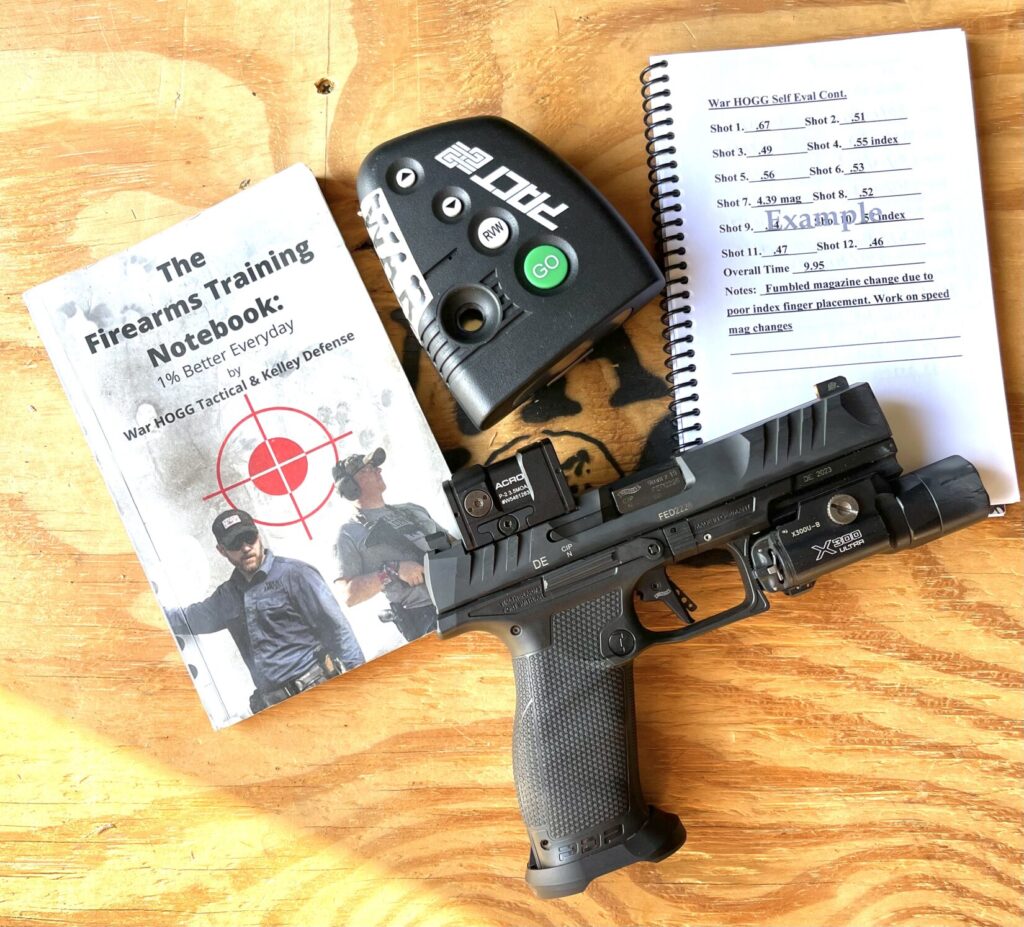
I record the drills I’m going to shoot in my Range Notebook. This way, all I need to do is make accuracy and time notes after I’ve shot.
Additionally, load your magazines at home. Load your range bag the night before with all your necessary gear. That’s an easy way to save time.
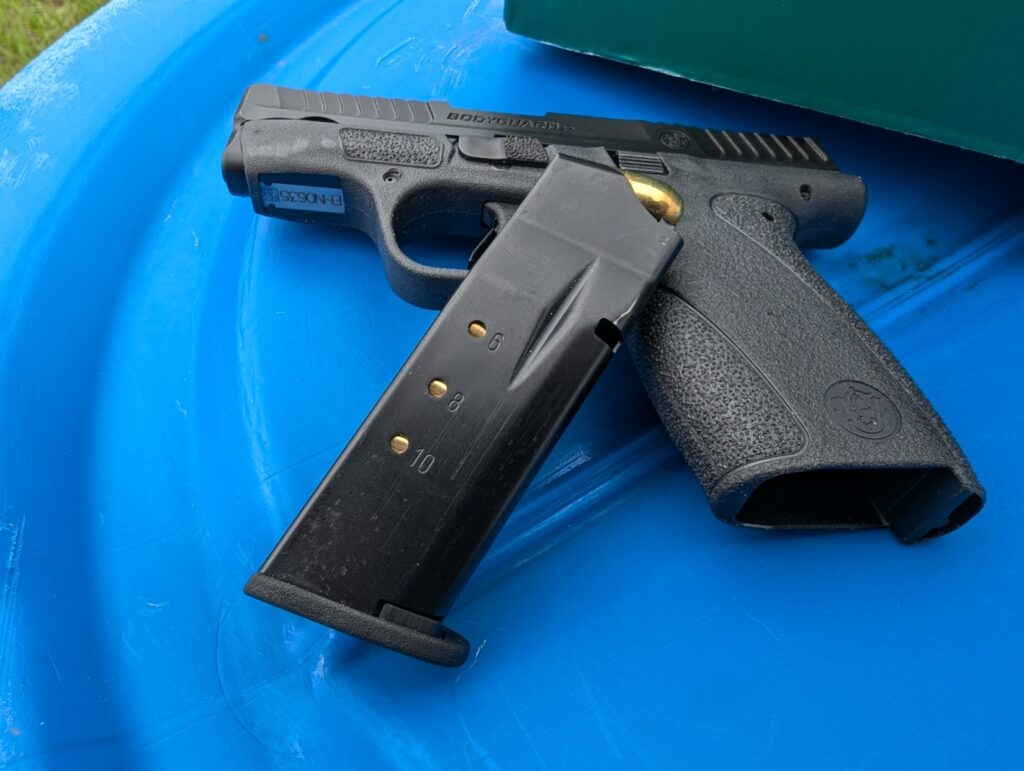
Next, go with the proper mindset. You’re not there to plink first and foremost; every round fired should be fired with a purpose. A big lesson I learned from Rick Hogg is not to get emotional when you mess up.
If you throw a shot or go over a par time, who cares? Move past it and focus on the task ahead of you. Don’t waste time worrying about shots you’ve already fired; focus on the next shots you’re going to fire.
The Lunch Break Range Session
This type of range session can be applied to most skills and most platforms. For this article, I’ll talk about both generalities. As an example, I’ll present a specific plan focused on recoil control with a handgun.
The Warm-Up
Like any workout, you need to warm up. You have to enter into the shooting mindset, and that’s tough to do as soon as you get to the range. The warm-up will help you shift into the shooting mindset, brush off the cobwebs, and get focused for the actual training session.
The Warm-Up takes about five minutes; any more than that, and we are eating into our training session. For a handgun, I’m going to shoot between 10 and 15 rounds.
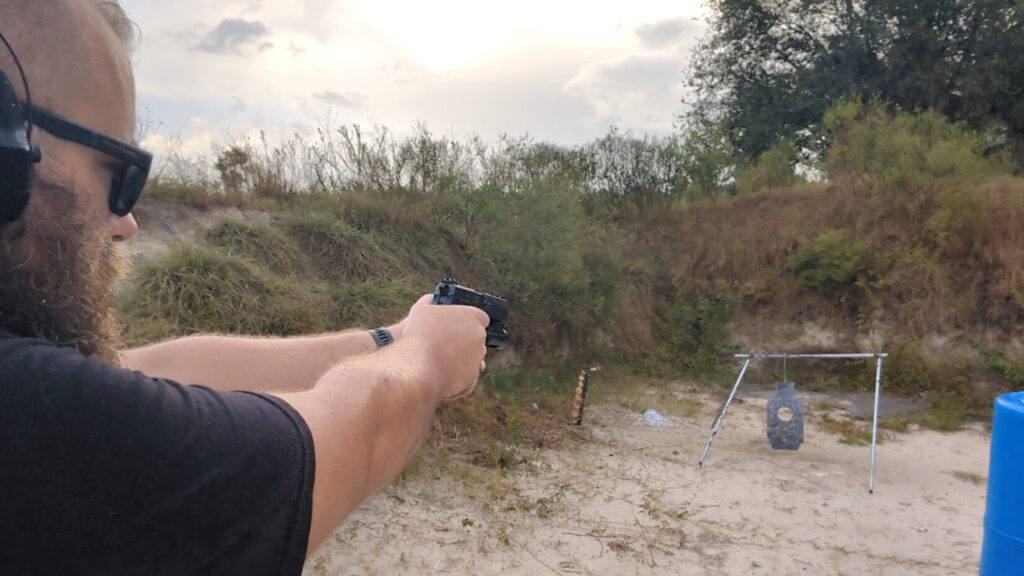
I’ll shoot at a fairly close range, within 7 yards, but I will use a small target, like a 3X5 index card or a B8 target. Focus on a good, consistent grip, a good threat-focused sight picture, and following up each shot, prepared to fire another. If you’re training with a shot timer, use it.
For a recoil control warm-up, I’m going to fire one shot at a time and work on tracking my sights and focusing on where my sights come to rest after that shot is fired. How fast am I ready to fire a second, accurate shot? I’m breaking out the timer, not because I’m trying to go fast, but to get used to that loud BEEP.
The Main Event
Here is where I’m going to commit the bulk of my training time. This is where you’ll work on that one specific skill you’re trying to improve.
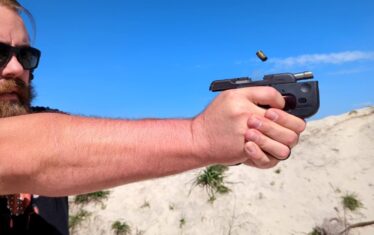
If it’s recoil control with a shotgun, you might be firing timed double-taps. If it’s accuracy with a rifle, you might set up several targets of varying sizes and engage one after another. I’m working on recoil control with a handgun, so I’m going to fire multiple rounds in quick succession at small targets.
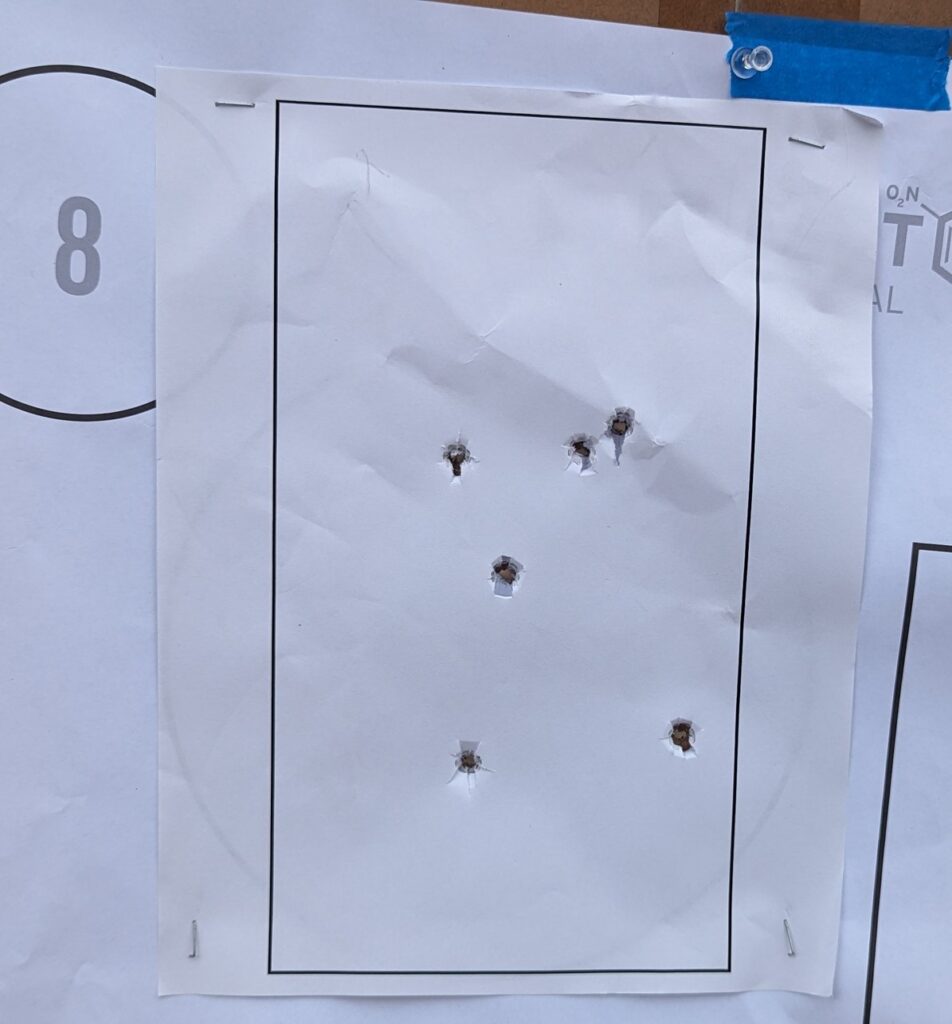
I use a series of small targets at a reasonably close range. Let’s staple a B8 to a backer and fire double taps, aiming to get every shot in the 10 Ring. Bam, I did it. I fired 10 rounds, all double taps into that B8 target. Let’s make it harder.
Now I’m going to use a 3X5 index card. I’m going to shoot Tim Herron’s Double Drill, which you can read about here. After I complete a round of this drill, I’ll check my watch. If I have time, I’ll move on to another recoil-focused task.
Let’s end it with a few Bill Drills. Traditionally, a Bill Drill is shot from the holster, but since my focus is on pure recoil control, I might just shoot it from the ready.
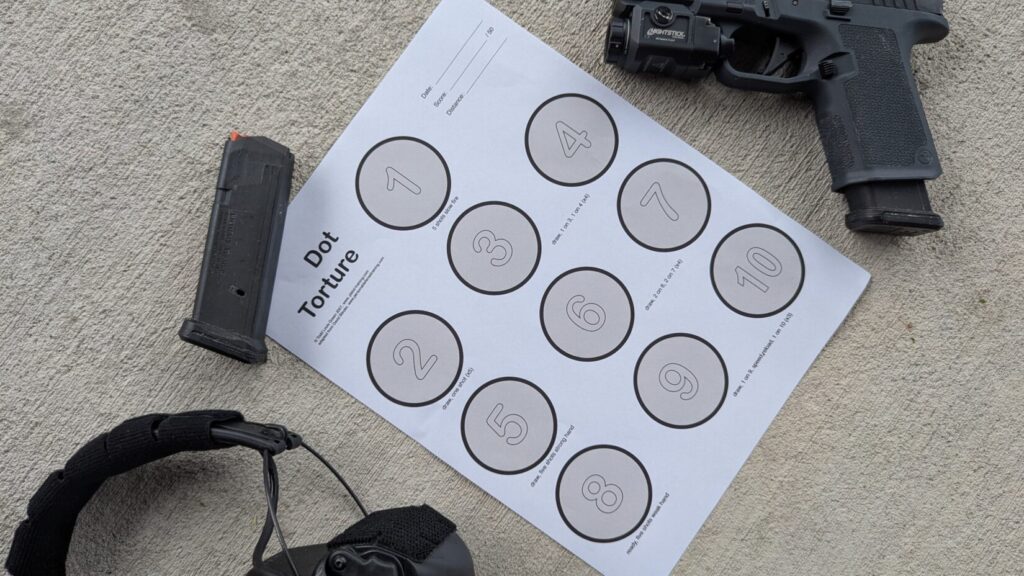
Depending on what your goal is, you might only shoot one drill, just doing it over and over. Repetition is critical to learning how to shoot. Just make sure you spend your time focusing on your chosen skill.
I treat skills like a pie, meaning if I’m in a rush, I don’t eat a whole pie; I work it one bite at a time.
The Cool Down
The Cool Down is where we might expend any extra ammo and go a little slower. Shoot a Bill Drill one shot at a time and notice where your gun ends up between shots. Feel your grip and see if you feel any noticeable changes.
This period is also where you can notate your drill times, review your data, and find weak points.
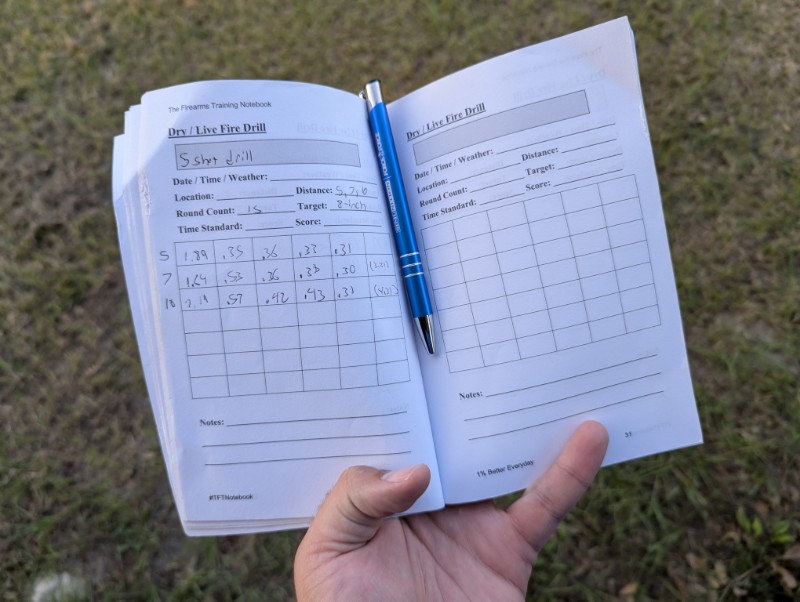
I keep talking about the Bill Drill, but recording data showed me that my first shot was fast, my second slow, and the following four just got faster. I used that data to drive my improvements.
Capturing and reviewing that data is the first step in getting a little better. Capturing data allows us to ask one simple question: What can I do differently to get better?
Beyond The Clock
It’s better to focus on one or two drills and get your reps in. You can’t build a variety of skills in such a short training session. Focus your training and just get 1% better than you were yesterday.
I’ll even go home and, if I have the time, replicate some of my shooting with dry fire. The new Mantis Titan X or Blackbeard is an excellent tool for that kind of practice.
You’ll be surprised by how much better you can get with short, consistent practice. It would be better to practice for half an hour a day than to have one four-hour range session. A little goes a long way.