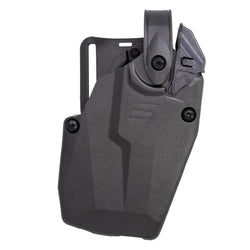

This article builds on my last article, “Selecting and Using Retention.” That article was really a plea, with all of the “whys” behind it, for armed professionals to get out of the Instagram mindset of “I need a sub-second draw, therefore I need a single or no retention duty holster.”
INSTAGRAM VERSUS REALity
While I get the “go fast” mentality, I also understand the power social media has over people.
As someone who fought for my gun (outside the holster), I know firsthand that the reality is we are more likely to go hands-on with someone than we are to shoot them. That means we need weapons retention—and more than just an ALS or a friction-fit holster.
BRIDGING THE Performance GAP
So, how do we bridge the gap between the reality of weapons retention and the low likelihood of an officer needing a sub-second draw? The answer, like most things firearms, tactics, or law enforcement related, is training.
This involves training, analyzing officer-involved shootings, and refining the Tactics, Techniques, and Procedures (TTPs) used
Hesitation is also a training issue. Not getting the right quantity of quality training—while having ridiculous de-escalation and implicit bias training forced down your throat—leads directly to hesitation.
The Danger of Hesitation
Hesitation and self-doubt are the byproduct of what I already mentioned and can get you hurt or, worse, killed.
For example, this NYPD officer had his nose cut off after repeatedly failing to get a positive Taser deployment on a knife-wielding suspect who charged him. Had he had his pistol out and made a shot while moving off-line of the attack, he would probably not have been feloniously assaulted.
The Suspect Gets a Vote
No one wants to have to kill another person. But remember, the suspect “gets a vote” in these incidents, and if they vote wrong, it is not your fault.
There are times (like the aforementioned NYPD video) where your gun should already be out and at a low ready. From a low ready at a distance of roughly seven yards, you can raise your gun to your eye-target line and get a hit center-mass in .75 of a second or faster with just a little training. It is also something that you can dry-fire at home for free.
Policy vs. Survival
I watch a lot of body camera footage and work with many officers who are very hesitant to draw their pistols and even more so to deploy a rifle. Some of that may stem from places like New York, where any use of force—including merely presenting a firearm or Taser—requires a report to the state.
In New York, the State Attorney General’s Office investigates all law enforcement-involved deaths. So, in theory, could they go back and say, “You brandished a firearm X number of times before this incident; were you just hoping to shoot someone?”
Sure, an anti-law enforcement attorney general or DA could easily do that. Especially if you are a proactive cop working with ‘slugs’ who won’t have the same amount of encounters as you. That is something that could be easily explained away by producing a record of your activity versus your peers.
The TTPs of Efficiency
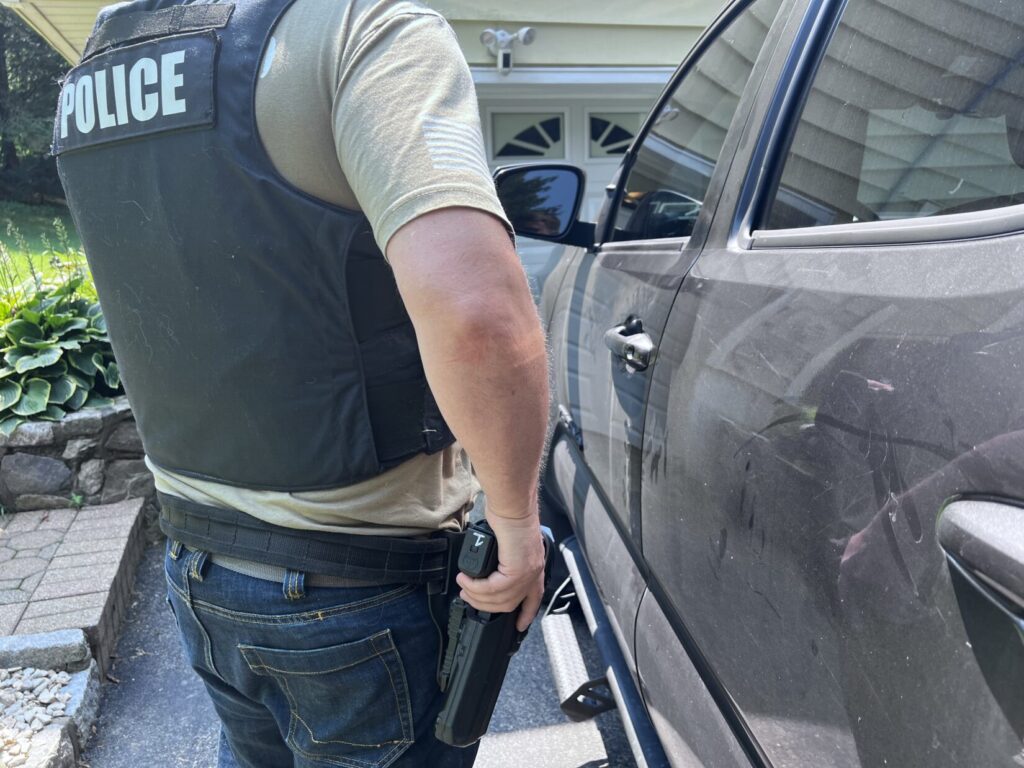
Let’s start with TTPs (Tactics, Techniques, and Procedures). I see a lot of cops walking up on traffic stops wasting energy touching the trunk, but almost none with their hand on their gun and their thumb on the retention.
Do you realize that you can save at least a quarter-second on your draw time by approaching or re-approaching a car with your hand already on your gun? Do you take the same action as a matter of habit when someone reaches under the seat, into a glove compartment, or somewhere else you can’t see?
Investing in Your Own Training
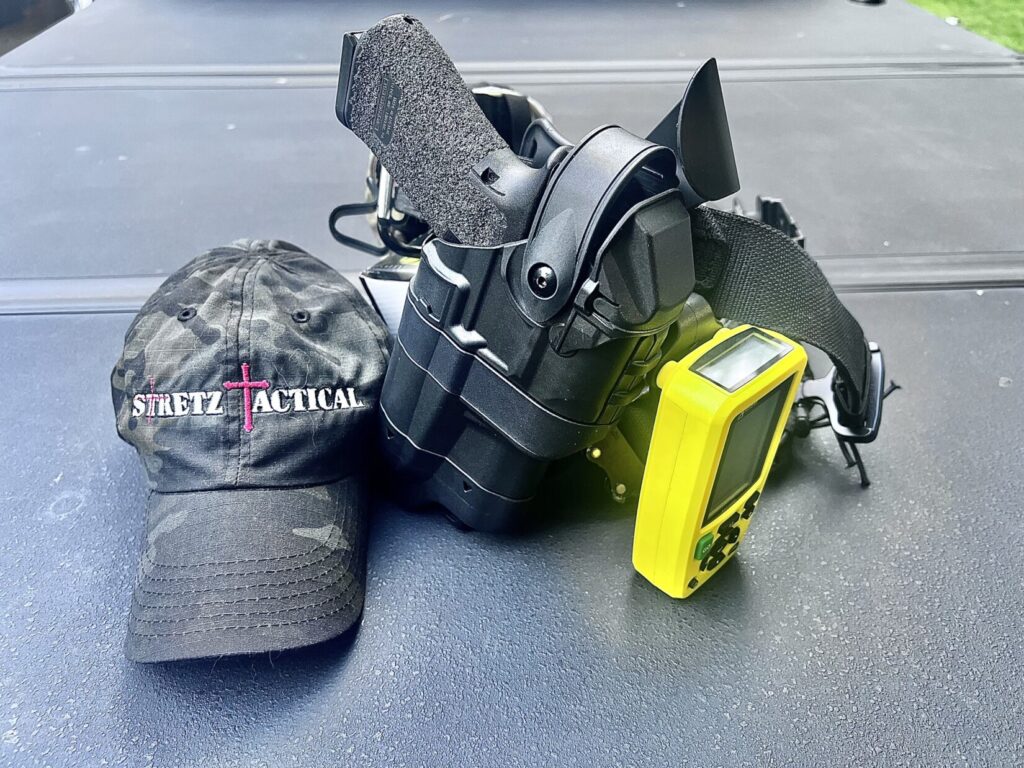
On the training side, how many of you attend training outside of the department? On your own time and on your own dime? Companies like Stretz Tactical exist for a reason.
A lot of law enforcement firearms training is “come late, take a long liquid lunch, and leave early.” At the very least, look up some drills from reputable instructors, buy a shot timer, and train on your own.
If you have a partner, bring them with you to a class or the range. Outside of the FBI HRT, you will never get enough quality training to keep you alive through department resources alone. Invest in your own survival. If you find yourself in the fight of your life, you will be glad you did.
Defining your DRAW Standard
While having your hand on your gun or your weapon at a low ready is sometimes the answer and can shave precious time off your first shot, it’s not always the answer. We can’t walk around paranoid all day with our hand on our gun during every encounter.
This means we need to work on our draw. So, how do we do that? What is the goal?
Everyone on social media has a sub-second draw and sub-two-second Bill Drills. The reality is that most people will never put in enough training to get a sub-second draw with an open-top, open-carried holster, let alone a triple retention duty or concealed holster.
The 1.5 Second Reality
What is your training goal? As I mentioned in my last article, the Active Self Protection YouTube channel concluded after analyzing thousands of videos that the average draw time needed was about 1.5 seconds to a first-round hit. I think that is a reasonable, realistic, and achievable goal with just a little training.
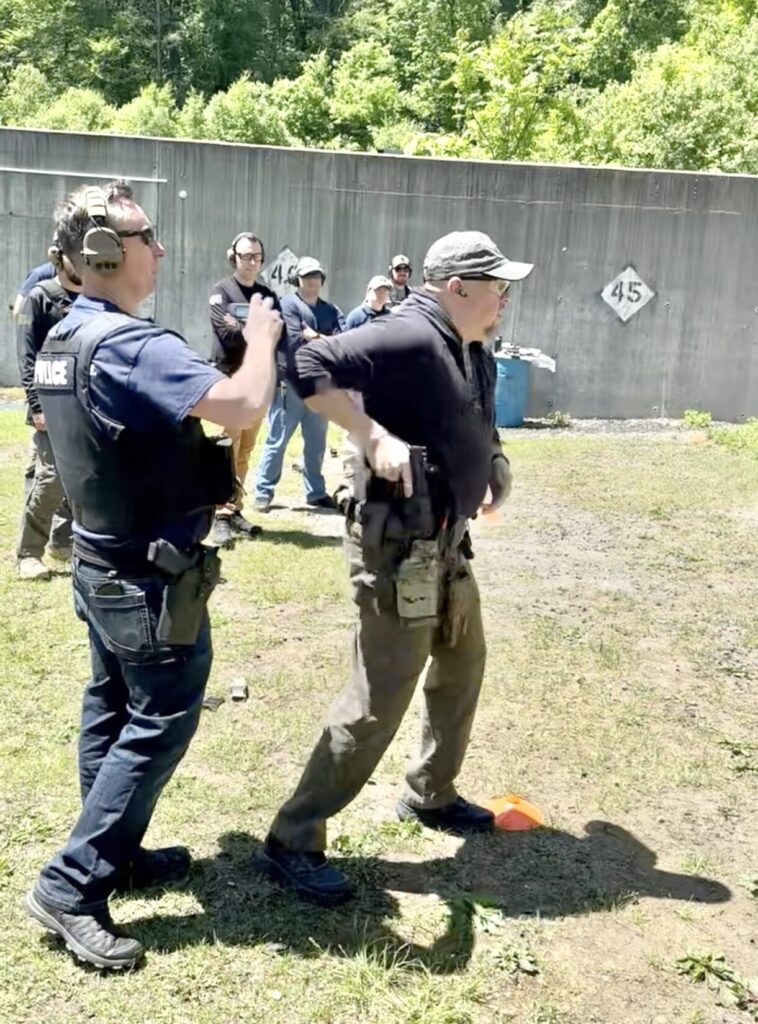
So if we have a goal of a 1.5-second draw at seven yards and in, the first thing I recommend is a smooth dry-fire draw with no time hack—just work on smooth mechanics. Make sure both the strong hand and support hand start moving at the same time. The support hand should move toward the centerline of your body and end up near where the dominant hand will meet it once the pistol is drawn.
The strong hand moves toward the pistol, defeating retention on the way down to a good grip. Remember, a good grip starts in the holster. It is essential to defeat the SLS AND the ALS on the way into your grip.
When people start to go fast, the most common mistake is defeating the SLS while pulling up on the pistol; their thumb slips and never hits the ALS. This is where you see them yanking on the pistol and watching the bottom of the holster move outboard of their body before they disengage the ALS and finally remove the gun from the holster.
Rep this over and over at a slow, deliberate pace to develop the unconscious competence of properly defeating retention. Five minutes a day of dry fire can make all the difference.
BREAKING DOWN THE DRAW
The best way I have found to add speed is by breaking the draw into manageable chunks.
The first piece of the puzzle is moving both hands to where they need to be and defeating retention quickly. For this, you will need to either purchase a shot timer or download an app to your phone. Set the timer on delay and relax your hands at your sides.
A problem with the “go fast” social media crowd is that they often start with their hands already in position to save time. If you’re playing a game, cool—but it’s not real-world. I am all for “cheating” by starting with the gun out or your hand on it, but when practicing the draw, let’s be realistic.
The .4 Second Snap
Set the timer for .4 seconds. On the beep, snap your hands into position. You should be able to get your dominant hand to defeat retention and establish a good grip on the gun in that time. At the same time, your support hand should be in position to receive the pistol in that .4 window.
If you’re working from IWB concealment (other than, say, a sport coat/open jacket), the support hand would be defeating the clothing while your dominant hand establishes a grip on the pistol.
The .8 Second Build
Once you have repped that for a few minutes and are making the time hack, we build on it. Reset your timer to 0.8 seconds.
Now, your goal is to move both hands quickly into position, defeat retention, grip the pistol, and draw. Both hands come together and start to push the gun out as your support hand pressure gets set. At or just before the buzzer, you are roughly halfway to the eye-target line. Rinse and repeat for 5 minutes.
The 1.2 Second Extension
Next is full extension. Adding another 0.4 seconds brings us to 1.2 seconds.
A good rule of thumb here is to leave out the trigger press initially. This is something I think I got from JJ Racaza: dry fire without the trigger press and concentrate on picking up your dot or front sight.
Often when working on timed one-shot draws, we “outrun our headlights” and pull the trigger before we actually see the sights. This prevents that habit.
Trigger Prep
After five minutes of that, add trigger prep. The time remains the same, but you start taking the slack out of the trigger as you push the gun to full extension. Do not break the dry press yet; just take the slack out of the trigger before you reach full extension.
Adjusting and putting it all together
If you are having a hard time at 1.2 seconds, bump it up to 1.5 and/or shorten the distance. Move from seven yards to five or three if you have to. Once you can do it in 1.5 or at five yards, cut the time to 1.4, then 1.3, and so on. Same with the distance.
Once you can make the time and distance hacks dry, it’s time to go live. Any target with a center-mass zone will do (IPSC/IDPA). Just remember: as a defensive shooter, your goal is the high center chest where the vitals are located.
conclusion
Like any other skill, you have to put in the work. No matter how busy your schedule or tight your budget, you can always afford to dry-fire. You will never know the time, place, or details of a gunfight ahead of time. Train now like your life depends on it—because it does!