
There are two types of hunters out there: the ones who have never been lost and the ones who have. Let’s face it, when the adrenaline dumps on a hunt, it is easy to lose track of your surroundings and get turned around in the woods.
For those who are unfamiliar with my background, I’m a lifelong outdoorsman, and I’ve been teaching bushcraft and wilderness survival skills professionally since 2007. More than a few hunters have attended my courses, and some have even admitted they were surprised by how much they learned. Much like the two types of hunters, there are also those who admit they have more to learn and those who know it all.
This article is for the hunter who wants to improve their chances of surviving an unexpected night out by carrying some basic items that really make a difference.
Pouch
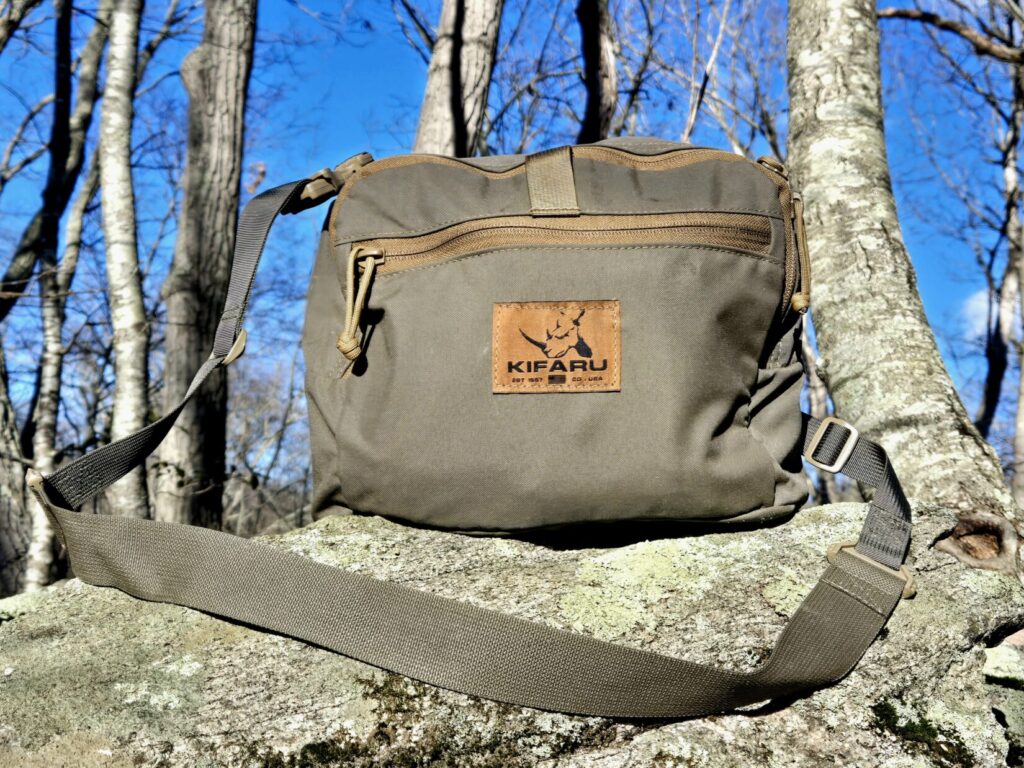
I like to hunt with as slick of a kit as possible. I typically carry my equipment in my pockets and in my binocular harness. While I hope the reader will carry a pack of sorts, I also know the importance of avoiding dangling gear that can get snagged, make noise, and slow your ability to mount your rifle.
To keep this kit small, I’m using a Kifaru International Claymore Pouch that I rigged up with an older shoulder strap. This pouch can be worn over the shoulder, and the total weight of it loaded is far under the threshold for comfort.
Two straps will always carry gear more effectively, but with two straps, there is a tendency to carry larger packs and one that could be left behind. Realize this size pouch is largely to set a limitation for capacity, as the goal is to stay light and compact. Any lumbar pack or small hydration bladder should easily carry the same contents.
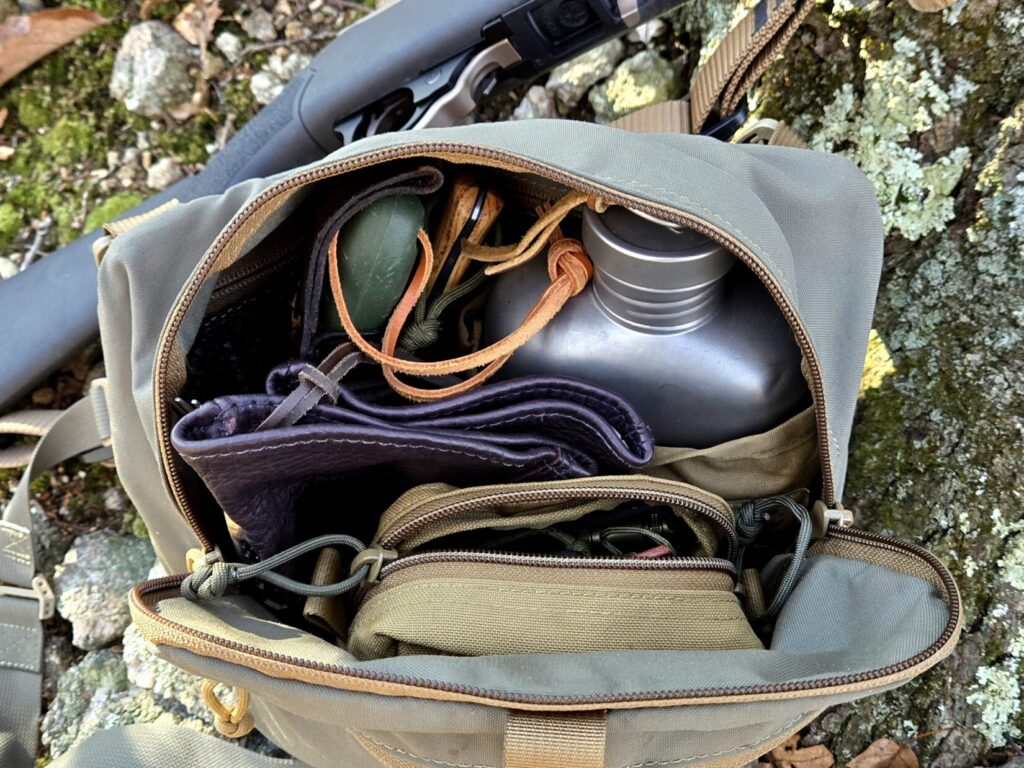
Medical
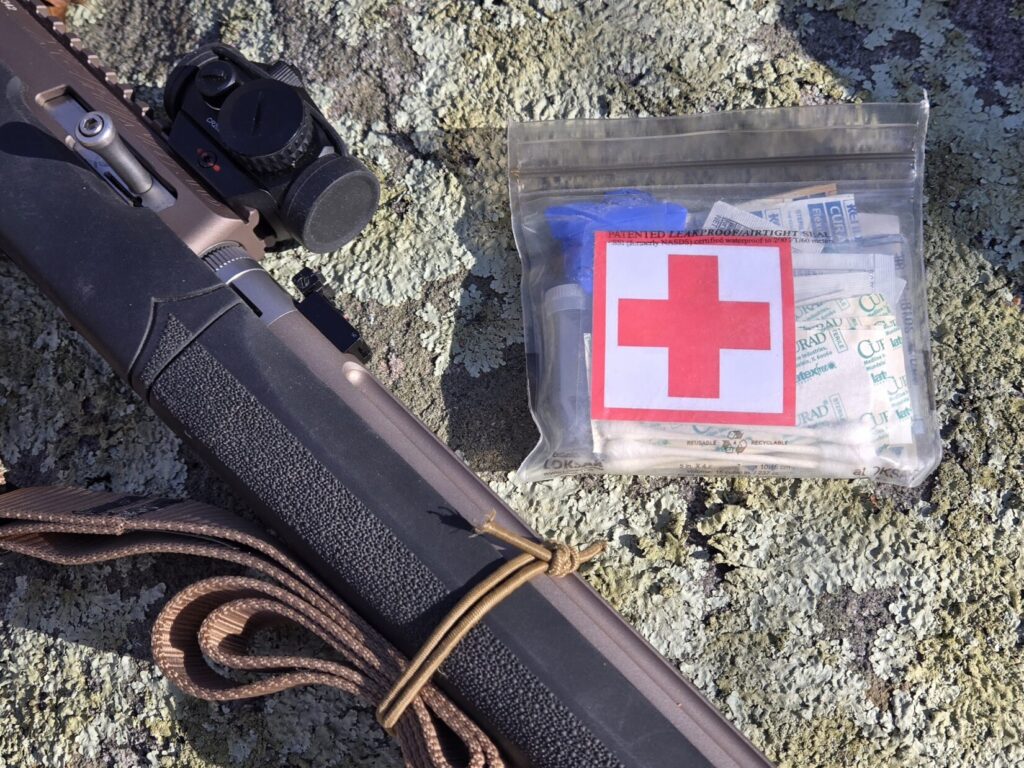
First-aid and trauma gear should be carried anytime you work with firearms. Keep in mind that a medical emergency may be the driving force for your unexpected night out.
A basic nicks and scrapes kit makes sense if you wander through terrain with briars and thorns. Burn gel should absolutely accompany you if there is a portable camping stove in your kit or you spend any amount of time by the campfire. Other medical items like basic pills for pain, allergies, diarrhea, and prescriptions should also be packed.
Last but not least, the minimal amount of kit should be carried to address massive bleeding, and a basic CAT-7 tourniquet, clotting gauze, and chest seals won’t weigh you down.
Fire

Fire will make the difference between an uncomfortable night out and one where you have a better fighting chance to combat the cold.
You don’t need an elaborate fire kit or one with oversized heavy items. You should carry at least one spark-based fire starter and at least one flame-based fire starter. The spark-based starter will be more reliable in windy conditions and extreme cold. The fire-based starter makes sense if you need to go straight to fire.
My kit contains an Exotac FireROD 2.0 and an Exotac FireSLEEVE. For good measure, I carry premade tinder, which is some sort of fuel and wick concept, and typically the combination of cotton balls and petroleum jelly.
Depending on where you hunt, there may be plenty of dead and downed branches to burn and squaw wood found at the base of evergreen trees. With some careful selection, you can easily find enough suitable wood to keep a small fire going for hours.
Shelter
A proper shelter has a component you sleep inside of, over, and under, and it is easily remembered as “shelter I.O.U.” The small shoulder pack carried won’t have space for a tarp, sleeping bag, and pad, but it will give you some room to shove some contractor cleanup bags in it.
One of these bags can be filled with pine straw or leaves and used as a bean bag chair. Another bag can be cut to have a head hole that will let you breathe but protect the rest of your body from the elements and trap in your body heat.
Speaking of heat, you can tuck a couple of artificial heat packs in your shelter kit to help warm you for 8 to 12 hours. Your clothing should be considered your first line of defense against the cold, and you can always use fire to improve any shelter.
Water

Drinking water in the cold isn’t always comfortable, and as a result, hunters will walk around partially dehydrated instead.
A metal canteen or a nesting metal cup around a water bottle can be used to heat water for consumption. That heated water can also be used in the canteen for additional warmth in the minimalist shelter previously mentioned. If fire isn’t possible, the hunter can carry water treatment tablets or use a filter system like the Grayl to provide instant access to drinking water.
Keep in mind, a gallon of water weighs just under eight and a half pounds, and carrying more than a quart in the field starts to weigh you down. The best place to carry water is internally, and you should already be well hydrated before you walk into the field. Rehydrate as needed.
Signal

I’ve written countless articles where an old-fashioned signal mirror and whistle were highly recommended for signaling. They still occupy space in this category, along with flaggers’ tape, a basic Sharpie marker, and a waterproof paper pad.
However, in this day and age, the Garmin InReach Mini is in a class of its own. As long as you are able to see the sky and you have battery power, you can send a message or an SOS signal reliably.
Pair the emergency communication function of the tool with the ability to sync the device with your phone for standard text messages, and you have a definite winner for an addition in your minimalist kit. Of course, with any electronic, you’ll have a level of fragility, so make sure you protect it from breakage.
Utility

The remaining space in your ultralight lost hunter kit can address the fundamentals not already covered. Additional light sources may help you discover your trail before it gets pitch black.
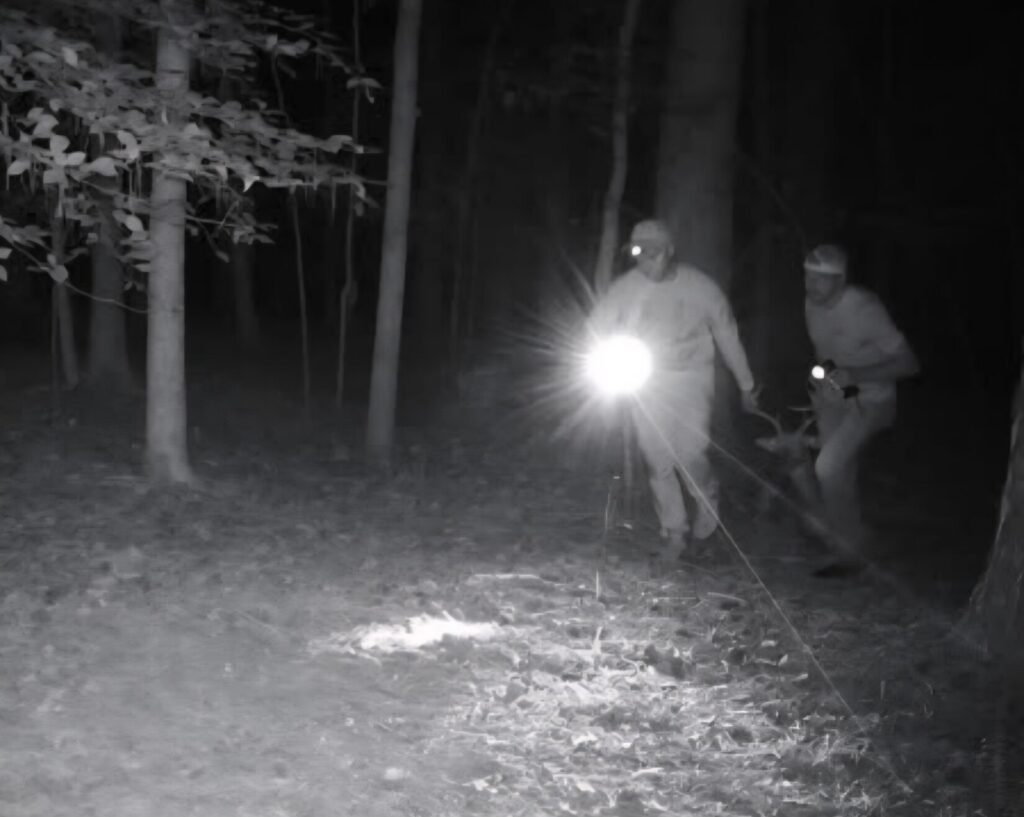
A multi-tool and fixed blade knife have obvious uses along with paracord, duct tape, and cable ties. A backup compass may provide you with an emergency azimuth (to be covered in a later article) that will get you to a known catch feature.
Creature comforts like snack bars and coffee mix are not important to short-term survival, but they give you a morale booster. A pair of insulative gloves and a wool hat stored in a dry bag are also great for boosting morale, as they will be drier than what you’re wearing while walking around.
Some hunters will never adopt a kit like this, and for those who feel it is unnecessary or overkill, I truly hope you only experience the best in the field with little to no hardship. For those of you who understand the concept and like the capability it offers, I will rest assured knowing you have the basic gear available to get you through a lost-hunter scenario.