
The shotgun is one of the most versatile and devastating tools to come out of the armory. It’s a close-range fight stopper that rarely requires more than a shot or two to end the conflict. People often misunderstand the shotgun, how to use it, and how it functions.
If you’re carrying a duty shotgun or using a shotgun as a defensive weapon, then you need to pattern your gun. Patterning a gun is fairly simple, but a lot of people pattern their gun, commit it to memory, and that’s about it.
To me, patterning is more than something you do once and observe. Patterning should be treated like an exercise or a drill. Patterning your shotgun is not an optional task; it’s absolutely mandatory. Today, we are going to dive deep into the world of patterning the duty shotgun.
Why We Pattern
If you were to believe Hollywood or video games, a shotgun throws an immediate wall of lead that doesn’t require the user to aim. Point in the general direction of the threat and fire, and you’ll hit something, right? Nope, not at all.
Pellet spread at close range is minimal. At ten yards, a 00 buckshot pattern is likely the size of your hand. If you don’t aim the shotgun, you’ll miss, and miss big. Patterning is how we determine how wide the spread will be at predetermined ranges.
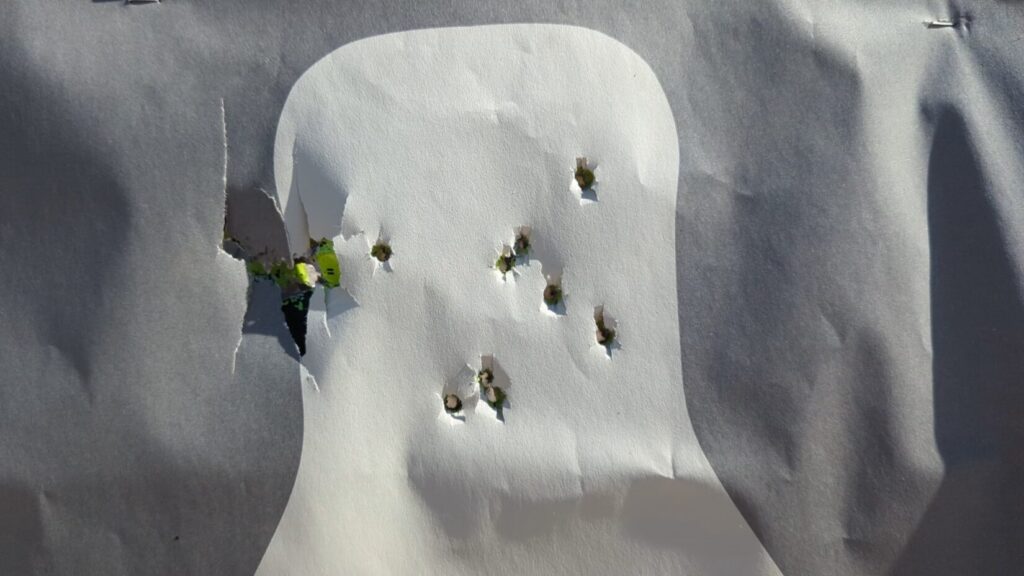
Knowing your pattern ensures you know where your pellets are likely to go. This helps you make precise shots with the shotgun and could help prevent errant pellets from causing collateral damage.
A single 00 pellet is roughly a .32 caliber projectile, and a single pellet miss can strike an innocent person and prove fatal. When you pull the trigger on a shotgun, you need to know where every pellet is going to go.
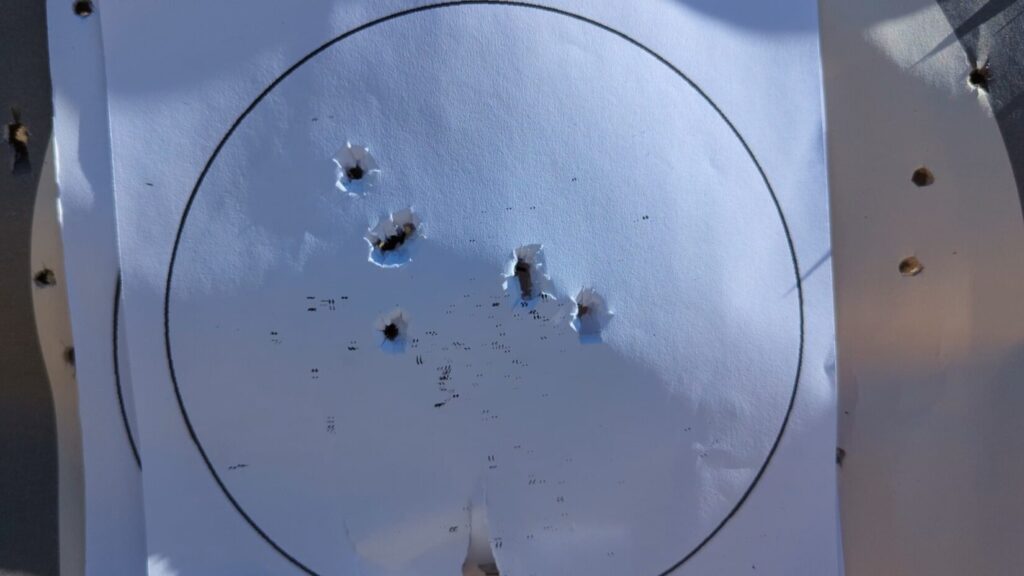
This can help you establish the right range where you might want to swap to slugs, or potentially choose not to engage with your shotgun.
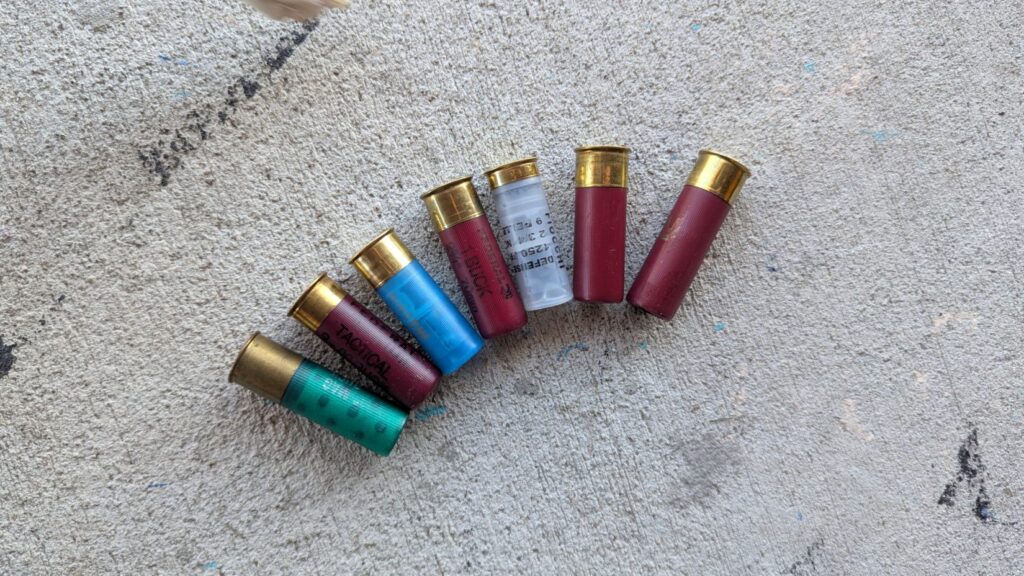
Patterning allows you to try different brands and types of ammo to determine what’s best in your gun at your ranges. When patterning a new shotgun, you should try multiple brands of ammo to find what works best with your individual gun.
What Affects a Pattern?
Why do shotgun patterns vary? Why don’t we get consistent performance across shotguns and ammo? Quite a bit can cause a variation in shotgun pattern and performance.
Some elements of your pattern are affected by ammo, others by the gun. Here’s a quick overview of the factors that affect patterning:
- Choke: The amount of constriction present at the end of your bore.
- Wad: The portion of the shotgun cartridge that separates the gun powder from the shot.
- Velocity: The speed at which shotgun pellets are moving.
- Buffer: Material inserted between the pellets to prevent deformation.
- Shot Plating: Metal plating around the pellets that prevents deformation.
- Barrel Harmonics: The barrel’s profile and how it’s attached to the gun can affect shot pattern.
- Pellet Stack: How pellets are stacked inside a shotgun shell.
How To Pattern a Shotgun
To pattern a shotgun, you’ll need your gun of choice and the exact ammo you intend to use in the gun. If you are trying to find the best pattern for your gun, I recommend trying multiple types of shotgun ammunition from a variety of manufacturers.
Grab some form of target, preferably a larger target. I like the FBI Q targets. Grab a tape measure or ruler to help accurately measure the pattern.
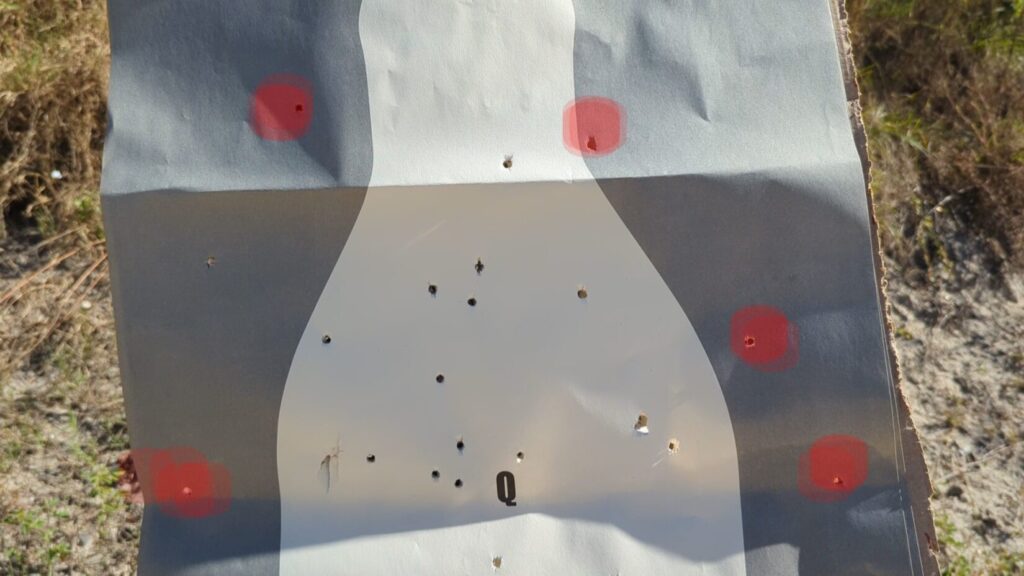
If it’s for home defense, I recommend patterning at seven yards, 10 yards, and then the furthest possible shotgun range you can take. For duty use, I recommend seven, 10, 15, 20, and 25 yards.
You may need to use a fresh target at each range, so bring plenty. With your stages measured, load, and fire at least two shots at each range; three to five is preferable. Swap targets to avoid cross-contamination between shots.
When shooting these patterns, make sure you observe for point of aim/point of impact discrepancies. Some sights can be adjusted to counteract this flaw, but not all. For example, Mossberg puts their beads directly on the barrel, which can cause some shot patterns to appear to hit high.
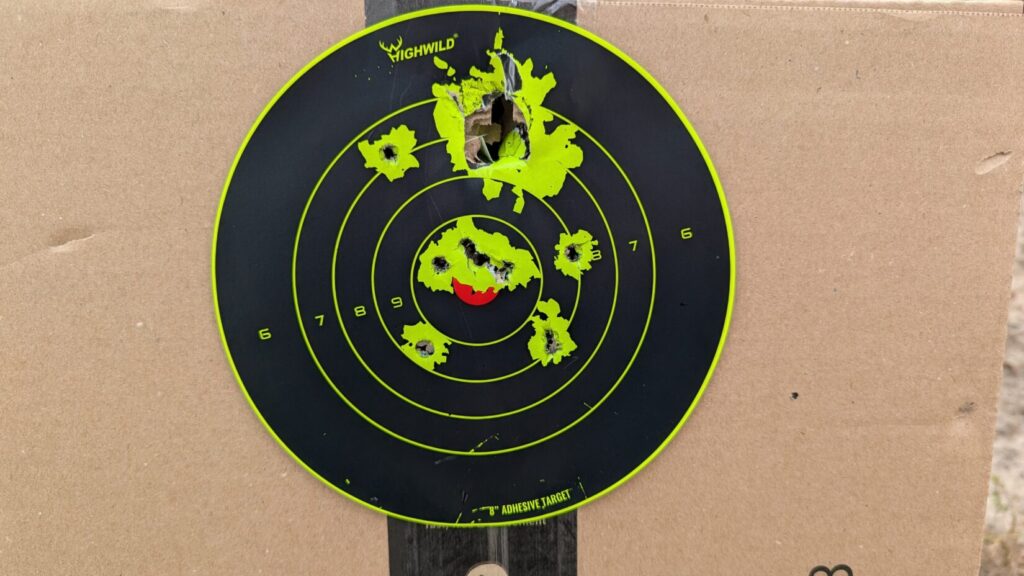
If you have a discrepancy and cannot adjust your sights, you might want to try a different load or ensure you can remember to adjust your point of aim accordingly.
Measure the Pattern
Locate the center of the pattern, which is where the greatest concentration of pellets lands. Measure outward to properly gauge the size of the shotgun pattern. When using multiple ammo types, you can note differences in patterns and find the tightest pattern possible.
I record my results to make them easy to refer to. You may want to print a shotgun pattern card and use it to mark your data. A shotgun pattern card is a lot like a DOPE card used by precision shooters.
I’m not sure if Benelli created the idea of a pattern card, but that’s the earliest example I can find. The head honcho at That Shotgun Blog recreated the Shotgun DOPE card in an easy-to-print format. You can record your range, your load, and how the pellets patterned on the target.
Tape this card to your stock, and you have an easy reference point, and it makes memorizing your pattern much easier.
If you change the choke, change ammo, or maybe a manufacturer changes your chosen load, re-pattern the gun. I recommend patterning at least once a quarter.
Beyond the Basics
That’s how you pattern a shotgun. With that said, you’re patterning in optimistic conditions against a stationary target presenting their entire body to you. In reality, that might not be the case.
A threat will tend to use cover, move, and might not square themselves up to you. This means they are presenting a smaller target. A wider pattern has more chances to both hit and miss the target.
After patterning your gun, I like to switch to smaller targets. I’m partial to eight-inch circles as they represent a very small target. Using this small target, I’m going to quiz myself on my pattern.
I want to shoot some basic drills: a ready-up drill, a two-shot drill, and maybe a failure-to-stop with two targets. I want to do this at various ranges, which I try to pick randomly.
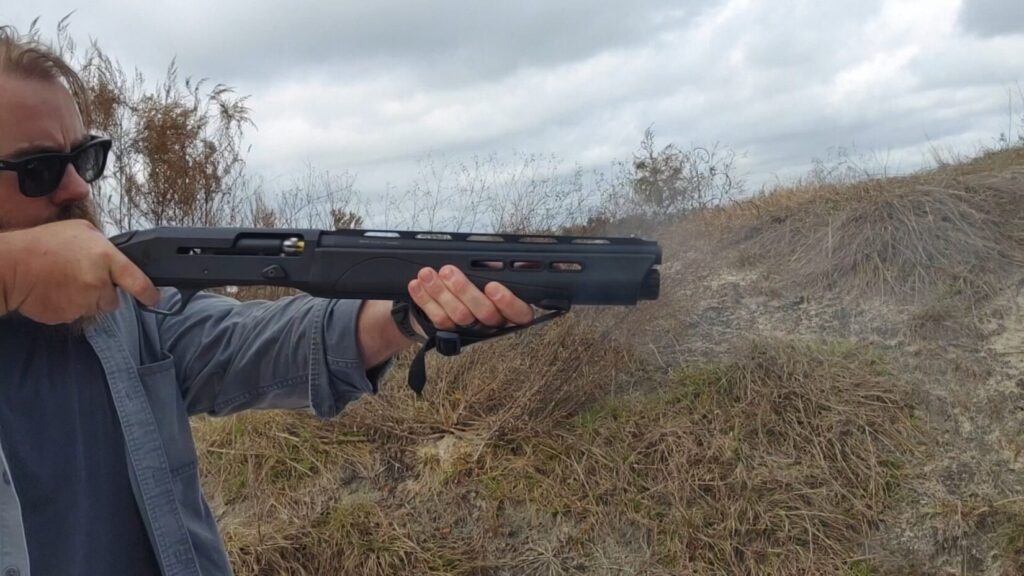
At my range, I throw a shotgun shell and shoot from wherever it lands. When we patterned our shotgun, we were looking at where our pellets hit. With these drills, we see where our pellets miss.
Adding a strict time standard makes it even harder because you have to make sure you are aiming dead center of that tiny circle before you press the trigger. In real life, we don’t always have time to get that perfect sight picture.
You’ll also see how POI/POA (Point of Impact/Point of Aim) differences can create a bigger problem when time standards and small targets are introduced.
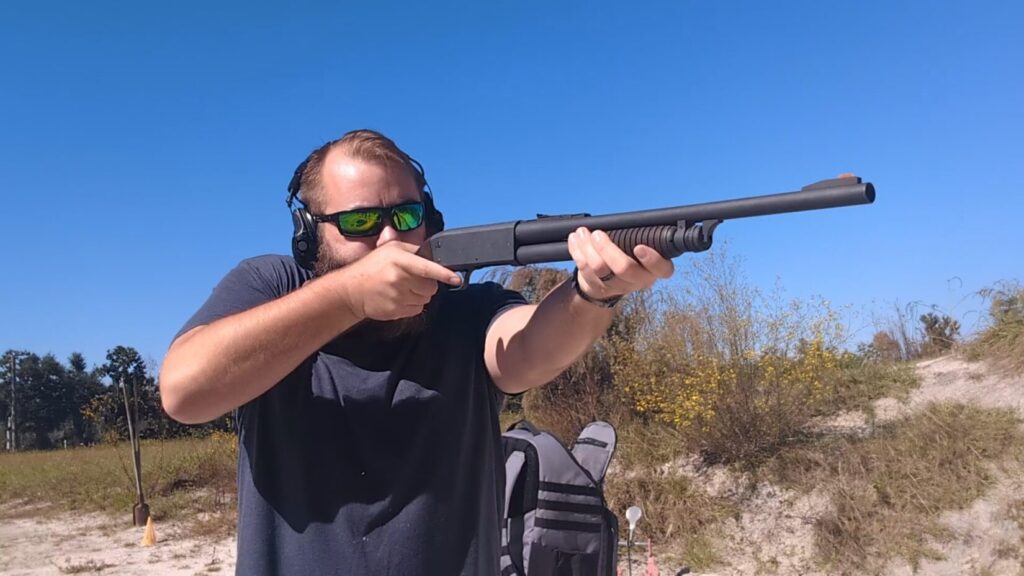
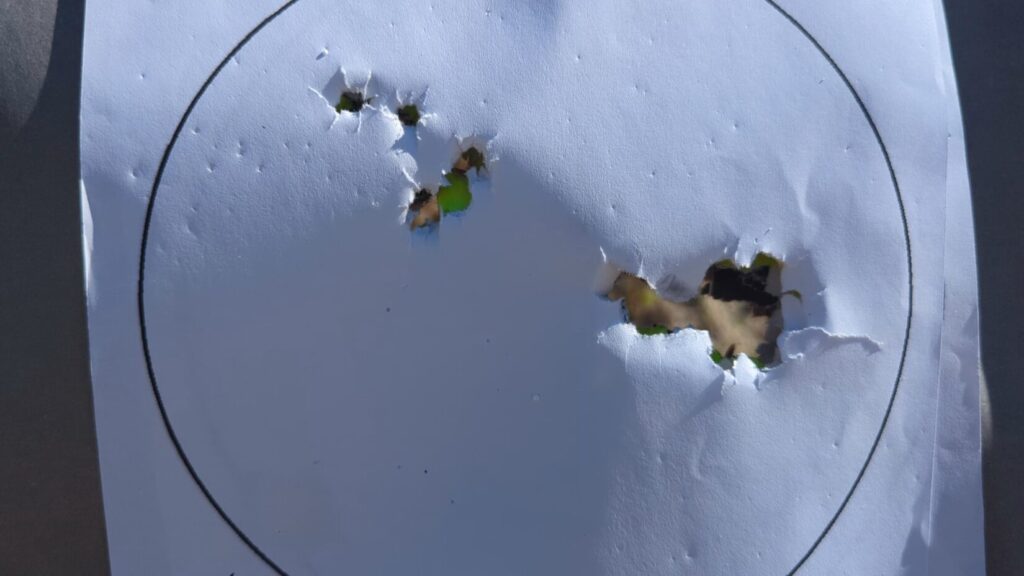
This can be a bit of a wakeup call. It’s why my own load of choice is Federal Flitecontrol. Federal Flitecontrol patterns roughly the size of a 50-cent piece inside of 10 yards, and within 15 yards, it’s palm-sized at best.
For duty use, when we go out to 20 yards, the pellets stay within that eight-inch circle with ease.
On Target
Shotguns are like battle axes. They are brutal tools. A miss is a big deal, and unlike an axe, the miss can cause serious collateral damage. Even a single pellet can miss and be incredibly harmful.
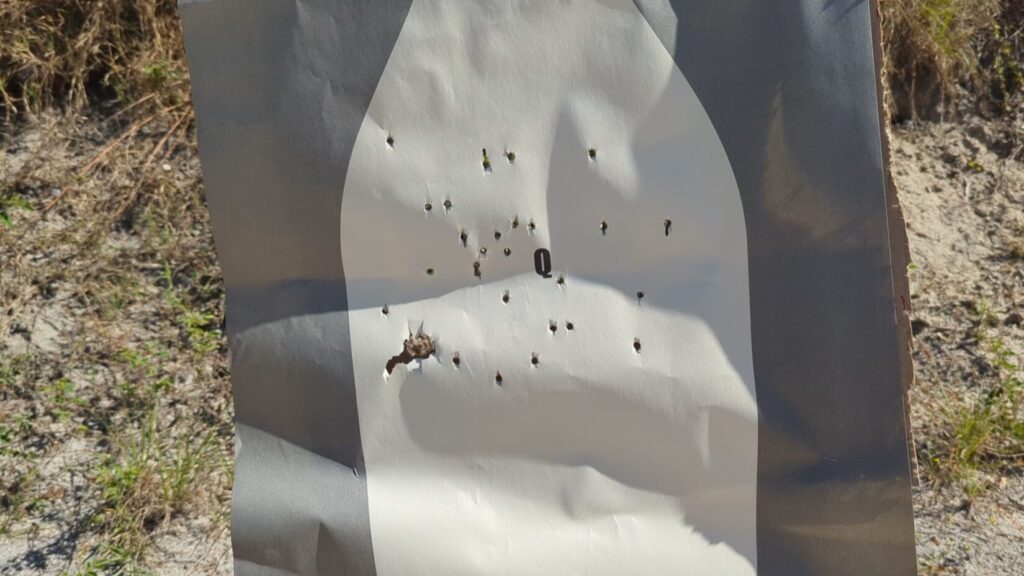
Patterning your shotgun isn’t something you do once. You should do it every so often to maintain a visceral memory of your pattern. Beyond basic patterning, you should add smaller targets and time standards to make sure you truly understand what that pattern does under less-than-ideal environments.
Get out there, pattern your gun, and stay battle-axe sharp.