
Happy New Year to everyone. I know some of you have made a New Year’s resolution to improve your self-defense firearms skills. At War HOGG Tactical, we don’t believe in New Year’s resolutions. If you want to change something in your life, START NOW. You don’t need some arbitrary date to start your improvement journey.
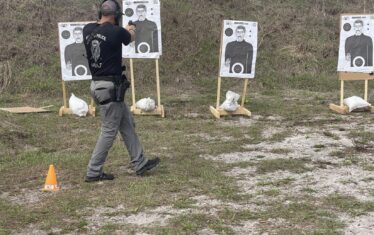
In the world of firearms training, the target you choose can make or break your practice session. Whether you’re a law enforcement officer honing survival skills, a competitive shooter chasing speed, or a civilian building self-defense skills proficiency, targets aren’t just paper or steel; they’re tools that shape your technique, mindset, and marksmanship results.
And with target selection comes developing a dry and live fire training program. The Firearms Training Notebook is a perfect tool to help identify your areas of deficiency and build a plan to improve those skills. There are a lot of different targets out there, and I’ll tell you what I think works the best for enhancing your self-defense firearms skills.
The ipsc target
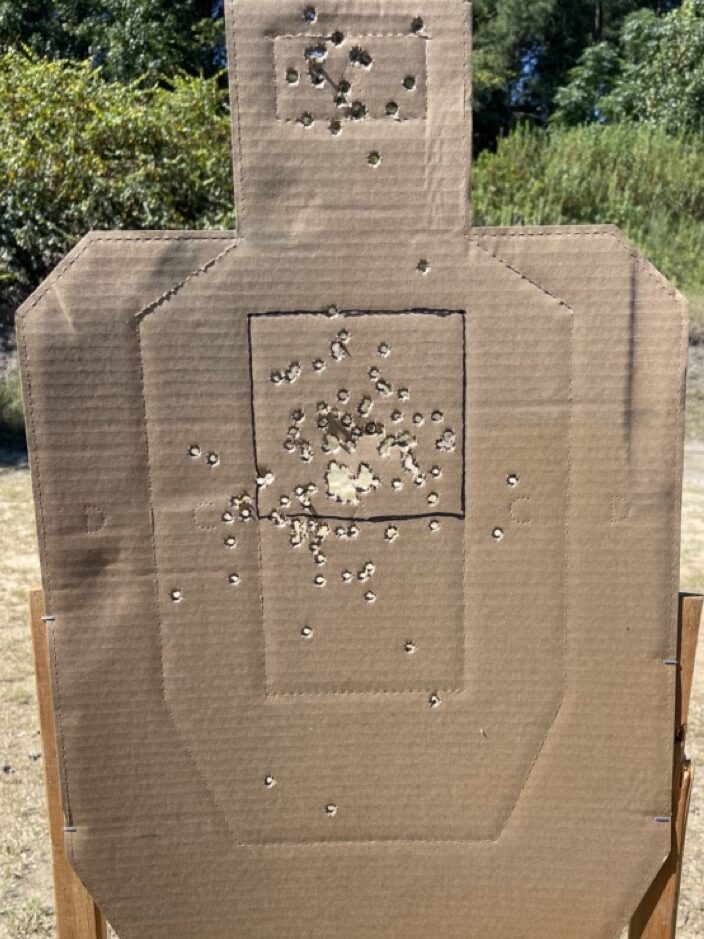
The International Practical Shooting Confederation (IPSC) target is a staple in the shooting world as a training target and in competitive shooting circuits like USPSA (United States Practical Shooting Association). Typically, it’s a cardboard silhouette measuring about 18×30 inches with scoring zones (A, B, C, D), designed for easy scoring at competitions. Paper versions of this target are available as an alternative to the cardboard target.
Pros
IPSC targets excel in building speed and accuracy under pressure. The standardized design allows for consistent scoring in matches and training, helping shooters track progress.
Cons
On the downside, IPSC targets can feel less realistic for defensive training. The large A-zone (about 6×11 inches) might foster sloppy habits, allowing “good enough” hits rather than proper shot placement. I personally like to keep my hit above the perforated “A” in the upper A zone.
The IDPA Target
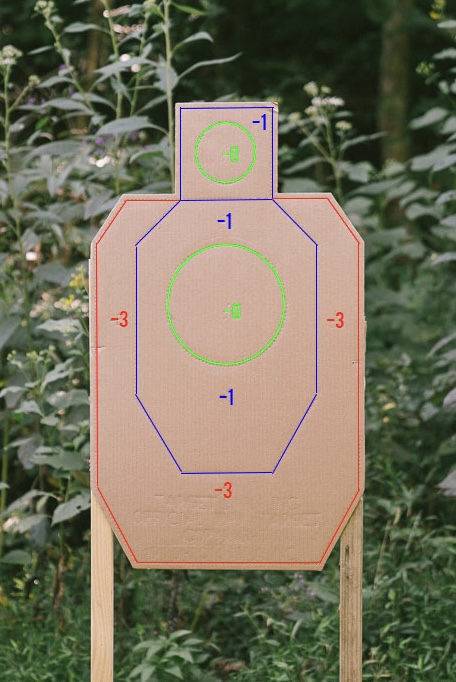
The International Defensive Pistol Association (IDPA) target is similar to IPSC but tailored for defensive scenarios. It’s a cardboard humanoid with down-zero (0) zones in the head and upper chest, emphasizing the upper thoracic shot placement.
The IDPA targets use a scoring system of adding time penalties for non-vital hits: one second per point down for a C zone IPSC, and three seconds for an IPSC D zone hit. This forces shooters to prioritize accuracy over speed. They’re excellent for enforcing that good high thoracic shot placement.
steel targets
Steel targets, often made from AR500 or SR500 hardened steel, come in shapes like plates, poppers, or silhouettes like C zone or full IPSC size targets. Some steel targets have vital areas that give you two different ring tones: one ring tone for the vitals and a different ring tone for non-vital hits.
The biggest draw for shooting steel is immediate feedback (the “ding” confirms hits) and no need to patch holes. They’re incredibly durable, lasting thousands of rounds if rated properly. Reusable and weather-resistant, they save money long-term. Moving variants (dueling trees, spinners) enhance tracking and engagement skills, making training engaging and fun.
When I am shooting my C-zone steel, I like to paint a box on it to hold me more accountable in my marksmanship training. Also, the ability to call your shot becomes very important with steel. Yes, you hear the audible ding, but was that a weak C zone hit or a good upper thoracic hit?
The b-27 target
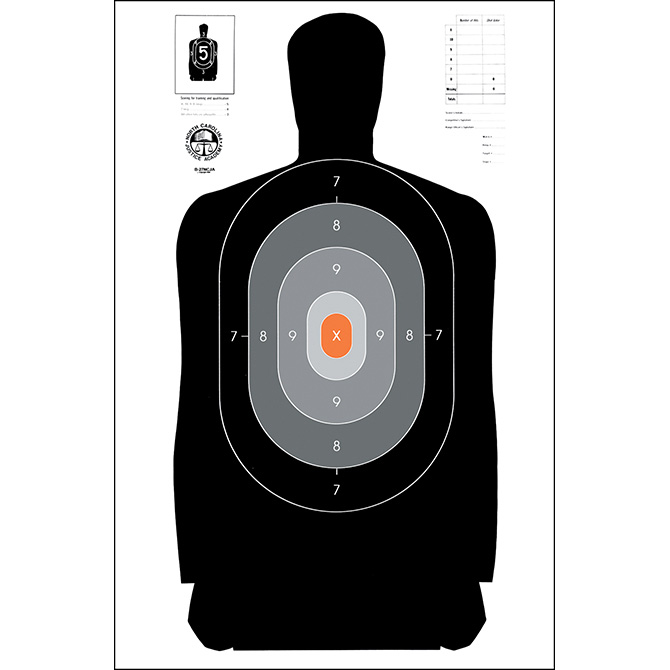
The B-27 is a full-size silhouette target (24×45 inches) with concentric scoring rings (7-10), widely used for police qualifications since the 1960s. The X-ring sits in the “center mass,” which is anatomically low, roughly in the stomach area of a person. The biggest flaw is anatomical inaccuracy: the X-ring promotes “center mass” shots that miss the heart / aortic arch, fostering bad habits for self-defense.
It’s outdated for modern times. I argue it doesn’t prepare a law enforcement officer for proper shot placement during a deadly force encounter, yet most agencies still use it for training and “qualification.” I see this repeatedly in my War HOGG Tactical course, where shots are low due to this B-27 target and the verbiage of center mass.
War HOGG Tactical self-defense Training Target
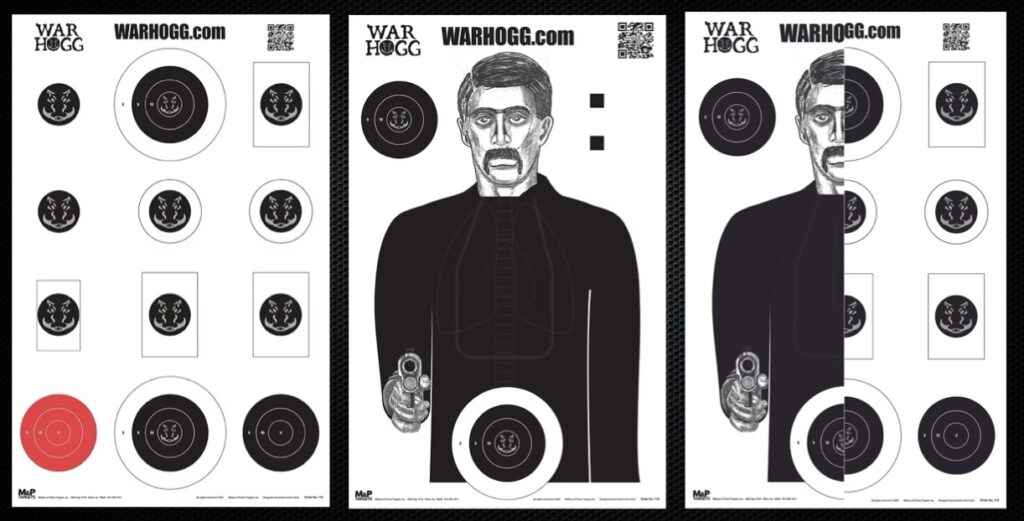
The War HOGG Tactical Self Defense Training Target draws directly from the proven Special Forces Advanced Urban Combat (SFAUC) Combat Marksmanship Program and the NRA Law Enforcement Firearms Instructor Training Course. We refined and modified this target specifically to supercharge our law enforcement red dot pistol courses. It also incorporates the War HOGG Self-Eval, and vital zones are very light, so the shooter can hone in on the area because of some bright color.
The double-sided design was made for maximum versatility. One side features precision-focused elements: multiple 3-inch dots, B8 bullseyes, and zeroing pasties — perfect for grip evaluation, recoil management, red dot tracking, and the War HOGG 5-Shot Drill. We also incorporated some larger scoring areas around the 3-inch dots, so shooters looking to push themselves have a little bit bigger of a target area.
The reverse side presents a realistic armed humanoid silhouette with clearly defined, very light vital zones. The extra B8 bullseye targets allow the shooter to work on their target indexing drills. This layout allows seamless progression from foundational zeroing and bullseye work to threat-based combat marksmanship drills.
Adding A T-shirt to increase realism in your training
In a real defensive encounter, threats aren’t naked paper silhouettes; they’re people wearing everyday clothes. Layers obscure vital zones and create visual clutter. We had a student who got so fixated on a circular logo on the left side of the t-shirt that all his shots were missing the vitals altogether. We believe so much in the t-shirt drill that every War HOGG Tactical course incorporates t-shirts into the training program.
How to Set It Up, A Simple DIY Guide
- Choose your base target — Use a target with a humanoid silhouette and vitals to see your shot placement.
- Select clothing — Cut old, used T-shirts in half; now you have two training aids from one shirt
- Mount it — 4 Staples, one on each edge of the collar and one in each shoulder, the shirt should cover the target’s torso.
Conclusion: Match Your Target to increase your skills
Whether you’re a law enforcement officer honing red dot skills for survivability or a responsibly armed citizen preparing for self-defense, the target you choose is critical to survive that deadly force encounter. Have a plan for both your dry and live fire training, and don’t forget to add realism to your self defense marksmanship training.
For more, check War HOGG’s resources on the website or listen to On The Range Podcast.
Train Hard, Stay Safe and see you “On The Range” – Rick