
Anyone who carries a firearm isn’t just carrying a firearm. They are carrying a tremendous responsibility to be safe, well-trained, and capable of employing the firearm properly. To meet this level of responsibility, there is a fair bit of training required, and part of that training should include Shoot/No Shoot training and scenarios.
Shoot/No Shoot training isn’t something we employ all that often. Most of our training takes place at the range where we practice the skills necessary to utilize our firearm. We draw, we reload, we shoot, but how often do we practice not shooting?
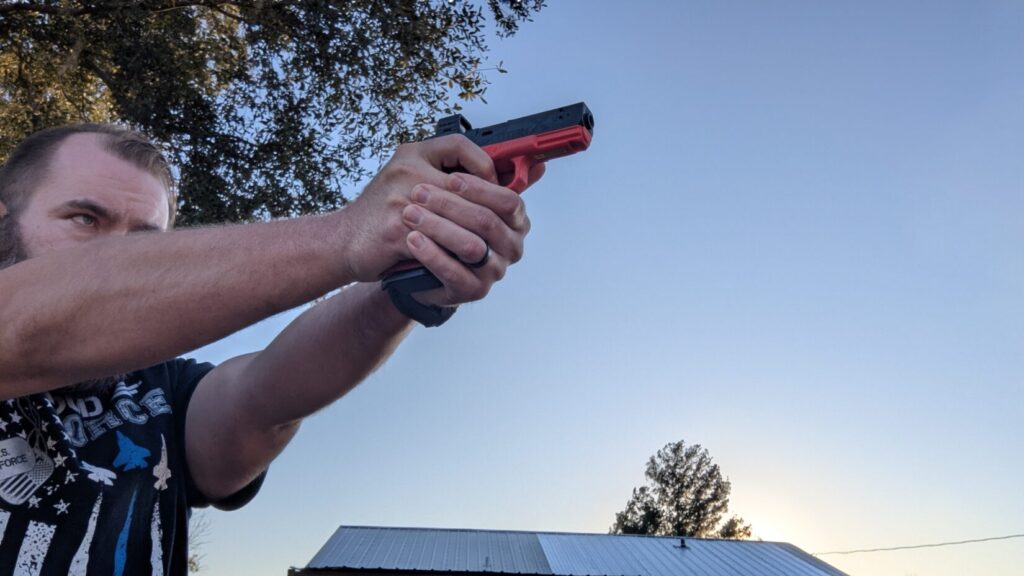
The real world is a dynamic, messy place, and situations can change in an instant. It can change from the time you initiate your draw to the time you get on target. Being able to hit the gas and go is critical, but being able to slam on the brakes is just as vital.
Training shoot/no shoot can create a critical difference in the real world, and as such, let’s dig into the why and the how.
The Why – The Neurological Aspects Of Shoot/No Shoot
Shoot/No Shoot training is judgment training. In a high-stress encounter, your prefrontal cortex is doing a lot of work. The amygdala triggers the fight, flight, or freeze response. Adrenaline rushes, and things can get extremely difficult.
With training, your ability to deal with high-stress situations gets easier. When your fight, flight, or freeze gets activated, you can experience a cognitive overload. Too much causes the freeze response, or what Colonel Cooper called condition black.
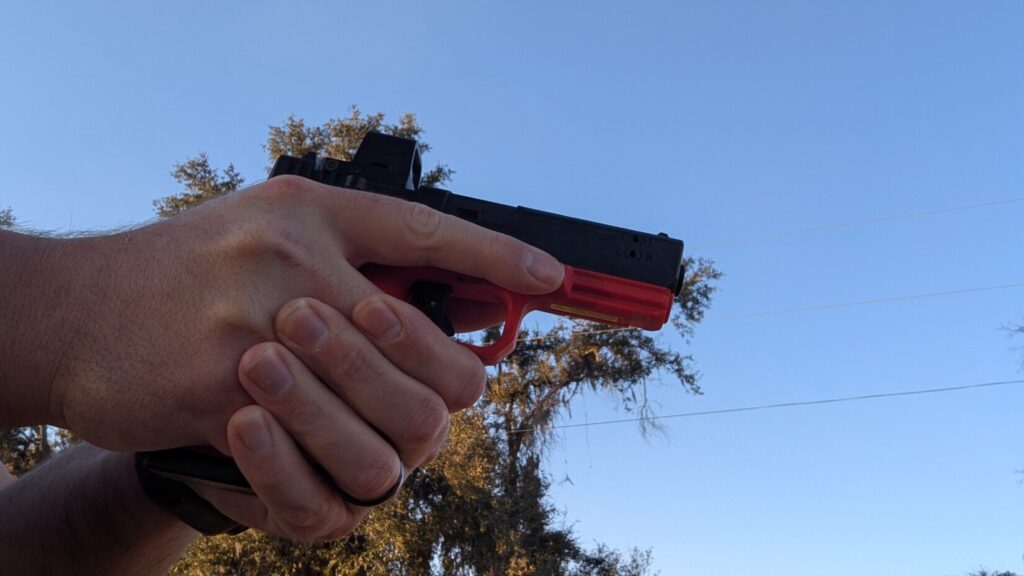
We can ease the cognitive load through training. As we practice motor skills, we develop motor memory and automate the action. If you practice drawing, you’ll automate the action, freeing up cognitive load to deal with the threat.
Training your draw, shooting, and engaging is all a critical part of the shoot/no shoot process because it frees up cognitive space. The more you can think, the more information you can process, which leads to making good judgments.
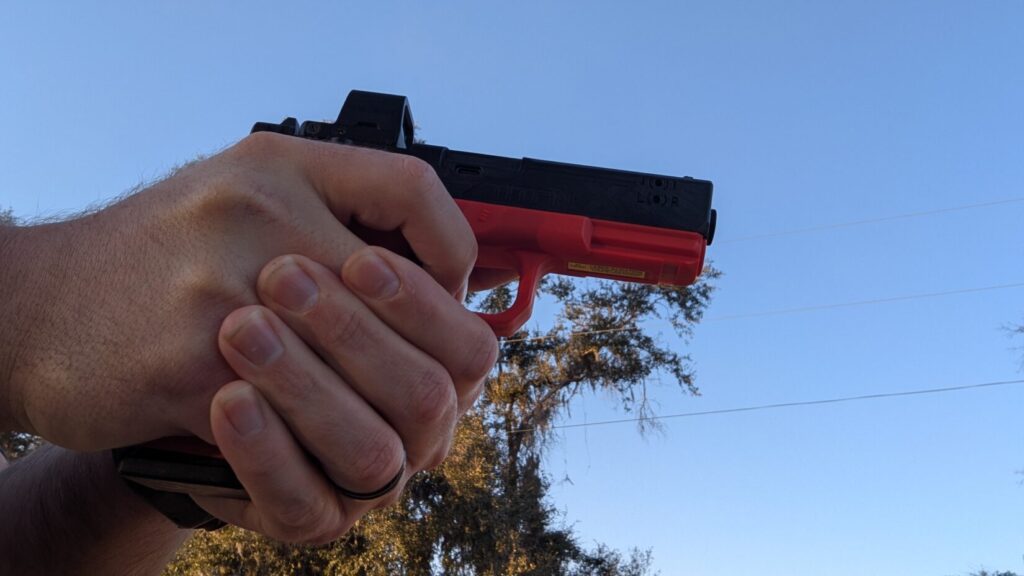
With that said, much like training to hit the gas, you should train to hit the brakes. From a physical perspective, we have an excitatory system, which is the gas, and an inhibitory system, which is the brakes. Your brain is naturally biased toward the gas, so we have to work on the brakes a bit more.
The Stop-Signal Reaction Time
The Stop-Signal Reaction Time is the time it takes for you to stop a motor skill that’s already been initiated. With a shoot/no shoot scenario, we might see a threat approaching us with a knife. We start our draw process, and as this occurs, the attacker flees, or maybe the knife is actually nothing more than a cell phone, and the attacker isn’t even looking at you.
What happens is a race between the go and stop signals. To improve your ability to stop, train to reduce your Stop-Signal Reaction Time. Your brain’s veto skills get a little more power.
There are several ways to train this skill, and it can be done solo or with a partner.
Solo Training
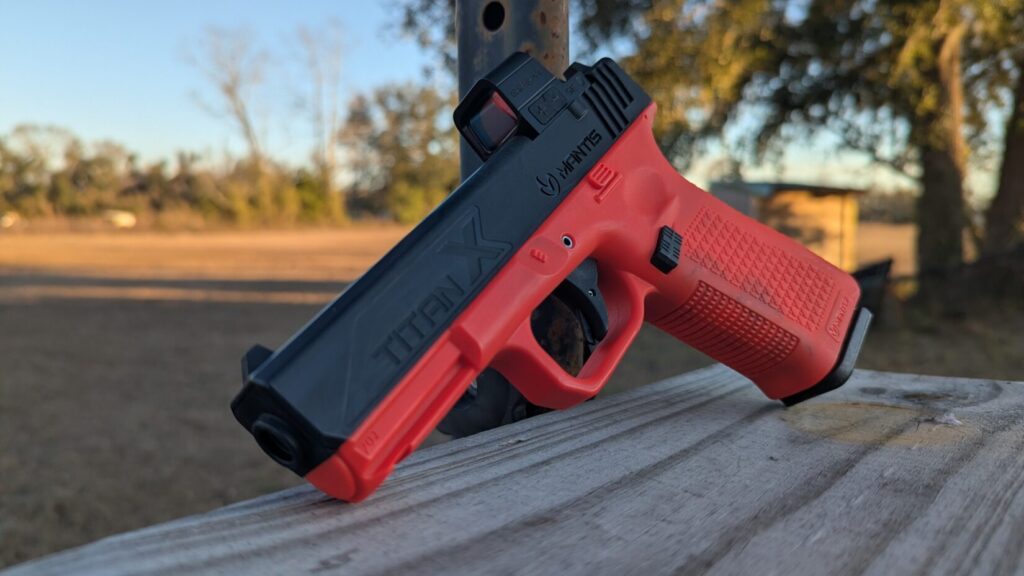
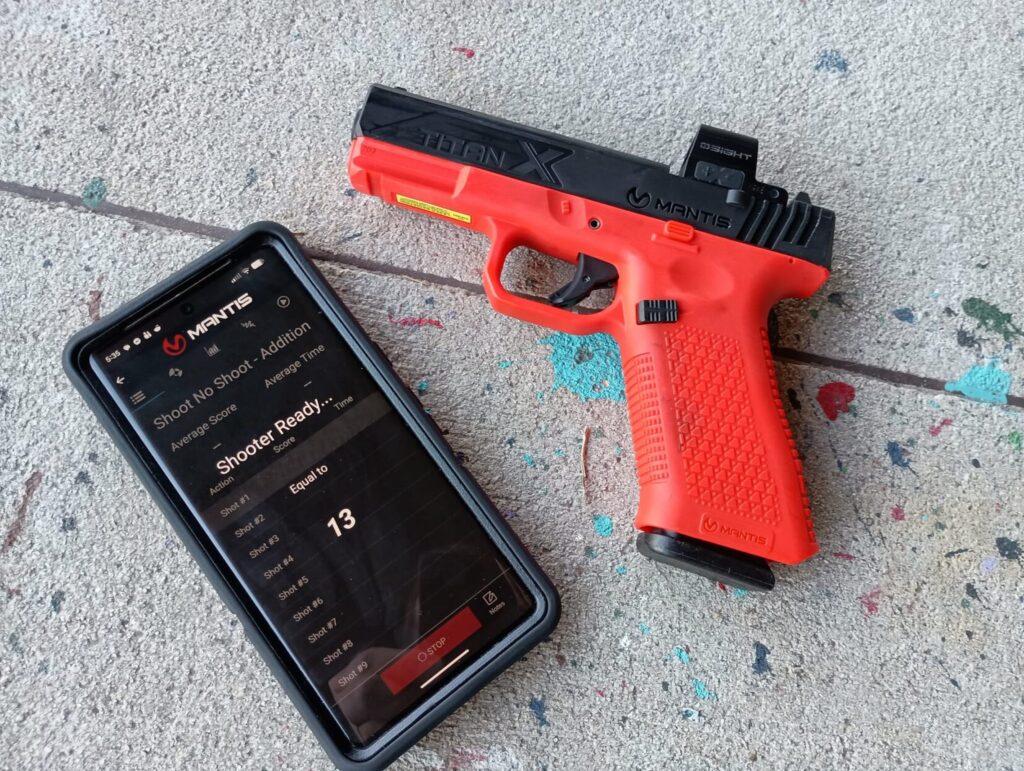
Solo training can be done with your unloaded firearm in a dry status or live fire at the range. For dry fire purposes, I’m a big fan of using the Mantis systems, specifically the TitanX paired with the Mantis app.
The Mantis App has several Shoot/No Shoot drills under the Decision Drills section. You have four different options which use colors, shapes, dice, and addition to teach inhibitory control. If you choose colors or shapes, you only draw and shoot when you see a specific color or shape.
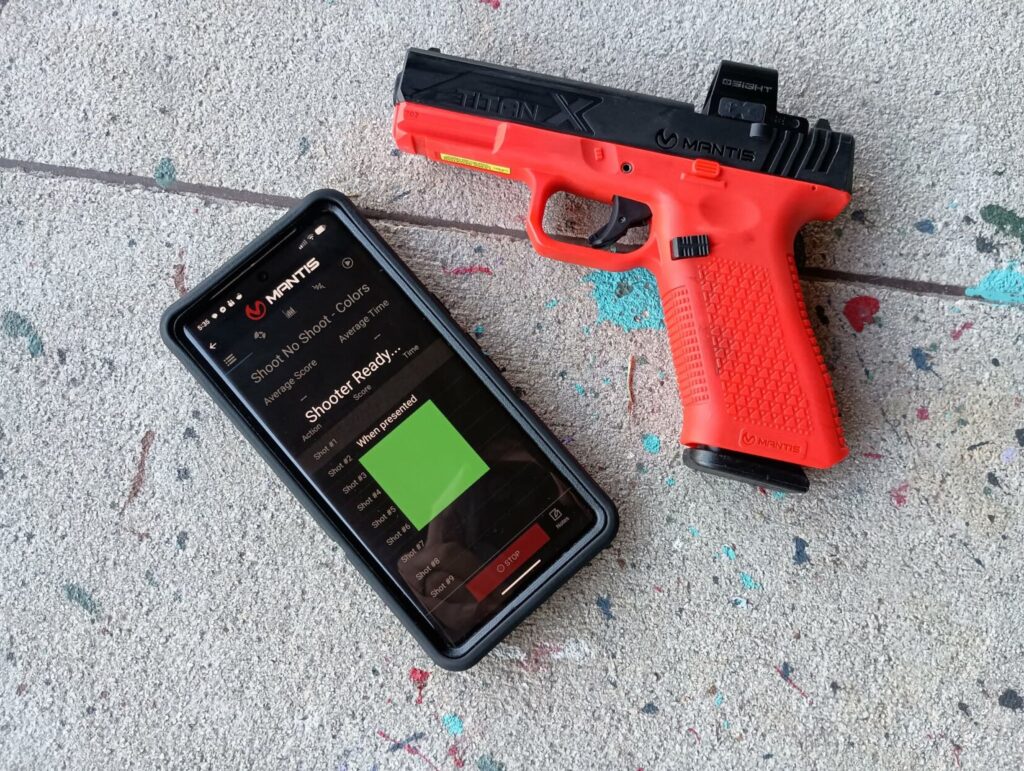
The dice does something similar, but requires more attention. You’re presented a die with a particular number, and then the dice are rolled. If the die matches what you shoot, you shoot; if not, you don’t shoot.
Addition requires even more cognitive focus. You’re given a number, and then random numbers are presented. If they equal that number, you shoot. Using these drills in your dry fire will increase your cognitive focus as you draw and attempt to engage. The Mantis then provides the time it took you to engage.
If you don’t have Mantis or want to go live, you can download an app like SwitchedOn, which is designed for neurological sports performance. I use this app at the live range with my phone on a tripod in my view, but out of the line of fire. I set up a session that uses colors, specifically Green, Red, and Yellow.
Green is draw and shoot. Red means don’t shoot. Yellow is draw to low ready. The app presents these colors randomly, in a loop with a certain amount of time between each color to allow you to reset.
Partner Training
Partner training makes decision training a fair bit easier. A variety of targets is the easiest way to go. If that’s not an option, grab a marker and write numbers on a variety of targets. I actually like balloons for this because they are cheap, brightly colored, and are easy to spot.
Have the shooter face away from the targets, or close their eyes. The partner will shout which targets to engage, either by number, shape, or name. The shooter then engages the appropriate target, or they might not engage at all if the partner calls out a target that isn’t presented.
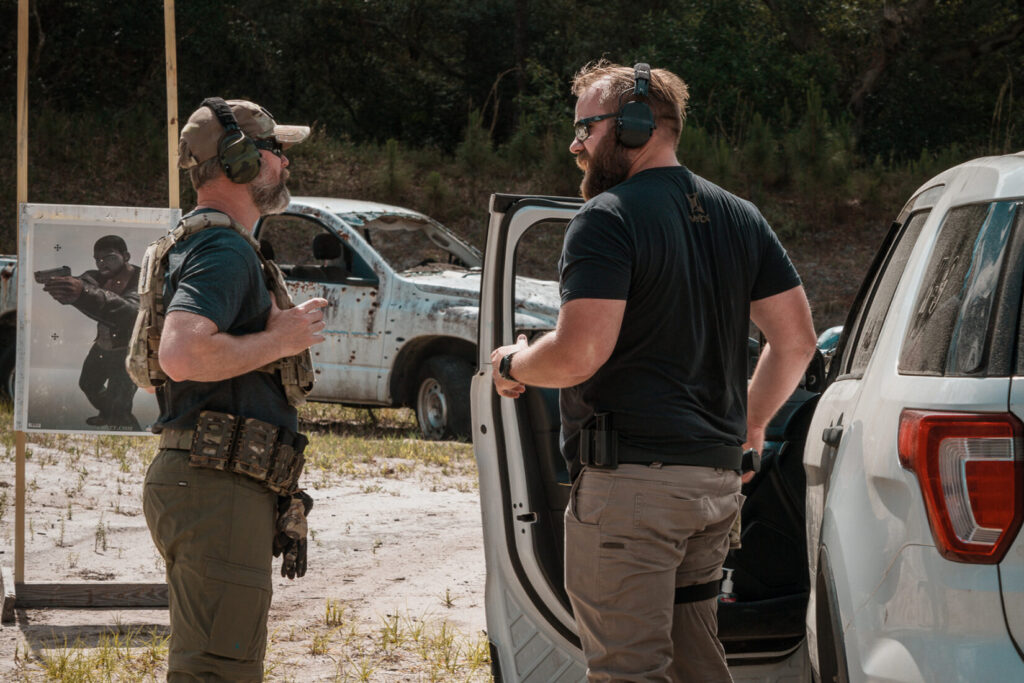
You can get creative with partner training. Having an excess of targets that are similar, but easy to identify, forces you to stop, think, and move on. Throw a dozen numbered targets out there and have your partner engage numbers that are divisible by three.
Be creative and make it difficult.
Getting the Most Out of Your Training
I work on these skills at the end of a training session. Prior to my shoot/no shoot training, I’ve worked drills, reloads, draws, and more, doing nothing but hit the gas for the entire training session. This sets me up for failure.
My body and brain are used to going fast and shooting, be it live or with the TitanX. Now I’m hitting the brakes and going against what the body and brain want to do.
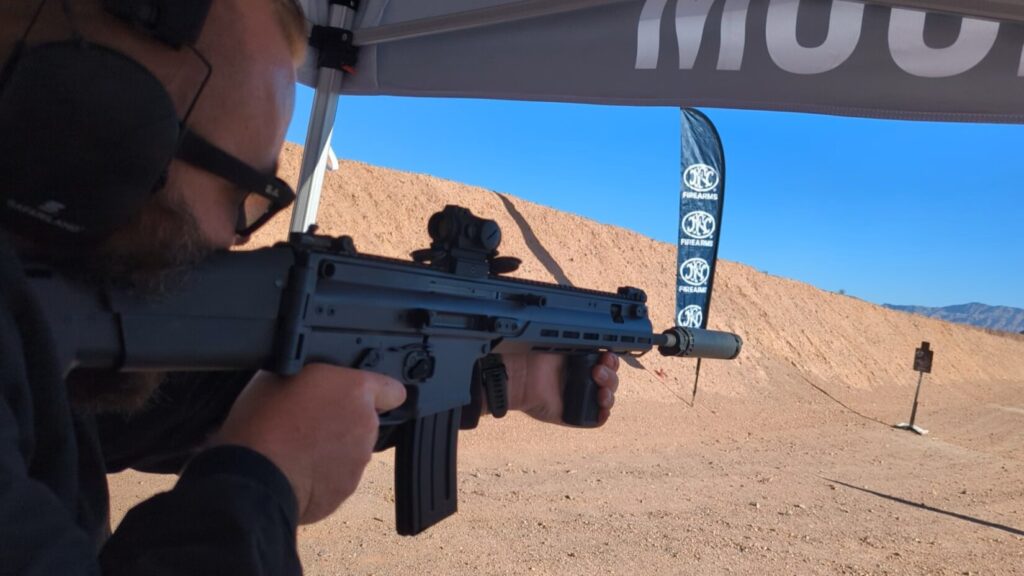
Starting with shoot/no shoot training isn’t a bad idea, but it is a bit easier than transitioning from traditional training to judgment training.
To Shoot Or Not
Being highly skilled with your draw, presentation, and ability to engage is critical for being good at judging when to shoot. The more you automate your defensive response, the better.
Still, getting some purposeful decision-making training is critical for anyone who carries a firearm. Being able to make those judgments on the fly requires a little practice at putting on the brakes. Build it into live fire and dry fire, even if it is only for a few reps.