
This is the first review in an ongoing series on 2011-style pistols. The Springfield Prodigy falls into the “entry-level” category, as its price suggests.
In recent years, this handgun style has dominated the handgun market. It seems every manufacturer is producing one. And it’s a broadly inclusive market that includes budget-friendly models made in Turkey, custom pieces from brands like Nighthawk, and intermediate options from VKTR and Watchtower Firearms. But STI, now known as Staccato, brought the 2011 to the mainstream.
To understand the history of the 2011, Staccato, and the rise of this pistol classification, check out “Party Like It’s 2011: Staccato and the 2011 Revolution,” which tells the origin story. That article lays the groundwork for what follows, and this is meant to give you honest opinions on this growing market.
Unlike other trends that come and go, this one has staying power. But unlike other trends, pistols in this class can cost thousands of dollars. The goal here is to give you an unbiased opinion on how these models stack up and help you decide which is best for your needs and budget.
Thank you to Springfield Armory for providing a sample. All thoughts and opinions are my own.
Prodigy 4.25” Comp— Key Specs
| Specification | Springfield Prodigy 4.25″ Comp |
|---|---|
| Caliber | 9mm |
| Capacity | 17 rounds (17- and 20-round mags included) |
| Barrel Length | 4.25″ |
| Weight | 32.5 oz. |
| Optic Cut | AOS optic system |
| Frame | Forged Carbon Steel |
| Price | MSRP $1,632; street price $1,349–$1,449 |
FEATURES
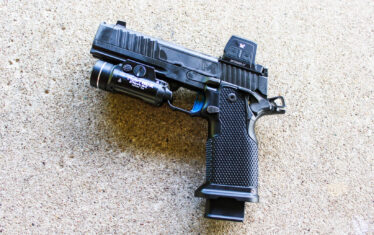
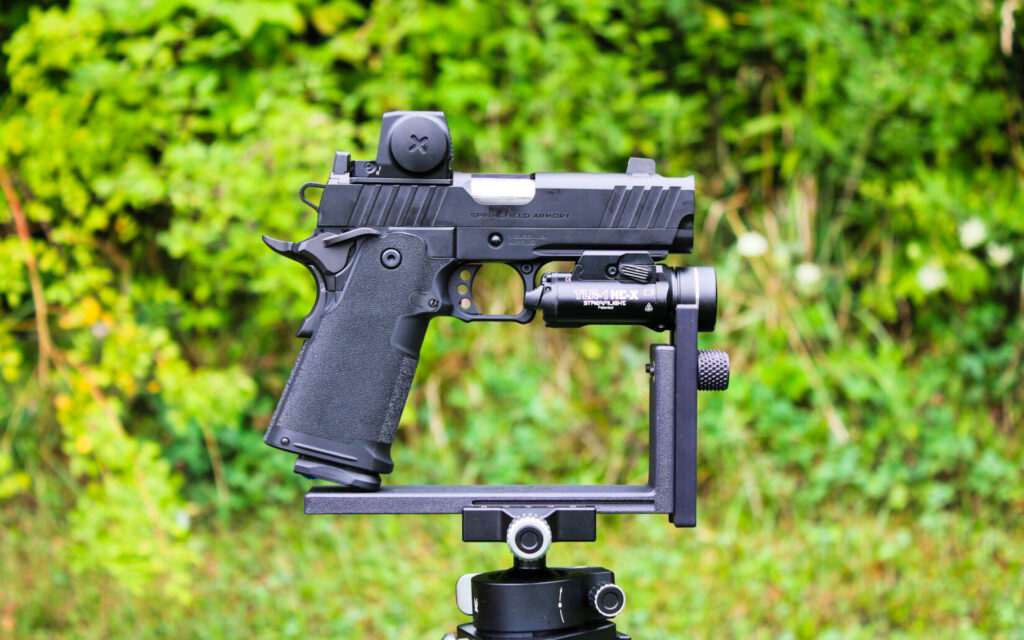
The Springfield Armory Prodigy Comp 4.25 blends the classic ergonomics of the 1911 with modern capacity and performance-focused upgrades. Built around a forged-steel frame and a polymer double-stack grip module, the pistol ships with both a flush-fitting 17-round magazine and an extended 20-round magazine, giving shooters ample capacity without sacrificing the familiar 1911 feel.
Its 4.25-inch forged stainless steel bull barrel is paired with an integral compensator, a combination designed to reduce muzzle rise and keep the pistol flatter during rapid strings of fire while maintaining match-grade accuracy.
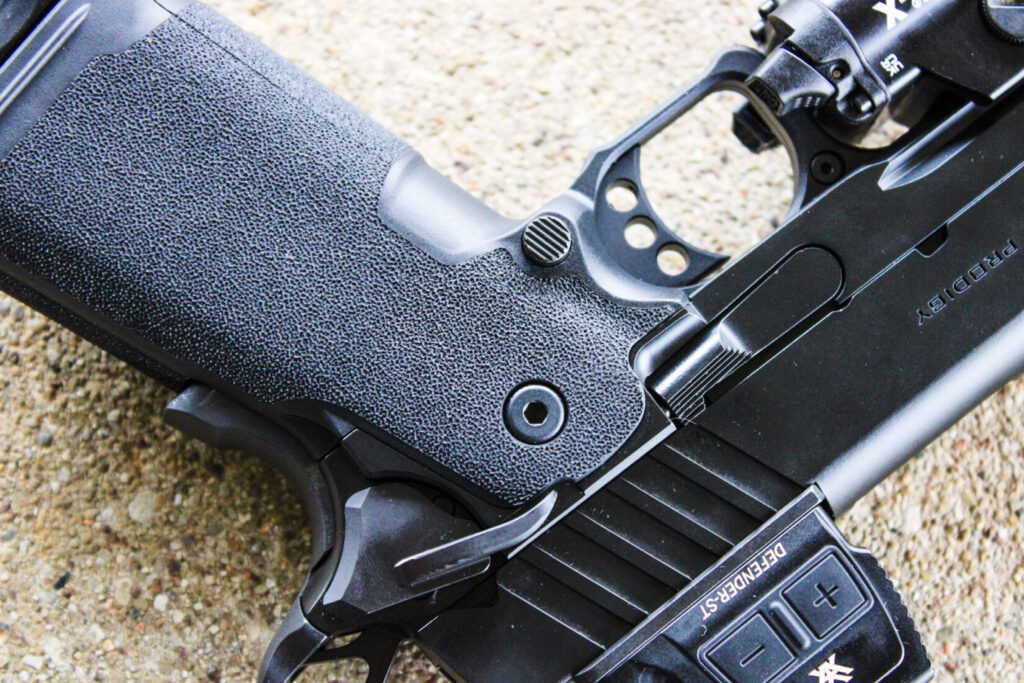
The slide is optics-ready through Springfield’s AOS (Agency Optic System), allowing shooters to mount many of today’s most popular red dot sights with interchangeable adapter plates. A Picatinny accessory rail adds further versatility by accommodating lights and lasers for defensive or duty applications.
Altogether, the Prodigy Comp 4.25 combines high capacity, recoil-reducing performance, and modern optics compatibility in a package that builds on the proven 1911 platform while embracing the demands of today’s shooters.
SETUP
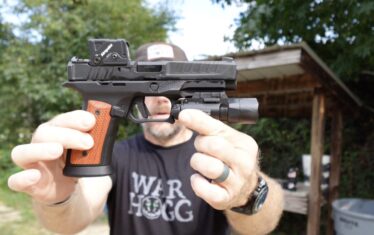
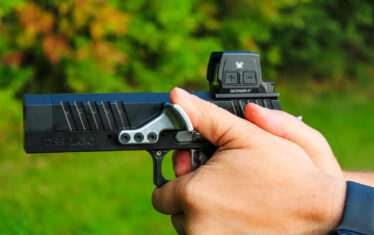
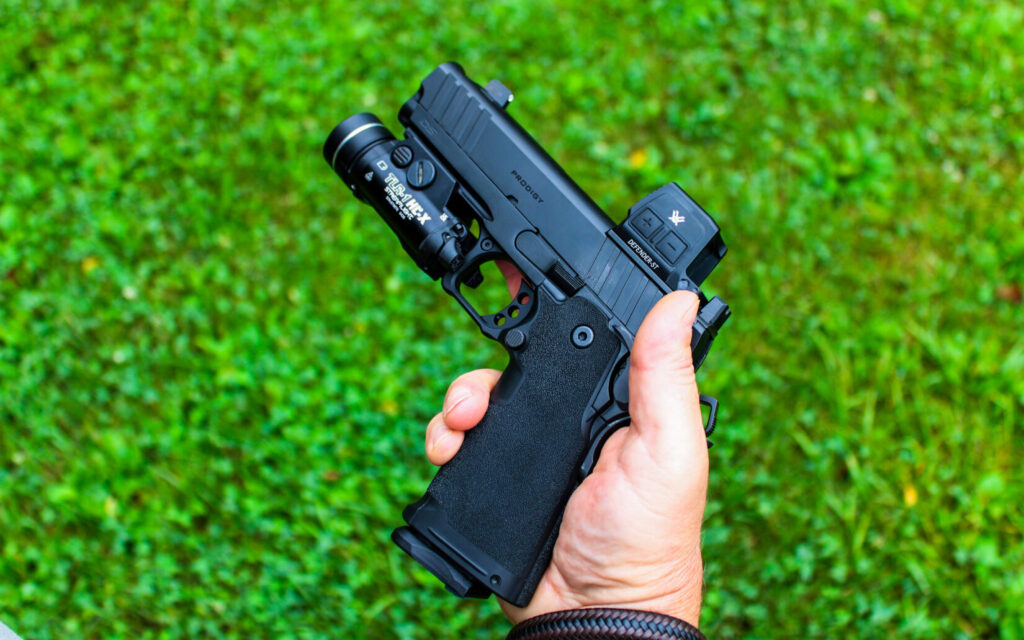
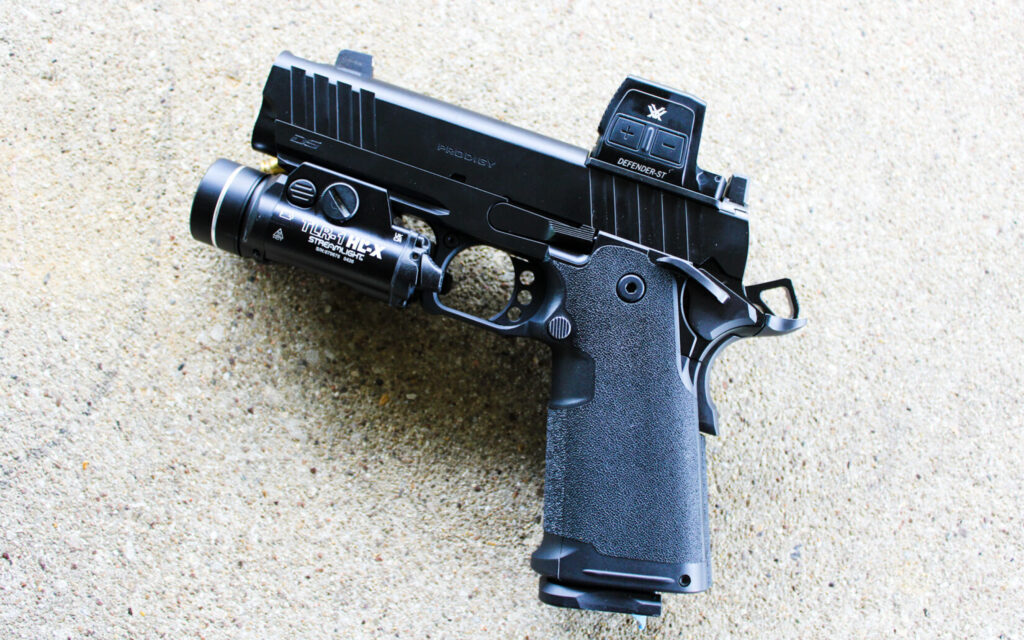
The setup is simple. I’m running a Vortex Defender-ST Enclosed with a multi-dot reticle. The ST variant fits a DPP footprint, so I’m using the corresponding AOS plate. As the name suggests, this is an enclosed emitter optic with solar capabilities.
I’ve also added a Streamlight TLR-1 HL-X. This proven light offers good value.
Outside of that, I’m running this pistol stock. That keeps things on an even playing field. Can you upgrade and customize these guns further? Sure. But doesn’t that defeat the purpose of buying a nice pistol in the first place?
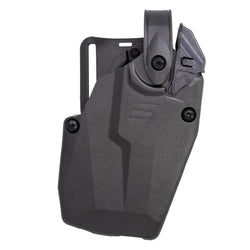
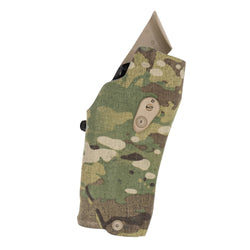
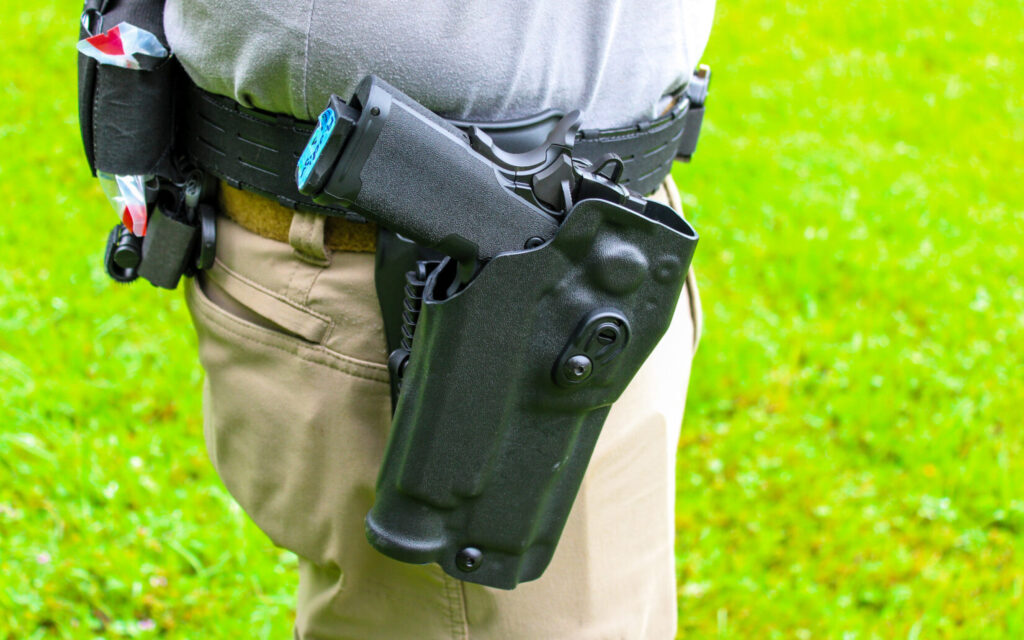
For a holster, I’m using the Safariland 6354RDSO ALS Holster w/ QLS19 Fork and a mid-ride QLS adapter. This is my go-to setup for any kind of “tactical” shooting or training. Since I’m not in law enforcement, I’ve removed the hood for easier access. This is mounted on the Safariland BASELINE MOLLE Belt, which I’ve grown to like quite a bit.
Now, let’s head to the range.
AT THE RANGE
A note on ammo. All “range ammo” is Blazer Brass 115-gr FMJ (5200). For accuracy testing, I used Hornady American Gunner 115-gr XTP. I picked up all the ammo for testing from Ammunition Depot.
Let’s get into the drills and accuracy testing.
Bill Drills
I like to run Bill drills to warm up and get things moving. Think of this as your pre-match stretching routine. Got to get the blood flowing.
Start at the low ready. For me, the goal is six A-zone hits in 1.25 seconds or less. My average time over six attempts with the Prodigy was 1.49 seconds—definitely not my best. First shots were around .44, while follow-ups hovered around .17. For me, this is really slow. I kept getting trigger freeze on the second or third shot of each string—on me, not the gun—which did not lead to good times. Accuracy was okay, probably on par with MAC, but not nearly as good as the DS Warrior.
Accuracy Testing
For this portion, I’m shooting from a pistol rest mounted to a tripod. This keeps things as stable as possible and really showcases the pistol’s capability.
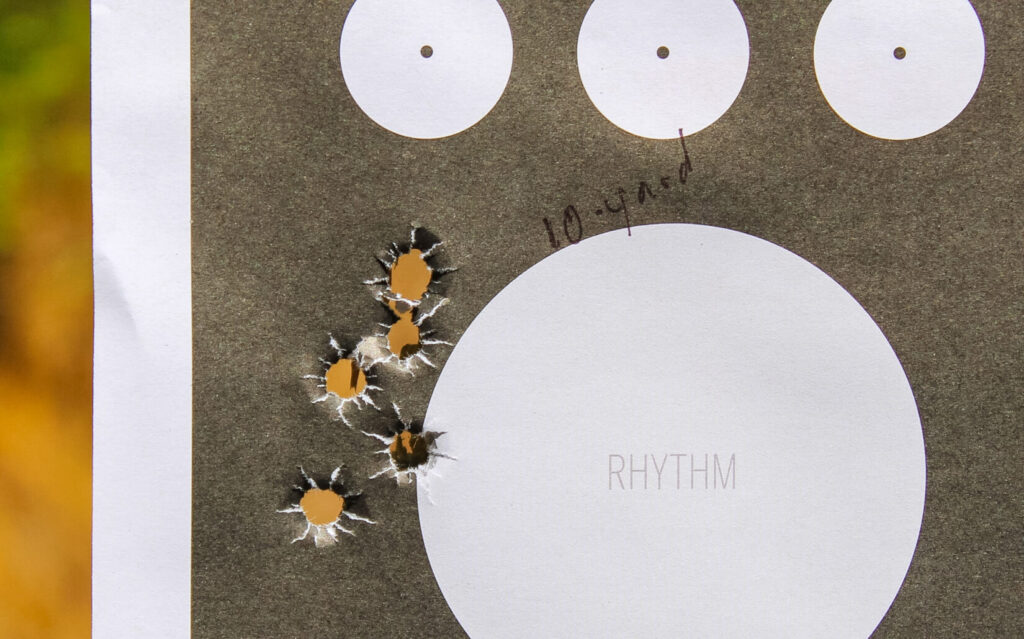
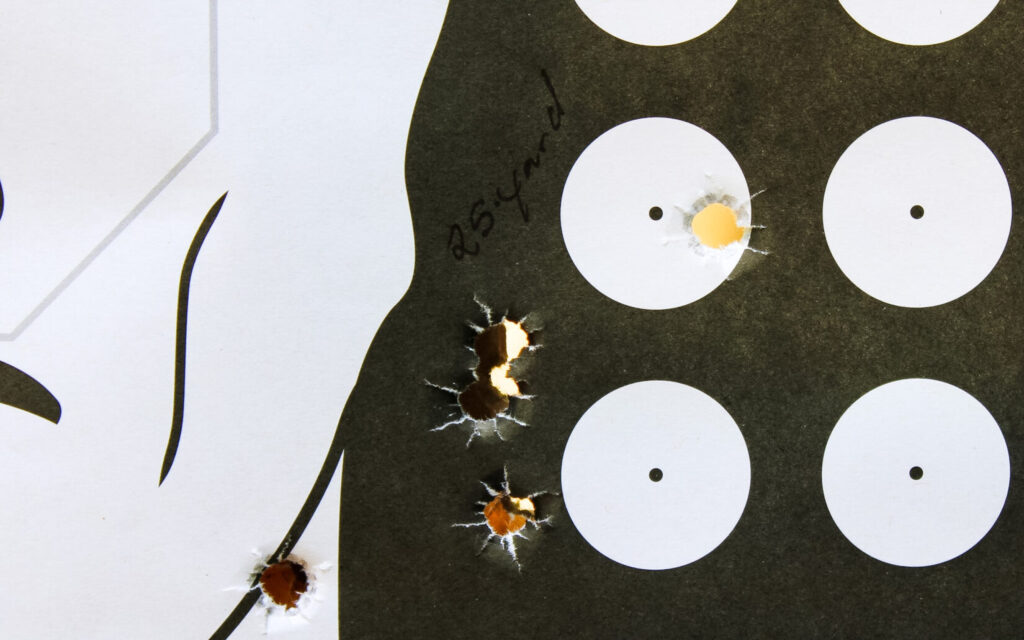
At 10 yards, the pistol’s accuracy was okay, about a 1.5” group. At 25 yards, the group spread out more, with a size of 3.25”. Overall, I’d call the accuracy okay. You will certainly see much better as the series goes along.
1-and-1 Drills
This is my favorite drill to run. I start the same way I do for Bill Drills. 1 shot fired, slide lock, reload, 1 shot. I did okay in this drill.
The Prodigy has relatively standard controls with nothing that stands out. But the diameter of the double-stack module complicates things. Maybe if you have large hands, it’s fine. Not with hands on the smaller side. I generally have to roll the pistol in my strong hand to engage the magazine release. I then use my left support hand to hit the slide release before returning to position.
My average over six attempts was right at 4.1 seconds, which is awful. My fastest time was 3.51 seconds. Yikes. Maybe I had a bad day.
The Humbler
A quick note before this one: if you’ve heard of “The Humbler” before, it’s likely the 70-round, 700-point aggregate drill popularized by Larry Vickers and associated with Delta Force training. This is not that drill — it’s a different, shorter exercise that happens to share the same nickname.
This is a good finisher I picked up from James Williamson of HK. It’s a 10-second par time. Either start with the pistol holster or on a bench. 10 shots into the A-Zone, reload, two shots into the head A-Zone. Hopefully I can redeem myself, right?
My time was 12.14, and I had more misses than I’d care to admit. Like any athlete, you have good days and bad days. This was the latter.
Sizing Up the Prodigy
Where the Prodigy Delivers
The Prodigy is one of the better “factory” options for a 2011-style handgun. It is relatively affordable—especially when you can find it on sale.
Because the Prodigy has market acceptance, there is extensive aftermarket support for it. Companies offer new grip modules, triggers, and more for the Prodigy. This allows a user to start with an affordable factory option and then customize it as time and funds allow.
I found the accuracy satisfactory, and I really like the AOS system for plates. While I wish the Prodigy used the VIS system that the Echelon uses, the AOS is good for optic plates.
Mixed Results Here
The overall controls of this pistol, as the Gen Zers say, are mid. The trigger is fine, but nothing to write home about. There’s a reason the Prodigy falls into this price category. The mag release is a bit small and not as protruding as I’d like. This will be a common theme throughout. My hands are on the smaller side, and it seems 2011s don’t fit people with smaller hands well.
As for the comp, it worked. Maybe a little too well. I felt follow-up shots were generally low. This makes sense, as the compensator pushes the pistol’s nose down. I’m not sure if comps on 4.25” guns are all they’re cracked up to be. It’s not a recoil eliminator, as many think. It comes with its own set of problems. But I have others with similar configurations in this series, so it will be interesting to see how that opinion holds going forward.
Growing Pains, Now Resolved
The elephant in the room largely stems from poor reception. The initial wave of Prodigy didn’t live up to the hype. Social media reviews were negative, which hurt the initial stock. We do need to remember the pistol was introduced in 2022, and much of its design and early manufacturing came at the end of COVID. Is that an excuse? No. But I can say, from working in firearms retail at the time, that QC from many manufacturers wasn’t as high as it once was. I think the early Prodigy pistols fell into that camp.
In recent years, there has been a resurgence in the pistol’s popularity. Springfield has quietly remedied any problems and now offers a pretty good pistol.
ZOOMING OUT
For the 2011 Project, the Prodigy was the best place to start for “entry-level” 2011-style pistols. I do recommend checking one out if you are in the market. They have a more attractive price point and are manufactured by a widely popular and reputable company. That means they will have support if something goes awry with your model.
That said, this isn’t a perfect gun. Nothing in this price category will be. They will all sacrifice in one area or another to keep prices down.
Next up in the series, we head overseas and check out the MAC 9 DS Comp. With similar features to the Prodigy, it comes in at a remarkable price point. Stay tuned.