
The Bianchi M12 doesn’t get mentioned much. Admittedly, it’s a bit out of date compared to modern duty holsters, but it does have an interesting legacy. The Bianchi M12 is a bit like the M16A2. It was a product of a peacetime military, more or less, until the Global War on Terror. Both the M16A2 and M12 served in the GWOT but quickly took a back seat to designs that were more oriented to modern combat.
John Bianchi, often called “The Father of the Modern Holster,” designed the M12 for the United States military. He began making holsters in 1958 after feeling his police-issued holster underperformed. By 1975, the company had produced over a million holsters. While leather was Bianchi’s bread and butter, he began working with ballistic nylon in the 1980s.

In 1981, the U.S. government came knocking. They were replacing the M1911, and the new gun would need a new holster. Their demands were simple. It had to work in all environments, from extreme cold to extreme heat, and from jungles to ships. Second, the holster needed to be ambidextrous because the Department of Defense discovered that left-handed shooters exist. Finally, the holster needed to be easy to clean and durable.
As you are aware, the M12 holster was selected. The military called it the UM84, for Universal Military 1984. All four branches adopted the holster, and numerous police forces outside of the military also did. This represented the first mass adoption of a new holster since World War 2.
Me and The Bianchi M12
Handguns in the military are fairly rare. The majority of the military doesn’t need and will never use a handgun in combat. As a machine gunner, I was one of the unicorns of a lower enlisted man who got a handgun. The holster I was issued was the Bianchi M12. Someone wiseacre had scrawled High-Speed gear on the flap, which I made sure the armorer marked down on my issuing paperwork.
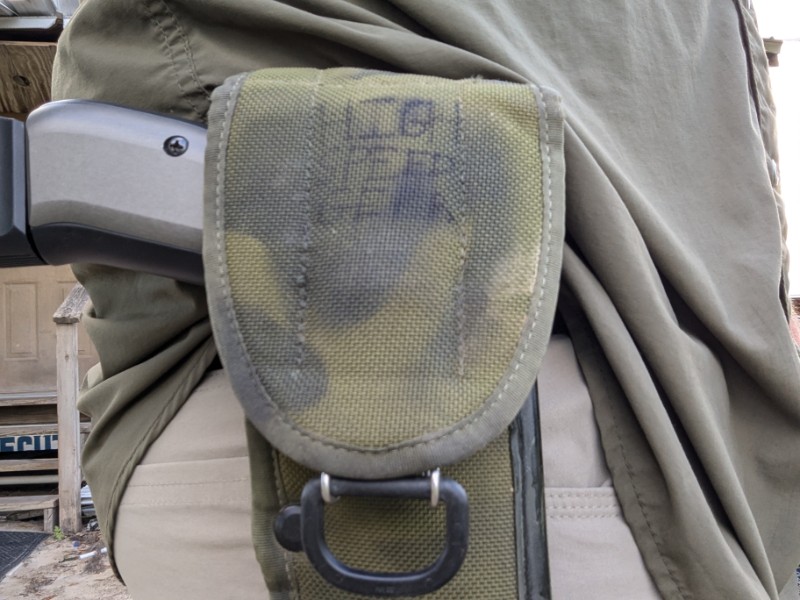
The Bianchi M12 and I weren’t constant companions. I was issued another, more modern holster that I thought was the bee’s knees. In fact, when I went to return the M12, the armory told me to keep it. They didn’t need it back. My journey with the Bianchi M12 wasn’t over. During a patrol, my new, high-speed holster broke. (Years later, I learned this specific holster was craptastic.)
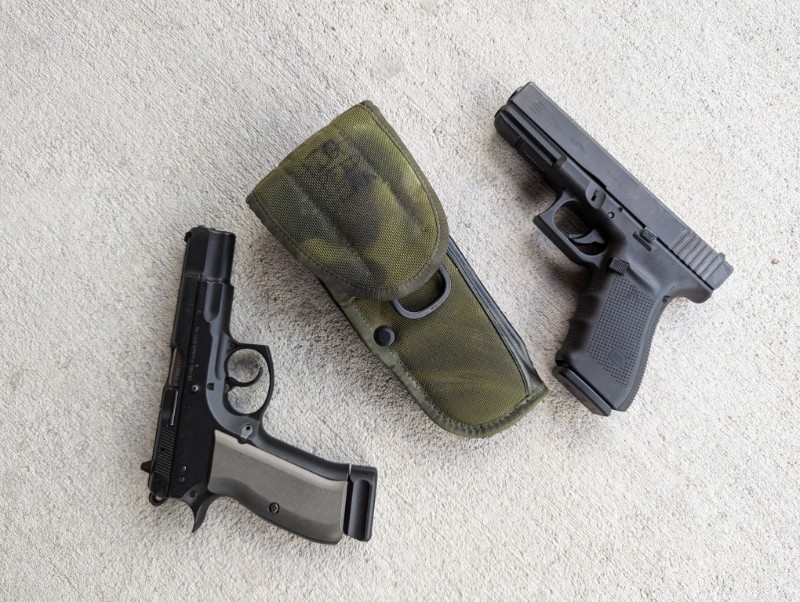
What’s a lowly E3 to do? I returned to my Bianchi M12, which sat in my sea bag, waiting to debut. I finished the rest of my deployment with this thing alternating between my belt and vest, depending on what I was doing. The M12 didn’t give me any issues. Sometimes, simple works.
As I was recently going through some stuff I kept in storage, I found that old Bianchi M12, which has brought us here.
Breaking Down the Bianchi M12
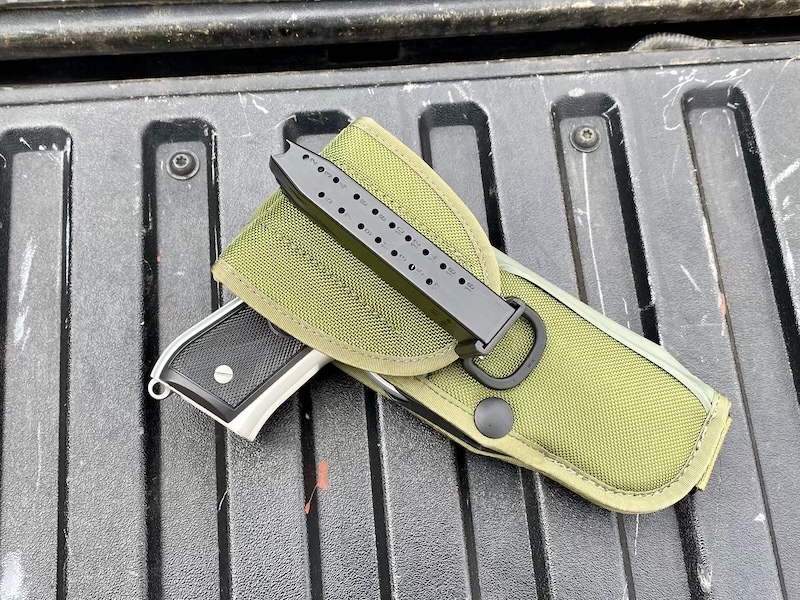
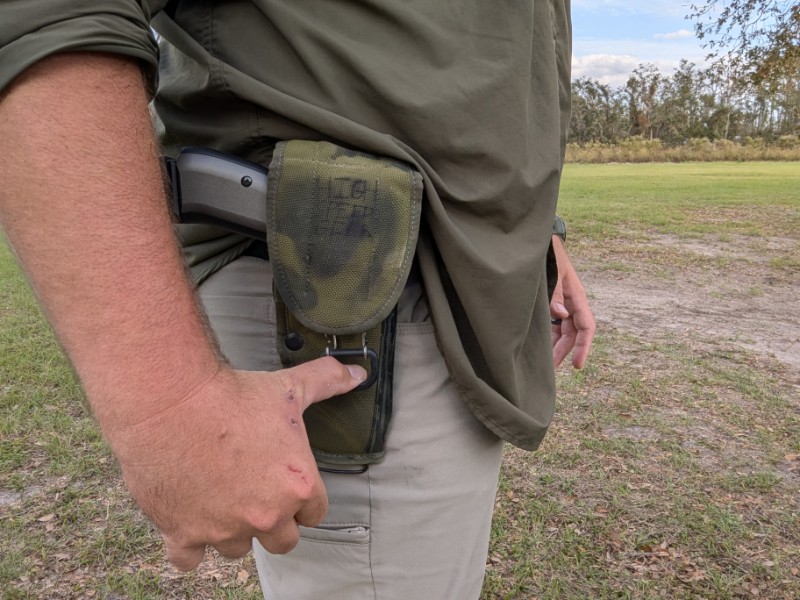
The Bianchi M12 is made from a semi-soft ballistic nylon. It’s one of the very few softish, ballistic nylon holsters that doesn’t totally suck. The material resists sand, dirt, water, and the environment well. Cleaning it is simple, and a toothbrush and elbow grease are all you need. It’s rugged and doesn’t break or tear easily.
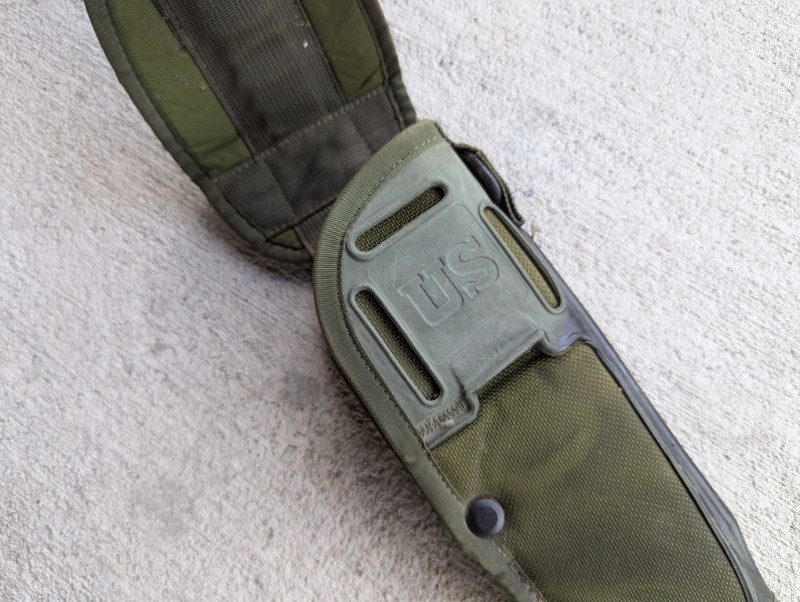
The holster is described as universal, but it’s more quasi-universal. It will fit most full-sized duty guns. The military used it for the Beretta M9, but it works with the M1911, Glock 17, and similar-sized firearms without a problem.
The system uses a security flap that goes over the rear of the gun. It gives the holster M1916 holster vibes but with nylon instead of leather. A button doesn’t retain the flap, but a tab. With a downward tap, you can free the flap to draw the gun. It doesn’t necessarily meet the modern definition of retention, but it is a capable security device.
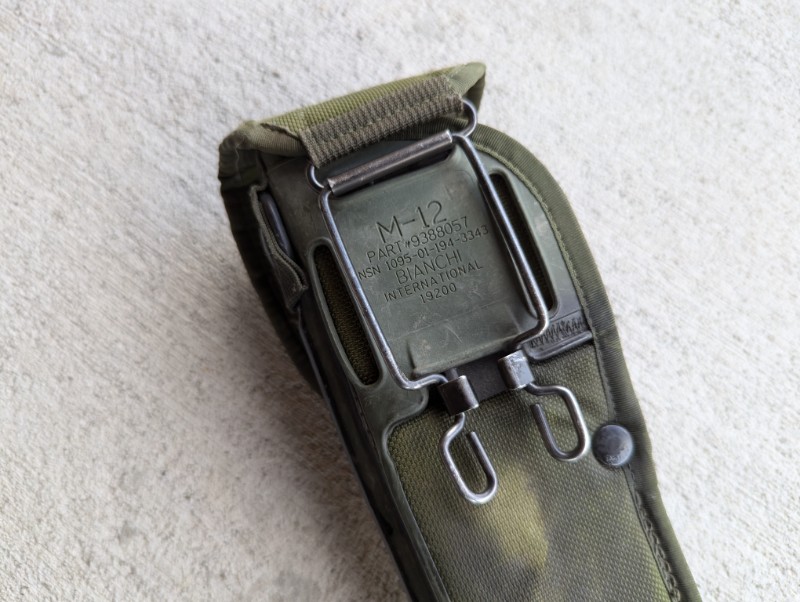
Converting it to a left-handed configuration is super simple and can be done quickly and efficiently. Throughout the holster’s lifespan, numerous methods were created for carry, including shoulder rigs, thigh rigs, and tanker rigs for the system. It’s surprisingly modular for its age and design.
At The Range
Admittedly, the draw is fairly slow for a combat rig. The flip can be somewhat cumbersome, and you have to learn a completely new style of draw. Compared to a modern holster, like any Safariland duty rig, the holster is going to feel slow and out of date. It took me over two seconds from a draw to first shot on target.
The holster shows its age by its inability to accept accessories. Lights and optics are a no-go. It just won’t fit. The retention is of the era and not all that modern or impressive compared to a standard duty rig. This sounds like I’m doing nothing but hating on the Bianchi M12, but in reality, it’s a 40-year-old design and functions like a 40-year-old design.
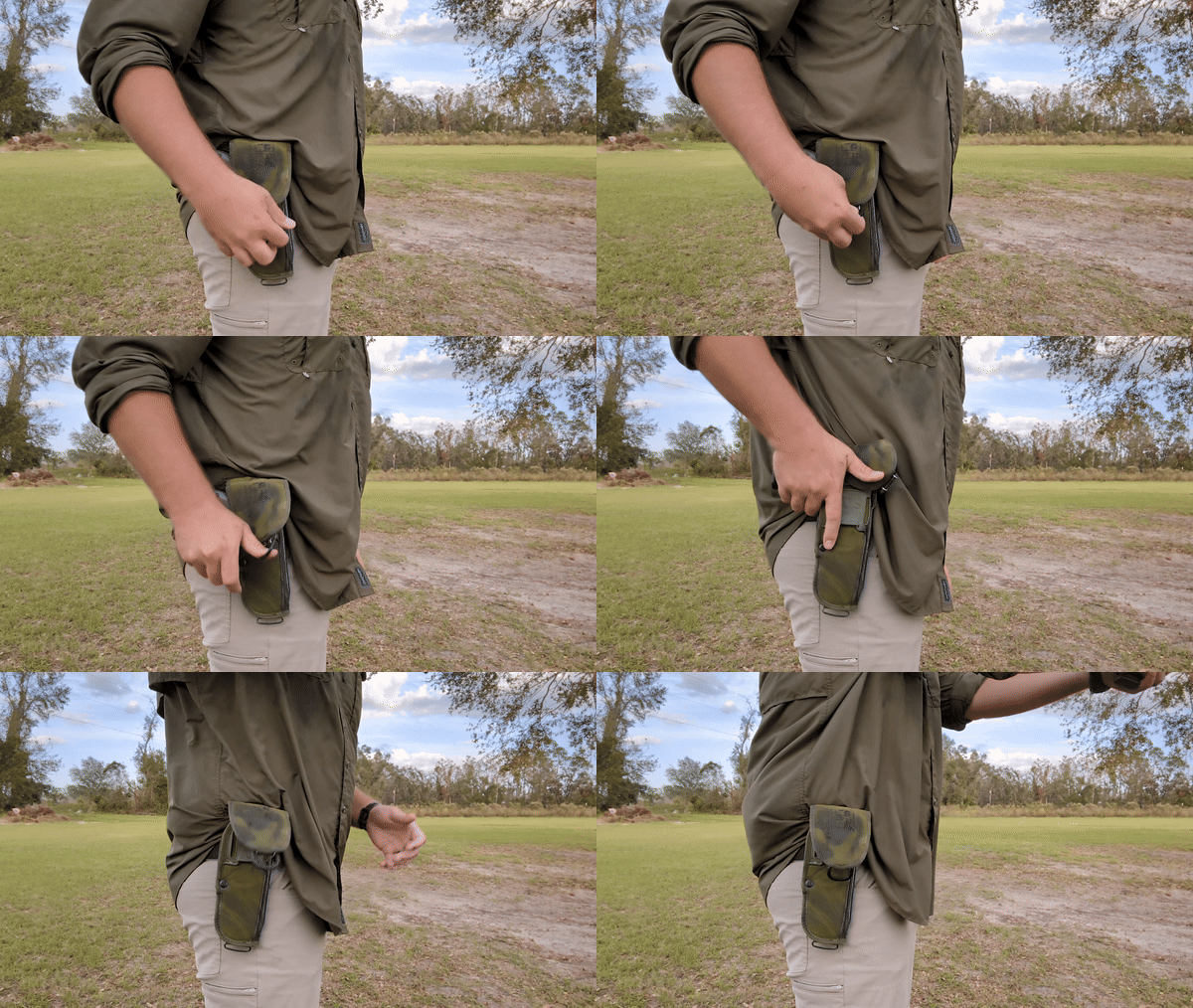
The design has some benefits. It’s clearly a field holster. The Bianchi M12 protects the gun very well from the environment. Dirt, debris, low-hanging limbs, snow, etc., will have a helluva time making their way through the Binachi and into your gun.
For the average Joe, that’s a minor need. However, for hunters, hikers, and similar folks, it can be extremely beneficial. The M12 excels at protecting your gun in rough areas. It can fit several full-sized guns and isn’t going to break the bank price-wise.
The End of an Era
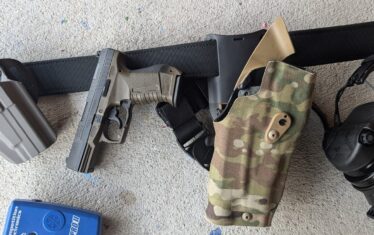
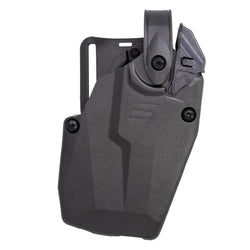
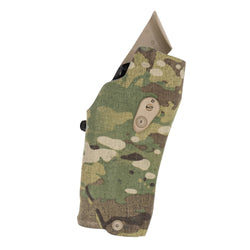
The world has moved on. The military replaced the M12 with a Safariland 7360 7TS holster for the new SIG M18 pistol. The Bianchi M12s have hit the surplus market, but there are still new production models out there as well. It’s not a modern option for duty, and certainly isn’t for concealed carry, however, for the range, the farm, and even the ATV and boat, it’s tough to go wrong with an M12.