
Developing a consistent, independent trigger press remains one of the most important and most difficult skills for shooters at every level.
Whether the goal is duty accuracy or performance shooting, the ability to press the trigger straight to the rear without disturbing the muzzle is foundational. It is also the skill most susceptible to degradation under stress, fatigue, or poor practice habits. Even small deviations can create significant accuracy issues, especially as shooters push for speed or work under pressure.
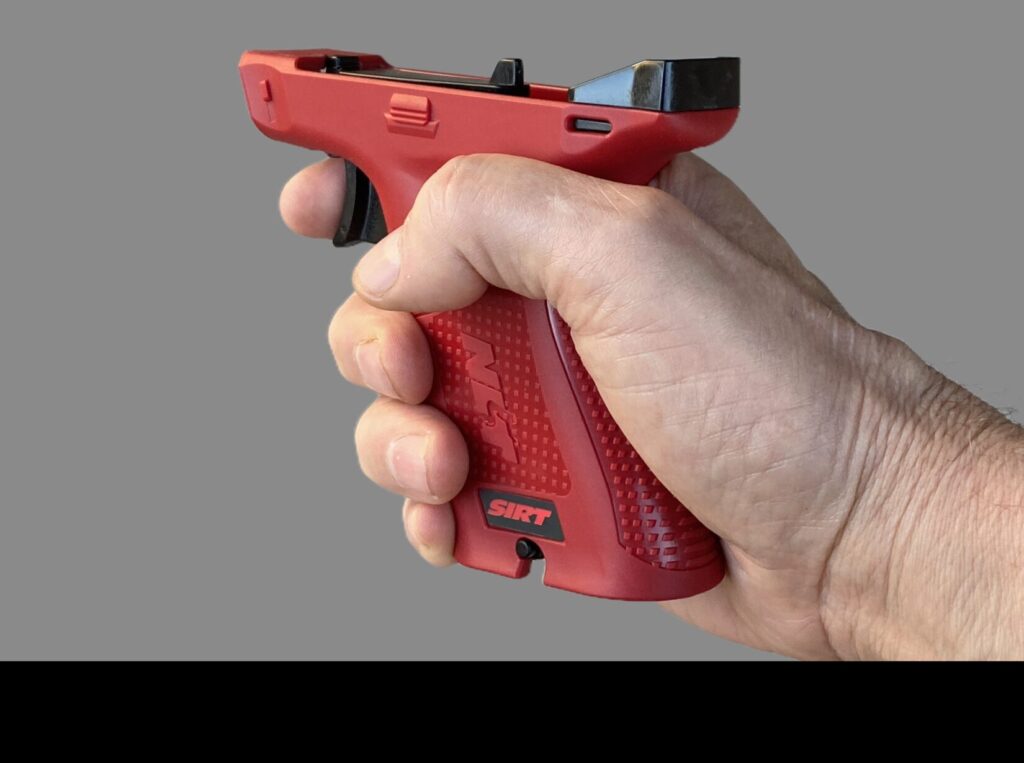
There is a ground-breaking new training tool that can greatly improve the trigger press of any shooter. The SIRT TruBreak from Next Level Training, the company that brought us the SIRT Training Pistols, is a dedicated trigger‑control device designed to isolate and reinforce this single skill.
Unlike dry fire with a duty pistol or laser‑training pistol, the TruBreak removes nearly all variables except the movement of the trigger finger, enabling extremely high‑volume repetitions with immediate tactile and mechanical feedback.
NLT provided a TruBreak unit and optional accessories at no cost for evaluation. All observations and opinions are my own.
Why Trigger Control IS ESSENTIAL
Trigger control is often described as the “final common pathway” of marksmanship. Sight alignment, grip, and stance all matter, but the shot breaks when the trigger finger moves. If that movement is inconsistent, lateral, or anticipatory, the muzzle shifts and accuracy suffers. Even skilled shooters can struggle to maintain a clean press when fatigue or stress elevates sympathetic hand tension.
The fundamentals are straightforward: the trigger finger should move independently, straight to the rear, with minimal lateral input. The shooter should know where the break occurs and be able to reset and reprep without disturbing the gun. Under pressure, shooters often revert to sympathetic hand movement, “milking” the grip, or slapping the trigger. Even in dry fire, many compensate for poor mechanics by subtly steering the muzzle.
A dedicated trigger‑control tool like the TruBreak isolates the movement and exposes these deficiencies.
How the SIRT TruBreak Works
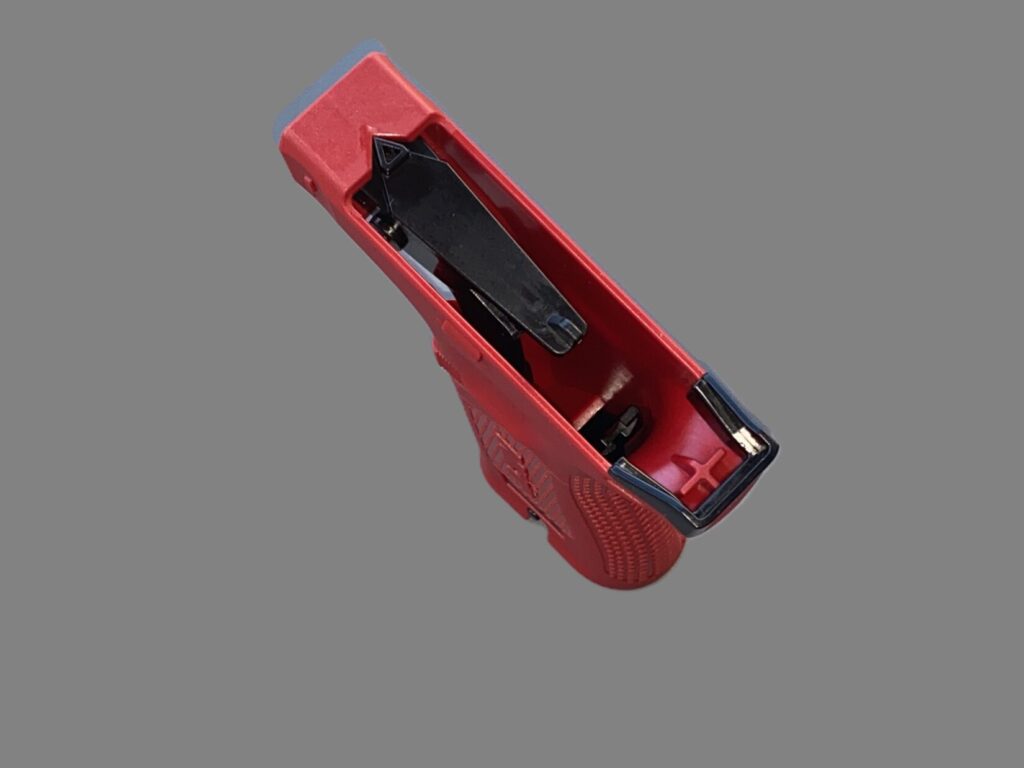
The TruBreak is a compact, non‑gun training device built solely to develop a straight, clean trigger press. It uses a balance‑plate system that is paired with the trigger. Interchangeable key modules insert into the base or the grip, each with a landing plate that determines how forgiving the press is. A straight‑back press keeps the trigger on the plate; any lateral drift drops it into a gutter, forcing a reset after the trigger break. Feedback is immediate.
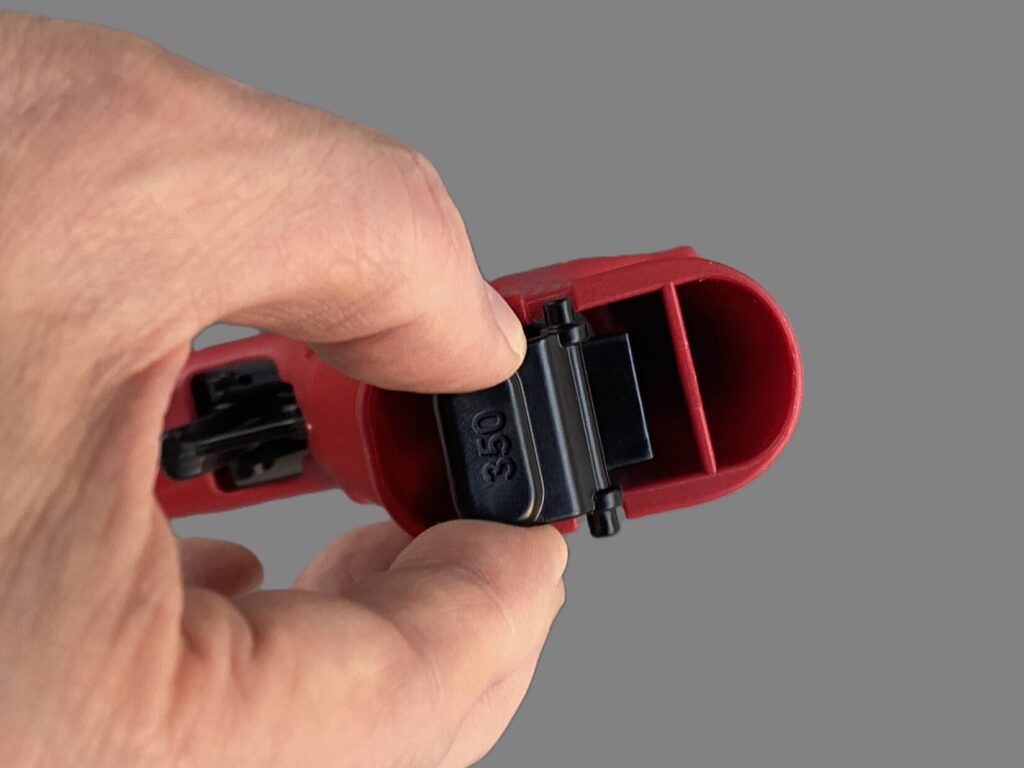
Three keys (150, 250, 350) are included, with wider plates being more forgiving. An optional four‑key pack (100, 200, 300, 400) adds finer progression. A crisp mechanical break reinforces proper neuromuscular patterns, and a small fin reveals lateral input. When visual cues need to be removed, a press‑fit shield blocks the fin from view.
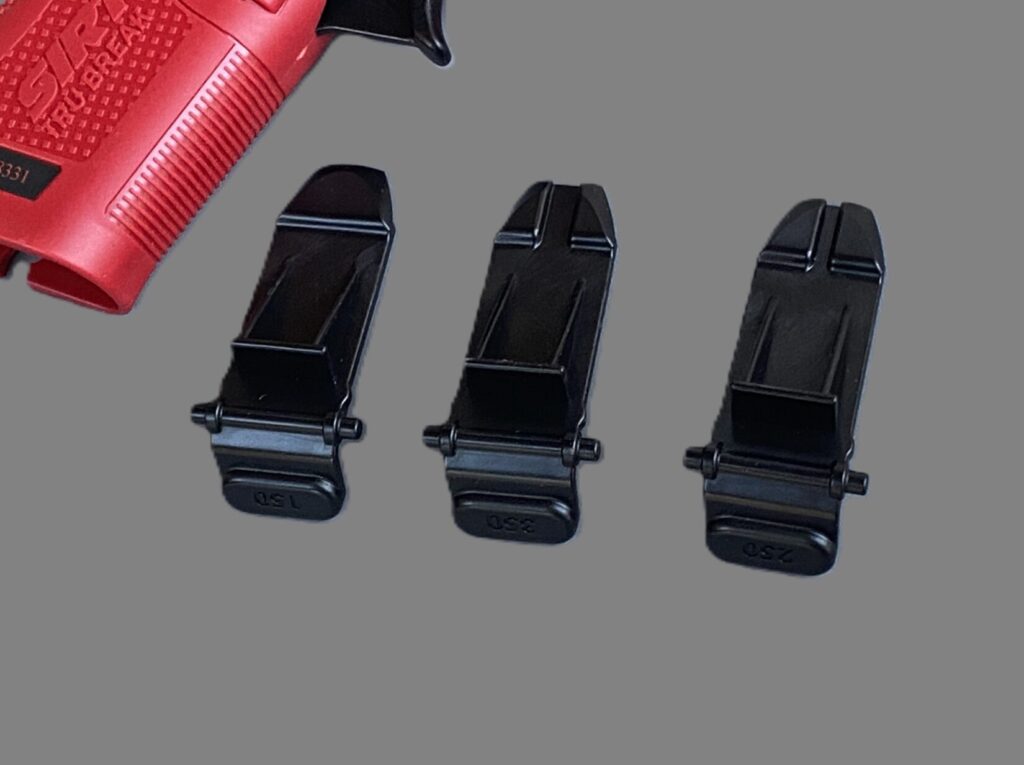
Some shooters learn best visually, others through mechanical feedback. The TruBreak provides both. It is also, frankly, addictive—NLT calls it the “fidget spinner for shooters.” Each unit is serialized for agency inventory needs.
Optional Slide Pack
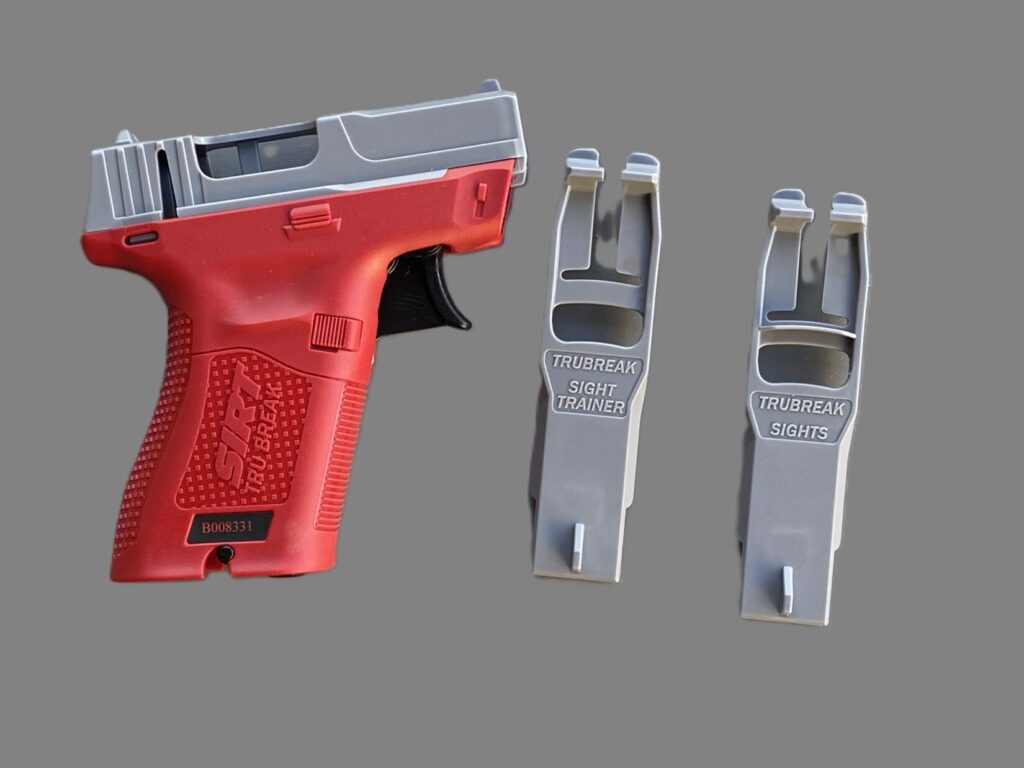
A common criticism of the original TruBreak was the lack of sight‑movement feedback. NLT addressed this with the optional Slide Pack, which adds a Sight Trainer, Sights, and a Slide Trainer. These press‑fit components allow shooters to observe sight movement during the press and also serve as visual shields for the fin.
Key Benefits
The TruBreak’s greatest strength is its ability to deliver high‑volume, low‑friction repetitions. Because it’s compact and not shaped like a firearm, shooters can run hundreds of presses in a session without fatigue or setup time. This makes it ideal for short, frequent training blocks that build durable neuromuscular patterns.
It also provides immediate, unambiguous feedback. A disciplined press stays on the plate; any deviation forces a reset. Errors cannot be masked, accelerating learning and preventing reinforcement of poor habits.
The device excels at isolating the trigger finger. With no grip frame or muzzle to stabilize the hand, sympathetic tension becomes obvious. Any clenching or heeling shows up instantly in the fin’s movement.
Its design naturally reinforces reset and reprep. The tactile break and reset encourage prepping back to the wall, building a smooth, repeatable trigger cycle that carries into dry and live fire.
Finally, the TruBreak’s simplicity gives it exceptional usability anywhere, at a desk, during downtime, or as a warm‑up before training.
Limitations and Considerations
The TruBreak is a valuable tool, but not a complete solution. It does not replicate a duty trigger, so shooters must still transition improved mechanics to their actual firearm. It also does not replace dry or live fire; it reinforces the foundational movement only. Some users may try to “game” the device by pressing faster than their technique supports. Used correctly, it is a powerful supplement, but it cannot stand alone.
Training Progressions
- Establish Baseline Mechanics (Wide Plate + Visual Feedback). Begin with the widest plate. Use slow presses while watching the fin for lateral movement.
- Reset and Reprep. Press to the break, allow the trigger to move forward only to reset, then prep back to the wall.
- Build Rhythm and Consistency. Introduce a controlled cadence—one clean press every one to two seconds.
- Increase Difficulty (Narrow Plates → Shield). Move to narrower plates as consistency improves. Add the shield to remove visual cues.
- Apply Mechanics in Compromised Shooting Positions. Reinforce the same straight‑back press from kneeling, seated, supine, rollover‑prone, barricade‑supported, and awkward‑angle positions. The goal is identical trigger control despite reduced leverage or non‑ideal alignment.
- Integrate into Dry Fire. Transition refined mechanics to the duty pistol using wall drills, laser tools, or sight checks.
- Validate in Live Fire. Confirm carryover with slow‑fire accuracy, controlled pairs, cadence drills, and pressure‑based strings.
Where the TruBreak Fits in a Training Program
The SIRT TruBreak enhances but does not replace established training methods. Many shooters use it as a warm‑up before dry or live fire to reinforce clean mechanics. It is also effective for diagnosing trigger‑control issues or rebuilding fundamentals. Its simplicity makes it ideal for short, frequent sessions.
New shooters benefit from early isolation of the trigger press, while experienced shooters can refine precision or correct regressions. For instructors and agencies, it serves as a practical diagnostic tool by removing variables such as grip and recoil.
Final Thoughts
Trigger control remains one of the most critical components of accurate, repeatable shooting, and it degrades quickly when fundamentals slip. The NLT SIRT TruBreak provides a focused, efficient way to isolate and refine that movement through high‑volume, high‑quality repetitions. Its balance‑plate system, progressive difficulty, and immediate feedback make it a genuinely useful addition to a broader training program.
While it doesn’t replicate a duty trigger or replace dry and live fire, it fills a valuable niche, helping shooters build the straight, independent trigger press that underpins accurate shooting. It benefits shooters at every experience level, and at $49.95 MSRP, it is a very affordable addition to a training kit.