
This is probably not a comparison many of us ever thought we’d want to make. PSA Micro Dagger vs Glock 43X? And wait…what’s a Micro Dagger?
The PSA Dagger series has made a big splash, but as far as firearms go, they haven’t done anything radically different. The polymer-frame, striker-fired pistol essentially clones the Gen 3 Glock series of pistols. What they did do differently was sell them at a fantastic price point while also filling them to the brim with modern features.
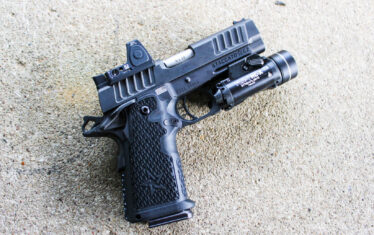
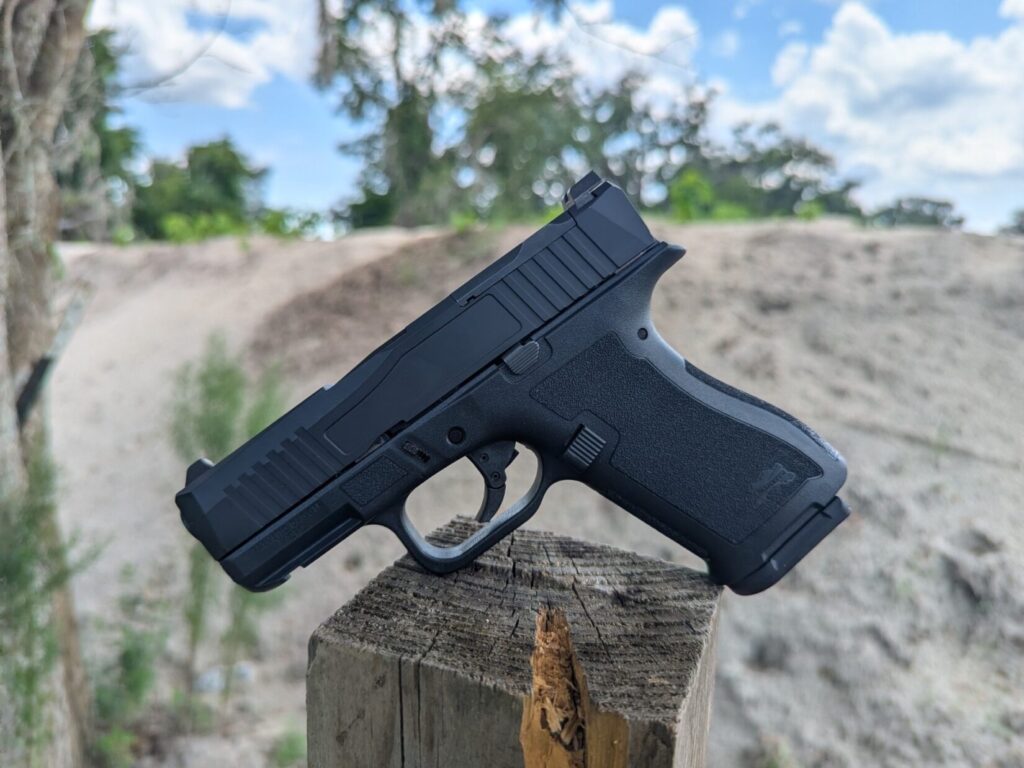
Palmetto State Armory recently released the Dagger Micro, which has ditched the Gen 3 design for something more akin to the Glock 43X.
Things become every more interesting…
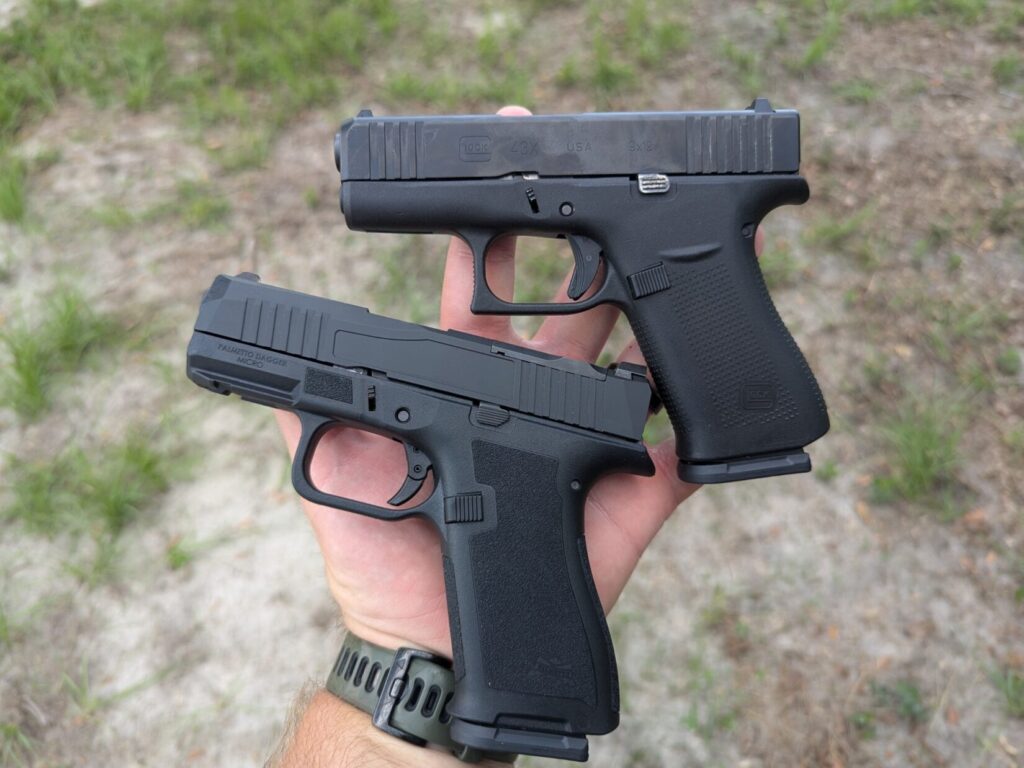
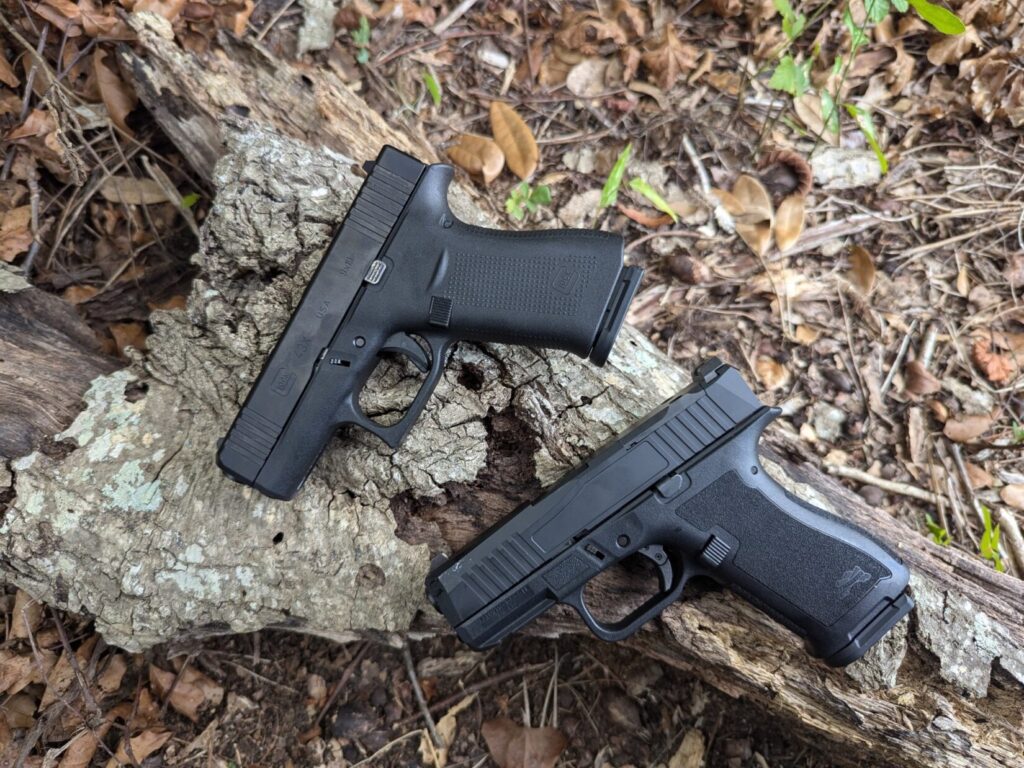
The Dagger Micro and the G43X share many features: both are micro-compact, 9mm, polymer-frame, striker-fired guns with 3.41-inch barrels, overall lengths of 6.5 inches, and widths of 1.1 inches. It’s a Glock 43 slide on a longer frame. I typically call the G43X the central AC of handguns. Both the 43X and PSA Dagger Micro fall into that same category.
These two micro-compacts compete for a spot on your hip or inside your waistband, but which one is worthy of that place? I ran both guns side by side to try and find out if one excelled more than the other.
Dagger Micro Vs. Glock 43X: Notable Differences
Before we hit the range, let’s discuss some differences I noticed out of the box. The PSA Dagger Micro comes with an optics cut and rail. Glock’s 43X does not, but the Glock 43X MOS does. That’s not a huge factor since you can just get the MOS model if you want those features, but it is a consideration.
This breaks down as a direct-milled RMSc optic cut and metal co-witness sights on most of the Micro Dagger slides without the need for adapter plates. The 43X requires slide milling or (as just mentioned) that MOS slide to achieve parity. Another advantage is the PSA gun’s rail.
It’s an advantage because the 43X doesn’t have one unless you get the MOS. (Which makes one wonder why one didn’t get an MOS in the first place.)
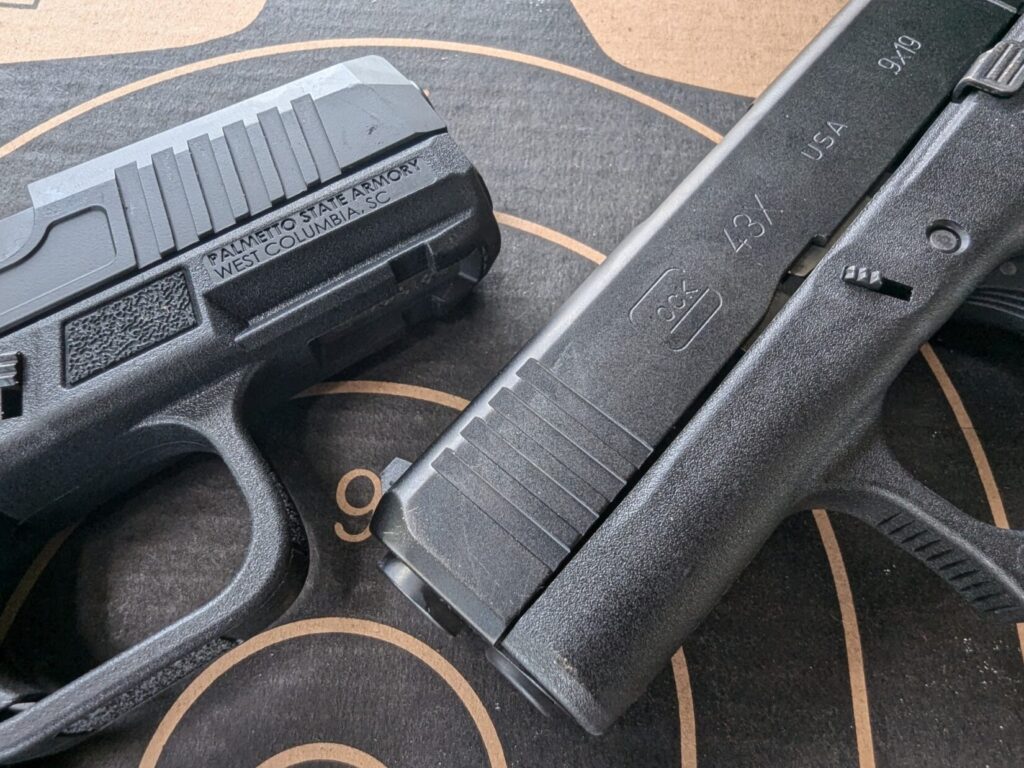
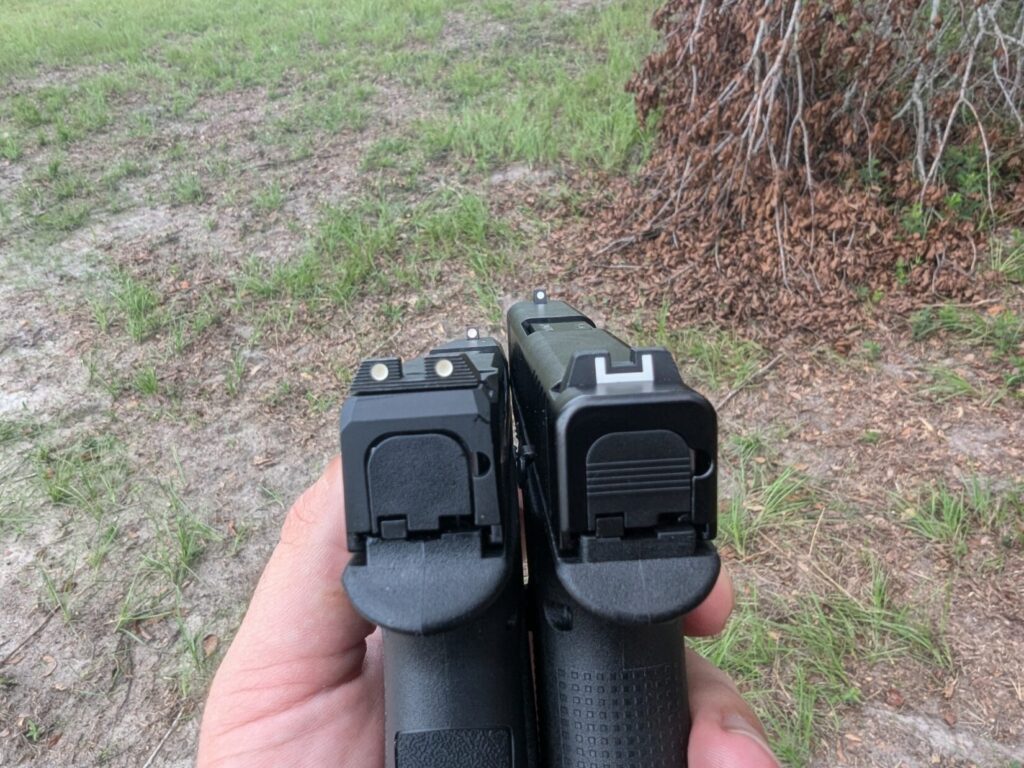
The Dagger Micro comes with metal sights of the three-dot variety. It is very basic, but also very usable. Glock famously keeps their crappy polymer sights on every gun they have. The same goes for the G43X. It has the crappy sights sported by all stock Glock pistols, despite the fact that no one likes them. Maybe Gen 6 will see them finally move to good sights.
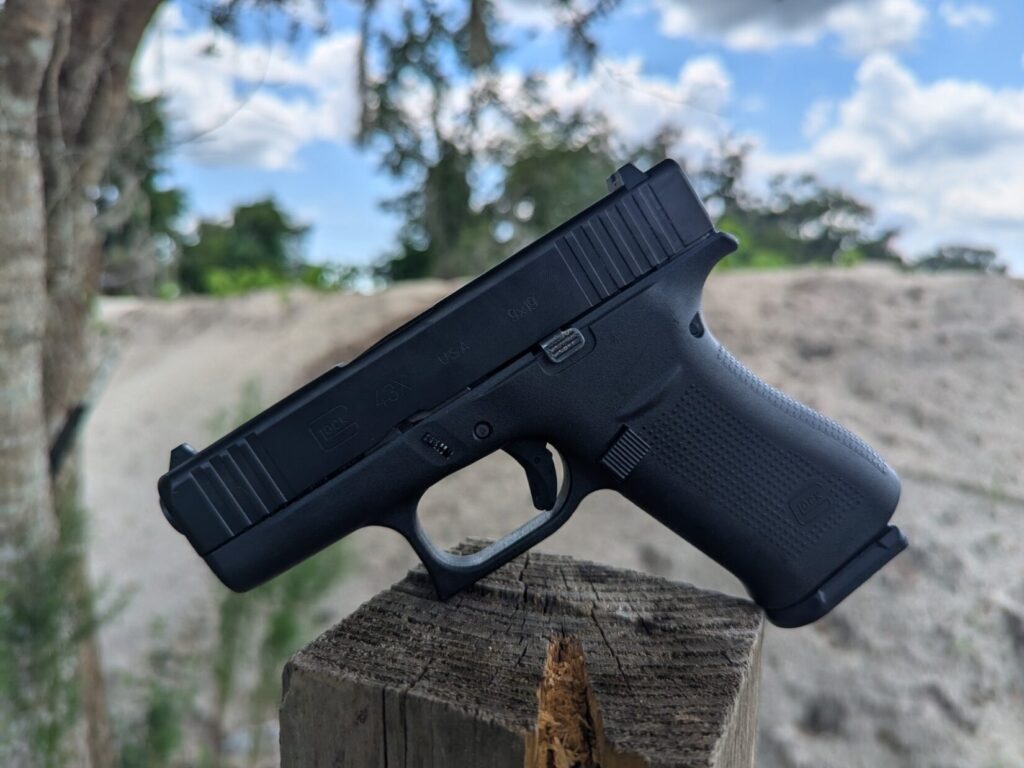
There are some other small differences with grip texture, as well as the curves and shape of the slide. The Dagger Micro looks fancier and has that Gucci-Glock aesthetic appeal of odd lines and curves.
The biggest difference, and the one most people will notice, is capacity. The Glock 43X uses a single-stack 10-round magazine. The PSA Dagger Micro uses a 15-round magazine that’s the same size as the G43X’s 10-rounder. The Dagger Micro magazines can also fit and work in the G43X. The Dagger Micro magazines are made from a mix of polymer and metal.
That’s because Glock engineering philosophy is – or was – predicated on a 10-round single-stack slimline mag structure. PSA engineered the Dagger Micro around a polymer-steel hybrid 15-round flush-fit magazine from the get-go. You have to go aftermarket to get for the 43X what the PSA Micro-Dagger shows up with.
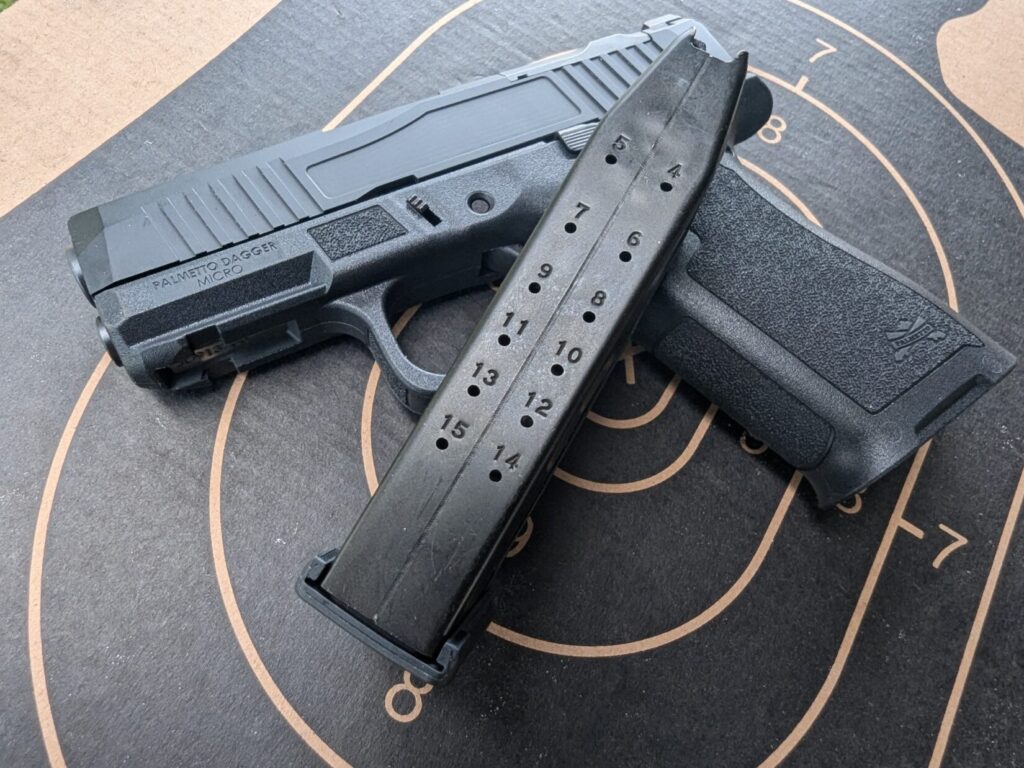
Unlike magazines from companies like Shield, these polymer hybrid designs do not require swapping or using metal magazine releases. Fitting the last three rounds in the magazine is a real thumb workout.
Trial By Fire
My testing procedure for the two guns was written out and fairly simple. My goal was to use some standardized tests to make the comparison identical. I didn’t want to give one gun an advantage over another. Thus, I used identical equipment and identical drills to test each gun. I even used a Dagger Micro magazine in the G43X because it gets old stopping to reload magazines.
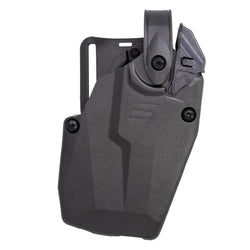
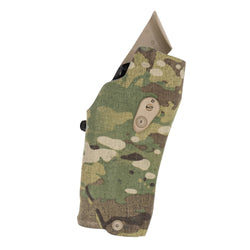
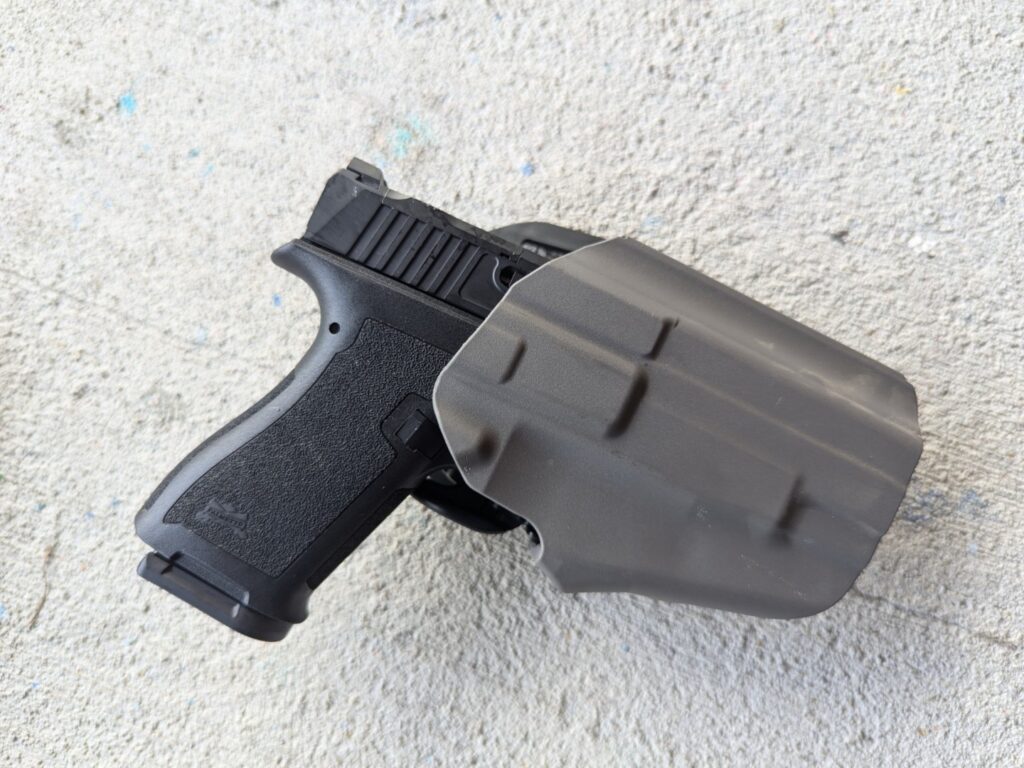
I used the 576 GLS holster for these tests. I needed to make a few adjustments to swap the holster from double stack 1911 to Glock 43X size, but it wasn’t tough. This holster is quickly becoming a favorite due to its ability to adapt to various firearms. This is a Level 1 holster that features a Grip Locking System.
The ammo fired was basic brass-cased, 115-grain FMJs. It’s nothing fancy, but it’s probably the most commonly fired 9mm ammo in the world.
The Drills
- Failure to Stop Drill: Draw and fire two to the chest and one to the head.
- Bill Drill: Draw and fire six rounds fired for time at seven yards into an IPSC A-Zone.
- Reload Drill: Shoot two rounds, reload, shoot two rounds.
- Distance Drill: Start at 25 Yards at the low ready and fire two shots as fast as possible at a 10-inch target.
I conducted each of these drills a handful of times and averaged the times to see if there was a notable difference between each gun. Each drill has an accuracy qualifier and a time qualifier.
Accuracy
Up close, the guns performed identically in terms of accuracy. Before starting, I fired a basic 15-yard group, and each could produce 3-inch groups. Once speed was added and the targets were specified, there wasn’t a massive difference in accuracy.
Up close, I didn’t have issues dropping rounds in the Bill Drill, and The Failure to Stop made it easy to walk headshots into the targets.
In regards to the Failure To Stop, I did notice the Dagger Micro seemed to group the two shots a bit closer together. The same goes for my Bill Drills. The group was tighter. I don’t think this was a mechanical accuracy issue, but it came down more to control over the gun. The difference was minor, but it was consistent.
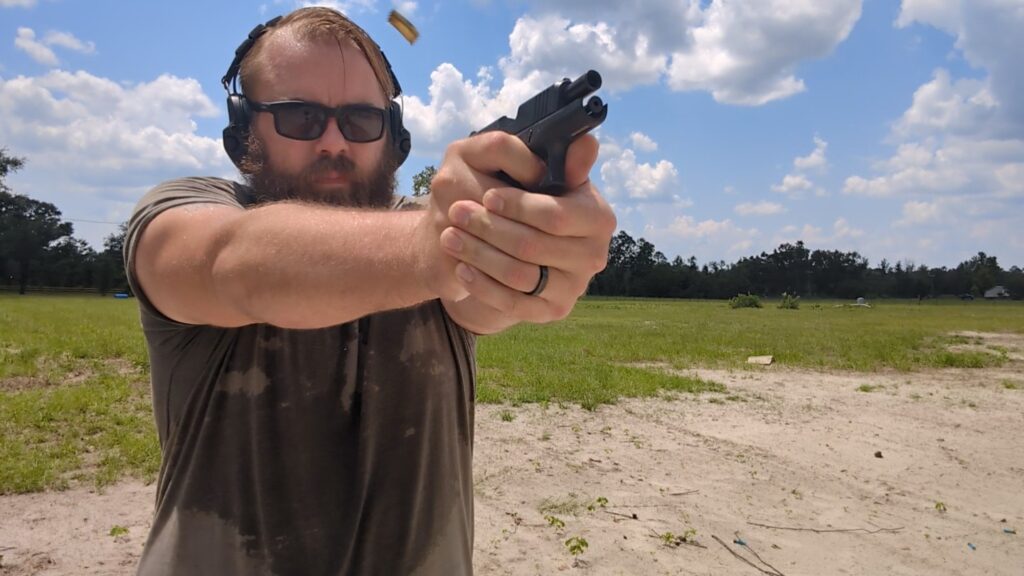
When we backed up to 25 yards, I found that I was more accurate with the Glock. When I calculated my hits and misses, the Glock had fewer misses. I have owned and shot the G43X for years, and familiarity is an advantage. With either gun, the front sight obscures almost the entire target so any little alignment issue is a problem.
Speed
Bill Drills is my typical speed test, and both guns performed well. As I shot the drill repeatedly and throughout the day, I found myself preferring the Dagger Micro. The G43X had slide bite, which gave me a pause at times. It wasn’t as present or noticeable in the Failure To Stop Drill or Distance Drill, but the Bill Drill is where it reared its head.
Six rounds meant plenty of bites. My early drills were the same time, which was three seconds, and some change from concealment. (I need more practice.)
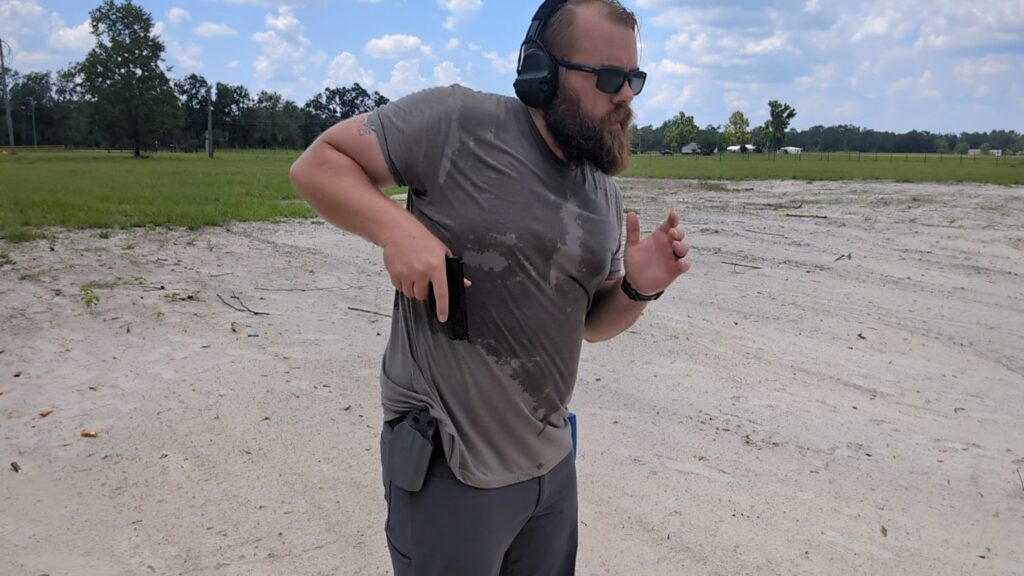
Chances are, if you’re reading this, you’re already familiar with “slide bite.” Perhaps literally, painfully so. If you’re getting your learn on, I’ll explain: Slide bite is something that happens when the rear of a reciprocating pistol slide damages the web of the master grip hand. Sometimes it tears the skin off; other times it’s more of a laceration. It’s most common when using subcompact pistols that don’t have enough beavertail, but really it could be virtually any size if the grip is too small for the shooter’s hand.
As the day and my hand wore on, the gap grew. I got a little faster with the Dagger Micro but slower with the Glock 43X. Call me a sissy, but the time climbed to 3.5 seconds while the Dagger Micro shrank to 2.9 and 2.8 runs.
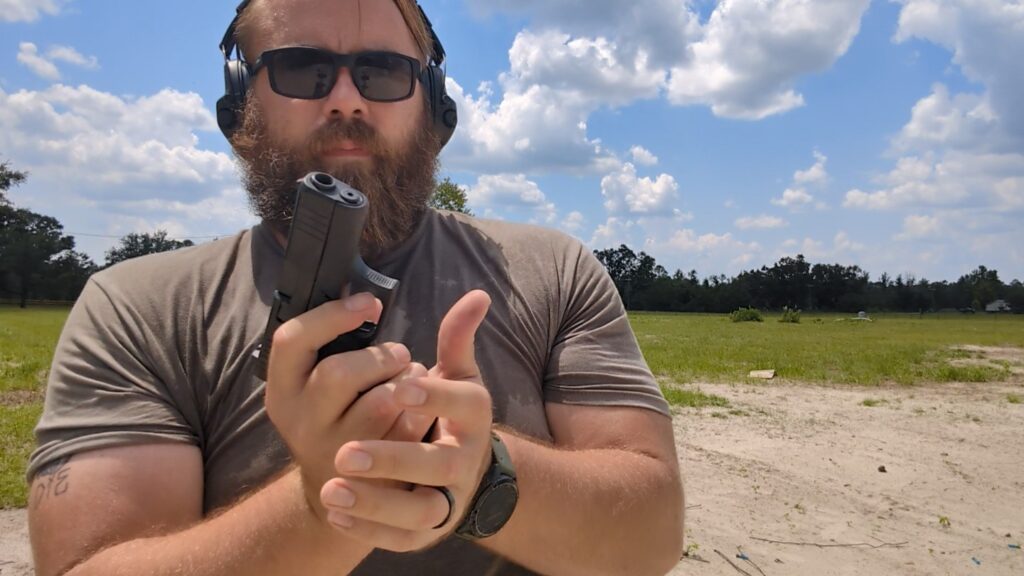
I didn’t notice any difference with reloads. The magazines drop free from each gun without a problem. I could slam fresh mags in place quickly and reload. I have a little trouble with the slide releases. I’m fixing my grip, but I tend to pin down the slide lock, rendering it useless, and keep the slide from locking open on a fresh magazine.
Comparison: PSA Micro Dagger vs Glock 43X Ergonomics
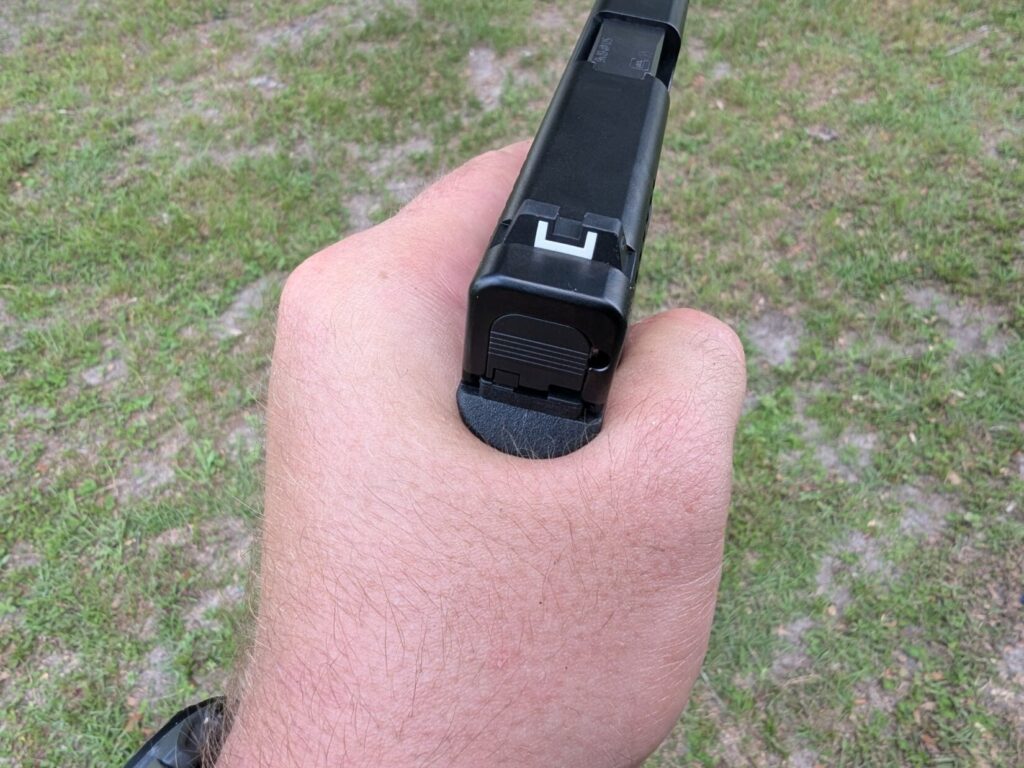
I wish I had some more dramatic differences in speed and accuracy, but there aren’t major differences. There are some slight speed and accuracy differences. The major difference is in ergonomics. Namely, the Dagger Micro uses a much longer and slightly wider beavertail-like device. This prevents slide bites and makes the gun so much comfier to shoot and enjoy.
Another big difference is the trigger. The G43X has that trigger dingus design Glock is famous for (part of the “Safe Action System”). It’s not a problem, but the Dagger Micro ditches the dingus for a two-piece trigger shoe (a hinged two-piece, like a Gen 3’s fire control group). When you fire the gun, the two-piece trigger shoe doesn’t poke your finger. There isn’t a performance issue, but I prefer the comfort level of not having my finger poked with every shot.
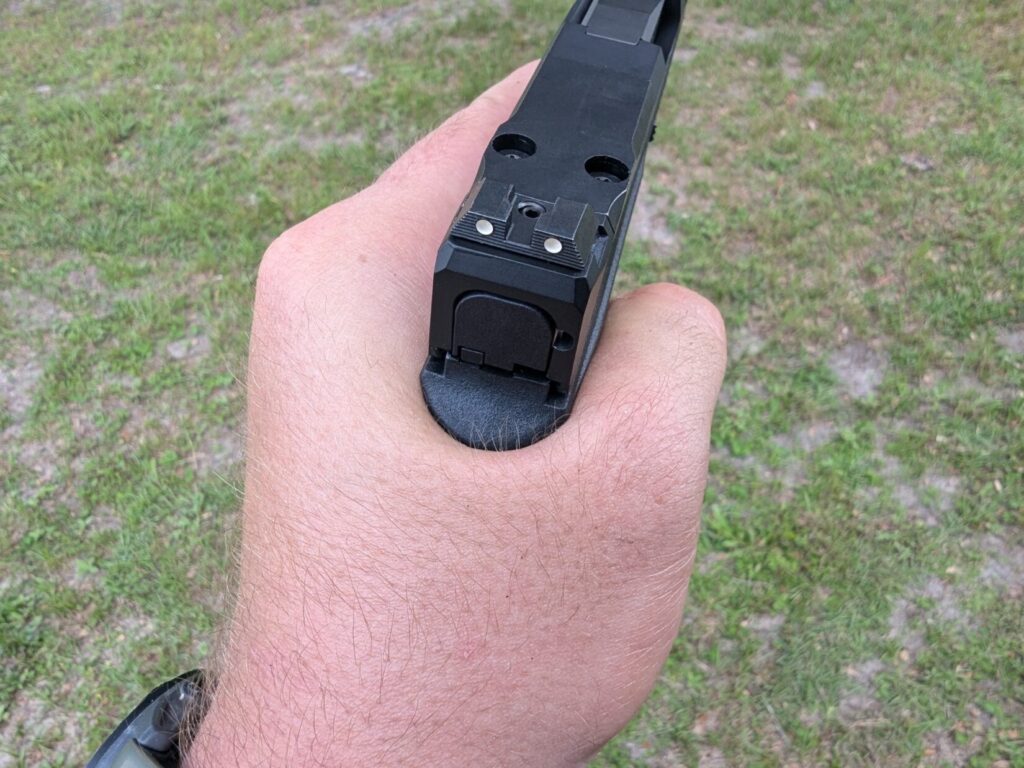
The grip texture on the Dagger Micro seems more aggressive, which, I think, when combined with a lack of slide bite, led to greater control over the gun. I’m in Florida, and it’s July, so my hands (and everything else) are soaked with sweat.
Reliability
In practice, both guns worked reliably. With the Dagger Micro, I had one failure to fire. I ejected the round but reloaded it and tried it again, and it fired. Other than that, the guns remained identical in performance.
If you asked me just to pick one and give it the reliability nod, I’d say Glock 43X. The main reason is that Glock has been producing firearms for decades, and they have a fantastic reputation for reliability. But that doesn’t mean I wouldn’t carry a Dagger Micro!
⚠️ The Glock Vault
This article is part of our comprehensive database. Jump directly to:
Price
Another major factor in anyone’s budget is price. The Dagger series made a huge splash for its low price point, and the Micro Dagger follows suit. The RMSc cut model retails for $339.99, which is super affordable. The Glock 43X MOS retails for $485, and the G43X standard sells for $448. I’m using PSA for price comparisons.
Micro Dagger vs Glock 43X: Final Answer?
From my findings, the guns are nearly identical. They don’t have larger performance gaps. The main selling point of the PSA Dagger Micro is its better ergonomics and lower price. The selling point of the Glock 43X is Glock’s legendary performance with police and military forces worldwide.
Which would you pick? Regardless of which, trust Safariland to provide you with the best holsters on the market.