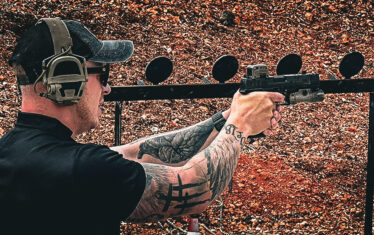

In mid-March 2026, I got to spend two days training and shooting with Rick Hogg of War Hogg Tactical. Mr. Hogg teaches a variety of free courses for law enforcement officers, and he was kind enough to invite me along for the ride. The class was a 2 Day Police Marksmanship CQB course with a room-clearing component.
This was a two-day, 16-hour course shot at the beautiful TNARA Operations Group facility right outside of Tampa, Florida. The class consisted of 12 hours of live fire training with both pistol and rifle, with a simmunitions-based room clearing event held during the last 4 hours of the course.
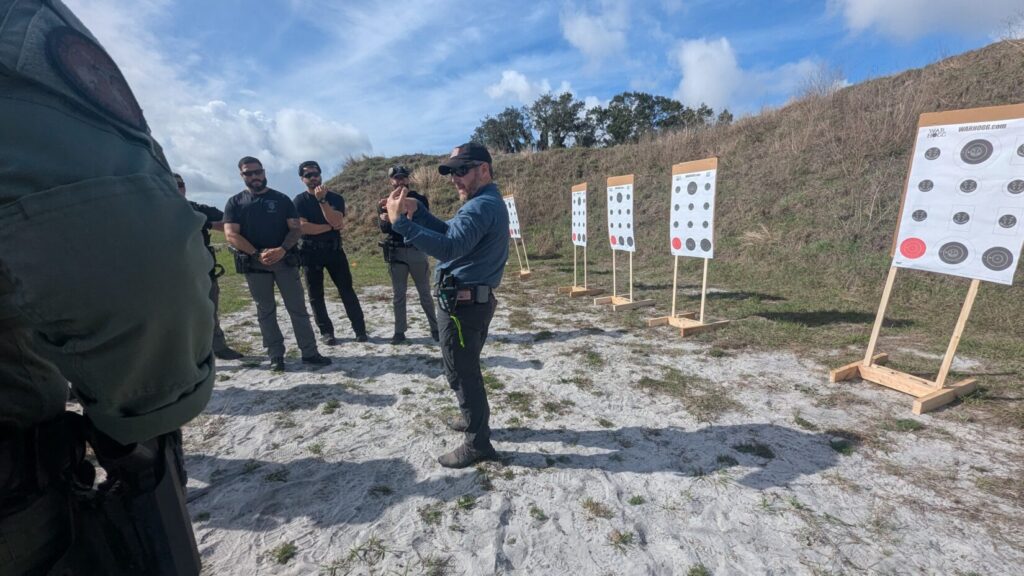
I have trained with Rick before and knew this would be reality-based, data-driven, and purpose-tested. Mr. Hogg served for 29 years in Special Operations before starting his training business. He is a modern shooter who recognizes modern tactics and equipment and instructs accordingly.
My Marksmanship CQB Loadout
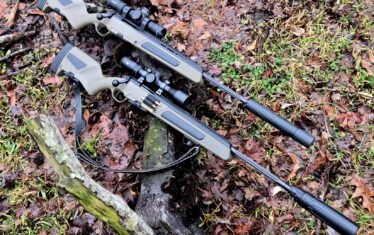
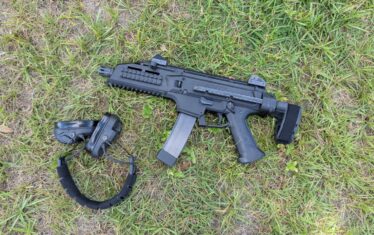
I went to the course with two rifles, the SIG MCX and BCM/Colt AR-15. The purpose of the two rifles was simple. The simmunition course used simmunition bolts, and I did not have one for the MCX. Plus, if the MCX broke, I could use the AR-15.
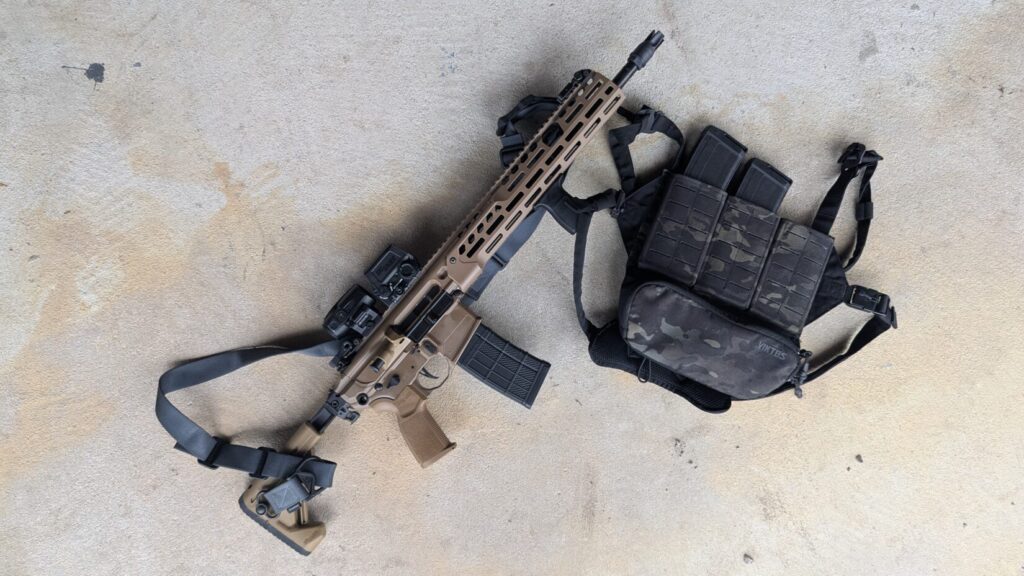
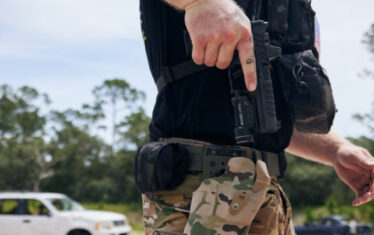
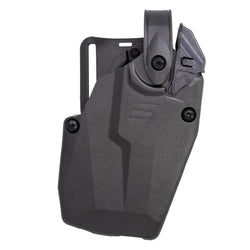
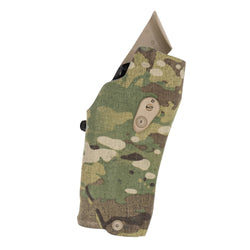
My sidearm was a Glock 17 Gen 6 equipped with a red dot. I use a Safariland Level 3 holster, the 6360RDS to be specific. The rifles used a Magpul MS1 sling, Daniel Defense DD32 magazines, a Viktos chest rig, and 500 rounds of .223 and 9mm remanufactured ammo from Ammunition Depot.
The SIG MCX used a Romeo8T-AMR red dot with a Juliet3 magnifier, and the Colt/BCM utilized a Holosun 512C red dot.
How War Hogg Tactical Trains
If you take a class with Rick Hogg, you can expect to go through a high-intensity, fast-moving course with lots and lots of range time. Rick teaches from a reality-based mindset. What you do in the course is reflective of real life.
This comes down to everything from how to shoot your rifle to what you aim at. You are not shooting B-27s with a center mass target. You are shooting the upper thoracic on the target, where the hits will matter.
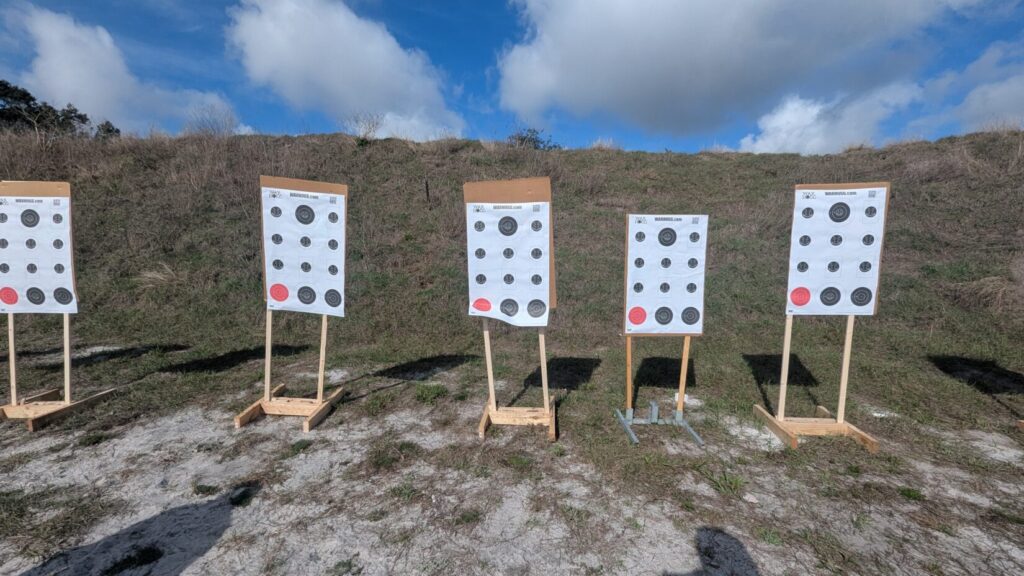
Every part of the class is designed to build on the last part. What you do for the first drill leads to the second, third, and beyond. Eventually, what you learned in the class translates directly to clearing rooms. For each drill and exercise, Rick explains and then demonstrates. The students then practice the drill dry a few times, and then they go live.
It is not so much a class as it is an evolution. We worked on the basics, like height over bore, shot calling, and the rifle to pistol transition, shot placement, and multiple target engagements. The principle is simple: start with basic tasks and go block by block to ramp up the training tempo and performance.
The Final Half
Near the end of the course, we worked on moving and shooting, moving and transitioning between rifle and pistol, multidirectional movement with multiple targets, and more. The class moved just fast enough to ensure every student got personalized attention from Rick during each drill.
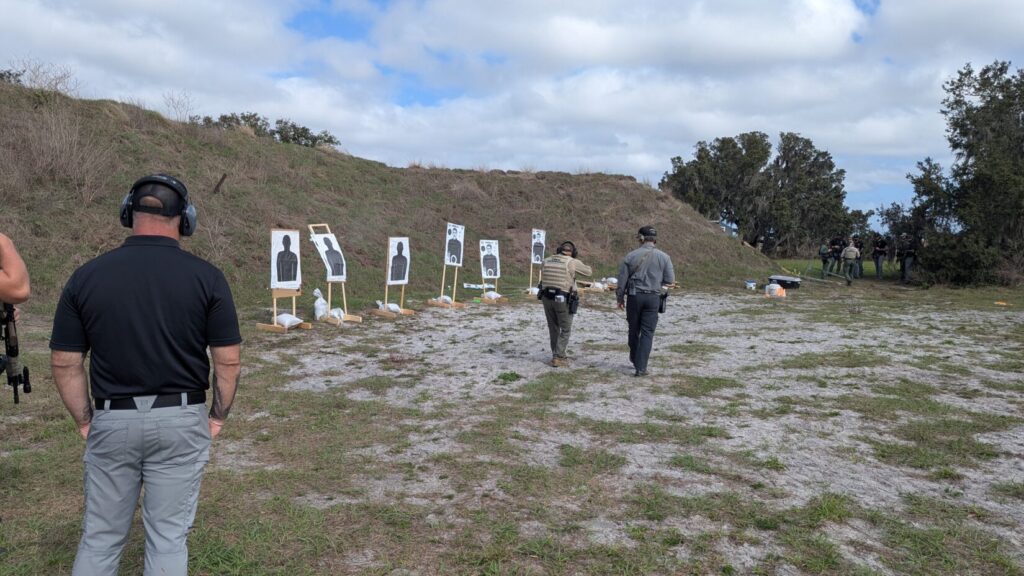
Where Rick draws his energy from is unknown to me, but he is constantly instructing, running up and down the line, shooting demos, and keeping spirits high. The final half put us in a shoot house where we cleared a variety of rooms. Like before, we started slow, doing the basics a bit at a time. By the end, we were clearing rooms one by one in ad-hoc teams.
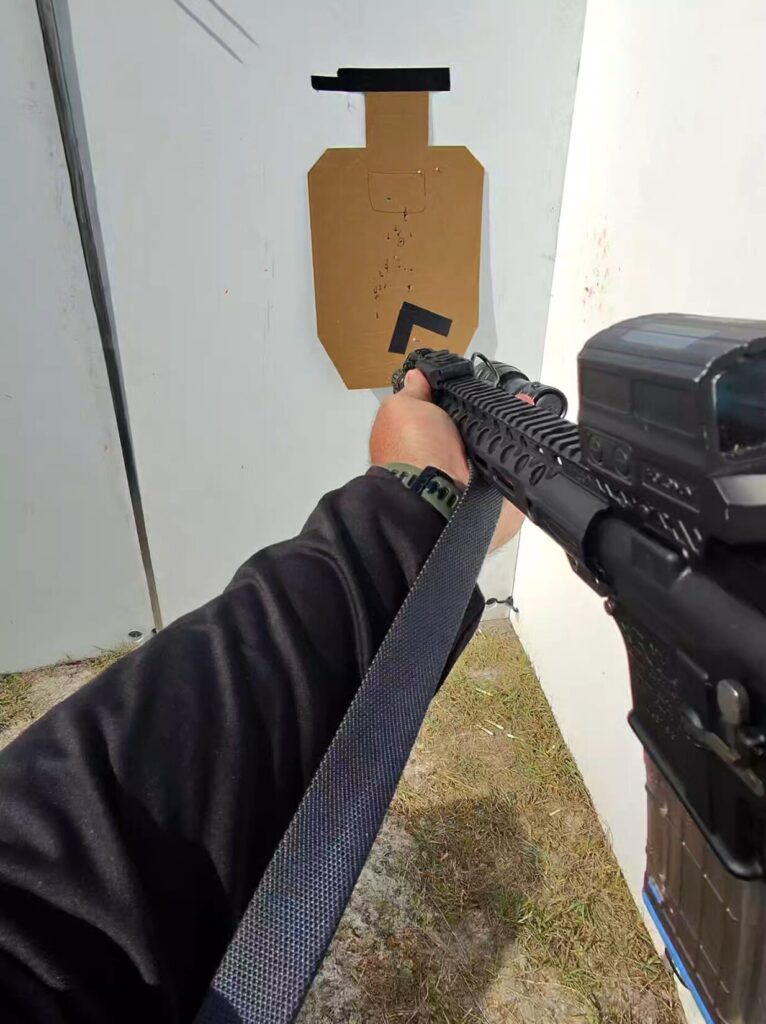
The drills we learned on the range directly translated to our room-clearing effectiveness. We used the training we were taught to move and shoot, to put our shots into effective places, and to do it all quickly and efficiently while our team moved around us.
Big Boy Rules
This course uses big boy rules when it comes to firearms handling and running drills. Safety is always paramount, but it also treats adults like adults. It is not a class for beginners who cannot master basic safety protocol. You are held to a standard, but you are not babied.
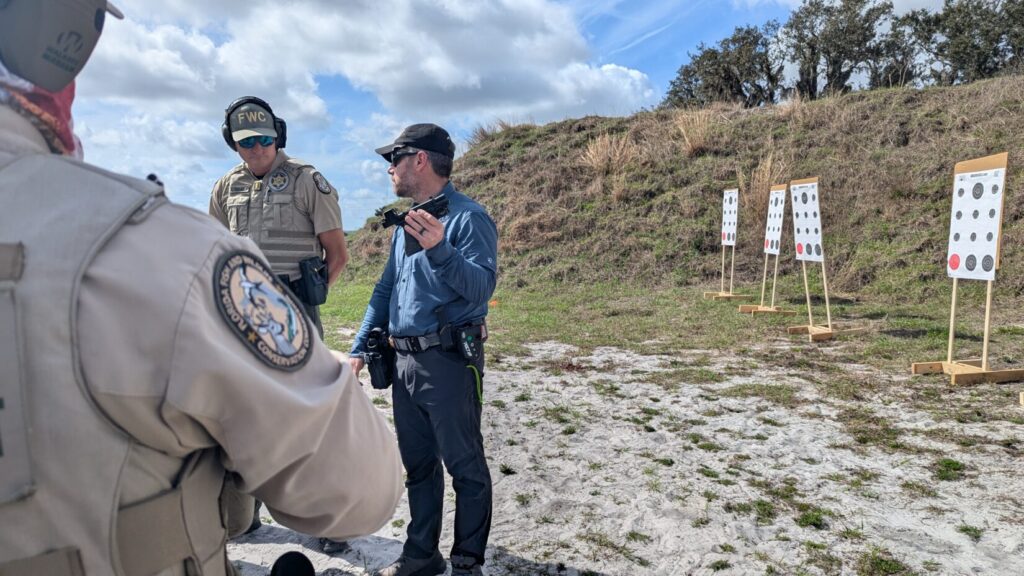
They do not shut the line down when you have a malfunction; you clear it and keep going. Those big boy rules extended into how we trained. For every drill, we had a handgun strapped to our waist. If your rifle malfunctioned or ran dry, you did not stop training. You transitioned to your handgun and completed the drill.
This standard makes transitioning to your handgun less of an exercise and more of a natural motion. When you incorporate it naturally into your training, it becomes a habit rather than just a drill. This approach flows throughout the entire process, turning skills into shooting habits.
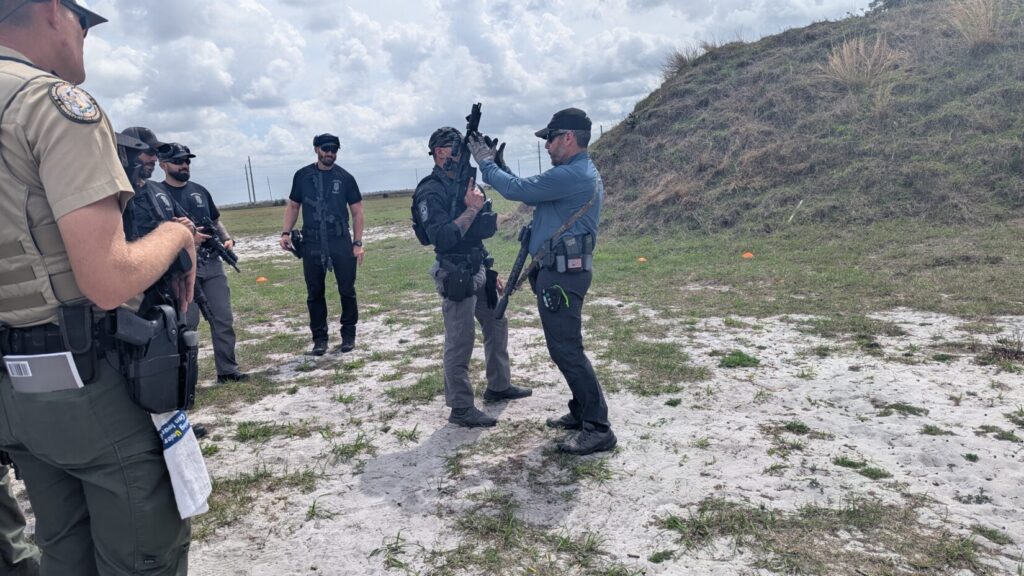
A Data-Driven Approach
A big part of Rick’s philosophy is using a data-driven approach. His Firearms Training Notebook is given to each student before the class starts. As the class continues, the notebook is employed to capture data for each drill.
The data comes from the target, a shot timer, and the shooter themselves. The idea is to capture times and accuracy to help diagnose flaws in your shooting. I recorded my split times, and in those split times, I noticed that I continually got faster as I shot longer drills.
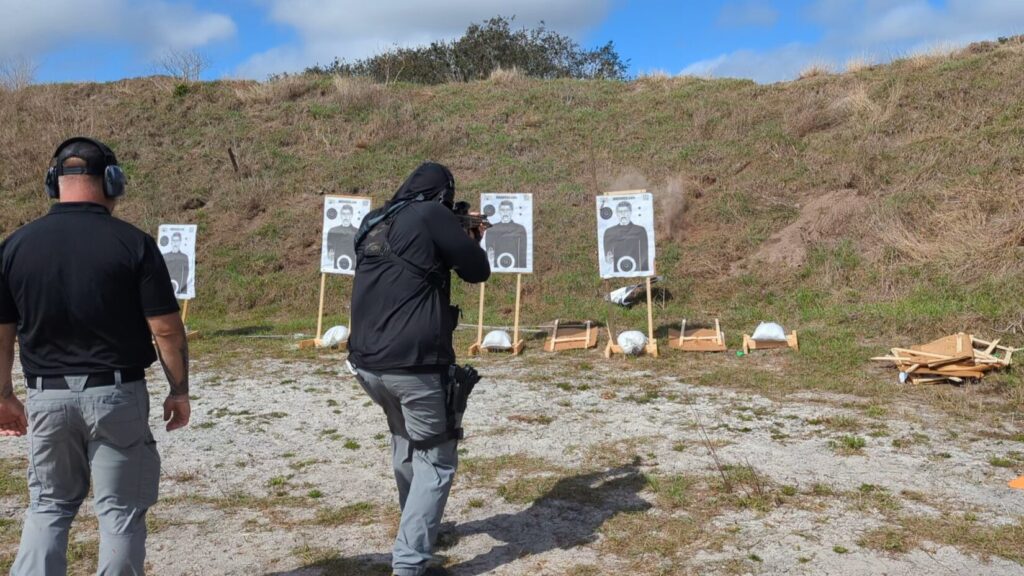
Beyond instant diagnoses, we can use the Firearms Training Notebook and Rick’s data-driven approach outside of class. We record our times and note our improvements or degradations. We can apply this approach to any drill or skill to build our capabilities a little bit more every day.
The Thinking Man’s Class
Classes with Rick Hogg are designed to get you to think. Think about how and why you shoot, think about your gear, your guns, and everything you are doing. You should know exactly what you are doing in all aspects of shooting.
This is a class that encourages shooters to think, to treat the class and training as if they were on the street. It pushes you to ramp up your performance until the wheels fall off so you can diagnose your faults and get better. Classes with War Hogg Tactical are a thinking man’s class, so bring your brain with your gear.
Be sure to check out Rick’s War Hogg Skill Builders, and if you haven’t already, subscribe to our newsletter to get new Skill Builders in your inbox every month.