
Hornady makes some of the highest-quality defensive and duty ammunition in the marketplace. Their Custom line, featuring the hard XTP bullet, excels in Magnum calibers. The Critical Defense line boasts good expansion and penetration with short-barreled and smaller caliber handguns.
The Hornady Critical Duty line is made with law enforcement in mind. This bonded polymer-tipped hollow-point is aimed at providing good penetration through intermediate barriers while delivering fight-stopping performance on the intended target.
For your consideration is our evaluation of the Hornady Critical Duty 9mm 135 grain load.
What’s In the Box?
The Hornady Critical Duty 135 grain 9mm Luger round ships in boxes of 25. The rounds use a nickel-plated case instead of conventional brass casings. Many premium self-defense ammunition uses nickel-plated cases for added corrosion resistance. Hornady maintains its use for easy-to-see low-light press checks.
The FlexLock bullet has deeper flutes at the nose than the Critical Defense line. The bullet itself uses similar Interlock technology as Hornady’s rifle ammunition and a harder lead alloy for a bullet that is hardened to penetrate barriers, while its polymer plug allows for ready hollow point expansion.
To +P or Not +P
When I first learned of the Critical Duty load, it was through a source that specified the +P 135 grain load was adopted by the Texas Highway Patrol when that agency transitioned from the .40 S&W back to 9mm.
The Critical Duty load is available in a higher pressure +P loading or a standard pressure load with the 135 grain bullet. Hornady lists the +P option at 1,070 feet per second, while the standard pressure load is at 1,010 feet per second with a 4-inch test barrel.
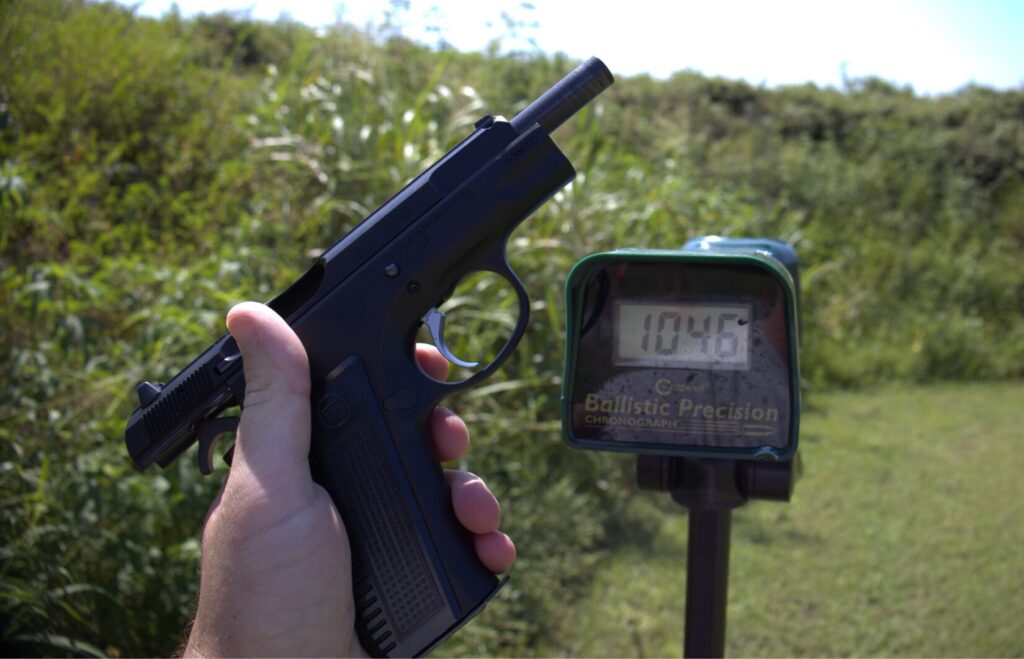
Out of my 4.6-inch CZ 75, I clocked the +P load at a five-shot average velocity of 1,114 feet per second. The standard pressure load came in at 1,066. That is a difference of 48 feet per second, which can be the variation from one round to the next with traditional ammunition. Between the two, there is a little more muzzle rise with the +P.
Boarding Up
The Hornady Critical Duty round is differentiated from the Critical Defense line due to its barrier penetration abilities. To put that to the test, I set up a few tests with competing brands. I fired the Critical Duty standard pressure load alongside the Critical Defense 115 grain load from a distance of 10 feet. The target was a stack of three pine 2x4s.
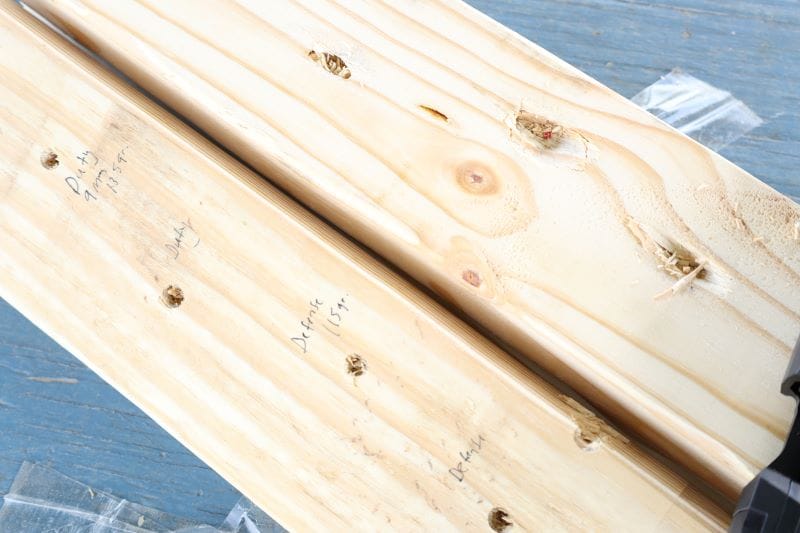
Two rounds of each were fired. The Critical Defense rounds quickly expanded and stopped in the second 2×4, while the Critical Duty rounds stayed intact and penetrated to the back of the second board.
The difference was an extra inch. Clearly, they had more energy to go deep.
Hornady Critical Duty Gel Test
To test the Critical Duty load on a representation of the intended target, I shot the round into Clear Ballistics 10% ordnance gel. I lined three 9-inch blocks end to end and dressed them with four layers of denim, which represents the toughest possible fabric in the most awkward shot, such as through an arm into the chest cavity of an assailant.
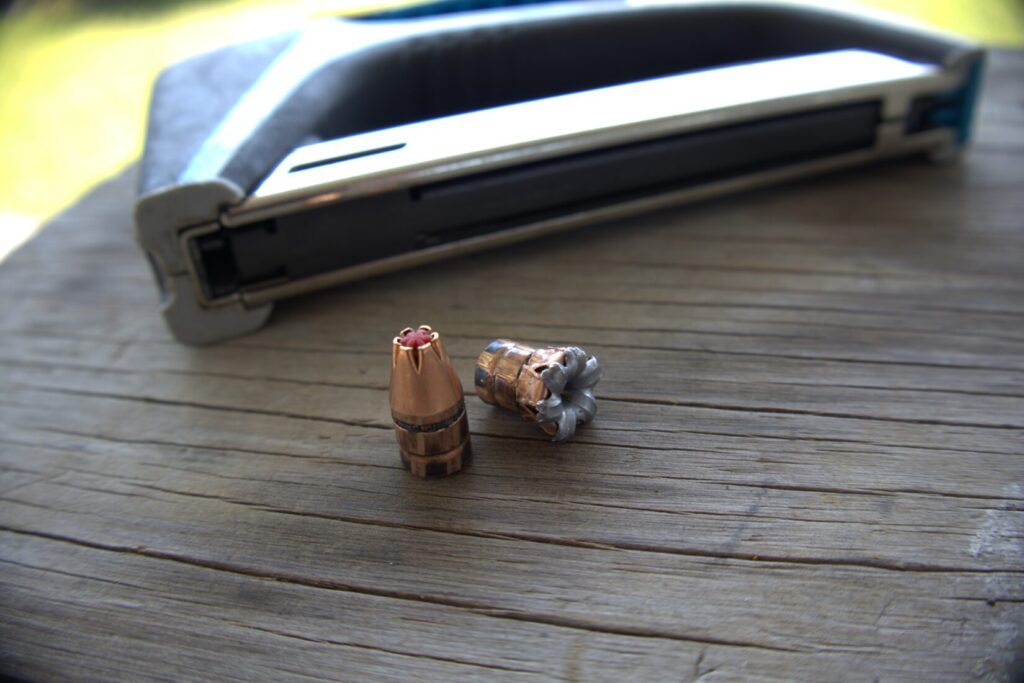
One round sailed through all 27 inches of gelatin and kept going, leaving a moderate wound track. A second round mushroomed out to .42 inch and lost its jacket before stopping at 19 inches. A third failed to expand and came just an inch and a half short of exiting the third block. It landed base first at 25.5 inches.
Good penetration through barriers ended up equaling more penetration through the gelatin.
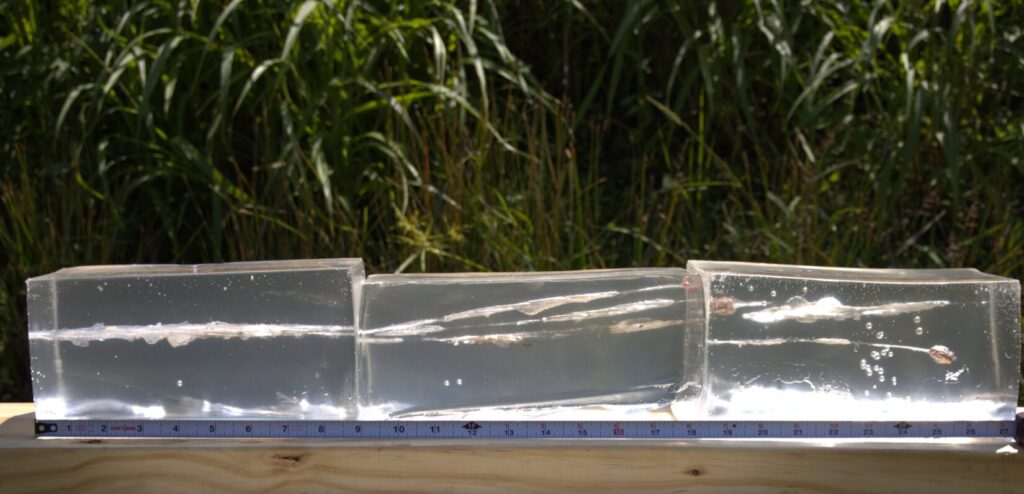
The FBI set a minimum for duty ammunition at 12-18 inches through ballistics gel regardless of the fabric medium. This is to ensure adequate penetration when a bullet has defied fabric and bone, even though an actual person’s vitals may not be as far if we were to tape ourselves.
The Verdict
This performance profile comes down to specific engineering priorities. Heavy clothing like denim can clog conventional hollow points and inhibit expansion. Hornady’s FlexLock polymer insert was designed to reduce this clogging, helping the hollow point cavity continue functioning after passing through barriers. However, Critical Duty also uses a hard, high-antimony lead core, a thick jacket, and Hornady’s mechanical InterLock band, all intended to preserve bullet integrity through FBI test barriers. It is behaving as designed.