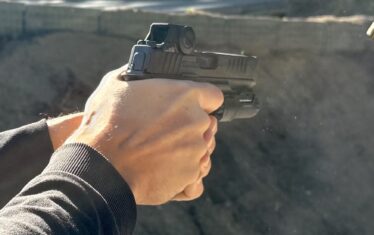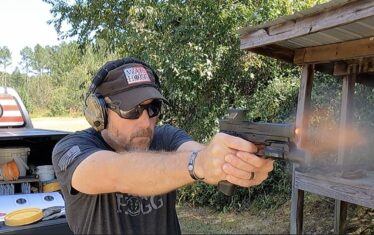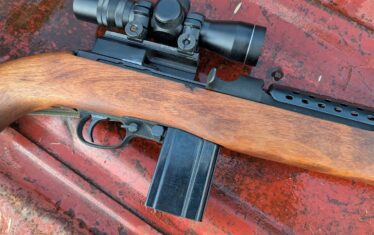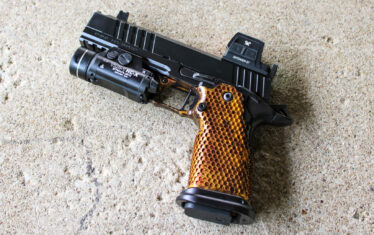

The 1911 platform has been on the commercial market for over 100 years, and the emergence of the double-stack 2011 has solidified the design’s continued popularity in the age of the striker-fired polymer pistol.
There have been precious few changes to the base design, but over the years, small improvements and changes in manufacturing have made a measurable difference. Among them is the shift from Series 70 pistols to Series 80 models. Both remain popular, and the design has continued in production for 1911 handguns as well as 2011-style models.
But what is the difference between a Series 70 pistol and a Series 80 pistol? Follow along as we explore both and what it means for you before you buy.
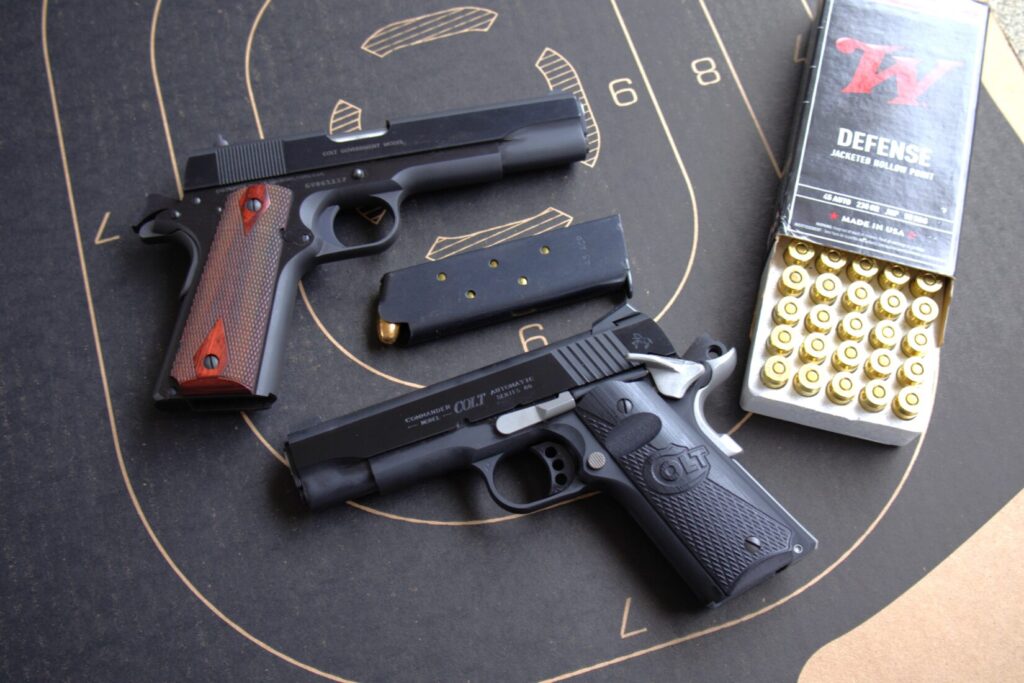
The 1911’s Long Initial Run
The 1911 is marked by very few design changes since it was adopted by the US Cavalry in… 1911. The original model served well through World War I, but in 1924, an improved M1911A1 version was adopted. The M1911 had fine sights, a flat mainspring housing, and a grip safety that was long but with a beavertail that was too short to protect the hand from hammer bite.
The A1 model features enlarged sights and an arched mainspring housing, as well as a protective beavertail and a smaller grip safety. It was the A1 model that saw service in World War II all the way until the mid 1980s when these worn-out models were replaced in service by the new Beretta M9.
On the commercial market, these improvements were also available, as well as different calibers and sight arrangements. But the military and commercial guns during most of this span of time, lumped into a category known as Series 70 pistols, had one potential problem: they were not completely drop safe.
The Problem with Series 70 Pistols
John Browning intended for the M1911 to be carried fully loaded, with the grip safety acting as a passive safety to nullify the light trigger pull while holstered. The manual safety was added to satisfy military requirements and increased the margin of safety. Still, the pistol was intended to be carried with a full magazine and a full chamber. But like most designs of its day, the M1911 lacked drop safeties that come on modern pistols.
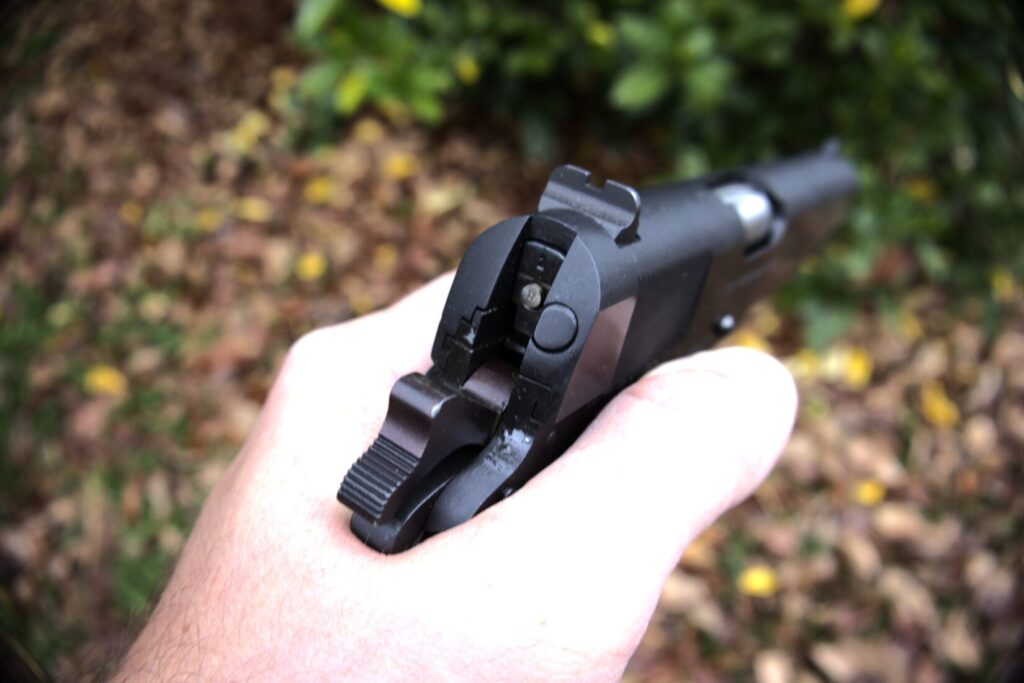
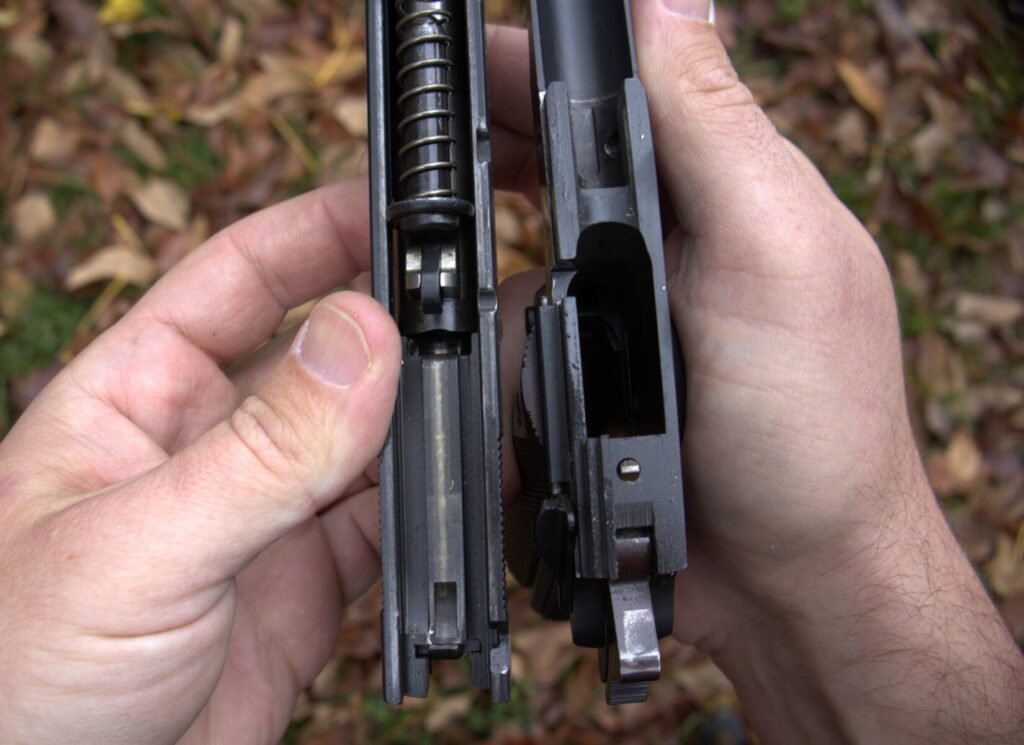
Series 70 1911s have a half-cock safety designed to catch the hammer in case the thumb slips while cocking the pistol. They also have a spring-loaded firing pin so the pin itself does not rest against a live round in the chamber. The only problem with this arrangement is inertia.
Inertia happens when a sudden stop occurs, and movable parts continue to move. In an auto accident, the vehicle can come to a sudden stop, but your body can keep moving until you are stopped by your safety belt. When a pistol is dropped, the movable parts could budge.
The 1911 is not so poorly designed that the trigger could pull itself under inertia when dropped. The half-cock and full-cock positions of the hammer are also not the glaring problem. Rather, Series 70 pistols are vulnerable to discharging when dropped on the muzzle. In that scenario, the pistol stops on its muzzle, but the firing pin will keep moving. If it overcomes the pressure of its spring, it can discharge the pistol.
The military effectively gave up the ghost with the design, as the US Army mandated carry with an empty chamber. Some of the justifications for that policy were from negligent discharges. George S. Patton famously went back to his revolvers in his early days, as he suffered a discharge by carrying around his 1911 without a holster. But no doubt, some of the problems were accidental discharges from being dropped.
In the 1970s, the industry faced lawsuits involving accidental discharges. This coincided with a resurgence of the 1911 platform due to the growing popularity of competition shooting. In response, a modernized ‘Series 80’ design was launched in 1983, incorporating new internal safety mechanisms to prevent such incidents.
The Series 80
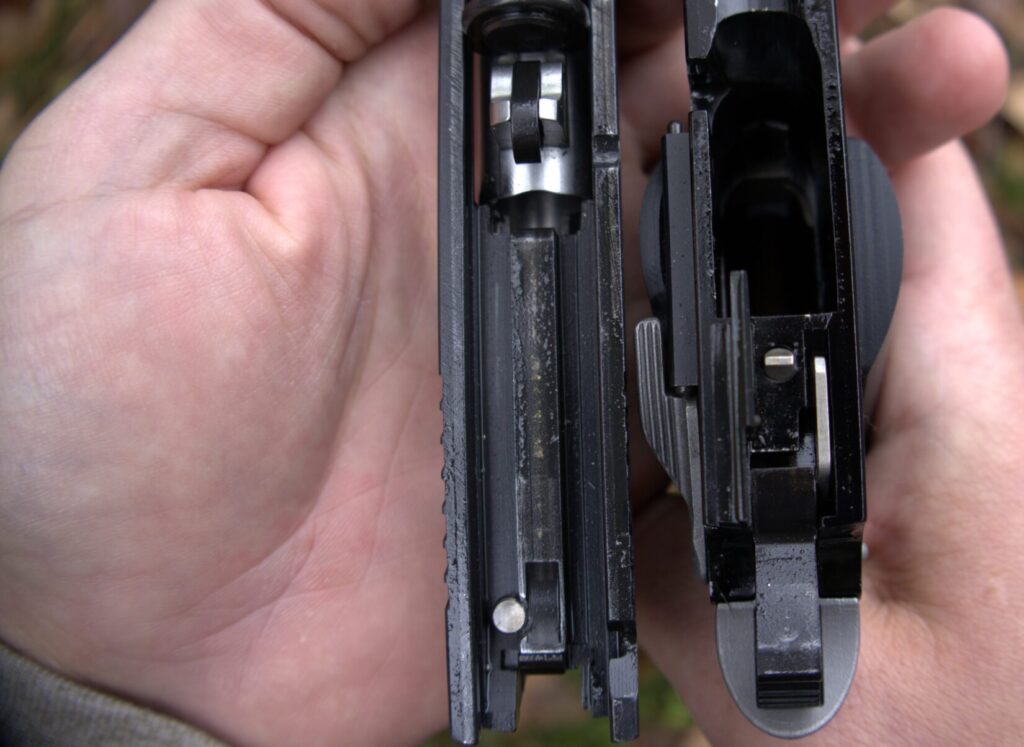
Series 80 pistols have become the standard 1911 platform for most makers of the 1911. The only difference between a Series 70 and Series 80 handgun is the addition of a firing pin safety system. This includes a firing pin plunger that physically blocks the firing pin channel, as well as a plunger and trigger lever that moves the block out of the way when the trigger is actually pulled.
Why Is There Debate?
The Series 80 is a completely drop-safe design and generally stays true to Browning’s design. For adherents to the faith and dedicated carriers of the 1911, it should have been a win-win. But there are still those who prefer Series 70 guns. That begs the question: Why do some prefer the Series 70 when the Series 80 is objectively better?
The answer lies with the trigger pull itself. The addition of the plunger and levers makes for a slightly spongier and heavier trigger pull. Tuning a Series 80 gun is possible to do, but the trigger pull on those models generally cannot compete with a Series 70. Furthermore, the lack of those parts makes the Series 70 that much easier to tune.
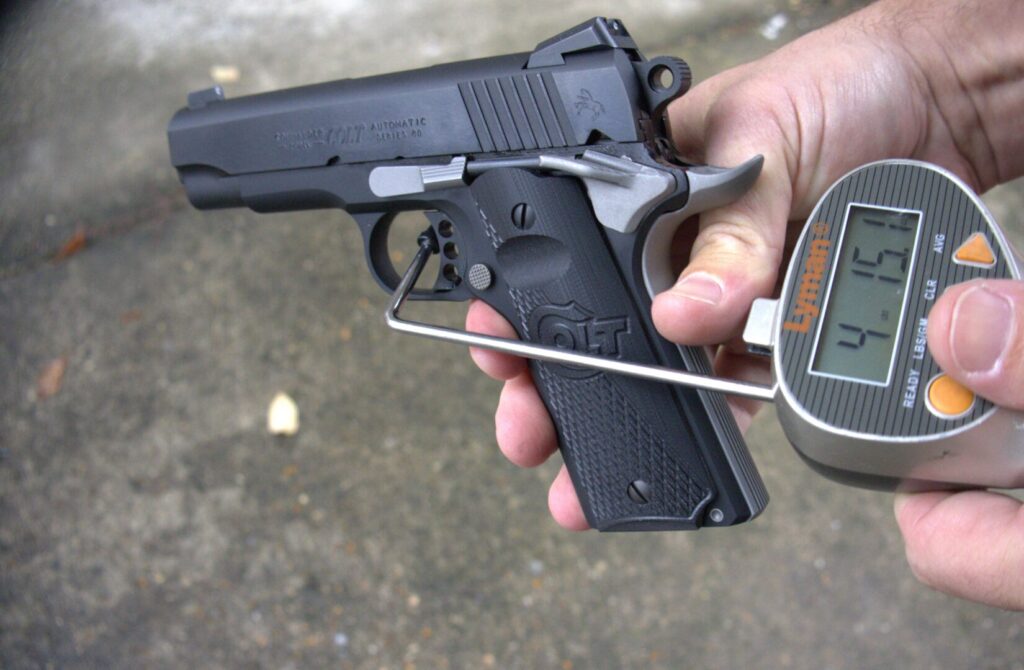
A lighter trigger pull is of little consequence for concealed carry or duty use, but for those who enjoy target shooting, handgun hunting, or shooting competitively, a Series 80 pistol behaves like a completely different piece of gear compared to a Series 70.
1911s and 2011s: Series 70 and Series 80?
Another reason the debate continues is that both types are still very much in production. Some early adopters of the Series 80 design initially suspended production of the older style, but have since reintroduced them as replicas. While “Series 70” and “Series 80” were originally specific brand designations, they have become industry-standard shorthand used by nearly every maker of this platform. It is not always obvious which version you are getting without researching the specific model or inspecting the internals at the gun shop counter.
Both types are well-represented across the industry. High-volume manufacturers often stick to the simpler Series 70 style for their standard military-spec models. Other major producers choose the Series 70 for its superior trigger feel but incorporate a lighter titanium firing pin and a heavier spring to ensure the firearm remains drop-safe. Double-stack 2011s add a new wrinkle as higher-end competition pistols are coming back into vogue for everyday use.
The choice between Series 70 and Series 80-style pistols is abundantly clear. If accuracy and fast shooting are the name of your game, the former is a no-brainer. But for everyday carry, the Series 80 brings more peace of mind.