
For a lot of people, purchasing a firearm for self-defense can feel a little scary, or at the least, make you feel anxious. I grew up around firearms so using them for hunting, sports, and self-defense feels natural. But it’s okay if owning a gun doesn’t feel natural or even feels overwhelming at first.
A lot of people make the decision to purchase a firearm for safety reasons. You want to know that you can protect your family if the unthinkable happens, right? But there is often a tension or uneasy feeling that can exist for new or inexperienced gun owners. From my experience, this uneasiness often relates to the conundrum of keeping a firearm “safe” but also ready to use.
Can a loaded firearm be a liability? Yes, when safety standards are not followed, it can. On the other hand, a gun locked away in the safe during a home invasion is absolutely useless.
The truth is that firearm safety and defensive readiness are not opposing forces. When you follow rigorous safety habits, a firearm stops being a “scary” object and becomes a professional tool. This transition from fear to confidence is built on the foundation of the four universal safety rules. By internalizing these, you create a mindset where safety is automatic, not an afterthought.
Ultimately, balancing these two worlds requires a shift in perspective. You are not just a gun owner; you are a safety manager. By prioritizing education and safety control, you ensure that your means of protection never becomes a source of danger to those you love.
Defensive Readiness in the Home
The goal of home defense is to have a tool available when seconds count. However, “ready” does not mean “careless.” If you have children, frequent guests, or roommates, your storage solution must bridge the gap between accessibility and security.
True Story: Two intruders startle a sleeping homeowner
Not long after I graduated from the police academy, an old friend called and asked for some advice on purchasing a handgun. He was unfortunately the victim of a burglary gone worse. You see, most burglaries take place during the day, when burglars assume you are gone. In this case, my friend had stayed home sick while his wife went to work.
He said the sudden “smash” of the door woke him up instantly, and he could hear two people talking in hurried tones. The realization that someone was actually in his home took a minute to set in. He felt a little confused and couldn’t think exactly of what he should do. Another thing he noticed was that his heart was racing so fast he was out of breath.
Sounds were coming from the other room, and the two intruders were obviously rummaging around. His phone was on his nightstand, but he was having trouble unlocking it and dialing 911.

At some point, he was able to call 911 but was too scared to say anything because the intruders would hear him. As he heard a dispatcher answering the phone, he looked around the room for something to defend himself with.
There was nothing but a piece of a 2×4 holding up part of a temporary shelf he had put up. As he grabbed the 2×4, the shelves all fell from the wall, sending everything on them crashing to the floor. The noise spooked the intruders enough that they ran out the front door and took off.
Shifting from Vulnerability to Preparation
Once a police report was made and his heart rate slowed back down, my friend decided he needed a handgun in the home. What if the two intruders had charged at him instead of running off? Or what if it had been his wife at home instead of him?
When I met him at the gun store to help him pick out his first handgun, he was still visibly shaken. He was also determined not to be in a vulnerable position like that again.
Once he purchased the handgun (a Glock 19), we headed to the range for some practice. This was all new to him, and he admitted that guns intimidate him a little. But after covering some basic gun safety and then putting some rounds down range, he was handling the Glock like a champ. His wife also came to shoot because they both planned to use the Glock 19 for home safety.
But their first purchase after buying the gun was a heavy dial-access safe for their bedroom. We talked about the hurdles this would cause, and over time, they made corrections. I’ll talk more about this shortly.
Carry Habits and On-Body Safety
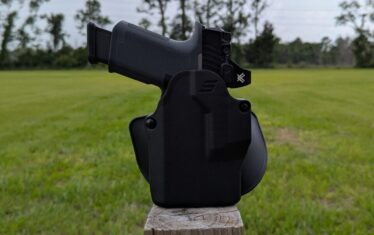
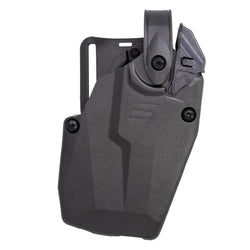
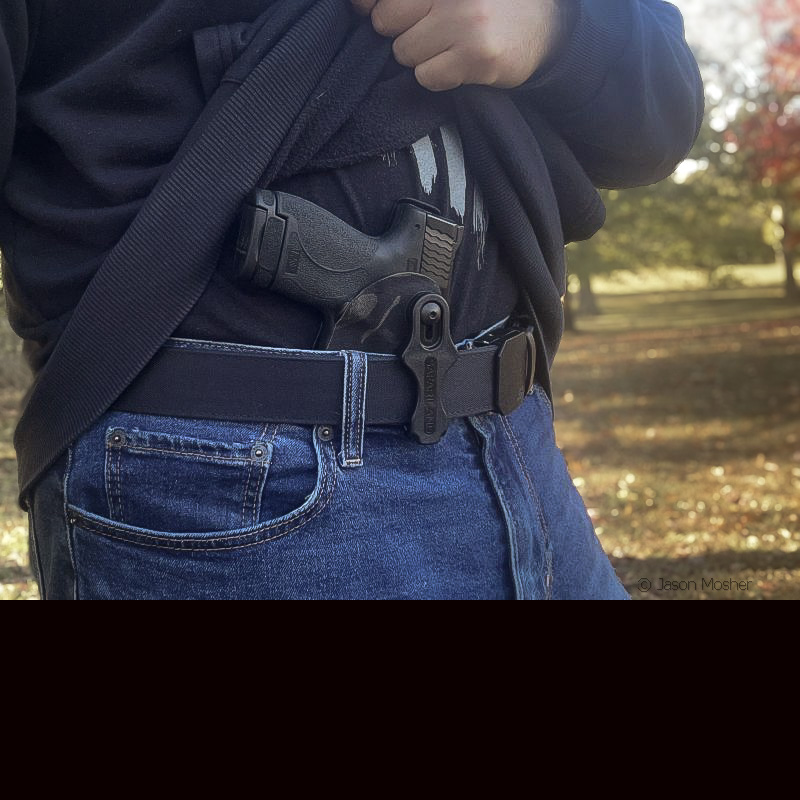
When you transition from home to public spaces, the balance of safety and defense moves to your holster. Carrying a firearm on your person is much different than having one stashed away somewhere at home. To make a gun “safe” while carrying, you must start with a good holster.
I’ve mentioned before that one of my first holsters after getting my concealed carry permit was a cheap nylon holster. This was back when holsters were mostly leather or nylon and holster retention wasn’t really a thing most people were aware of. As a new member of the carrying community, I purchased a holster from the bargain bin and went home proud of my money-saving skills.
As I walked up the steps to my front door, the gun fell out of the holster and, with a “clink-clink-clink,” bounced all the way down the concrete steps. If I remember correctly, this was a Charter Arms .38 Spl that I had just purchased. At first, I was glad it didn’t go off. Then came the embarrassment that follows such an ordeal, and I looked around to see if anyone had witnessed my blunder. No one had, so I was good there. Next came the outrage at the scuff marks on my new revolver.
My point is that the quality of your holster will cause you either frustration or peace of mind that your gun is secure. For the next 25 years, I’ve refused to use anything but the best quality holsters available.
The Chambered Carry Debate
Many new gun owners who are carrying for the first time tend to carry with an unloaded chamber because of an inherent uneasiness about carrying a chambered gun.
One of my old firearms instructors in the police academy used to say, “A gun with an empty chamber is nothing more than a club.” He said this because in a real life-or-death situation, drawing and firing under stress is incredibly difficult. There will be little time for drawing your gun, racking a round into the chamber, and then confronting someone who is trying to harm you.

Having the handgun chambered and ready to fire is what makes you prepared to defend yourself. Carrying that gun in a quality holster is what keeps it safe until you need it. Without both, you are not truly safe and prepared.
To effectively protect yourself or others around you, it takes a good holster, a handgun that is ready to fire, and the skill to use it.
The Power of Regular Training and Education
There are three components to balancing firearm safety and self-defense: the physical safety devices used, a handgun that is ready to go, and the training needed to use both.
Carrying a loaded gun shouldn’t make you anxious; it should make you feel safe. When I carry, I know my gun is safe inside my holster. If I need it, it is ready to fire as soon as I draw it. Even though I still have much to learn and plenty to improve on, I have the confidence, ability, and training needed to react.
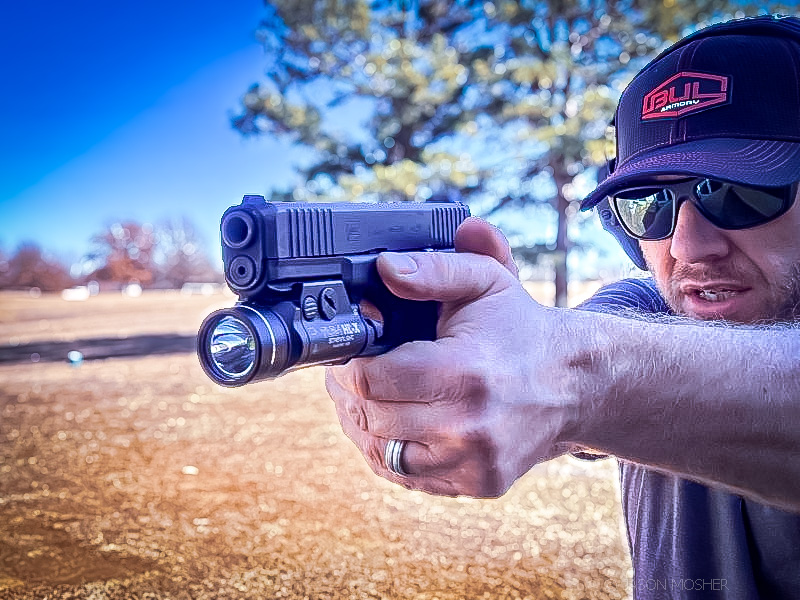
This confidence and ability to react, however, are not a gift that comes wrapped up with the gun. It is earned through repetitions at the range, dry-fire practice, and visualization of how you will react to various situations. We will talk more about the benefits of visualization in another article, so keep an eye out for that.
The bottom line is, training makes you familiar with your firearm, so it doesn’t feel like a foreign object in your hands. When you train regularly, you build up muscle memory, ensuring that firearm safety and usage become second nature.
Finding the Practical Balance
When my friend purchased that dial-opening safe, he was trying to accomplish two things. First, he felt safer knowing he had a handgun for protection should something like this happen to him again. Second the safe made him feel better about having a loaded gun in his house.
After some discussion, I asked him to run a drill for me. We unloaded his handgun and put it back in the safe where he had planned to keep it. For the drill, we agreed that a loud knock would simulate his door being kicked in like before. When he heard this sound, he would retrieve his handgun while I made my way to his bedroom.
I knocked loudly twice, entered his living room, and walked around the room twice before entering his bedroom. After a few minutes of watching him fiddle with the spinning dial on his safe, I sat down and waited for him to open it.
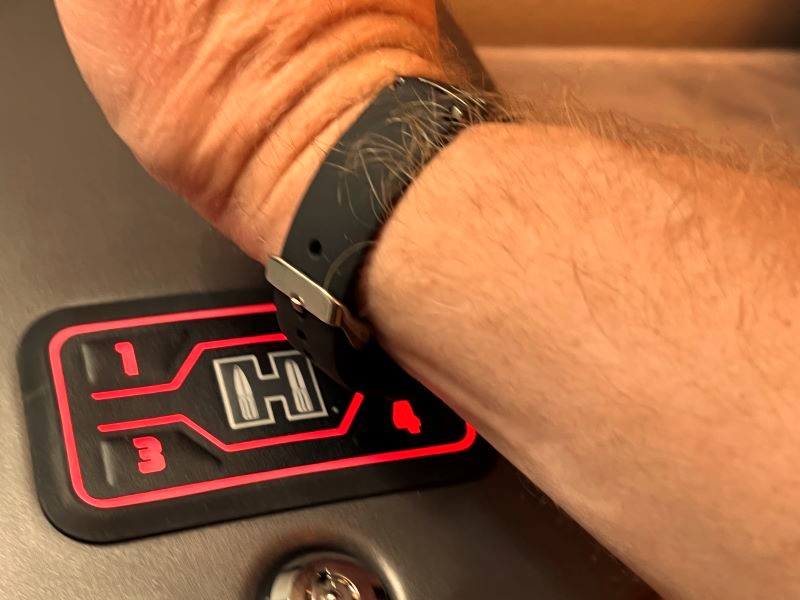
He finally realized the adrenaline rush was making him mess up and slowed down. But even with calm, steady movement, a dial combination was not a reasonable way to access a self-defense tool.
A few weeks later, he purchased a small safe that sits on the nightstand. It has fingerprint access and a bracelet with a chip in it. All he has to do is hold his hand over the safe, and it pops open in less than a second. Now he has the peace of mind that his loaded gun is “safe” but also instantly accessible for emergencies.
Finding a balance of gun safety and self-defense preparedness doesn’t mean you have to use a safe. Everyone’s environment and circumstances are different. But there is a reasonable middle ground for both.
It’s all about finding the right balance of the two. You can absolutely achieve both with a little education, training, and determination.