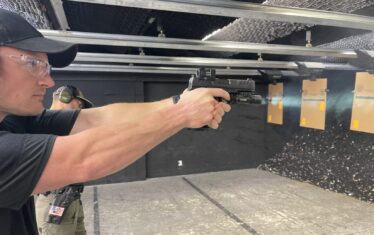

The first thing I noticed stepping onto the range at the Miami-Dade Sheriff’s Office Training Center was the energy.
It’s something you can feel immediately when a group of women in law enforcement comes together to train. There’s a quiet professionalism, a readiness to learn, and an unspoken understanding that everyone there carries the same responsibility—to protect their communities and make it home safely at the end of their shift.
My sister Tracy and I have had the privilege of working with officers across the country, but every time we step onto a range with a group like this, we’re reminded why this work matters so much to us.
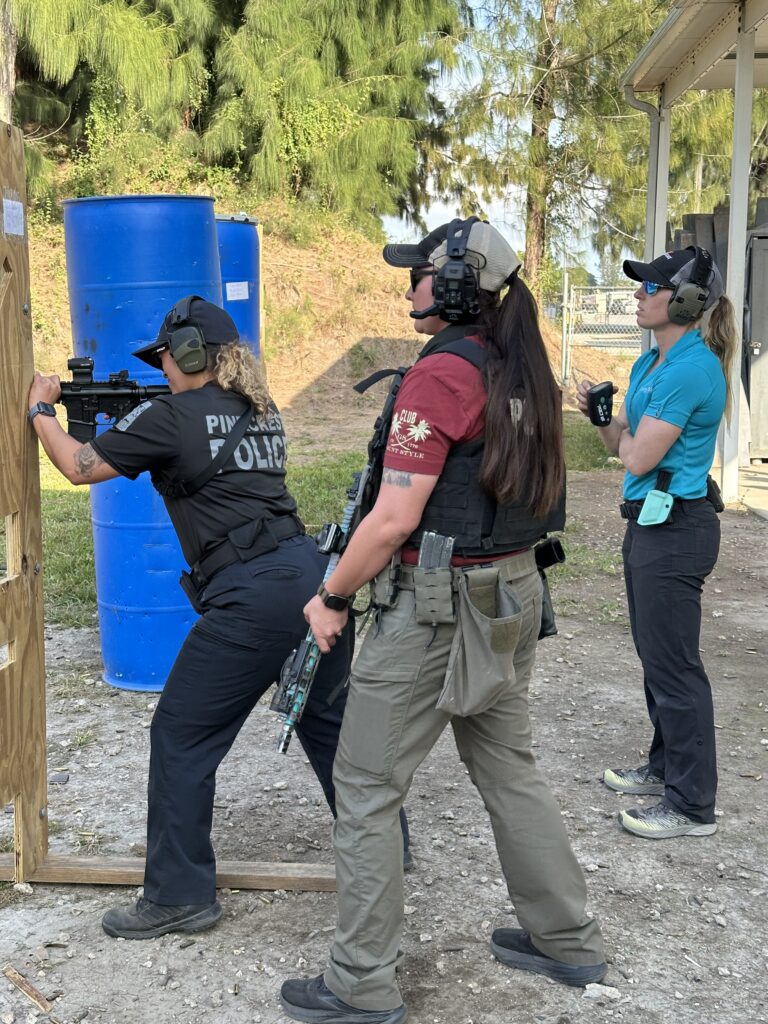
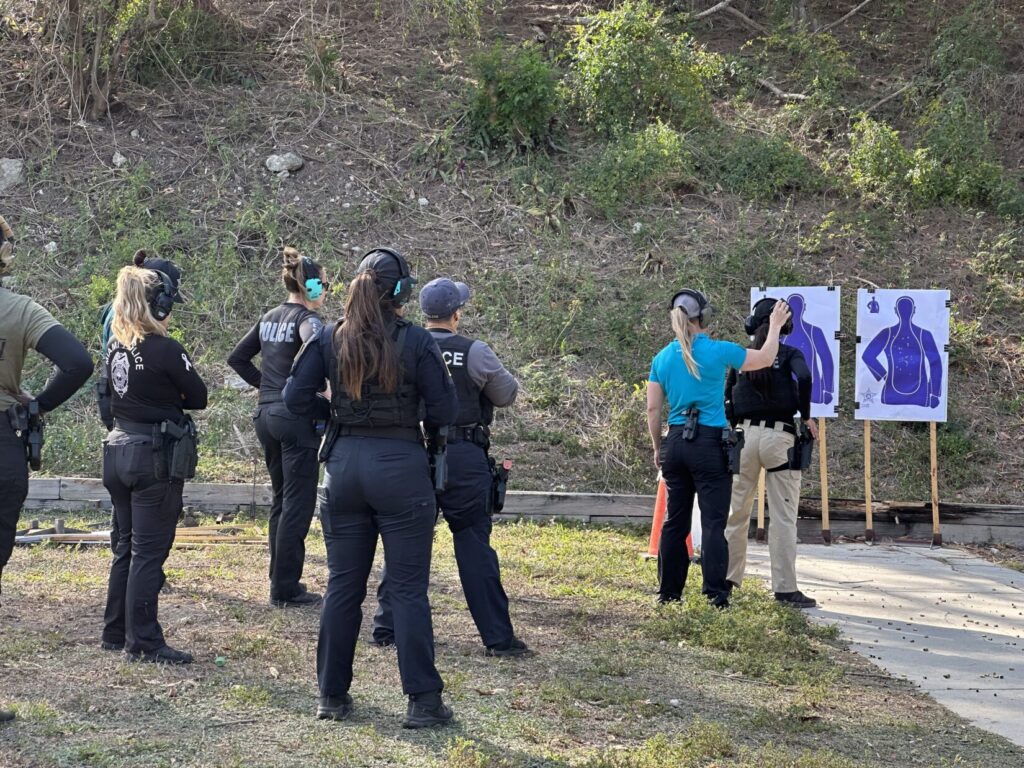
This class brought together women from different agencies and backgrounds, all with one common goal: to sharpen their skills and strengthen their confidence under pressure.
And from the moment the training began, they showed up ready to work.
Understanding the Physiology of the Fight
Before we ever stepped onto the range, we spent time in the classroom discussing something that doesn’t always get enough attention in firearms training: what happens to the body and mind during a critical incident.
When an officer faces a life-threatening situation, the body immediately activates the fight-or-flight response. Heart rate spikes, breathing becomes rapid, adrenaline floods the system, and the brain shifts into survival mode.
These physiological changes can create several challenges for shooters:
- Loss of fine motor skills
- Tunnel vision
- Auditory exclusion
- Reduced cognitive processing
- Difficulty making complex decisions
For officers, these responses can happen in a fraction of a second.
Tracy and I teach officers that these reactions are normal and predictable. The key is learning how to manage them so they don’t control your performance.
From our experience as Olympic biathletes, we teach techniques that help bring the body and mind back under control—things like breathing regulation, mental cue words, and focus resets. In biathlon, we had to ski at full effort with our heart rates through the roof and then step onto the range and make precise shots at small targets under immense pressure.
Law enforcement officers often face similar physiological demands, except the stakes are far higher.
Understanding how the body reacts to stress is the first step toward performing effectively when it matters most.
The Psychology of Performance
An old saying goes, ” Performance is 90% mental.” Whether you’re in the field or at the range for a qual, your psychological response to stress can greatly impact the result. Equally important, and perhaps more so, is working on the psychological side of shooting and decision-making.
In high-stress situations, hesitation and overthinking can be just as dangerous as poor marksmanship. That’s why we emphasize mental conditioning as an integral part of the training.
We work on:
- Confidence under pressure
- Mental rehearsal
- Trusting trained responses
- Managing fear and stress
- Maintaining focus during rapidly evolving situations
- One concept we stress is that performance follows preparation.
If an officer has practiced efficient movements and decision-making under controlled stress, those responses are far more likely to hold up when the situation becomes real.
We encourage officers to develop mental cues that help them reset quickly in the middle of a stressful event—simple triggers that bring attention back to the task at hand.
The mind leads the body. When the mind is calm and focused, performance improves dramatically.
Decision-Making Under Pressure
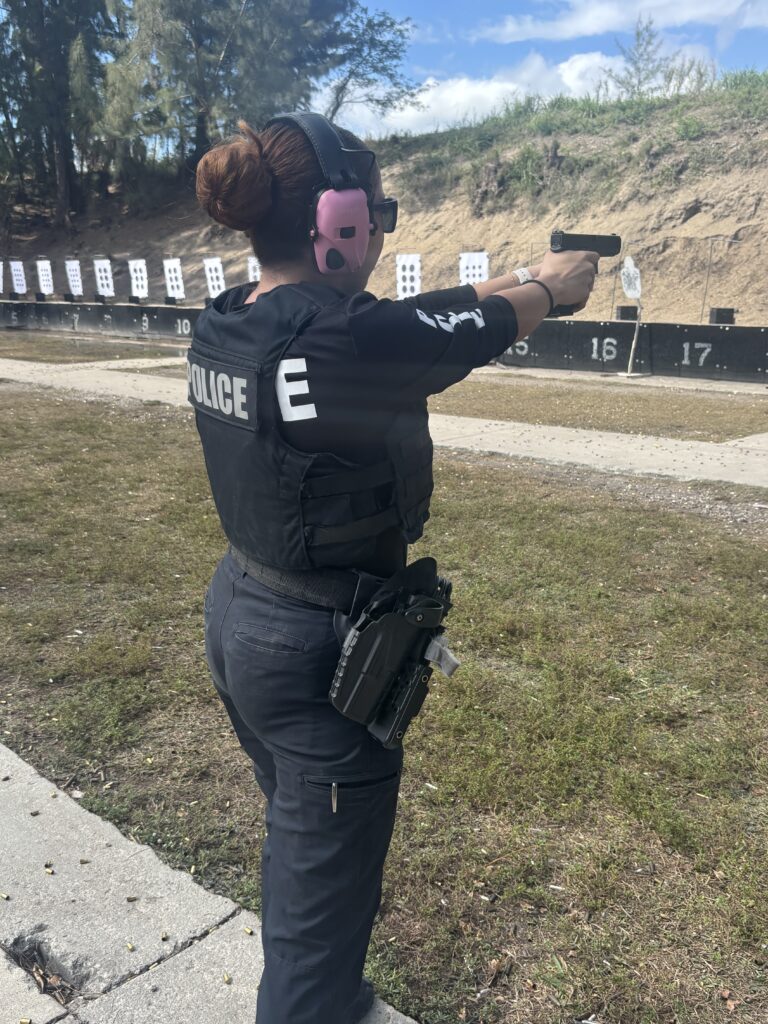
Another major focus of the course was decision-making.
In law enforcement, the ability to make rapid, accurate decisions can be the difference between life and death. Officers often have only seconds—or fractions of seconds—to interpret what they are seeing and determine the appropriate response.
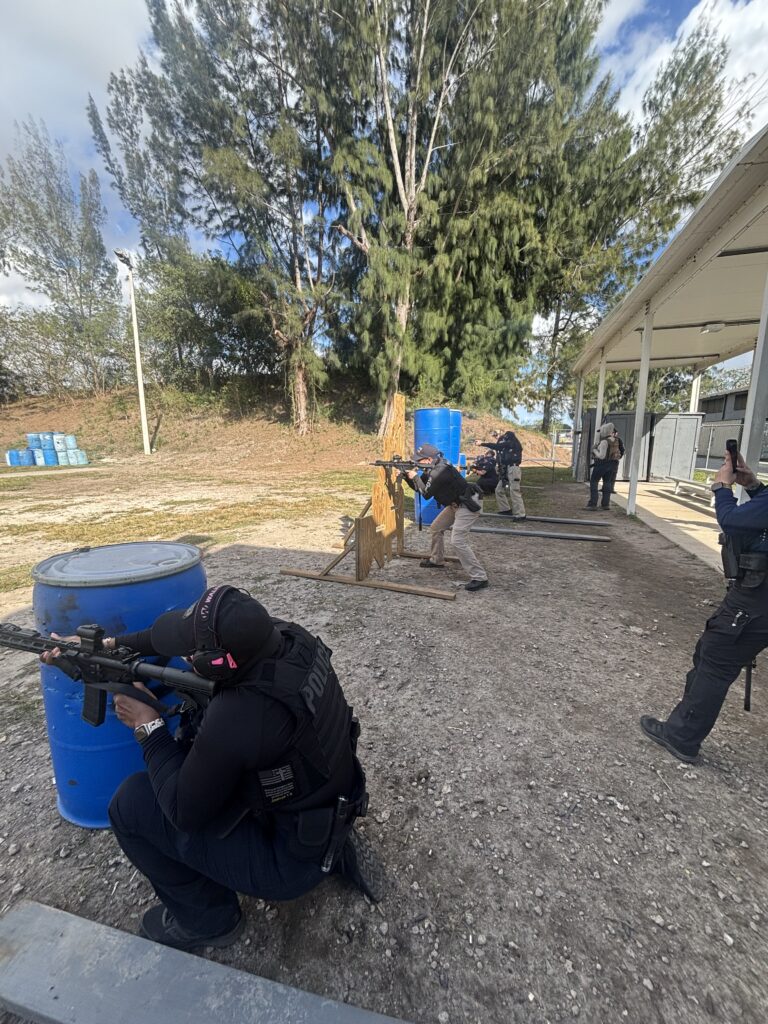
We incorporated drills that forced officers to think while they were shooting. Instead of simply standing on the line and firing at static targets, we added elements that required them to:
- Identify threats versus non-threats
- Process information quickly
- Decide when to shoot and when not to shoot
- Manage movement and positioning while engaging targets
These types of exercises help bridge the gap between traditional range training and the realities officers face in the field.
The goal is to train both the brain and the body together, because in real-world encounters, the two cannot be separated.
Performance Under Stress
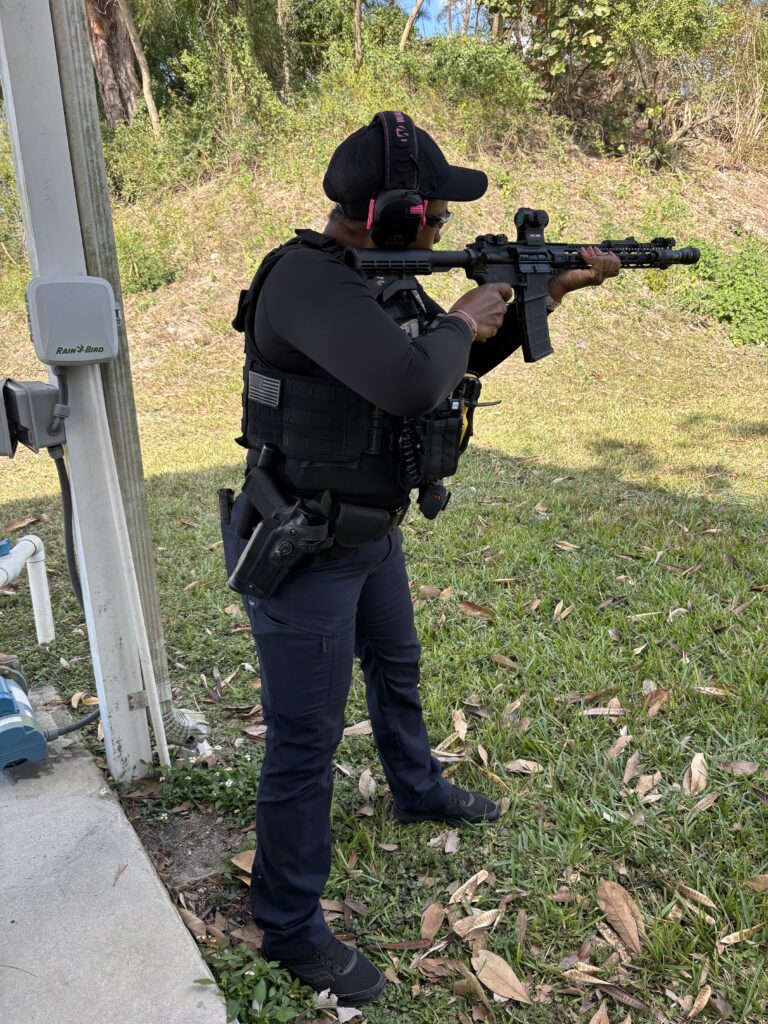
Once we moved onto the range, the focus shifted to something Tracy and I believe is essential for anyone who carries a firearm professionally: learning to perform under stress.
In real-world encounters, officers aren’t standing calmly on a static firing line. Their heart rate is elevated. Their breathing is heavy. The situation is unpredictable and evolving.
So we design our training to reflect that reality.
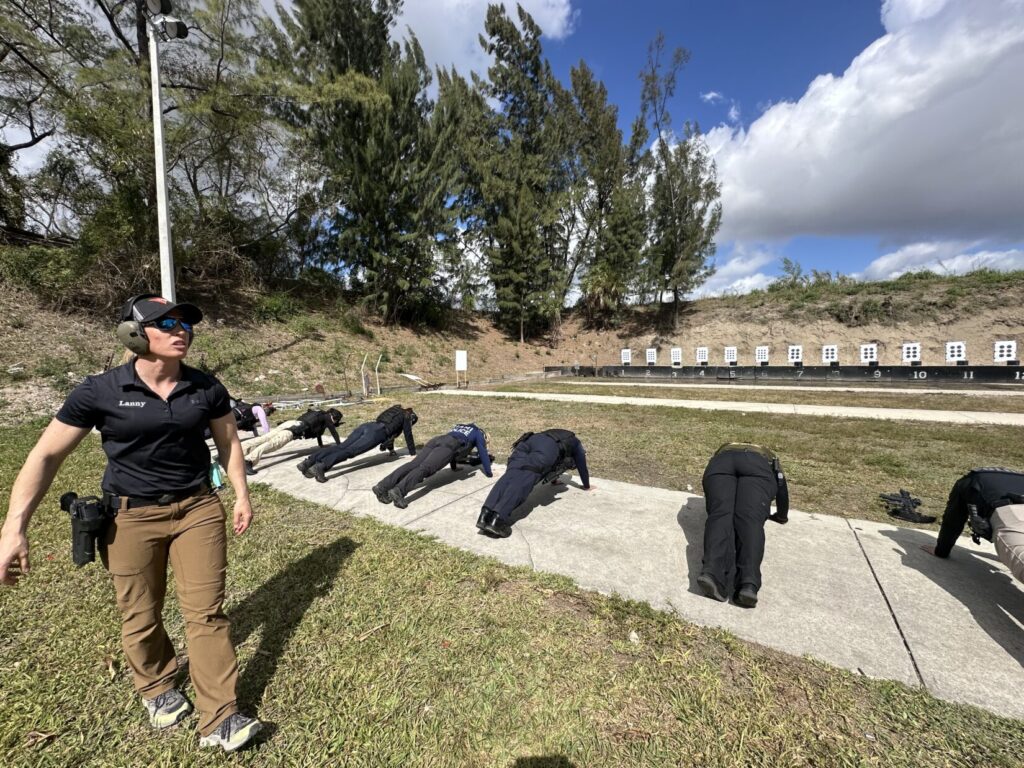
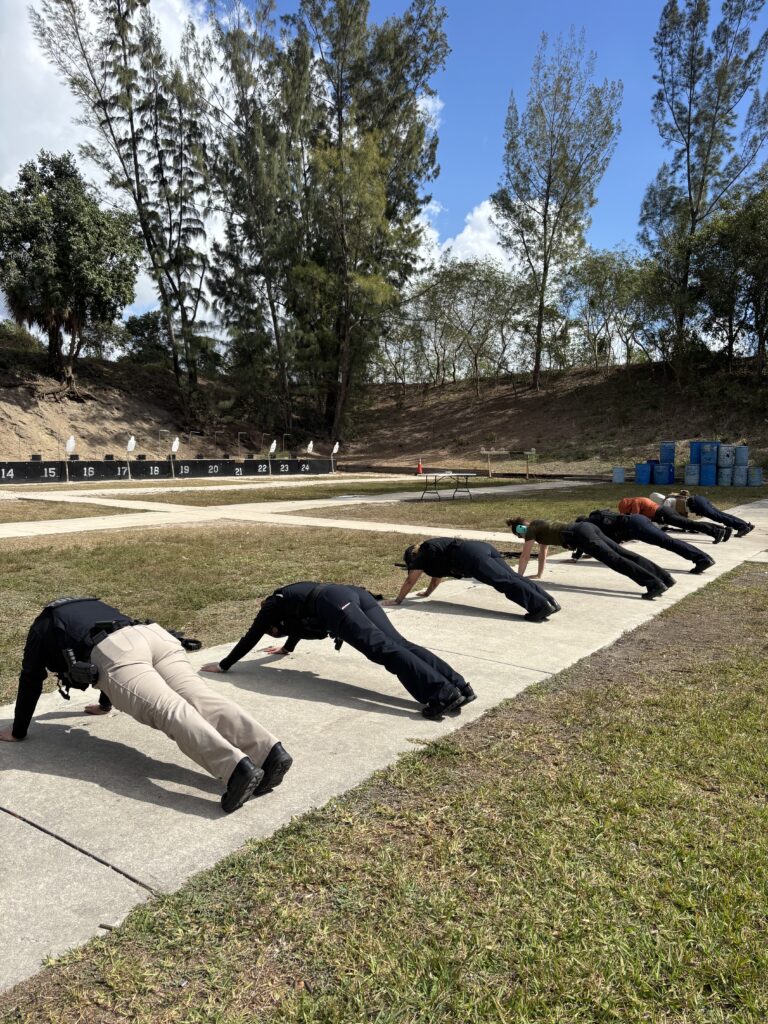
Throughout the day, we intentionally pushed the women both physically and mentally before asking them to shoot. We incorporated movement, short bursts of physical exertion, and decision-making tasks that force them to manage their breathing, control their focus, and execute the fundamentals under pressure.
The goal wasn’t just to hit targets.
The goal was to teach them how to regain control of their mind and body when stress begins to take over.
The Power of Women Training Together
One of the most powerful parts of this course wasn’t just the instruction—it was the environment.
When women in law enforcement train together, there’s a unique camaraderie that develops. Officers support each other, share experiences, and push each other to improve.
By the end of the course, what started as a group of individuals had become a tight-knit team. That kind of support matters in a profession that can be physically and emotionally demanding.
And it’s one of the reasons we love teaching these classes.
Why We Do This
People often ask Tracy and I why we dedicate so much time to training law enforcement.
The answer is simple.
The men and women in this profession carry an enormous responsibility. Every shift, they step into unpredictable situations and make decisions that can affect lives in an instant.
If the lessons we share—about managing stress, controlling the mind, improving accuracy, and trusting their training—can help even one officer perform better in a critical moment, then the work is worth it.
Our goal isn’t just to help officers shoot better. It’s to help them believe in their abilities and trust their training. Because confidence, preparation, and skill working together can make all the difference.
Leaving Stronger
As the day came to an end and officers began packing up their gear, there was a noticeable shift from the start of the training.
Yes, the shooting had improved. But more importantly, confidence had grown.
These women left the range stronger—not just in skill, but in mindset. They left with new tools, a new understanding of how their minds and bodies perform under stress, and new connections with other officers who share the same commitment to the profession.
For Tracy and me, that transformation is always the most rewarding part.
Because the training doesn’t end on the range.
It carries forward into every shift they work, every decision they make, and every community they serve. And if it helps them go home safely at the end of the day, then every minute spent on that range was worth it.