
Firearm suppressors are more popular than ever. That popularity will only grow as the benefits of shooting suppressed become more widely known and laws regarding ownership and use become less restrictive.
As suppressors become more common, the firearm industry is responding by making their firearms more suppressor-friendly with threaded barrels, gas-reducing accessories, and suppressor-optimized subsonic ammunition.
Subsonic ammunition is nothing new. Common cartridges like .32 ACP and .45 ACP are inherently subsonic, while .22 Long Rifle and others feature many subsonic options. But newer cartridges, like .300 Blackout and .338 ARC, have been developed with suppressed shooting in mind, even though both offer supersonic options.
You may ask why subsonic ammo is necessary, or even desirable, when using a “silencer.” That’s a fair question given the common misconceptions about how suppressors actually work. You may also wonder about the pros and cons of subsonic versus supersonic ammo, and the strengths and weaknesses of each. Let’s take those in turn.
Suppressors, Not Silencers
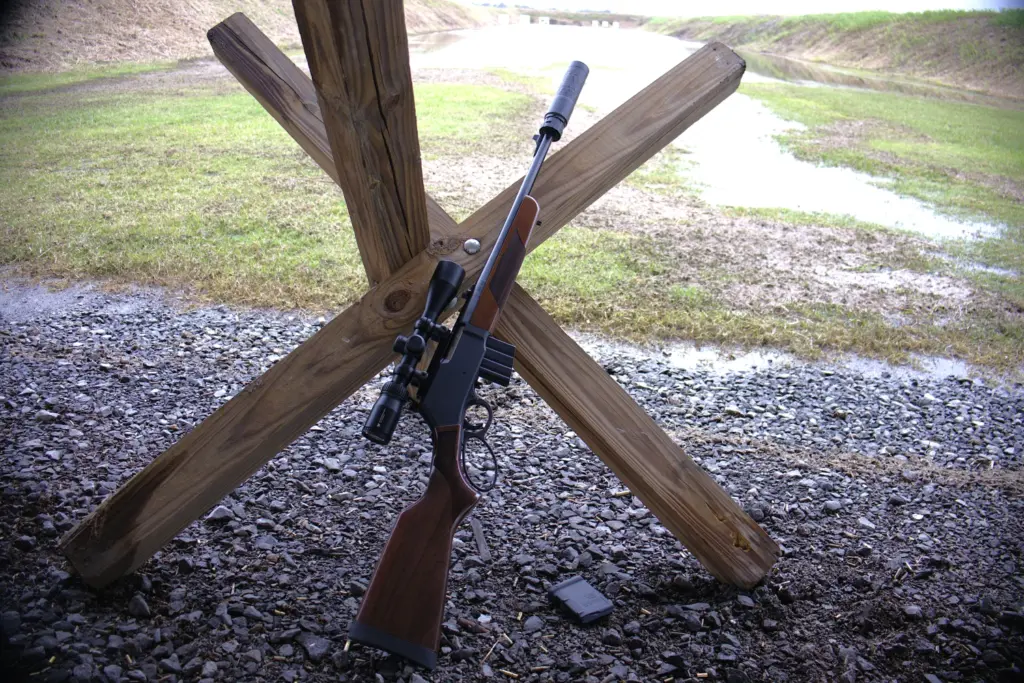
Suppressors are commonly called “silencers.” That’s fair since their inventor, Hiram Percy Maxim, labeled his product the “Maxim Silencer.” But the name is misleading.
Suppressors reduce a firearm’s muzzle blast by redirecting the gases released when a round is fired. But they cannot affect the distinctive sonic crack as the bullet breaks the sound barrier, or the cycling of the gun’s action if it’s an automatic or semi-automatic.
Hollywood doesn’t help with this common misperception. The John Wick scene where the protagonist and the bad guy walk through a crowded train station anonymously, taking suppressed potshots at one another, is pure myth. That could never happen in real life. The first shot would scatter the crowd.
“Hollywood quiet” is only obtainable in very specific, and limited, circumstances. Shooting supersonic 9mm ammo through semi-automatic pistols is not among those circumstances. Even using less-powerful subsonic ammo in that situation would be nowhere near as quiet as the movie portrays.
Subsonic vs. Supersonic Ammo
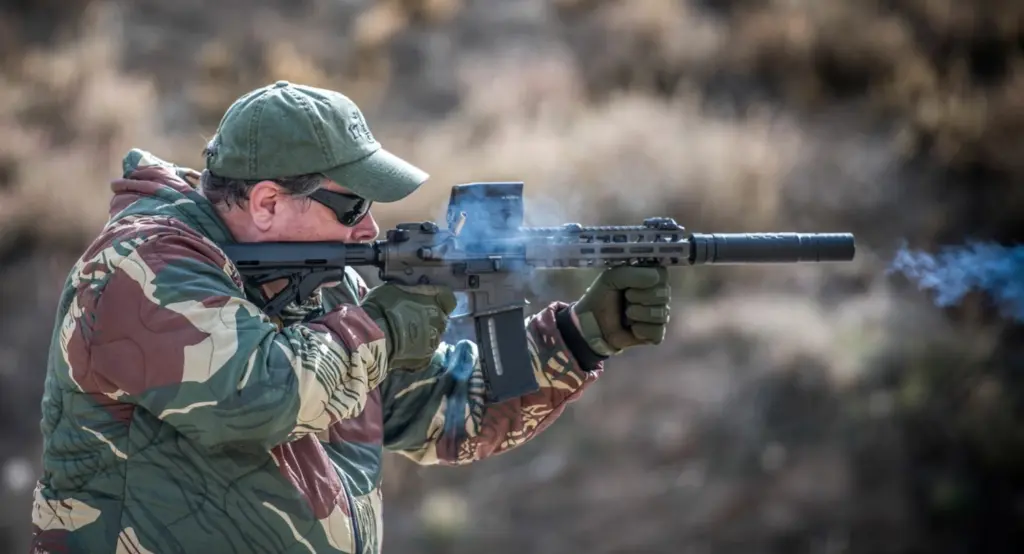
The sound barrier lives right around 1,100 feet-per-second. Bullets traveling at that speed or faster create a loud sonic crack when they break the sound barrier. Bullets that don’t reach that speed threshold do not make the crack.
Combining a suppressor with subsonic ammunition creates a superior scenario for stealthy or hearing-safe shooting. Add a manually-operated firearm, like a bolt or lever-action rifle, and you enter “best-case” scenario territory.
As we noted, some cartridges are inherently subsonic, making them prime candidates for suppressed shooting. But others are engineered to maximize performance while remaining just under the supersonic threshold. These rounds travel about 1,050 fps, just under the sound barrier, but optimized for the best possible terminal performance, usually by employing heavier bullets.
Cartridge design plays a major part in this optimization, and some rounds do it better than others. A cartridge’s perceived role plays a large part in its design, which, in turn, affects its performance. We can address that process by looking at two cartridges: the .300 Blackout (BLK) and the .338 ARC.
.300 BLK and the Need for Versatility
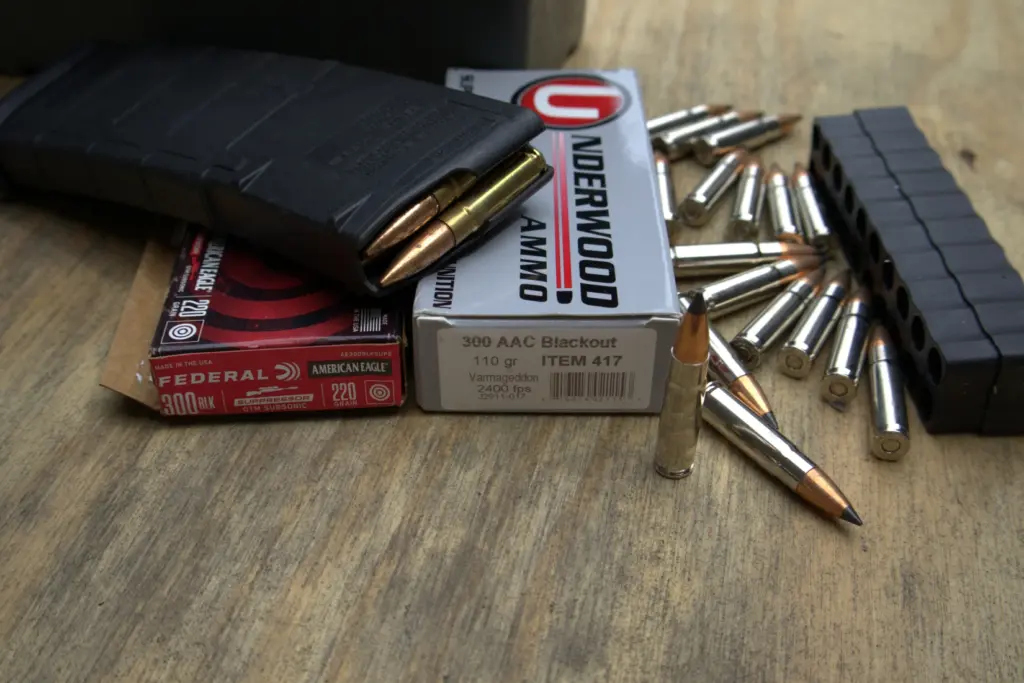
The .300 BLK cartridge resulted from the US Military’s Special Operations Command’s request to the firearms industry for a round that could provide better short-barrel terminal performance than the 5.56 NATO round while still using standard M4A1 receivers and magazines. The new cartridge had to include viable supersonic and subsonic loads for use in the same rifle by merely changing magazines.
What emerged was a “jack-of-all-trades” round that’s good for many applications, but not really great for anything particular. The supersonic 110-125-grain loads provide a longer range and better terminal performance, while the heavier 180-220-grain subsonic loads reduce the shooter’s signature while still remaining on target, albeit at shorter ranges.
The lack of all-around great performance is due to the .300 BLK’s design. The case must accommodate enough powder to drive supersonic bullets while still providing adequate pressure when the powder load is reduced for subsonic rounds.
The reduced powder load in the same-sized case means the powder burns less effectively due to the extra space. The result is a compromise that doesn’t provide outstanding performance on either end. One understands, however, that SOCOM’s need for versatility made that compromise unavoidable. But the civilian market can be more flexible.
.338 ARC: Subsonic Optimized
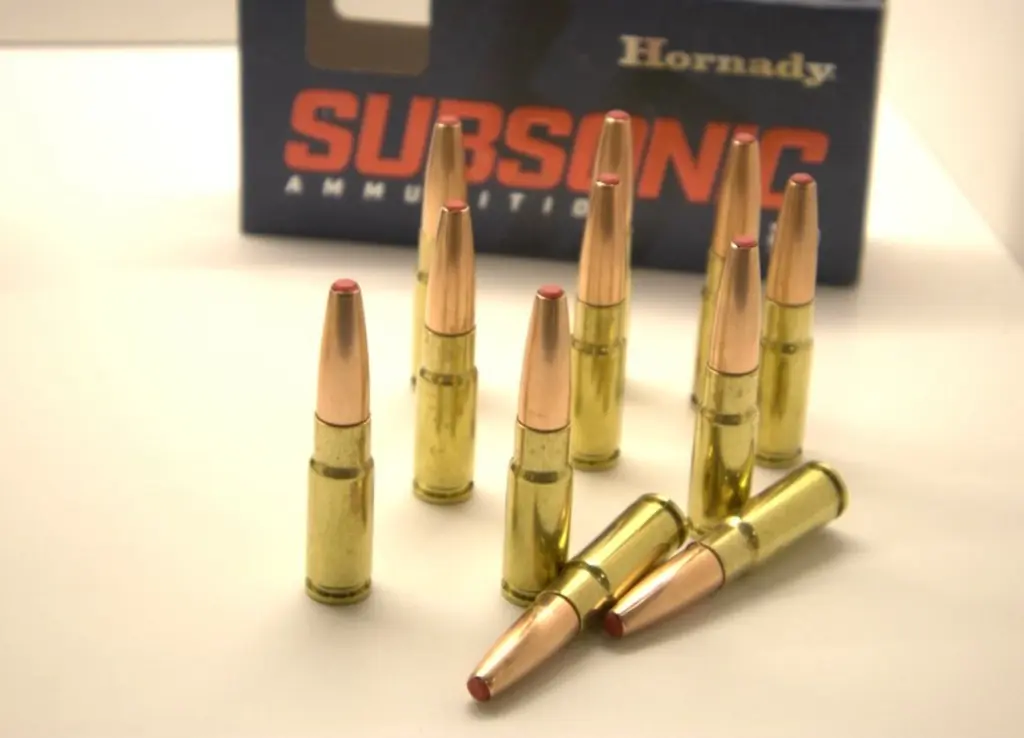
Hornady developed the .338 ARC as part of its Advanced Rifle Cartridge line, joining the .22 ARC and 6mm ARC. .338 ARC offers a supersonic option but is optimized for subsonic performance.
The round’s 1,050 fps 307-grain bullet tops the .300 BLK’s terminal energy by 50 percent out to 500 yards, while delivering comparable numbers to the larger 8.6 BLK. But the 8.6 BLK requires a heavier AR-10 platform, while the .338 ARC is suitable for the AR-15. The .338 ARC’s efficient case design makes that performance possible, while also making it more effective at longer ranges than the .300 BLK.
The .338 ARC’s case is shorter, making for a more efficient powder burn for subsonic rounds, while leaving space for an adequate supersonic load. But the choice to optimize for subsonic loads means the 175-grain supersonic round’s performance drops considerably past 300 yards.
The .338 ARC is only one round optimized for subsonic performance, but the point is that such rounds do exist and will become more prominent as suppressors become more popular.
Choosing a Subsonic Cartridge
Your cartridge choice obviously depends on your firearm. Several established cartridges are either inherently subsonic or available with subsonic loads, including .22 LR, .32 ACP, 9mm, .45 ACP, 8.6 BLK, and .458 SOCOM, in addition to the two cartridges discussed in detail. And that is not a comprehensive list.
Some of those rounds will be more efficient than others, as noted when comparing .338 ARC to .300 BLK. Ballistics information is widely available, so you can compare velocity, pressure, terminal energy, effective range, and more.
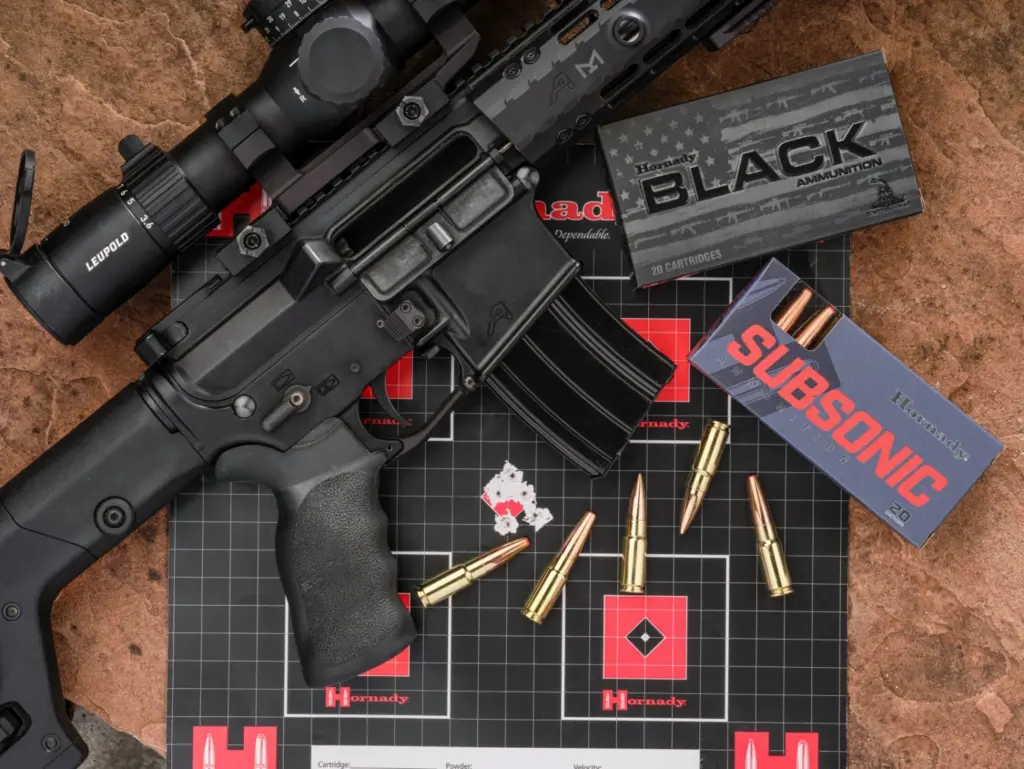
Even a basic understanding of ammunition performance will help you get the most out of shooting suppressed. You don’t always have to go subsonic. But subsonic ammo provides another facet to minimizing your sound signature. Just a little bit of homework before buying a threaded-barrel firearm or suppressor goes a long way toward making sure you have the best experience.
Today’s choices are better than ever. Take advantage of that to make shooting suppressed the best it can be.