
ASP (Armament Systems and Procedures)’s C‑Series flashlights represent a significant update to the company’s handheld lighting approach. Long known for producing duty‑focused tools used widely in law enforcement, ASP has consolidated 11 models, spanning everyday carry, duty, and specialized applications, into a unified operating system. This common framework allows personnel to transition between lights without retraining, supporting consistent muscle memory and reducing the likelihood of user error under stress or in low‑visibility conditions.
Rather than developing each model independently, ASP designed the C‑Series as an integrated product family. All models share a core construction foundation: 6061‑T6 aerospace‑grade aluminum (with select variants using ordnance‑grade polymer), Type III hardcoat anodizing on aluminum versions, and on the “Duty” and “Strategic” models, ASP’s established all‑weather foamed vinyl grip. This grip, familiar from ASP batons and earlier lighting tools, provides secure handling in wet, cold, or gloved environments.
The consistent design language creates a uniform feel across the lineup, from the smallest EDC light to the most advanced Strategic model.
Duty and Strategic C‑Series lights use a standardized tail‑cap interface featuring a three‑position selector for momentary, constant‑on, and lockout. Activation is controlled through a single tail‑cap pressure switch: one press engages the primary (high) output, and a rapid double‑tap accesses the user‑programmed secondary mode. This control system reflects years of field refinement and remains one of ASP’s most intuitive and reliable switching configurations.
Power flexibility is also built in: most models support Dual‑Fuel or Tri‑Fuel operation, running on ASP’s USB‑C rechargeable 18650 cells or optional CR123A primaries when charging isn’t practical. ASP’s rechargeable cells incorporate built‑in protection circuits to guard against over‑charging, over‑discharging, and thermal issues, important for lights that may be charged frequently or used in harsh conditions.
Although the lights are built to withstand professional use, ASP positioned the C‑Series to remain accessible. While it sits in the premium category, the line includes models priced within reach for individual officers while still meeting the durability and reliability expectations of agency‑level equipment. Across the board, the C‑Series avoids cutting corners on construction or operational capability.
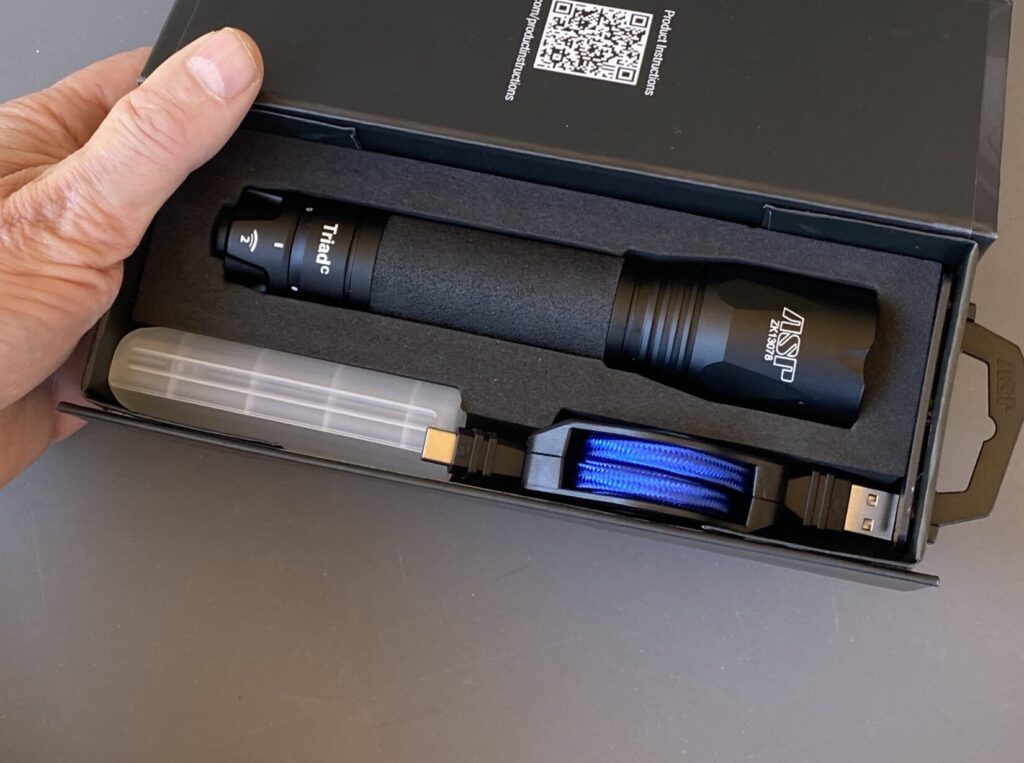
ASP provided the Scribe‑C, Triad‑C, and Spectrum‑C to me at no cost for evaluation as examples of their EDC, Duty, and Strategic C‑series tactical lights. While the products were supplied for testing, all observations and conclusions are based on my own independent assessment.
About ASP
For more than 50 years, ASP has focused on developing tools and training intended to support law‑enforcement professionals. ASP equipment is used by agencies in over 100 countries, largely due to its reputation for durability and reliability in situations where equipment failure isn’t an option.
The company designs and engineers its products in the United States, maintaining tight control over development and quality assurance.
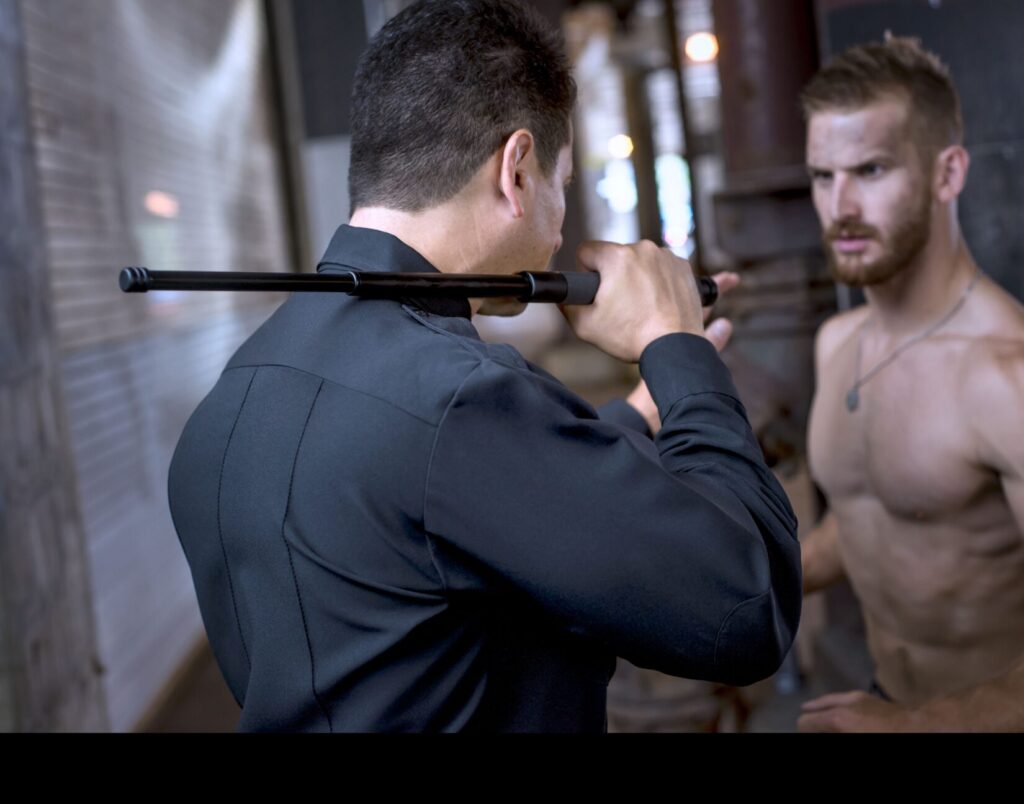
ASP is also deeply involved in the standards that govern the lighting industry. All C‑Series lights are tested to the ANSI/PLATO FL1 standard, the benchmark used to evaluate output, runtime, impact resistance, and water resistance.
ASP was one of the founding members of PLATO (Portable Lights American Trade Organization), the group responsible for establishing and promoting these standards. Their participation reflects a long‑standing preference for measurable, repeatable performance criteria rather than marketing‑driven specifications.
Consistent with that philosophy, ASP does not publish candela as one of its primary metrics. The company’s position is that candela, while technically valid, often fails to provide a true apples‑to‑apples comparison between lights because it can be heavily influenced by beam shape, measurement distance, and optical design. Instead, ASP emphasizes manufacturer‑rated lumen output, runtime, and other FL1‑defined criteria that offer more consistent and comparable data for end users.
ASP’s durability testing goes beyond FL1 requirements. Lights are subjected to testing for overall performance, drop testing, salt spray exposure, and more, intended to replicate real‑world abuse, including temperature extremes, moisture exposure, and impact scenarios common in law‑enforcement work. These tests are designed to ensure that the lights perform predictably even after being subjected to the kinds of conditions officers routinely encounter.
ASP’s warranty and support structure is designed with agency use in mind, with repair and replacement processes intended to minimize downtime for working officers.
EDC Example: Scribe‑C
The Scribe‑C is one of four Every Day Carry models, designed as a compact pen‑style light that maintains the operational characteristics of the larger C‑Series tools. Despite its slim profile, it delivers 450 lumens on high with a 100 m beam distance, and 25 lumens on low—substantially higher output than earlier Scribe variants. High‑mode runtime is 1.5 hours.
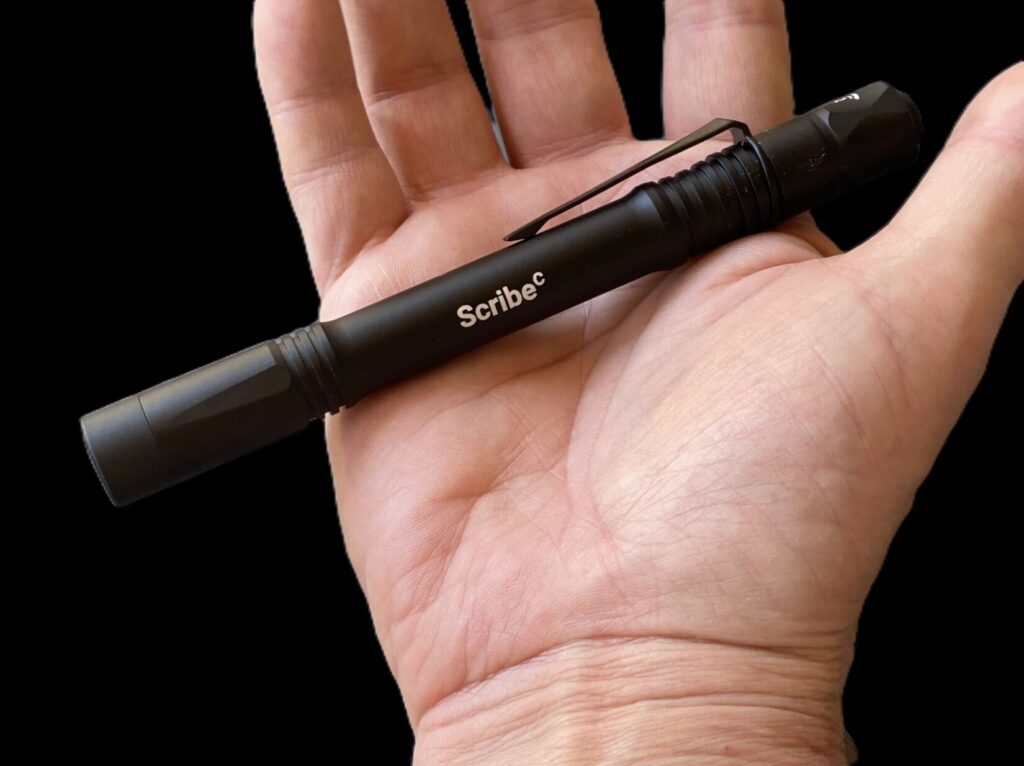
A single tail‑cap pressure switch controls all functions: one press activates high, while a rapid double‑tap selects low. The light retains core C‑Series construction standards, including 6061‑T6 aluminum, Type III hardcoat anodizing, and a USB‑C rechargeable 10900 lithium‑ion battery. It also accepts disposable AAA cells, supporting the line’s emphasis on flexible power options.
The beam pattern provides a balanced hotspot with practical spill, suitable for close‑range tasks and general situational awareness. Lightweight and pocket‑friendly, the Scribe‑C is well‑suited for investigators, supervisors, and officers who need a dependable, low‑bulk illumination tool.
MSRP: $77.00
Duty Example: Triad‑C
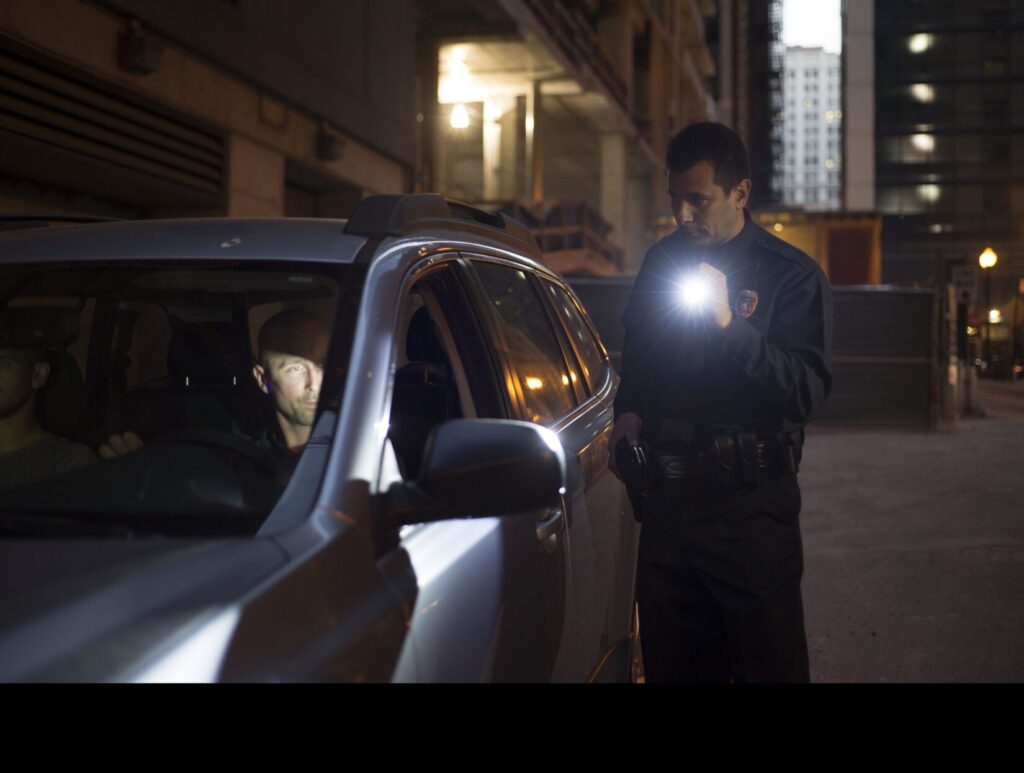
The Triad‑C represents the core mission of the C‑Series, built for patrol and general duty applications. It produces 1000 lumens on high with a 190 m beam distance, offering sufficient reach for building searches, traffic stops, and outdoor operations. Additional modes include 25‑lumen low, 300‑lumen medium, and strobe, all accessible through a user‑programmable secondary interface.
The beam profile balances throw and spill, providing a defined hotspot while maintaining peripheral illumination.
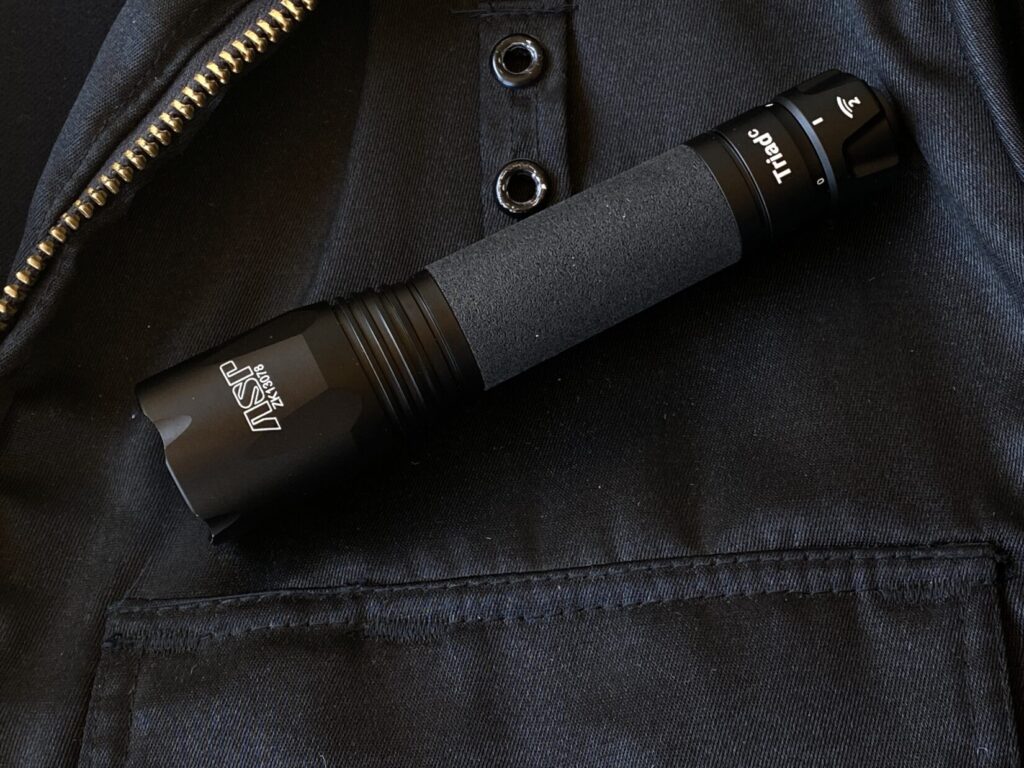
High‑mode runtime is 2.5 hours, supporting typical patrol demands before recharging. The Triad‑C operates on a USB‑C rechargeable 18650 cell and is compatible with CR123A primaries for redundancy. Construction aligns with the Duty and Strategic lineup, featuring a hardcoat anodized aluminum body, foamed vinyl grip, and the standardized tail‑cap selector.
MSRP: $179.00
Strategic Example: Spectrum‑C
The Spectrum‑C is the most feature‑rich model in the C‑Series, offering 800 lumens of white light with a 190 m beam distance. Its primary advantage is versatility: five additional user‑programmable modes provide red, blue, and UV illumination, along with low‑light and strobe options. These capabilities support tasks such as night‑vision preservation, evidence detection, and specialized investigative work. High‑mode runtime is 3 hours.
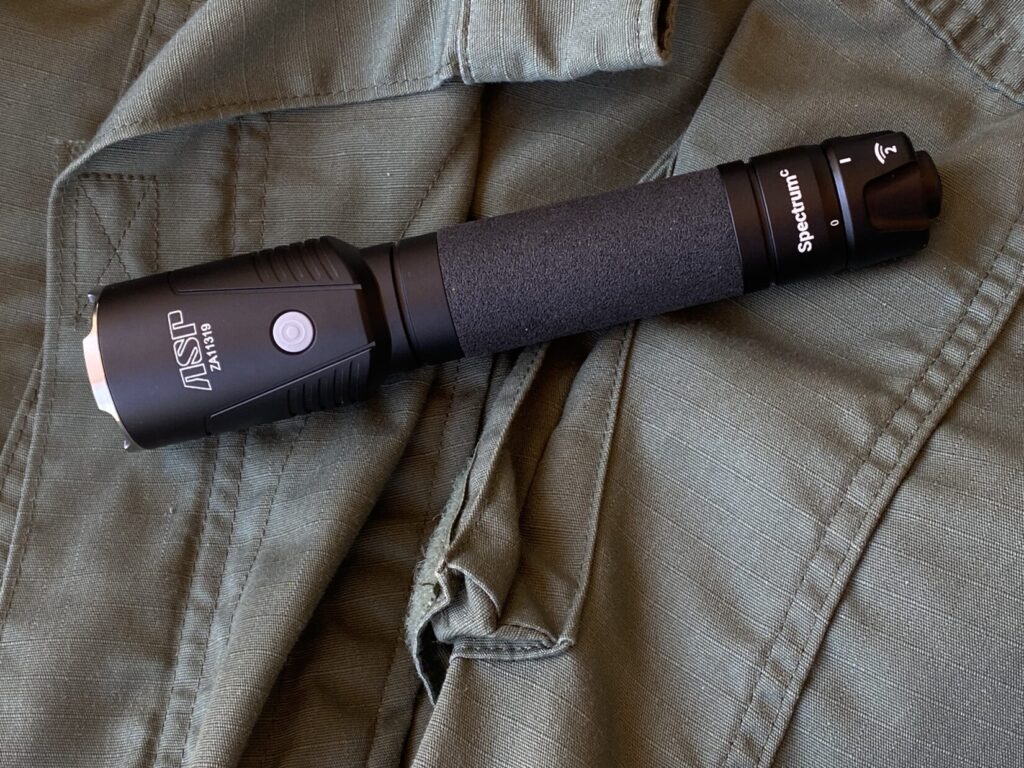
Strategic models differ from Duty models by incorporating color outputs and/or other specialty modes tailored for low‑visibility, investigative, or forensic applications. The rechargeable battery on the Strategic models charges inside the flashlight, using the supplied cord, or any USB-C portable electronics charging cord. The Spectrum‑C runs on a USB‑C rechargeable 18650 cell and supports CR123A primaries as backup.
MSRP: $184.00
Final Thoughts
The Scribe‑C, Triad‑C, and Spectrum‑C provided to me for evaluation performed exceptionally well with no issues whatsoever. The unified system built around consistent controls, materials, and power options is a clear advantage, reducing the learning curve across the product line and simplifying training, equipment transitions, and agency‑wide standardization. They’re outstanding lights.
All ASP lights are backed by a limited lifetime warranty that covers defects in original workmanship and materials