
Compared to a handgun or AR-type rifle, slapping accessories onto a shotgun can feel a bit difficult. This has slowly changed in recent years, with guns like the Mossberg 940 SPX, the Beretta 1301, and the A300 becoming more accessory-friendly.
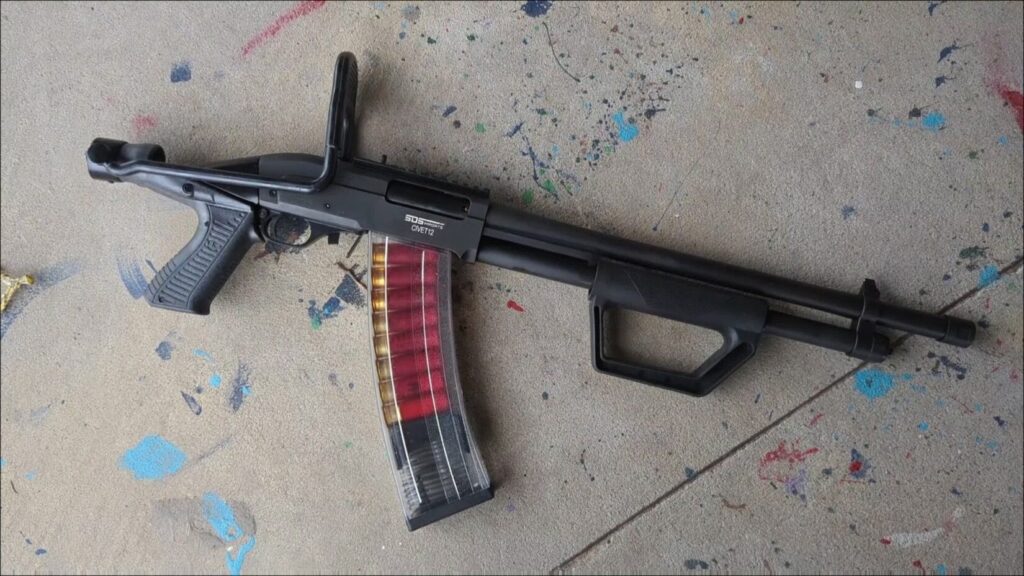
Most of the time, we are left adapting solutions made for other firearms onto a shotgun, with just a few accessories dedicated to the platform. With that in mind, for a defensive shotgun, I think you can get away with a fairly plain gun and have a capable defensive tool.
There is only one accessory I’d argue you need for a shotgun, and the rest are nice to have. With that in mind, we’ll go through the shotgun accessories ranked from most important to least important.
1. The Essential Accessory: White Lights
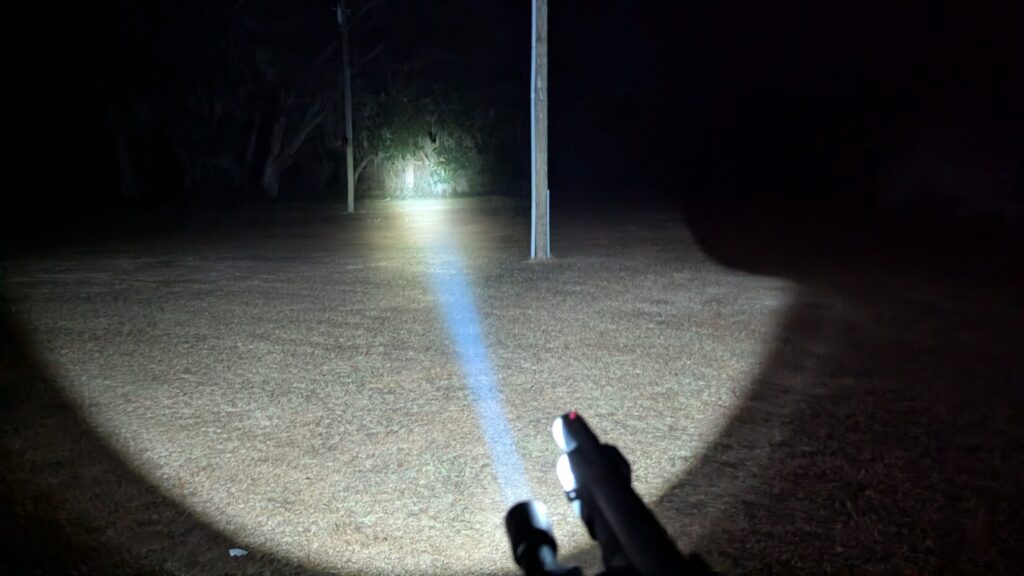
I’m a firm believer that any home defense firearm needs a white light. White lights allow the defender to positively identify a threat before engaging. There have been too many accidents where a defender accidentally shot a family member or guest due to a lack of positive identification (PID).
Options for Pump-Action Shotguns
White lights on shotguns can be tricky—pump shotguns especially. If you have a light, you should be able to control it as you use the shotgun. Having to manually work your action with a back-and-forth motion makes it difficult to utilize a weapon light.
Pressure pads are difficult because they aren’t long enough for the racking action. Adding a light to an M-LOK forend can work; tossing a pistol light on a Magpul SGA forend is a perfectly fine option. I like the TLR-RM series from Streamlight with the ramping button for this roll.
I’d stick to M-LOK pumps. Railed pumps are quite uncomfortable with 12-gauge recoil.
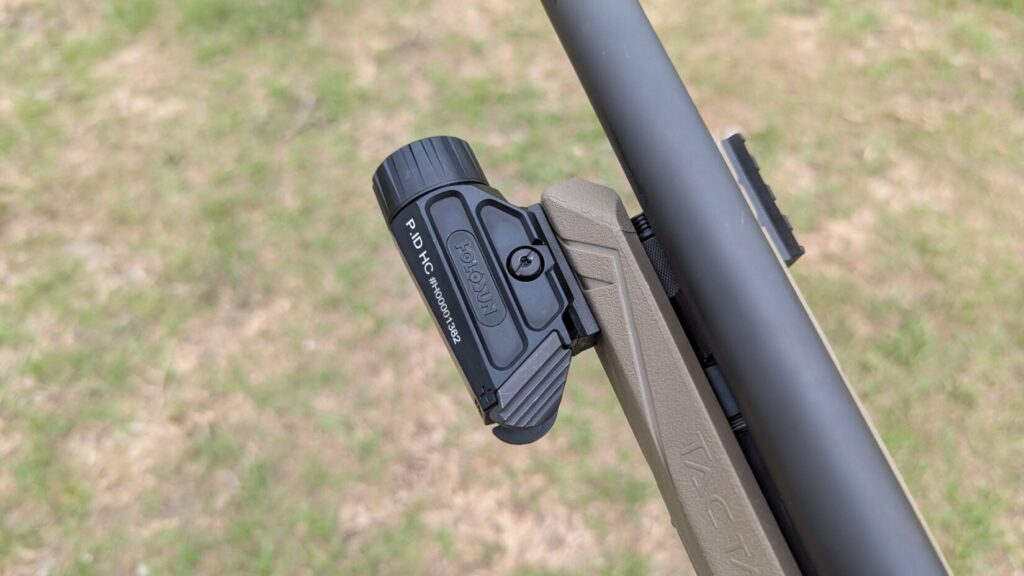
The easiest answer is to replace the pump itself with an integrated weaponlight. Surefire started this trend and still produces the DSF series pumps for Remington 870 and Mossberg 500/590 series guns.
The Surefire DSF is an excellent option. It has ambidextrous controls, a kill switch, and the hump produced by the light allows you to press against the gun to establish a good push/pull recoil mitigation technique. It’s not quite the brightest beam on the market at 600 lumens and 13,000 candela, but it’s certainly enough for inside the house.
We also have the Streamlight TL Racker, which is about a third of the cost. The TL Racker integrates a 1,000-lumen light with a pair of big ambidextrous switches. It’s mostly fine, but it’s easy to accidentally turn on when carrying the gun, and you don’t get the hump to press against.
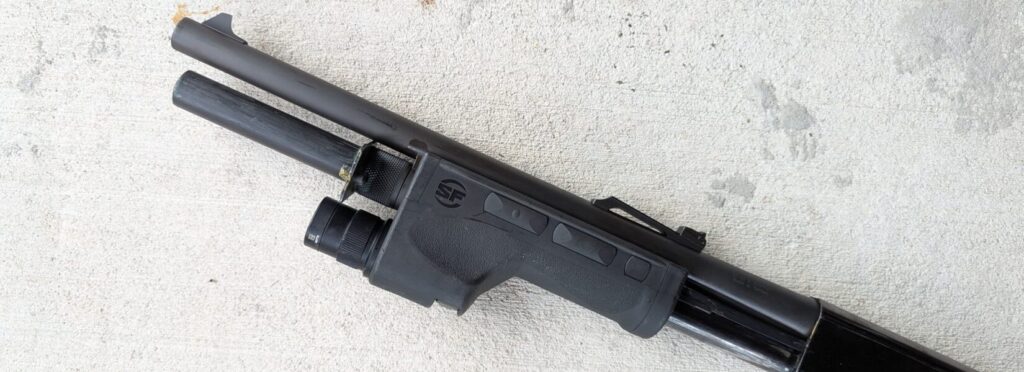
Finally, we have the Nightstick SFL, which gives you 1,200 lumens and 10,315 candela, with an option for a laser. The switches are smaller than the TL Racker, but still large enough to easily engage. Like the TL Racker, we don’t have a hump to press against.
Limitations of Pump-Mounted Lights
These types of integrated lights are only made for Mossberg and Remington shotguns, so your pump gun selection is limited if you go this route. While these lights work well, on a standard 18.5-inch barrel, we have to deal with barrel shadow. The same goes for just attaching a light to an M-LOK pump.
It eats up a bit of your light, especially light that would normally travel above the barrel. With lights mounted to M-LOK pumps, you’ll get barrel shadow that’s dependent on where the light is mounted.
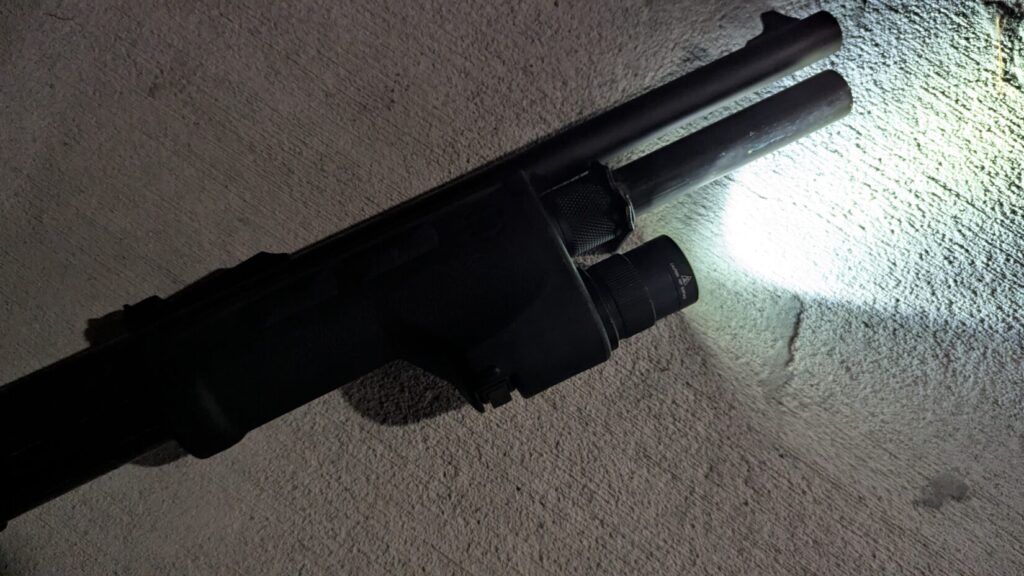
This can make the white-light search tactic known as “baseboarding” difficult. Baseboarding is a low-light technique that allows you to bounce light off the floor to illuminate an area without pointing a gun directly at a potential non-target. With barrel shadow in the way, you can’t bounce as much light. If you run a shorter 14-inch barrel (which requires NFA involvement), these lights tend to work rather well without the shadow problem.
Another downside is weight. Shotguns are heavy enough as it is, so adding a weapon light to the front of the gun makes it front-heavy. It does make the gun feel unbalanced, but it does give you less muzzle rise, so it’s not all bad.
Options for Semi-Automatic Shotguns
Lights are much easier to add to a semi-auto shotgun, provided you have a method to mount them. A lot of my guns wear the Mesa Truckee M-LOK forend. These give you tons of room for accessories and are constructed of metal for a good, positive connection to the light.
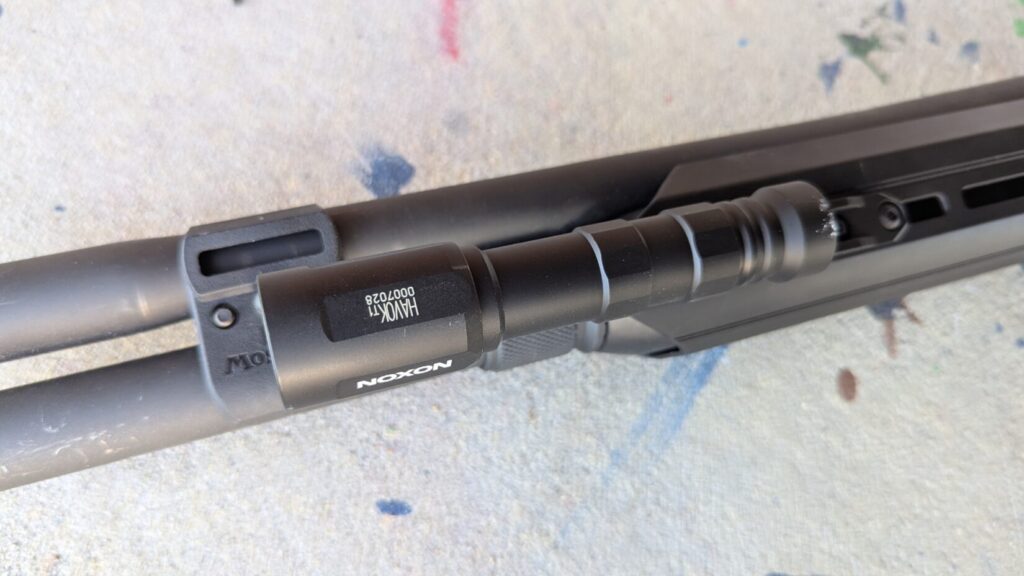
Shotgun recoil demands that positive connection. Of course, guns like the 1301, A300, and 940 SPX have handguards now equipped with M-LOK slots, so an upgrade might not be needed. Depending on handguard length, you can push the light fairly far forward to avoid barrel shadow and use a pressure switch.
You can toss on nearly any rifle or pistol light and have enough power for home defense. I like rifle lights due to the Scout mount ecosystem and the ability to push the light fairly far forward.
Maintenance: The Recoil and Battery Issue
As a quick aside, if you are using a rifle or pistol light on a shotgun, I advise you to remove the batteries before training days. (Unless, of course, it’s low-light training.)
The recoil of a 12-gauge makes the batteries race back and forth and often breaks them. Pop them out, train, and toss them back in.
2. The Stock: Optimizing Length of Pull
Your second most important accessory ensures your shotgun actually fits you.
A big problem in the shotgun world is factory length of pull. Length of pull is the distance from the trigger to the end of the stock. To this day, we still see LOPs over 14 inches for some ungodly reason. Long LOPs don’t fit most shooters when they assume a strong, recoil-reducing stance. They often make the gun feel clumsy and overly long.
LOP adjustments are commonly made in inches. A nice standard LOP is 12.5 inches, which fits most people. As a big guy, I like a 13.5-inch LOP. The general rule of thumb is that a LOP that’s too short is easier to manage than a LOP that’s too long.
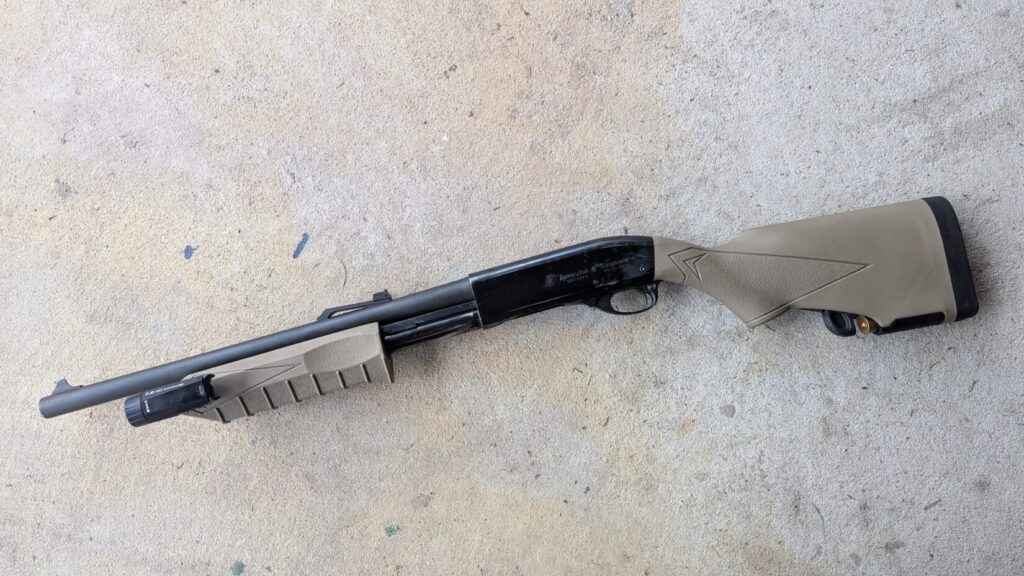
A lot of shotguns these days come with LOP spacers, particularly the three I’ve mentioned numerous times: the 940, A300, and 1301.
Stocks like the Magpul SGA have set the standard for LOP adjustments. Sadly, these stocks are only made for the 870 and 500/590 series and cannot be adapted to the 1301.
Additionally, the Hogue Youth stock is a popular and affordable option to get a shorter LOP on a variety of shotguns.
3. The Case for The Red Dot
The third item I’d purchase to accessorize is a red dot. Most shotgun sights are fine—bead sights, ghost rings, rifle sights—they work. A red dot just works better.
A red dot gives you the speed of a bead, but the precision of a ghost ring sight system. It works in all lighting conditions and can be easily adjusted to make up for point-of-aim/point-of-impact issues. Shotguns are target-focused guns, and red dots are target-focused sights.
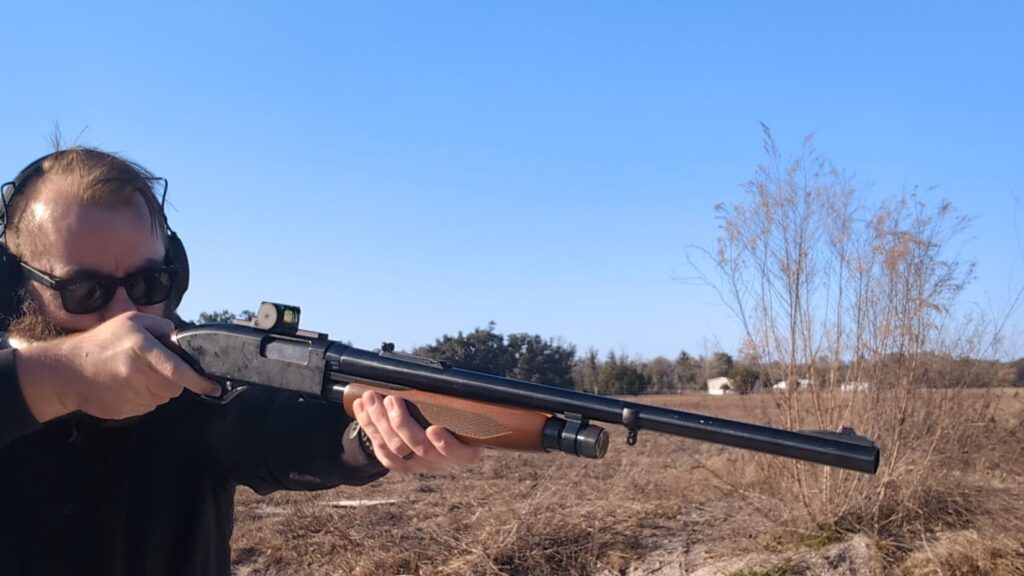
Which red dot? Well, you have tons of options these days. I stick to a pistol-sized red dot or something in the Aimpoint T1/T2 category. They are small and sit low, both important criteria for me.
I like optics that come with the 32ish MOA circle reticle. When using my chosen gun with my chosen buckshot, I know that at 15 yards and closer, every single pellet will land inside that circle. This gives me total pellet accountability.
That’s not a necessity, just a meism.
Any quality red dot from a reputable company can withstand the recoil of a shotgun. Optics designed for handgun slides experience more G force on a reciprocating slide than a shotgun can throw at it.
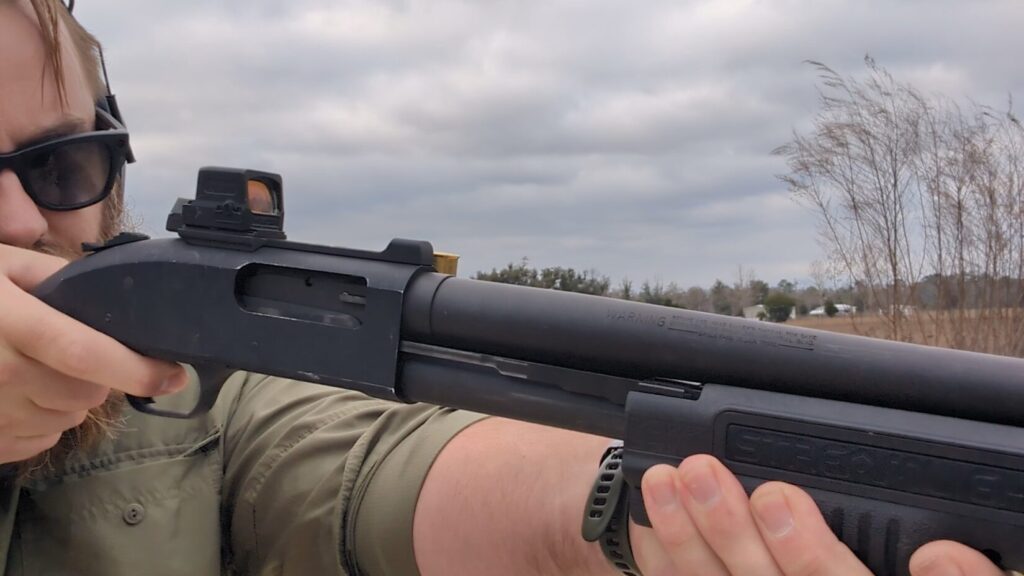
Vortex has a dedicated shotgun optic, and I like it a lot. It combines a universal mount with a red dot that’s fantastic overall. In general, lean into established brands like Aimpoint, Holosun, Trijicon, and similar brands with good reputations for quality.
Keep optic height in mind. Most long-gun red dots are designed for rifles, so they tend to sit at cowitness heights for AR-type sights. This makes them sit high for most shotguns. If the sight is high, you lose your cheek weld. Admittedly, a good cheek weld isn’t necessary for making hits at shotgun ranges. However, when you get that chin weld, the gun tends to beat you up a bit.
Another issue with taller optics can be height over bore. Shotguns are close-range guns, and the less we have to deal with height over bore, the better.
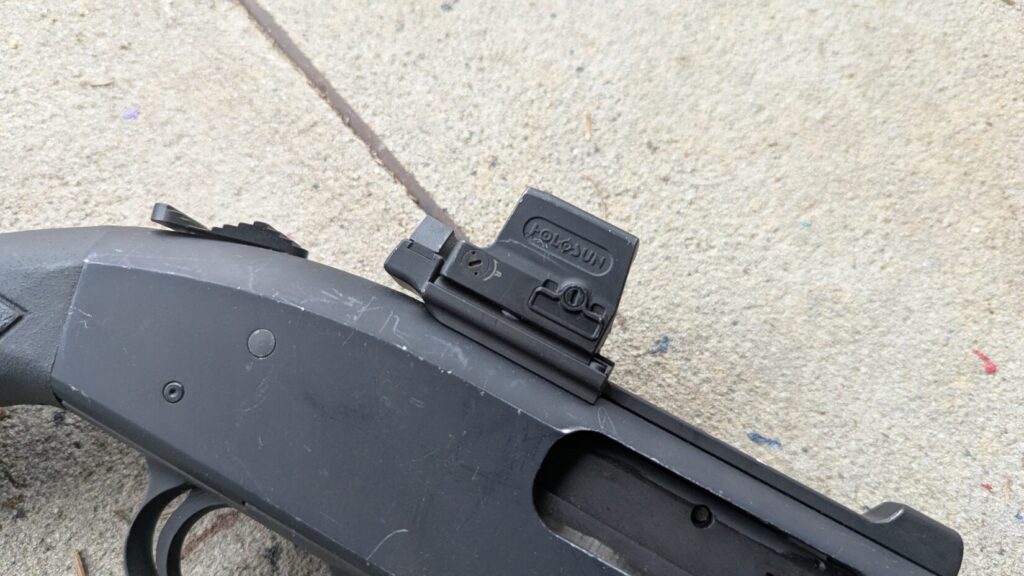
Bigger optics can get in the way if you do emergency port loads over the gun instead of under the gun. Admittedly, these are somewhat minor problems. If you use a taller optic, you won’t lose the fight because of it. Just keep the downsides in mind.
This changes if you have a gun like the Mossberg 590R or the Iron Horse Sentry 12 with an inline stock system. You’ll need that taller optic in these cases.
Direct Mounts vs. Rails
I like to mount my optics low, and I try to eliminate as many stacked tolerances as necessary. For that reason, the 940 Pro Tactical’s RMSc footprint directly milled into the receiver is my favorite mounting method on modern shotguns.
The classic optic-to-Picatinny rail adapter works, and works well. However, I prefer a low mount that the optic directly mounts to. This eliminates the need for the optic to be mounted to a rail adapter.
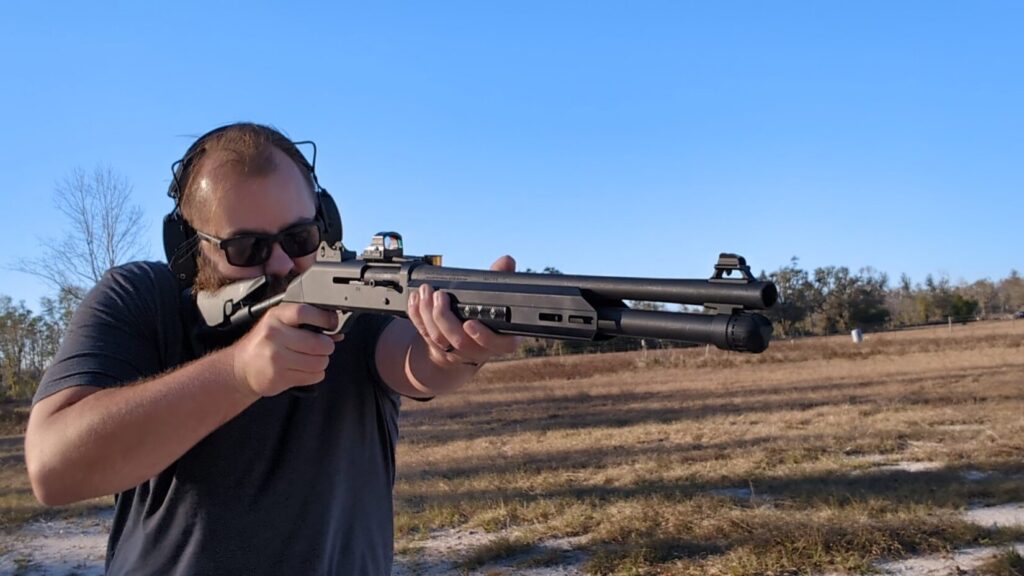
Mounts like the Scalarworks Sync, the Defender Tactical CoSight, and Aridus Crom keep the optic low and remove one tolerance from the stack. With the Crom and CoSight, we get backup irons as well.
4. On-board Reloads: Choosing a Sidesaddle
Spare ammo is my fourth priority. I doubt you’ll ever have to reload in a home defense encounter, but on-board ammo is cheap insurance.
Soft Cards vs. Rigid Carriers
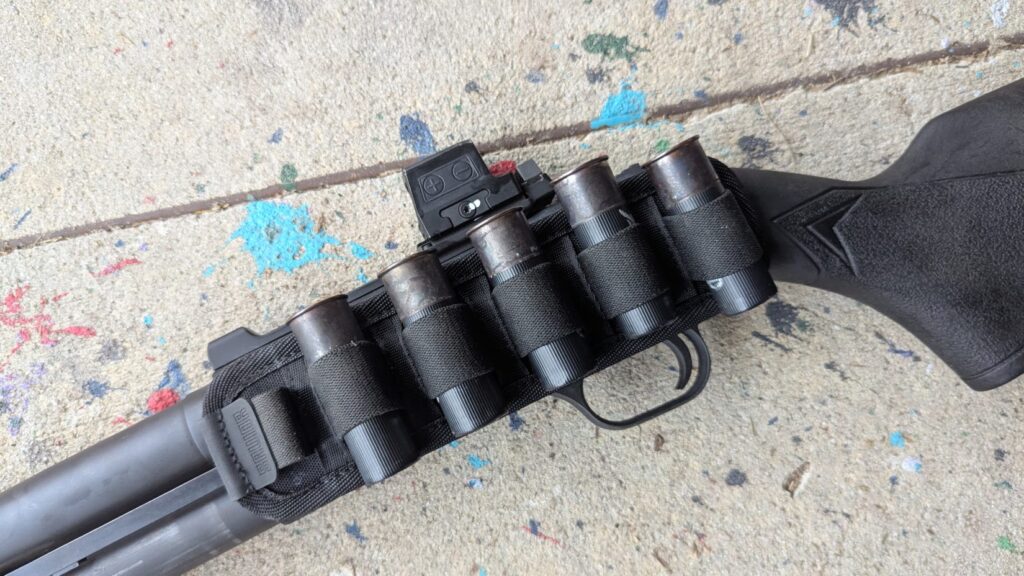
The most common method for carrying extra shells is a side saddle. You need to be selective with your selection. The easiest type of side saddle is a shotgun card that attaches to the gun via hook-and-loop. These are cheap, simple, and they work.
Lots of folks make these types of side saddles these days. Esstac makes good ones. I’ve heard a lot of praise for the Vang Comp models as well. Savior Equipment makes an interesting shotgun card that uses a semi-rigid backing and puts a lot of space between each shell for easy retrieval.
The elastic loops will eventually get loose. For home defense, it’s unlikely you’ll move enough to lose shells with loose elastic. However, if they get loose, a trip through the dryer can fix them.
The alternative is a rigid aluminum or polymer side saddle. You have to be cautious with these designs as mounting them typically requires bolts that go through the receiver. If you tighten the bolts too much, it will bind the receiver and cause reliability issues.
For rigid side saddles, I like the Mesa Tactical models with an adjustable retention cord and the Aridus QD-C design.
The Mesa Tactical SureShell carriers use Chicago screws to prevent this binding action. The ability to swap retention cords is a nice touch. They are also available for a ton of different guns at great prices.
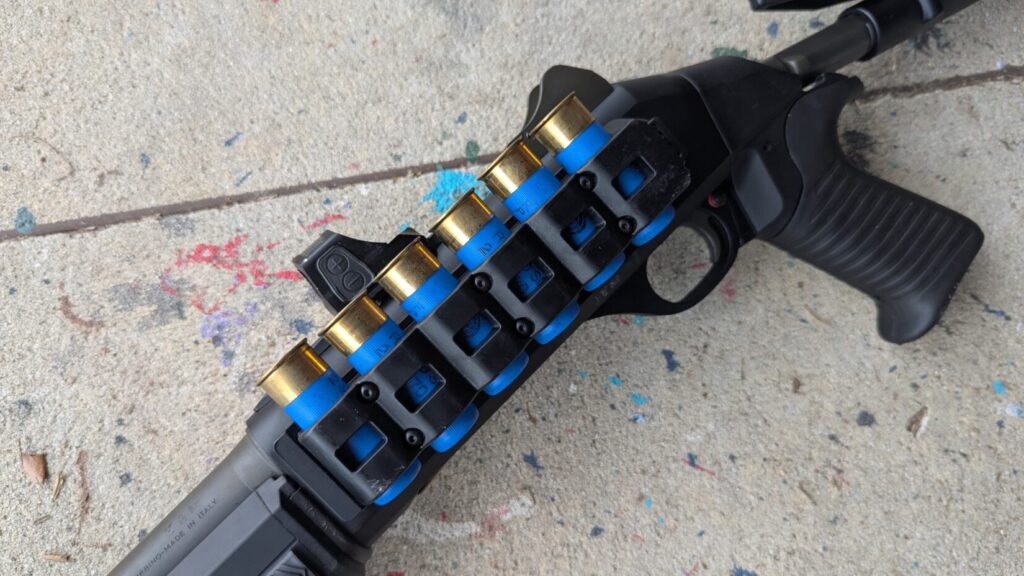
The Aridus QD-C is the most overengineered side saddle ever and uses detachable carriers so they can be swapped out if need be. The universal version rides on my Benelli M4 and has for years without the tape wearing out. It’s a fantastic sidesaddle, but it’s pricey.
The Stock-Fed Option
For 870, 590, and 990 users, a company called Tactaload makes a stock called the Flash 5. The Flash 5 has a magazine built into the stock that holds five rounds of ammo. A follower and spring propel the rounds downward, assisted by gravity.
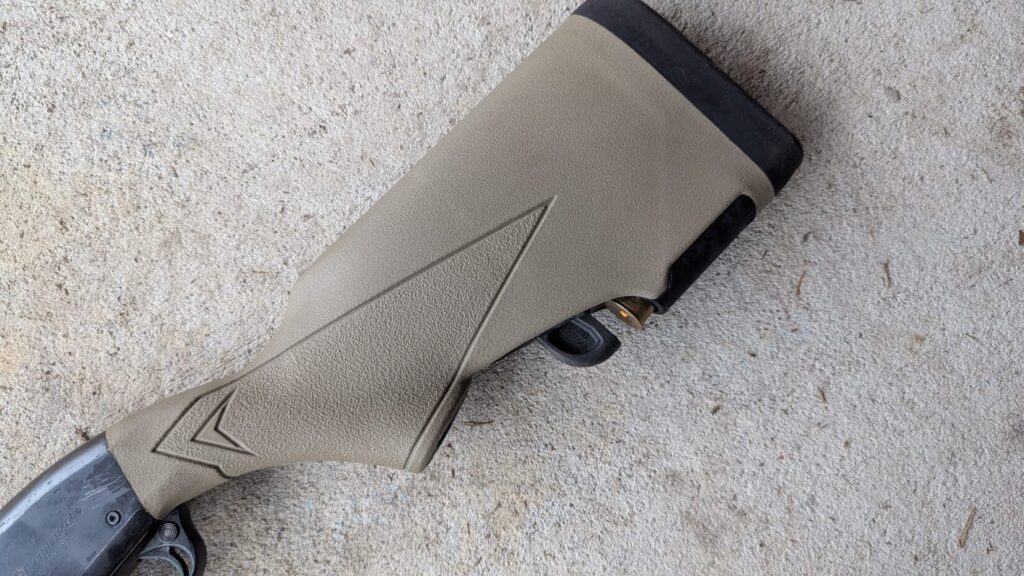
A small door holds the shells in place, and that door retracts when you pull the shell out of the stock, then springs right back up. This gives you easily defeatable retention. It’s fairly fast to reload from and is ambidextrous.
The stock itself is fantastic, adjustable for length of pull, sling-ready, and quite comfortable. I have two of these stocks and remain impressed by their design.
5. Retention and Recoil Management: The Sling
Okay, a sling is my fifth pick. It’s fifth because this focuses on home defense, and in a quick-moving situation, you might not have time to sling up. If you can, you should, but we have to be realistic.
Slings for defensive use ensure you retain control of the gun. It’s a lot tougher to take a gun from a shooter if it’s slung. That’s the primary value for a defensive shotgun sling.
A secondary use is that when properly tightened, the sling can help reduce recoil. When we engage in push/pull we are using tension to reduce recoil. A tight sling pushes the gun into your shoulder, helping you with the pull part of push/pull.
Selecting and Mounting Modern Two-Points
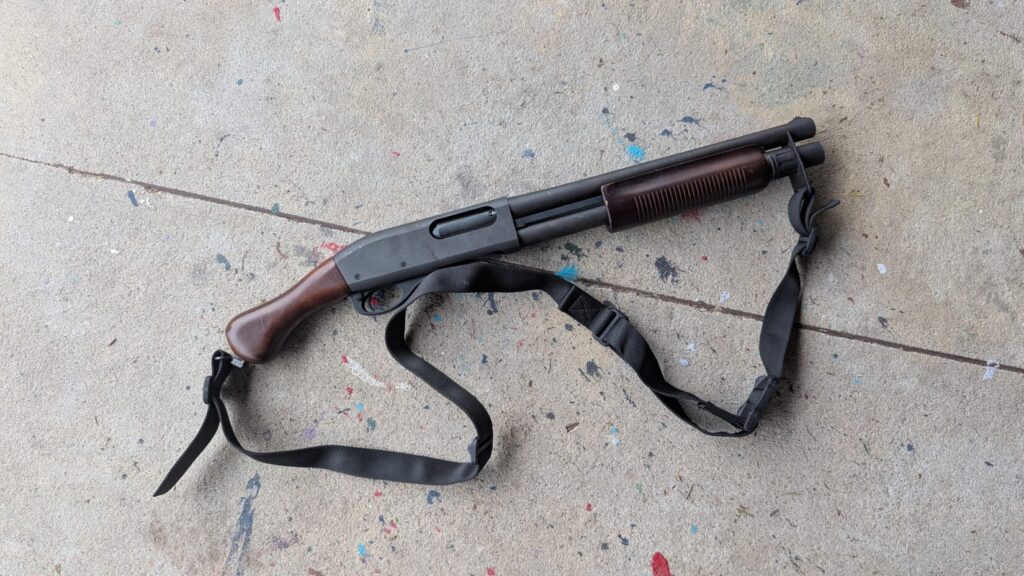
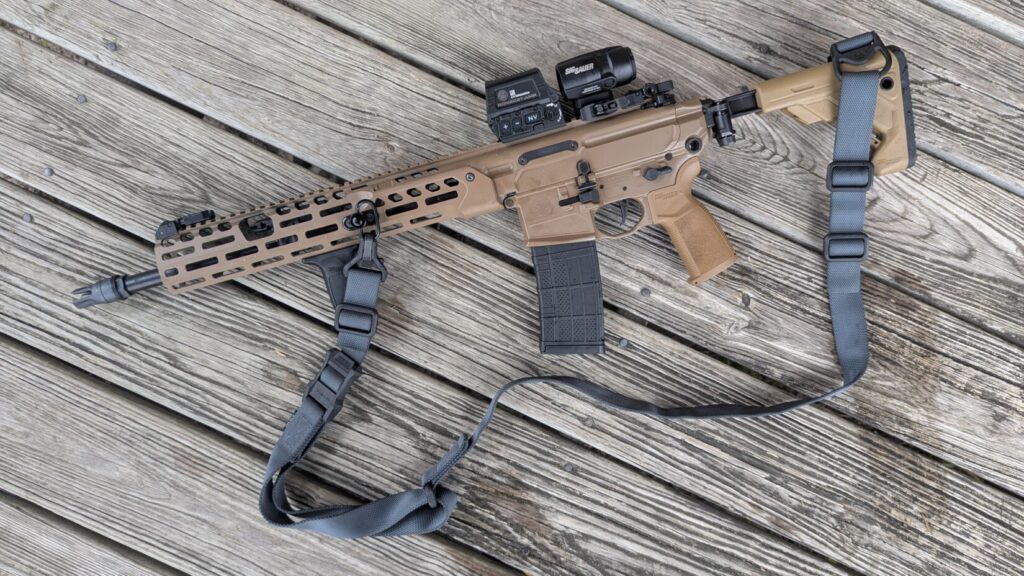
Any modern tactical, quick-adjust two-point will work. The Blue Force Gear Vickers Sling, the Magpul MS1 or MS3, the Arbor Arms Dual Adjust, and so on. Those slings work great on shotguns.
Mounting them isn’t always easy, especially on older guns. Most shotguns with sling points are designed for old-school strap-style slings that just hang off the shoulder. This places sling mounts in less-than-optimum locations.
It’s fine, but if we are spending money on a sling, we can spend money to optimize the mount.
Magpul and several other companies make barrel magazine clamps with sling points integrated. A lot of modern semi-autos come with these as well, and they are perfect front sling points.
If you have an 870, a 590, or a 1301, mounting a Magpul SGA stock is a great way to add rear sling points to your gun, including QD cups. If not, and you only have a bottom sling point that’s workable, attach the sling, then wrap it over the dominant-hand side of the stock, and then over the body.
This keeps the sling out of the way and creates good tension. It’s not perfect, and you might want to employ U-Loops or paraclips to make it a little easier to deal with.
Accesorizing
Those are my big five accessories. I want to establish PID and have a shotgun that fits. While most shotgun sights are fine, I like the speed and all-light conditions capability of a red dot.
A little extra ammo and a sling just top things off nicely. Accessorizing the shotgun isn’t always easy, but it’s not too hard to find the right setup for your needs.