
Mag-dumps aren’t training. Neither is standing still at the 25 yard line, poking holes in paper targets. It isn’t enough to practice static IWB draws in controlled conditions. Repetition can build solid foundations, but you should introduce adrenaline to replicate the effects of stress so you get more from range time.
Training for self-defense
I’m assuming that you’re training to build skills that may help you defend yourself and not training for basic shooting competitions. Training for self defense is hard, as there’s usually an unexpected element of surprise in real scenarios. Range time is all about control. But armed self defense is about the effort to regain control.
The Fight-or-Flight Response, Explained
What is casually called the fight-or-flight response is actually what happens when adrenaline hits the bloodstream. Adrenaline, or more exactly, epinephrine, is a hormone and neurotransmitter produced by the adrenal gland. When your brain turns on the faucet, good things happen.
The Physical effects of an adrenaline dump
- Heart rate increases: more oxygenated blood to muscles
- Airways open: you breathe faster and deeper
- Blood vessels redirect: blood shifts away from digestion toward muscles and the brain
- Pupils dilate: vision sharpens
- Glucose dumps: gives muscles and the brain an energy surge
- Sweating increases: to cool the whole system
Adrenaline is backed by cortisol, a hormone that allows the body to keep working with the intensity of the adrenaline dump. Otherwise, you’d crash out fast.
Once the threat is gone, the nervous system resets and you may feel off balance as the glucose is used up and normal sensation comes back online. This is typically when you might realize you’ve been injured.
How fast is the adrenaline dump?
After a high-stress event, you may feel like the response was instant. But the brain has to signal the adrenal glands, which send epinephrine into the bloodstream. That blood has to circulate, so there’s a measurable delay of a few seconds.
What happens in the milliseconds before an adrenaline dump?
Neural Shock: What Happens Before the Adrenaline Hits
When the brain registers an overwhelming threat, the nervous system fires first. Our nerves are like electric signals, so response time is more like an on/off. Neural shock hits fast and is exceptionally hard to simulate.
Deer-in-the-Headlights Effects
All of this happens before the adrenaline dump:
- Muscles freeze: the body briefly locks up
- A drop in heart rate can occur when shock is extreme: blood pressure craters
- Tachypsychia: time feels slow and you may get tunnel vision
- Fine motor breakdown: your hands may not work right
This is bad. But the effects are short-lived.
Why Typical Training Has Limits
Running the same drills on the range at every session helps build muscle memory. If you were to encounter an emergency situation and remain completely calm and in control, these skills would be invaluable.
But if neural shock kicks in and bypasses the brain, what then? Neural shock partially bypasses the systems that routine training trains. Under sudden threat, the prefrontal cortex, the part of the brain responsible for decision-making and accessing learned behaviors, can go dark for a moment.
The amygdala takes over. And this is what you hear people describing as lizard-brain.
Training with adrenaline
Before we get into designing drills, do some self-evaluation. Know your limits. Run all drills dry before adding live fire. Make sure the range is safe and clear of tripping hazards. You need to be able to move freely while your focus is downrange.
As is always the case with guns, be safe. It is equally important to take care of your physical health. Stretch. Do warm-ups.
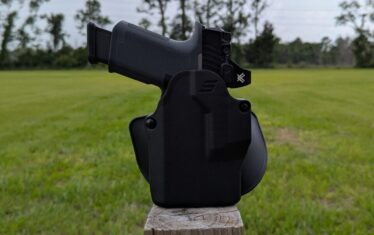
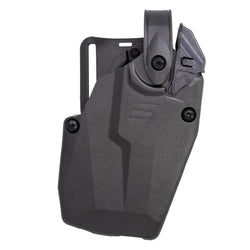
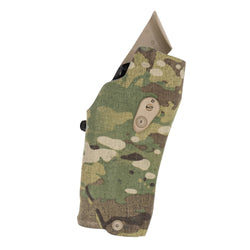
Gear note: I’d start all of these with an OWB holster with retention, like this 6354RDSO.
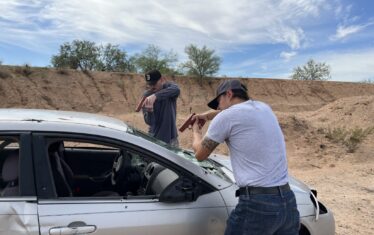
Each of these drills below should be done with a partner or coach. This person will call some shots and keep the element of uncertainty in the mix, but is also there to help watch for potential problems. And note that much of what follows is hard or impossible at some indoor ranges with narrow lines. Safety first.
Find a Move-and-Shoot drill
Multiple targets: begin by standing still and shifting your body to address two or more targets. Then add addressing one target from two locations on the range (like moving side-to-side, or backing up between shots). This is a real skill, and challenging to shooters who are still learning how to find a sight picture.
Hostage targets: Add some consequence to missed shots. This is a great way to begin to simulate a very real concern for any firearm use off the range. I put a freshly painted steel torso target up in front of a paper target and try not to hit it. Then I move and shoot the same drill.
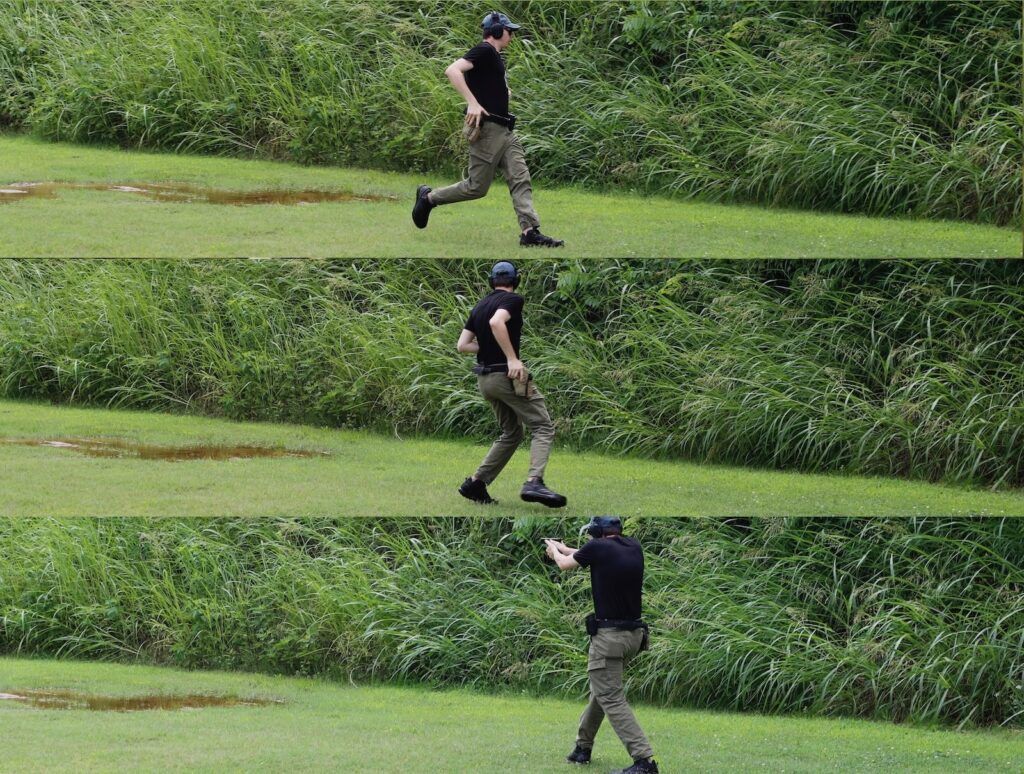
Getting off X: When your partner gives the signal, begin an intentional movement while you draw and shoot. This requires more coordination, but acknowledges you won’t be waiting for the threat to come to you.
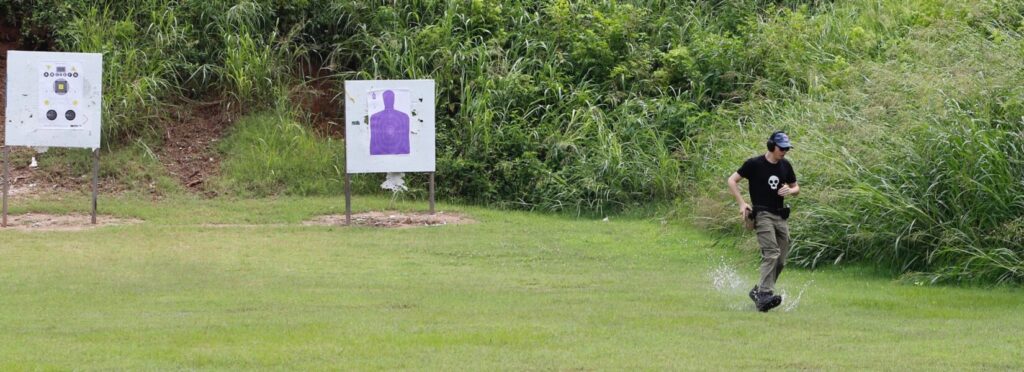
For an advanced exercise, jog or run with your gun holstered until your heart rate is up above your normal aerobic rate. Push it until you are at the point where you’re having trouble talking without sucking wind. This is best done on outdoor ranges where you have room to run over long distances. When you hit that point, then shoot for accuracy and see how you do.
Shoot with unexpected targets
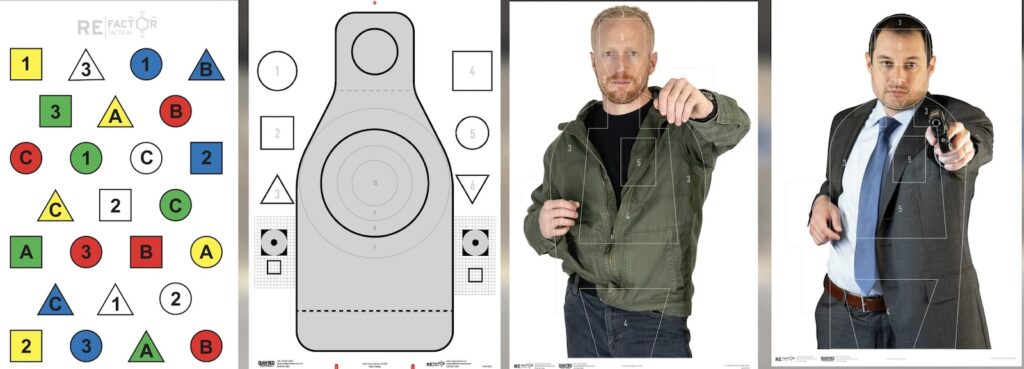
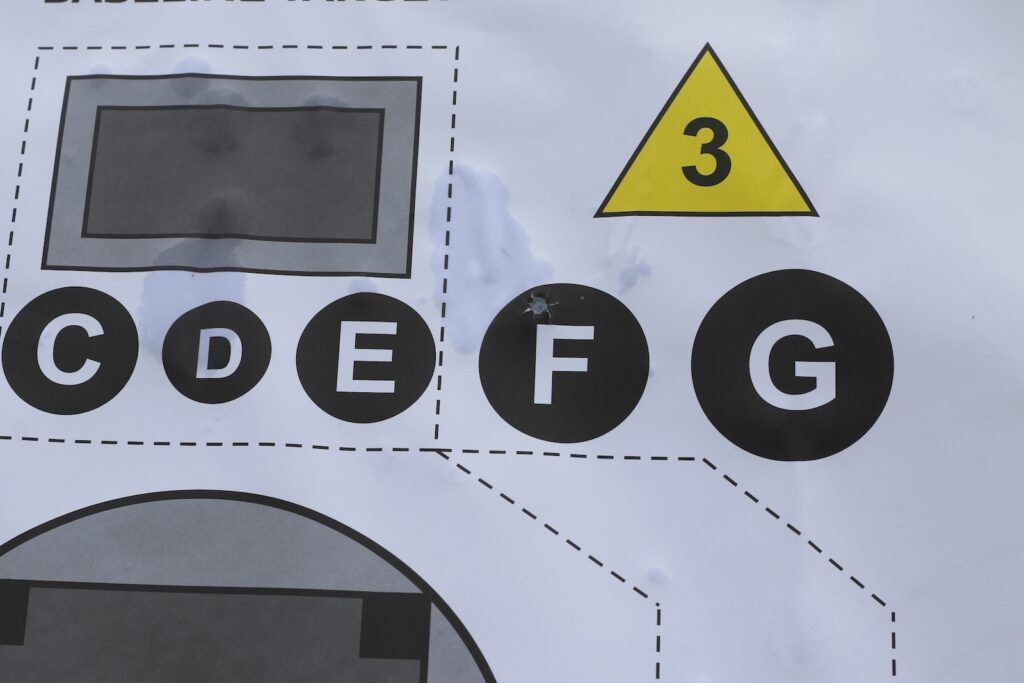
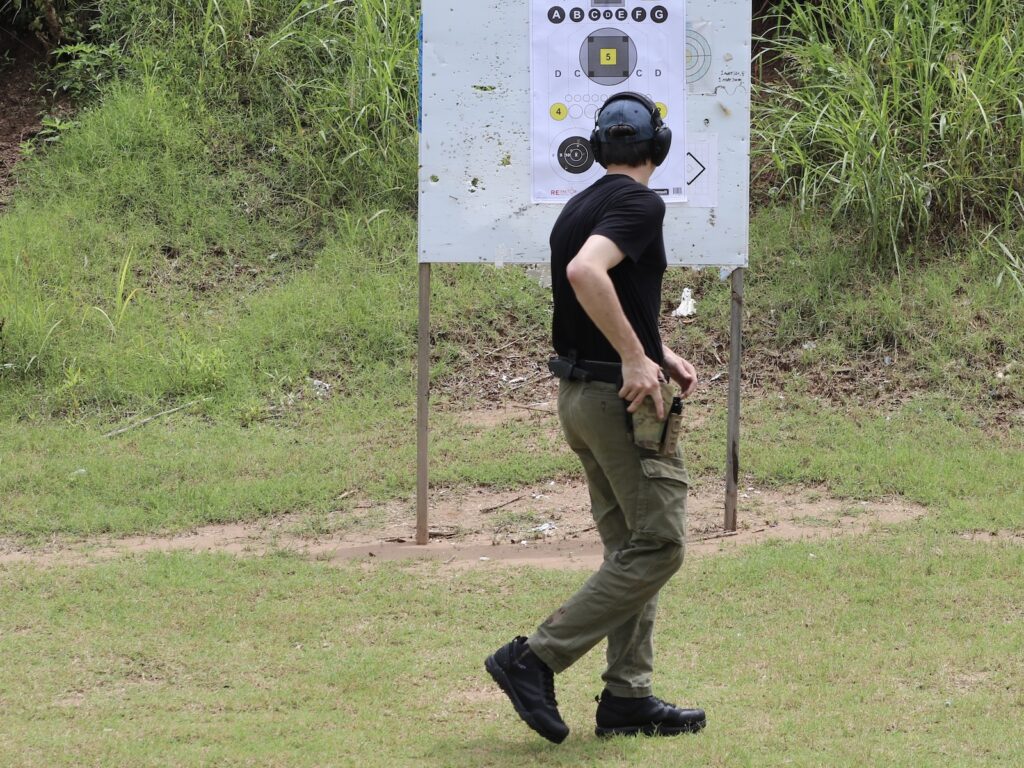
RE Factor Tactical makes great targets with multiple sections. These will strain your brain. Face away from your target, have your partner call a color and shape or number, then turn, draw, identify the target, and shoot.
For an advanced drill, have your partner put up targets without you watching. If you get to a point where you have a target memorized, you’re defeating the purpose of the drill.
Introduce Malfunctions into Training
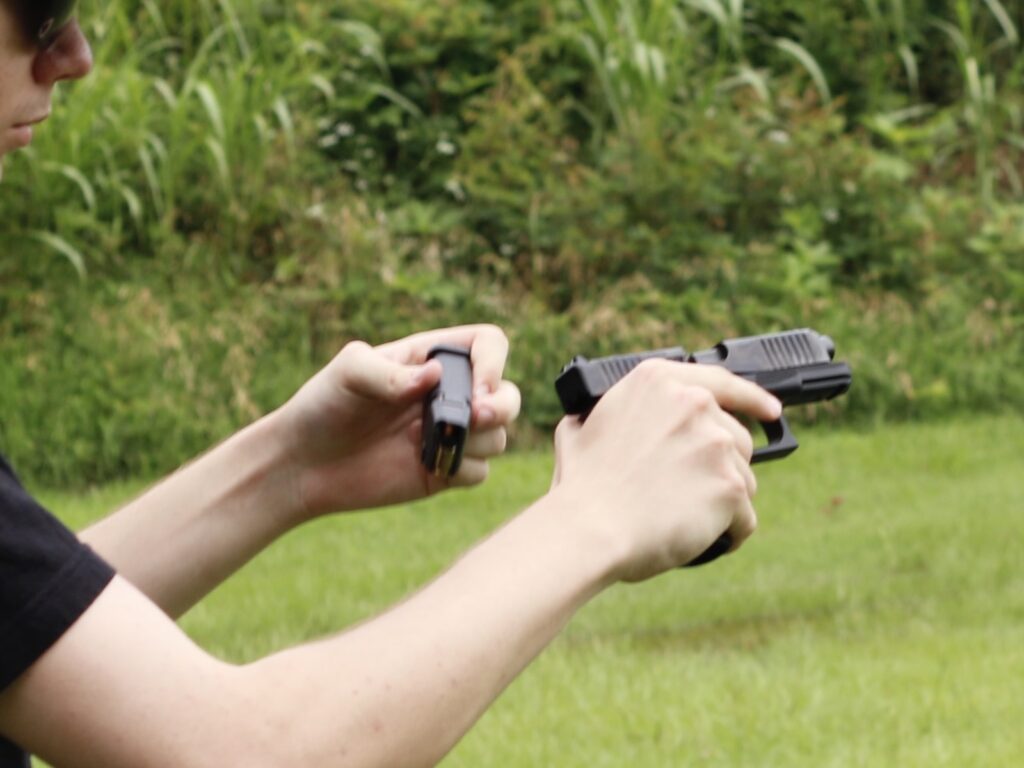
Snap caps work great, but only if you don’t know when they are coming. Have your partner load one or two in a mag of otherwise live ammunition.
If you don’t have snap caps, use a spent shell casing. This is meant to replicate a failure to fire, but in my experience, spent casings tend to induce a failure to feed more often than not, which makes them equally effective training tools for clearing a jam.
Each malfunction should be cleared quickly, but the more you rush it, the worse it will become. The advanced level of this drill will combine preset malfunctions with the drills above.
What You Can’t Train For
Are these perfect simulations of adrenaline? No. If you get into it, though, you will feel the stress build. This part is easy enough.
Neural shock is different. How do you train for a physiological response that bypasses the brain? I haven’t found a convincing way, yet.
Instead, think about it like this. Focus on situational awareness. Neural shock is always a result of a surprise. While you can’t prepare for every unknown, maintaining an awareness of your surroundings can go a long way to eliminating the surprise element. You may still get the adrenaline dump when things kick off, but your brain will stay connected.