
Proper firearm maintenance keeps your firearms running flawlessly when lives depend on them. Yet, there is often some confusion as to how often and what type of lubrication should be used. Applying the wrong lubricant can cause sluggish performance, attract abrasive carbon, or accelerate mechanical wear. Should you only use gun oil, or is grease needed in some cases?
In this article, we will break down lubrication and explore the mechanical properties of both liquids and solids. We will also discuss exactly where to apply them across common firearms like your Glock, SIG, 1911, AR-15, or bolt-action rifle.
Oil vs. Grease
Before we talk about where to apply these two types of lubrication, let’s look at what they are. The primary difference between gun oil and gun grease boils down to viscosity and fluid retention.
Gun Oil: A low-viscosity liquid designed to migrate into tight mechanical tolerances. It flows easily into tiny crevices, cleans surfaces, and provides immediate corrosion resistance. High-quality oils like Break Free Performance Synthetic Gun Oil work great for surface penetration and surface tension. It stays wet longer than traditional solvents.
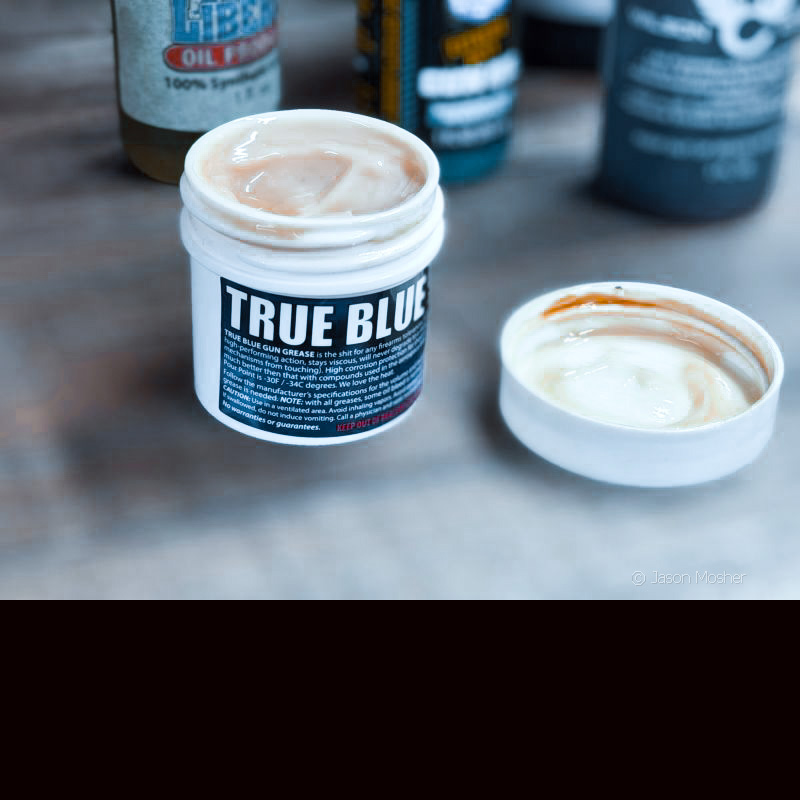
Gun Grease: Essentially a base oil mixed with a thickener or soap matrix. This binder acts like a micro-sponge, holding the lubricant in place under heavy mechanical stress and high temperatures. Products like True Blue Gun Grease provide a durable physical barrier that refuses to burn off during rapid, high-round-count strings of fire.
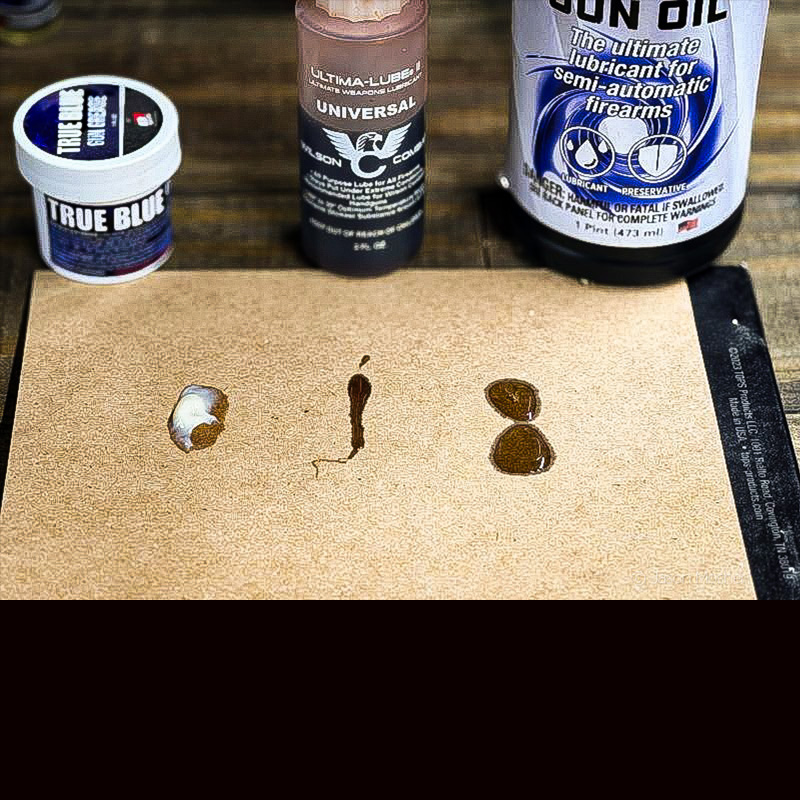
Just like with oil, there are different thicknesses of grease. When I use grease on certain parts of a firearm, I select a lighter grease that will hold up longer than oil, but still spread easily over the parts I’m performing maintenance on.
The same goes for oil. When I’m oiling an area with extremely tight tolerances, I use a thinner oil so it will work its way down into the parts. On other parts, however (like the barrel), I use a thicker oil that will provide a little more protection against friction.
When to Use Oil
Gun oil is perfect for fast-moving components with tight clearances. It creates a thin, hydrodynamic film that reduces friction without adding bulk. Because oil naturally migrates, it acts as an excellent preventative measure against environmental rust. It should be applied to some pins, springs, hinges, and small internal trigger components as needed.
As I mentioned above, I like to use Break Free Synthetic Gun Oil or Wilson Combat Universal Ultima Lube II. I’ve found both of these oils to be excellent at holding up under heavy use. Because the Wilson Combat oil is a little thicker, I use it on sliding parts, but not springs and pins. For the smaller items, I stick with Break Free’s oil.
For a large part of my life, I thought some simple gun oil from the store worked for everything gun-related. And to some extent, you can make gun oil work for everything. But because gun oil is lighter and thinner, it will wear off faster. It wasn’t until I attended armory school that I was introduced to the idea of using both, depending on the gun.
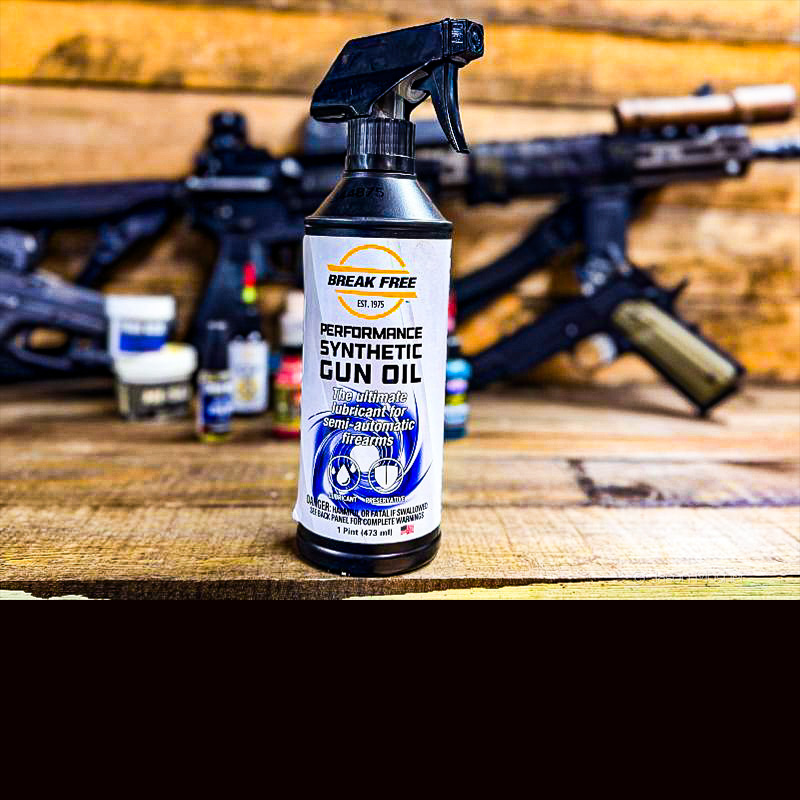
Some guns simply don’t need much at all. Take a Glock, for example; these pistols require surprisingly little lubrication to run reliably. In fact, excess oil can seep into the internal firing pin channel. This causes carbon to build up and could lead to a light primer strike.
Does it rotate?
A general rule is to use oil on anything that rotates. These are often smaller parts with tighter tolerances, and grease can be too thick. This would include the trigger bar/connector interface and the round portion of the exterior of the barrel.
On the trigger bar and connector, place about a drop of low-viscosity oil where the rear trigger bar meets the connector hook. It doesn’t take much at all for these parts because there is not much friction between them. Don’t overdo it, or you will have oil running off of them.
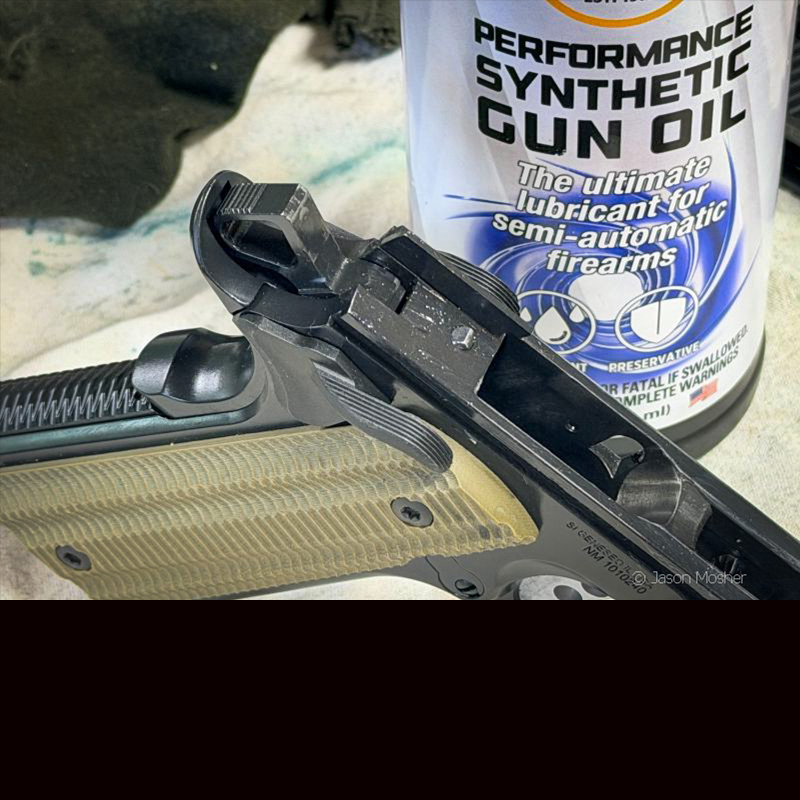
For the barrel, you want it to slide easily without causing wear on the exterior. Spread a very thin film of oil along the surface to prevent locking friction. Again, a little goes a long way. You can also place some oil on the take-down pin if it rotates, as a Sig or Beretta does.
On 1911 style handguns, place some oil on the linkpin, bushing, hammer, and sear pin. I can’t cover every type of handgun out there, but you get the idea. If it rotates, oil it.
When to Use Grease
Gun grease handles heavy loads, extreme heat, and violent reciprocating metal-on-metal sliding movement. When two flat metal surfaces slide against each other, they scrape away thin oils. Grease maintains its structural integrity under these harsh directional forces. It resists water washout and seals out abrasive environmental dirt. The general rule for grease is to apply it to sliding parts.
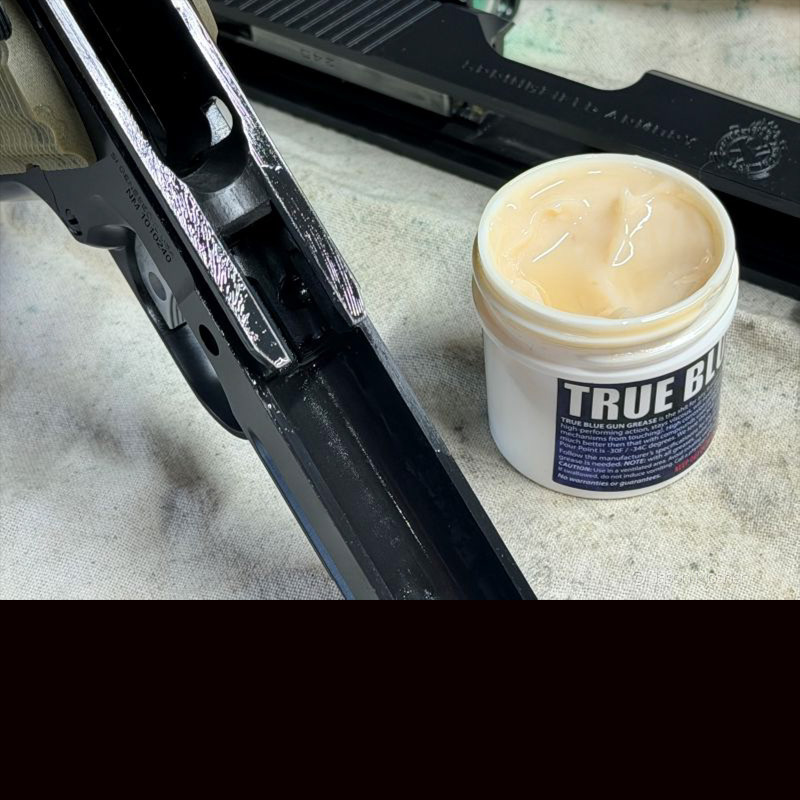
It should also be used sparingly, as over-greasing can trap excess carbon fouling and create an abrasive paste. I like to use True Blue Gun Grease for most of my guns.
I mentioned earlier that I used oil for everything on my guns before going to armor school. That was where I learned the difference between the two and when they should be applied. Even though oil can work great on handguns, like a Glock, I now prefer to use a small amount of grease. More specifically, I wipe my finger across the metal surfaces where the frame and slide meet.
Oil can be used to lubricate these surfaces, but if you plan to do much shooting, a small amount of grease will hold up longer. I also add some grease under the barrel hood. While this is part of the barrel, the square part (near the chamber) has more friction on the slide than the round portion of the barrel.
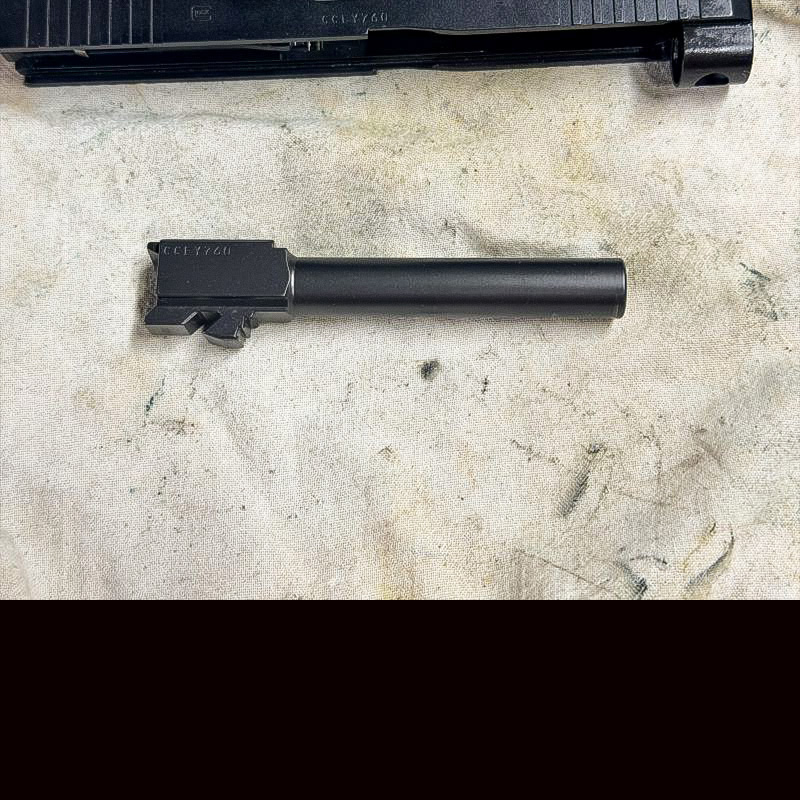
Of course, it would take much longer to mention every single area on each type of gun that should be greased. Just remember, if there is a flat, metal-on-metal surface that slides, grease it.
Rifles and Long Guns
Just like handguns, rifles need oil, grease, or both, depending on the specific model. An AR-15 bolt carrier group (BCG) has both sliding and rotating mechanics. The exterior flats of the carrier slide aggressively against the receiver interior. I’ve found these sliding flats run smoother and last longer when lightly coated with high-quality grease.
But the internal bolt rings and cam pin rotate and twist within the carrier cavity. These internal components require a migrating liquid (oil).
For bolt-action rifles, apply grease to the rear of the bolt lugs where they cam into the receiver. This treatment smooths the bolt throw and prevents galling of the rifle’s locking surfaces. It’s the same concept as handguns, just in different places.
Why do factories pack new guns in grease?
If you have ever purchased a new firearm, there is a chance it was covered in a thick, sticky, dark grease. This substance is mistakenly identified by many as operational lubrication.
In reality, this is not a high-performance lubricant at all. It is a cosmoline-based or synthetic rust-preventative compound designed solely for long-term storage and overseas transit. This is why it’s always a good idea to clean it all off and lubricate the gun before firing it.
Manufacturers ship firearms globally via ocean freighters and store them in warehouses for months at a time. Liquid gun oil would quickly evaporate or migrate off the weapon, leaving the raw steel unprotected against saltwater and humidity. The heavy factory packing grease seals out moisture completely.
Try both and see what works best on your firearm
Really, once you understand the difference between the two types of lubrication, deciding where to apply them is not complicated. Just about everyone I know uses oils and grease a little differently. The important rule is not to use too much.
With many of the parts, just wiping my finger across the part with either oil or grease on it will work. If you choose to use oil only, just remember to check it a little more often. If you oil the slide on a handgun and check it after a day of shooting, you will probably find it dry.
Both types are a form of lubrication; one holds up better to high-friction, and one gets down into tight tolerances better.