
With a pedigree in NASCAR, Race City Defense wholly believes that “if you ain’t first, you’re last.” The RCD Core might be just the pistol to help you climb the podium at your local club match.
Thank you to Race City Defense for providing a sample. All thoughts and opinions are my own.
What Is the 2011 Project?
To understand the history of the 2011, Staccato, and the rise of this pistol classification, check out “Party Like It’s 2011: Staccato and the 2011 Revolution,” which tells the origin story. That article lays the groundwork for what follows, and this is meant to give you honest opinions on this growing market.
Unlike other trends that come and go, this one has staying power. But unlike other trends, pistols in this class can cost thousands of dollars. The goal here is to give you an unbiased opinion on how these models stack up and help you decide which is best for your needs and budget.
WHO IS RACE CITY DEFENSE?
Race City Defense (RCD) was born in Mooresville, North Carolina—better known as “Race City USA”—where precision machining and motorsports go hand in hand.
Founders Tyler and Adam honed their engineering skills supporting local NASCAR teams before applying that same problem-solving mindset to firearms. Competitive handgun shooters, they began building and modifying pistols for friends, blending racing-inspired precision with practical performance.
Today, that engineering-first approach remains at the core of every firearm they produce. Now, let’s dive into the RCD Core Pistol.
RACE CITY DEFENSE CORE SPECS
- Model(s): Core
- Action: Single Action, Hammer-Fired
- Frame: Stainless Steel
- Grip: Aluminum Grip and Magwell
- Caliber: 9mm
- Capacity: 17
- Sights: Black, Serrated, Suppressor-Height Sights
- Optic Cut: Yes, RMR and DPP
- Magazines: 1
- Barrel Length: 4.6”
- Weight: 39 oz.
- Price: $2,995
FEATURES
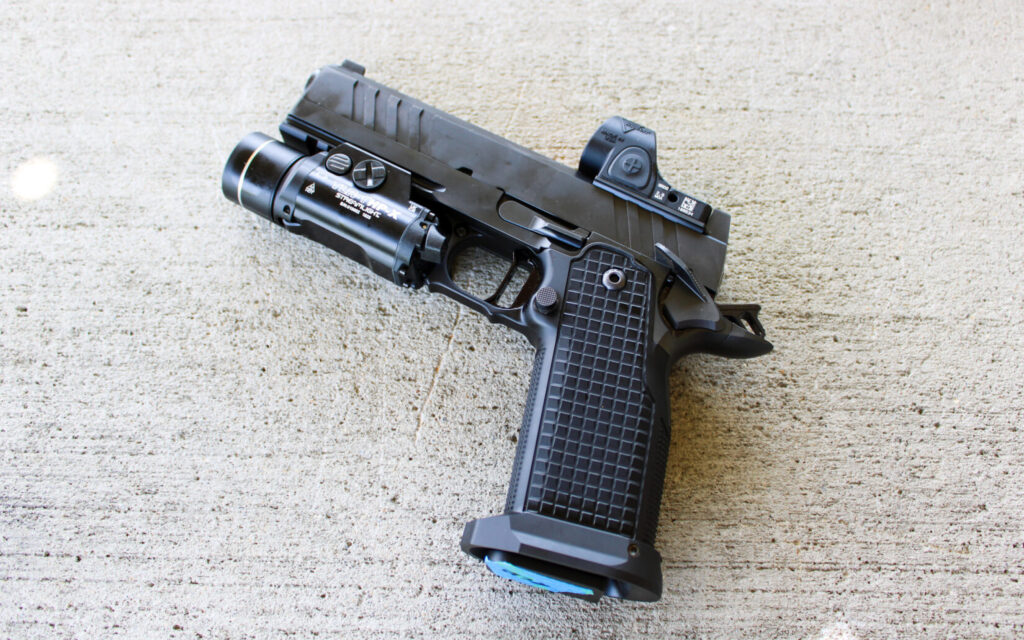
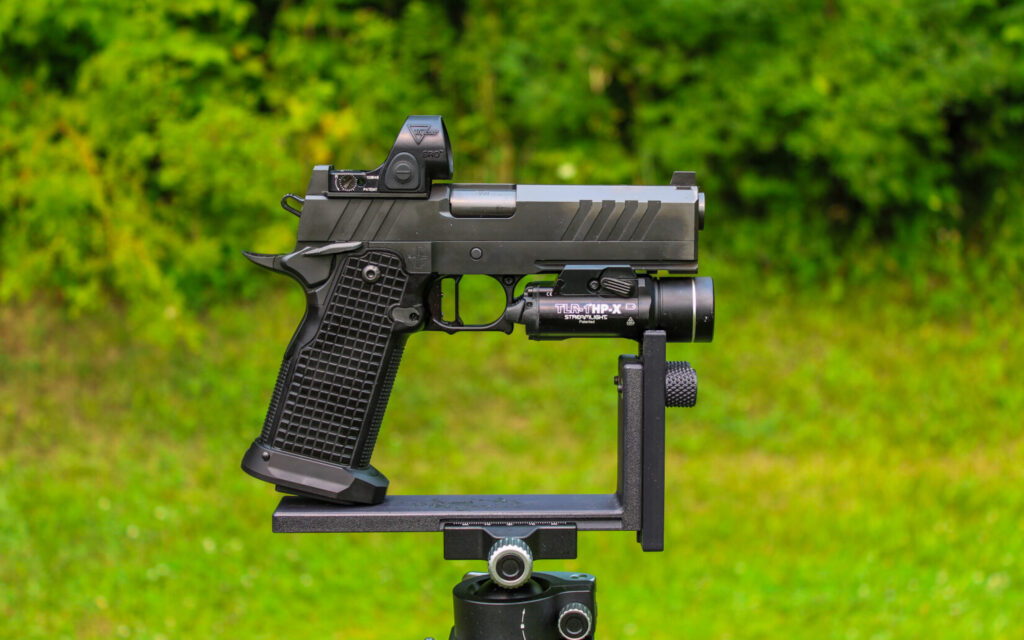
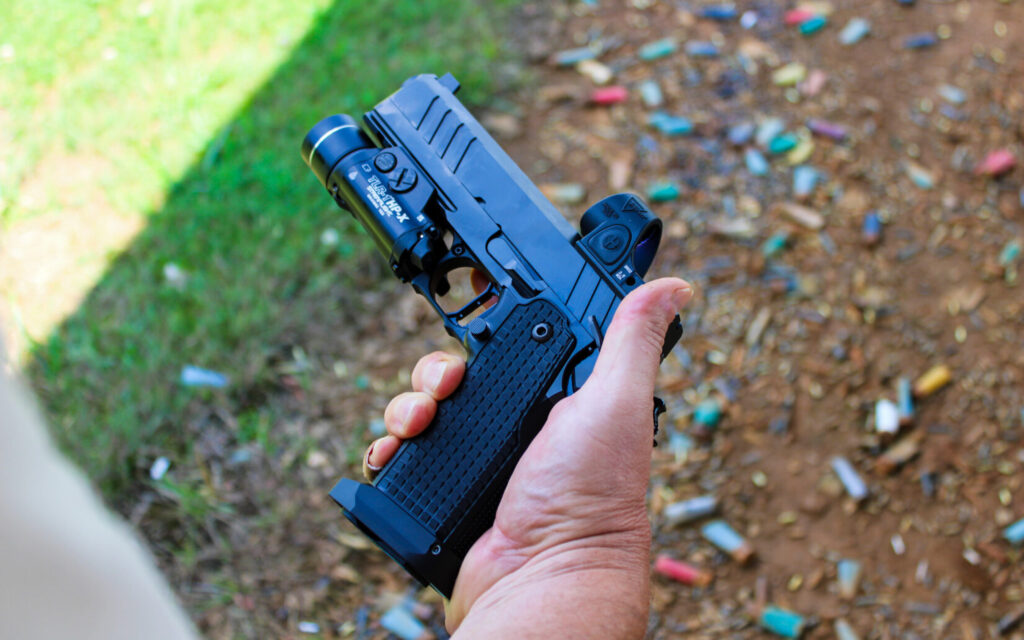
The Race City Defense CORE 4.6 is a purpose-built double-stack 1911 that pairs competition-ready performance with premium components. The pistol centers on a 4.6-inch Atlas Gunworks bull barrel and a precision-machined tri-top slide, cut from bar stock rather than blanks.
Finished in black DLC, the Core features a full-length dust cover, machine-finished construction, and a toolless guide rod for simplified maintenance (thank you).
The optics-ready slide is cut for Trijicon RMR and SRO footprints and ships with an RMR/SRO mounting plate. However, if you remove the RMR plate, the pistol will accept direct-mount DPP-footprint optics.
Front and rear slide serrations provide positive purchase when racking the slide, while the aluminum grip and magwell, aluminum grip panels, undercut trigger guard, and extended beavertail help maintain a higher, more controlled grip under recoil. An ambidextrous safety rounds out the user-friendly controls.
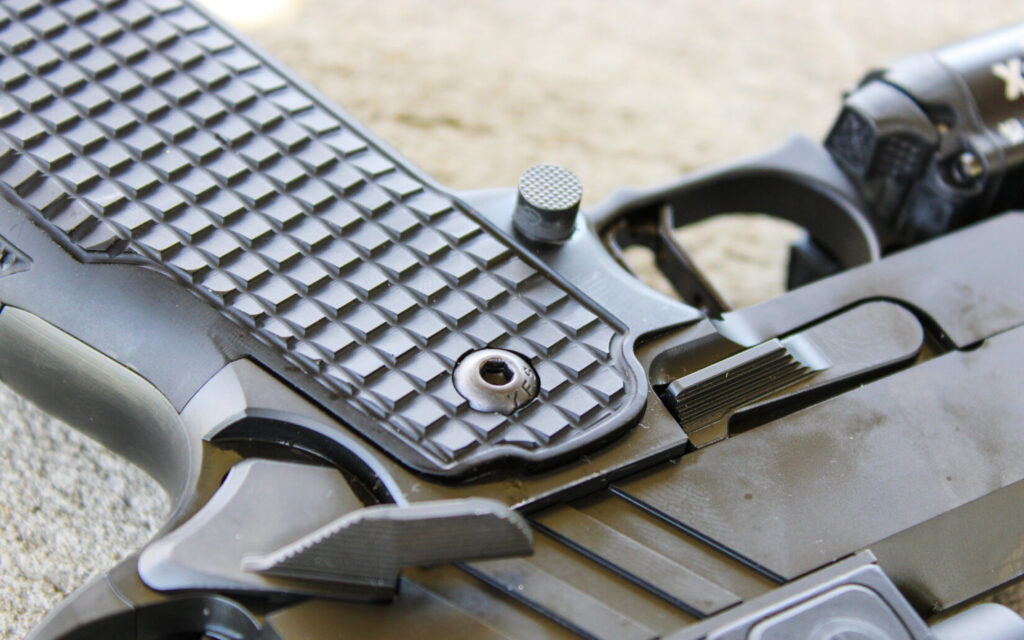
The trigger breaks at a crisp 3- to 3.5-pound pull and is an Atlas Gunworks Flat Medium Black Trigger. It features a short reset for fast, accurate follow-up shots.
Designed for competition, defensive use, or showing off to your buddies, the RCD Core exemplifies the capabilities of modern machining. Each pistol includes one 126mm Atlas Gunworks magazine and a Savior Range Slip.
SETUP
Since the Core comes out of the box with the plate mounted, I decided to go with a Trijicon SRO. The SRO has become the standard for competition optics and has stood the test of time. The one I’m using is from my personal collection. I took it off another pistol to use on the Core.
You can also remove the RMR plate and mount a DPP footprint optic directly, such as the Vortex Defender-ST Enclosed I’ve been using for other reviews in the 2011 Project. RCD recommends applying heat before removing the screws. Just an FYI.
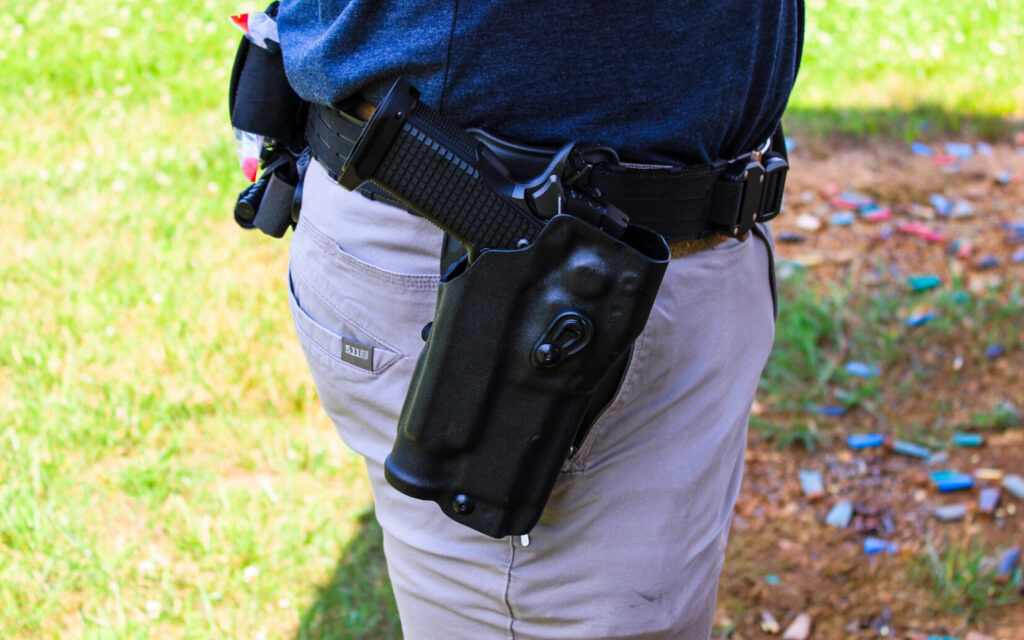
For holster compatibility, I’ve added a Streamlight TLR-1 HL-X. This proven light offers good value. The best part is that it is multi-fuel compatible and delivers about 1,500 lumens and 20,000 Candelas. Depending on where you are shopping, this light hovers around $220.
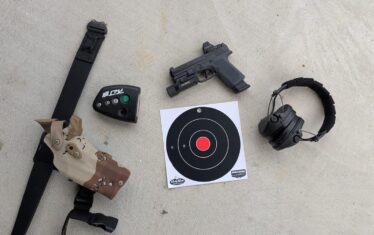
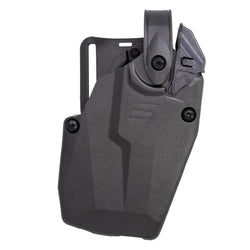
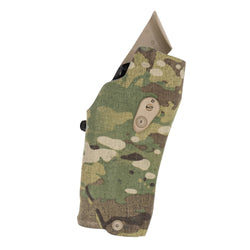
As I am throughout this series, I’m otherwise running this pistol stock. That keeps things on an even playing field. For a holster, I’m using the Safariland 6354RDSO – ALS Holster w/ QLS19 Fork and a mid-ride QLS adapter. This is my go-to setup for any kind of “tactical” shooting or training. Since I’m not in law enforcement, I’ve removed the hood for easier access. This is mounted on the Safariland BASELINE MOLLE Belt, which I’ve grown to like quite a bit.
Now, let’s head to the range.
AT THE RANGE
A note on ammo. All “range ammo” is Blazer Brass 115-gr FMJ (5200). For accuracy testing, I used Hornady American Gunner 115-gr XTP. I picked up all the ammo for testing from Ammunition Depot.
Let’s get into the drills and accuracy testing.
Bill Drills
As I continually mention, I like to run Bill Drills first to warm up and get acquainted with the pistol. Just as an athlete warms up before a game or match, you need to prepare your body with a stretching routine to perform at your best.
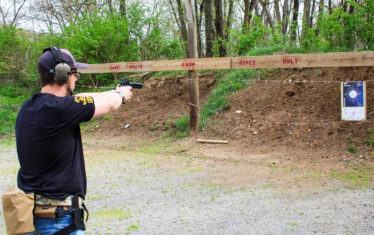
I start Bill Drills at a low ready, with the target about 5-7 yards away. The goal is six A-zone hits in 1.25 seconds or less. With the RCD Core, my average time over five attempts was 1.19 seconds. All attempts were solid and fell under my 1.25 par time. Because of its weight and excellent trigger, the Core is easy to shoot fast.
First shots hovered around .41 seconds, while follow-ups were in the .15 range. Accuracy was excellent. I settled into the Core quickly. Again, I’ll reiterate that full-size steel guns are easy to shoot, and the Core was no different.
Accuracy Testing
For this portion, I’m shooting from a pistol rest mounted to a tripod. This keeps things as stable as possible and really showcases the pistol’s capability.
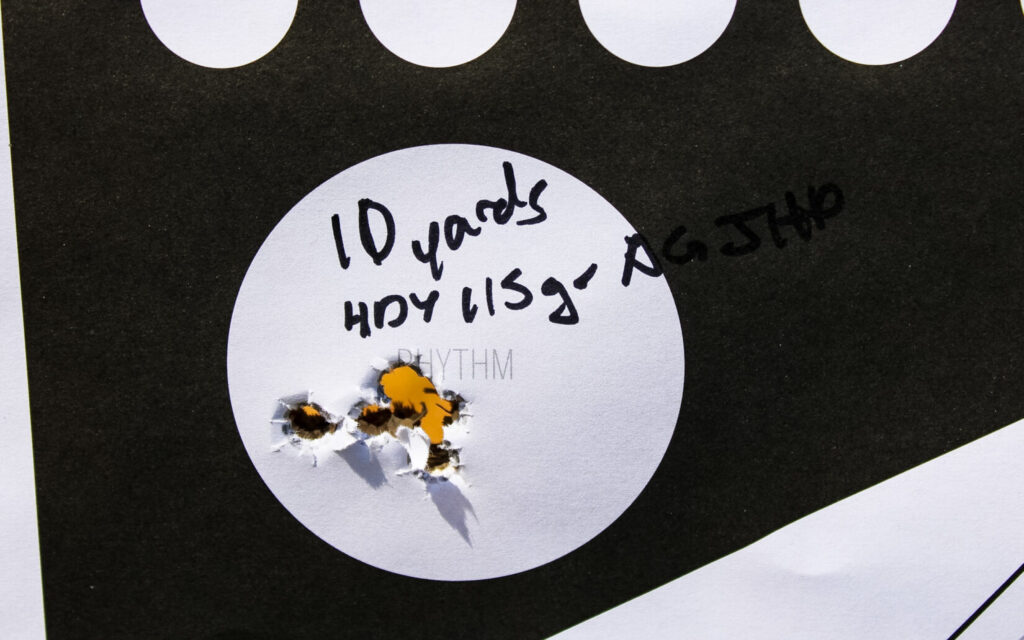
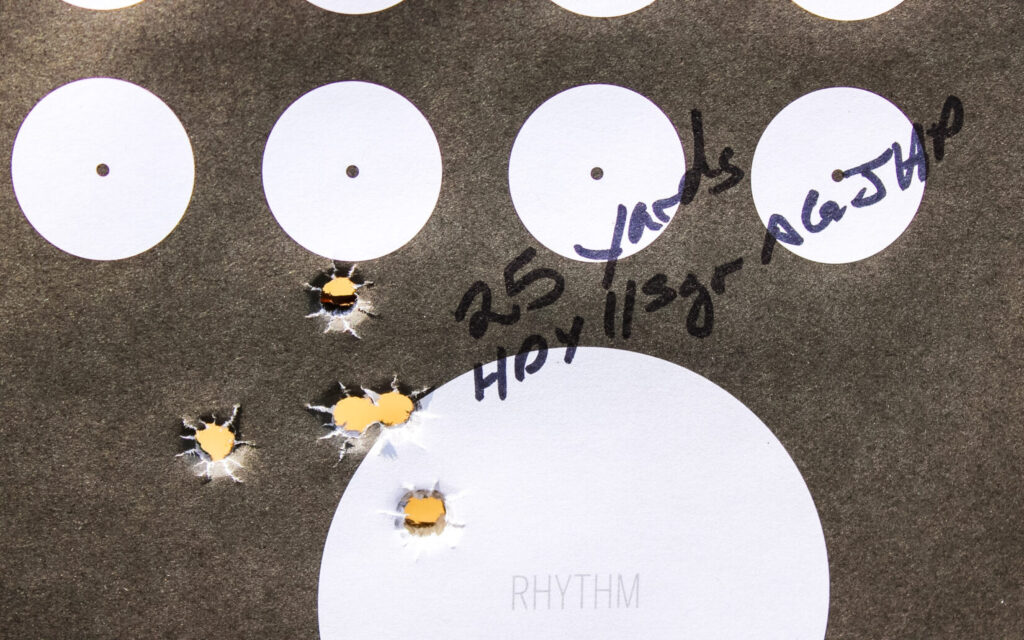
At 10 yards, the pistol was excellent, with one ragged hole and the fifth shot next to it. At 25 yards, the Core printed a 2” group, making this one of the most accurate pistols in the 2011 Project. Really impressive stuff.
1-and-1 Drills
This is my favorite drill to run. I start the same way I do for Bill Drills. 1 shot fired, slide lock, reload, 1 shot. My goal is to hit a 3.25-second par time. I have small hands, which can make shooting 2011-style pistols interesting. For this, I’d roll my strong hand to engage the magazine release, then use my support hand to hit the slide release before moving back into position.
Since the Core has a pinned grip safety, the grip’s radius is a little smaller, which makes hitting the mag release easier. Also, the mag release is extended on the Core, which is a huge upgrade.
I was blazing on 1-and-1 drills and averaged 2.9 seconds. For context, this was the same day I was shooting the Kimber 2K11, which I didn’t perform well on. This proves that ergonomics matter.
The Humbler
This is a good finisher I picked up from James Williamson of HK. It’s a 10-second par time. Either start with the pistol holstered or on a bench. Ten shots into the A-Zone, reload, then two shots into the head A-Zone.
As with the 2K11, I was a touch slow at 10.10 seconds. My first shot was at 2.54 with .60 splits (which includes a reload). I had two line breakers, but otherwise this was clean. I believe they were the first two shots fired. The Core is a heavy pistol, so I shot a little low out of the draw.
Note: If you’ve heard of “The Humbler” before, it’s likely the 70-round, 700-point aggregate drill popularized by Larry Vickers and associated with Delta Force training. This is not that drill — it’s a different, shorter exercise that happens to share the same nickname.
Sizing Up the Race City Defense Core
Where the Core Delivers
The fit and finish of this pistol is excellent. You can tell the lineage of machining and working in NASCAR has transcended to their handgun production.
The grip texture is excellent and is on the aggressive side—so be warned. I prefer texture that nearly makes my hands bleed when I’m done. I had a few others shoot this pistol, and they weren’t as accommodating to the texturing.
The optic mount is excellent and overly robust. No issues there. The trigger, as I mentioned, is excellent. It feels more like a custom job than a factory one. The extended magazine release is another positive, which is why the reload times were so good.
A nice touch is the double undercut on the trigger guard—another feature usually reserved for pistols at a higher price point. Overall, the pistol’s ergonomics exceeded my expectations.
Mixed Results Here
While the magazine release is extended, the rest of the controls were not. This pistol would be a perfect 10 if it had an extended (or oversized) slide release and an enlarged strongside safety. That may be nitpicking, but it’s a minor ask for a pistol this well thought out otherwise.
Where It Falls Short
I know the Core is a price-point gun, and at just under 3 grand it offers tremendous value. But in 2026, shipping a pistol with a single magazine is a real gap, regardless of price. Even one more in the box would go a long way.
Zooming Out
The RCD Core really exceeded my expectations. They are a new company, but they have come out swinging. There’s not much more you could ask for in this price range.
Its price point, ergonomics, and machining quality set this one apart from the others in this category. But as I mentioned, this is a very competitive grouping of pistols. All of them are good; it’s about finding what best fits your needs.
Because this is a smaller company that only recently sprang up, you won’t find them everywhere. This is one you will have to find through their dealer map, because you likely won’t find it at your local FFL.