
The criminal element, though seemingly thoughtless and impulsive, operates through a pattern of backgrounds, motives, and behaviors. One might call these patterns a standard operating procedure, or SOP.
In response, law enforcement develops their own SOPs, manuals of operation, and hands-on training to combat the criminal element. Experience, faulty and correct, is the foundation of it all, and the concepts are nothing new.
Take the Colt New Police Revolver as such a case study. This pocket-sized .32 caliber revolver was the NYPD’s first standard issue handgun, and it represented the next step forward in standardized marksmanship training—the ultimate deterrence and resolution.
A Department Without Standards
The New York City Police Department was the first professionally staffed law enforcement agency in the United States. But since its founding in 1845, professionalism was light. Aside from their woolen uniforms, copper badges, and knight sticks, the NYPD at the end of the 19th century was under the thumb of Tammany Hall.
The department was better known for collecting protection money and electioneering than for policing. Appointments, promotions, and policing methods were based on politics. There were no physical fitness standards. The NYPD was an armed agency, but the average patrolman had to buy his own gear.
The hammerless Smith & Wesson New Departure .38 was a common and safe choice, but it was expensive and hard to shoot. Invariably, the patrolman carried something lower-end that was seldom used in practice or maintained for months on end. The City was on the hook for property damage and wrongful injuries caused by accidental discharges.
The Lexow Committee and Roosevelt’s Appointment
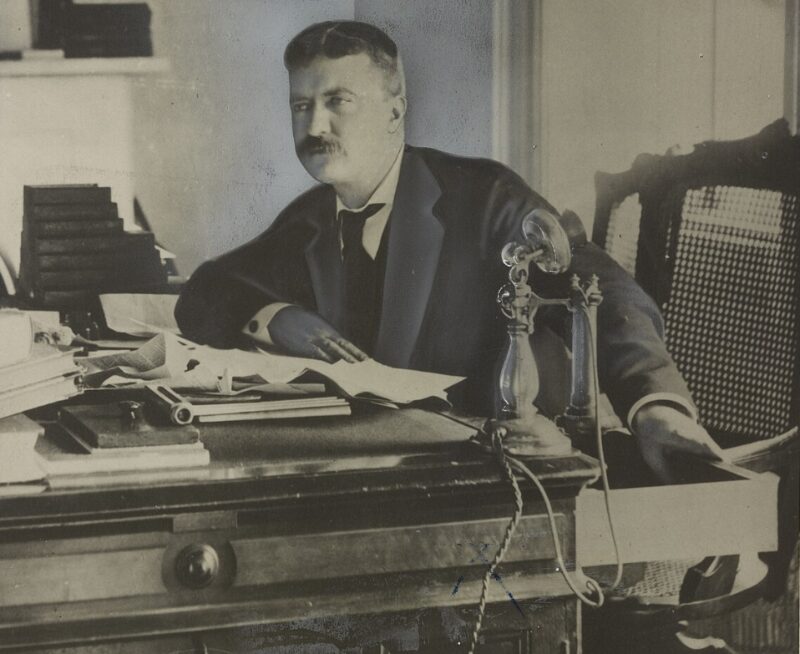
In 1894, New York State intervened. The Lexow Committee — a State Senate investigation chaired by Senator Clarence Lexow — spent the year exposing systemic corruption, vice protection, and rigged elections inside the NYPD, and the scandal helped sweep a reform ticket into City Hall. Wall Street-backed new men took charge of the city. After his election, Mayor William Strong appointed New York State Assemblyman Theodore Roosevelt as New York’s Police Commissioner in May 1895.
Why Roosevelt Was the Right Man for the Job
Theodore Roosevelt was the ideal man for the job. Ever the loud critic, he chafed too many in Albany, but his gruff analysis was needed to cut through the fat of corruption in New York City. He was also a vigorous outdoorsman who enjoyed boxing, physical fitness, and shooting as a renowned big game hunter.
Choosing a Standard-Issue Revolver
Roosevelt implemented a merit-based promotion system and physical fitness standards across the NYPD. He also searched for a new revolver that would be standard issue. It had to be light enough for the foot patrolman to carry all day, of high quality, safe, and easy to shoot. It also had to be issued across the department so that arms, ammunition, and maintenance procurement would be simplified in an emergency.
In 1896, Roosevelt adopted the Colt New Police revolver and paired it with a standard qualification course that all officers had to meet.
The Colt New Police Revolver
Colt had an early leg up in police procurement since the start of armed policing in the United States. Their muzzle-loading Colt Pocket .31 revolver was a popular early issue sidearm, and its .36 caliber successor was among the first handguns to be marketed for law enforcement.
Now in the cartridge era, Colt revolutionized the handgun market once again with the release of a solid-frame swing-out cylinder design in 1889. This line of revolvers was stronger than existing break-top guns, but its simultaneous ejection made it equally as fast to load and unload. It would become the de facto method for the modern revolver, and the idea was too irresistible not to copy.
In 1896, Smith & Wesson debuted their own model in the Smith & Wesson Hand Ejector—a small-frame .32 caliber revolver ideal for urban police. Colt responded with their own model, the Colt New Police.
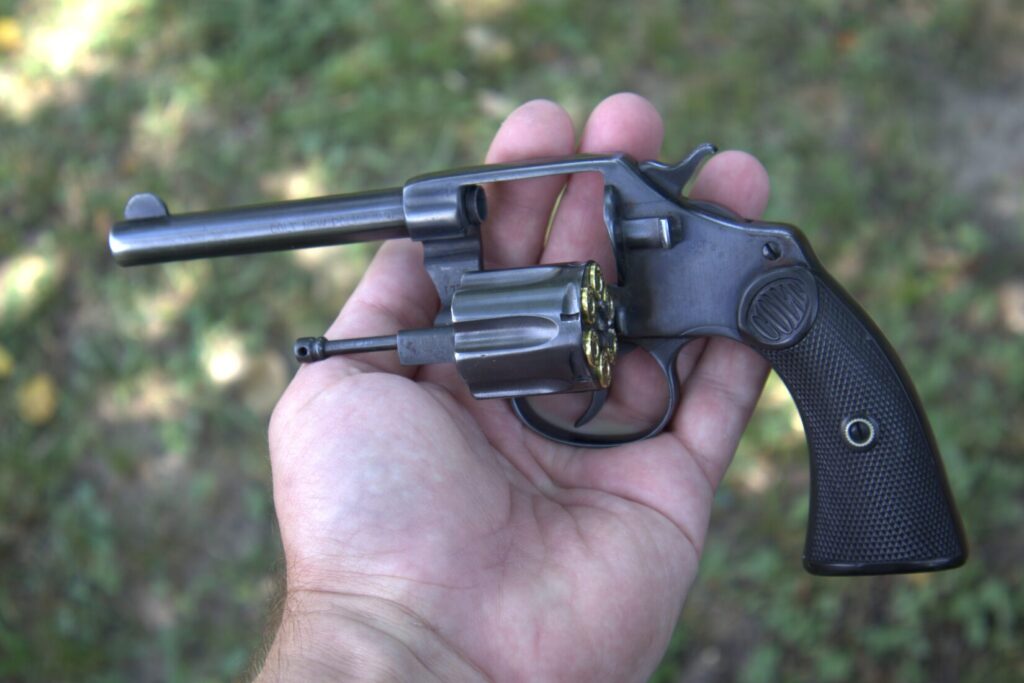
The Colt New Police is a small six-shot double action revolver that uses the same swing-out cylinder that most revolvers use today. It featured a rebounding hammer for safety and low-profile sights that, in their day, were considered target sights.
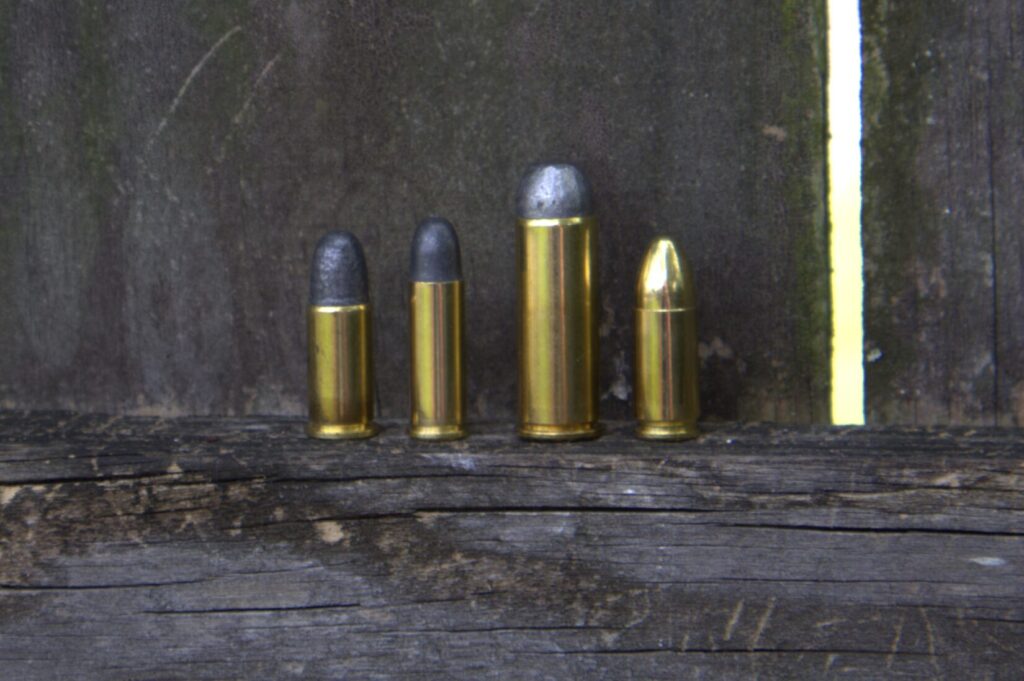
Available with either a 4-inch or 6-inch barrel, the Colt New Police was chambered in the .32 Colt New Police cartridge. While Smith & Wesson copied Colt’s basic design, Colt responded by copying the .32 S&W Long cartridge and called it the .32 Colt New Police.
Roosevelt’s Marskmanship Program and Qualification Course
Roosevelt placed an order for 4,500 Colt New Police revolvers with 4-inch barrels, and these models would supplant personal weapons over the next few years.
In that time, Roosevelt’s marksmanship program was enacted. The top shooters in the department were put in charge of respective teams. Two teams of five men each would shoot against one another competitively, and scores were recorded and analyzed for training purposes.
In the same spirit of competition, the badges of Marksman and Sharpshooter were awarded for scoring on a 4-inch bullseye target at a distance of 15 feet with 15 rounds of fire. The officer must score 65 out of 75 points.
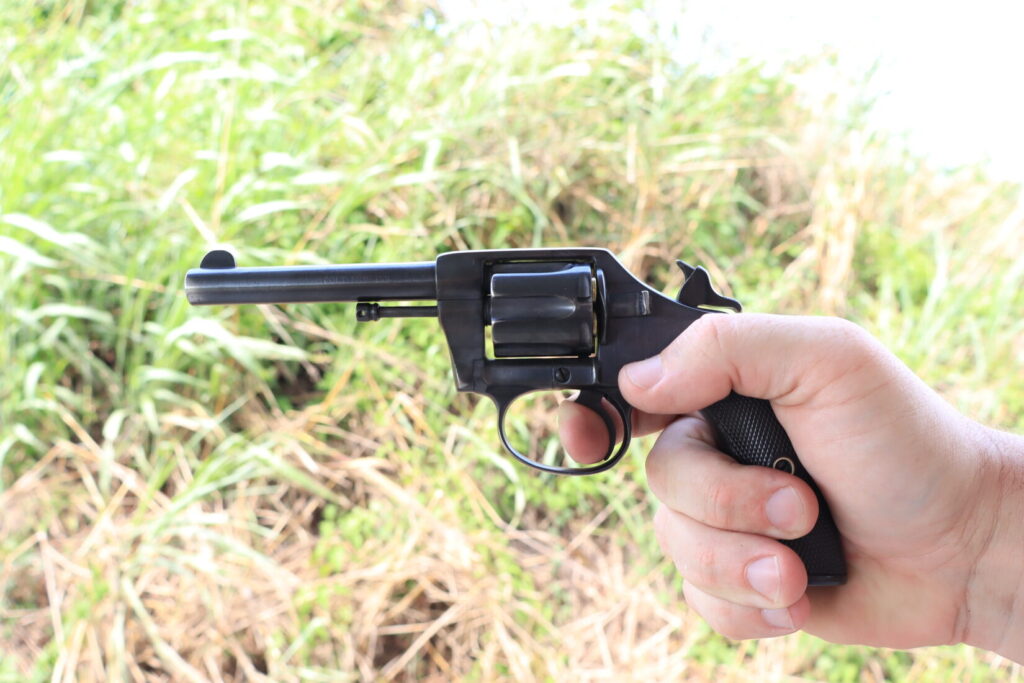
Teams of Sharpshooters would then collectively shoot the final qualification course. Each five-man team would shoot fire four five-round strings at 20 yards using the police revolver “with open sights and a trigger pull no less than three pounds.” In other words, using the sights and in single action with the hammer cocked. “Accidental” shots were counted as part of the score, while misfires were not. The score must be no less than 70 out of 75 points.
Roosevelt orchestrated the creation of the largest bullseye shooting team in the country. There were no timed reloading drills, and neither were a holster and a method for carrying spare ammunition specified. Although shooting the course in double action was not forbidden, nor was it encouraged, as bullseye shooting one-handed continued to be the default method for shooting handguns.
Despite these shortcomings, Roosevelt’s qualification course was a standard of measure, and incidences of negligence and accidents were reduced over the coming years.
Shooting the Colt New Police Today
My Colt New Police revolver is a standard 4-inch barreled model with checkered hard rubber grips. Although it has been refinished, the revolver is in great mechanical shape, as its serial number is dated to 1903. While I have shot it occasionally on paper and steel, I found my next opportunity in the archives.
Before J. H. Fitzgerald’s 1930 work, Shooting, I had little to go on to understand a course of fire that could be applicable to our story at the turn of the 20th century. I found the answer in a serialized catalog of The Report of the Police Department of the City of New York, dated to Dec. 31, 1895-1897. With the Colt New Police now in context, I decided to try the course myself as a team of one.
The Turn of the Century Range
I tried my luck with the Colt New Police using my usual B8 NRA 25-yard pistol bullseye targets. Interestingly, these have a 5.5-inch black center, which is larger than the 4-inch Creedmoor target.
The targets were stationed at the prescribed 15- and 20-yard marks and were engaged with 15 and 20 rounds, respectively. I tried one run in double action and another in single action, single-handed.
Loading and Shooting
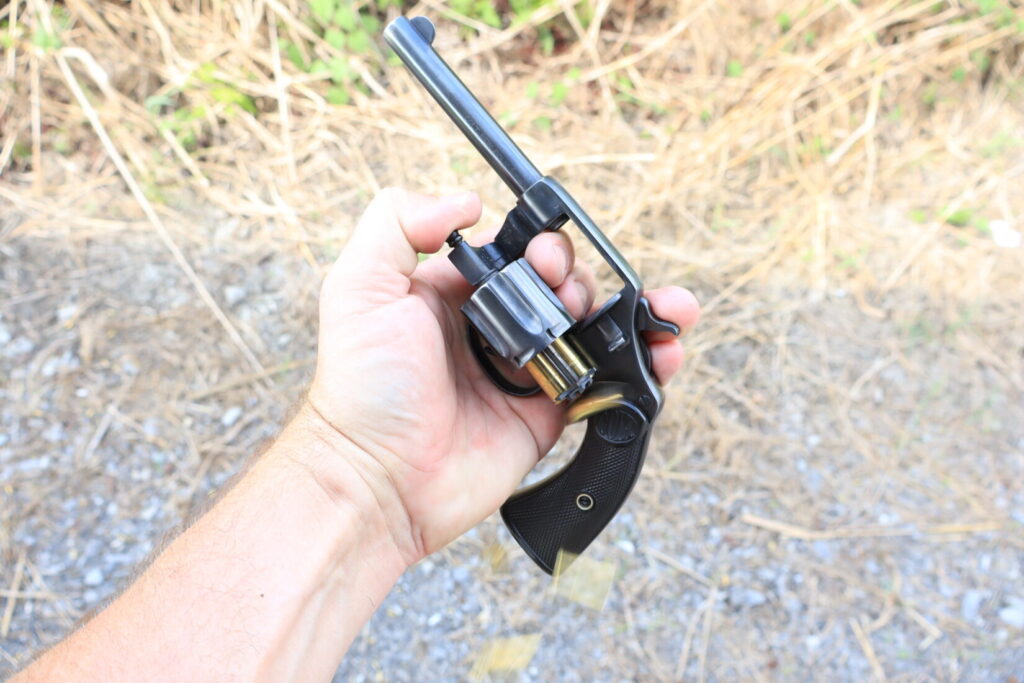
To load and unload the Colt New Police, the clamshell cylinder release is pulled back, and the cylinder is rolled out to the left for loading. The revolver is loaded and the cylinder replaced. Once empty, the process is repeated, but a smack on the exposed ejector rod kicks the empty cases out.
Beyond the loading and unloading procedure, it is hard to describe the Colt New Police as modern. Even the primary source states the difficulty of shooting with this “Pocket revolver.”
In modern and larger hands, the New Police has a small grip that requires some shifting around to not put too much finger on the trigger. The revolver is more instinctive to shoot in double action, since time is not wasted shifting the grip to thumb cock the hammer for a lighter, but hefty single action pull.
The sights are of the period, a fine half moon front sight and a slight groove on the receiver. While it is easy to draw a bead on a small target with these sights, it is hard to tell if they are lined up, since the groove is so shallow.
The New Police makes up for it with its .32 caliber chambering. The ammunition used was Magtech .32 S&W Long 98 grain wadcutters, which leave the muzzle at about 700 feet per second. The round gives off little noise, and recoil is just north of sedate.
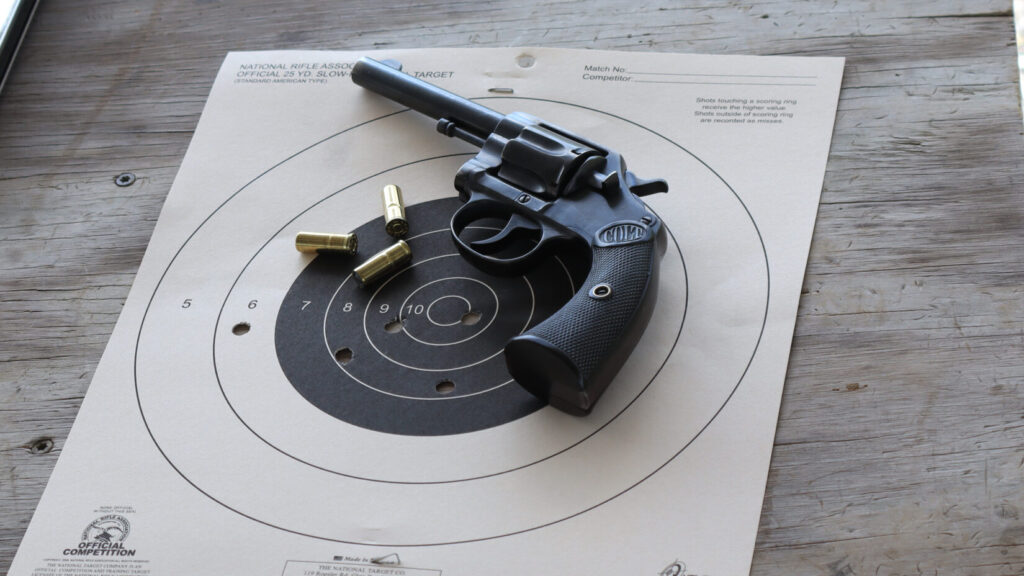
Even so, the sights played with my ability, and I was able to keep 13 out of 15 shots on paper at 15 yards. 65 out of 75 points. Although 20 yards is not much further, the combination of sights, trigger, grip, and me managed to get only 12 hits out of 20.
I will have to take my Marksman badge and see myself out in shame. Despite its unrealistic nature compared to modern techniques, breath control, trigger control, sight picture, and follow-through are perhaps hammered home more in this exercise than what a modern shooter might otherwise get.
From the New Police to the Police Positive — and Beyond
The Colt New Police revolver was produced from 1896 to 1907, with some 50,000 units produced. It was a moderate success, but it was replaced when Colt designed their Positive lock hammer block safety.
The Colt Police Positive that succeeded it kept the same basic swing-out cylinder design but added that hammer-block safety, and it went on to become a law enforcement and cinema icon for decades. The NYPD was among its first adopters. By the 1970s, the NYPD had moved to the S&W Model 64 and Ruger Service-Six — updated .38 Special revolvers issued to replace the aging Model 10 and Colt Official Police guns then in service. Revolvers held on at the NYPD until 1993, when Commissioner Raymond Kelly authorized the switch to 9mm semi-automatic pistols.
In that time, the NYPD morphed from a small constabulary to among the largest and most sophisticated crime-fighting forces in the world. Yet the transition began with a man before he became an icon and a handgun that was just short of one.