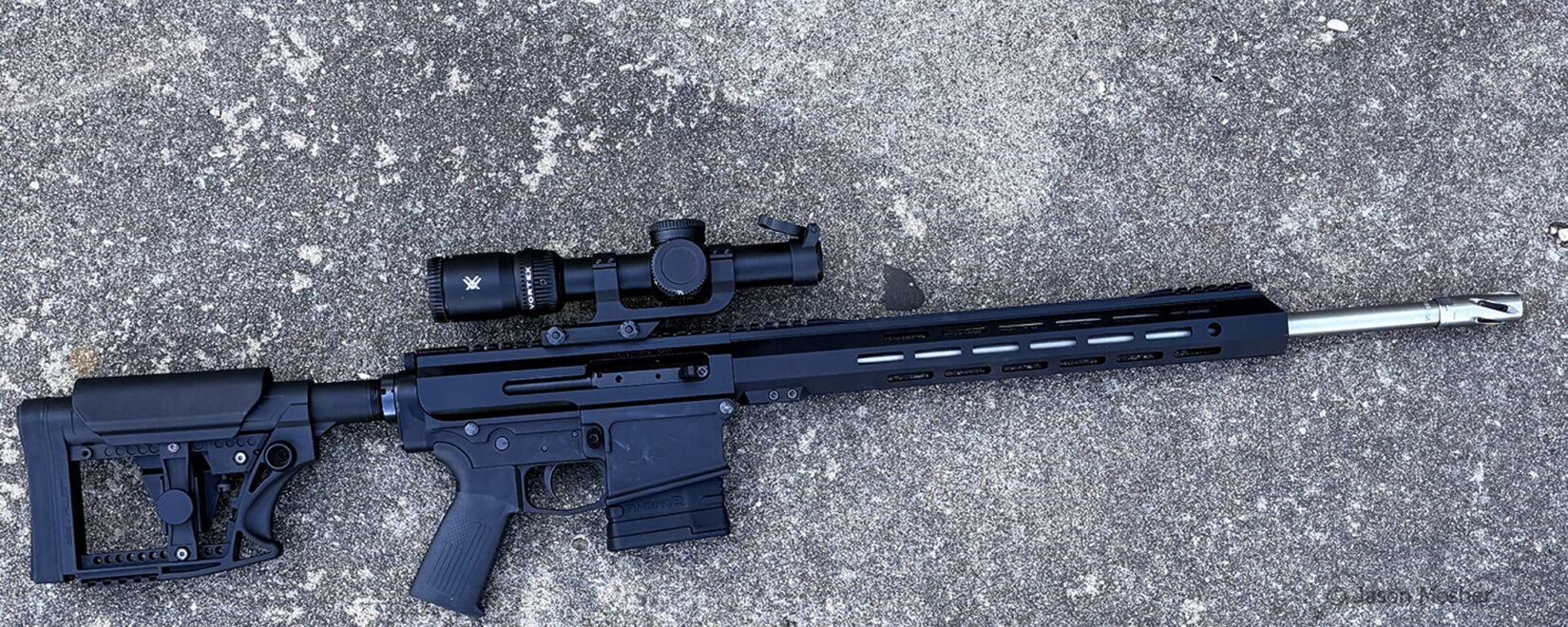
Even though I love the iconic firearms from the WWII period, I’ve always been an AR-15 fan. And while other rifles are being produced that could someday “replace” the platform, it remains the gold standard for now. This is due not just to its reliability, but its ergonomics, modularity, and ease of use as well. This is why I like the idea of having a .308 Win. in the same layout, which is where the Bear Creek Arsenal BCA-10 comes in.
Even though a .223 Remington or 5.56 NATO round will work for a lot of general tasks, an AR-10 platform is like the big brother that can reach out much farther with a lot more power. This gives you a significant advantage in terms of terminal ballistics and effective range.
The most immediate benefit of a .308 in an AR platform is the inherent familiarity of the rifle. If you can run an AR-15, you can run an AR-10. The safety, magazine release, and trigger pull remain virtually identical, which eliminates the learning curve of learning a new rifle or platform.
Beyond ergonomics, a semi-auto .308 has a few distinct advantages that you won’t get with a bolt-action rifle. In hunting scenarios, it allows for rapid follow-up shots on tough game like feral hogs or elk. And don’t get me wrong, I’m not bashing bolt-action rifles; they still reign supreme in the long-distance game. But for those who want an affordable, high-powered rifle that can still reach out there, the BCA-10 is an awesome option that is surprisingly affordable.
The Bear Creek Arsenal Niche
Bear Creek Arsenal (BCA) has managed to carve out a unique niche in the firearms world by providing functional rifles at what I would call an astonishing price. In fact, the first time I saw a BCA AR-15, the price was so low that I didn’t even give it another glance. Over the years, however, I have learned that the quality of a firearm does not always equal the price. Some are overpriced for what you get, and while others are way underpriced for a decently built gun.
BCA10: Bear Creek Arsenal’s take on the legendary AR-10 rifle
The rifle is constructed primarily from 7075-T6 aluminum, which is the industry standard for durability and weight savings. The upper and lower receivers are forged to ensure they can handle the increased pressures of the .308 Winchester cartridge.
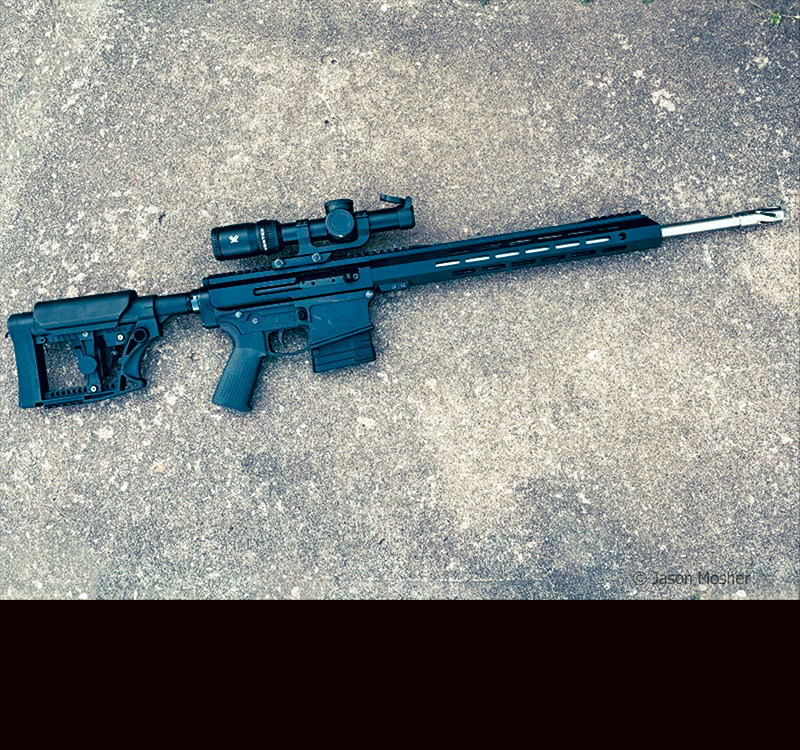
BCA10 Specifications
- Caliber: .308 Winchester
- Platform: BCA10 (Gen 2)
- Action: Semi-Auto, Direct Impingement
- Charging Style: Right-Side Charging
- Barrel Length: 20 Inches
- Barrel Material: 416R Stainless Steel
- Twist Rate: 1:10
- Gas System: Rifle Length
- Receiver Material: Forged 7075-T6 Aluminum
- Stock: Luth-AR Adjustable Precision Stock
- Handguard: 15-inch Lightweight M-LOK
- Magazine: 20-Round (DPMS Pattern)
The Right-Side Charging Handle
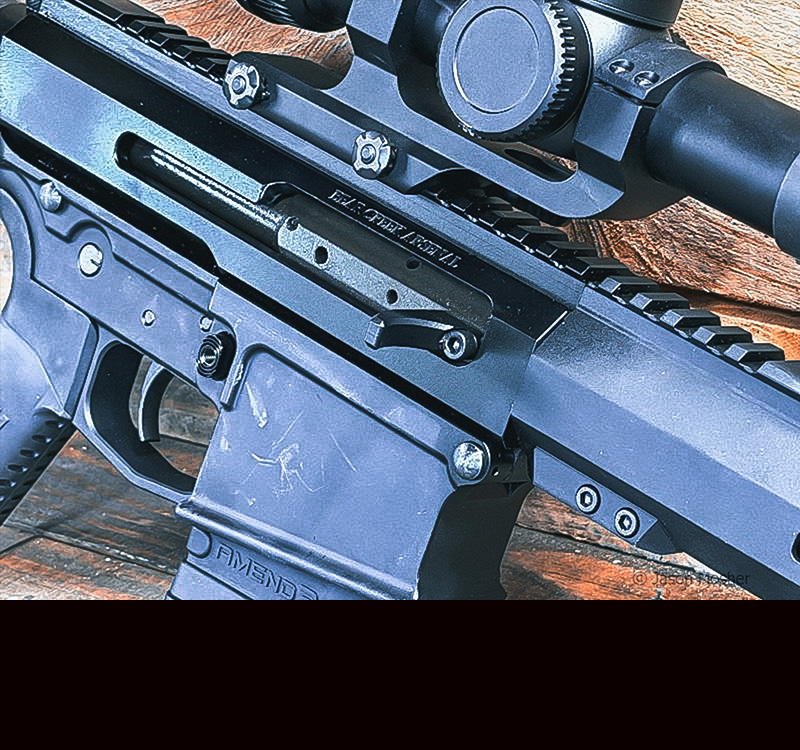
Of course, the most obvious difference with this model compared to other AR-10’s is the side charging handle. Unlike the traditional T-shaped charging handle located at the rear of the receiver, the BCA10 has a reciprocating handle on the right side of the bolt carrier group.
This design is intended to make it easier to cycle the action while maintaining a cheek weld. It is especially useful when using large optics that might otherwise obstruct a rear charging handle. For a larger rifle like the AR10, I think this is a great idea.
The BCA10 also has an M-LOK handguard and an adjustable Luth-AR MBA-4 stock, which I’ll talk more about below.
Why the Side Charger Matters
A lot of people find the side-charging handle to be more efficient than the rear T-handle on an AR-15 rifle. If you have ever tried to clear a malfunction on a traditional AR-15 with a large scope mounted, you know the struggle. When you’re prone with your target in the crosshairs, racking the bolt is much more difficult on a traditional AR.
Having the charging handle on the side feels more like a traditional bolt-action or an AK-47. Because it is reciprocating, I’m not sure how it would handle with a left-handed shooter, but they may offer an alternative for that.
Steel vs. Stainless Steel Barrels
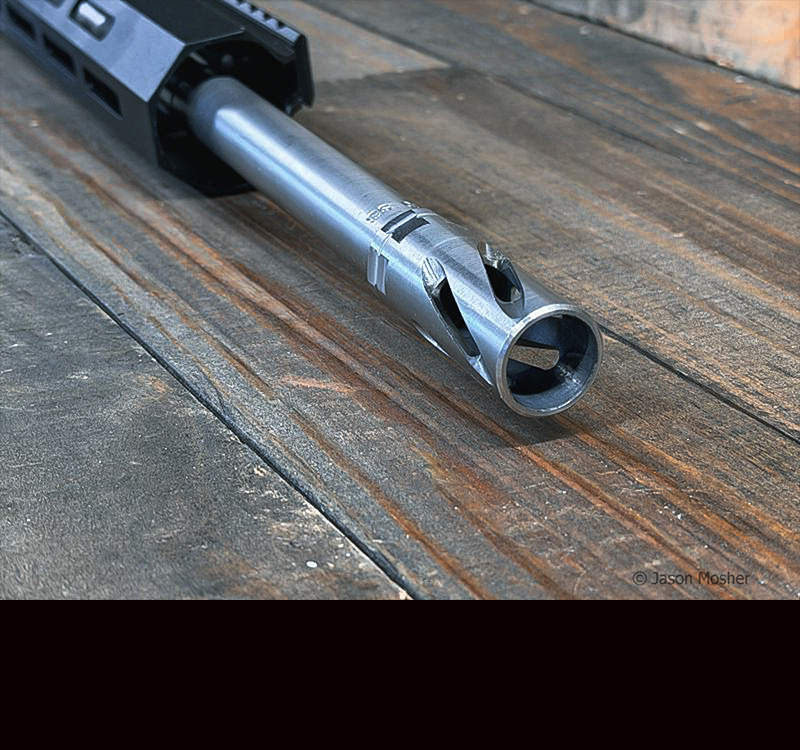
The heart of any rifle is its barrel. When selecting a BCA10, you can choose between a traditional 4140 or 4150 Chrome Moly Vanadium (CMV) steel barrel and a 416R stainless steel barrel. Understanding the metallurgy behind these choices can help when choosing a rifle for long-range tasks.
Carbon Steel (CMV) Barrels
Standard steel barrels are known for their extreme durability and longevity. They are often chrome-lined or nitrided to resist corrosion and heat erosion. These barrels are great for high-volume fire or “duty” use where the rifle might be subjected to harsh environments. However, the process of chrome lining can sometimes lead to slight inconsistencies in the bore, which can marginally affect your precision.
Stainless Steel (416R) Barrels
I chose to go with a stainless barrel when choosing my BCA10. It has a 416R stainless steel barrel, which isn’t best for high-round counts, but it’s much better for extreme accuracy. This specific grade of steel was designed for the firearms industry to be functional even in freezing temperatures. Stainless steel is generally softer than CMV steel, which makes it easier for manufacturers to machine with extreme precision.
The rifling in a stainless barrel is often “cleaner,” leading to better consistency from shot to shot. This is why most precision shooters and competitive marksmen prefer stainless steel. It may have a slightly shorter overall lifespan than a nitrided steel barrel, but the trade-off is a tighter group on your target. For a .308 meant to reach out to 600 yards or beyond, stainless is the logical choice.
Upgraded buttstock: The little things matter
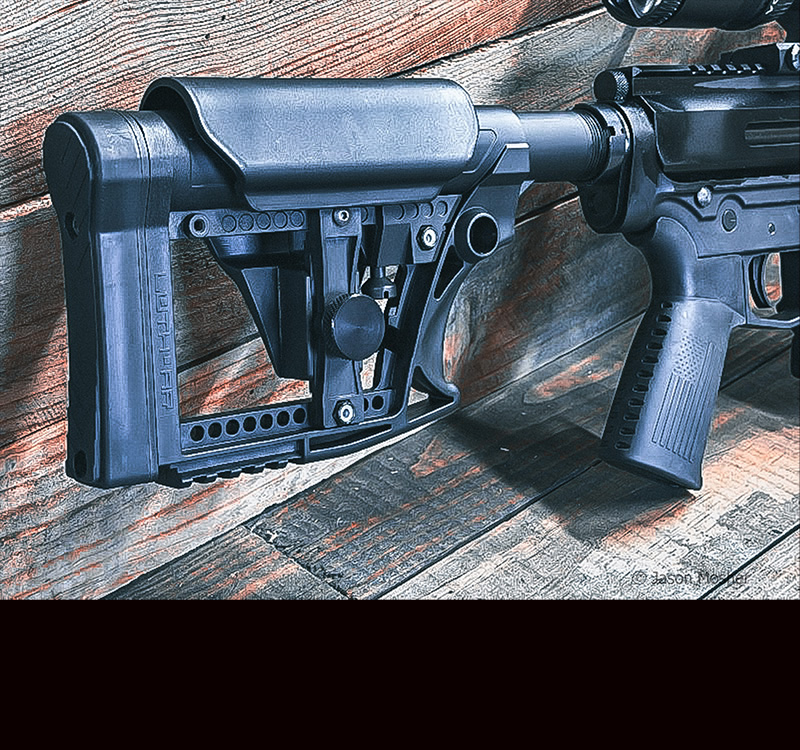
An AR-10 does not “kick” as much as a bolt-action rifle because the semi-automatic action absorbs some of the energy. But it still has a lot more recoil than an AR-15. Having a solid interface between the shooter and the gun is needed. This is one reason BCA teamed up with Luth-AR to offer the BCA with a precision stock already installed.
Unlike a standard collapsible carbine stock, the Luth-AR MBA-4 buttstock is designed so that you can adjust the length and cheek-rest height.
Proper eye relief is important when using high-magnification scopes. By raising the cheek rest on the Luth-AR stock, you can make sure your eye aligns perfectly with the optic every time you rest your cheek against the stock. This consistency is one of the secrets to shrinking your groups.
Shooting the BCA10
I started out at 75 yards to sight in the BCA10. I wanted to make sure it was on paper, so I didn’t have too much trouble zeroing it in at 100 yards. My plan was to zero at 100 yards and then shoot out to some longer distances to see how it performed.
I decided to use a Vortex Venom 1-6×24. For a long-range rifle, a little more magnification would be better. But my plan with this rifle is just to have a more powerful caliber on hand should I need it, giving me a setup that can do a little bit of both. While I don’t plan to ever use a .308 at closer distances, I like the idea of an LPVO so I can use it in any circumstance if I need to.
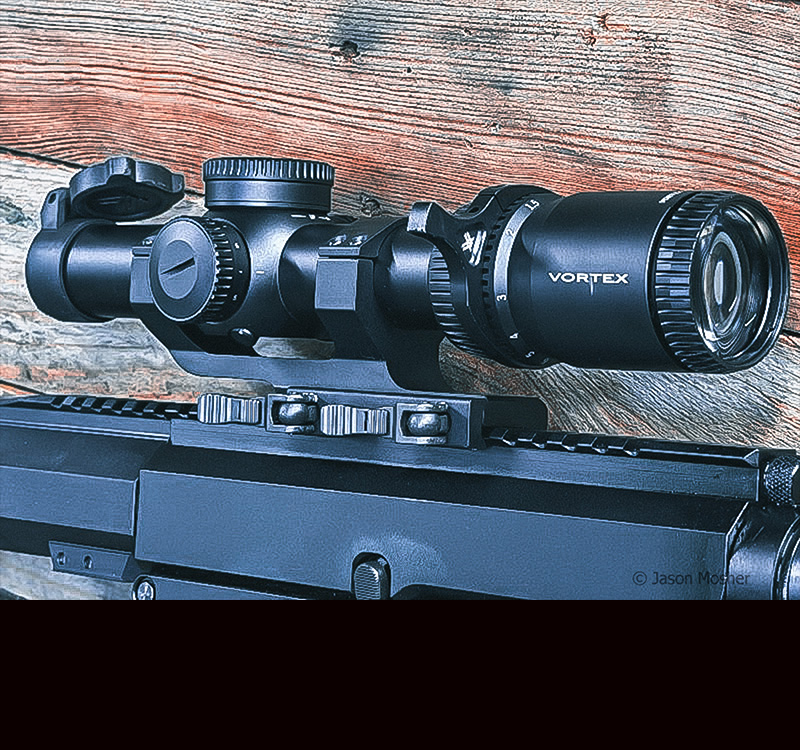
After a few adjustments, I had the Vortex Venom zeroed in at 100 yards. The Venom does have holdover lines, so I went out to 200 yards to see how it handled. With a .308, you can go much further than this, but I wanted to get a feel for how it shoots at closer distances first. I also have to travel a little farther to find a range that goes beyond 200 yards.
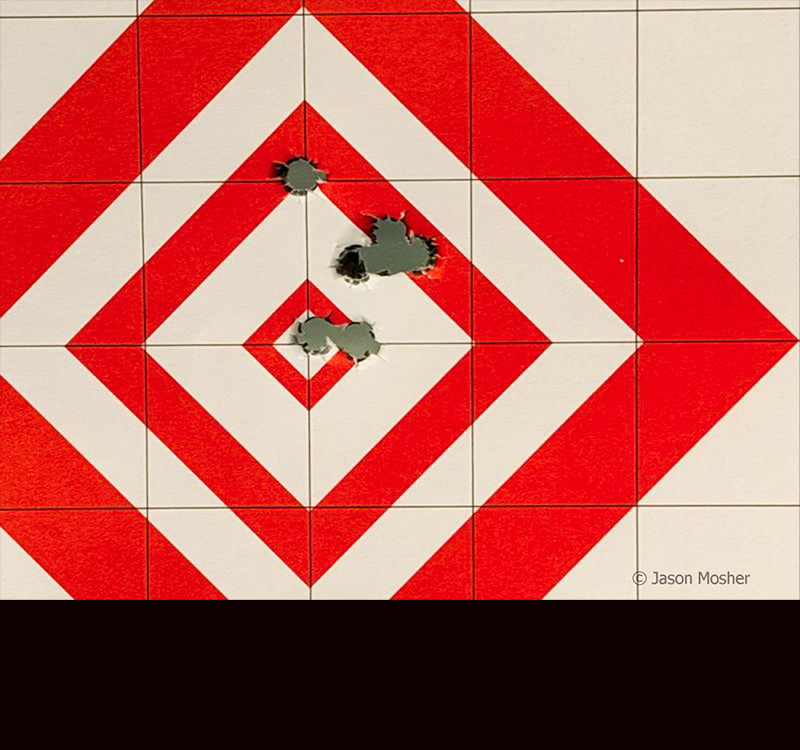
My first few shots were grouped well, but just above and to the right of the center (see photo below). I made some adjustments, and it started hitting in the center, using a rifle rest. At 200 yards, it kept some good groupings, but my ability to use the holdover lines needs a little work; I had a grouping above the center and one below. After that, I was able to get a few hits on the center. With a more powerful scope, this would be a bit easier when you get out to 200+ yards.
Reliable and accurate Performance
After shooting a few rounds from multiple distances, I also wanted to shoot some up close. This was mostly for the fun of it, but I also wanted to see how the illumination did on the Venom at 1X magnification.
I used a variety of ammunition and brands, but relied mostly on Hornady for anything longer than 100 yards. You can’t really find “cheap” .308 ammo, but I used the cheapest ammo I could find for function testing and sub-100-yard shooting.
The only issue I had when doing a mag-dump (which is a blast with a .308) was the bolt getting sticky when the gun got hot. I’m sure the rifle needs some breaking in and probably a little more lubrication. But after a mag dump of 20 rounds, the bolt felt like it was sticking some. Not that it wouldn’t move, but you had to noticeably pull harder on it. After it cooled down, it would slide smoothly again.
Overall, I think this is a great deal for those wanting an AR10 at a reasonable price. The craftsmanship appeared to be great, and it shot smoothly. The trigger was about average for a mil-spec trigger, so an upgrade would be a good idea if you plan to shoot long distances with it.
Besides that, I didn’t have any other issues with the BCA-10, which isn’t bad at all for a $500 rifle.