
If you have a shotgun, your ammo, and your accessories, you’re off to a good start, and now it’s time to figure out your training plan. To quote Jeff Cooper, “Owning a handgun doesn’t make you armed any more than owning a guitar makes you a musician.”
The key to being competent with a defensive shotgun is training and practice.
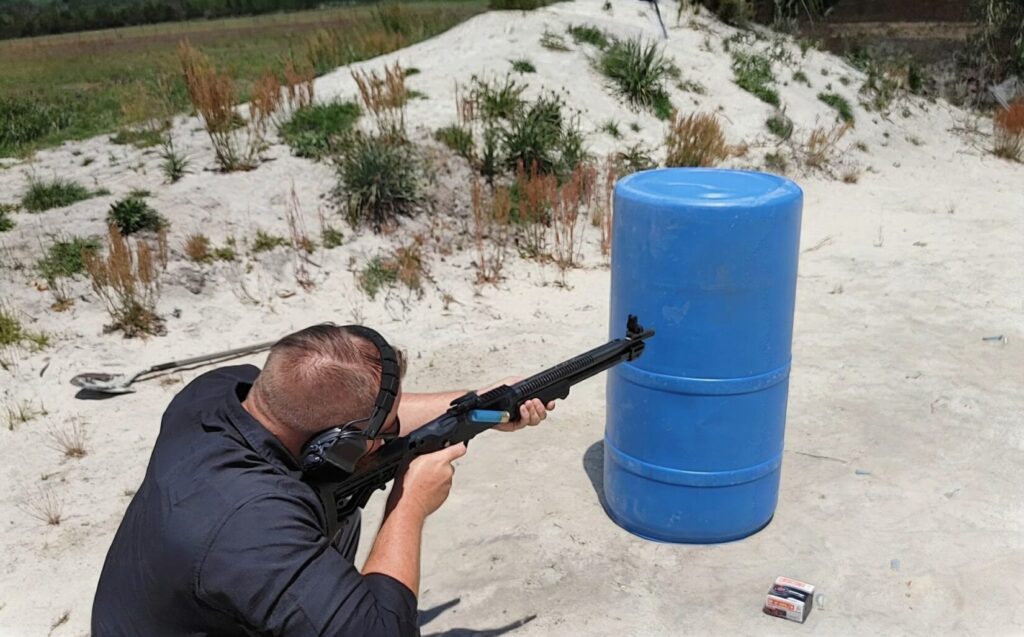
Shotguns are, in some ways, incredibly simple to be effective with, but in other ways, they tend to be less user-friendly than rifles or handguns.
With that in mind, the best thing you can do is seek out a class with a respected shotgun instructor. There are lots of great instructors out there, but my short list would consist of:
- Darryl Bolke
- Steve Fisher
- Nate Parker
- Ashton Day and Tim Chandler
- And last but not least, Rob and Matt Haught
These are respected instructors with a deep knowledge of the tactical and defensive shotgun, with a ton of experience behind the gauge. A class from these folks will get you running and gunning.
There is likely going to be a gap between buying your shotgun and getting into a class. In the interim, there are a lot of things you can do to train and practice with your shotgun prior to the class.
Before you start training, I recommend buying some dummy rounds. These will help you a lot with manipulations and learning how to load, unload, and use a side saddle.
Basic Manipulations
While an AR is an AR is an AR, shotguns are all different. The position of safeties, pump releases, bolt releases, and more are likely to vary a fair bit. It would be impossible for me to break down the basic manipulations of any shotgun.
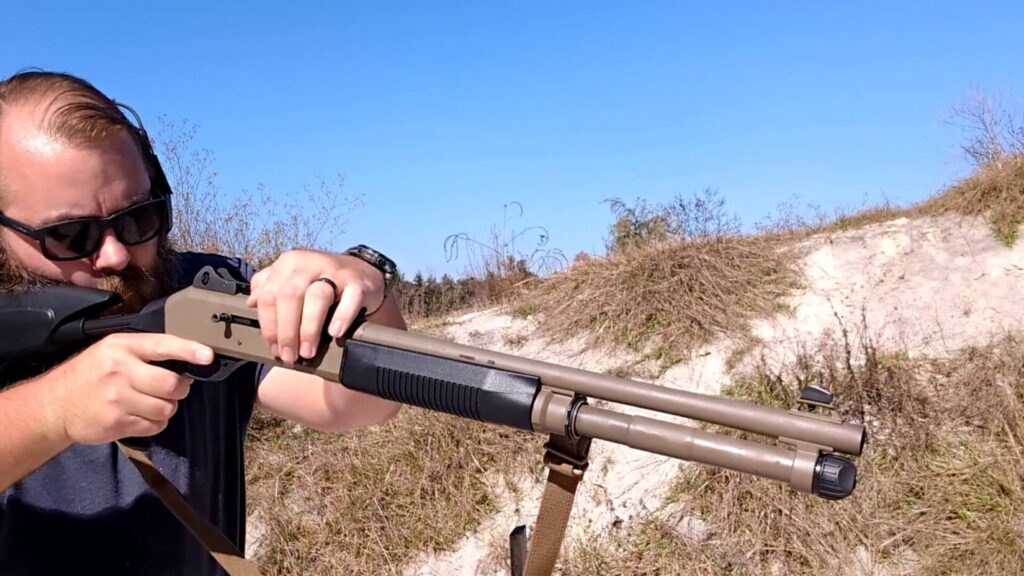
The best way to learn the basic manipulations of your shotgun is to do the one thing no one ever does: read the manual that came with the gun. It will walk you through basic manipulations. Use those dummy rounds to practice those basic techniques listed in the manual.
You should know how to:
- Load the shotgun
- Manipulate the safety
- Unload the shotgun
- Chamber a round
- Manipulate the pump (if applicable)
Those are the very basics of operating a shotgun. Knowing how to use one shotgun doesn’t mean you’ll know how to use another. Trust me, the transition from Mossberg 590 to Benelli M4 is a big one.

Building the Stance
Once you’ve mastered the basics of manipulating the shotgun, you can begin dry fire practice. Ensure it is completely unloaded. Physically and visually inspect the magazine and chamber of your firearm to ensure it’s unloaded.
Separate any live ammo, and if you set the shotgun down to take a bathroom break, make sure you clear it again when you pick it back up.
Dry fire is a great way to learn without having to go to the range. The first thing we are going to do is build our shooting stance.
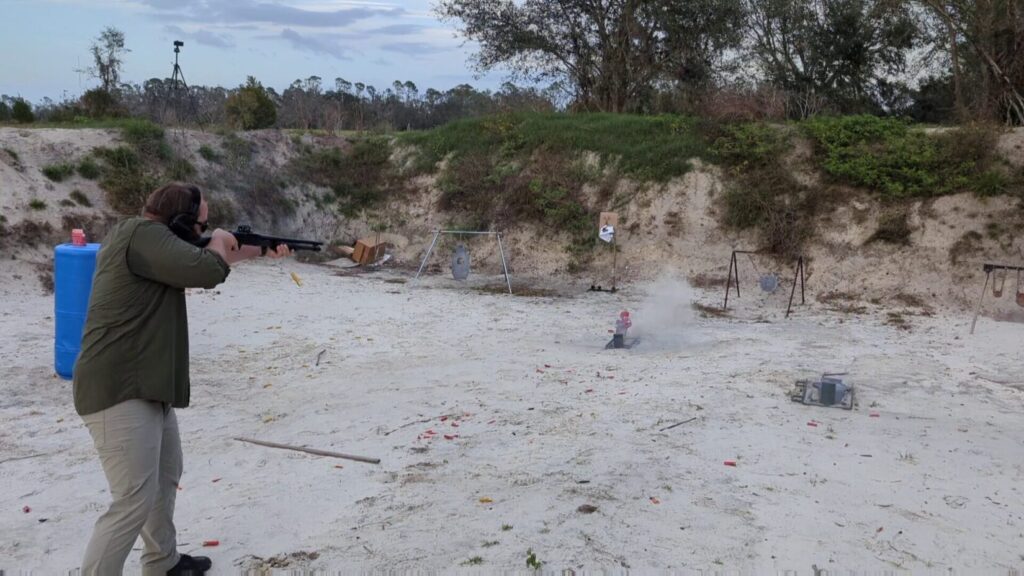
We want to assume an athletic stance, with the support side foot about a step forward and the dominant side a step rearward. With your legs, you’re assuming a boxer’s stance.
In Stressfire 2, Massad Ayoob advocates for positioning your dominant leg a little more rearward. He likens it to an artillery piece, and the further back leg helps brace for impact. Try it, see if you like it.
Bend the knees slightly, and bend at the hips forward just a bit. We want our body weight forward. Load the hips by pressing your rear out just a bit. Put your weight on the balls of your feet.
We want to avoid standing straight up, and most certainly want to avoid leaning rearward. Imagine pushing a push mower; that’s the kind of weight and forward stance we want to accomplish. You want to be squared up to the target as best you can.
This all helps counteract recoil, and shotguns are known for their recoil.
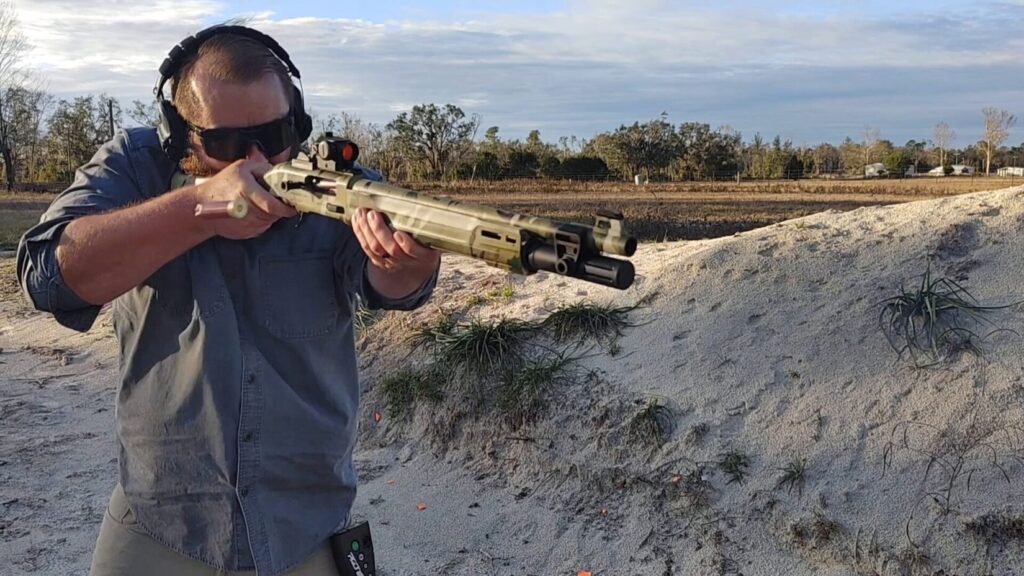
Push/Pull and Recoil Mitigation
Push/pull is a technique invented by Rob Haught that uses isometric tension to help control a shotgun’s recoil.
The shooter pulls the shotgun rearward while pressing the forend outward. This tension helps control the gun and creates a stable platform. The recoil has to travel through the support hand and its forward-pressing pressure before it hits the shoulder.
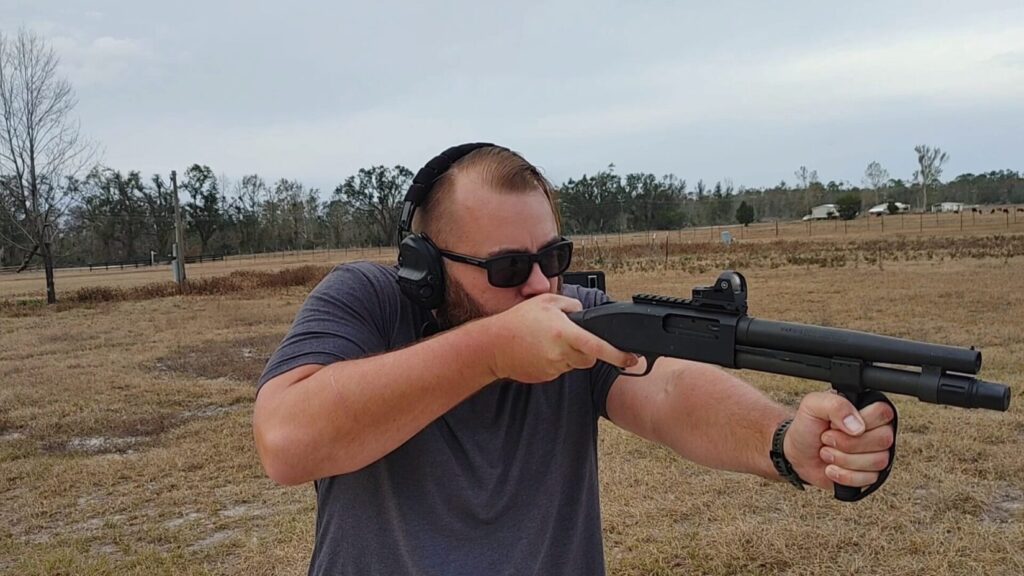
The stock doesn’t need to be jammed into your shoulder. It should make contact and sit comfortably.
Your support arm should not be straight; it needs some bend in the elbow to allow for recoil absorption.
You have to learn how to time the push/pull as you take a shot. It’s not something you’ll sit around doing because it gets tiring. Practice establishing the position and dry firing.
I mentioned earlier in this series that push/pull turns pump-action shotguns into a rhythmic dance because we push forward against something we eventually pull rearward. It takes time, and dry fire is a great way to learn that rhythm.
Eventually, it becomes second nature. As soon as you grab the gun, you’ll assume a push/pull position.
Dry Fire Practice
Work on building the stance, then establishing your push/pull. Focus on getting that push in right before you break the shot. Once we develop that rhythm, we can get a little more advanced with it.
You can start in a low ready and do a basic ready-up drill. Raise the shotgun, establish your sight picture, engage push/pull, and dry fire.
Practice doing that over and over. Take it slow at first and let speed come naturally. Next, fire two dry fire shots, then three, find the push/pull rhythm, and keep it going.
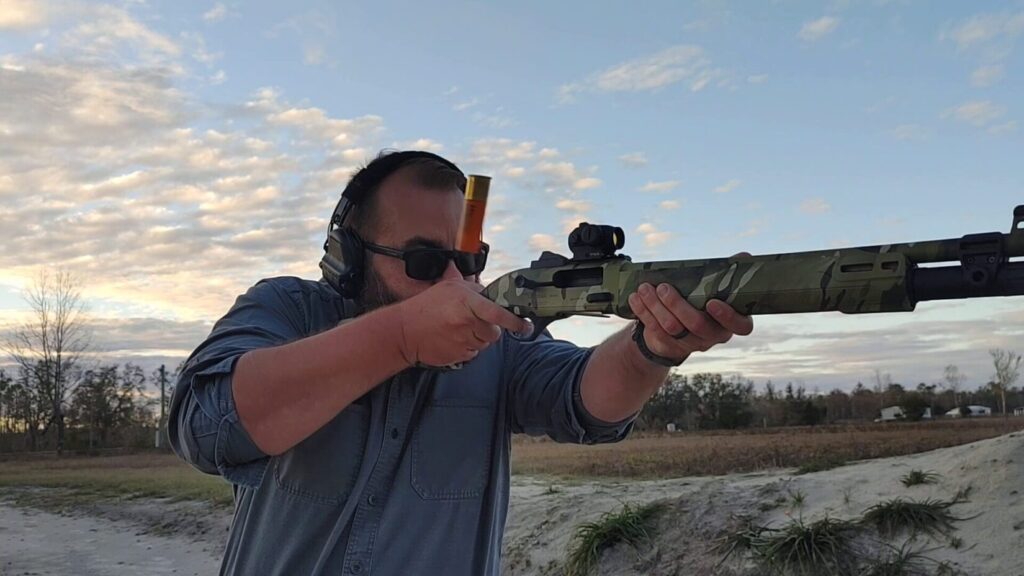
Introduce secondary and tertiary targets. With a pump gun, you should aim to work the action as you transfer from target to target. Remember, before each shot, push the shotgun forward to establish your push/pull.
If using a pump-action shotgun, remember to work the action completely, back and forth to its rear and forward limits.
The most important skill you can have is the ability to get on target quickly and control the gun. Work on the following skills until they are second nature:
- Proper Stance
- Effective Sight Acquisition
- Push/Pull
- Target Transitions
- Working The Action (With a Pump Gun)
Beyond these skills, we get into malfunction clearances, reloading, short-stocking, and more. These are skills you can learn at home, but are best done under the observation of an instructor.
At the Range
Ben Stoeger said it best: “Dry fire is the training, live fire is the test.”
The same thing we dry-fired will be brought to the range. Practice stance and push-pull. Add in a low-ready-to-fire drill, then low-ready to multiple shots, target transitions, etc. When using live ammo, you are getting live feedback.
If the gun is pushing you backward, your stance needs some work.
If your sights or red dot is leaving the target completely, your push/pull needs work.
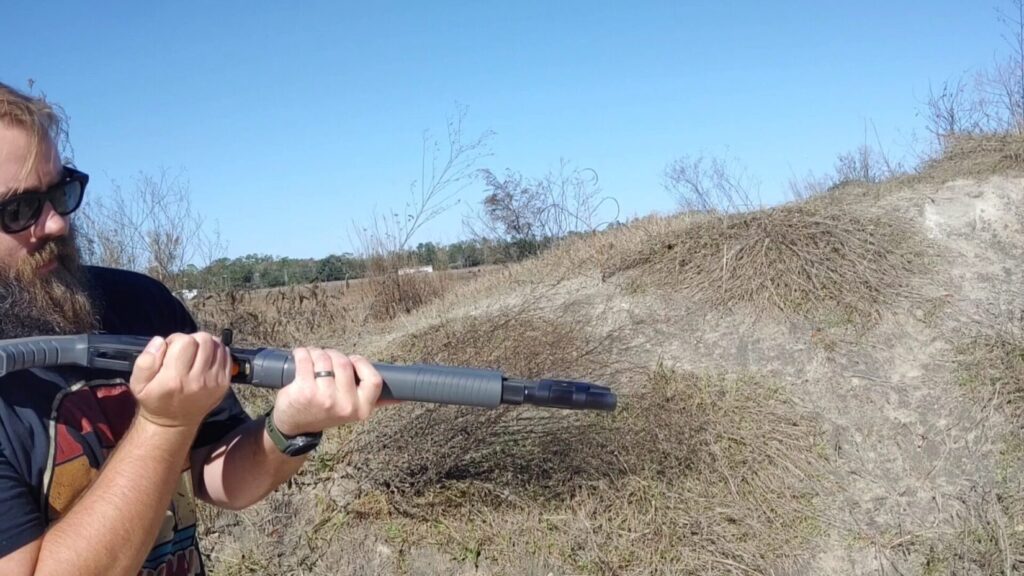
If you’re stuttering between multiple shots or target transitions, you’re losing your push/pull pressure between shots or targets. This is especially easy to do with a pump-action.
Your shotgun will tell you a lot about what you’re doing wrong or right. Listen to the feedback it’s providing.
As your skills increase, get a shot timer and attempt to go faster without losing skill.
Patterning
I consider patterning part of training. You’re actively learning something as you pattern, so to me it’s training. Patterning is simple.
You shoot your chosen defensive cartridge at a series of predetermined ranges. After each shot, you observe your pattern. You want to know how much the shot spreads at different ranges.
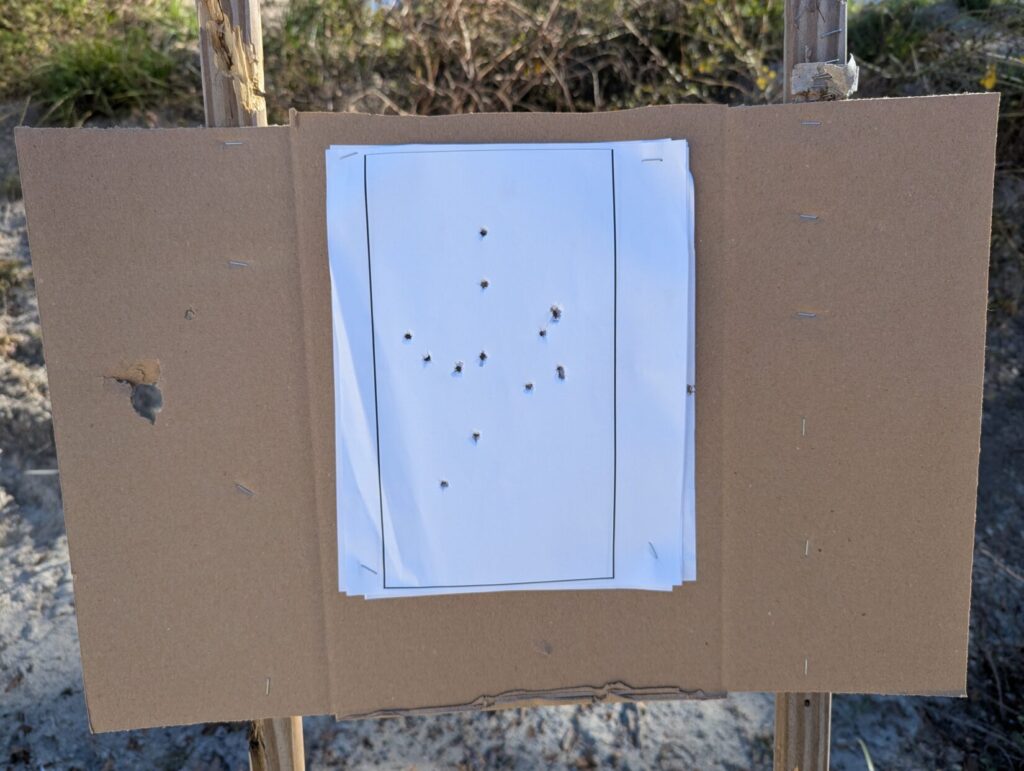
Patterning should be done at ranges you expect to engage with your shotgun. This allows you to be able to predict your shotgun’s pattern at defensive ranges. Patterning is also a test of your chosen load to see if it patterns to your standard.
I always suggest grabbing a variety of good-quality, defensive shotgun ammo and testing it through your gun. Every shotgun pattern is a bit different with every load, so this is a task you have to do.
We have an entire in-depth article on patterning you should read here.
Shotgun Drills
There are a few different drills you can use to press your shotgun training further. These drills require some advanced skills, but might be worth giving a try.
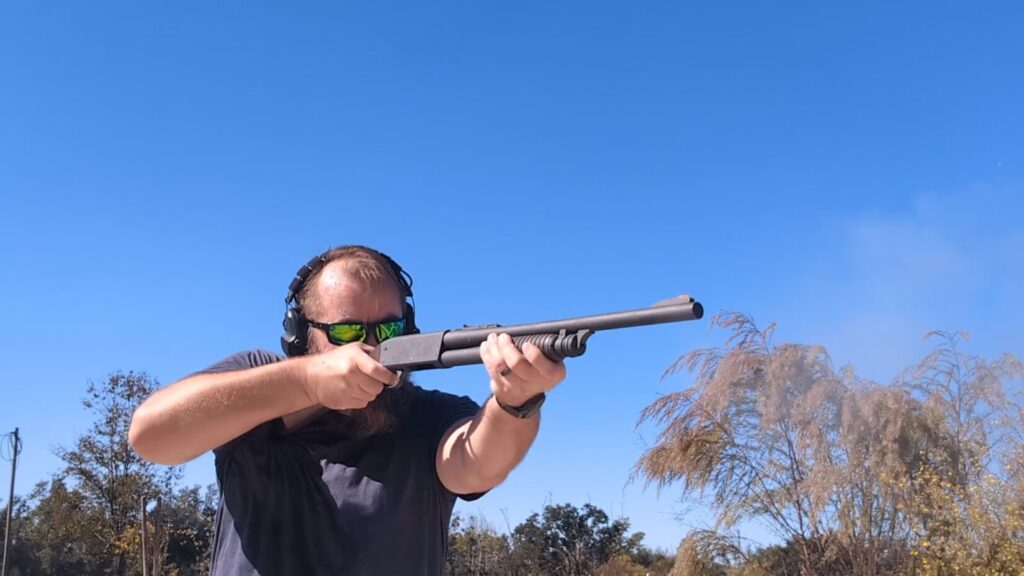
I won’t explain each, but here are some of my favorites and what they help train.
- Valhalla Drill: Reloading, multiple shots on target.
- Shotgun El Pres: Reloading, target transitions.
- Lucky Gunner Shotgun Skills Test: A bit of everything.
The shotgun’s most basic skills can feel difficult to learn effectively, but once you learn the basics, you’ll be much better equipped to handle a home defense threat.