The handgun red dot market grows every year. As of 2026, it’s absolutely massive. We have options in all shapes and sizes, which brings us to the question: Does window size matter?
All red dots have windows, and the window is where your dot sits. The window has a special coating that makes the lens reflect the reticle projected by the emitter. Window sizes can vary wildly, and there isn’t a universal best answer.
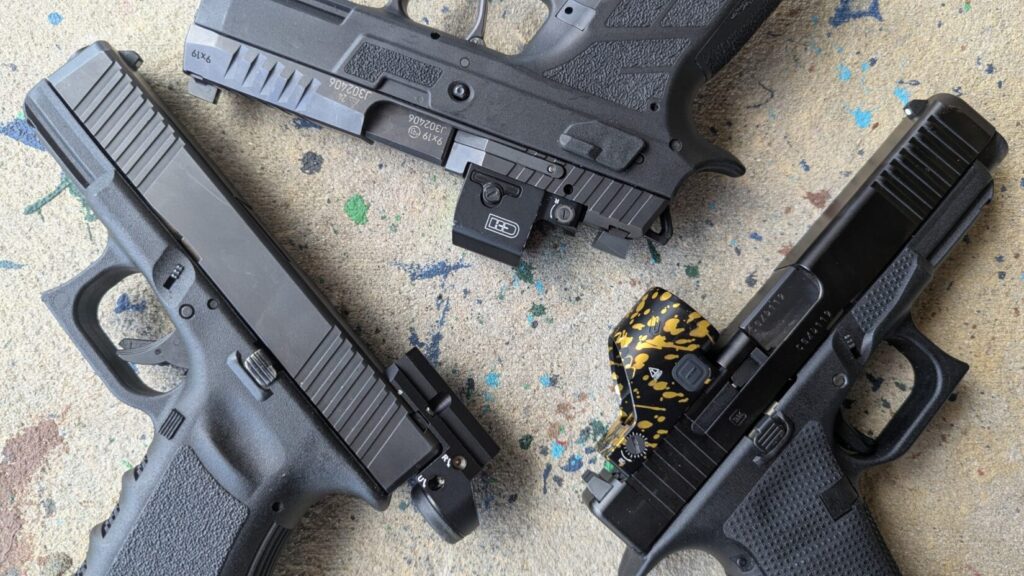
However, there are certainly some pros and cons of different window sizes. To get out there and try it myself, I snagged three radically different-sized windows for comparison. I used the Leupold DPP Micro, the CHPWS EDC Enclosed, and the Cyelee Chameleon.
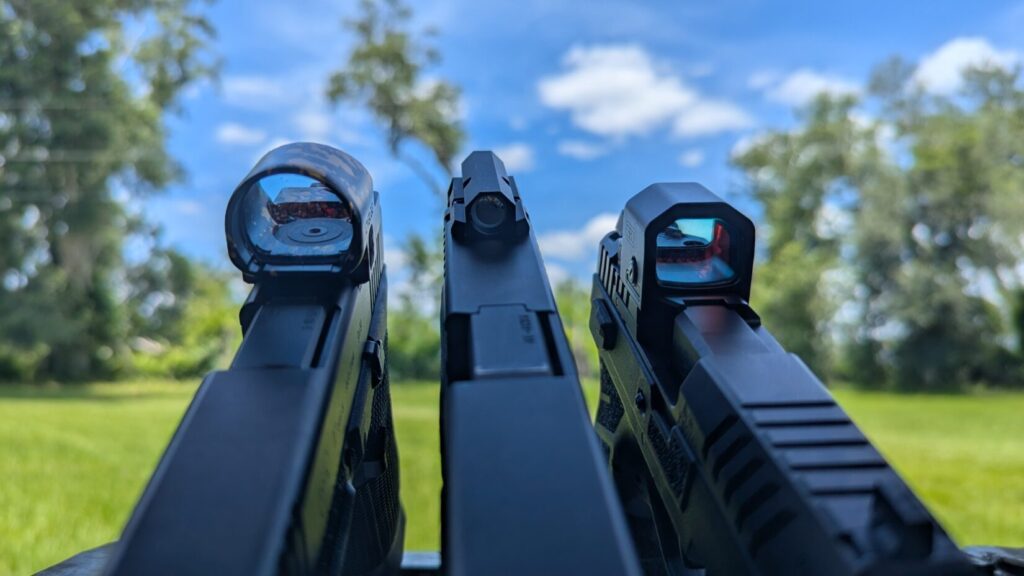
The DPP Micro has a 9mm window, the smallest I’ve ever seen. The EDC Enclosed has a 21mm window. The Chameleon has a 26.5mm window.
I’ve taken all three to the range and tried shooting a variety of drills and skills to try and find where the difference lies. Before we get into that, let’s discuss the external differences you’ll run into with varying window sizes.
Window Size: Beyond Performance
One of the most obvious differences you might notice is concealment. The larger the window, the larger the optic. Anytime we add bulk to the gun, it gets a little bigger, and the bigger the gun, the more difficult it can be to conceal.
Besides bulk, we’ll see a slight increase in weight. In most cases, this isn’t an issue because even large optics are fairly lightweight. Some big window optics can be lighter than smaller window optics, depending on the optic’s overall design.
As the market currently stands, large-window optics are all open emitters. This means the emitter, which projects the light that becomes our reticle, sits open and exposed to the environment. This allows rain, snow, dirt, and debris to get between the emitter and the window, potentially rendering your optic ineffective.
Most duty optics have transitioned to an enclosed-emitter design to improve reliability. When we get into the enclosed emitter world, the windows are often small to moderate in size. An enclosed emitter with a large window optic would be an utterly massive design due to the housing.
Larger window optics have a larger lens, and lenses are often the most vulnerable part of an optic. So by sheer lens size, these optics are a bit more fragile.
When we factor in the lack of enclosed large windows and the fragility of lenses, we can conclude that larger window optics are more fragile.
Window Size At The Range
A lot of practice tends to be flat range practice, which is perfectly acceptable and necessary. If you’re only doing flat range training and you’ve developed a good draw and presentation, then you likely won’t notice much of a difference between various window sizes.
If you’re a beginner, you’re likely going to notice a significant difference between window sizes. If your draw and presentation aren’t as smooth as you want them to be, you might find yourself fishing for the dot. The larger the lens, the easier it is to find the dot.
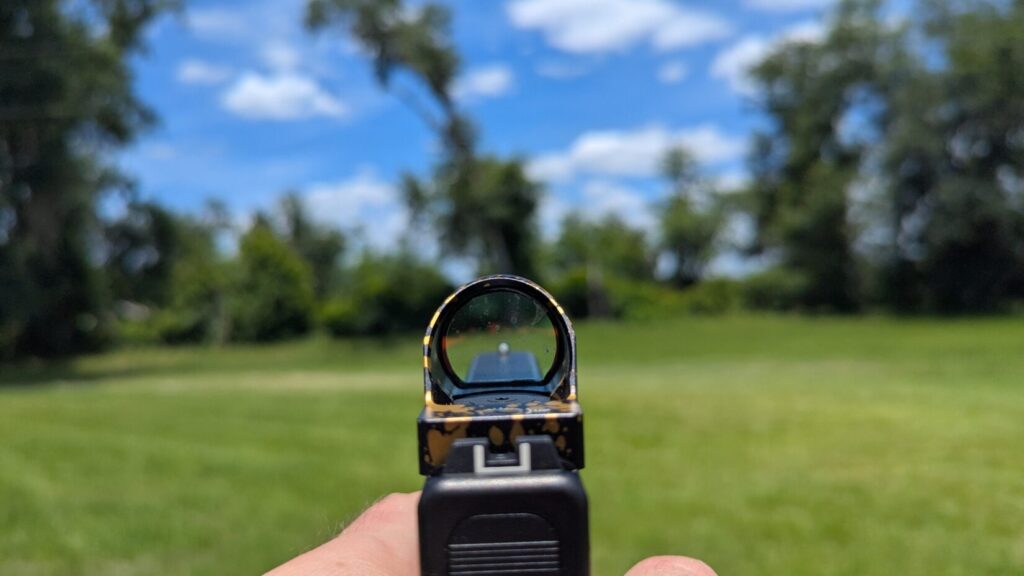
The most common presentation issue comes down to indexing high as you present the pistol to the target. You have to crank your wrist down for the dot to appear on target. With a larger window, you’re more likely to see that the dot is high as you come to full presentation and can adjust rapidly.
If the dot sits high in a smaller window, it might be completely out of your view, and if you’re new to red dots, you might not know that your dot is likely sitting high. Larger windows give you more room for mistakes.
I shoot a fair bit, but I mess up often. When drawing the Glock equipped with a Leupold DPP Micro, I would miss the dot far more often when compared to the EDC Enclosed and the Chameleon when going as fast as I could.
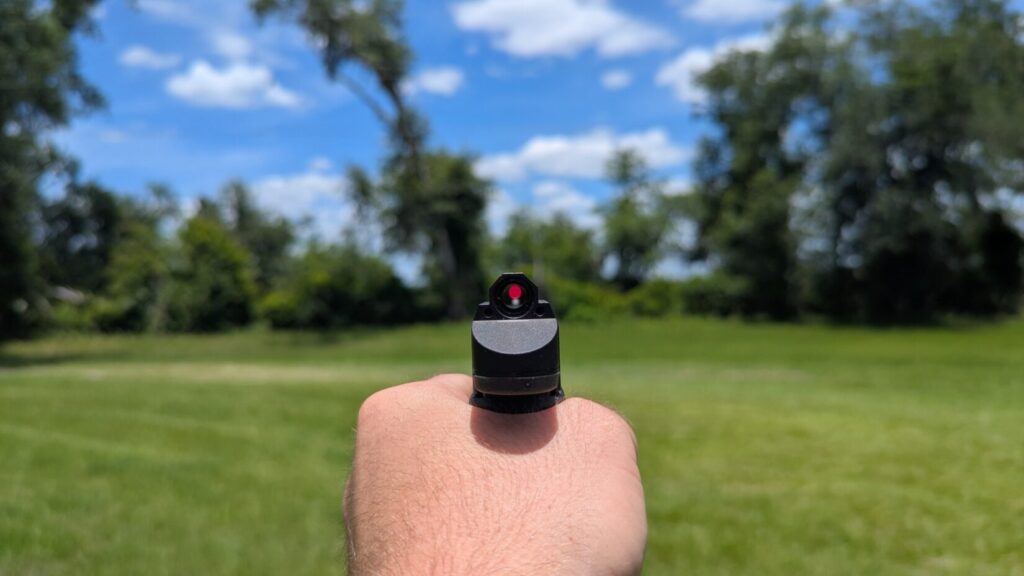
I was going faster than my normal speed, but that’s the only way we got faster. When I pressed the gas fast enough to go off the tracks, the smaller window didn’t help.
Dot Tracking
One of the primary benefits of a larger window size is that it makes it easier to track your dot during recoil. Regardless of window size, the dot is likely going to leave your view as the gun recoils. However, with a larger window, you can track the dot for longer before it leaves your window.
With a perfect grip and stance, an experienced shooter knows the dot will return to their field of vision, right where they want it. However, a less experienced shooter can benefit from seeing the dot for a longer period and tracking its recoil, so they can predict the angle at which the dot will return and be ready for it.
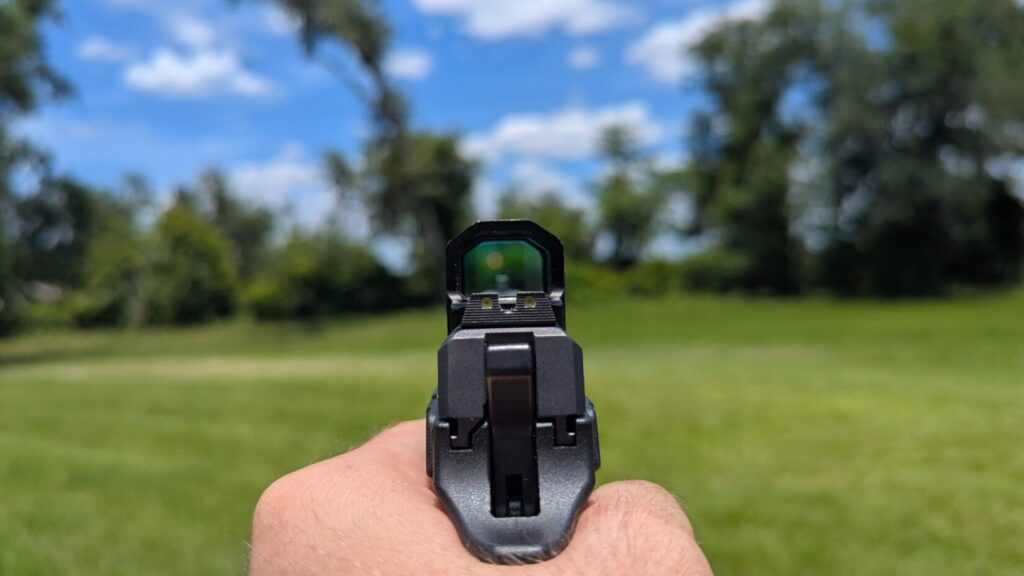
When I took the Chameleon to a War Hogg Tactical class, I found it to be much easier to track when shooting smaller targets. The dot just seems to appear faster. In practicing with the EDC Enclosed, I noticed a slight difference, but with the DPP Micro, it completely disappears.
Beyond Skill
So far, the two advantages of a larger window size are often fixed by training and skill. However, the larger windows can have an advantage that’s difficult to train past. That advantage comes into play when you move into odd situations.
When we get off the square range and into the world of moving, shooting, weird positions, and using cover, the larger window just becomes wonderful.
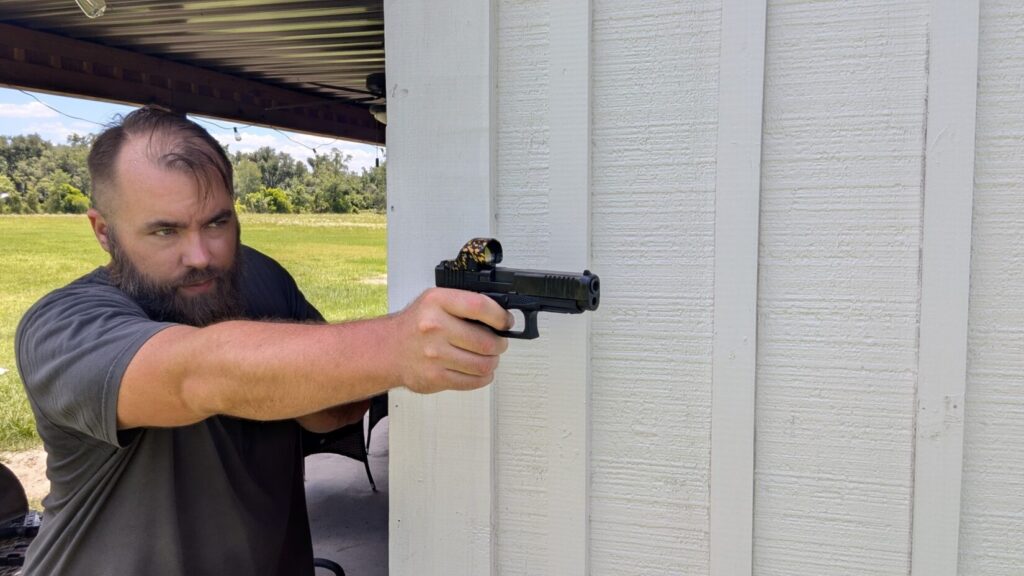
I noticed a huge difference when it came to shooting one-handed, especially with my nondominant hand. I can barely operate a microwave with my left hand, so shooting a gun, tracking the red dot, and getting accurate shots is much more difficult.
With the bigger window, the difference was remarkable. Even between the Chameleon and the EDC, the difference was remarkably noticeable. I could not make quick hits with the Leupold DPP. With that said, if I had more skill with my nondominant hand, this would be less of an issue.
When I clambered behind cover, I didn’t have any major difficulties with strong-side, two-handed engagements. When I switched to one-handed shooting or to engaging from weak-side cover with my strong-side arm, the difference became clear. All the little advantages of the bigger window become much more obvious.
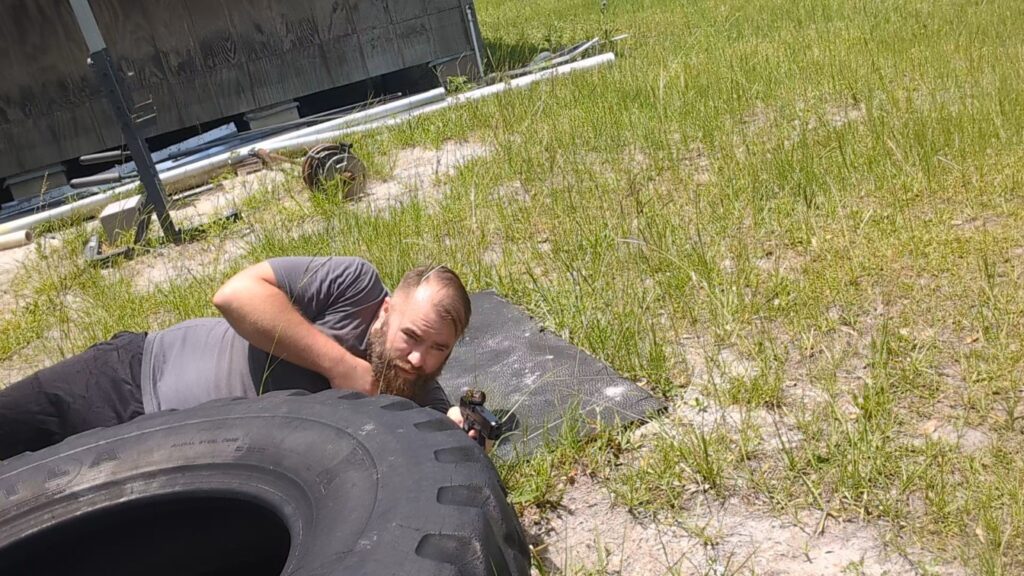
The larger dot is easier to find, to track, and to get on target rapidly. When we get into odd positions, like lying behind a tractor tire and shooting with one hand, the bigger window helps a lot.
The Movement Penalty
When walking, the bounce of my steps affects my reticle. A larger window gives the dot much more room to bounce around while staying within my vision. The EDC Enclosed and Chameleon were both much easier to walk and shoot with than the Leupold DPP Micro.
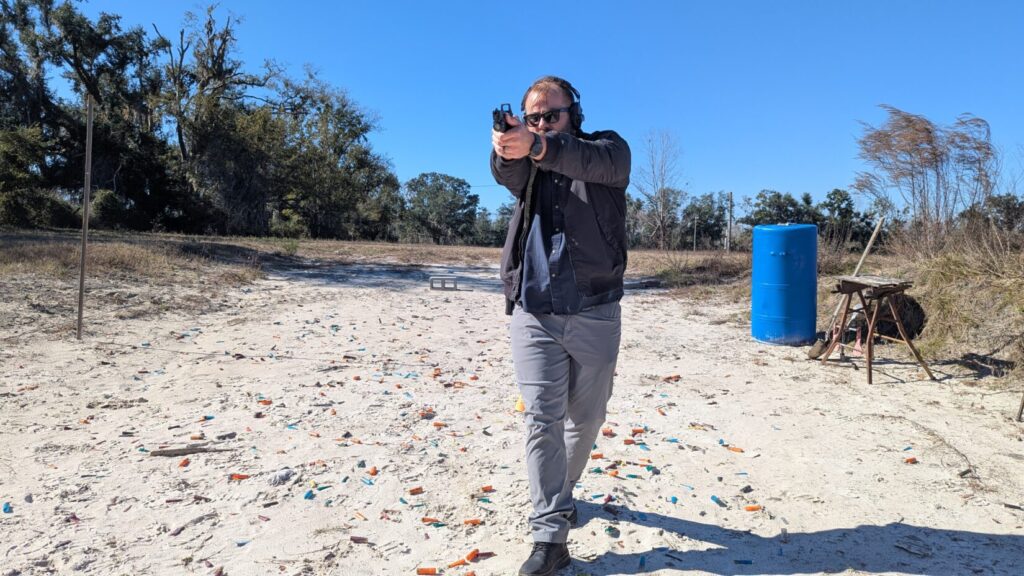
With the DPP Micro, the dot would just pop out of the window with nearly every step if I went faster than snail speed.
When it came to target transitions, I didn’t notice much difference. I think this is because target transitions have been a big subject of my training this month, and practice pays off.
Window Size: It Matters
The bigger window is clearly the more forgiving option. Skill can fill the gap a fair bit, but there are some situations where the window size becomes a big benefit.
Of course, a big window tends to be an open design, which compromises reliability and durability. Plus, additional bulk and weight should always be considered.
For me, an enclosed emitter will always be my go-to for a CCW or duty gun. The likelihood of being tossed in a weird situation is quite small, but the likelihood of rain is always high.
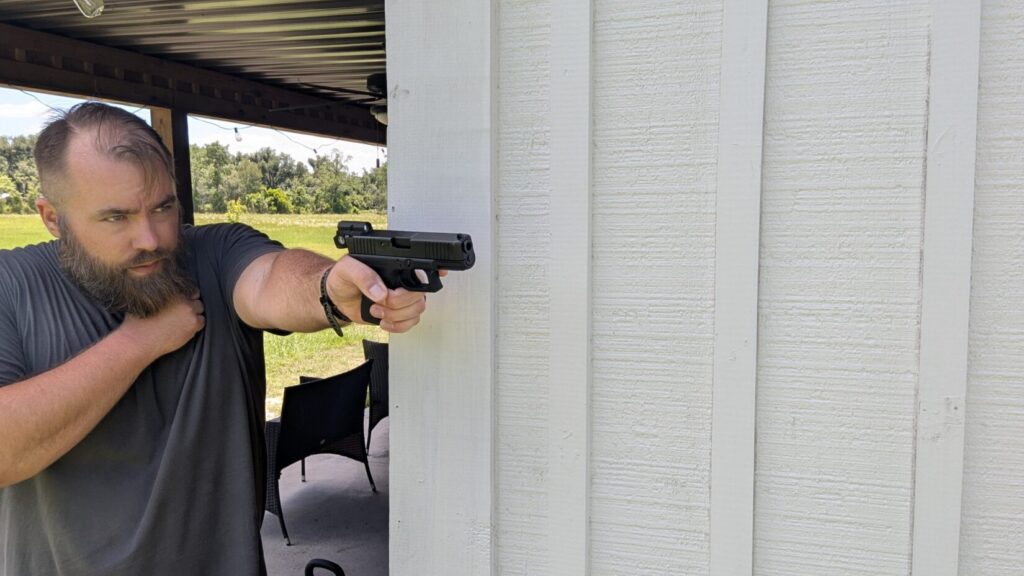
For competition or for a newer shooter, the larger window size seems to be a significant benefit. While the Leupold DPP Micro offers reduced bulk and weight, I’m not sure if that small of a window is all that beneficial.
As always, the best thing you can do is train with your setup, learn its weaknesses, and work to address them.