

Glock pistols are the virtually ubiquitous handguns designed and manufactured by Austrian manufacturer Glock GmbH, and its U.S. subsidiary, Glock USA of Smyrna, GA. The company’s first handguns entered formal service in 1982, when the Austrian military and law enforcement agencies adopted them. The United States followed suit when the company established its American headquarters in November 1985. Since then, they have supplied handguns of numerous models, styles, and calibers to civilians, law enforcement officers and agencies, and the military in vast numbers. Glock pistols, now in their sixth generation, are without a doubt the most immediately recognizable and commonplace example of the polymer-frame, striker-fired handgun.
Their slogan, Glock Perfection, is a mantra founded on the ethos of Gaston Glock, the company’s founder.
Table of Contents
History: Doing it Right for Decades
Gaston Glock: the Revolutionary Gunmaker

Model overviews, views, and reviews
- G17: the Duty Workhorse
- G19: the Classic
- The Legendary G18
- The 19: How the Compact Became a Flagship
- G20: Their Most Versatile Pistol
- G21: A Good Self-Defense Handgun
- G43X: Why It Makes Sense
- A G45 Viewpoint
- G47 Explained: How It Replaces the G17 MOS
- G48: the Slim Crossover for Concealed Carry
- G48 Reviewed
- G49: What Is It and Why Is It?

Glock History: Doing It Right For Decades
The company’s name is a household word, even among people who aren’t into firearms. The name evokes strong emotions, both good and bad. These handguns are famous, infamous, and even mythical. Many gun owners won’t own anything else, while some refuse to own one at all. Glock handguns are praised and vilified, celebrated and condemned.
To say that they are the world’s most popular handgun brand would be an understatement. But how did a brand nearly 40 years old come to dominate the market as it does? The answer lies with an Austrian engineer who decided to try something new.
That engineer was Gaston Glock.
Gaston Glock - An Insightful Newcomer
Most successful firearms manufacturers rely heavily on their pedigree. That reputation for quality and reliability means a lot. It also helps if the company has been successful in the military and law enforcement worlds. Most top-shelf gunmakers have decades, even centuries, of experience to draw from.
But in 1980, Gaston Glock decided to enter the Austrian Army handgun trials completely lacking such a pedigree. Glock founded his company, Glock Ges.m.b.H in 1963, initially making curtain rods and other consumer goods.
The company developed a relationship with the Austrian military in the 1970s, making knife handles and sheaths, grenade casings, and machine gun belt links. This expansion led to experiments with molded polymers, which paid off big-time with Gaston Glock’s new venture.
The Austrian P80 Pistol
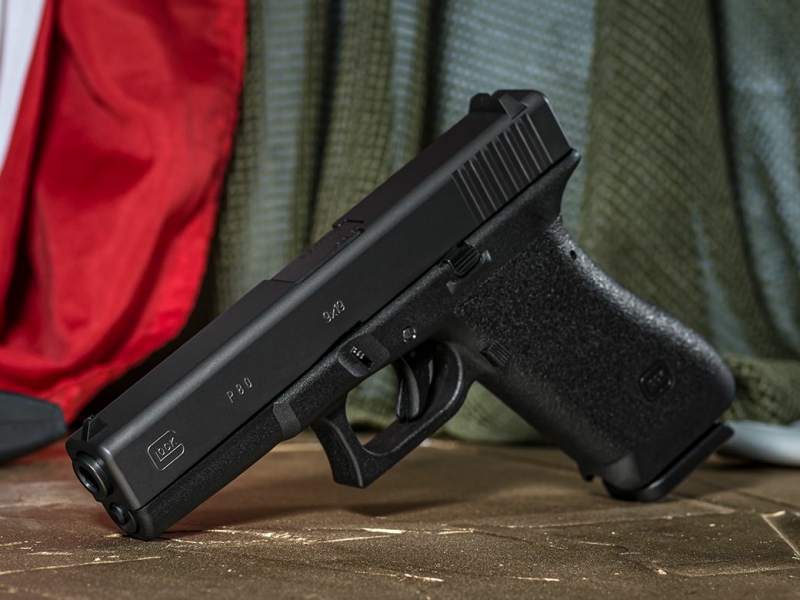
1980 saw the Austrian Army looking to replace its aging Walther P38 service pistols with something more modern. The P38 was a great gun, but it was a pre-World War II design with only an 8+1 capacity, and obsolete by any standard. It was time to move on.
The army announced trials for the new P80 pistol that year, and Gaston Glock saw an opportunity. Despite not having a firearms background, he determined to enter the trials. The only problem was that he didn’t actually have an entry. Some may have seen his lack of experience as an impediment, if not an outright barrier. But not Gaston Glock.
His lack of experience led him to consult with many firearms experts, specifically asking them what they would want in a modern service pistol. The Austrian Federal Ministry of Defense published 17 criteria for the new sidearm. Among other things, the ministry wanted a self-loading pistol chambered for 9mm Luger, easily loaded magazines, that was drop safe from a height of two meters onto a steel plate.
But Glock wanted to hear from the people who would use the P80. Glock’s consultants told him they wanted a pistol that was easy to fire and easy to learn. Specifically, they said it should be instantly deployable, with no worrying whether the safety was on or not. It should also have a much higher capacity than the current models.
Finally, it should be tough and reliable. Soldiers must be able to count on their new sidearm. Glock then examined and tested the best available firearms with which his product would compete.
Glock’s findings, coupled with his knowledge of polymers and metallurgy, led to a sleek, durable, lightweight handgun whose reliability was based on its simplicity. Glock patented his new pistol the next year, dubbing it the Glock 17. In this case, Glock’s lack of pedigree and tradition opened possibilities that might not have otherwise occurred to him. The firearms world was never the same.
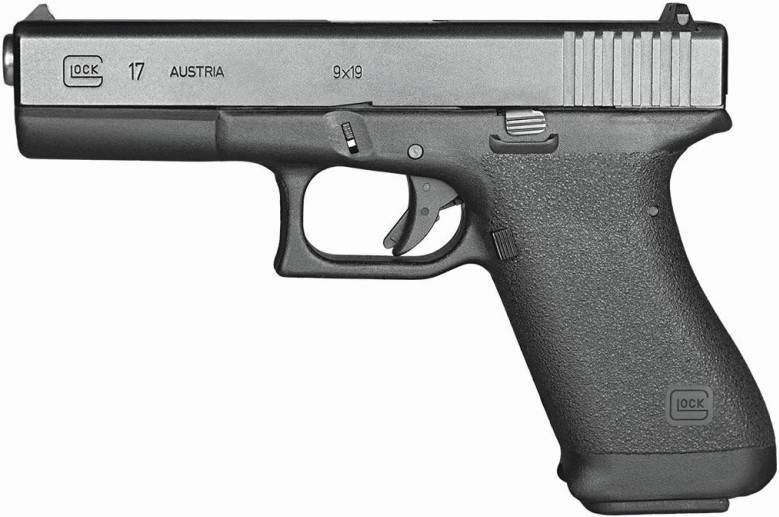
The Glock 17
The Glock 17 was so named because it was Gaston Glock’s 17th patent. It’s that simple. Contrary to what some may believe, there are no prototypical Glocks numbered 1 through 16 sitting in a vault somewhere. That includes the porcelain “Glock 7” referenced in the movie Die Hard 2. That’s Hollywood mythology, as I expect most of you are aware. And a porcelain gun? Really?
The Glock 17 won the P80 pistol trials, which included a 15,000-round firing test, after which the trial guns were checked for wear. Each gun then fired a deliberately over-pressured test cartridge.
But Glock was an upstart gunmaker, so the army assigned the new handgun a preliminary test. Before the trials even began, the Glock had to fire 10,000 rounds with no more than 20 stoppages. The pistol experienced only a single malfunction. So, the Glock 17 had to fire 25,000 rounds, while the others only fired 15,000.
Even so, the Glock 17 won the trials going away. The Austrian military formally adopted it in 1983. The new pistol not only outperformed the others, but Gaston Glock’s price bid was 25 percent lower. His simple, quality design allowed him to streamline costs in a way competing manufacturers could not at the time.
The Defense Ministry awarded Glock a contract for 25,000 pistols plus spare parts. Glock Ges.m.b.H had to expand its Deutsch-Wagram, Austria, production facility quickly, as it had only 38 employees when Gaston Glock embarked on his firearms venture.
The Glock 17 passed the NATO durability test in 1984, prompting the Norwegian Army to adopt the gun as well. The Glock was gaining international attention, and its creator turned his eyes west.
Coming to America
Glock is known for shrewd marketing, and nowhere was that better demonstrated than in the company’s American expansion efforts. The company brought in respected gun writer Peter Kokalis, who tested the Glock 17, eventually writing a glowing article titled “Plastic Perfection” for the October 1984 issue of Soldier of Fortune Magazine. “Glock Perfection” was born.
Kokalis opened the article by saying, “The best pistol will not win the current XM9 (Personal Defense Weapon PDW) trials. The finest military pistol in the world today, in my opinion, is not entered in the XM9 tests.” It seems that Gaston Glock refused to accept the US government’s requirement that the winning pistol’s designer release the patent and production rights to open bidding. Smart guy, Gaston Glock.
Kokalis touted the Glock’s ease of use and built-in safety system. He especially liked the then-revolutionary Safe Action trigger design that is now ubiquitous across most pistol brands. The Glock’s simplicity, durability, reliability, and the fact that it ate whatever ammo he fed it impressed him greatly. Kokalis eased the concerns of American shooters regarding the “plastic” (we would call it polymer) frame. He noted the gun’s light weight, muzzle heaviness (a virtue), and toughness.
The Soldier of Fortune article caught the eyes of American professionals, and when Glock expanded to the US in 1986 as Glock, Inc., the word was out. Glock, Inc. opened its doors in Smyrna, Georgia, as a distribution outlet. Full production operations took time and were in place by 2013. The company stamps all U.S.-made firearms with “U.S.A.” and a small outline of the state of Georgia.
Glock built its name in America by offering police forces top-quality sidearms at attractive prices. Glock’s timing was fortuitous, as the mid-to-late-1980s saw a spike in the American drug trade, leaving the police looking for better options than their aging revolvers. Aggressive marketing to those agencies quickly gained traction, and today, roughly 65 percent of US law enforcement agencies feature Glocks as their standard agency sidearm.
Law enforcement adoption paid off on the civilian side since people trusted police firearms. Those people were also willing to pay full retail price, which was still competitive. Glock had the right gun, at the right time, at the right price. It wasn’t long before American police forces and consumers wanted a more compact pistol, which Glock delivered in 1989 as the Glock 19. The rest, as they say, is history.
A Glock is a Glock is a Glock. Mostly.
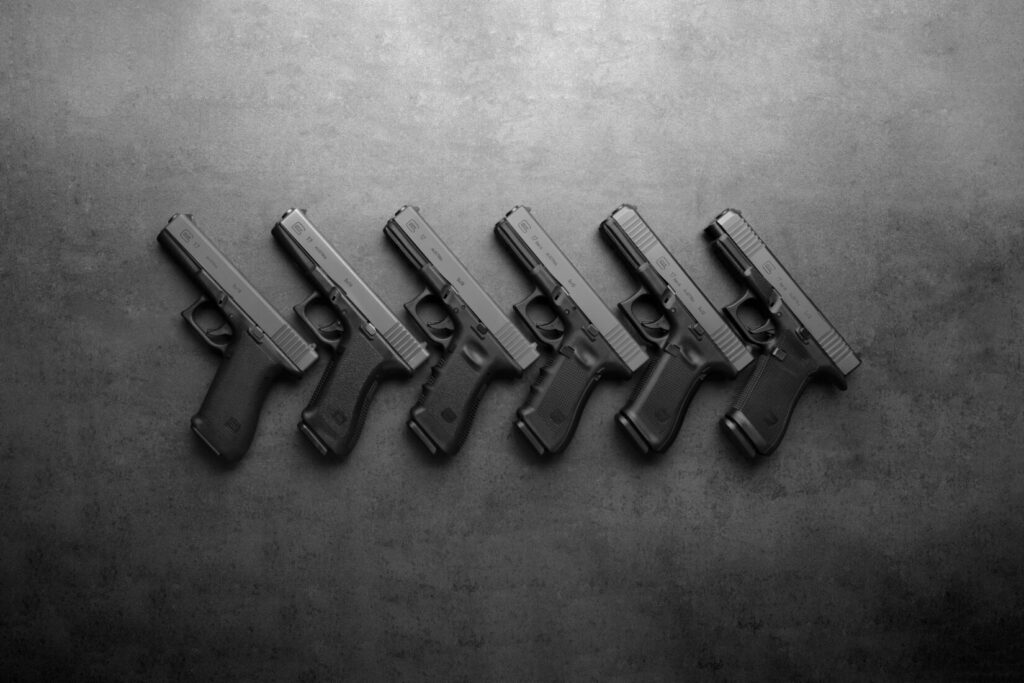
Despite literally dozens of models, some spanning six generations, Glocks are still essentially the same as the original Glock 17 created for the Austrian military. They are instantly recognizable, since internal and ergonomic improvements have been incremental. Glock is the epitome of the old adage that says, “If it ain’t broke, don’t fix it.”
Glock Models
Glock is currently undergoing the most significant commercial catalog restructuring in decades. The company has officially announced the launch of the Gen 6 pistols, which represent the new flagship standard and contain the most radical design changes. This comes concurrently with the discontinuation of most legacy Gen 5 pistols across multiple calibers.
The total number of unique models is constantly shifting, but the new standard lineup is anchored by the Gen 6 and Slimline series:
- Gen 6 Flagship: The newest models featuring the most comprehensive redesign (G17 Gen 6, G19 Gen 6, G45 Gen 6, and—internationally—G49 Gen 6).
- V-Series: a baseline product offering from GLOCK to simplify their processes while maintaining product accessibility on the market.
- Slimline: The G42, G43, G43X, and G48 remain the foundation of the concealed carry market.
Glock models have no unified numbering system. Each is numbered sequentially as it’s introduced. For instance, the G17 was Gaston Glock’s 17th patent, and the sequence has continued from there, regardless of caliber.
Calibers
Glock offers pistols chambered in multiple calibers, with 9mm being dominant. Other available calibers are .22 Long Rifle, .380 ACP, .40 Smith & Wesson, .45 ACP, and 10mm.
Frame Sizes
Frame sizes continue to be classified by intended role: Standard (Full-Size), Compact, Subcompact, Long Slide, and Competition. Modern designs also include Slimline and Crossover pistols, which use narrow or hybrid frames for improved concealment and versatility.
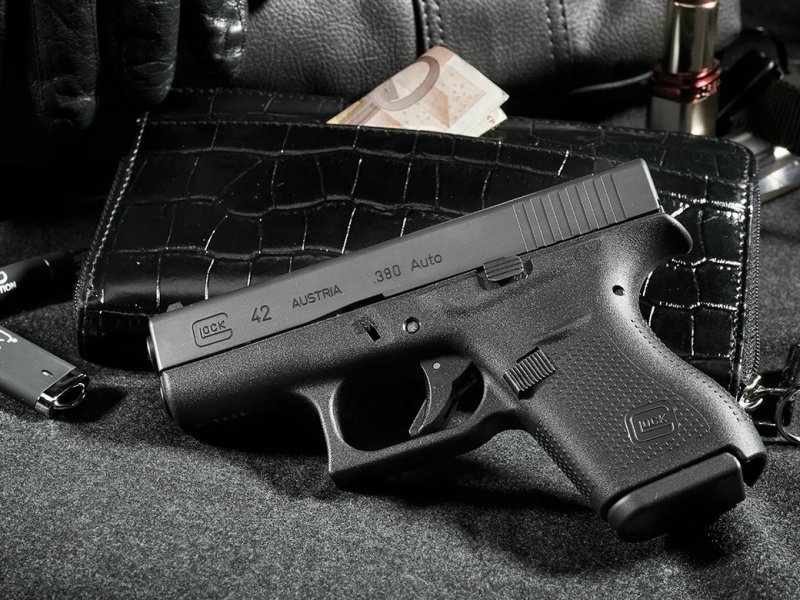
One of Glock’s great strengths is its magazine compatibility. The rule of thumb for double-stack pistols is that a larger magazine will work in a smaller frame: for example, a G17 magazine (17 rounds) will fit and function in the shorter-gripped G19 or G26, though it will extend below the frame. Conversely, a G19 magazine is typically too short to seat properly in a G17 and generally will not lock in or function reliably.
However, there are two important exceptions to this general compatibility:
- Slimline Models: Single-stack models (G42, G43, G43X, G48) are entirely separate and require dedicated Slimline magazines.
- The G19X: Thanks to design considerations for the US Army’s XM17 trials, the G19X frame features a lip that prevents it from fully accepting early Gen 5 magazines due to the specific design of their baseplates.
Thanks to that general compatibility, your 9mm Glock can hold as little as 10 rounds, or as many as 33, depending on your magazine choice. There are also aftermarket drum magazines offering up to 50 rounds.
Glock Generations
Glock is currently in a major transition, moving from its 5th Generation to the newly announced 6th generation. Glock no longer manufactures Gen 1 and Gen 2 models. Gen 4 and Gen 5 Glocks are easily identified since that information is stamped on the slide next to the model number.
There is, however, an evolutionary process through the Glock pistol generations:
Gen 2
The Gen 2 Glocks were manufactured between 1988 and 1997. They featured improved, textured front and back straps, as well as the .40 S&W and .357 Sig chamberings.
Gen 3
Glock rolled out the Gen 3 in 1995. The first Gen 3s kept the textured front and back straps and added finger grooves and a thumb rest. Later Gen 3s also added a front accessory rail. The first single stack “Slimline” model, the G36, also debuted with Gen 3, as did the .45 G.A.P. chambering.
Gen 4
Gen 4 Glocks, introduced in 2010, made the grip texturing less aggressive and included interchangeable backstraps. The basic frame was a bit smaller to accommodate different-sized hands via those backstraps. The Gen 4 also included a reversible mag release. New mags were included for the new mag release, though older mags will also work.
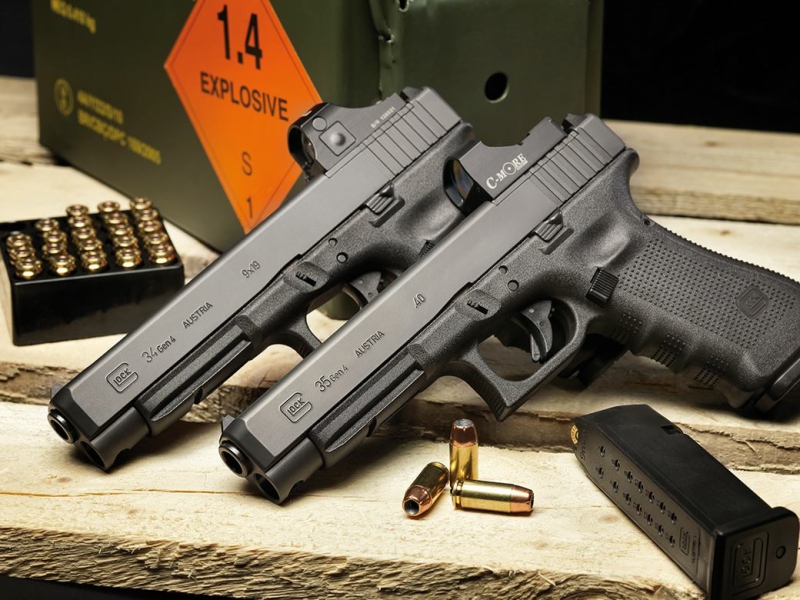
Glock added a dual recoil spring assembly to reduce felt recoil. The Gen 4 era added the .380 ACP chambering and the single stack G42 and 43 pistols. Finally, Glock introduced the Modular Optic System (MOS) in 2015 on selected Gen 4 models, giving shooters a factory optics-ready slide.
Gen 5
Gen 5 represents the latest Glock iterations and includes pistols chambered in 9mm, 10mm, .40 S&W, and .45 ACP. The finger grooves went away, making the grip more compatible with different hand sizes. But the Gen 5 adds some nice features, like ambidextrous slide releases, a flared mag well, and the Glock Marksman Barrel with more aggressive polygonal rifling, a target-style crown, and tighter chamber specifications.
Gen 6
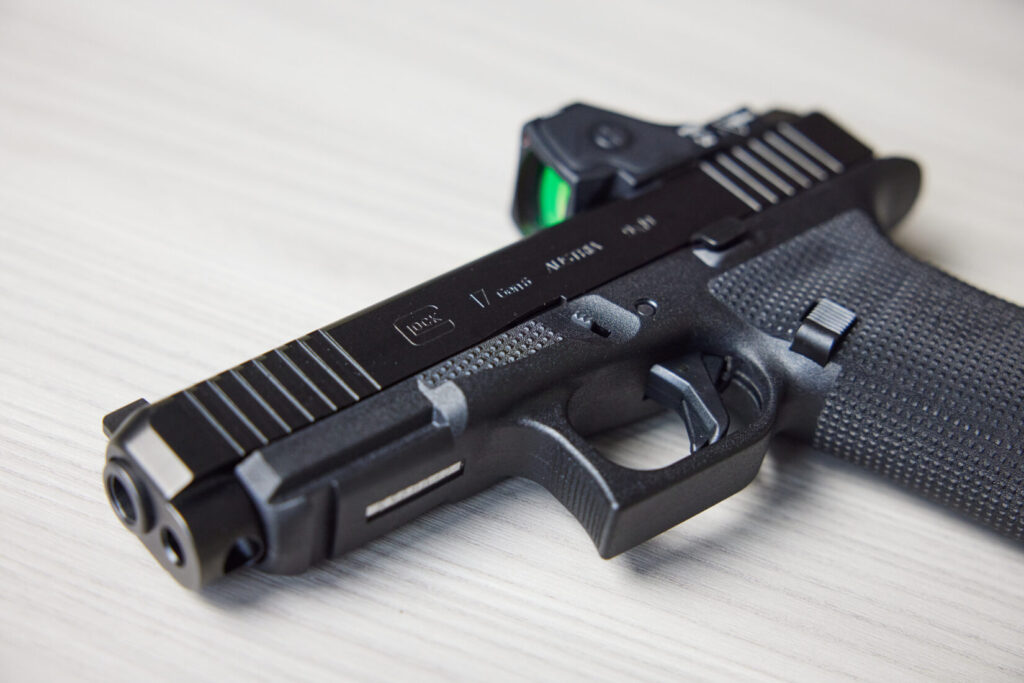
And now we have the Gen 6; this is the redesign GLOCK enthusiasts have been begging for. Gen 6 carries forward the no-finger-grooves approach but completely reworks the ergonomics with an integrated palm swell, more aggressive RTF6 grip texture, an undercut trigger guard, a built-in thumb rest, and a much longer beavertail.
Internally, GLOCK finally offers a flat-faced trigger shoe right from the factory. Most critically, the MOS plate system is gone, replaced by a superior, lower-profile Optics Ready System (ORS) that mounts the optic directly to the slide using a polymer shock absorption plate.
Glock and Safariland
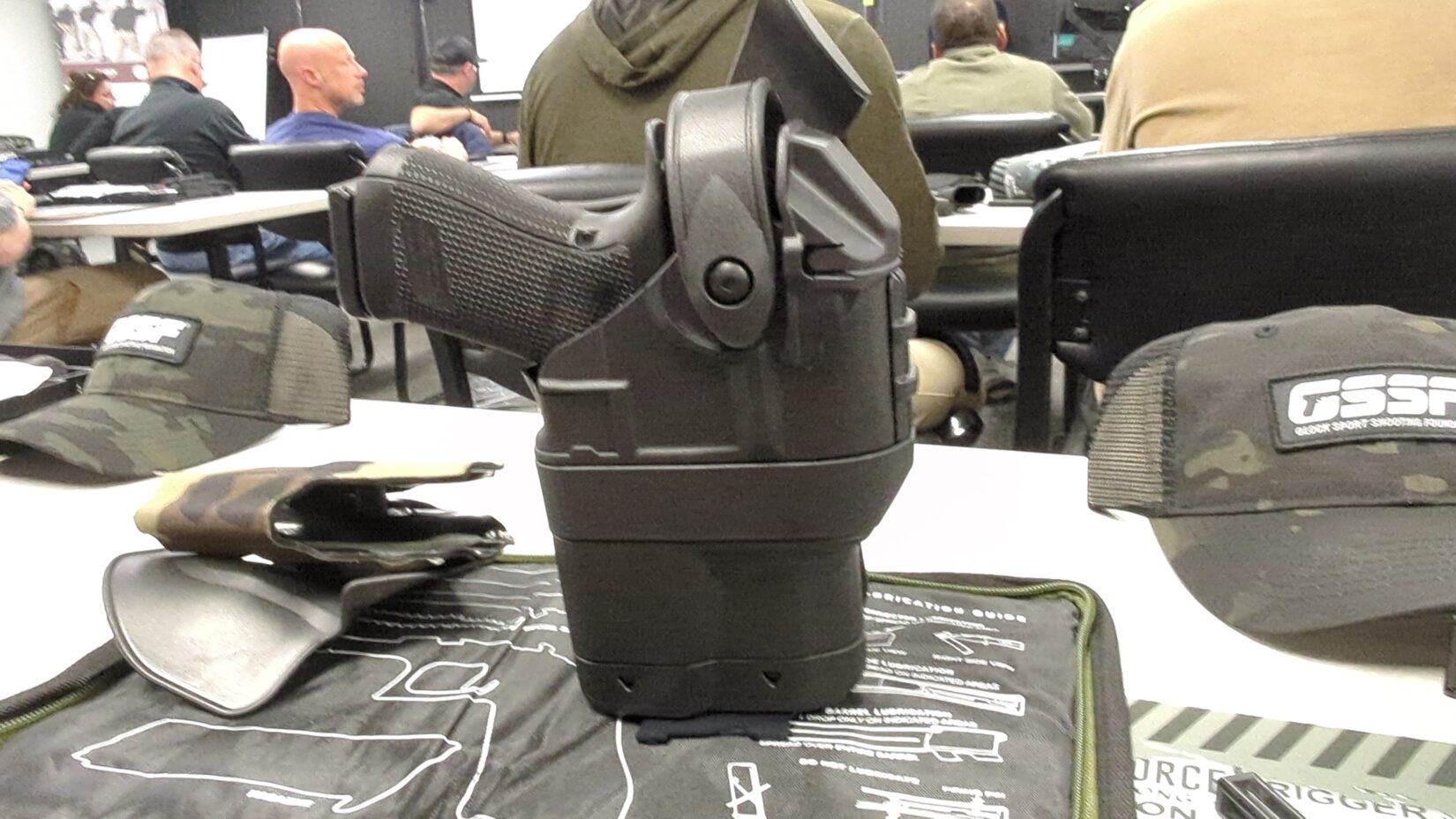
This is the Safariland Blog, so I’d be remiss if I didn’t briefly mention the relationship between Safariland and Glock. Safariland works closely with Glock’s design team so that holsters are available at the pistol’s release date. Being ahead of the game is an absolute must. Agencies wouldn’t take kindly to having new sidearms but no holsters.
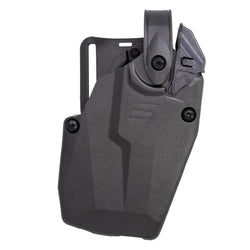
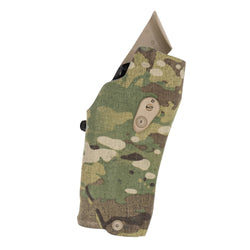
Three of the most popular Safariland Glock holsters are the Ballast Duty Holster, the 6000 Series Red Dot Sight Open (RDSO) outside-the-waistband line, and the Incog X IWB Holster. Glock’s practice of keeping similar profiles for all their pistols helps Safariland tweak their holsters for new products or generational changes.
Most Safariland holsters will be compatible, first and foremost, with Glock 17 and 19 pistols. Availability for other models is based on law enforcement demand.
Glock Perfection
No firearm is perfect, despite marketing claims to the contrary. But Glock’s track record is second to none. Militaries and police agencies around the world choose Glock more than any other brand. That’s because Glocks are simple, affordable, and they run.
They run for a long time. I’ve often heard a proverb stating that a certain expensive, and admittedly better looking, firearm is the gun you show your friends. But the Glock is the gun you show your enemies. That’s a difficult adage with which to argue.
We can always nitpick, and people do nitpick the Glock. I know because I’m one of them. I don’t care for the grip angle. But I cannot, and would not, deny that Glocks are number one for a reason.
There are cooler, sexier guns out there and Glocks are not sexy. They are a bit blocky by today’s standards. But Gaston Glock’s proven system is admirable, and it just plain works. Yes, Glocks have evolved, as new technology and changing applications demand they should. But Glock has never sacrificed the core philosophy that won the Austrian P80 trials.
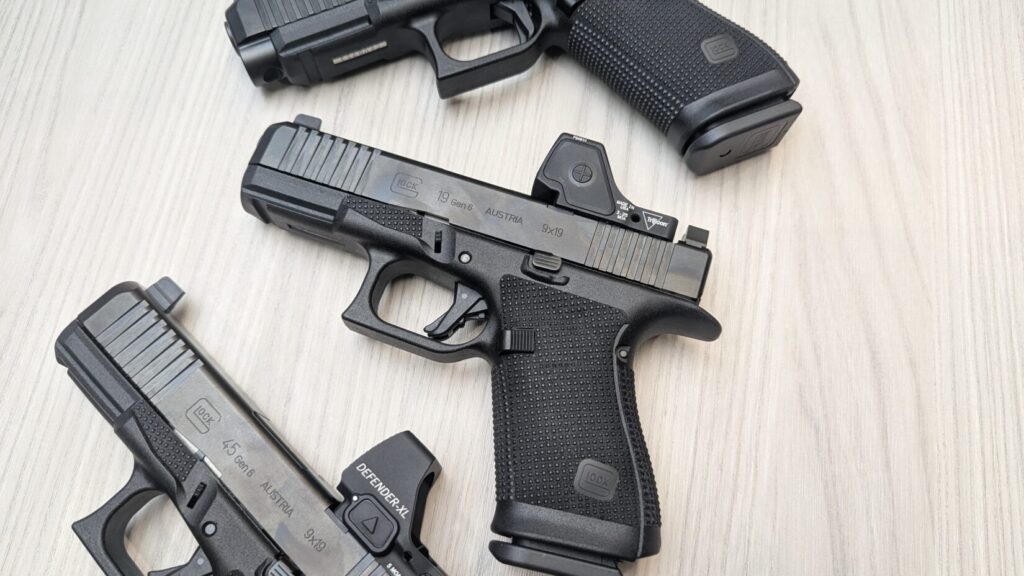
The passing of founder Gaston Glock in late 2023 marked the end of an era. Kathrin Glock, now leading the company, is driving a decisive strategy that maintains the brand’s commitment to perfection while accepting competitive challenges.
The Gen 6 represents that strategic evolution as ‘Perfection Continues’ for the modern shooter. In this sense, the Gen 6 is truly honoring the founder’s legacy: it’s the next step taken to keep Glock on top.
The continued market supremacy of the G17 and G19 proves that Glock is doing it right. Only 40 years after the G17’s adoption, Glock handguns dominate the industry and have done so for decades, thanks to their founder’s original vision and the current leadership’s strategic commitment to that legacy.
Glock Generations
Gaston Glock: Revolutionary Gunmaker
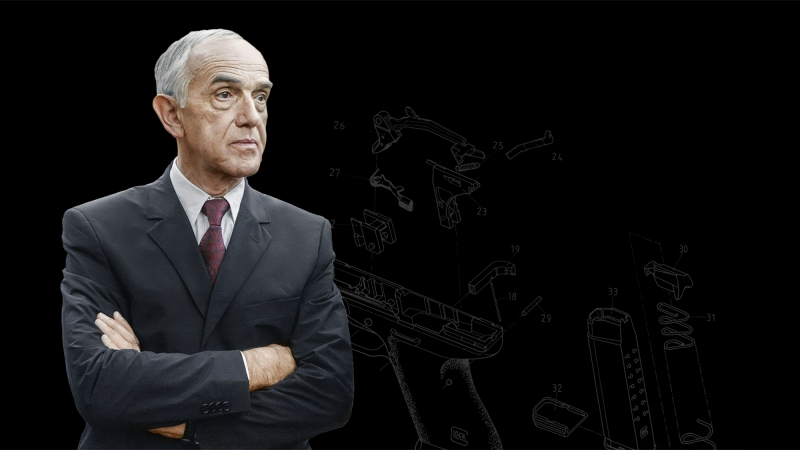
Gaston Glock was probably the most influential handgun designer since John Moses Browning. Glock products revolutionized handgun designs, and even how those handguns were used. Barely four decades after the first Glock 17 pistol, Gaston Glock’s firearms dominate the law enforcement and civilian handgun markets, while maintaining a significant military presence as well.
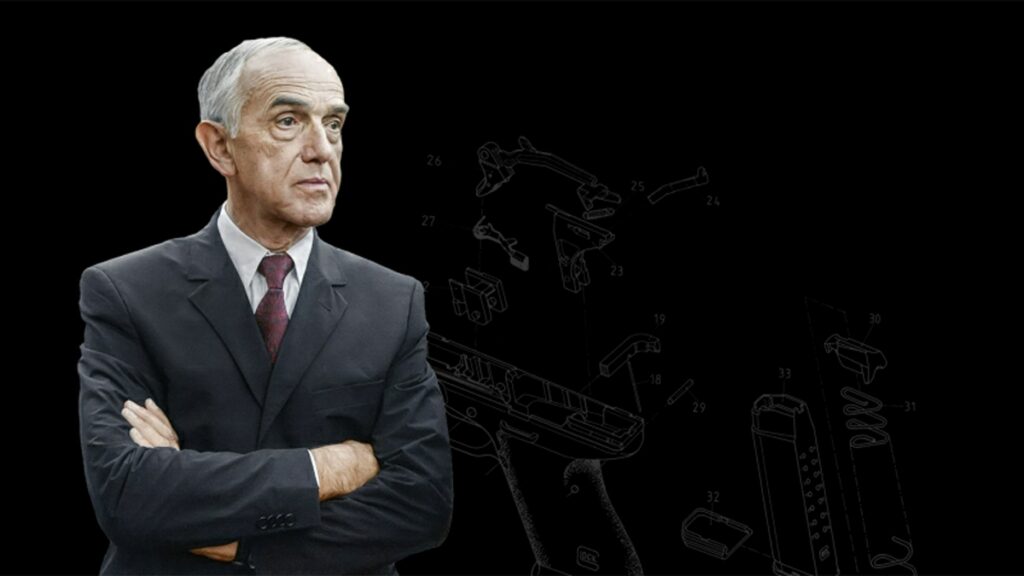
Gaston Glock’s passing on December 27, 2023, at the age of 94 represents a loss to the firearms world equal to that of Browning, Eugene Stoner, and Mikhail Kalashnikov. The Glock corporation has been a model of consistency and quality, built on its founder’s vision of simplicity and reliability. The company’s future seems solid and Gaston Glock leaves a secure legacy. Let’s look briefly at how Glock built that legacy.
Gaston Glock’s Early Days
Gaston Glock was born in Vienna, Austria in 1929. He was conscripted briefly into the German Army in the closing days of World War II, as the Germans sought to bolster their ranks with men previously deemed too old or too young. Glock later studied mechanical engineering in Vienna, after which he worked in manufacturing.
Gaston and his first wife, Helga, opened a small business in their garage in 1963, making small consumer items like curtain rods and brass fittings. Glock Ges.m.b.H eventually developed a relationship with the Austrian military in the 1970s, making knife handles and sheaths, grenade casings, and machine gun belt links. This expansion led to experiments with molded polymers, setting the stage for Glock’s revolutionary handgun.
Gaston Glock: The Novice Gunmaker
By 1980, Glock employed 38 people and was looking for further business opportunities. He learned through his defense ministry contacts that the Austrian Army was looking to replace its World War II-era Walther P38 pistols.
Glock reportedly had not even held a firearm since his brief military service 35 years earlier. But he was determined to compete for the new P80 pistol contract. The Austrian Federal Ministry of Defense published 17 criteria for the new sidearm. Among other things, the ministry wanted a self-loading pistol chambered for 9mm Luger, with easily loaded magazines, that was drop safe from a height of two meters onto a steel plate.
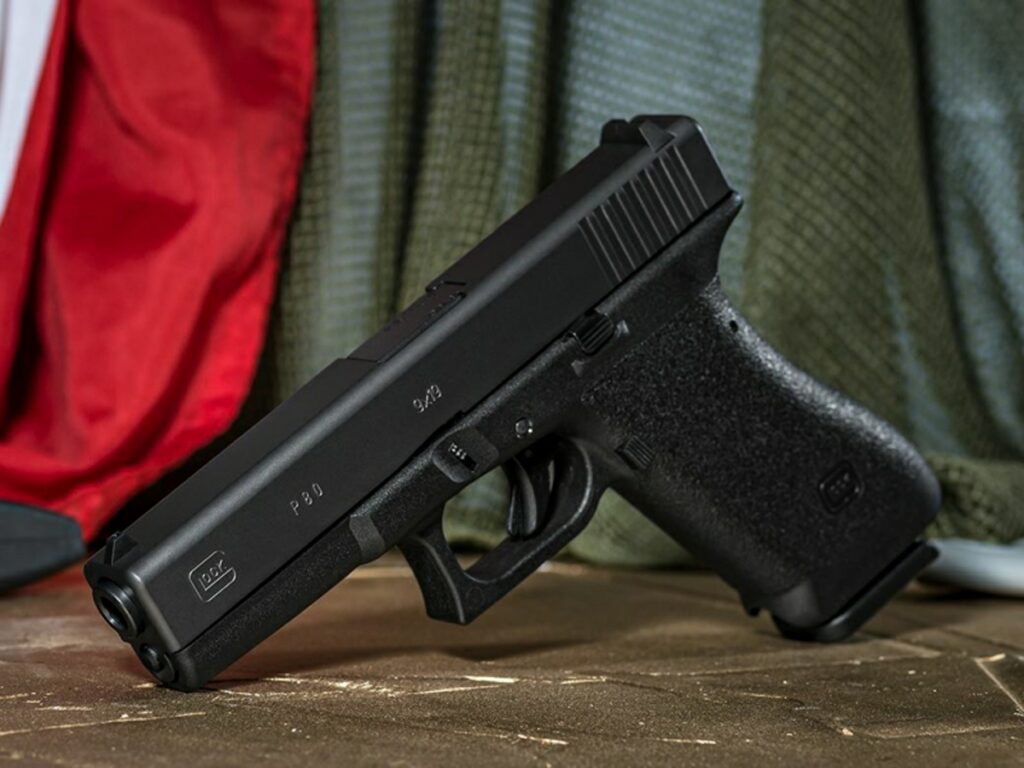
But Glock’s lack of experience led him to look outside the Defense Ministry’s guidelines. He wanted to hear from the people who would use the P80. He consulted with firearms experts, specifically asking them what they would want in a modern service pistol. Glock’s experts told him they wanted a pistol that was easy to fire and easy to learn. It should be instantly deployable, with no concerns about whether the safety was on or not. It should also have a much higher capacity than the current models. Finally, it should be tough and reliable.
Glock acquired, examined, and tested the best available firearms, evaluating their performance and features within his established parameters. Glock’s lack of experience meant that he had no preconceptions about how such firearms should operate. He looked at it with an engineer’s eye, guided by his extensive research.
Glock’s findings, coupled with his knowledge of polymers and metallurgy, led to a sleek, durable, lightweight handgun whose reliability was based on its simplicity. Glock patented his new pistol the next year, dubbing it the Glock 17. The number 17 has no special meaning. It was merely the 17th patent for which Gaston Glock had applied. This was the gun he submitted to the Austrian Army trials in 1981.
The P80 Pistol
The Glock 17 won the P80 pistol trials, including a 15,000-round firing test, after which the trial guns were checked for wear. Each gun then fired a deliberately over-pressured test cartridge. But Glock was an unknown gunmaker, so the G17 was assigned a preliminary test. Before the trials even began, the Glock had to fire 10,000 rounds with no more than 20 stoppages. The pistol experienced only a single malfunction. So, the Glock 17 had to fire 25,000 rounds, while the others only fired 15,000.
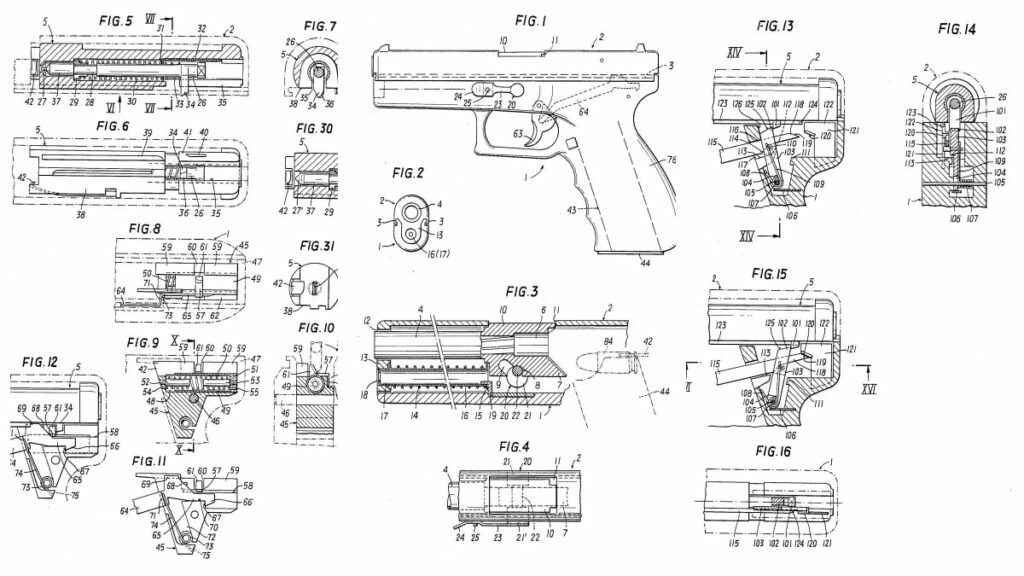
Even with the extra requirement, the Glock 17 won the trials handily. The new pistol not only outperformed the others, but Gaston Glock’s price bid was 25 percent lower. His simple, quality design allowed him to streamline costs in a way competing manufacturers could not at the time. The Defense Ministry adopted the Glock 17 as the P80 in 1983.
The ministry also awarded Glock a contract for 25,000 guns plus spare parts. Glock Ges.m.b.H had to expand its Deutsch-Wagram, Austria production facility quickly. 38 employees weren’t nearly enough. The Glock 17 passed the NATO durability test in 1984, prompting the Norwegian Army to adopt the gun as well. The Glock was gaining international attention, and its creator turned his eyes toward the United States.
Smart Marketing
Gaston Glock knew he wanted to enter the lucrative American civilian market. He also knew that American gun owners often took their cues from law enforcement agencies. So, with that in mind, Glock set about winning police contracts. The first move was to invite respected gun writer Peter Kokalis to Austria. Kokalis ran the Glock 17 and loved it. His enthusiastic review, titled “Plastic Perfection,” ran in Soldier of Fortune Magazine’s October 1984 issue. “Glock Perfection” was born. Kokalis boldly wrote that the Glock 17 was “the finest military pistol in the world today.” The article spread through American professionals, prepping the market for Glock’s 1986 grand opening in Smyrna, Georgia.
Glock’s American expansion came at just the right time. The drug trade exploded in the mid-1980s, leaving revolver-equipped cops outgunned by gangs wielding modern weapons. Glock offered discounted prices to agencies looking to upgrade, and many accepted. Today, some 65 percent of American law enforcement agencies use Glocks.
Law enforcement adoption paid off on the civilian side since people trusted police firearms. Those people were also willing to pay full retail price, which was still competitive. Glock had the right gun, at the right time, at the right price. It wasn’t long before American police forces and consumers wanted a more compact pistol, which Glock delivered in 1989 as the Glock 19. The gun-making industry scrambled to catch up.
Gaston Glock, the Man
Glock, himself, was mostly reclusive as his company grew exponentially. He was undoubtedly deeply involved, but not publicly. Gun control organizations quickly propagandized his firearms, often making wild accusations regarding the company, its products, and its founder. Glock rarely responded, preferring to attend to business rather than politics.
One very public incident, however, demonstrated Glock’s fortitude. Glock seemingly caught his financial advisor, Charles Ewert, embezzling funds. He went to Luxembourg to confront Ewert, but Ewert acted first. He hired a former professional wrestler named Jacques Pêcheur to ambush Glock in a parking garage and kill him. The 70-year-old Glock fended off the rubber mallet-armed assassin, and even knocked out some of his teeth. Glock was injured but recovered. His only comment on the attack was that he was glad it happened, so he knew not to trust Ewert anymore. Ewert and Pêcheur were both convicted and imprisoned.
Gaston Glock’s Legacy
Glock’s legacy is vast but simple. He dedicated himself to producing a quality, reliable, user-friendly firearm whose strength was its rugged simplicity. Despite marketing claims, Glock handguns do not represent “perfection.’ Nothing is perfect. But they are arguably the most consistently excellent semi-automatic handguns ever conceived.
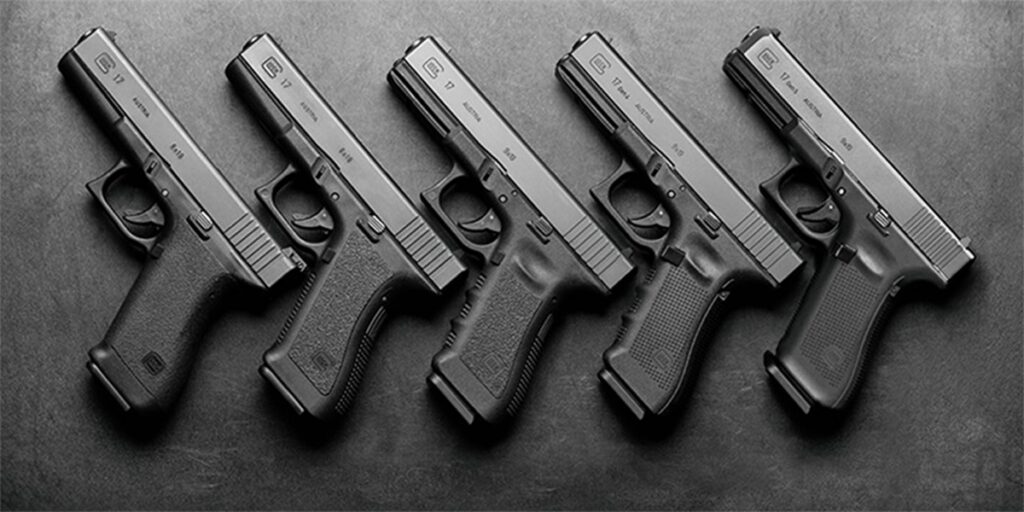
Factory Glocks aren’t fancy. They were never meant to be fancy. Gaston Glock devised a formula that works, and he stuck to it. Modern Gen 5 Glock 17s don’t look much different from the 1983 model. That’s because that 1983 Glock ran, just as it was designed to do. Why change something that works? Sure, you can tweak things, and Glock has done that. But the basic pistol remains very close to the original.
Gaston Glock’s vision revolutionized the firearms industry. Simplicity and reliability became the watchword for duty and concealed carry pistols. You can still buy the bells-and-whistles firearms, but as the saying goes, those are the guns you show your friends. The Glock is the gun you show your enemies.
Glock Perfection
The phrase “Glock Perfection” is the manufacturer’s catchphrase, marketing slogan, and philosophical mindset. It represents what the company has described as its “…It represents the company’s commitment to uncompromising quality, exceptional reliability, and continuous improvement in the design and manufacturing of its products.” The slogan is derived from founder Gaston Glock, who prioritized developing products precisely to customer requirements, with an emphasis not only on quality, but simplicity.
They describe the core tenets of “Glock Perfection” as:
- Uncompromising Quality: A commitment to the highest standards in the materials and construction of every product, from the polymer frames to metal parts.
- Maximum Customer Satisfaction: Striving to meet and exceed the requirements of customers, particularly law enforcement agencies and military units that rely on the pistols for their safety.
- Reliability and Durability: Glock pistols are renowned for their ability to function in adverse conditions with minimal maintenance, a key factor in the “Perfection” half of that claim.
- Simple, Safe Operation: Their “revolutionary” Safe Action System delivers a consistent trigger pull and three independent, automatic safeties. This is intended to make the pistols simple and intuitive to use.
- Continuous Pursuit of Excellence: The company views “Perfection” not as a state they’ve attained, but as an ongoing journey or an ideal to strive for with each new generation of pistols and accessories.
“Glock means the continuous pursuit of perfection in everything we do.” ~ Kathrin Glock

By the Numbers: Deciphering Glock Nomenclature
If I graded the way different companies named their guns, Glock might get an F. All they use is a number without any other identifying information. Sometimes they might add a letter or initial to the end of the number to make things a little trickier.
You have to be a real nerd to be able to decode the Glock naming systems. Luckily for you, I’m a giant gun nerd, so let’s dig into and decode the Glock designations.
Glock Model Numbers
Glock model numbers start with 17 and go up. The numbers do not correlate with caliber, frame size, or design in any way. It’s essentially just a numbered list of guns in the order they were produced and released.
The first Glock handgun, the Glock 17, was Gaston Glock’s 17th patent, and since then, the guns have been designated as numbers. So, the Glock 40 isn’t a .40 S&W, it’s a 10mm. The Glock 44 is actually a .22LR, and the Glock 45 is a 9mm.
It can be a bit confusing, especially if you ask for a Glock 45 and get handed the .45 ACP Glock 21. The first thing we’ll break down in this article is the various Glock designations by caliber.
Glock Handguns, By Caliber
.22 LR Glock
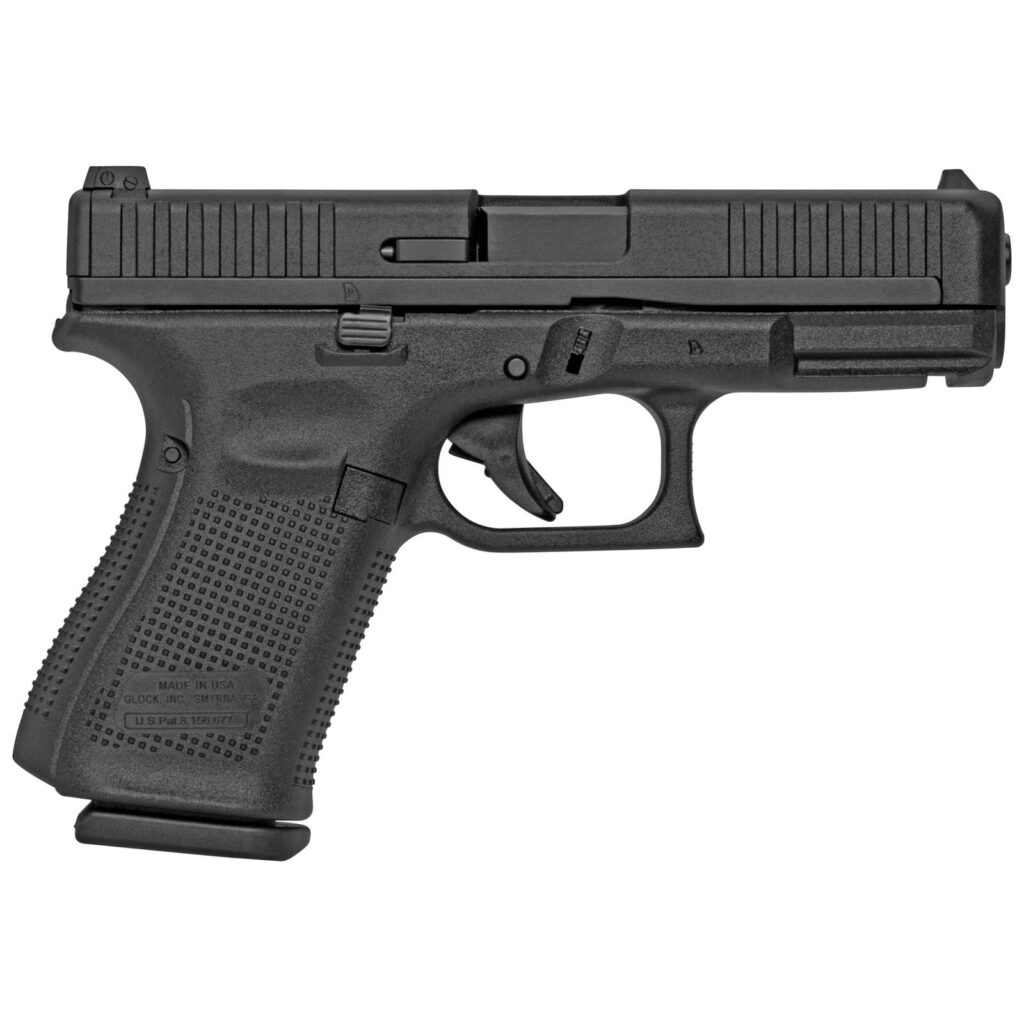
Glock 44: Glock’s only .22LR is a straight blowback design with a compact size.
.380 Models
Glock 25: This model has a straight blowback design with a double-stack 15-round magazine in a compact frame size.
Glock 28: The G28 has a straight blowback design with a double-stack magazine in a subcompact frame size.
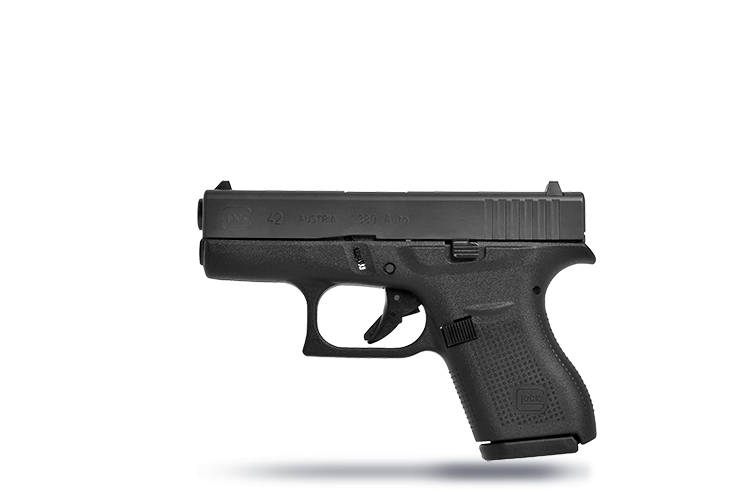
Glock 42: This model has a locked breech short recoil design with a single stack magazine in a Slimline frame size.
.357 SIG Models
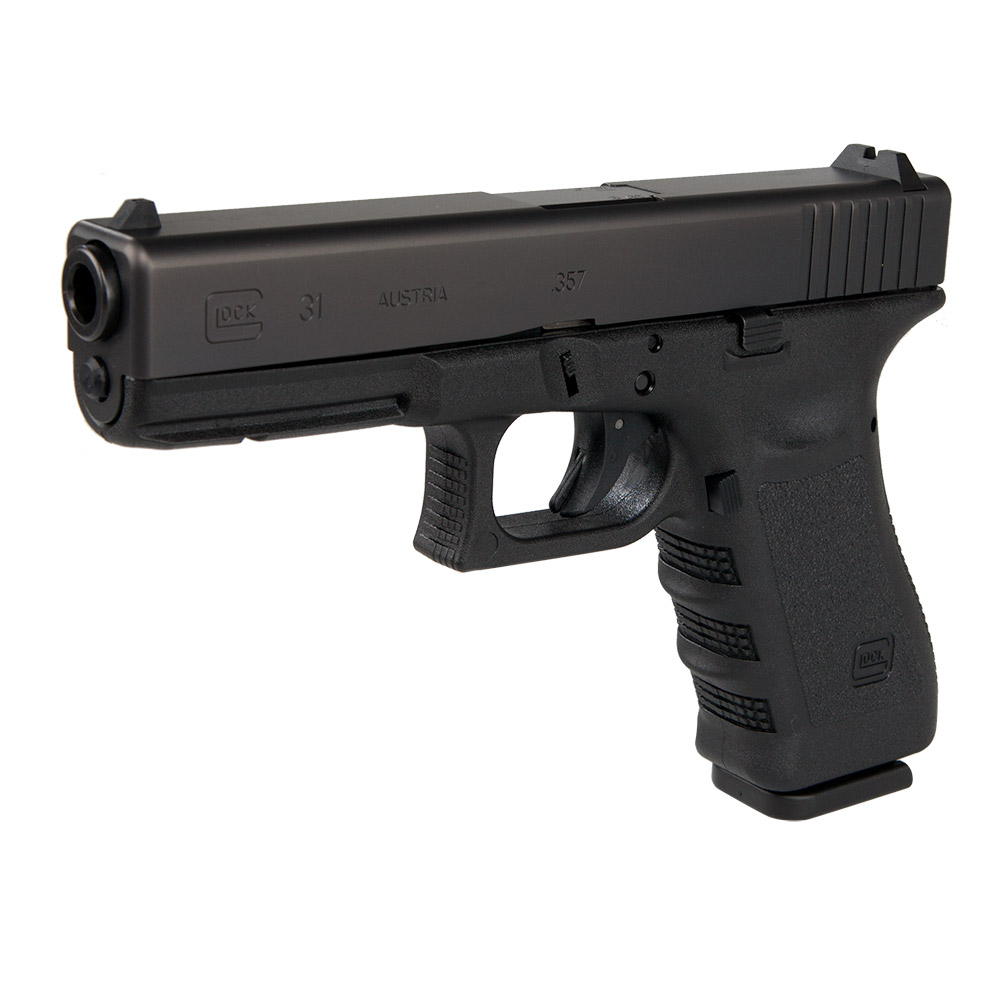
Glock 31: This is a full-sized handgun with a double-stack 15-round magazine.
Glock 32: The G32 is a compact with a double-stack, 13-round magazine.
Glock 33: This model is a subcompact with a double stack 9-round magazine.
9mm Glocks
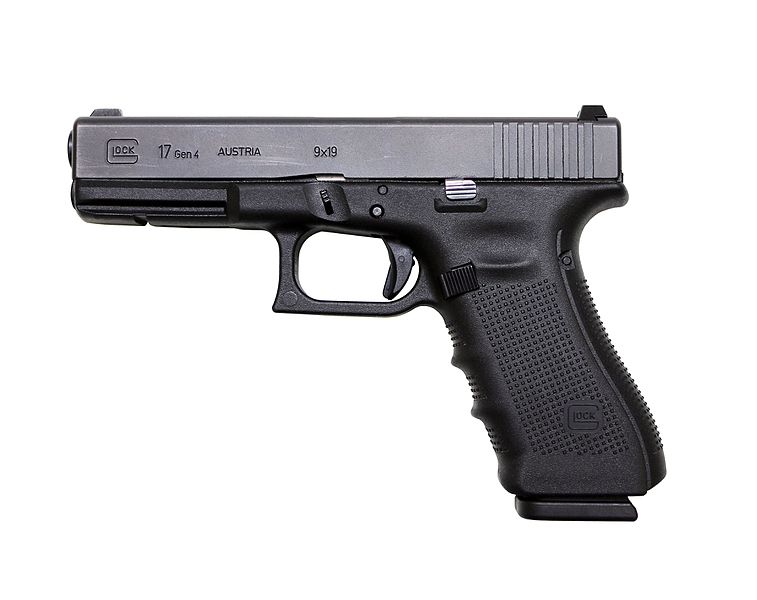
Glock 17: The Glock 17 is a full-sized handgun with a double-stack 17-round magazine.
Glock 17L: The first Glock with a long slide and barrel, the G17L uses a Glock 17 frame with 17-round double-stack magazines.
Glock 18: This one is full size, with double stack 17 to 33-round magazine. It’s a selective fire machine pistol.
Glock 19: The G19 is a compact with a double-stack, 15-round magazine.
Glock 19X: This model has a full-sized frame with a compact slide and a double stack, 17-round magazine. This pistol was designed for the MHS contract. It has a lanyard loop and a front lip on the magazine well. It cannot use GEN 5 magazines and domes in coyote color only.
Glock 26: This is a subcompact with a double-stack, 10-round magazine.
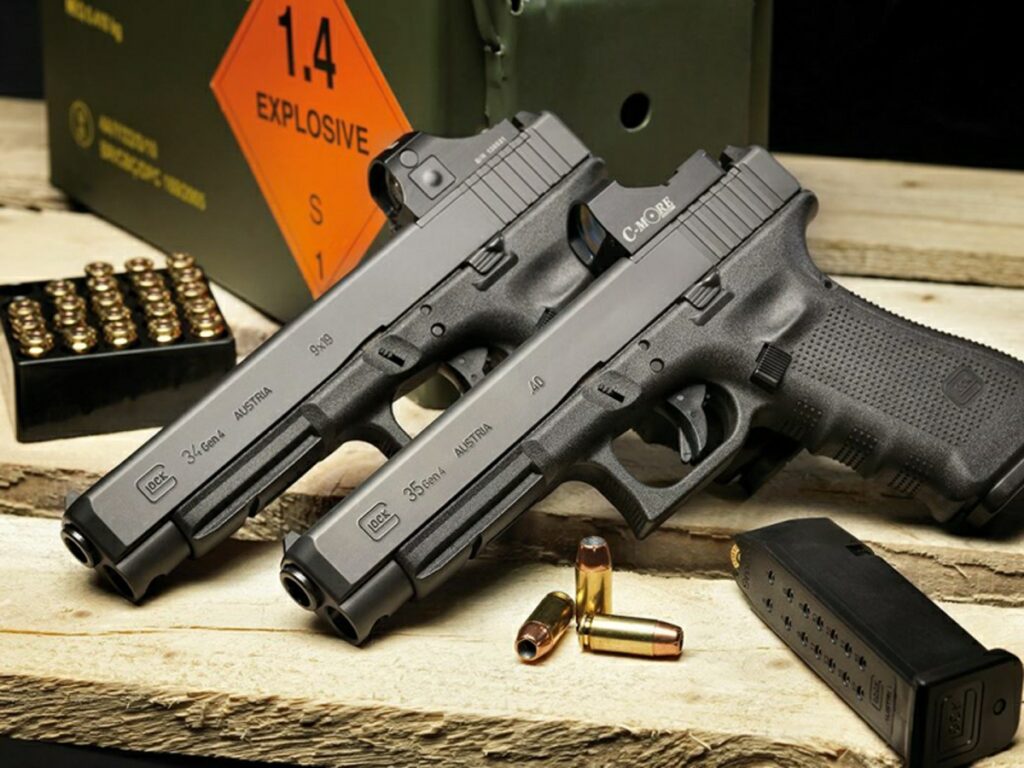
Glock 34: The G34 is a competition model with a longer barrel and full-sized frame with a double stack, 17-round magazine. Its barrel and slide are slightly shorter than 17L.
Glock 43: This is a Slimline model with six-round, single-stack magazine.
Glock 43X: A Slimline model with G43 slide and G48 frame and single stack 10-round magazine.
Glock 45: This model has a full-sized frame with a compact slide with a double stack, 17-round magazine.
Glock 46: The G46 has a compact frame with a double stack, 15-round magazine. It uses a rotary barrel breech design.
Glock 47: This is a full-sized handgun, with double stack 17-round magazine. It has greater parts commonality with the Glock 19, allowing the G47 barrel and slide to mount to a Glock 19 frame and the Glock 19 barrel and slide to mount to a Glock 47 frame.
Glock 48: This model has a Slimline frame with single stack 10-round magazine.
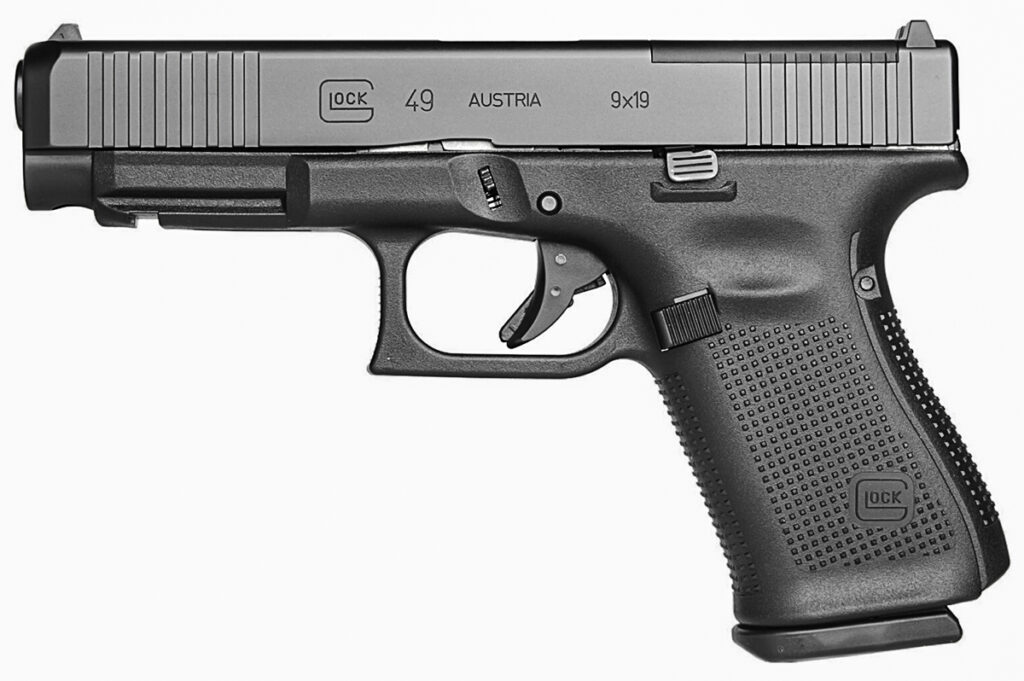
Glock 49: The G49 has a full-length slide mated to a compact frame, with double stack 15-round magazine.
.40 &SW Models
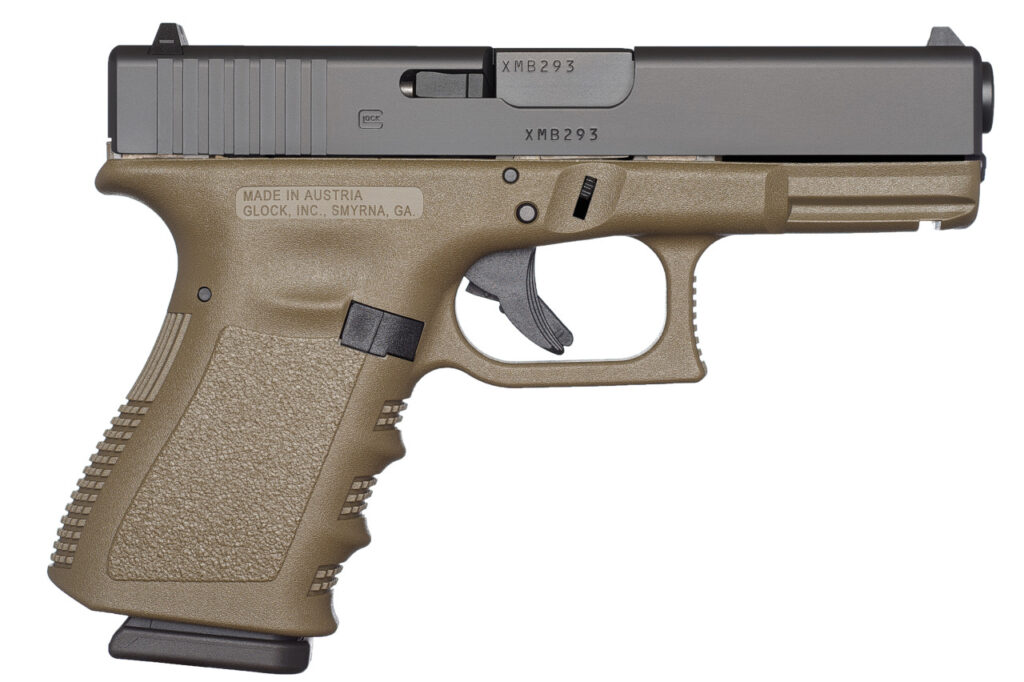
Glock 22: This is a full-sized handgun, with a double stack 15-round magazine.
Glock 23: The G23 is a compact model with a double-stack, 13-round magazine.
Glock 27: This is a subcompact model with a double stack 9-round magazine.
Glock 24: The Glock 24 has a competition-length slide with a full-size frame and double stack 15-round magazine.
Glock 35: This model also has a competition length slide with a full-size frame and double stack 15-round magazine. The barrel is slightly shorter than the Glock 24.
.45 ACP Models
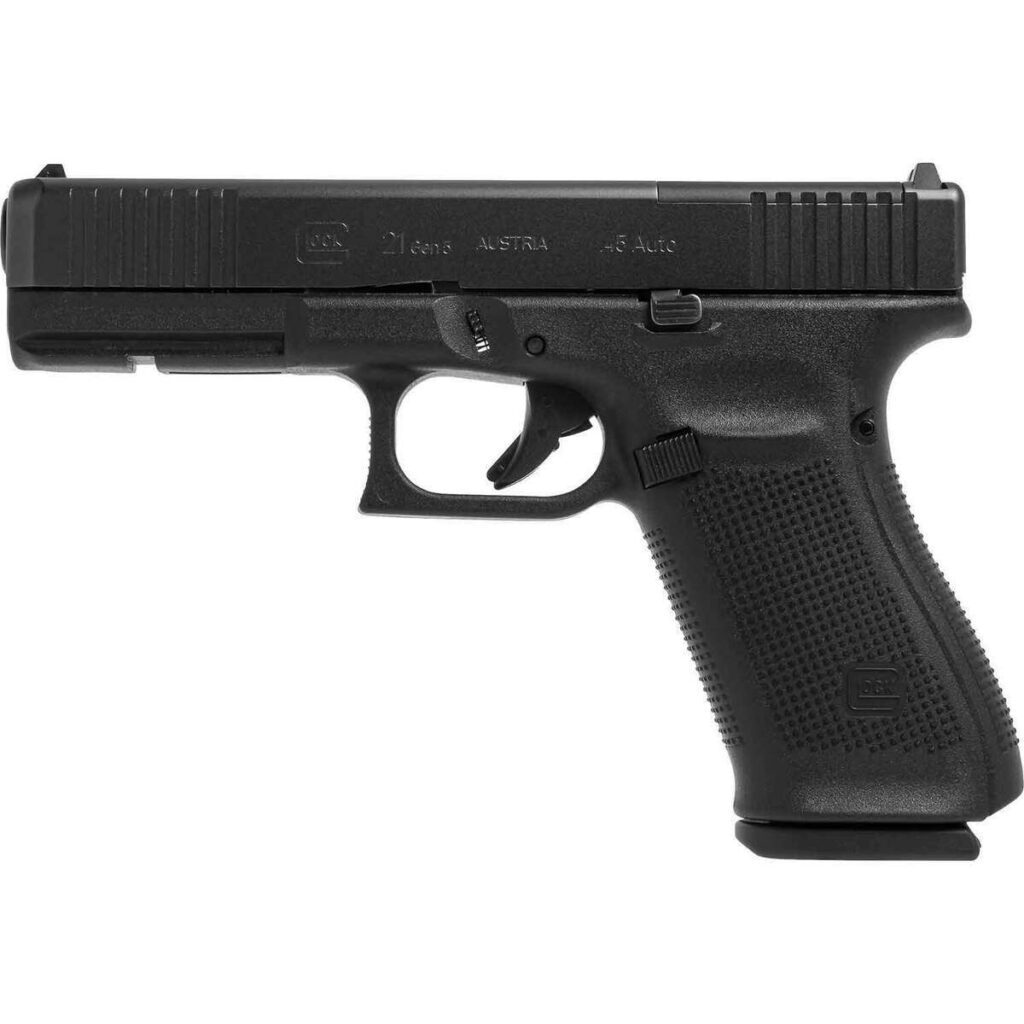
Glock 21: The G21 has a full-size design with a double stack 13-round magazine.
Glock 30: This model has a subcompact design with a double-stack 9-round magazine.
Glock 36: The Glock 36 has a Slimline design with a single stack 6-round magazine.
Glock 41: The G41 has a competition-length slide with a full-sized frame and a double-stack 13-round magazine.
.45 GAP Models
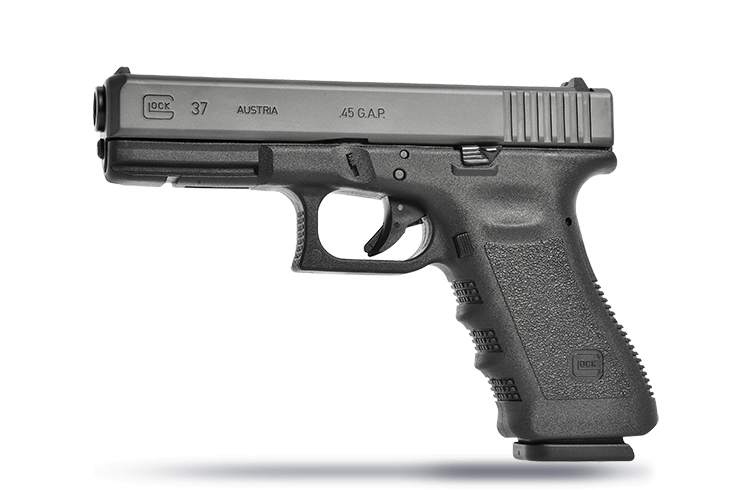
Glock 37: This model has a full-sized design with a double-stack 10-round magazine.
Glock 38: The G38 has a compact design with a double-stack, 8-round magazine.
Glock 39:- The Glock 39 has a subcompact design with a double-stack 6-round magazine.
10mm Models
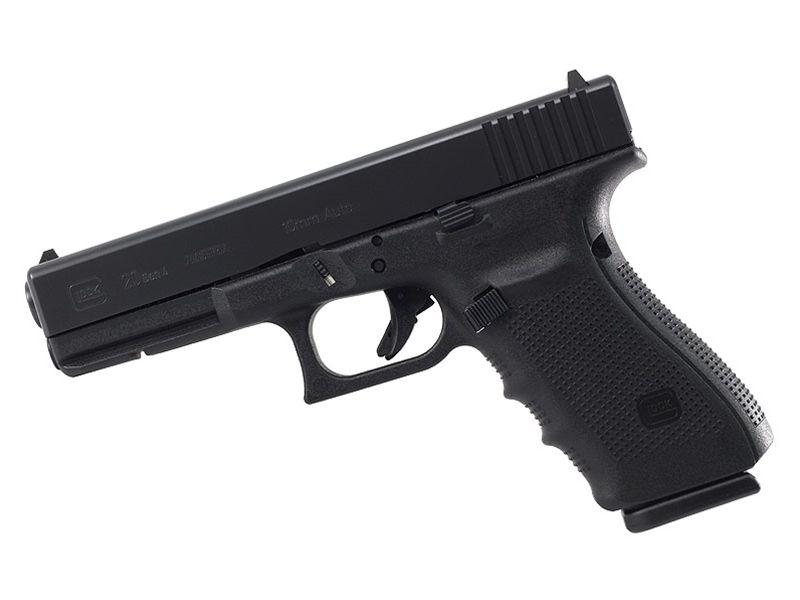
Glock 20: The Glock 20 has a full-size design with a double-stack 15-round magazine.
Glock 29: This model has a subcompact design with a double-stack 10-round magazine.
Glock 40: The G40 has a competition-length slide with a full-sized frame and a double-stack 15-round magazine.
Frame Sizes
Outside of the various calibers that Glock handguns are chambered in, you’ve probably seen various frame and slide sizes mentioned. Let’s briefly decode this part of the Glock designations system.
Full Size
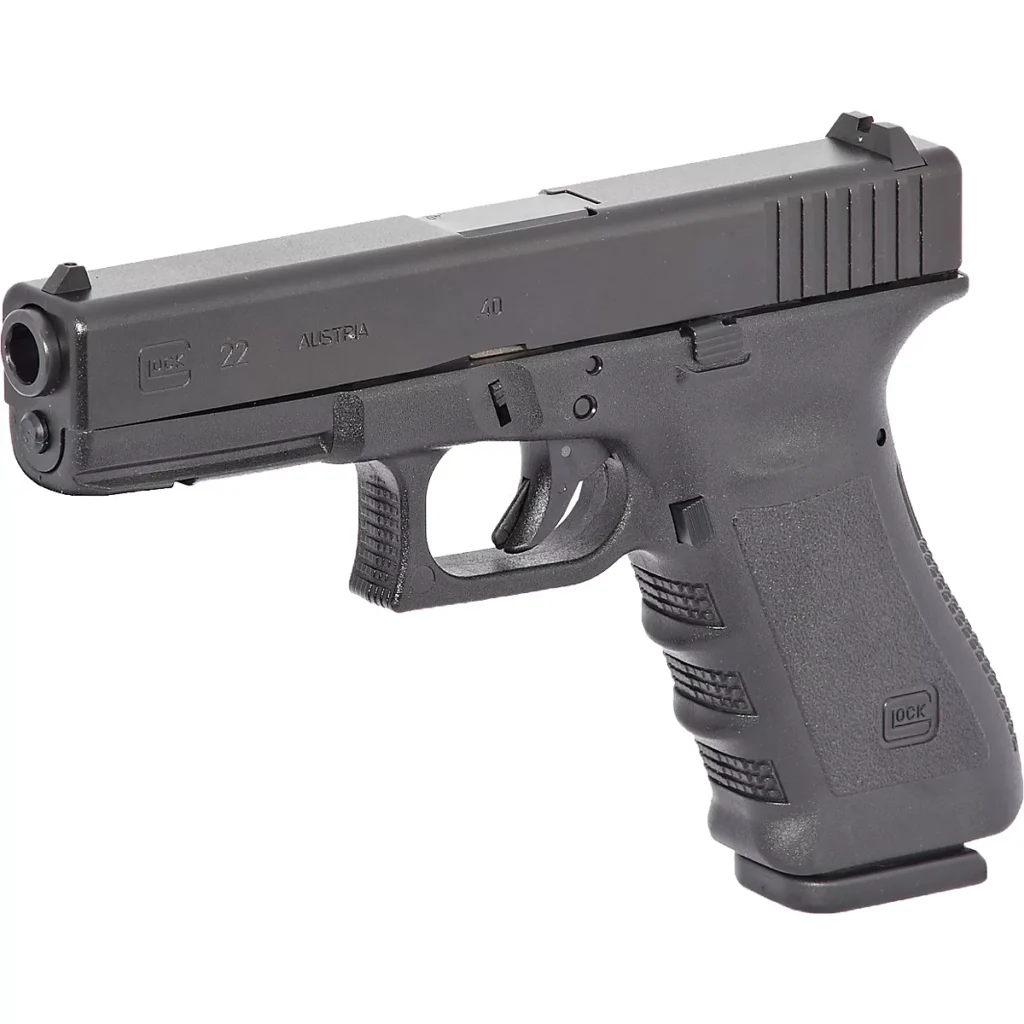
Full-sized models feature a full-length grip module with a height of approximately 5.5 inches and a barrel length of 4.5 inches. This is an approximation and will vary based on caliber. Full-sized guns like the Glock 17 are typically duty or home defense guns.
Compact
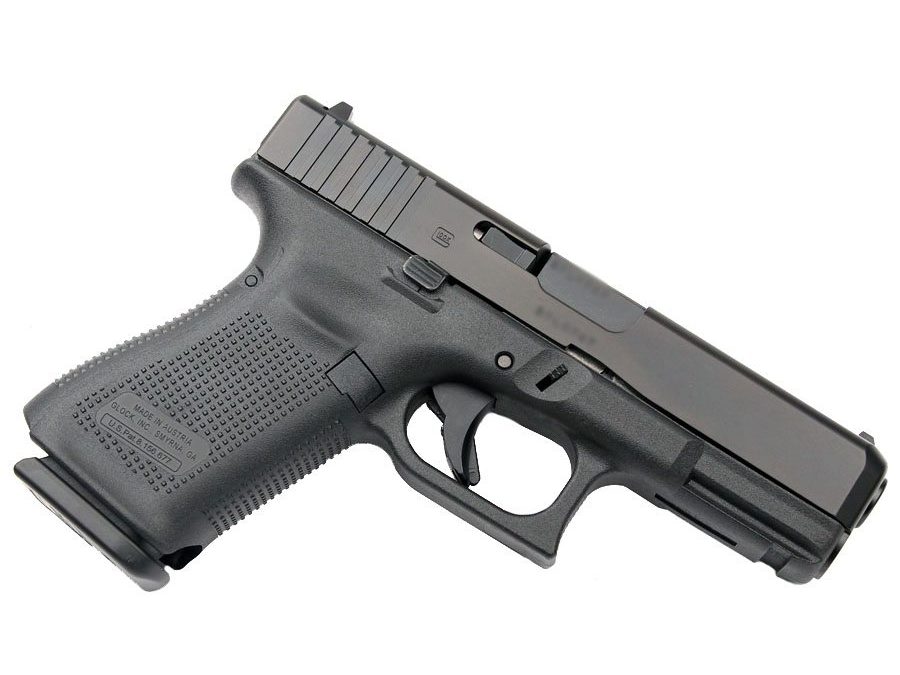
Compact Glocks have a reduced-length grip with a height of approximately 5 inches and a barrel length of around 4 inches. This is an approximation and will vary based on caliber. Compact Glocks like the Glock 19 can be used for concealed carry, home defense, and duty use.
Subcompact
Subcompact Glocks are typically the smallest double-stack models. Their height is around 4.15 inches, and their barrel lengths tend to be about 3.43 inches long. This is an approximation and will vary based on caliber. Subcompact pistols tend to be used for concealed carry or as backup guns.
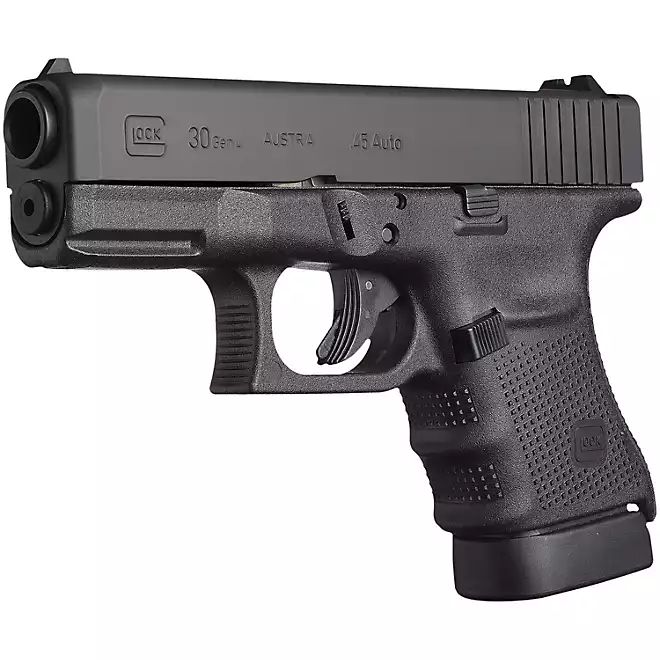
Long Slide
Long slide models have full-sized frames but sport longer barrels and slides. The modern long slide barrels can vary from roughly 5.31 inches to 6 inches, depending on the model. Long slides are often used for competition, but models like the Glock 40 are capable of medium-game hunting handguns.
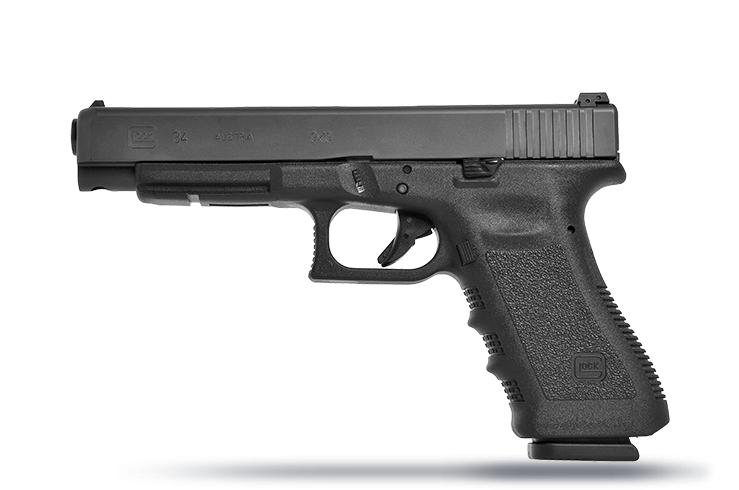
Large Frame
Large frame refers to the frame utilized for the double-stack 10mm and 45 ACP options. These platforms use a larger frame than the standard 9mm, .40 S&W, .357 SIG, and .45 GAP guns. The 10mm and .45 ACP have longer overall cartridge lengths, which necessitate the larger frames.
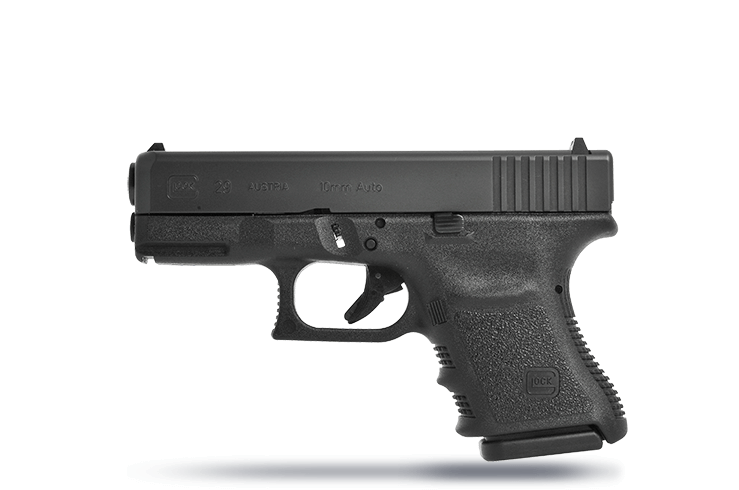
Slimline
Slimeline refers to the company’s single-stack guns. These guns tend to be aimed at concealed carry and come in numerous grip and slide lengths.
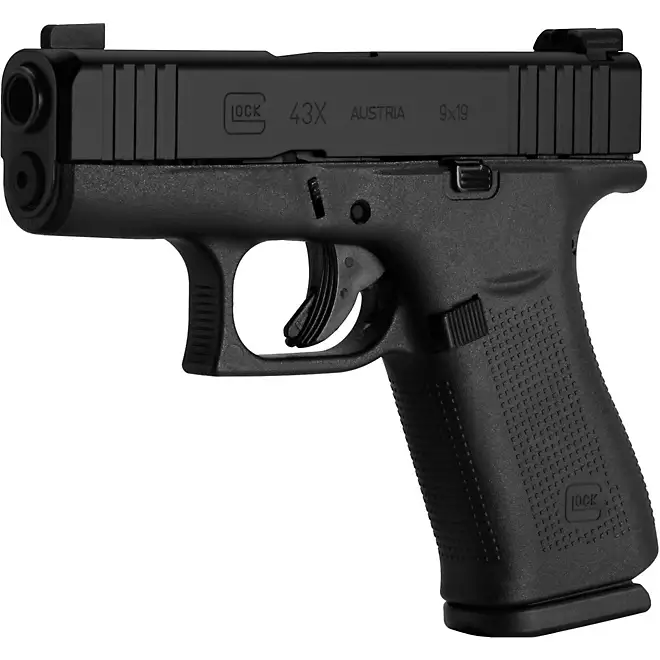
Hybrid Frames
Hybrid frames use a combination of different frame sizes and slide lengths. Some use compact slides with full-sized frames, like the G45. Others use compact frames and full-length slides like the G49. There are also hybrids of the slimline design with the G43X.
Other Models
You may see Glock designations followed by specific letters. There are lots of companies who produce custom Glocks, Glock parts, 80 lower receivers, and much more, but we’ll stick to Glock OEM guns. These letters refer to specific features of that model. Let’s break those down so we have a better understanding of the design.
SF
SF stands for short frame. Short frame guns are large frame .45 ACP and 10mm guns that have had the reach to trigger reduced by 2.5mms to accommodate smaller-handed shooters.
MOS
MOS stands for Modular Optics System and is Glock’s factory red dot system. It uses a series of plates to allow for over a dozen different optics to be mounted to the slide.
C
C stands for Compensated, and the barrel and slide feature compensator cuts to reduce the upward rise of the gun while firing.
MB
MB means that it’s a Gen 3 Glock with an ambidextrous magazine catch. These were discontinued when the Gen 4 was introduced.
The Generations
Another core part of a Glock’s identity is which generation it belongs to. Glock currently has five main generations. They are often mentioned alongside the various model designations, so they are an important part of the gun’s identity.
Generation 1
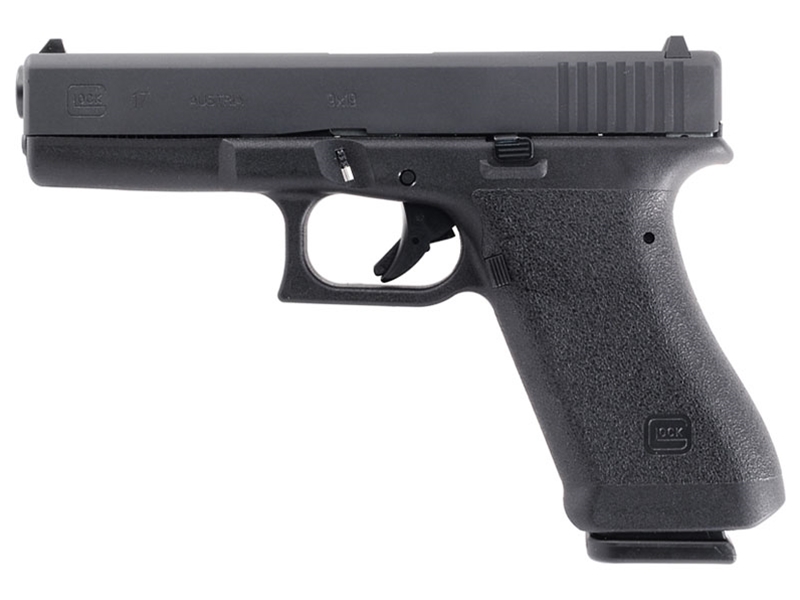
Gen 1 guns were produced from 1982 through 1986, and are collector’s items these days. They are known for their pebble-like grip texture, and some early models feature very thin barrels, which are highly collectible.
Generation 2
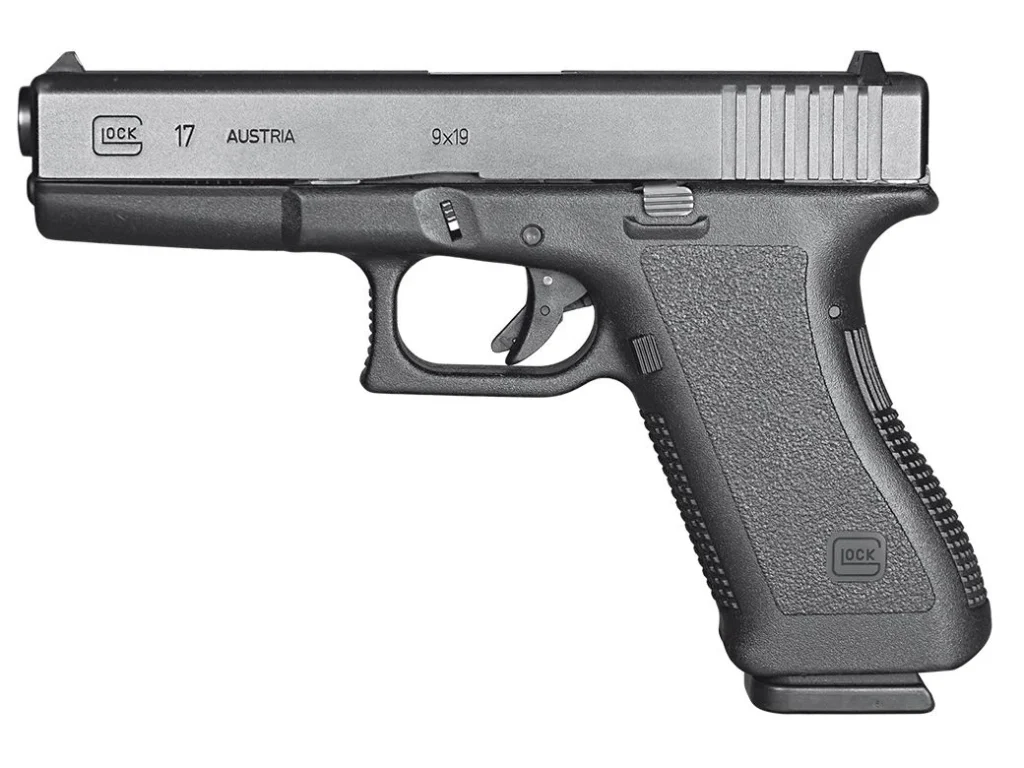
Gen 2 guns added checkering to the front strap, checkering and serrations to the back strap, and serrations to the trigger guard. To meet ATF regulations, a steel plate with the serial number was stamped into the frame. Slight modifications were also made to the magazine and recoil spring assembly.
Generation 3
Gen 3 guns were introduced in 1998 and might be the most famous. These guns added the beloved rail and the much-maligned finger grooves. Thumb rests were added to both sides of the frame as well. A modified extractor that served as a loaded chamber indicator was added. The company’s designers enlarged the locking block and added an extra cross pin to aid in distributing bolt thrust force exerted by the locking block.
Generation 4
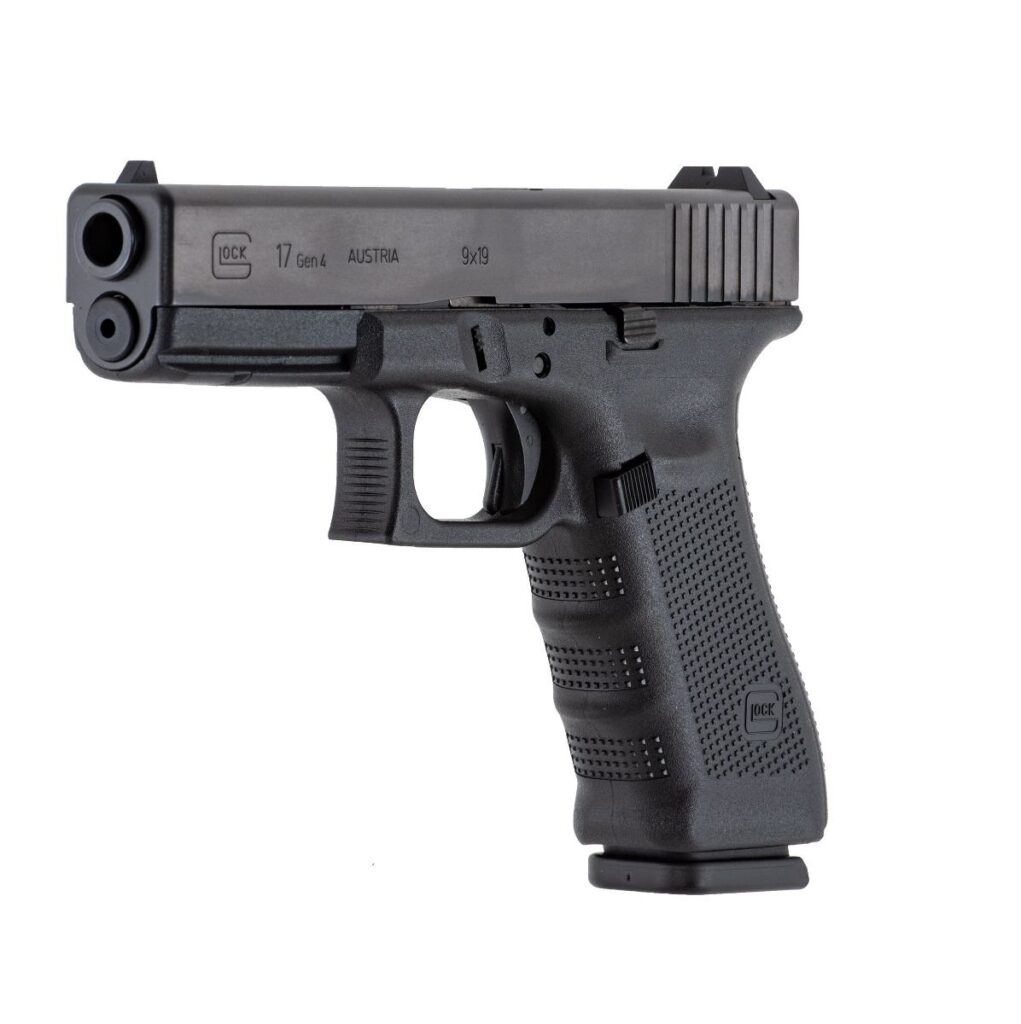
Gen 4 guns were introduced in 2010, with several ergonomic changes. This includes a more aggressive grip texture and interchangeable backstraps, and the basic grip is slightly reduced. Magazine catches were enlarged, and they could be reversed for left-handed shooters. A dual recoil spring assembly was added to help reduce recoil. The engineers resized the slide and barrel shelf, with the front portion being wider and enlarged for the dual recoil spring assembly.
Generation 5
Gen 5 guns were introduced in 2017. They eliminated the finger grooves, utilized ambidextrous slide locks, and added a flared magwell. Glock also produced their eponymous Marksman Barrel, a new barrel with a deeper recessed crown, which is supposed to aid in accuracy. Front slide serrations were added, and a DLC finish was applied to the slide and barrel.
A Confusing World
An endless array of numbers certainly doesn’t help in making one gun easier to decipher than another. Hopefully, we’ve helped you decode their designations.