The M1 Carbine made its mark in places like Iwo Jima, Bastogne, and the Chosin Reservoir. What’s commonly overlooked in the M1 Carbine’s history is its use as a police carbine.
The first time you handle and shoot one, you understand that it’s something special. It’s quaint due to its wooden furniture and traditional stock. Still, you can feel its competence as a fighting rifle as you nail targets from five to 200 yards.
In an era where there are dozens of intermediate rifle options, the M1 Carbine doesn’t quite stand out. But if we backtrack a bit, you start to understand why it became one of the earliest patrol rifles.
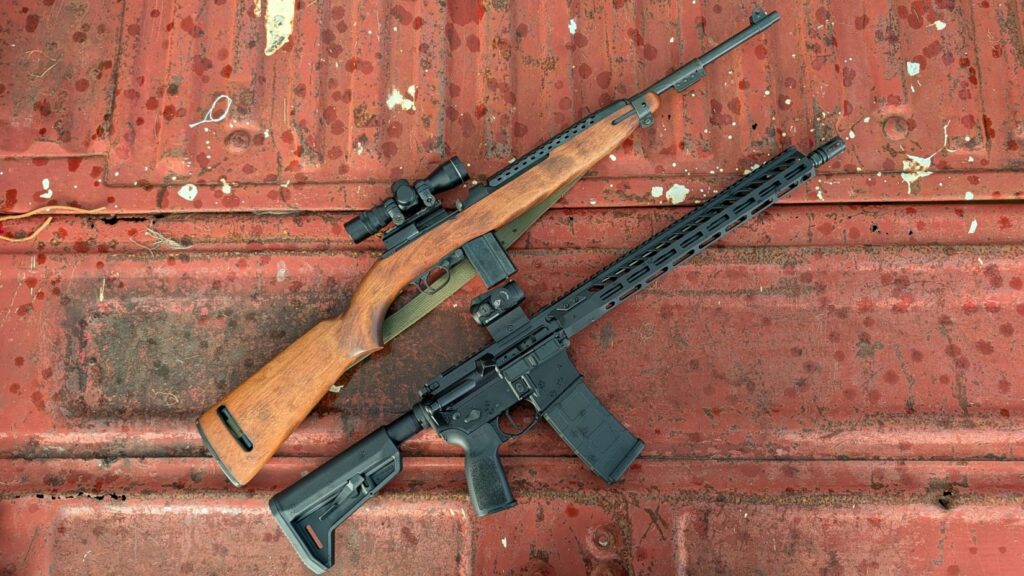
The little carbine was a bit of an anomaly in 1940s small-arms development. Rifles of the era were rather large and heavy, and fired full-power cartridges like the .30-06. The entire design was suited for soldiers, but would be a bit too big, too heavy, and too powerful for police officers.
The M1 Carbine offered a light, short, magazine-fed, semi-auto rifle with low recoil that slipped in and out of a police cruiser without difficulty.
It was a natural patrol rifle, and the fact that the government was selling them at extremely low prices in the post-WWII world made it the perfect option for police forces seeking more range and less recoil than a pump shotgun.
The M1 Carbine Inside and Out
David ‘Carbine’ Williams didn’t invent the short-stroke gas piston system, but he designed the modern take on the system we see in the M1 Carbine. It resulted in a reliable, fairly simple semi-auto design with low weight and low recoil.
User-friendly describes the platform quite well. It’s one you can feel confident handing to a beginner, and it’s not an overwhelming experience.
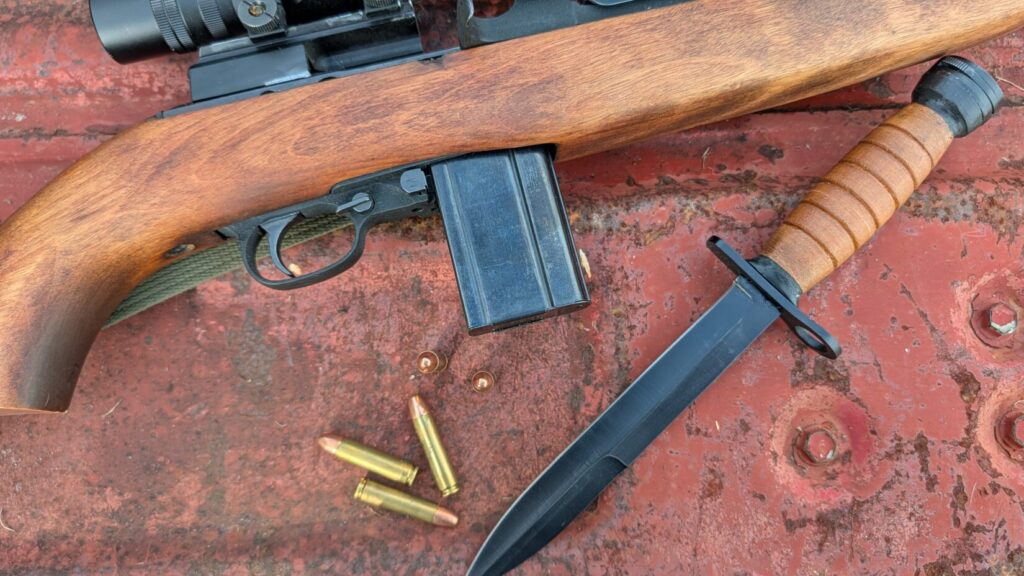
The M1 Carbine initially fed from 15-round magazines but later adopted 30-round magazines. In a time when police carried revolvers and pump shotguns, 15 rounds seemed almost bottomless. The magazines held the .30 Carbine cartridge, which was specifically developed for the M1 Carbine.
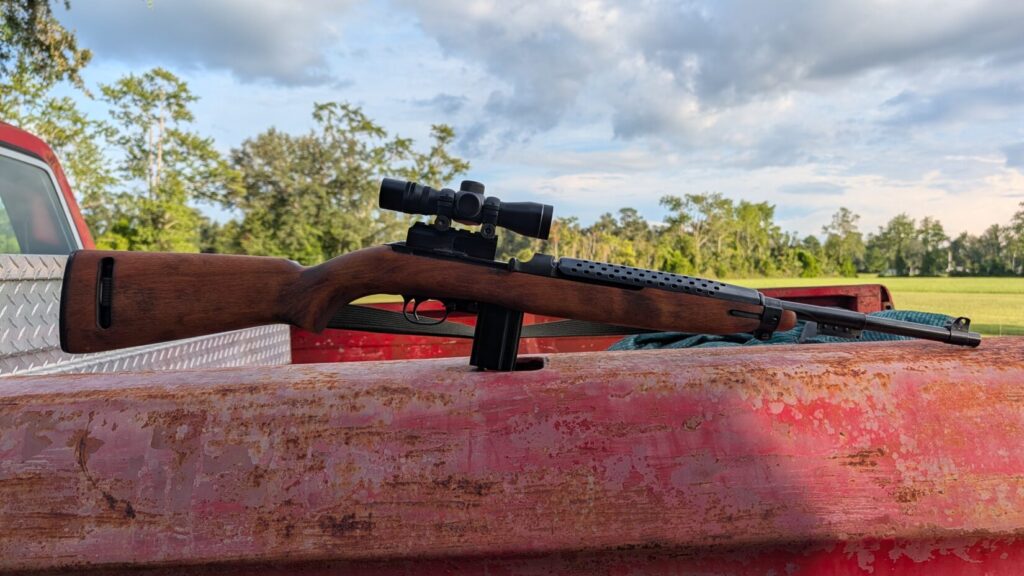
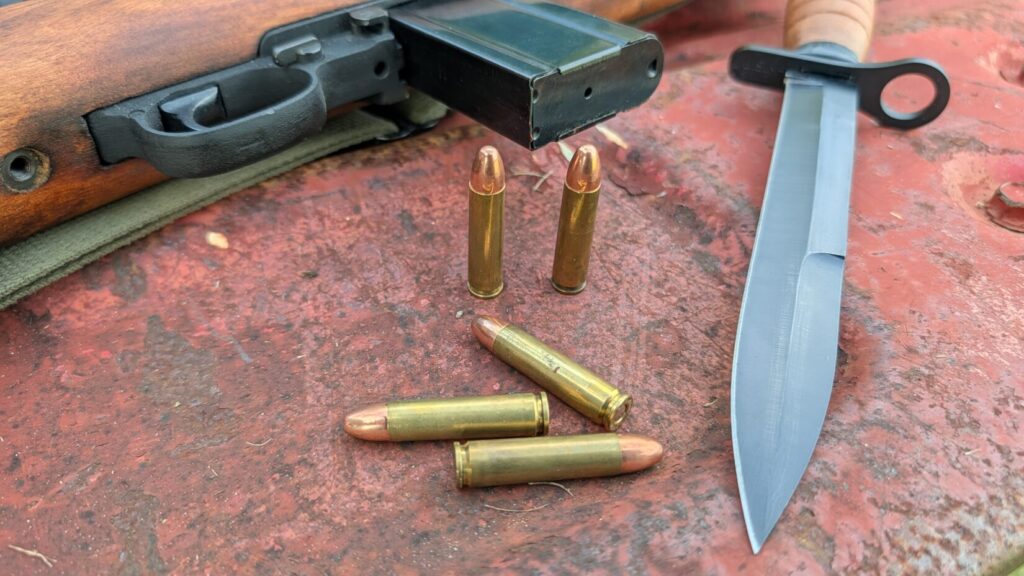
The .30 Carbine cartridge isn’t quite a traditional rifle or pistol round. It’s a light rifle round. It pushes a 110-grain projectile at 1,990 feet per second from the M1 Carbine’s 18-inch barrel. The round reaches out to 300 yards, but is typically most effective against a point target at 150 to 200 yards.
However, the light-recoiling design makes it incredibly versatile. I love shooting my M1 Carbine and can deliver failure-to-stop drills in a second or so. Even with just iron sights, you can rapidly put lead on target, or multiple targets, and it feels a lot like shooting any other AR-15.
This capability at both close and moderate ranges, combined with 15 rounds of a fairly potent round, made it a capable police carbine in a world before the intermediate rifle dominated.
The M1 Carbine Enters the Police World
Finding records of how many police forces adopted the M1 Carbine, or who did so first, proved exceedingly difficult. Notable early adopters include the Michigan State Police and the Detroit Police Department.
Arguably, the most notable source of firsthand data comes from Jim Cirillo’s time on the NYPD’s famous Stakeout Squad, which operated from 1968 to 1973 and was known for staking out high-risk locations, waiting for armed robbers to show up. They engaged in dozens of firefights armed with a variety of guns, including the M1 Carbine.
Cirillo spoke favorably of the rifle and said, “…it was fast to shoot, light recoil, and you had 15 rounds. It turned out that anybody that was hit with it, even if they weren’t hit in the vitals, got dropped.”
Cirillo reported a 100% stop rate with the M1 Carbine when utilizing expanding ammunition. The NYPD would shorten some of the barrels to 12 inches and fit them with folding stocks and forward pistol grips for greater control.
The M1 Carbine Out West
Across the country, the LAPD established the first SWAT team in response to the 1965 Watts riots. This early special unit didn’t have a big budget or access to specialized weapons. Some of these early SWAT officers fielded M1 Carbines.
Much like the NYPD, the LAPD could easily appreciate the M1 Carbine as an urban police rifle. The M1 Carbine wasn’t limited to the urban environment. Numerous Texas Rangers carried the M1 Carbine as part of their standard kit as well.
Handling the M1 Carbine Today
I took my M1 Carbine replica, with a cheap 4X optic, and tried my hand at a modern patrol rifle qualification. The MPOETC Patrol Rifle Qual is designed around the AR-15, but I used the M1 Carbine to see if it could still keep up.
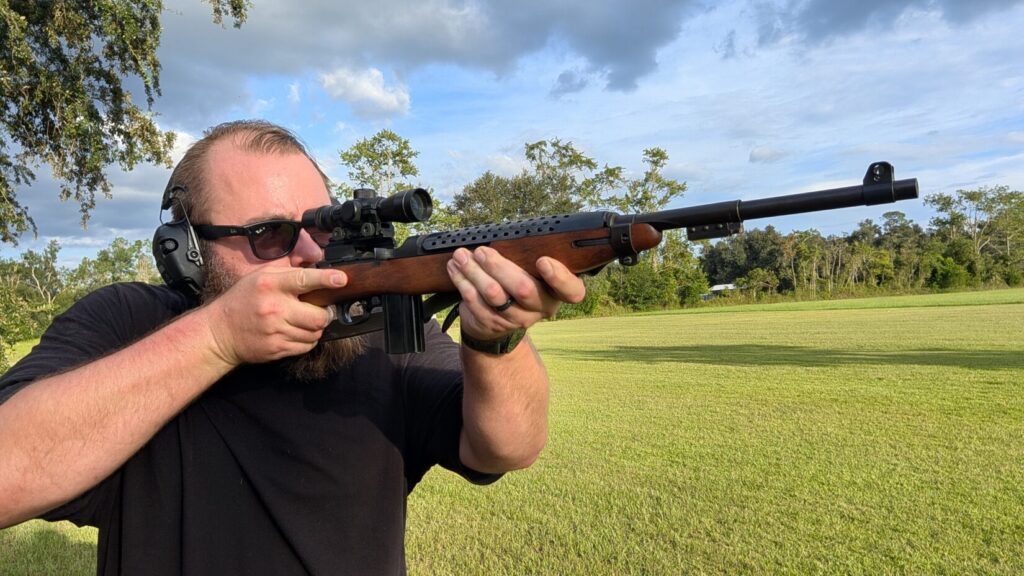
The course of fire starts at 100 yards and goes all the way to three yards. It’s short with only 50 rounds fired, but it’s one of the better police qualifications out there. With the 4X optic, I had no problem landing my 100-yard hits. It does help that you have 60 seconds to fire eight rounds.
As I moved through the course of fire, I remained impressed by the M1 Carbine’s capabilities. I never felt all that challenged by using the 1940’s rifle. At 5.2 pounds, the rifle is lighter than most AR-15s, although recoil feels a little snappier.
The M1 Carbine has its faults. It doesn’t offer the same range or capability as the 5.56. The rifle is not easy to accessorize, and magazines can be a serious weak point for reliability. No one should rush out to replace their AR with an M1 Carbine.
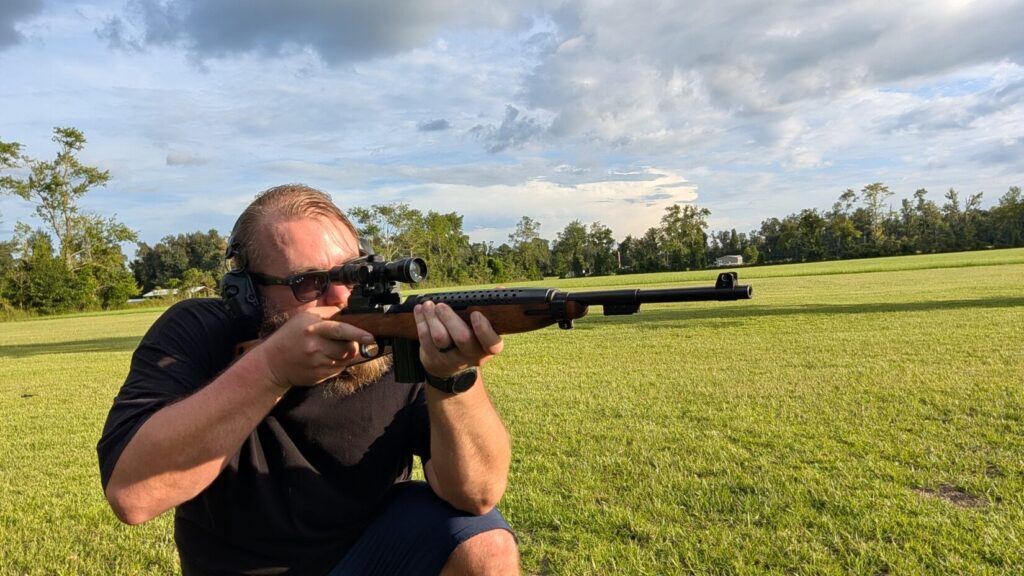
However, the little carbine that could earned its place as one of the first patrol rifles. Its use as a police carbine highlights its somewhat novel design for the era. The M1 Carbine found its way into some of America’s earliest elite police units and helped create the concept of the patrol rifle.
FAQ
What cartridge does the M1 Carbine use?
The .30 Carbine, a light rifle round that pushes a 110-grain bullet at 1,990 feet per second — distinct from both a pistol round and a full-power rifle cartridge.
Did police departments actually use the M1 Carbine?
Yes — early adopters included the Michigan State Police, Detroit PD, NYPD’s Stakeout Squad, and some of LAPD’s first SWAT officers, who often supplied their own.