
Everything new is old, and it’s no different in the gun industry. And while that might be true, often what’s new is an evolution of what’s old. Concepts, tactics, guns, and training evolve. Pocket carry is no different.
It’s in no way new. Pocket carry might be one of the oldest ways to conceal carry a gun.
We know this due to all the old guns with “pocket” in the name. Pocket guns have shrunk, as have pockets. We no longer have overcoat pockets that can conceal a S&W M&P .38 Special revolver, but the advantage of pocket carry hasn’t disappeared.
Pocket Carry: Highs and Lows
It’s convenient, it’s deeply concealed, and for a lot of people, it’s an effective way to carry when your wardrobe might dissuade you from carrying any other way. The modern pocket pistol market is pretty solid.
We have the old standards like snub nose revolvers, but effective small autos like the KelTec P32, the Seecamp LWS 32, and new pocket rockets like the S&W BG 2.0 and the Ruger LCP Max. Lots of good options exist in capable calibers.
The downsides to pocket carry exist. Access when seated is difficult. You’re restricted to a fairly small gun. You even lose a pocket to carry the gun.
Like any carry method, pocket carry requires training. With that in mind, today we are tackling the ins and outs of the pocket carry draw.
The Pocket Draw Starts With the Holster
Drawing a firearm is one of those things that sounds so easy, but there are some intricacies to efficiency. It’s as easy as saying reach into your pocket, grab the gun, and draw. That’s it, but the same could be said of any holster and gun combination.
Before we can do any drawing, we do have to talk about holsters. A pocket holster is a necessity for safety.
It completely covers the trigger and protects it from anything that might interact with it. A pocket holster also orients the gun to make your draw simple and repeatable.
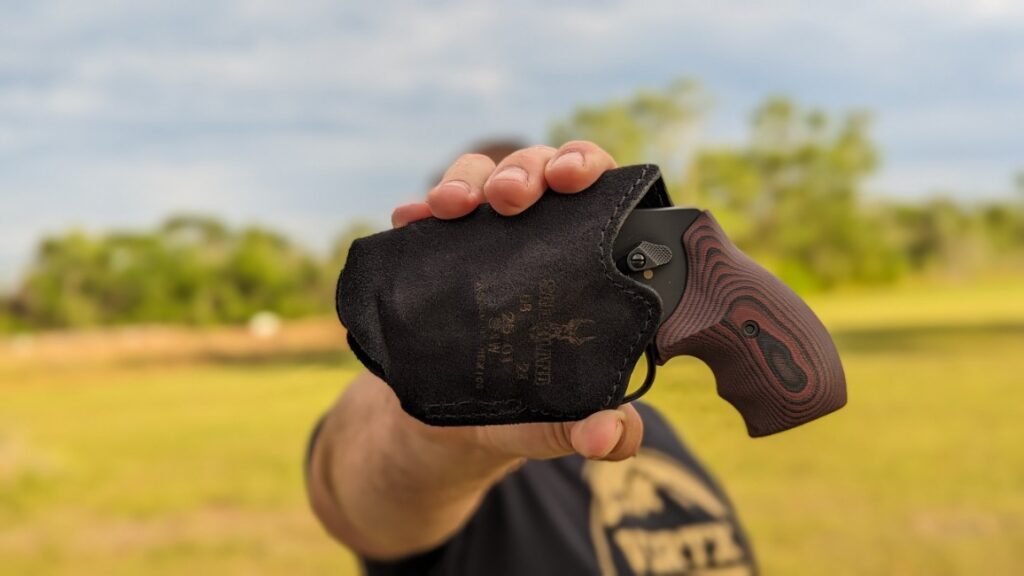
Without a pocket holster, you’ll never know how your gun will be oriented when you reach into your pocket. Your holster ensures your grip faces upward as you reach into the pocket.
The pocket holster can also enhance concealment, and who doesn’t want more concealment?
I use the Safariland Model 25. Its mix of an external soft textile and an internal hard shell makes for a capable, comfortable holster that conceals well.
From the Pocket
The pocket draw isn’t all that much different from a normal draw. Both hands are going to do work.
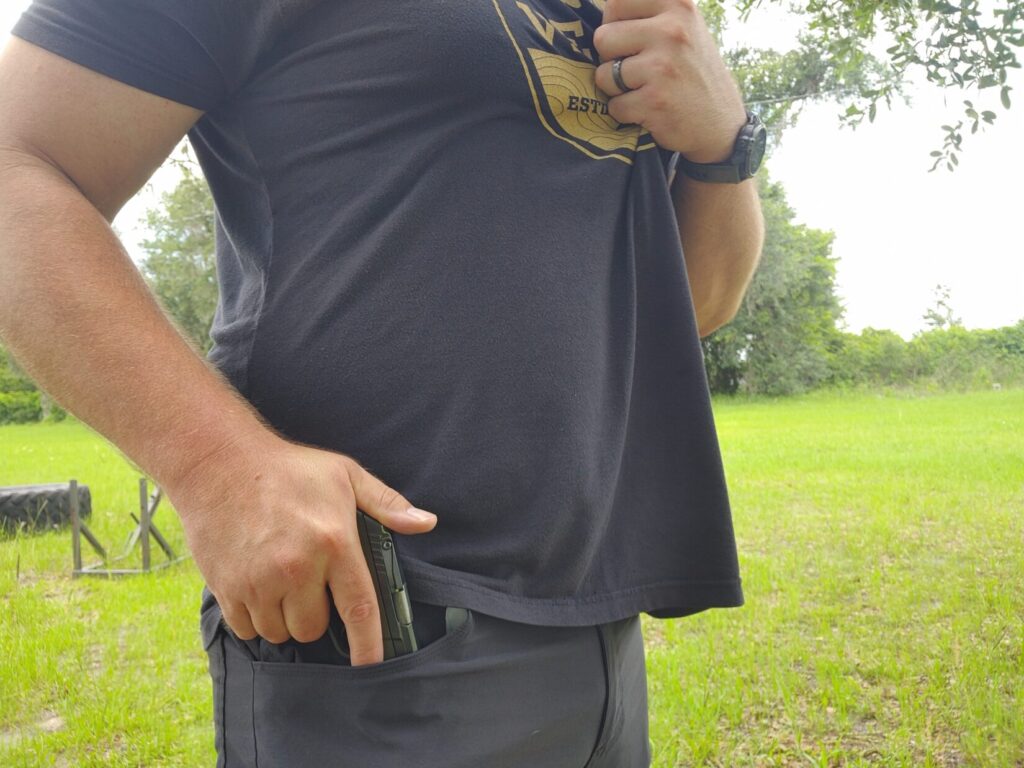
Most of us have shirts long enough to cover our pockets, and those shirts get in the way. We have to keep our shirt, jacket, or hoodie from interrupting our draw. The support hand gets to work, grabbing our shirt at about sternum height and pulling it upward to get it out of the way.
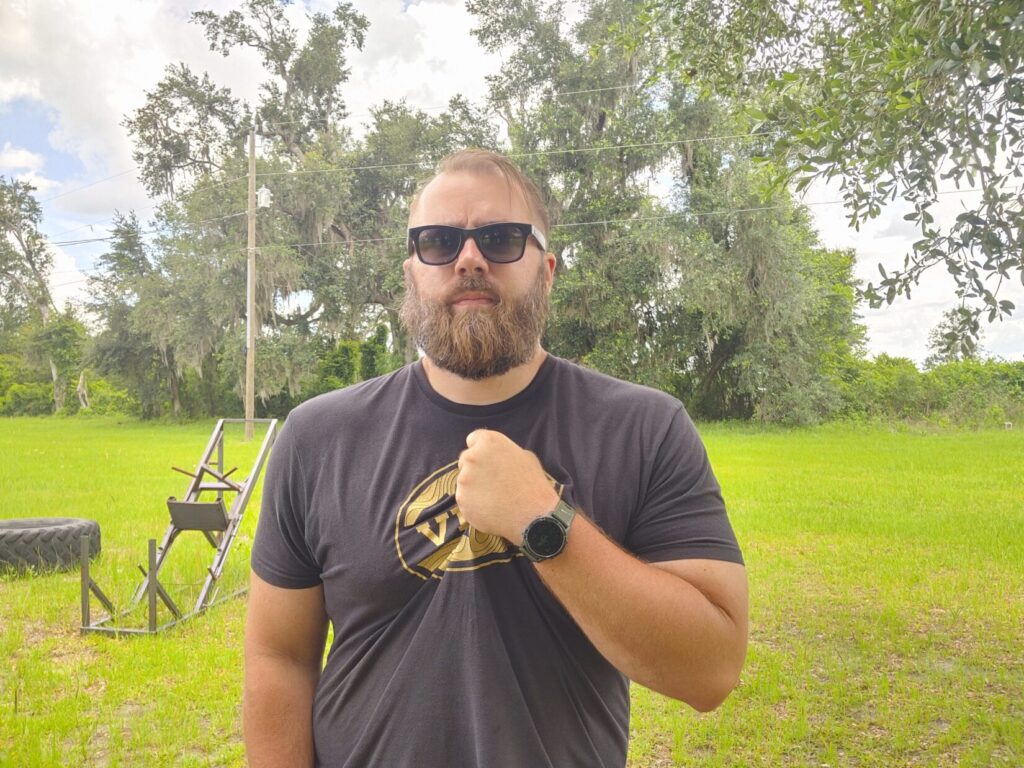
I start from a natural position, and my hands are typically sitting right above my pockets. Index your hand on the outside of your pocket where you can feel your gun. Use that as a starting point.
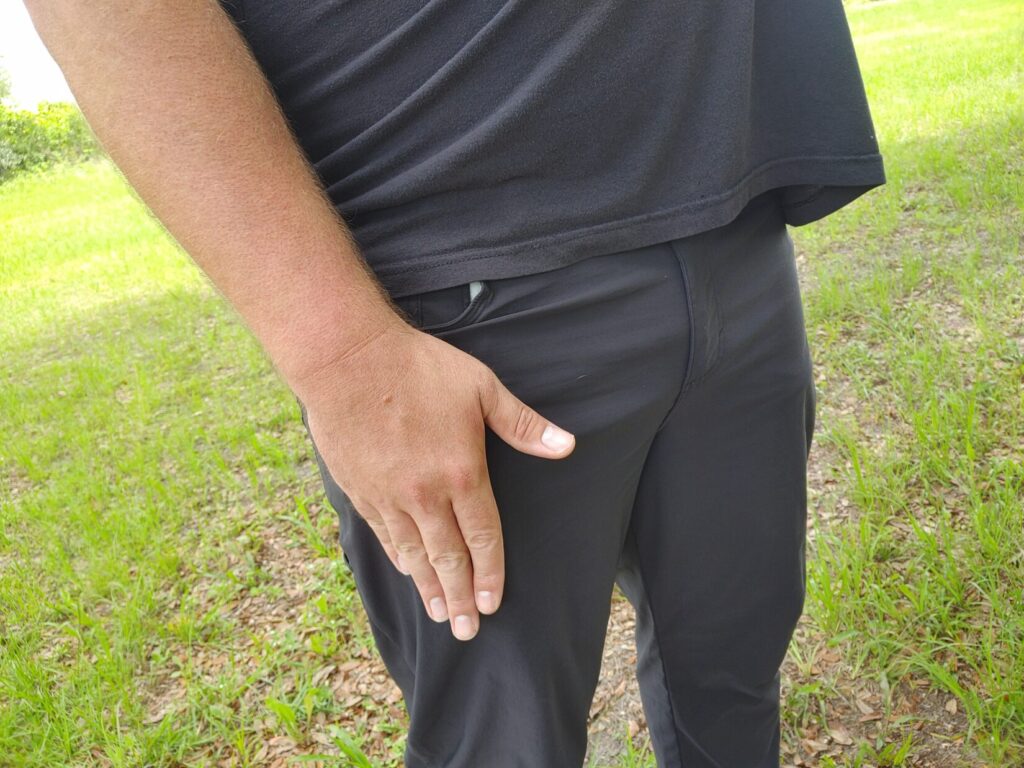
Glide your hand up, keeping a little contact with your pants. Once your fingers drift over the seam of your pocket, you want to drive the hand downward, into the pocket.
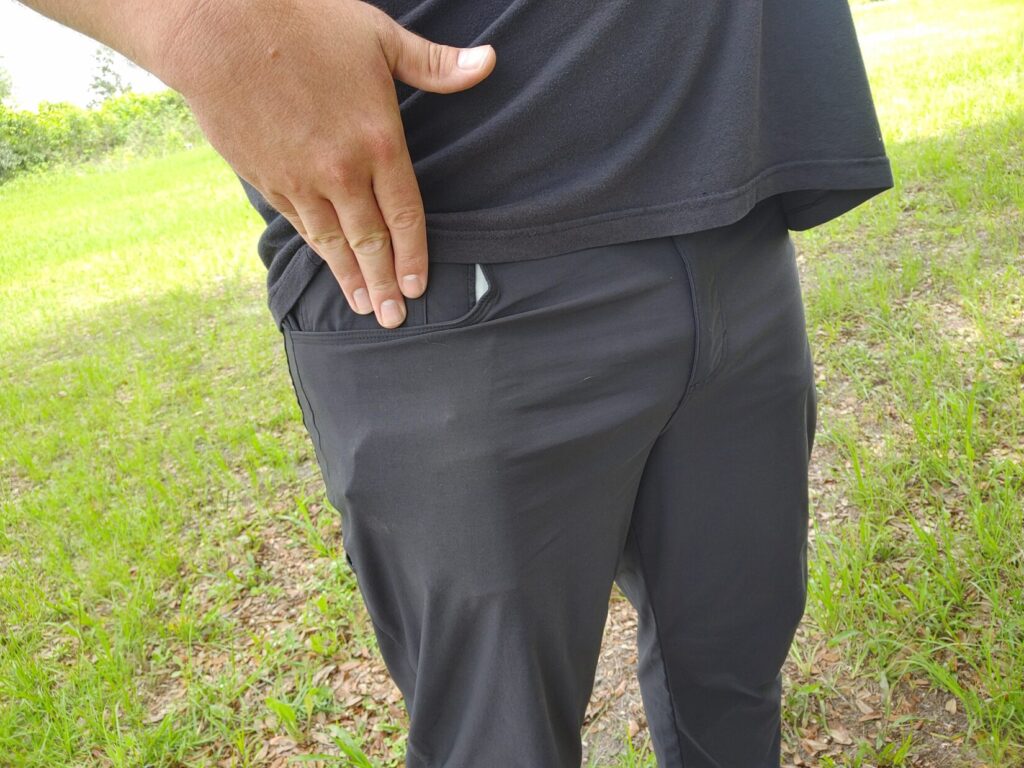
We trace the pants and pockets for a few reasons. First, it aligns your hand with your gun before you ever drive your hand into the pocket. Second, going from low to high prevents you from accidentally driving your hand into the coin pocket that’s present on most pants. Finally, a constant index point ensures a consistent draw regardless of pant height or pocket design.
The Hand
Your dominant hand should be flat and fingers together. Think of it like a knife hand or karate chop. Your thumb will be separated from the rest of the fingers. The knife-hand style grip keeps your fingers from snagging on the pocket as the handgun enters it.
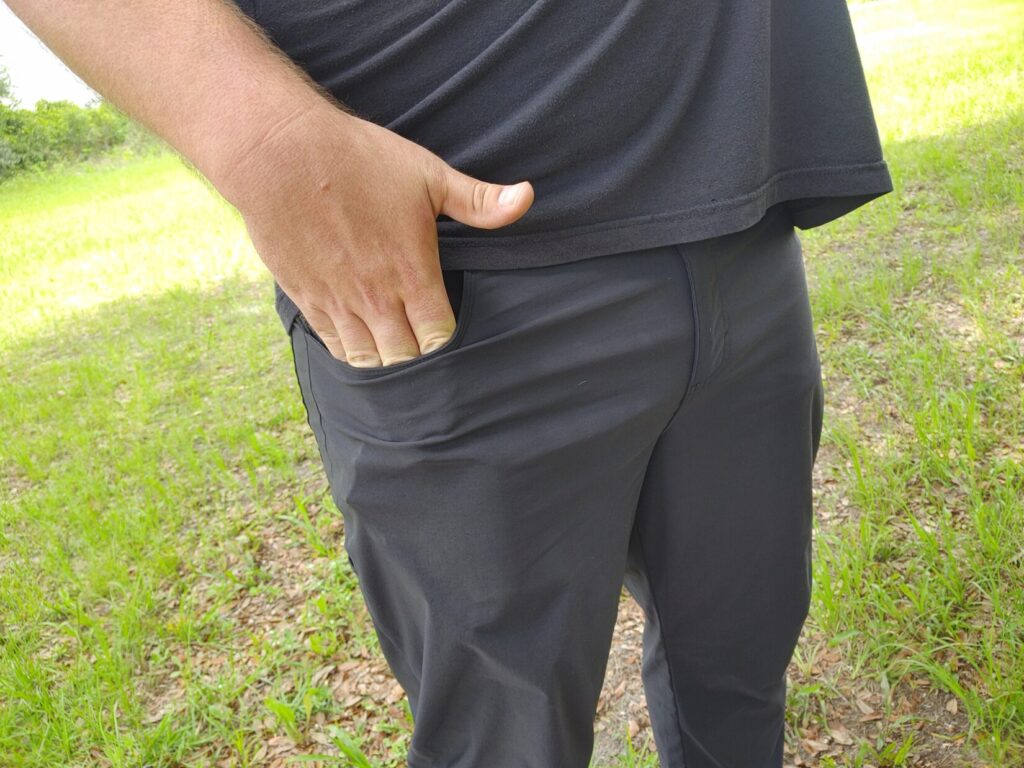
I tend to notice a more consistent, higher grip when my fingers are held together. It allows for a good grip inside my pocket.
I place my thumb on the back of the gun as I retrieve the firearm. This is not only easier with flat semi-autos, but it also prevents my thumb from pinning the holster to the gun. If the holster is pinned to the gun, it might come out as you draw.
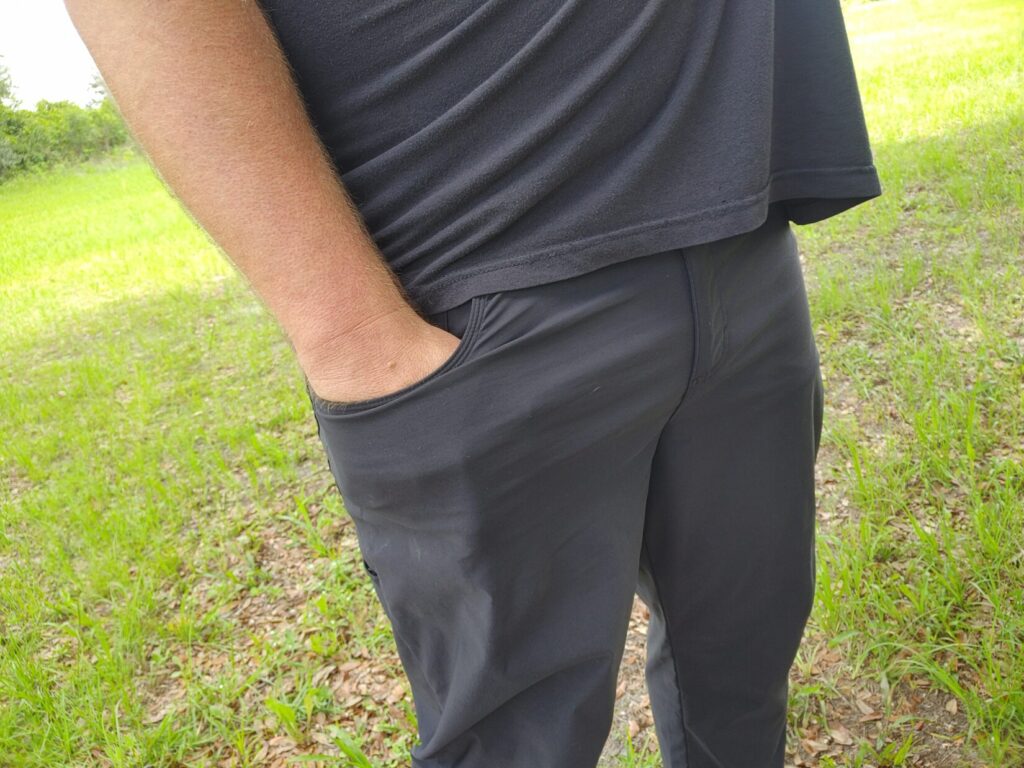
As the support hand clears the garment, the dominant hand drives down and into the pocket. The fingers wrap around the grip, and the thumb sits on the rear of the gun.
I pull straight upward—I pull to about my pectoral—and drive forward, meeting my support hand. As my hand rises, my thumb naturally falls into place on the side of the frame. The high presentation gets the gun oriented to the target, and, if necessary, I can keep the gun tight to the body and fall into a close-retention shooting position.
The Pocket
Pockets do vary a bit. Loose pockets allow you to get a grip around the gun, but this method works with tight or loose pockets. I prefer to have one method that works for all of the various pocket sizes.
If the holster comes out as you draw and falls into the dirt…well, who cares? As long as it’s not sticking to your gun, it doesn’t matter. Let it fall to the ground and be done with it.
The Pocket Draw +1: Pre-staged
A big benefit of pocket carry is the ability to position your hand inside the pocket on the gun, and no one is the wiser. You look casual, hands in your pocket, but ready to draw. This creates an extremely fast draw since it’s pre-staged.
Most people can achieve a pre-staged draw time of less than a second to first shot with just a little dry-fire practice. This is a huge benefit to pocket carry.
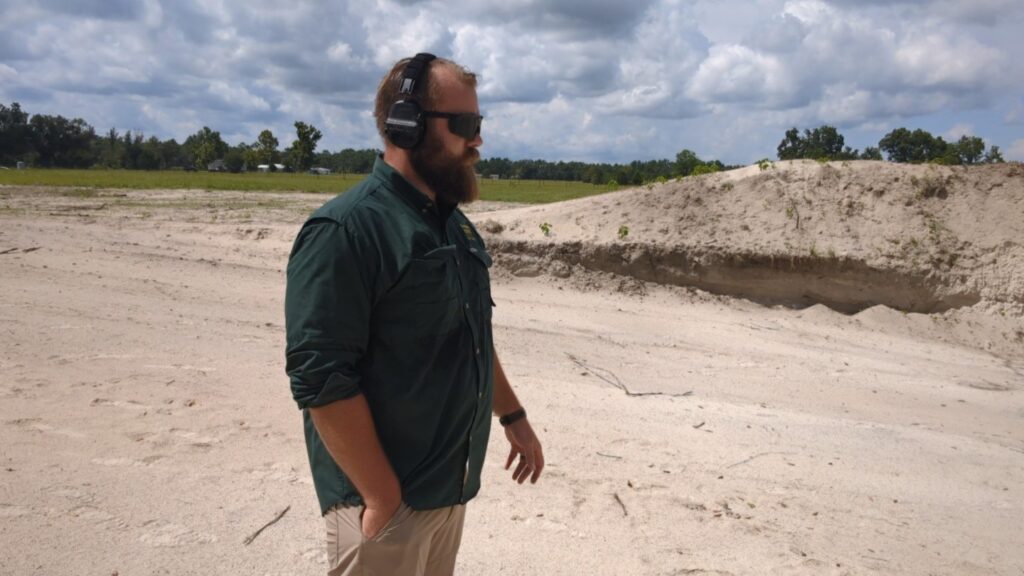
I call it a pre-draw. Your spider senses are tingling, but there is no clear sign of attack. You simply put your dominant hand in your pocket and grip the gun.
You can walk, talk, and continue doing whatever task is at hand, while being fully prepped for a rapid draw. This method cuts most of the steps out of the process.
Just pull to the pectoral, meet your support hand, and engage.
Pocket Carry Life
Pocket carry might not be your main carry method, but it’s a useful alternative for times when you can’t carry a large firearm. When you’re stuck with a pocket revolver or tiny automatic, the pocket carry method is extremely convenient, and with practice, quite quick.
Practice is the keyword. Practice this draw dry, going slow, and adding speed when possible. A good pocket draw might not beat AIWB, but it can get awfully close.