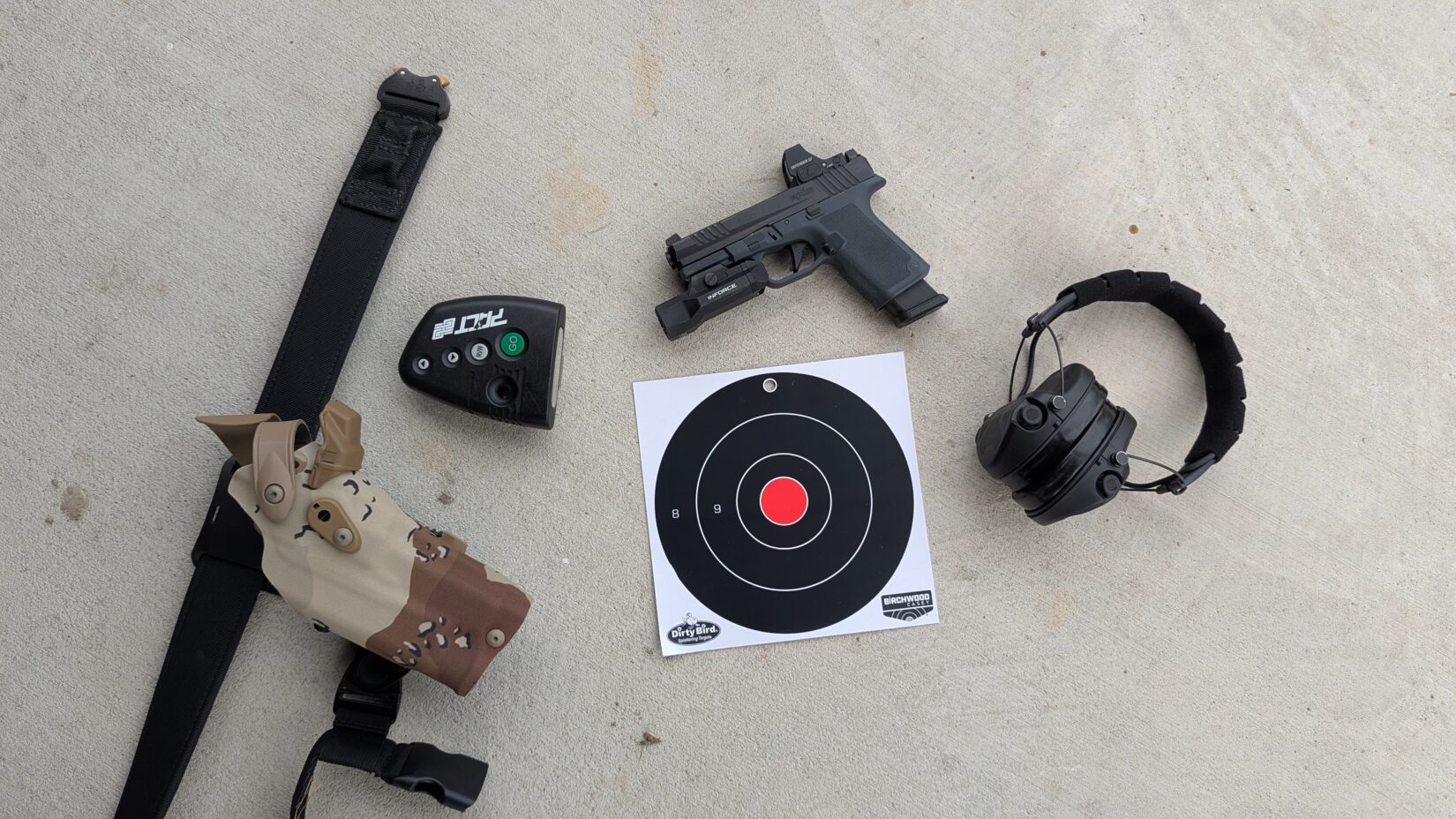
Targets aren’t just there to catch bullets. They are also part of a two-part system that we can use to gather objective, recordable data about our shooting. (The other part being a shot timer.)
Targets play a massive role in our training, and some targets just suck. For years, countless police officers and civilian shooters suffered through the nonsensical B-27 with its belly-placed scoring ring that never made much sense. Some might say, “It’s just a piece of paper; who cares?”
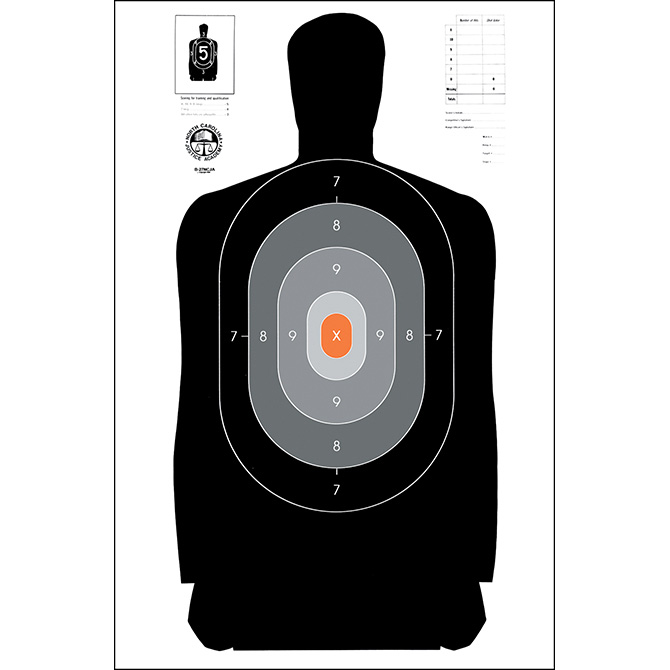
I care because the target we choose determines the feedback we’ll receive.
Today I’m going to challenge you to put more thought into your target selection.
Picking the right target can make all the difference when it comes to squeezing out every ounce of training potential. With that said, you don’t need anything fancy or expensive to train effectively.
A lot of my training is done with index cards, paper plates, and A-zones I made in Microsoft Paint. That doesn’t mean a little thought wasn’t put into picking the right piece of paper to put holes in.
Match Your Target to Your Skill
Our first step will be to match the skill to the target. We can break our goals down in a variety of ways and find a target that works for that specific skill. It doesn’t make much sense to work on precision with a target that’s better suited for speed, right?
Let’s break down a few of the more common skills worked on and the type of target that works best for that goal.
Precision
If our goal prioritizes precision over speed, we need a target that demands exactly that — one that’s unforgiving of problems with grip, speed, trigger manipulation, and sight picture. This is where my index cards often come into play, and so do targets like the classic B-8.
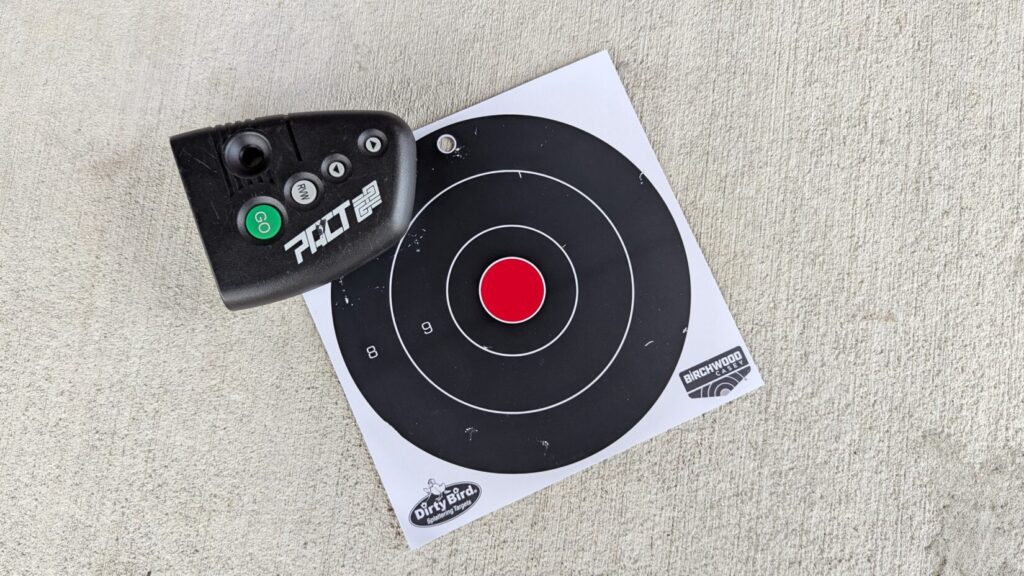
If we are shooting the No Fail Pistol Drill from Chuck Pressburg, we are trying to land our shots in the black of a B-8 from the draw, in less than 3.5 seconds for 10 repetitions at 25 yards. Doing this drill with a massive silhouette makes no sense.
A smaller target makes it harder to hide issues with grip, trigger manipulation, sight picture, and sight confirmation.
Speed
The targets we use for speed should give us an acceptable accuracy boundary while the timer measures our speed.
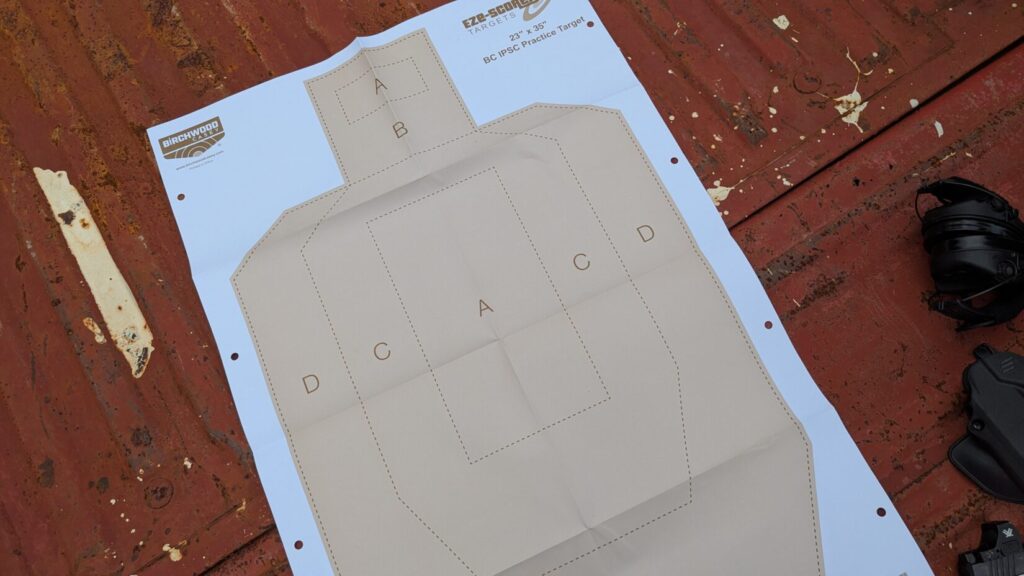
If our goal is to prioritize speed over exact precision, the index card might feel a bit more difficult to use. Here’s where the A-zone of a USPSA target makes a lot of sense. It still demands accuracy, but allows you to prioritize speed to get fast reps and work your cadence.
A Bill Drill is six rounds from the draw, as fast as you can keep your hits inside an A-zone. An A-zone helps distinguish an acceptable sight picture from a perfect one without having to focus on scoring rings.
Realism
Let’s say you can put every round you fire into a B8 or A-zone; that’s valid training for sure, but how well does that translate to defensive shooting? You have precision and speed, but if our goal is to stop a threat, you need to know where to apply them.
Targets can either tell you exactly where to shoot or require you to determine where to shoot. For realism, we want to determine where to shoot.
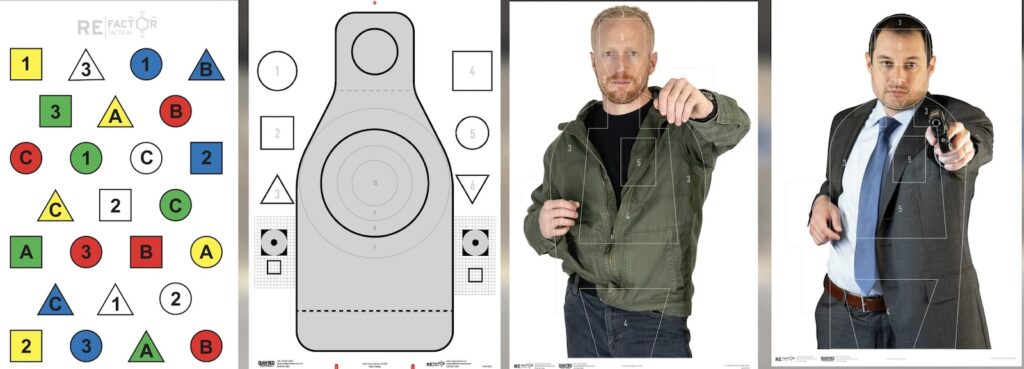
With a realistic target, you can train to put those rounds into the head or upper thoracic area of a human-shaped target. The best realistic targets will subtly highlight those areas.
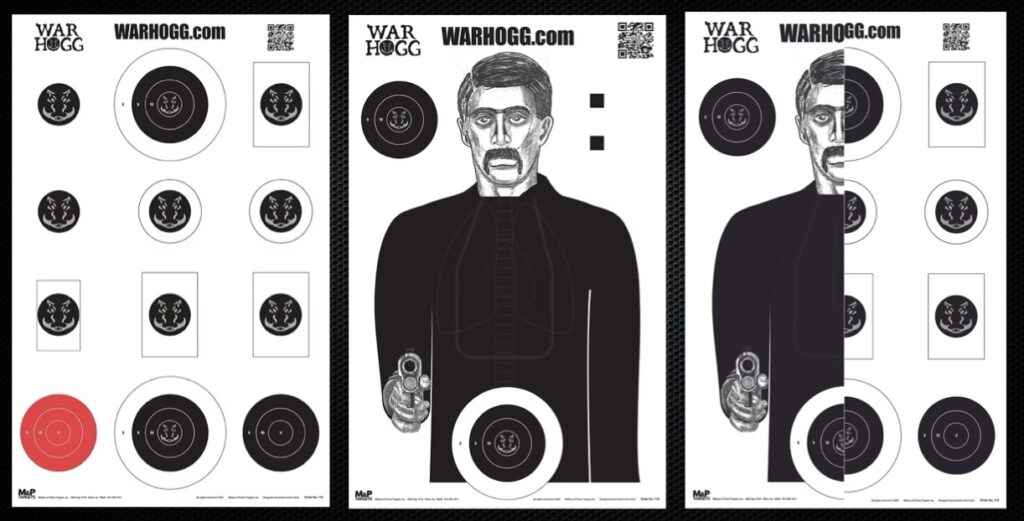
This allows you to visually process a human target and learn where to place rounds without needing a distinct area.
In real life, we don’t have these big visible lines on a bad guy, so we need to train without visual indicators. However, we want these lines to be visible when we approach our targets to grade them.
The War Hogg Tactical targets are fantastic for this. At any range but contact, you can’t see the visual scoring zones. They force you to learn where to put shots without visual indicators.
Competition
Competition targets are probably the easiest to pick. Competitions have designated targets that are easy to find and purchase for training.
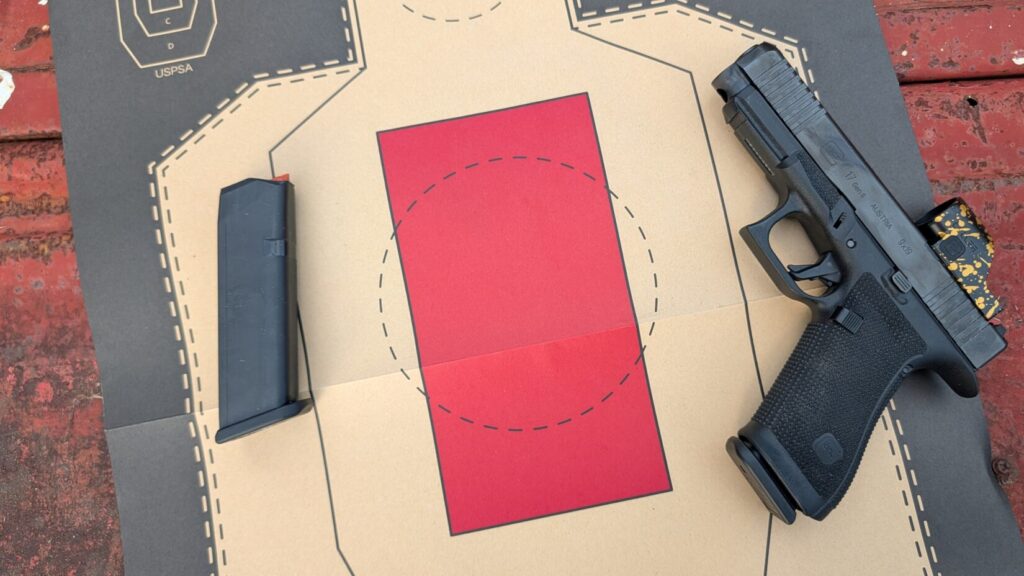
I also suggest finding reduced-sized targets if your training range is limited in distance. Smaller targets aren’t a perfect substitute for longer-range shooting, but they still provide a target that’s harder to hit than a full-size target.
When a Drill Calls for a Specific Target
Some drills will call for specific targets, which, much like competition shooting, makes life a lot easier. Some will call for B8s, others for A zones. If you want to be cheap, you can easily print an A-zone on standard printer paper, and B8S are everywhere online for free.
Some will require a target that just has a head and chest, which makes any silhouette useful, but I’d stick to the realistic targets for these drills. Alternatively, you can use a paper plate as your “body” shots and an index card for “head” shots. These provide smaller-than-average targets to better test yourself.
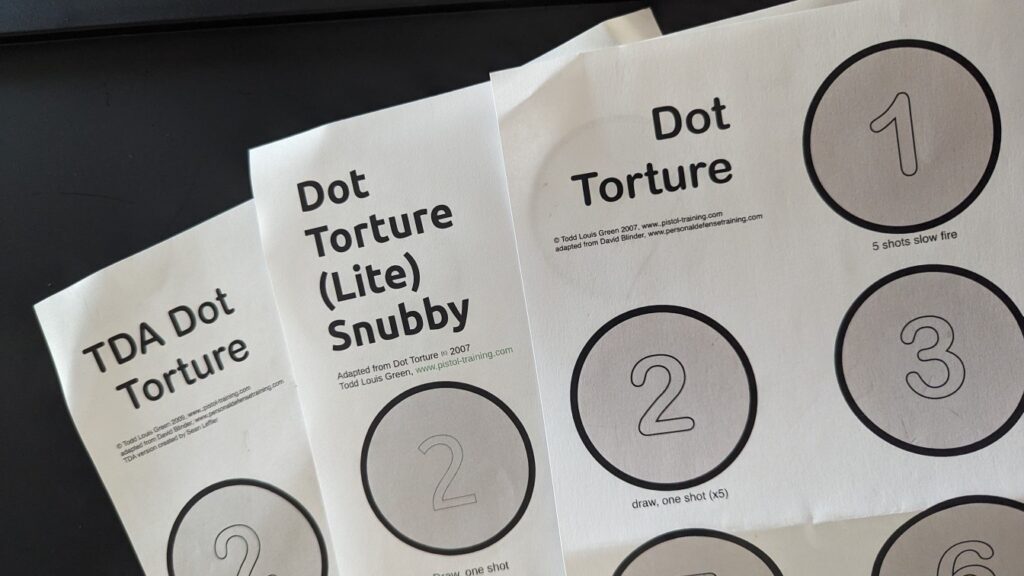
Some drills are specific enough that you need to be incredibly specific. Stuff like Dot Torture has its own target, and the drill really can’t be run without it. Just pay attention to the instructions and use the target prescribed for your best approximation of it.
Steel or Paper
Paper targets are the classic standard, but steel has gotten more and more common as it’s gotten cheaper and cheaper. Steel and paper both have strengths and weaknesses. Bottom line up front: there’s a place for both types of targets in training.
Steel Targets
Steel targets offer a near-instant ding that lets you know when you’ve made your hits. At long ranges, it’s nice to know you’ve made your hits before dredging forward a few hundred yards to confirm.
Steel comes in various sizes, so precision isn’t out of the question for any major task. The downside is that they don’t offer you the same diagnostic depth as a paper target. Steel targets offer a binary: you either hit the target or you didn’t.
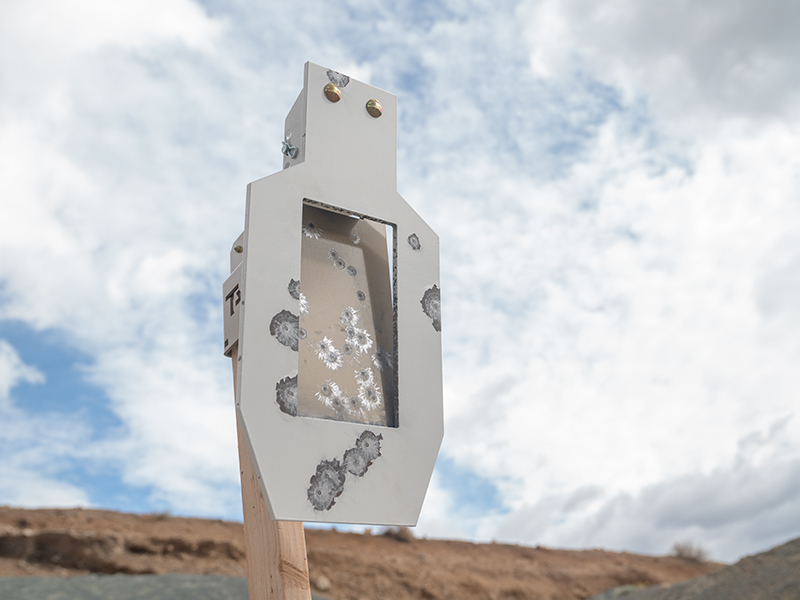
Beyond the ding, steel targets can react in different ways; they can fall, they can spin, and swing back and forth, which adds a new challenge to your training. They also last a long time, and for platforms like shotguns, they can be extremely useful because shotguns can damage paper and cardboard almost instantly.
Steel also has a standoff range. You can shoot point-blank into paper, but with steel, this can create ricochets and splash that could potentially injure a shooter.
Paper Targets
Paper targets offer a significant advantage when it comes to data collection. If you can hit a B8 at 25 yards, you can measure your group accurately and know that you could hit a smaller target at the same range. Being able ot measure groups with precision allows for data beyond hit or miss.
Paper comes in a greater variety of sizes and shapes than steel. It’s also much lighter and easier to toss in a range bag.
Paper does fall apart, has to be reset with pasties, and relies on whatever’s holding it up. In rain and wind, they can be a nightmare. Steel hits the ground and stays there until it’s shot to pieces.
Paper targets are much cheaper; heck, they can be nearly free if you’re creative enough. Each target style has its strengths and weaknesses, so balance them based on your tasks and logistical reality.
Travis’s Quick Target Picks
If you want my quick picks for targets, it’s pretty easy. I like the:
- B-8
- A-Zone
- USPSA Target
- War Hogg Tactical Target
- Index Cards
- Paper Plates
At the end of the day, you have to pick the target that best complements the skill you wish to build. Don’t pick the target you want; pick the target you need.
FAQ
What target is commonly used for speed-focused drills like the Bill Drill?
The A-zone of a USPSA target — it demands accuracy while allowing shooters to prioritize cadence, without needing to track precise scoring rings.
What target does the No Fail Pistol Drill use?
A B8 at 25 yards, with all 10 shots landing in the black within a 3.5-second par time each.