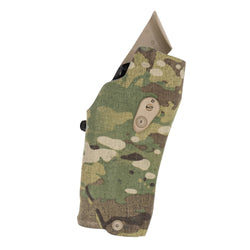

Belts do a little more than just hold your pants up when it comes to carrying a gun. They are a mounting platform and have evolved over the decades, with the Safariland HOLLE belt marking the next step for duty belts.
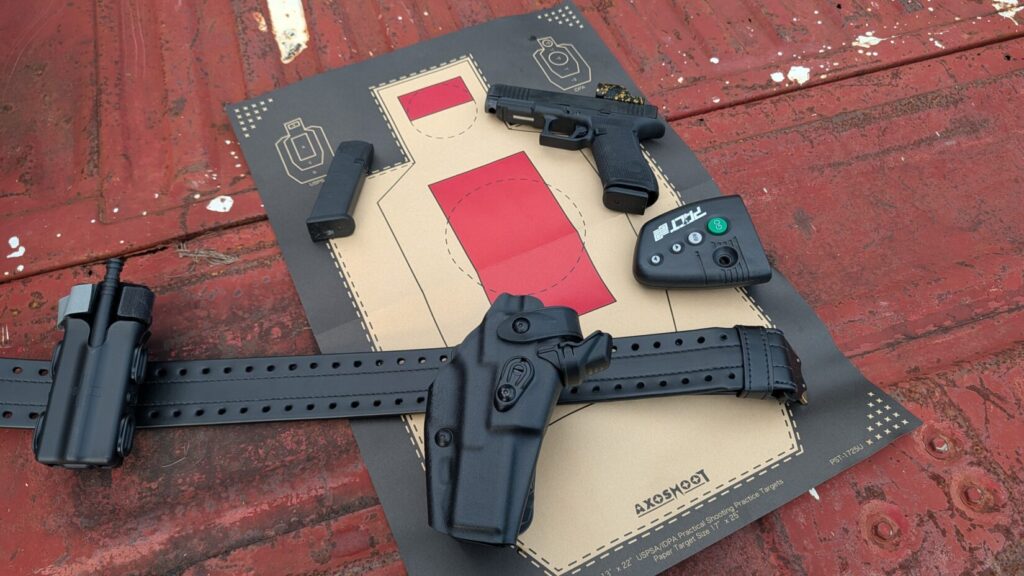
I say duty belt (and not battle, war, or Batman belt) for a reason. While SWAT officers and soldiers get the latest and greatest options, the traditional police duty market doesn’t always see that high-speed gear.
Agencies that want their officers to maintain a traditional uniform appearance often lack more modern, modular options.
What Is the Safariland HOLLE Belt?
The HOLLE aims to fix that. It’s a modern system that still looks like a traditional cop belt. It comes in plain, nylon look, basketweave, and high-gloss finishes, and agencies can choose between a buckleless design, a Sam Browne, a CopLok, or a Cobra buckle.
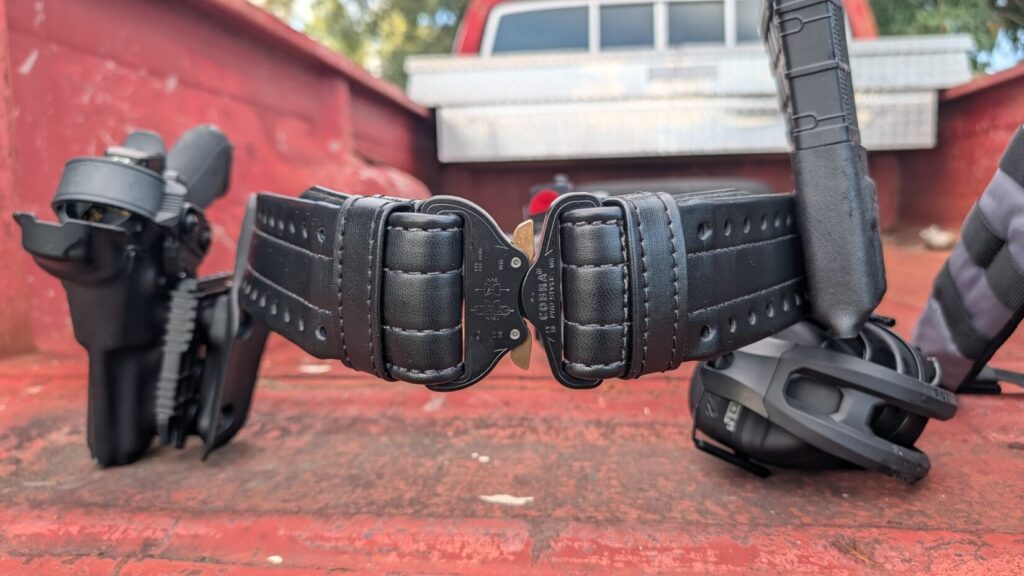
The name HOLLE is a play on the classic MOLLE acronym, standing for Hole-Optimized Lightweight Load-Carrying Equipment. It aims to provide the modularity of MOLLE while making the process of attaching gear faster and more customizable. For sizes and components, see our HOLLE specs breakdown.
As the name implies, the HOLLE belt uses a grid of holes to mount your gear. Pouches, direct-mount universal belt loops (UBLs) like the QUBL2, VUBL2, and CUBL2, and other accessories are secured to a four-hole pattern using screws.
You can still slide older, traditional belt-loop pouches onto a HOLLE belt, but you won’t reap the full benefits of the mounting system.
How Is The HOLLE Better Than MOLLE?
Securing pouches with an Allen wrench is a lot easier than weaving through tight webbing. I remember the first time I got my hands on an ancient Interceptor vest and how excited I was to customize my flak jacket, only to hate the process two pouches in.
Weaving through tight MOLLE ladders can be tedious, whereas the HOLLE system keeps things simple: line up the pouch, drive the screws, and you’re done.
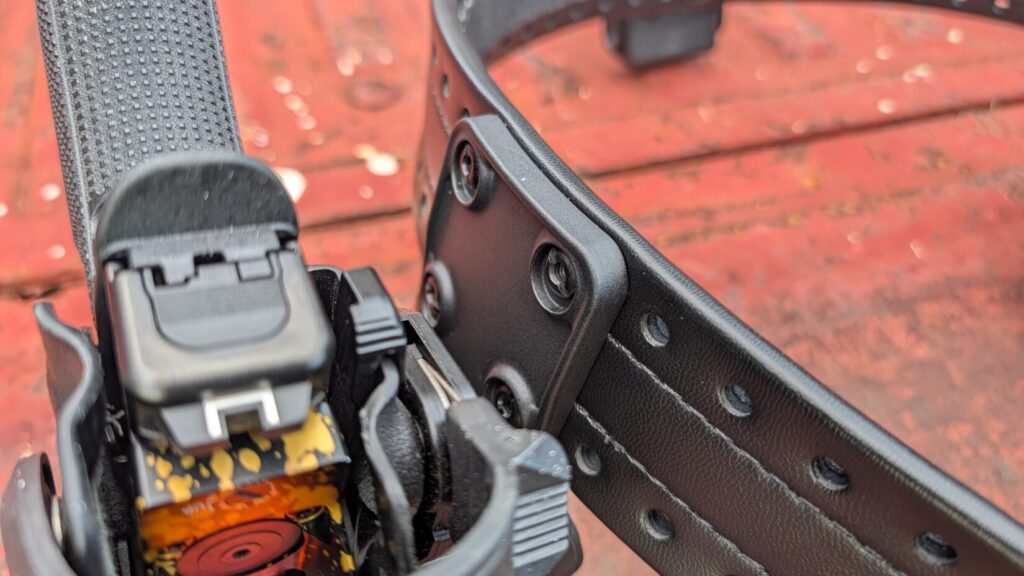
I like to tinker with my gear. I put it on, try it out, and make adjustments. Being able to quickly unscrew an accessory makes fine-tuning pouch placement painless. You can make subtle, incremental adjustments to get your kit positioned exactly where you want it.
HOLLE accessories can also utilize spacers that push pouches slightly outward. These spacers are ideal when wearing an outer vest carrier or plate carrier because they prevent the gear from catching on the bottom of your armor during a draw.
If you don’t need the extra clearance, you can omit the spacers so the pouch rides flat against your body.
Move It Around
Because HOLLE pouches anchor at up to four points across the top and bottom of the belt, they don’t sag or lever outward under load.
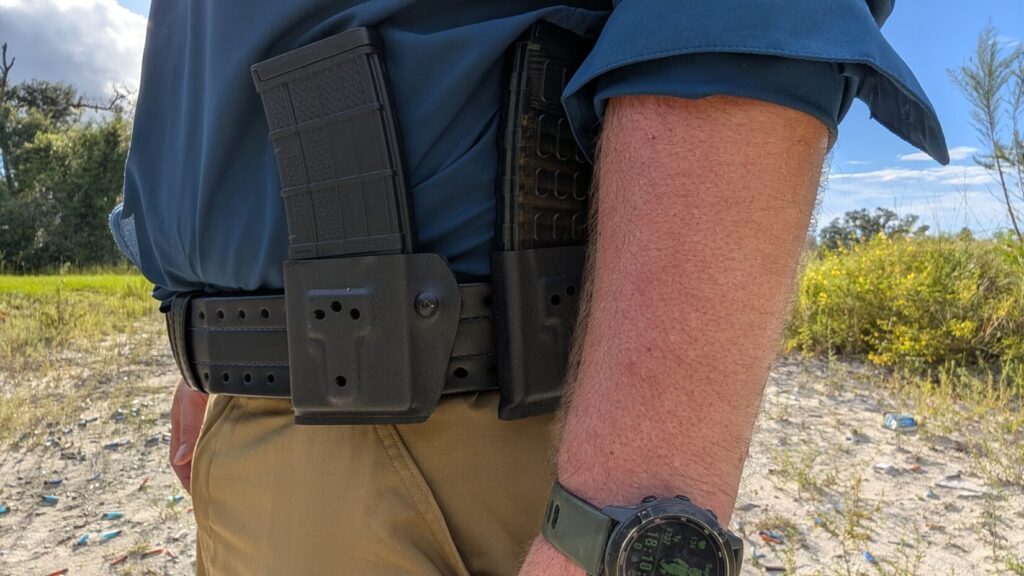
They also offer versatile mounting angles. MOLLE is typically restricted to vertical, or occasionally horizontal, orientations. The HOLLE belt allows you to mount pouches vertically, horizontally, or canted at an angle, similar to a competition rig.
Canting magazine pouches can speed up reloads by offering a more ergonomic angle that matches your natural wrist position when bringing a fresh magazine to the workspace.
The HOLLE in Action
This system outperforms a standard duty belt in several ways, but one of its biggest advantages is how securely it engages with the inner belt. Traditional slide-on pouches interrupt hook-and-loop contact along the inside of the belt, but HOLLE hardware avoids that interference.
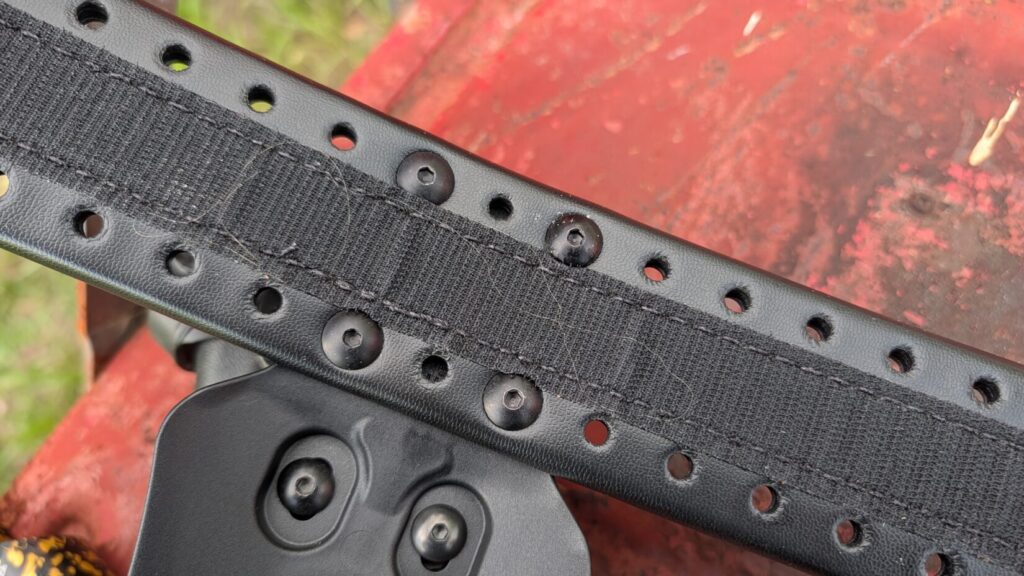
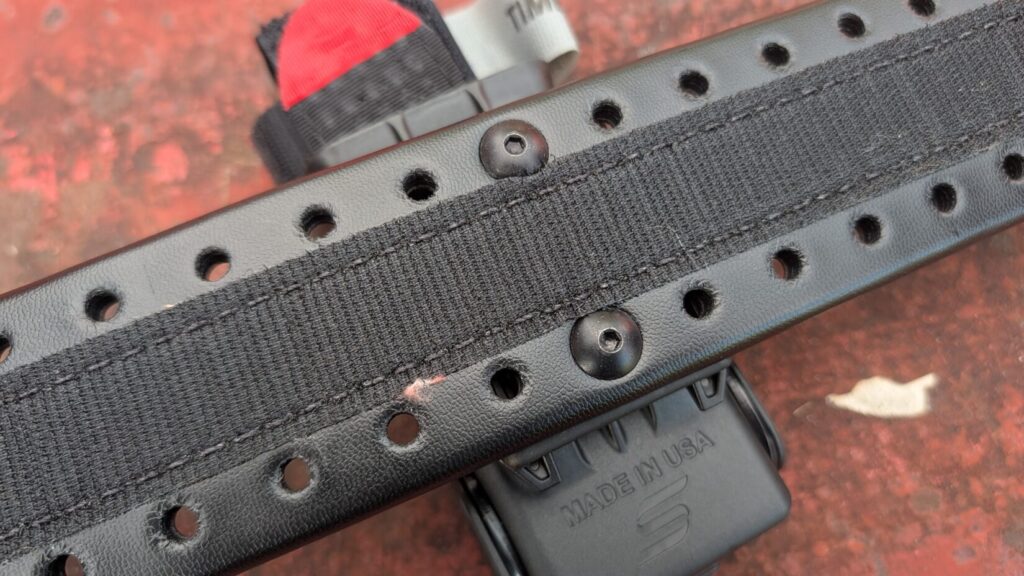
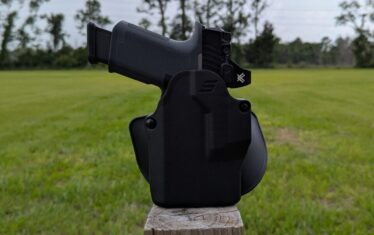
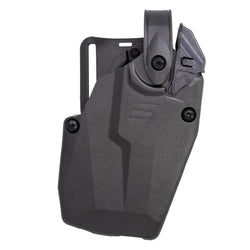
The result is a tighter, more stable connection. For heavy setups, like a duty pistol in a Safariland retention holster with an optic, weapon light, and a fully loaded 17-round magazine, that rigidity makes a noticeable difference by keeping the holster locked in place.
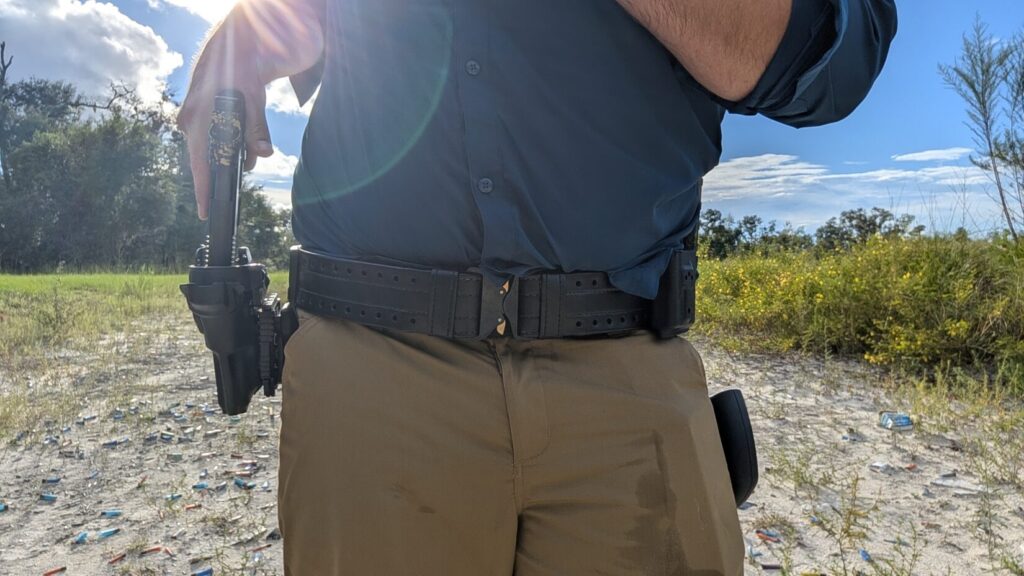
During dynamic drills, the gear stays planted without bouncing around under the momentum of an all-out sprint.
Everything stays locked down tight. I didn’t use threadlocker initially because I like to experiment with different setups, yet through several long-range sessions over two months, nothing backed out.
The belt is rigid and supportive, keeping gear readily accessible. The small refinements it offers over both MOLLE and standard duty belts make it stand out.
What to Know Before You Switch
There are a few things worth knowing.
You are primarily tied to the Safariland ecosystem. HOLLE is built around patrol officers’ needs, and because it’s a brand-new system, the full line of purpose-built pouches, holders, and holster mounts is still growing.
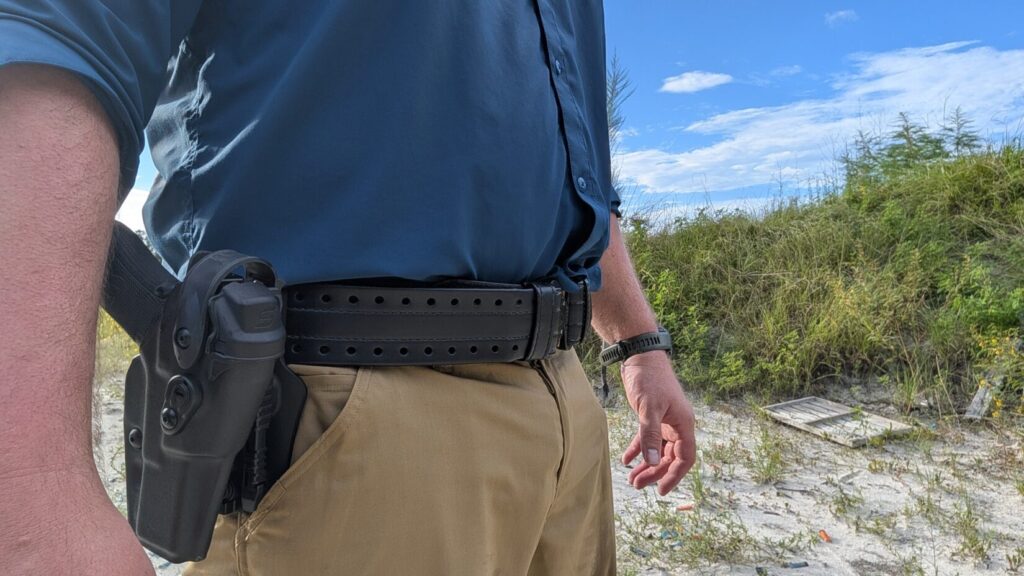
Additionally, if you prefer specialized pouches from third-party manufacturers, they likely won’t interface directly with the hole pattern. Keep that in mind if you rely heavily on specific non-Safariland gear.
That said, the belt also works with Safariland’s ELS, QLS, and TQP systems, which widens the gear options, and traditional belt-loop accessories still slide on. Safariland is also developing connectors that will let existing pouches mount directly to the HOLLE hole pattern. See Safariland’s mounting options for how each system attaches.
Final Thoughts on the Safariland HOLLE Belt
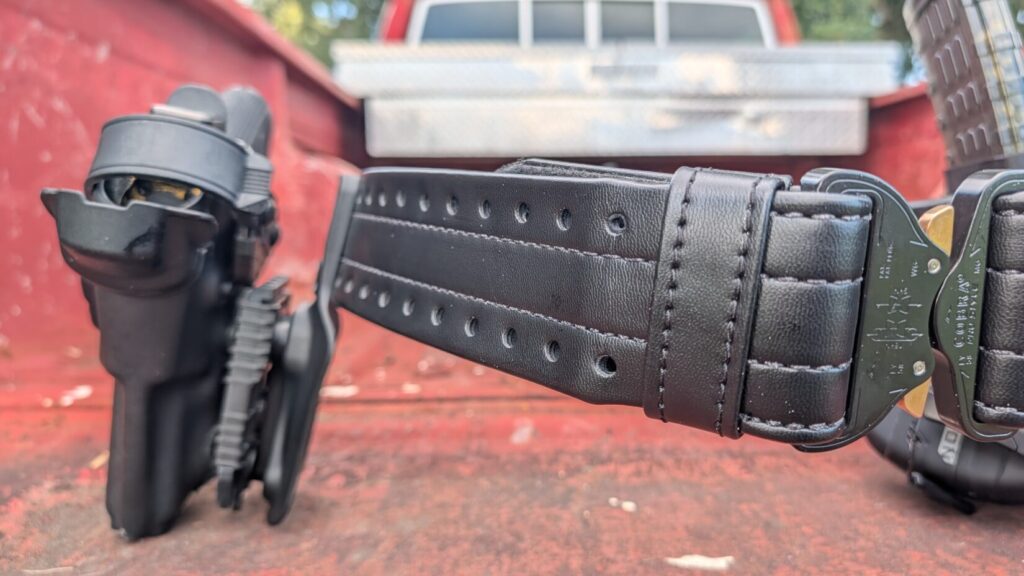
Overall, the HOLLE belt delivers substantial upgrades over legacy duty setups. It bridges the gap between tactical MOLLE belts and traditional uniform duty gear, resulting in a design that is practical, clean, and genuinely innovative.
If your agency is weighing a duty belt upgrade, take a closer look at the HOLLE Duty Belt and the growing line of HOLLE-ready pouches and holster mounts.
Build Your HOLLE Duty Rig
Explore the product collection


Safariland HOLLE Belt Questions, Answered
Hole-Optimized Lightweight Load-Carrying Equipment.
Buckleless, Cobra, CopLok, and Sam Browne configurations.
Yes. Traditional belt-loop accessories slide onto the belt, and it works with Safariland’s ELS, QLS, and TQP systems. Purpose-built HOLLE pouches use the four-hole screw pattern.
2.25 inches (58mm), in sizes from 20 to 62 inches.