
The Sig Sauer P211 GTO Combat was the first 2011-style handgun I purchased—and that was only in December 2025. So, would I make that decision all over again?
The P211 was a surprise introduction. It didn’t hit the market until mid-2025! So this is still a fairly new gun, but I think it offers a lot.
I originally thought, “Why?” when it was introduced. Sig already has so many models to choose from. Why start an entirely new line? That alone should prove how big the 2011/DS1911 market is—everyone is trying to take a piece. Let’s see if the Sig Sauer P211 Combat warrants your attention.
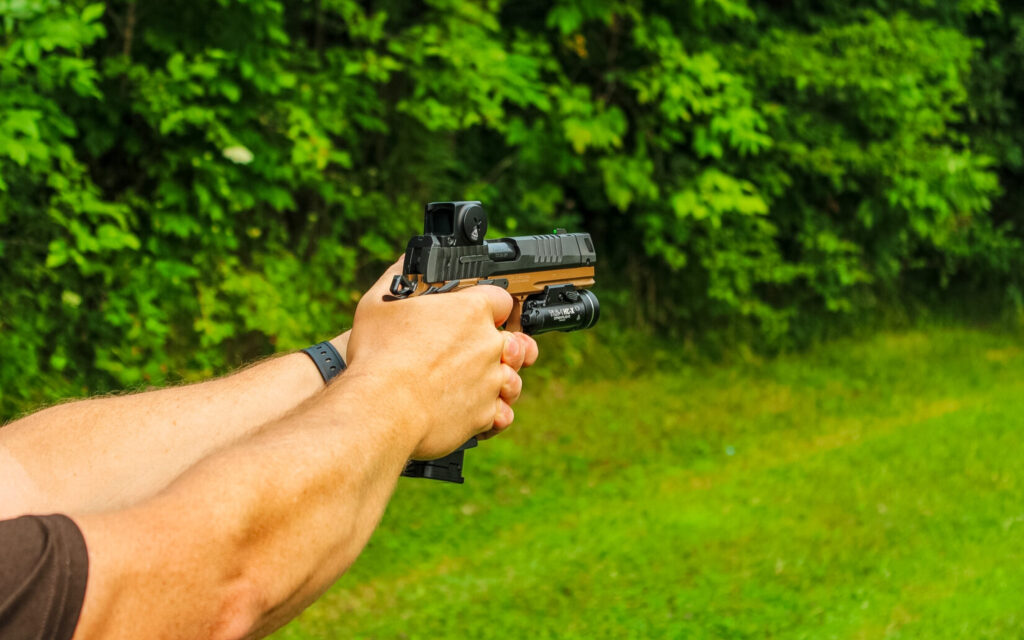
To understand the history of the 2011, Staccato, and the rise of this pistol classification, check out “Party Like It’s 2011: Staccato and the 2011 Revolution,” which tells the origin story. That article lays the groundwork for what follows, and this is meant to give you honest opinions on this growing market.
Unlike other trends that come and go, this one has staying power. But unlike other trends, pistols in this class can cost thousands of dollars. The goal here is to give you an unbiased opinion on how these different models stack up and help you decide which one is the best for your needs and budget.
Sig Sauer P211 GTO Combat SPECS
- Model(s): P211 GTO Combat
- Action: Single Action, Hammer-Fired
- Frame: Stainless Steel
- Grip Module: Alloy
- Caliber: 9mm
- Capacity: (1) 23-rd, (2) 2-rd
- Sights: XRAY3 Front, Blackout Rear Sight.
- Optic Cut: Yes (multi-footprint & SIG-LOC Pro)
- Magazines: 3
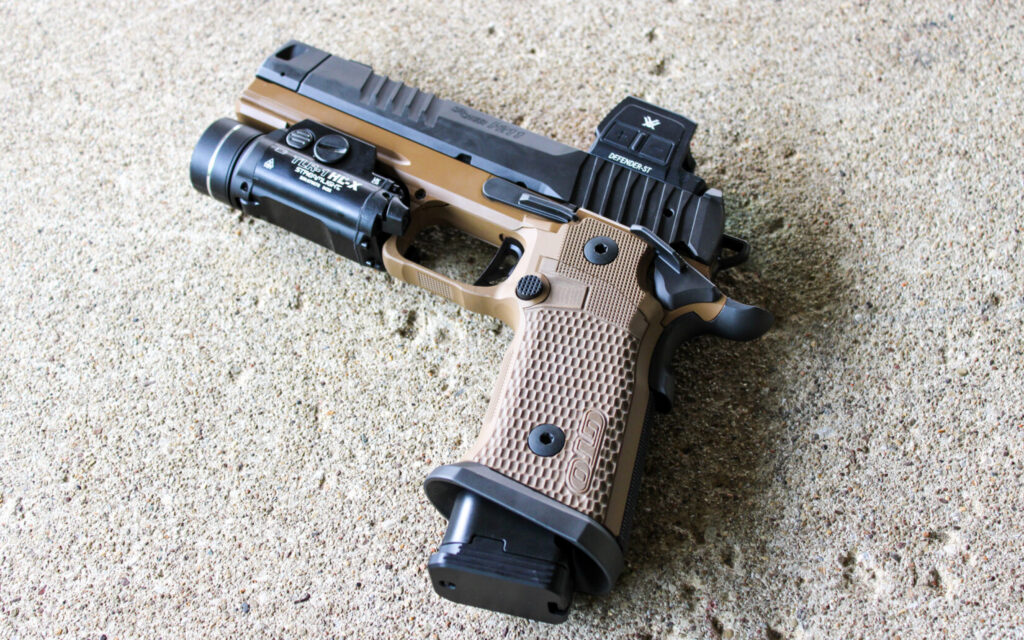
- Finish: Black slide, Coyote Brown Frame.
- Barrel Length: 4.4”
- Overall Length: 8.5”
- Width at Grip: 1.48”
- Height: 5.75”
- Weight: 46 oz.
- Price: Approx $2499.99, depending on the website. Sig doesn’t list MSRP.
FEATURES
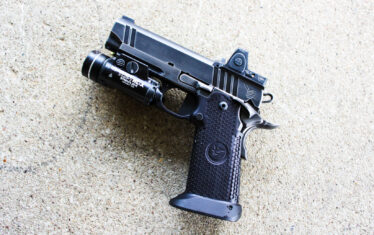
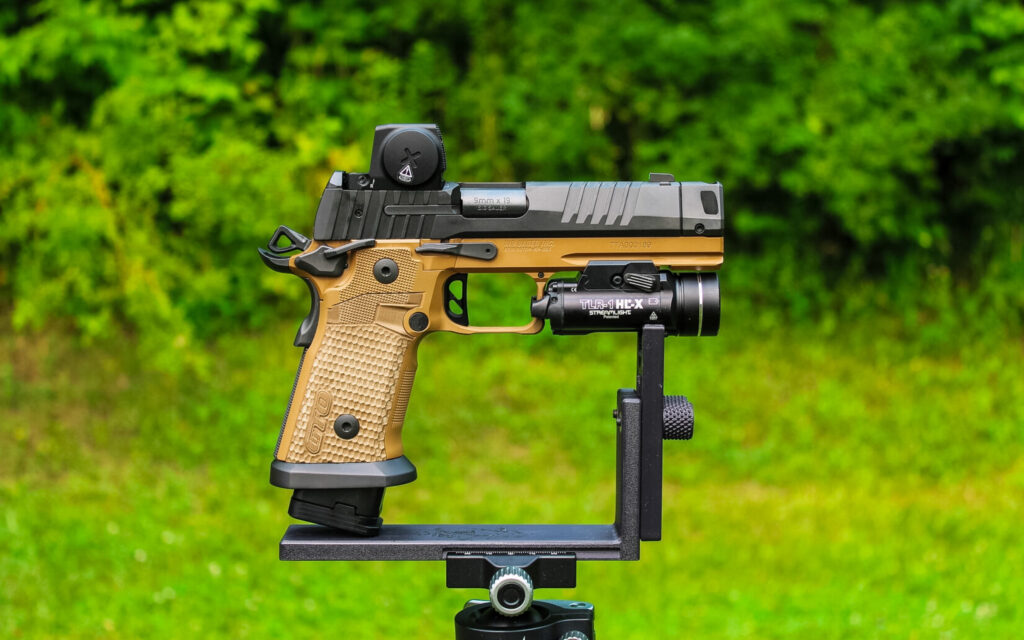
The Sig Sauer P211 GTO Combat (from now on, I’ll refer to it as the GTO or P211) brings a modern take on the double-stack 1911 platform, blending classic single-action operation with advanced engineering for faster, flatter shooting.
Chambered in 9mm, the full-size pistol pairs a 4.4-inch carbon-steel bull barrel with the innovative MACH3D Compensator, a 3D-manufactured design engineered to reduce muzzle rise and felt recoil, enabling quicker follow-up shots.
The stainless-steel slide features a durable Nitron finish, aggressive slide serrations, and the SIG-LOC PRO optics-ready footprint, while XRAY3 front and blacked-out rear sights provide a proven sighting system.
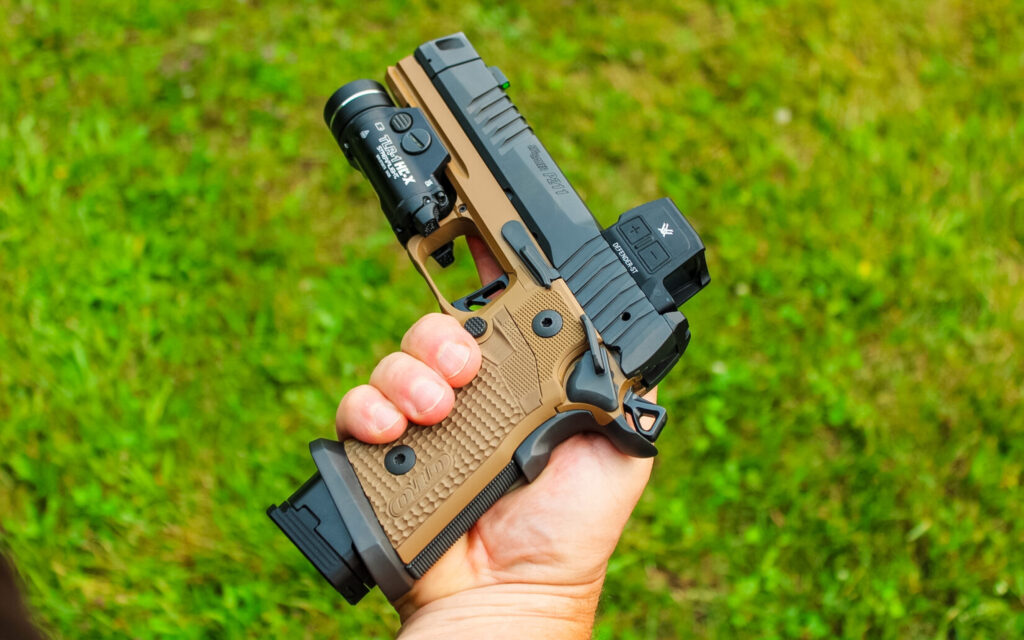
The P211 features a coyote brown stainless-steel frame, an alloy grip module, matching Coyote Brown G10 grip panels, and a full-length 1913 Picatinny rail for lights and lasers. A removable steel magwell aids reloads, while the ambidextrous slide release and straight-pull, skeletonized flat trigger are designed to maximize speed and control.
The pistol ships with one 23-round and two 21-round P320-compatible steel magazines.
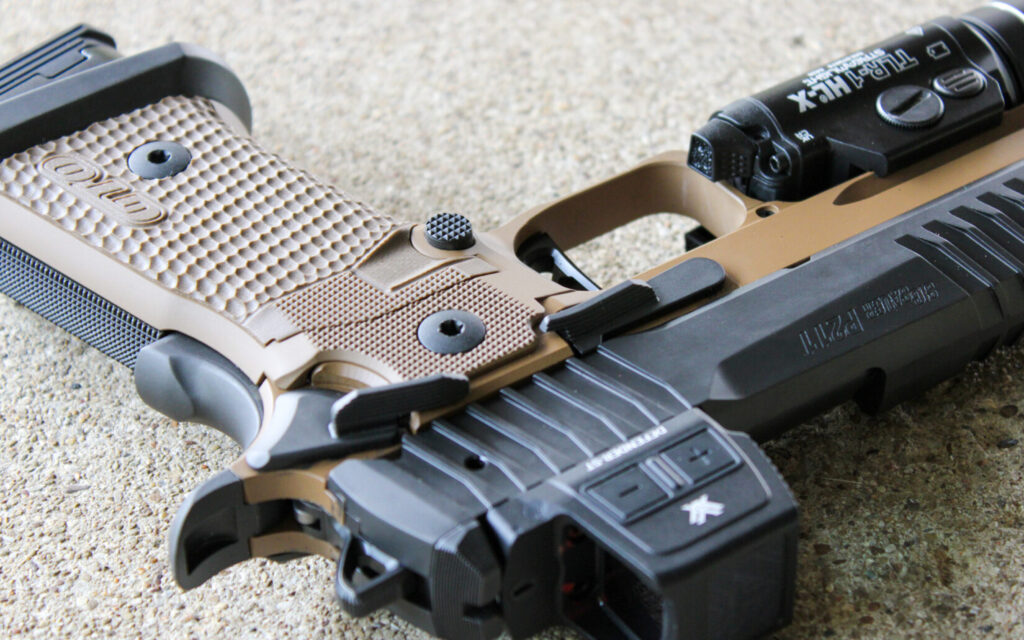
Additional features include ambidextrous thumb safeties, a grip safety, and a firing pin safety, all for added security without compromising performance.
Weighing 45.9 ounces, the GTO combines competition-inspired features with duty-ready durability, offering shooters a refined, optics-ready 2011-style pistol built around high-capacity P320-compatible magazines and modern recoil-reduction technology.
SETUP
Like the others so far in this tier, I’m running a Vortex Defender-ST Solar Enclosed red dot. So far, I’ve had zero issues with these optics, a testament to Vortex’s quality.
I really like the company, too. Vortex has always been great to work with and to get answers from. Just call them up; they’ll be more than happy to help.
Like the others, I’ve added a Streamlight TLR-1 HL-X. This proven light offers good value. The best part is that it is multi-fuel compatible and delivers about 1,500 lumens and 20,000 candelas. Depending on where you are shopping, this light hovers around $220.
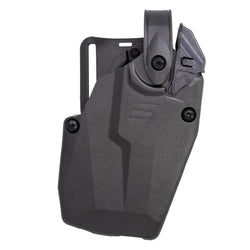
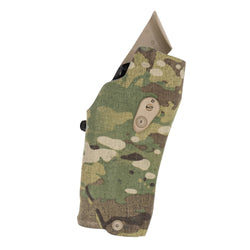
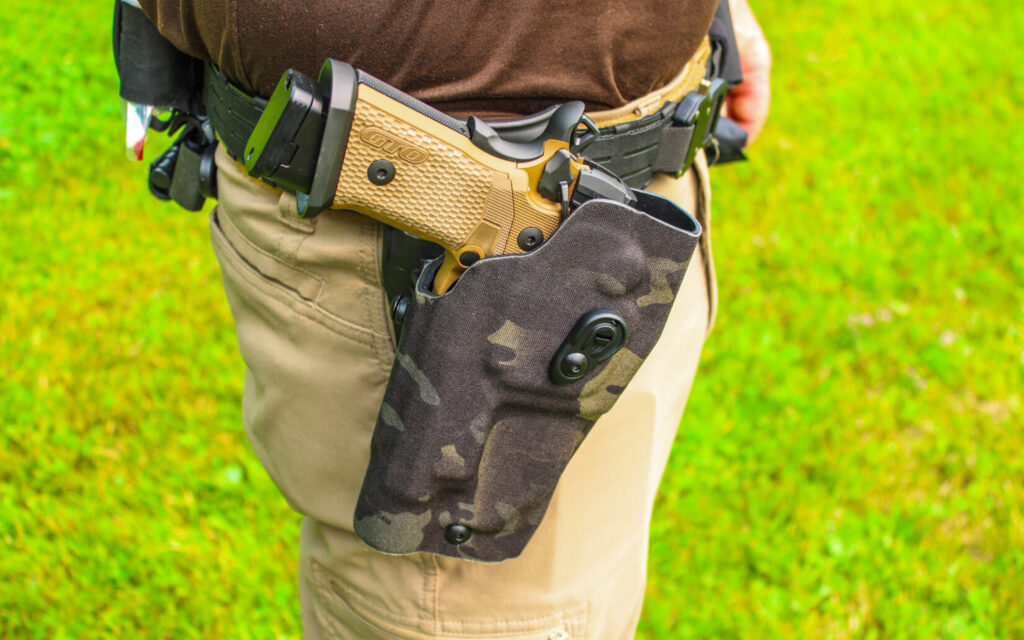
As I am throughout this series, I’m running this pistol stock. That keeps things on an even playing field. For a holster, I’m using the Safariland 6390RDSO – ALS Mid-Ride Duty Rated Level 1 Retention Holster and a mid-ride QLS adapter.
This is a new Safariland fit, and I’m glad it came out before this project started. In general, this is my go-to setup for any kind of “tactical” shooting or training. Since I’m not in Law Enforcement, I’ve removed the hood for easier access. The holster is mounted on the Safariland BASELINE MOLLE Belt, which I’ve grown to like quite a bit.
Now, let’s head to the range.
AT THE RANGE
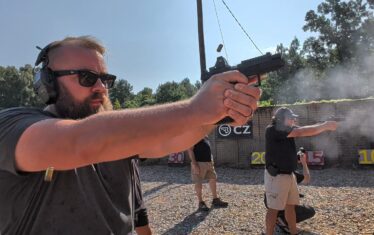
As mentioned, this is a personal gun, so I’ve shot it a lot. At this point, I’m well over 1,000 rounds through it. I feel I have a good understanding of what it does well and what it doesn’t.
A note on ammo. All “range ammo” is Blazer Brass 115-gr FMJ (5200). For accuracy testing, I used Hornady American Gunner 115-gr XTP. I picked up all the ammo for testing from Ammunition Depot.
Let’s get into the drills and accuracy testing.
Bill Drills
I start Bill Drills at a low ready, with the target about 5-7 yards away. The goal is six A-zone hits in 1.25 seconds or less. With the GTO, my average time over five attempts was 1.14 seconds—which for me is blazing fast.
Accuracy was good, but again, I already have a lot of time on this pistol. I will stand and say the MACH3D Compensator might be the best one out there. Sig Sauer did 3D simulations and modeling to develop and build the perfect comp. I’ve never had one work this well and keep the gun as flat.
First shots averaged .36 seconds, while follow-ups were in the .14 range. So far, this has performed the best in Bill Drills.
Accuracy Testing
For this portion, I’m shooting from a pistol rest mounted to a tripod. This keeps things as stable as possible and really showcases the pistol’s capability.
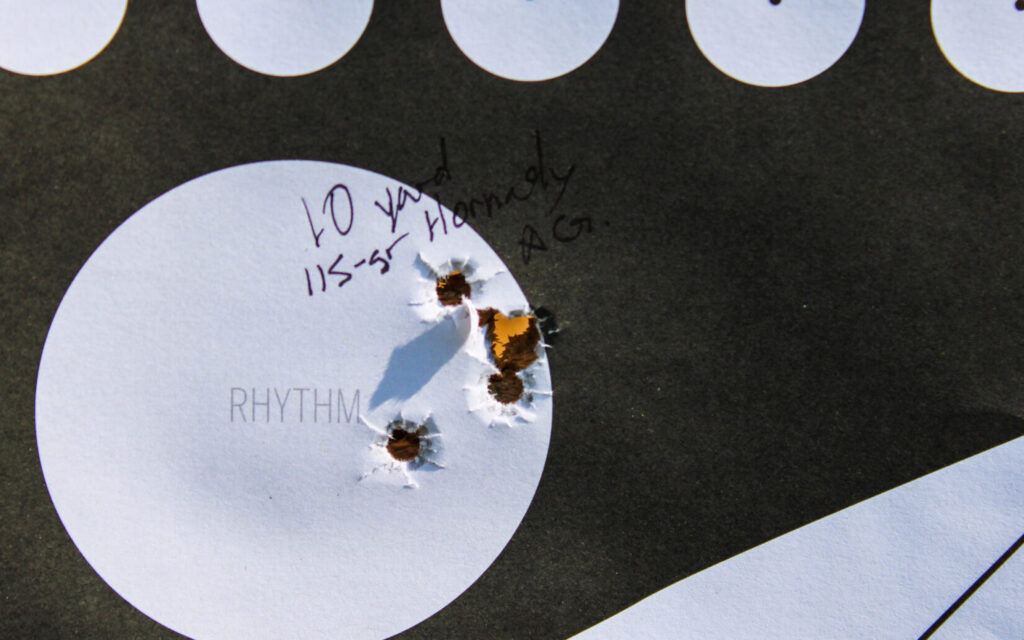
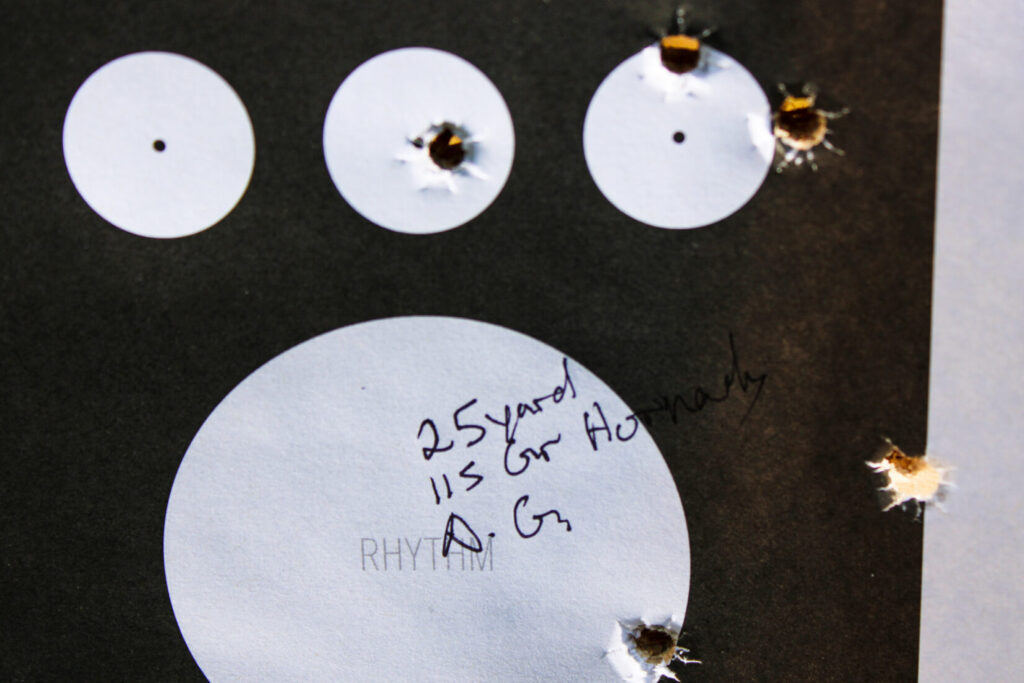
At 10 yards, the pistol shot a small 4-shot cluster with one flyer about ½” away. It’s definitely serviceable. At 25 yards, the group opened to 3.5”, which seems to be a trend with comped guns (though not always, as with the Platypus).
This is a standard production gun made by a large manufacturer. It will not have the hand-fitting that others on this list have, which largely helps with accuracy.
1-and-1 Drills
This is my favorite drill to run. I start the same way I do for Bill Drills. 1 shot fired, slide lock, reload, 1 shot. My goal is to hit a 3.25-second par time.
My hands run on the smaller side, which can make shooting 2011-style pistols challenging. For this, I’d roll my strong hand to engage the magazine release, then use my support hand to hit the side release before moving back into position.
Like the Platypus, the P211 uses P320 magazines but retains a larger grip circumference. It’s more in line with typical 2011-style pistols. However, the controls are comfortable and well-placed, which help achieve fast reloads.
These were among the fastest times on the test. I averaged 2.34 seconds over five attempts—blazing. Average draw time was .38 seconds, while reload and second shot averaged 2.25 seconds. This gun is really meant for competition.
The Humbler
This is a good finisher I picked up from James Williamson of HK. It’s a 10-second par time. Either start with the pistol holstered or on a bench. 10 shots into the A-Zone, then reload and take 2 shots into the head A-Zone.
With the 211 GTO, I posted my fastest attempts. I actually shot the drills twice to verify how fast I ran them. The first run was 9.29; the second was a smoking 8.06. Unfortunately, I missed on each attempt. My guess is it’s the second shot after the comp pushed it down too low before I pulled the trigger again.
My first shot was at 2.08, with .43 splits (which includes a reload). Draw was 2.00 and 1.69 seconds, respectively, while splits were .76 and .66 (remember, this includes a reload).
Note: If you’ve heard of “The Humbler” before, this is not that drill — it’s a different, shorter exercise that happens to share the same nickname.
Sizing Up the Sig P211 GTO Combat
Where the P211 GTO Combat Delivers
This is the best compliment I can give any handgun—it’s easy to shoot well. There are two reasons for that: the MACH3D compensator and its 46 oz. weight.
It is the flattest-shooting handgun I own, and maybe the flattest in the whole test. A heavy gun helps with that. Weight and mass are linked. A pistol with more mass eats recoil. Coupled with the MACH3D compensator, there’s barely any muzzle rise.
Shooting-wise, I find this gun easy to keep on target. Follow-up shots are a breeze. It’s actually quite comical. And I’ll be the first to admit it—I’m not a world-class shooter. I’d consider myself average at best. But this pistol makes me look good.
That doesn’t mean it’s perfect. I also like the gun’s overall look and feel. Value-wise, I think it’s pretty high up there for its performance level.
Some people might scoff at the fact that it takes P320 magazines, but I like them quite a bit and have had zero issues with them. Plus, there’s a growing aftermarket of affordable options (like Magpul’s).
Mixed Results Here
Because this is a heavy gun, it will dissuade some people. Heavy guns aren’t for everyone. And that’s fine (there are P211 models that might better suit your needs).
Some people argue that these types of pistols are used to “game” it and make up for poor technique. And honestly, there’s some truth to that argument. You should work on shooting as a skill rather than relying on a pistol to make up for a lack of effort.
The other mixed thought is the grip texturing. You may love it; you may hate it. It seems like this is always a controversial issue. People have their own preferences. There’s no one-size-fits-all. I lean towards the more aggressive side. So, I find the texturing to be perfectly fine.
A nice perk is that the controls are ambi, so this is a lefty-friendly pistol. But I still wish they were a bit enlarged—that remains a common theme.
Where It Falls Short
The trigger will be the main concern for the P211 Series. Most 2011-style pistols use a Series 70 trigger, but Sig chose an 80-series instead. What’s the difference?
That distinction traces back to the classic Colt 1911 design. A Series 70 setup doesn’t use a firing pin safety, so fewer parts move when you pull the trigger. This typically produces a cleaner, lighter break that’s easier to tune—one reason many competition-focused 2011 pistol platforms stick with it.
The Series 80 system, introduced decades ago by Colt’s Manufacturing Company, adds a trigger-activated firing-pin block designed to enhance drop safety. While it’s a smart safety feature on paper, it also involves extra internal parts that move during trigger pull. In practice, this can lead to a slightly heavier or less crisp feel than many shooters expect from high-end 2011-style pistols like the SIG Sauer P211-GTO.
There is more side-to-side play in the P211 trigger than in any other 2011 in this price range, which is disappointing. The trigger pull is serviceable but not up to typical 2011 standards.
ZOOMING OUT
I like the Sig P211 GTO, especially the Combat version. I sought it out and purchased it, so I have that inherent bias. But if this is the only 2011-style pistol you’ll own, I don’t think you could go wrong.
I like that it takes P320 magazines—something I have in abundance—and that they are more affordable than typical 2011-style magazines. You can often find these for around $2500, sometimes cheaper when they are on sale.
That’s good value, especially when you compare its performance to that of a Staccato XC, which is nearly $ 4,500. So to answer the original question, I’d still buy this.
To close out the “Mid-Tier” category, we’ll check out the Masterpiece Arms DS9 series of pistols. These definitely fall at the top end of this category and may slightly exceed it, but what you get is a gun worthy of hanging with the big boys. Stay tuned.
FAQ
Does the Sig P211 GTO use Series 70 or Series 80 fire control?
Series 80 — it includes a firing-pin safety block, which adds a small amount of trigger travel compared to a Series 70 setup but improves drop safety.
What magazines does the Sig P211 GTO use?
SIG P320-compatible steel magazines — a 23-round and two 21-round mags ship with the pistol.